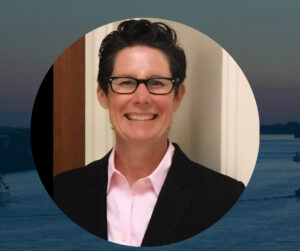
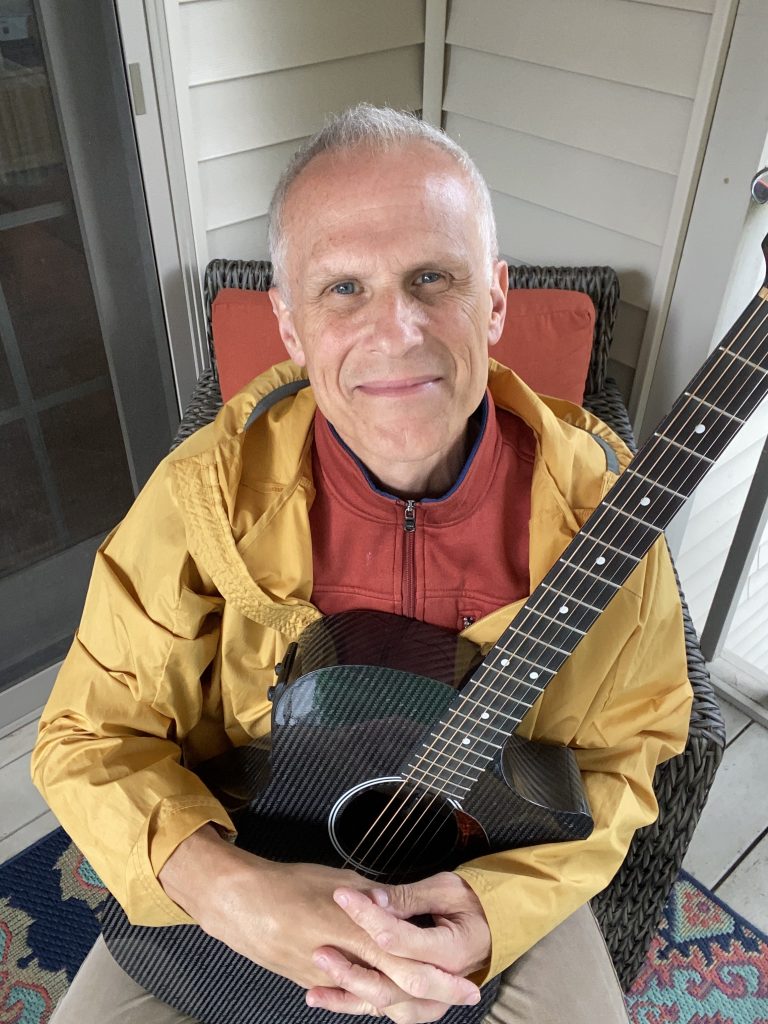
Musician Peter Mayer. Submitted photo

I recently attended a concert by Minnesota musician Peter Mayer and another musician. In case you don’t know, Mayer is known for his environmentally themed songs about interconnectedness and the human journey. He has produced 11 albums over 20 years and has received many artist fellowships.

Mayer wrote a song that’s a favorite of mine called “Ocean Mary.” It’s about a woman who “becomes” the ocean from touching a stream near her home. While Mayer didn’t play that song during his recent concert, I found myself thinking about it and wishing someone would write lyrics for a similar song about the Great Lakes.

Gradually, I had the audacity to realize that maybe I could help bring such a song into being if I tweaked the “Ocean Mary” lyrics a little. So, I did! Here’s the result, used with Mayer’s gracious permission. We thought you might enjoy it as a Sea Grant offering for U.S. National Poetry Month.

Great Lakes Julie

There’s a road in a river town
And on that road is Julie’s home
By her house is a deep ravine
Running there is a magic stream
Laughing over sand and rocks
It runs the length of Julie’s block
Another mile to the riverside
And a hundred more to the Great Lakes wide

Now, down in that ravine one day
By the water, Julie lay
Put her hand in the shallow stream
And Julie had a magic dream
She imagined that, inside her, stirred
All the waters of the Earth
Every puddle, every wave
And every one of the five Great Lakes

She could feel the fishes roam
In her fingers and her toes
And in her chest, the Keweenaw Current flows

Now, ever since her dream that day
People say that Julie’s changed
But they sympathize when they think
It must be strange to be the Great Lakes
She senses when the salmon swim
And waterspouts lick her skin
Canada tickles her left arm
And the moon above tugs her heart
Her front is Duluth, her back Oswego
She recollects the glaciers’ decline
Rip currents run up her spine
And lightning tingles when it strikes

She can feel the fishes roam
In her fingers, in her toes
And in her chest, the Keweenaw Current flows

And all this happened, so it seems
Because of Julie’s magic stream
But some will say that ponds and wells
And even rain can cast a spell
And every water drop you ask
Tells a tale of Great Lakes vast
So be careful when you take a drink
There’s magic in the kitchen sink!

The post Great Lakes Julie first appeared on Wisconsin Sea Grant.

Original Article

Blog | Wisconsin Sea Grant

Blog | Wisconsin Sea Grant

https://www.seagrant.wisc.edu/blog/great-lakes-julie/?utm_source=rss&utm_medium=rss&utm_campaign=great-lakes-julie

Marie Zhuikov

As  lake sturgeon in Michigan’s Black Lake in Cheboygan and Presque Isle counties travel up the Black River to spawn in shallow waters, volunteers will be ready to guard the fish against poaching. Read the full story by Michigan Radio.

Original Article

Great Lakes Commission

Great Lakes Commission

https://www.glc.org/dailynews/20230407-lake-sturgeon

Theresa Gruninger

The Toledo shipping channel in the Maumee River is relatively shallow, so it has to be dredged on a regular basis to make it deep enough for freighters. Sediment brought up during that process is now being put to good use in a number of places including the new Glass City Metropark. Read the full story by WTVG-TV – Toledo, OH.

Original Article

Great Lakes Commission

Great Lakes Commission

https://www.glc.org/dailynews/20230407-toldedo-metropark

Theresa Gruninger

An Ontario Superior Court of Justice ruled Monday that Chippewas of Saugeen First Nation is — and always has been — the rightful owner of Sauble Beach after decades of litigation. The 2.5-kilometre stretch of Lake Huron shoreline was previously claimed by the Town of South Bruce Peninsula. Read the full story by the St. Catherines Standard.

Original Article

Great Lakes Commission

Great Lakes Commission

https://www.glc.org/dailynews/20230407-sauble-beach

Theresa Gruninger

A new immersive, hands-on course at Muskegon Community College is taking a close look at freshwater ecology. The Aquatic Ecology course introduces students to the processes that occur in local bodies of water, including the Great Lakes. Read the full story by WOOD-TV Grand Rapids.

Original Article

Great Lakes Commission

Great Lakes Commission

https://www.glc.org/dailynews/20230407-beaver-island

Theresa Gruninger

Researchers from across northwest Ohio met at the University of Toledo Lake Erie Center in Oregon on Wednesday to clean and calibrate sensors that will be going into Lake Erie in preparation for another summer algal bloom season. Read the full story by the Toledo Blade.

Original Article

Great Lakes Commission

Great Lakes Commission

https://www.glc.org/dailynews/20230407-algal-bloom-devicea

Theresa Gruninger

Representatives of fifty-one Tribal and First Nations located in what is now the United States and Canada submitted a report to the United Nations Human Rights Council calling on the Government of Canada to stop violating the human rights of Indigenous peoples through its support for Enbridge’s Line 5 crude oil pipeline. Read the full story by Environmental Defence.

Original Article

Great Lakes Commission

Great Lakes Commission

https://www.glc.org/dailynews/20230407-line-5

Theresa Gruninger

News

Great Lakes Commission awarded over $10 million for habitat restoration in Great Lakes Areas of Concern

ANN ARBOR, MI – The Great Lakes Commission (GLC) announced that it has been awarded more than $10 million to fund habitat restoration in the Great Lakes basin. The funding will accelerate projects in the Niagara River and Maumee Areas of Concern (AOCs): the Ralph C. Wilson, Jr. Centennial Park Restoration Project in Buffalo, New York; the Collins Park Restoration Project in Toledo, Ohio; and the University of Toledo Swan Creek Restoration Project, also in Toledo, Ohio.

The funding was awarded as part of a new regional partnership between the GLC and the National Oceanic and Atmospheric Administration (NOAA) to restore Great Lakes coastal habitat, with a focus on areas of historic pollution more formally known as AOCs. This work directly contributes to efforts to remove the Niagara and Maumee Rivers from the list of Great Lakes AOCs.

“This is the fifth time since 2008 that the Great Lakes Commission has been awarded funding for habitat restoration, with over $76 million being directed to priority sites across the basin,” said GLC Chair Todd L. Ambs of Wisconsin. “We appreciate NOAA’s continued support and look forward to working with our federal, state and local partners on these critical projects. Restoring Great Lakes coastal wetlands and riparian areas protects the environment and human health, as well as being a great economic driver for the region.”

To celebrate its new partnership with NOAA, the GLC has released a new video highlighting the benefits of this collaboration. This video was produced by Great Lakes Outreach Media and features key partners. The video can be viewed here.

For more information about the GLC’s habitat restoration work, visit https://www.glc.org/work/habitat.


The Great Lakes Commission, led by chair Todd L. Ambs, deputy secretary of the Wisconsin Department of Natural Resources (retired), is a binational government agency established in 1955 to protect the Great Lakes and the economies and ecosystems they support. Its membership includes leaders from the eight U.S. states and two Canadian provinces in the Great Lakes basin. The GLC recommends policies and practices to balance the use, development, and conservation of the water resources of the Great Lakes and brings the region together to work on issues that no single community, state, province, or nation can tackle alone. Learn more at www.glc.org.

Contact

For media inquiries, please contact Beth Wanamaker, beth@glc.org.

Recent GLC News

Upcoming GLC Events

View GLC Calendar

Archives

Original Article

Great Lakes Commission

Great Lakes Commission

https://www.glc.org/news/noaa-040623

Beth Wanamaker

Most cemeteries are looking to provide green burial as an option, whether it’s immediately today or as part of their master plan.

The post More cemeteries offering green burials, recreational space first appeared on Great Lakes Echo.

Original Article

Great Lakes Echo

Great Lakes Echo

http://greatlakesecho.org/2023/04/06/more-cemeteries-offering-green-burials-recreational-space/

Guest Contributor

Episode 2303 Lesson Plans: Citizen science in the Great Lakes

This lesson will explore the phenomenon of light pollution in the Great Lakes and some of the citizen science efforts going on around the region. Students will explore the impact that artificial lights have on night sky visibility for star gazing, learn about how everyday people can contribute to scientific research, and engage in citizen science projects in their community.

Read Now at Great Lakes Now.

Original Article

Great Lakes Now

Great Lakes Now

https://www.greatlakesnow.org/2023/04/episode-2303-citizen-science-lesson-plan/

Gary Abud Jr.

For three days in March the world came together at the United Nations in New York City to discuss ways to place water at the center of decision-making. Public officials, business leaders, and scientists from the Great Lakes region attended the conference, linking global debates about freshwater supply and management with local experience. Read the full story by Michigan Radio.


Original Article

Great Lakes Commission

Great Lakes Commission

https://www.glc.org/dailynews/20230405-united-nations

Connor Roessler

The federal government says it’s making Canada’s largest investment ever in protecting the nation’s sources of fresh water, including the Great Lakes. Commitments announced by the government during U.S. President Joe Biden’s visit and in the recent budget bring the federal government’s total investment to $750 million. Read the full story by CBC News.


Original Article

Great Lakes Commission

Great Lakes Commission

https://www.glc.org/dailynews/20230405-canada-investment

Connor Roessler

On March 30, a lawsuit was filed against H. Wood Farms in Jefferson County, New York, with claims that runoff from the over 2,000-cow dairy farm has previously polluted nearby creeks that run into the St. Lawrence River. However, the Wood Farms President and Co-Owner said these accusations are false. Read the full story by WWTI- TV – Watertown, NY.


Original Article

Great Lakes Commission

Great Lakes Commission

https://www.glc.org/dailynews/20230405-wood-farms

Connor Roessler

In their annual meeting held last week in the Ontario city of Hamilton, the Lake Erie Committee established the total allowable catches for 2023, a determination of how many walleye and yellow perch can be harvested from the lake. Read the full story by the Toledo Blade.


Original Article

Great Lakes Commission

Great Lakes Commission

https://www.glc.org/dailynews/20230405-allowable-catches

Connor Roessler

The National Oceanic and Atmospheric Administration reported that February 2023 was Earth’s fourth-warmest on record. In the Great Lakes basin, this is being witnessed through less lake ice cover, which is already having major impacts. Read the full story by Great Lakes Now.


Original Article

Great Lakes Commission

Great Lakes Commission

https://www.glc.org/dailynews/20230405-ice-cover

Connor Roessler

The National Weather Service offices across Michigan have issued Gale Warnings for parts of Lake Michigan and Lake Huron ahead of the approaching storm system. Lake Superior’s conditions are expected to be especially dangerous. Read the full story by MLive.


Original Article

Great Lakes Commission

Great Lakes Commission

https://www.glc.org/dailynews/20230405-storm-winds

Connor Roessler

Of the 945 charter boat guides licensed in Ohio, there are 18 who are female, and only two in Ottawa County. Earning success in a male-dominated profession is a significant accomplishment, but the discrepancies between them and their male colleagues pretty much end there. Read the full story by The Beacon.


Original Article

Great Lakes Commission

Great Lakes Commission

https://www.glc.org/dailynews/20230405-female-captains

Connor Roessler

The National Museum of the Great Lakes will explore the uncharted chapter of Great Lakes pirate history on April 19, when Arrgh: A History of Piracy on the Great Lakes comes to the Clinton-Macomb Public Library in Michigan. Read the full story by the Macomb Daily.


Original Article

Great Lakes Commission

Great Lakes Commission

https://www.glc.org/dailynews/20230405-pirates

Connor Roessler

...PATCHY DENSE FOG WITH VISIBILITIES NEAR A QUARTER MILE... Hazardous travel remains possible through the morning due to patchy dense fog with visibility of one mile or less, with some locations near a quarter of a mile visibility. Allow extra time while traveling, slow down, and use headlights. Patchy dense fog will persist through the morning, improving this

Original Article

Current Watches, Warnings and Advisories for Brown (WIC009) Wisconsin Issued by the National Weather Service

Current Watches, Warnings and Advisories for Brown (WIC009) Wisconsin Issued by the National Weather Service

https://alerts.weather.gov/cap/wwacapget.php?x=WI1266421CE5FC.SpecialWeatherStatement.1266421D2F08WI.GRBSPSGRB.3b77a733acfe35fc01f412b80021d336

w-nws.webmaster@noaa.gov

Great Lakes Take Global Stage

By Brett Walton, Circle of Blue

The Great Lakes News Collaborative includes Bridge Michigan; Circle of Blue; Great Lakes Now at Detroit Public Television; and Michigan Radio, Michigan’s NPR News Leader; who work together to bring audiences news and information about the impact of climate change, pollution, and aging infrastructure on the Great Lakes and drinking water.

Read Now at Great Lakes Now.

Original Article

Great Lakes Now

Great Lakes Now

https://www.greatlakesnow.org/2023/04/great-lakes-take-global-stage/

Circle of Blue

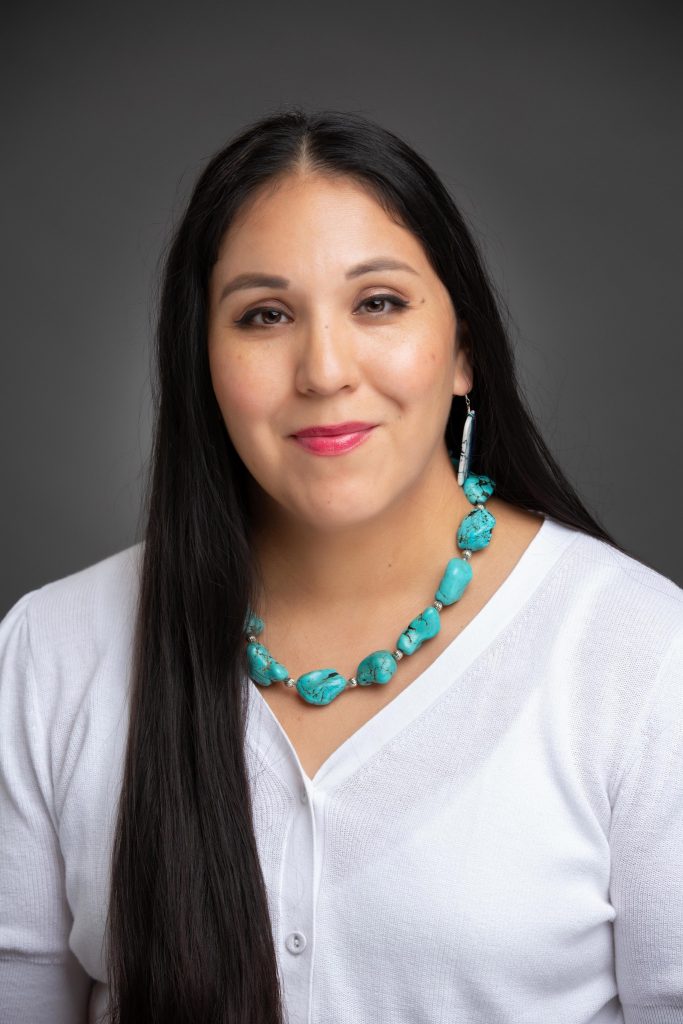
Margaret Ellis, First Nations Graduate Assistant, Wisconsin Sea Grant. Submitted photo.

Margaret Ellis is the latest person to fill the First Nations Graduate Assistantship with Wisconsin Sea Grant and the University of Wisconsin-Green Bay’s Cofrin Center for Biodiversity. Ellis has all the qualifications that look good on paper, plus others that are just as meaningful.

Ellis has a master’s in global Indigenous nations studies with an environmental focus from the University of Kansas and is working toward a Ph.D. in education at UW-Green Bay in First Nations entrepreneurial and small business operations.

“I have the skills; I have the knowledge. My master’s degree was years ago, but you know, I’ve continued to live my life in a certain way that reflects a responsibility to earth and water,” Ellis said.

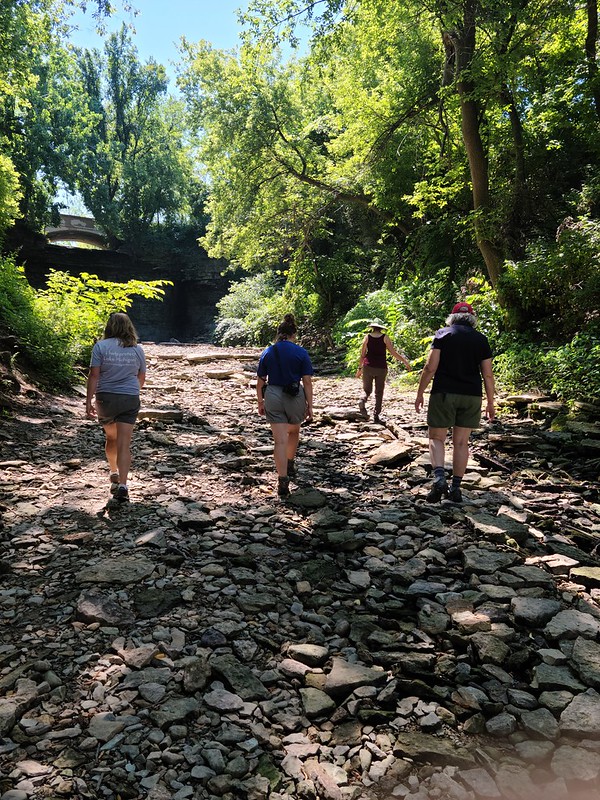
She also has connections to the Wequiock Creek Natural Area, a 76-acre property with forests, wetlands and prairie she will work on along the lower bay shore area of Green Bay. The area is being restored and is culturally significant to the Oneida, Potawatomi, Ho-Chunk and Menominee nations. Ellis, a member of the Oneida Nation, has been visiting Wequiock Creek since she was a child.

“It was a free place to go and it was beautiful,” she said. “There’s a little waterfall there and so my family would always go there to picnic or just walk around. I was excited to find that connection to the project. I want to bring a voice back to that land and reconnect those nations with the Wequiock area.”

In addition to continuing the tradition of organizing a spring tobacco blessing, Ellis will be helping the Cofrin Center to develop interpretive signage and plant signage featuring Indigenous viewpoints and language. “It’s really about supporting restoration efforts for the natural area and ensuring that the Indigenous knowledge and voice are represented by all the nations that once used the land,” she said.

Wisconsin Sea Grant staff members walk the dry bed of Wequiock Creek. Image credit: Marie Zhuikov, Wisconsin Sea Grant

In between her degrees, Ellis co-founded Kenco Tribal Marketing Initiative, a full-service marketing and procurement agency serving tribal businesses, plus she owns Mirax, LLC, an apparel business for nonprofits and Native nations. For her Ph.D. dissertation research, she is building off this to create a small business model that is based on the Oneida Thanksgiving Address. Ellis explained that the address gives thanks to all the elements that are on Earth and in the cosmos – water, the sun, plants and the animals. “I want to support small businesses in creating something that keeps those elements in mind. It’s all about sustainability and conscious consumerism,” Ellis said.

Through her business success, academic achievements, and community grassroots efforts Ellis achieved the National Center for American Indian Enterprise Development 40 under 40 Award, which recognizes Native American citizens for outstanding leadership and community contributions.

Julia Noordyk, Wisconsin Sea Grant water quality and coastal communities specialist, is Ellis’s supervisor. She’s thrilled that Ellis accepted the position.

“Margaret is such an impressive person. She has a lot of positive energy that she’s willing to share. She’s determined to bring the voices of Indigenous women to the table and integrate business practices that protect water resources. I am hopeful that through this position, Sea Grant can help support her academic and professional goals,” Noordyk said.

Ellis recently posted an announcement about her Sea Grant graduate assistantship on social media. She said, “The post just went crazy! I had so many shares, comments and likes. It made me think it’s a sign that I’m in the right place.”

The post Margaret Ellis: Bringing a voice back to the land first appeared on Wisconsin Sea Grant.

Original Article

News Releases | Wisconsin Sea Grant

News Releases | Wisconsin Sea Grant

https://www.seagrant.wisc.edu/news/margaret-ellis-bringing-a-voice-back-to-the-land/?utm_source=rss&utm_medium=rss&utm_campaign=margaret-ellis-bringing-a-voice-back-to-the-land

Marie Zhuikov

...DENSE FOG WITH VISIBILITIES NEAR A QUARTER MILE... Hazardous travel is possible this morning due to visibility of half a mile or less, with many places close to a quarter of a mile visibility. Allow extra time for your morning commute, slow down, and use headlights. Areas of dense fog will persist for a couple more hours, improving

Original Article

Current Watches, Warnings and Advisories for Brown (WIC009) Wisconsin Issued by the National Weather Service

Current Watches, Warnings and Advisories for Brown (WIC009) Wisconsin Issued by the National Weather Service

https://alerts.weather.gov/cap/wwacapget.php?x=WI1266421C7130.SpecialWeatherStatement.1266421CE6C4WI.GRBSPSGRB.3b77a733acfe35fc01f412b80021d336

w-nws.webmaster@noaa.gov

The U.S. Geological Survey (USGS) Office of International Programs team of Joel Groten (Upper Midwest Water Science Center), Molly Wood (Water Mission Area [WMA], on detail to OIP), and Brian McCallum (WMA) participated in a reconnaissance trip to Itaipu Binacional, Foz do Iguazu, Brazil and Paraguay, during March 25 – April 3, 2023.

Original Article

Upper Midwest Water Science Center

Upper Midwest Water Science Center

https://www.usgs.gov/centers/upper-midwest-water-science-center/news/usgs-office-international-programs-team?utm_source=comms&utm_medium=rss&utm_campaign=news
jvelkoverh@usgs.gov

...THUNDERSTORMS MOVING THROUGH THE FOX VALLEY... At 630am thunderstorms ere moving quickly across the Fox Valley. The strongest storms south of Appleton could produce some hail and gusty winds.

Original Article

Current Watches, Warnings and Advisories for Brown (WIC009) Wisconsin Issued by the National Weather Service

Current Watches, Warnings and Advisories for Brown (WIC009) Wisconsin Issued by the National Weather Service

https://alerts.weather.gov/cap/wwacapget.php?x=WI1266421C450C.SpecialWeatherStatement.1266421C7194WI.GRBSPSGRB.670272ffdeab82d92d5ab990673d0435

w-nws.webmaster@noaa.gov

...SCATTERED THUNDERSTORMS MOVING ACROSS CENTRAL AND PORTIONS OF NORTHEAST WISCONSIN EARLY THIS MORNING... At 1214 AM, a cluster of strong thunderstorms extended from Wautoma to Oshkosh to Sheboygan, moving northeast at 60 mph. The cluster of storms will move across Waupaca, Green Bay, the Fox Valley, Kewaunee, Manitowoc by 130 AM. The storms are expected to reach

Original Article

Current Watches, Warnings and Advisories for Brown (WIC009) Wisconsin Issued by the National Weather Service

Current Watches, Warnings and Advisories for Brown (WIC009) Wisconsin Issued by the National Weather Service

https://alerts.weather.gov/cap/wwacapget.php?x=WI1266421B5534.SpecialWeatherStatement.1266421B8734WI.GRBSPSGRB.c77a44b1fba293a01a7f5700f7bf5c43

w-nws.webmaster@noaa.gov

...SCATTERED THUNDERSTORMS EXPECTED ACROSS CENTRAL AND NORTHEAST WISCONSIN INTO EARLY WEDNESDAY MORNING... At 1055 PM, scattered thunderstorms were moving across central and northeast Wisconsin. Scattered thunderstorms will continue to move across or move into central and northeast Wisconsin into early Wednesday morning. Some of the strongest storms will move into

Original Article

Current Watches, Warnings and Advisories for Brown (WIC009) Wisconsin Issued by the National Weather Service

Current Watches, Warnings and Advisories for Brown (WIC009) Wisconsin Issued by the National Weather Service

https://alerts.weather.gov/cap/wwacapget.php?x=WI1266421B14C0.SpecialWeatherStatement.1266421B546CWI.GRBSPSGRB.3b77a733acfe35fc01f412b80021d336

w-nws.webmaster@noaa.gov

...SCATTERED THUNDERSTORMS EXPECTED ACROSS CENTRAL AND PORTIONS OF NORTHEAST WISCONSIN THIS EVENING... Scattered thunderstorms were now moving into central and east- central Wisconsin this evening. Scattered thunderstorms will continue to move into or develop across central and northeast Wisconsin through midnight. The scattered thunderstorms were moving

Original Article

Current Watches, Warnings and Advisories for Brown (WIC009) Wisconsin Issued by the National Weather Service

Current Watches, Warnings and Advisories for Brown (WIC009) Wisconsin Issued by the National Weather Service

https://alerts.weather.gov/cap/wwacapget.php?x=WI1266421ADF3C.SpecialWeatherStatement.1266421B0070WI.GRBSPSGRB.e640bd7c2e54aa963bb0f5d153a31c55

w-nws.webmaster@noaa.gov

Andrea Densham is a Senior Strategic Advisor to the Alliance for the Great Lakes.

Resources: Take Action


Lakes Chat Podcast

Subscribe to the Lakes Chat Podcast

Every Tuesday, the Alliance for the Great Lakes will chat with special guests about Great Lakes issues and dig into what it all means for you and your community. Subscribe to our Podcast on Apple Podcasts, Spotify, Amazon Music, and Deezer (more platforms coming soon).

Hear More Episodes

The post Plastic Pollution Season 2, Episode 14 appeared first on Alliance for the Great Lakes.

Original Article

News - Alliance for the Great Lakes

News - Alliance for the Great Lakes

https://greatlakes.org/2023/04/plastic-pollution-season-2-episode-14/

Michelle Farley

Frogs, salamanders, and fairy shrimp are appearing at a vernal pool near you

By Lester Graham, Michigan Radio

The Great Lakes News Collaborative includes Bridge Michigan; Circle of Blue; Great Lakes Now at Detroit Public Television; and Michigan Radio, Michigan’s NPR News Leader; who work together to bring audiences news and information about the impact of climate change, pollution, and aging infrastructure on the Great Lakes and drinking water.

Read Now at Great Lakes Now.

Original Article

Great Lakes Now

Great Lakes Now

https://www.greatlakesnow.org/2023/04/frogs-salamanders-fairy-shrimp-appearing-vernal-pool/

Michigan Radio

Sustainability and fighting climate change with University of Michigan President Santa Ono

Join Great Lakes Now Wednesday, Apr. 5 at 12 p.m. for a conversation on sustainability and fighting climate change with University of Michigan President Santa Ono.

Ono has put sustainability and fighting climate change among the top priorities for his administration. In addition to several programs and initiatives that are being expanded or developed, the university is serving as the lead institution for the University Climate Change Coaltion that convenes 23 leading North American universities to work toward climate action on campus, in communities, and at a global scale.

Read Now at Great Lakes Now.

Original Article

Great Lakes Now

Great Lakes Now

https://www.greatlakesnow.org/2023/04/sustainabilityfightingclimatechangeono/

GLN Editor

Habitat restoration can cost hundreds of thousands of dollars, years of time and the collaborative effort of engineers, scientists and designers. It may be better to just start from scratch. 

The post Creating habitat to help fish reproduce is costlier, but more effective than restoring it first appeared on Great Lakes Echo.

Original Article

Great Lakes Echo

Great Lakes Echo

http://greatlakesecho.org/2023/04/04/creating-habitat-to-help-fish-reproduce-is-costlier-but-more-effective-than-restoring-it/

Vladislava Sukhanovskaya

Great Lakes Moment: Decreasing Great Lakes ice cover has consequences

Great Lakes Moment is a monthly column written by Great Lakes Now Contributor John Hartig. Publishing the author’s views and assertions does not represent endorsement by Great Lakes Now or Detroit Public Television.

The National Oceanic and Atmospheric Administration (NOAA) reported that February 2023 was Earth’s fourth-warmest on record.

Read Now at Great Lakes Now.

Original Article

Great Lakes Now

Great Lakes Now

https://www.greatlakesnow.org/2023/04/great-lakes-moment-decreasing-great-lakes-ice-cover-consequences/

John Hartig

The groups behind Chicago’s planned overhaul of a key portion of the iconic Lakeshore Drive have revealed the latest renderings of a project that’s set to add much-needed protective barriers and green space along the city’s Lake Michigan shoreline. Read and hear the full story by Archinect.


Original Article

Great Lakes Commission

Great Lakes Commission

https://www.glc.org/dailynews/20230403-chicaco-lakefront-project

Jill Estrada

The Canadian Environmental Law Association is giving the federal government a thumbs-up for moving ahead with a Winnipeg-based special agency to oversee the protection of the country’s fresh-water supply. The association “supports the federal investment in advancing science and knowledge on fresh water, and the distribution of those funds to a range of high-priority watersheds across the country, including the Great Lakes.” Read the full story by the Thunder Bay Chronicle Journal.


Original Article

Great Lakes Commission

Great Lakes Commission

https://www.glc.org/dailynews/20230403-winnipeg

Jill Estrada

A new study by researchers at Northwestern University shows that people who live in neighborhoods along Chicago’s interstates — particularly I-290, I-90 and I-94 — and in communities directly next to Lake Michigan are exposed to more air pollution than residents in the rest of the city. Read the full story by WTTW -TV – Chicago, IL.


Original Article

Great Lakes Commission

Great Lakes Commission

https://www.glc.org/dailynews/20230403-air-pollution

Jill Estrada

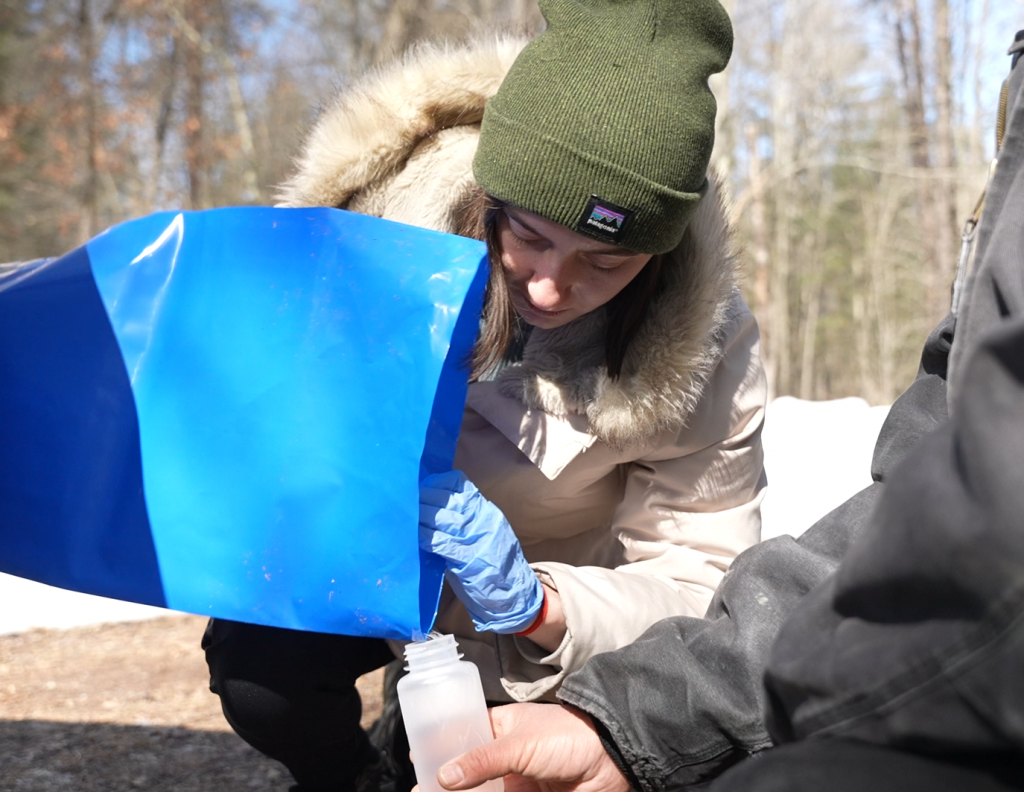
Eve Muslich, University of Wisconsin-Madison, pours maple sap from a collecting bag into a bottle for testing for PFAS. Image credit: Bonnie Willison, Wisconsin Sea Grant

April 3, 2023
By Marie Zhuikov

When Jonathan Gilbert, director of biological services with the Great Lakes Indian Fish and Wildlife Commission, received a report about levels of PFAS (per- and poly-fluoroalkyl substances) in wolves taken during the 2021 hunting season in Wisconsin, he was flummoxed. The scientific report contained terms and measurements that he, even as a biologist, didn’t understand. Gilbert’s quest for answers led to a larger project that is testing maple syrup, walleyes and lake water for PFAS in areas of the Midwest where Ojibwe tribal members harvest food.

During the wolf season, hunters volunteered their wolf remains to GLIFWC for PFAS testing. Gilbert said about 40% of the wolves had detectable levels of these chemicals. He was given Gavin Dehnert’s name as someone who could help answer his questions about the PFAS report. Dehnert, an emerging contaminants scientist, specializes in PFAS. Dehnert works for Wisconsin Sea Grant, a sister agency to the University of Wisconsin Water Resources Institute (WRI).

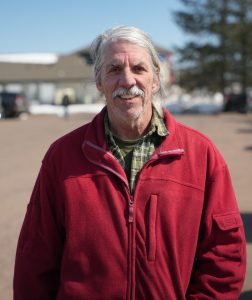
Jonathan Gilbert, Great Lakes Indian Fish and Wildlife Commission. Image credit: Bonnie Willison, Wisconsin Sea Grant

“So, I called him up and we had a nice conversation and he answered all my questions and educated me quite a bit on this,” Gilbert said.

Gilbert needed to present the wolf data to the Voigt Intertribal Task Force – a group composed of 10 of the 11 Ojibwe tribes that harvest from Ceded Territories in parts of Minnesota, Wisconsin and Michigan. The task force ensures safe harvest limits and is advised by GLIFWC. Gilbert invited Dehnert to attend the meeting.

Dehnert said, “We spent probably two to three hours just listening to the questions they had, concerns they had – big questions they were really hoping to answer.” Those questions involved PFAS levels in fish, wild rice, and maple syrup and other things tribal members harvest on a regular basis.

“Gavin kept saying, ‘Well, we don’t know, we don’t know.’ But he took what he heard there, and he wrote up a grant proposal to test the waters in rice lakes and in walleye lakes, and to test the sap of maple trees. That’s exactly what the tribes were telling him they were really concerned about,” Gilbert said.

The three-year tribally driven project, “Quantifying PFAS bioaccumulation and health impacts on economically important plants and animals associated with aquatic ecosystems in Ceded Territories,” was recently funded by the U.S. Geological Survey’s Water Resources Research Act Program, the same program through which WRI is funded.

The project has three goals: 1) Assess aquatic environments for PFAS contamination in the Ceded Territories, 2) Determine the accumulation of PFAS in different plants and animals and 3) Understand the health impacts from PFAS exposure. In addition to Dehnert and Gilbert, the project involves Emily Cornelius Ruhs with the University of Chicago, Sean Strom with the Wisconsin Department of Natural Resources, and Christine Custer and Robert Flynn with USGS.

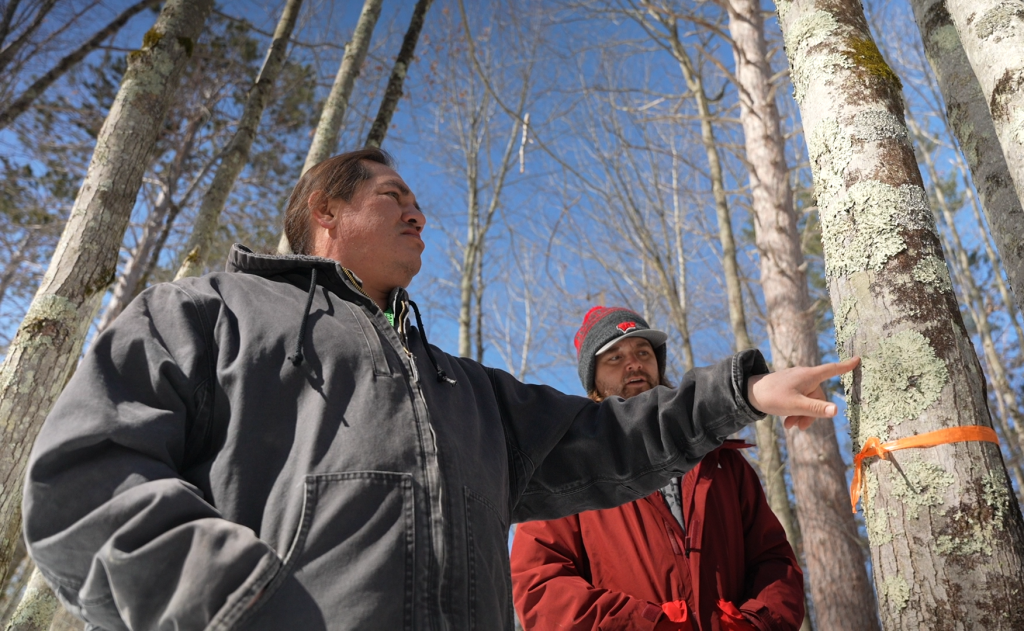
“Zhewaab” Reggie Cadotte, Native American Studies Faculty and Cultural Coordinator, Lac Courte Orielles Ojibwe University, and Gavin Dehnert, Wisconsin Sea Grant, inspect a maple tree for sap sampling on Lac Courte Orielles tribal land in northern Wisconsin. Image credit: Bonnie Willison, Wisconsin Sea Grant

Dehnert said that part one of the project will explore lakes where there’s high harvests of walleye and other fish species and wild rice in Ceded Territories. Researchers will look for the presence of PFAS and determine the levels.

Maple trees were tapped for maple sap collection on Lac Courte Orielles tribal lands to determine levels of PFAS. Image credit: Bonnie Willison, Wisconsin Sea Grant

Part two involves understanding the bioaccumulation of PFAS in harvestable goods. “If we know that it’s in the water source where these walleye or wild rice are living, we want to be able to have some sort of correlation between how much PFAS is in the lake water and then how much is then getting into the fish and wild rice,” Dehnert said. Gilbert stressed that they don’t know how much PFAS moves from the water into fish and plants. They will also test vats of maple sap harvested by tribal members.

Part three will look at impacts on organisms that live in the aquatic environments, focusing on tree swallows. This part, led by Ruhs, will explore how PFAS can impact the immune function of tree swallows in different life stages, from nestlings to adults. The swallows are considered an indicator species for contaminated water because they feed near their nesting area almost solely on aquatic insects. Researchers will take blood samples from the birds and look at white blood cell count and antibodies.

Part one will begin this spring with sampling of maple sap and lake water in 25 lakes.

Dehnert is looking forward to the project.

“It’s not focusing on just science for science. There’s a true actionable side to it. That was why we chose the plants and animals that were highly harvested by these tribes. If you’re finding high concentrations of PFAS in these types of harvestable goods, they are going to disproportionately impact the tribes because they are relying on them for their sustainability and food consumption. Sometimes in science people might look at different plants and animals that don’t really have a cultural tie. So that, to me, has always been why we got so excited about this project,” he said.

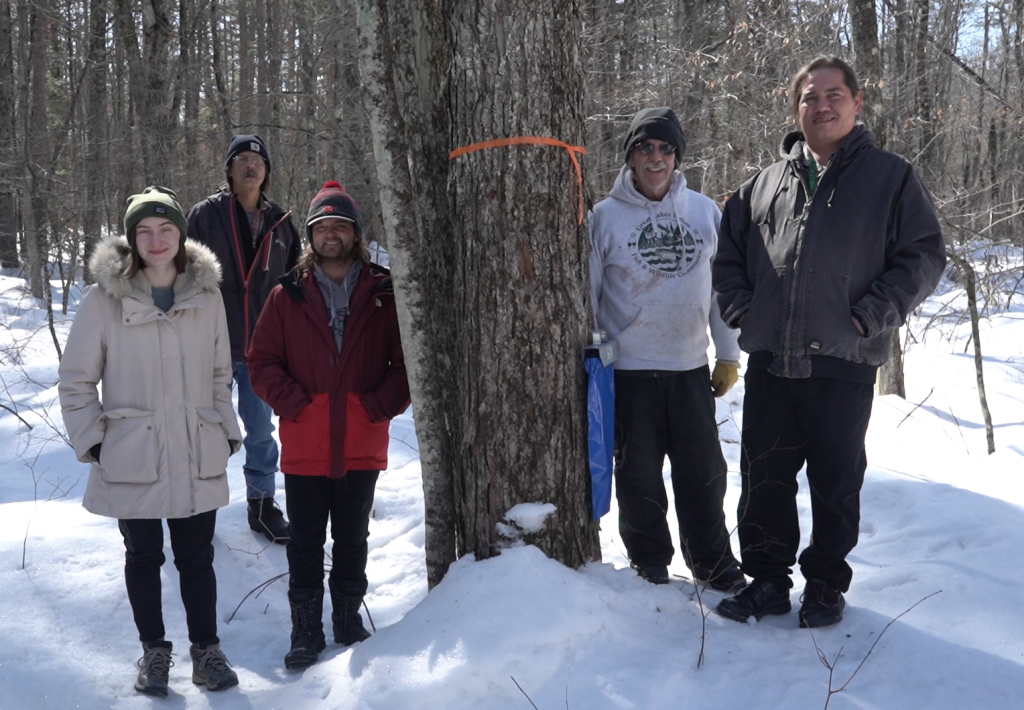
A research project team collects maple tree sap for PFAS sampling on Lac Courte Orielles tribal land in spring 2023. Pictured, left to right, are Eve Muslich, University of Wisconsin-Madison; Andre Bennett, Lac Courte Orielles Ojibwe University; Gavin Dehnert, Wisconsin Sea Grant; Jonathan Gilbert, Great Lakes Indian Fish and Wildlife Commission; and “Zhewaab” Reggie Cadotte, Lac Courte Orielles Ojibwe University. Image credit: Bonnie Willison, Wisconsin Sea Grant
The post New project tests Ceded Territories for PFAS at request of tribes first appeared on WRI.

Original Article

News Release | WRI

News Release | WRI

https://www.wri.wisc.edu/news/new-project-tests-ceded-territories-for-pfas-at-request-of-tribes/?utm_source=rss&utm_medium=rss&utm_campaign=new-project-tests-ceded-territories-for-pfas-at-request-of-tribes

Marie Zhuikov