New title brings new responsibilities
2020-05-06
Group home supervisor is an essential worker
Great Lakes Echo
http://greatlakesecho.org/2020/05/06/new-title-brings-new-responsibilities/
Great Lakes Echo
http://greatlakesecho.org/2020/05/06/new-title-brings-new-responsibilities/
National Park Service rangers issued citations Sunday to stop contractors working on repairs to seawalls along the Lake Michigan shoreline in Odgen Dunes, Indiana. The Park Service said the contracts had not received necessary permits for the construction. Read the full story by The Times of Northwest Indiana.
Great Lakes Commission
https://www.glc.org/dailynews/20200506-nps-odgen
You searched for flood - The Press
You searched for flood - The Press
https://gopresstimes.com/2020/05/06/chief-litton-gives-update-on-covid-19-city-flooding/
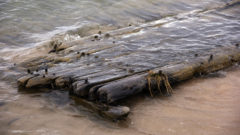
LUDINGTON, Mich. (AP) — A portion of a shipwreck was recently discovered on a Lake Michigan beach near Ludington State Park and historians are working to identify the wreckage.
The fragment was revealed by waves amid high water levels on the Great Lakes. It was spotted by people walking on the beach, the Ludington Daily News reported.
Great Lakes Now
https://www.greatlakesnow.org/2020/05/shipwreck-fragment-emerges-along-lake-michigan-beach/
Great Lakes Echo
http://greatlakesecho.org/2020/05/06/online-grocery-shopping-is-a-coronavirus-legacy/
|
|||||||||||||||||
|
|||||||||||||||||
|
Blog – Freshwater Future
https://freshwaterfuture.org/uncategorized/freshwater-weekly-may-5-2020/

As the author of Great Lakes Now’s Collection of Lesson Plans, educational consultant Gary Abud Jr. is now providing more support for parents, teachers and caregivers who want to incorporate Great Lakes learning into their time with children and students. His series of writings can be found HERE along with the lesson plans and a Virtual Field Trip.
Great Lakes Now
https://www.greatlakesnow.org/2020/05/great-lakes-learning-younger-learners-2/
 Information provided by Melanie Perello, Minnesota Department of Natural Resources
CHAOS has come to Lake Superior. However, it’s organized chaos, so that’s a good thing.
CHAOS stands for the Coastal Hazards of Superior. The group, organized by the Coastal programs and Sea Grant programs in Minnesota and Wisconsin, the National Oceanic and Atmospheric Administration Office for Coastal Management and the Lake Superior National Estuarine Research Reserve, is a community of practice for sharing knowledge and resources about natural hazards that affect Lake Superior coastal communities in Minnesota and Wisconsin.
It provides an opportunity for local community leaders, managers, researchers and communicators to engage over concerns about coastal hazards across western Lake Superior. Recent storms, flooding and shoreline erosion have strained local communities, making CHAOS’ goal of building collaborations among groups impacted by these hazards even more important.
Membership is free and open to all. To join or for more information, contact Melanie Perello at Minnesota’s Lake Superior Coastal Program: melanie.perello@state.mn.us.
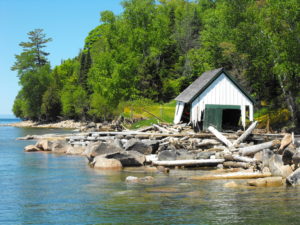
Storm damage to a boathouse on Devil’s Island in the Apostle Islands National Lakeshore. Image by Gene Clark, Wisconsin Sea Grant.
The group hosted its first event on April 29, a webinar attended by more than 70 participants, featuring presentations on Lake Superior water levels and lakeshore flood modeling and forecasting. Deanna Apps, a physical scientist at the U.S. Army Corps of Engineers Detroit District, explained historical and recent lake levels, the drivers of water level fluctuations and how the Army Corps forecasts future conditions.
Joseph Moore, warning coordination meteorologist at the National Weather Service-Duluth Office, highlighted efforts to model and forecast lakeshore flooding events and explained the need for reports of lakeshore flooding storm damages.
Following the presentations, webinar participants had the opportunity to network in small breakout groups to discuss actions they will take in response to the information shared.
A recording of the presentations is being edited and will soon be shared on the Wisconsin Sea Grant’s YouTube Channel.
Apps highlighted several resources available from the U.S. Army Corps of Engineers:
Water Level Forecasts: https://www.lre.usace.army.mil/Missions/Great-Lakes-Information/Great-Lakes-Water-Levels/Water-Level-Forecast/
Water Level Observations: https://www.lre.usace.army.mil/Missions/Great-Lakes-Information/Great-Lakes-Information-2/Water-Level-Data/
Basin Conditions & Great Lakes Information: https://www.lre.usace.army.mil/Missions/Great-Lakes-Information/Great-Lakes-Information-2/Basin-Conditions/
Living on the Coast: https://publications.aqua.wisc.edu/product/living-on-the-coast-protecting-investments-in-shore-property-on-the-great-lakes/
Moore highlighted the importance of observational data for lakeshore flood modeling and projections. The NWS seeks reports of damages attributed to recent and past storm events — cost estimates and photos or videos are extremely valuable. These reports are useful not only for current modeling but will become part of the official storm record and help improve future modeling.
To learn more about efforts to model lakeshore flooding: https://www.weather.gov/dlh/lakeshoreflooding
Want to help? Anyone can make a report using this online form: https://docs.google.com/forms/d/e/1FAIpQLSd87gub2R_vCVCZkZ5GaPC88LIFfVhd0d7paSXjRbiD5GCZ7A/viewform
With projections of higher water levels on Lake Superior this summer, these additional resources may be helpful.
Blog – Wisconsin Sea Grant
https://www.seagrant.wisc.edu/blog/new-community-of-practice-focuses-on-western-lake-superior-hazards/
The Detroit District of the US Army Corps of Engineers is urging those living along the Great Lakes shoreline to prepare for high and possibly record-breaking water levels this spring. Read the full story by the Manistee News Advocate.
Great Lakes Commission
https://www.glc.org/dailynews/20200505-levels
Sightings of river otters along western Lake Erie at Ottawa National Wildlife Refuge in Ohio and Point Pelee National Park in Leamington, Ontario, and evidence of a return of river otter to Toronto Harbour, raise the prospects that they just might return one day to the Detroit River too. Read the full story by Great Lakes Now.
Great Lakes Commission
https://www.glc.org/dailynews/20200505-otters
We’re sharing four ways that you can adapt Great Lakes Learning lessons and activities to engage younger learners with the Great Lakes.. Read the full story by the Duluth News-Tribune.
Great Lakes Commission
https://www.glc.org/dailynews/20200505-GL-learning
The U.S. Environmental Protection Agency said Monday it has approved removing another official “impairment” for the St. Louis River Estuary and Twin Ports harbor. Read the full story by the Duluth News-Tribune.
Great Lakes Commission
https://www.glc.org/dailynews/20200505-twin-ports
Solutions to the Erie Shoreline flood and erosion problems will have to be solved with resilience, not in-water structures, consultant Peter Zuzek pointed out at Monday night’s meeting of the Chatham-Kent Council in Ontario. Read the full story by the Chatham Voice.
Great Lakes Commission
https://www.glc.org/dailynews/20200505-erosion
Andrew Reeves traveled across 10 states, interviewing and shadowing countless experts, to get the truth behind the Asian carp invasion. Sifting through his findings, he published a 384-page book, “Overrun: Dispatches from the Asian Carp Crisis,” in March 2019. Read the full story by BU News Service.
Great Lakes Commission
https://www.glc.org/dailynews/20200505-carp
Our recovery from this pandemic must include a sincere investment in water systems, including assuring access to reliable, affordable water in all households, strengthening underfunded and struggling water utilities, and modernizing the aging pipes, pumps and plants that deliver it. Read the full story by Crain’s Chicago Business.
Great Lakes Commission
https://www.glc.org/dailynews/20200505-COVID
Thirty five million people get their drinking water from one of the Great Lakes. But with rising temperatures, more rainfall and more nutrients running into the water, conditions become perfect for algae growth. So, what’s the prognosis for drinking water near the Great Lakes? Read the full story by WORT – Madison, WI.
Great Lakes Commission
https://www.glc.org/dailynews/20200505-drinking-water
A new study shows that hundreds of tons of plastic are building at the bottom of the Great Lakes and Lake Erie alone has about 380 tons of plastic.gain. Read the full story by WROC-TV – Rochester, NY.
Great Lakes Commission
https://www.glc.org/dailynews/20200505-plastic
Great Lakes Echo
http://greatlakesecho.org/2020/05/05/curbside-service-pet-supply-deliveries-and-video-adoption-now-part-of-animal-care/
As the author of Great Lakes Now’s Collection of Lesson Plans, educational consultant Gary Abud Jr. is now providing more support for parents, teachers and caregivers who want to incorporate Great Lakes learning into their time with children and students. His series of writings can be found HERE along with the lesson plans and a Virtual Field Trip.
Great Lakes Now
https://www.greatlakesnow.org/2020/05/great-lakes-learning-younger-learners/
Great Lakes Echo
http://greatlakesecho.org/2020/05/04/an-essential-worker-at-the-family-dollar/
A pair of endangered piping plovers whose Montrose Beach nest sparked fierce debate last year between conservationists and music fans, leading to the cancelation of a popular lakefront festival, have returned to nest once again. Read the full story by the Chicago Sun-Times.
Great Lakes Commission
https://www.glc.org/dailynews/20200504-plover
The Great Lakes Commission is calling upon Congress to remember the Great Lakes region “in any economic stimulus response to the devastating coronavirus pandemic.” Read the full story by The Toledo Blade.
Great Lakes Commission
https://www.glc.org/dailynews/20200504-commission
Three property owners in Porter, Indiana, who claim their holdings include a private beach on Lake Michigan are challenging a new state law that explicitly asserts state ownership of the Lake Michigan shoreline. Read the full story by the Times of Northwest Indiana.
Great Lakes Commission
https://www.glc.org/dailynews/20200504-shoreline
Heavy rain undermined a Kenosha, Wisconsin, construction site, causing a rupture to a sewer pipe and the bypass of nearly 2 million gallons of sanitary sewage into the storm water system and ultimately into Lake Michigan. Read the full story by the Kenosha News.
Great Lakes Commission
https://www.glc.org/dailynews/20200504-sewer
As the energy utility company Northern Indiana Public Service Company prepares to close its Michigan City Generating Station, a coalition of residents and environmental groups are calling on the company to do more to protect their health and the environment. Read the full story by the Times of Northwest Indiana.
Great Lakes Commission
https://www.glc.org/dailynews/20200504-nipsco
As April ends, Lake Michigan, Lake Huron, Lake Erie, and Lake St. Clair will all average out at new April record high water levels. Read the full story by MLive.
Great Lakes Commission
https://www.glc.org/dailynews/20200504-record
With Great Lakes and river water levels projected to be higher than last year, the city of Detroit is underway on a $2 million dam project to protect the Jefferson-Chalmers neighborhood ravaged by flooding last year. Read the full story by WJBK-TV – Detroit, MI.
Great Lakes Commission
https://www.glc.org/dailynews/20200504-dam
The area proposed for a wind energy project in Lake Erie offshore of Cleveland, Ohio, would be located in the middle of a major migratory pathway for wildlife, prompting concerns from environmentalists about the impacts of approval. Read the full story by Belt Magazine.
Great Lakes Commission
https://www.glc.org/dailynews/20200504-wind
There is only a 5% chance that the water level of Lake Ontario will rise high enough this year to cause significant flooding in Niagara County, New York. Read the full story by The Buffalo News.
Great Lakes Commission
https://www.glc.org/dailynews/20200504-flood
Marina officials in Indiana along the Lake Michigan shoreline said that while some aspects of their operations have been impacted by the COVID-19 virus, boaters have been respectful of social distancing mandates as the season gets under way. Read the full story by The Post-Tribune.
Great Lakes Commission
https://www.glc.org/dailynews/20200504-marina
Waves from Lake Michigan have washed away a section of pavement in a Northwest Indiana town, threatening utility lines and nearby homes. Read the full story by the Associated Press.
Great Lakes Commission
https://www.glc.org/dailynews/20200504-waves

So many fantastic plants and animals call the Great Lakes their HOMES. Their habitats are in or near the Great Lakes because that’s where they find the food, water, and shelter they need.
In this lesson, your child will choose a Great Lakes creature to learn more about – including what it eats and what animal eats it. Then, they’ll diagram a food chain. Students will see how the plants and animals that live in and around the Great Lakes are connected.
This activity will take between 30 minutes and an hour.
You’ll need:
Watch the video below to learn about food webs.
Ask your kids: What foods do you or your pet eat? Is it mostly plants or animals? What about the animals you see out your window or when visiting a Great Lakes habitat. Can you make a simple food chain for those creatures?
Parents: Take a photo of your Great Lakes food chain or food web, and share it on social media. Tag us in your creations, and we may share it with others!
Want to learn more? Check out these resources!
Find more Great Lakes lessons at H.O.M.E.School.
The post H.O.M.E.School Week 5: Food Chains & Food Webs appeared first on Alliance for the Great Lakes.
News – Alliance for the Great Lakes
News – Alliance for the Great Lakes
https://greatlakes.org/2020/05/homeschool-food-webs/
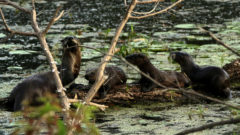
Great Lakes Moment is a monthly column written by Great Lakes Now Contributor John Hartig. Publishing the author’s views and assertions does not represent endorsement by Great Lakes Now or Detroit Public Television.
Most people know river otters from zoos or YouTube videos as endearing playful creatures that can put a smile on anyone’s face.
Great Lakes Now
https://www.greatlakesnow.org/2020/05/river-otters-western-lake-erie/
Wisconsin Beach Health - Brown County
Wisconsin Beach Health - Brown County
http://www.wibeaches.us/apex/f?p=181:27
Wisconsin Beach Health - Brown County
Wisconsin Beach Health - Brown County
http://www.wibeaches.us/apex/f?p=181:27
Wisconsin Beach Health - Brown County
Wisconsin Beach Health - Brown County
http://www.wibeaches.us/apex/f?p=181:27
Wisconsin Beach Health - Brown County
Wisconsin Beach Health - Brown County
http://www.wibeaches.us/apex/f?p=181:27
Wisconsin Beach Health - Brown County
Wisconsin Beach Health - Brown County
http://www.wibeaches.us/apex/f?p=181:27
Great Lakes Echo
http://greatlakesecho.org/2020/05/04/life-skills-skateboarding-art-appreciation-relationship-mending/
Current Watches, Warnings and Advisories for Brown (WIC009) Wisconsin Issued by the National Weather Service
https://alerts.weather.gov/cap/wwacapget.php?x=WI125F4BD0C110.SpecialWeatherStatement.125F4BDD7E00WI.GRBSPSGRB.747e49cf925d473ecac83faa26316a44
Current Watches, Warnings and Advisories for Brown (WIC009) Wisconsin Issued by the National Weather Service
https://alerts.weather.gov/cap/wwacapget.php?x=WI125F4BCFACE4.SpecialWeatherStatement.125F4BD0D3D0WI.GRBSPSGRB.747e49cf925d473ecac83faa26316a44
Current Watches, Warnings and Advisories for Brown (WIC009) Wisconsin Issued by the National Weather Service
https://alerts.weather.gov/cap/wwacapget.php?x=WI125F4BCE4D54.SpecialWeatherStatement.125F4BCFC260WI.GRBSPSGRB.5cf3797acd1a901ac77b8d3d54bd6a7c
Current Watches, Warnings and Advisories for Brown (WIC009) Wisconsin Issued by the National Weather Service
https://alerts.weather.gov/cap/wwacapget.php?x=WI125F4BC21A48.SpecialWeatherStatement.125F4BCE3BC0WI.GRBSPSGRB.3b77a733acfe35fc01f412b80021d336
Current Watches, Warnings and Advisories for Brown (WIC009) Wisconsin Issued by the National Weather Service
https://alerts.weather.gov/cap/wwacapget.php?x=WI125F4BC05E24.SpecialWeatherStatement.125F4BC22DD0WI.GRBSPSGRB.3b77a733acfe35fc01f412b80021d336
Duluth, Minnesota, tourism leaders are ready for Minnesotans that may be looking for summer vacations close to home. Visit Duluth, the city’s tourism nonprofit, plans to use taglines like “Lake Superior: Big enough for everyone.” Read the full story by the Star Tribune.
Great Lakes Commission
https://www.glc.org/dailynews/20200501-duluth
Despite a delay, Emmet County, Michigan, is slated to open the Crooked River Lock later this month. The lock regulates water levels between the Crooked River and Crooked Lake, and is one passageway in the extended Inland Waterway connecting to Lake Huron. Read the full story by the Petoskey News-Review.
Great Lakes Commission
https://www.glc.org/dailynews/20200501-crooked-lock
As Ohio begins to open some businesses again, Lake Erie fishing guides will be back in operation. The guide operations will be taking customers fishing starting Friday, but only if the guides and their customers diligently follow the COVID-19 protocols mandated by Gov. Mike DeWine. Read the full story by Cleveland.com.
Great Lakes Commission
https://www.glc.org/dailynews/20200501-charter
This month, waves and high water levels unearthed two historic shipwrecks on the shores of Lake Michigan. Read the full story by Smithsonianmag.com.
Great Lakes Commission
https://www.glc.org/dailynews/20200501-shipwrecks
Beverly Shores, Indiana, looks to secure five million dollars in funding to mitigate erosion at Indiana Dunes National Park due to high water levels amid severe spring weather. Read the full story by The Times of Northwest Indiana.
Great Lakes Commission
https://www.glc.org/dailynews/20200501-indiana-shoreline
The municipality of Chatham-Kent, Ontario, is looking for public feedback when it comes to a highly-anticipated Lake Erie shoreline study. Read the full story by CTV News.
Great Lakes Commission
https://www.glc.org/dailynews/20200501-shoreline