...SLOW MOVING THUNDERSTORMS MAY PRODUCE FLOODING... .An upper level low pressure system will produce showers and thunderstorms at times as it moves slowly northeast from Iowa to Wisconsin. The storms will be moving very slowly, and produce torrential rain that could produce flooding of urban areas, small streams and basements.

Original Article

Current Watches, Warnings and Advisories for Brown (WIC009) Wisconsin Issued by the National Weather Service

Current Watches, Warnings and Advisories for Brown (WIC009) Wisconsin Issued by the National Weather Service

https://alerts.weather.gov/cap/wwacapget.php?x=WI125F5818279C.FloodWatch.125F58187D28WI.GRBFFAGRB.7a3878c2d76d9e5e39b138f2d0da3c78
w-nws.webmaster@noaa.gov

Quagga mussels are invasive shellfish that arrived in Utah in the boats of privately-owned watercraft trailered from the Great Lakes; Sgt. Krystal Tucker with the Dept. of Wildlife Resources Aquatic Invasive Species Operations discusses their program involving boat inspections for the mussels at some of the larger lakes. Read and listen to the full story by NPR.

Original Article

Great Lakes Commission

Great Lakes Commission

https://www.glc.org/dailynews/20200709-quagga-mussels

Patrick Canniff

Three Great Lakes freighters are headed for a very early layup this year and nearly 100 crew members and other personnel have been laid off after a shipping company announced it would idle some of its vessels due to an economic downturn. Read the full story by MLive.

Original Article

Great Lakes Commission

Great Lakes Commission

https://www.glc.org/dailynews/20200709-freighters

Patrick Canniff

The bridge company has made inquiries to the Michigan’s transportation department on what it would take to allow trucks carrying flammable, chemical or corrosive materials to cross the four-lane Windsor-Detroit bridge across the Detroit River. Read the full story by the Windsor Star.

Original Article

Great Lakes Commission

Great Lakes Commission

https://www.glc.org/dailynews/20200709-hazardous-transport

Patrick Canniff

A new study looked for PAHs in the sediments of 71 Great Lakes tributaries across six states. Results point to pollution sources coming from pavement dust from coal-tar sealed driveways and parking lots. Read the full story by Detroit Free Press.

Original Article

Great Lakes Commission

Great Lakes Commission

https://www.glc.org/dailynews/20200709-pahs-pollution

Patrick Canniff

A pilot project with Ohio Department of Natural Resource staff is using inexpensive sensor technology used in everyday products such as dishwashers and cell phones to help monitor water quality to improve the health and safety of Lake Erie. Read the full story by Water World.

Original Article

Great Lakes Commission

Great Lakes Commission

https://www.glc.org/dailynews/20200709-algal-blooms-erie

Patrick Canniff

In a model developed by National Oceanic and Atmospheric Administration (NOAA) and the Cooperative Institute for Great Lakes Research, Bigheaded carp were shown as a big threat to yellow perch if bighead and silver carp made it into Lake Huron’s Saginaw Bay. Read the full story by Great Lakes Echo.

Original Article

Great Lakes Commission

Great Lakes Commission

https://www.glc.org/dailynews/20200709-bighead-carp

Patrick Canniff

The Healing Our Waters – Great Lakes Coalition is providing $25,000 in ­­grants to community organizations working to assist those who have felt the myriad effects of COVID-19, specifically related to clean water.­

Grantees include Abiinooji-Aki Inc. in Hayward, Wis., the Flint Development Center in Flint, Mich., the Junction Coalition in Toledo, Ohio, True Skool in Milwaukee, Wis., and Milwaukee Water Commons in Milwaukee, Wis. Each will receive a $5,000 grant toward new and ongoing water equity work, particularly oriented around helping overcome challenges presented by COVID-19.

“We know that the COVID-19 pandemic has been disproportionately impacting low-income communities and communities of color, particularly Black and indigenous communities,” said Healing Our Waters – Great Lakes Coalition Director Laura Rubin. “Several of our member organizations serve communities that struggle with access to clean water and water-based recreation, water affordability, and water equity issues. We hope that these grants can help them continue to do this important work.”

“This grant will give Milwaukee Water Commons the capacity to implement new, crisis-specific technological and communications strategies to strengthen our coalitions and increase the capacity of our partners to work for water equity and justice, which is even more critical during this time of COVID-19 crisis and its disproportionate impact on communities of color,” said Milwaukee Water Commons Co-Executive Director Brenda Coley.

Water is so vital and most needed for all of eternity and beyond,” said MaryEllen Baker of Abiinooji-Aki Inc. “My body, mind and spirit is so touched with the thoughts of how many individuals, families, communities and countries we’ll be able to enlighten about life, water, and Mother Earth with the Women and Water Symposium this August.”

“We are TRUEly grateful for the BOLD doers out there and we are inspired more than ever. People are stepping up and working together in collective support, that’s #TRUEgiving, said Shalina S. Ali, co-executive director of TRUE Skool. “TRUE Skool has continued to engage our amazing youth and community network during these uncertain times and this investment helps with unforeseen adjustments. “

The list of grantees includes:

Abiinooji-Aki Inc: Founded in 1992, Abiinooji-Aki works to empower the Ojibwe Tribe in the northern Great Lakes. This grant will go toward the 4th Annual Women and Water Coming Together Symposium, August 2-6, bringing together women and men and providing them with Native American Teachings, Healing Rituals, Songs and Stories to educate the public on the natural order of things around life and water. The goal is personal empowerment and advocacy for long-term clean water solutions.

Flint Development Center: A project of the Flint Development Group, the Flint Development Center is a community space that provides the residents of Flint facilities to safely engage in recreational, social and cultural programs. The grant will go toward bolstering The Mckenzie Croom Flint Community Lab and The Flint Communications HUB, as well as daily food and water drives and community outreach and education.

Junction Coalition: Serving the diverse Junction neighborhood of Toledo, Ohio, the Junction Coalition is a network of dedicated individuals working toward equitable outcomes for Toledo’s residents. The grant will go toward preventing water shutoffs and increasing citizen participation in local cleanup efforts.

Milwaukee Water Commons: Rooted in connection and community collaboration, Milwaukee Water Commons promotes stewardship of, equitable access to and shared decision-making for our common waters. The grant will go toward communications efforts to support ongoing anti-racism work.

TRUE Skool: A grassroots art movement in Milwaukee, Wisc., TRUE Skool uses urban arts as a tool to engage youth in social justice and humanities education, community service, and civic engagement. This grant will go toward summer youth programs oriented toward environmental justice and water equity.

The post Great Lakes Coalition Awards $25,000 in COVID-19 Pandemic Emergency Assistance Grants to Frontline Groups appeared first on Healing Our Waters Coalition.

Original Article

Healing Our Waters Coalition

Healing Our Waters Coalition

https://healthylakes.org/great-lakes-coalition-awards-25000-in-covid-19-pandemic-emergency-assistance-grants-to-frontline-groups/

Pavan Vangipuram

Joint Press Release from Alliance for the Great Lakes, Freshwater Future, Michigan Environmental Council, Ohio Environmental Council

Toledo, OH (July 9, 2020) – This morning the National Oceanic and Atmospheric Administration (NOAA) and its partners released the 2020 Seasonal Forecast of Harmful Algal Blooms (HAB) for Lake Erie. NOAA predicted a bloom severity of 4.5 and could possibly range between 4 and 5.5. In 2015, the Governors of Ohio and Michigan, along with the Premier of Ontario, set a public goal of reducing nutrient pollution by 40% by 2025, with 2020 as a halfway interim goal of 20%. Today’s results show very plainly that little progress is being made, and we are very far off from achieving this goal. 

In response to today’s report, the Alliance for the Great Lakes, Freshwater Future, the Michigan Environmental Council, and the Ohio Environmental Council are calling on the Governors and the Premier to improve domestic action plans to provide a blueprint that the public can use to hold decision-makers accountable, not just a long list of best management practices. 

“Regardless of whether the severity is measured as a 6 or 7.5, when the algal blooms in western Lake Erie can be seen from space, it doesn’t take an expert to understand that this is becoming a crisis,” said Crystal M.C. Davis, Director of Policy and Strategic Engagement at the Alliance for the Great Lakes. “Efforts are not only falling short, we also don’t have a clear accounting of how or where we are in reaching the 20% reduction goal, or how we will get to the 40% reduction goal. Lists of best management practices are nice but leaders need to provide an accounting of progress and a plan of action so the public knows where things stand and how their money is being spent. The future of Lake Erie and our communities relies on it.”

Among the waterways in the Great Lakes region, western Lake Erie in particular has been plagued by an increase of HABs over the past decade. The toxins created by HABs pose serious health risks to humans and animals, the environment, and Lake Erie’s more than $15 billion economy that supports hundreds of thousands of jobs. Scientists believe that reducing the amount of runoff pollution will significantly reduce Lake Erie algal blooms and improve the lake’s health. Unfortunately, very few rules are currently in place to limit agricultural nutrient runoff, which remains the major contributor of HABs in Lake Erie.

HABs also threaten approximately 12 million people’s drinking water each year while also driving up water rates. This is of particular concern as the COVID-19 crisis deepens, and access to clean, safe, affordable water for drinking and hand-washing is more critical than ever. To make matters worse, the cost burden of HABs is often disproportionately placed on the rural and urban communities that sit at the bottom of these rivers and streams, and some have even experienced water shutoffs.

“Rural and urban communities’ drinking water rates are rising as a result of having to treat for harmful algal blooms,” said Kristy Meyer, Associate Director at Freshwater Future. “Rising water rates are causing people to have to make hard decisions between food on the table and tap water to drink and wash hands, something that is essential for public health. It is time community members impacted have a seat at the table to ensure comprehensive equitable solutions are being crafted as the region works to reduce harmful algal blooms in Lake Erie.”

“We understand that achieving the benchmarks is aspirational and difficult, but state leaders have clearly failed to meet the targets they voluntarily outlined years ago. We are especially concerned since the plans and strategies outlined  by state and provincial agencies double down on the same status quo methods that have led us to this point,” said Tom Zimnicki at the Michigan Environmental Council. “Moving forward state and provincial administrations owe it to residents and taxpayers to develop programs with real accountability and metrics to ensure water quality objectives are met. Otherwise, we will be writing this same statement in five years.”

“Harmful algal blooms continue to put Lake Erie and Ohio waterways at risk and threaten the quality and safety of our drinking water. We know that there is not one simple solution to address this critical, complex issue,” said Pete Bucher, Managing Director of Water Policy at the Ohio Environmental Council. “Ohio’s updated Domestic Action Plan and the H2Ohio program are important investments to improve Lake Erie water quality. We are committed to continuing to work with the DeWine administration and stakeholders to ensure these plans are sustainable, include accountability measures and involve diverse public engagement in order to achieve quantifiable water quality improvements.”  

###

Media Contact: Jennifer Caddick, (312) 445-9760, jcaddick@greatlakes.org

The post Great Lakes leaders react to NOAA’s 2020 Western Lake Erie Basin Harmful Algal Bloom Forecast appeared first on Alliance for the Great Lakes.

Original Article

News – Alliance for the Great Lakes

News – Alliance for the Great Lakes

https://greatlakes.org/2020/07/10983/

Jennifer Caddick

Unchanged Mission: Activists say a Nestle Great Lakes exit doesn’t resolve bottled water issue

Nestle might be selling its contentious Michigan bottled water brand, but water rights activists in the Great Lakes region aren’t so quick to let go of the issue.

Swiss-based Nestle recently announced it’s looking for buyers for its North America regional brands including Ice Mountain which has operated in Michigan since the early 2000’s.

Read Now at Great Lakes Now.

Original Article

Great Lakes Now

Great Lakes Now

https://www.greatlakesnow.org/2020/07/nestle-great-lakes-exit-bottled-water/

Gary Wilson

From crime boss and occasional visitor “Scarface” Al Capone to the Upper Peninsula’s own Public Enemy #1, John “Red” Hamilton, Up North has historic ties to organized crime and the baddies who used the area as a playground.

Original Article

Great Lakes Echo

Great Lakes Echo

http://greatlakesecho.org/2020/07/09/mobsters-in-the-vacationlands/

Eric Freedman

Four new projects focused on Wisconsin groundwater are underway on university campuses, as of July 1, as well as a continuing one. The work is funded by the University of Wisconsin Water Resources Institute (WRI).

“We look forward to the findings from this latest group of projects that address emerging issues,” said Jim Hurley, WRI director. “Each project advances our understanding of Wisconsin’s buried treasure, our groundwater.”

The projects will:

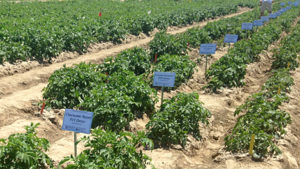
-Investigate in-season cover crops for reducing nitrate loss to groundwater below potatoes. Kevin Masarik at the University of Wisconsin-Stevens Point will lead the project. His colleague Jacob Prater on that campus will also participate in the exploration that will inter-seed the crops and assess the positive and/or negative interactions on potato yield, quality and ease of harvest.

Wisconsin is a major national potato producer and a WRI researcher will look at nutrients and groundwater needed for that cultivation. Photo by UW-Madison.

-Formulate a cost-function analysis of Wisconsin water utilities to place a value on groundwater. James Price is this investigator, based at the School of Freshwater Sciences, UW-Milwaukee.

-Conduct further research on the issue of arsenic in southeastern Wisconsin groundwater. Eric Stewart, bedrock geologist at UW-Madison, will correlate bedrock fold and fractures with the detection of this naturally occurring but carcinogenic chemical in drinking water.

-Provide insight into the sources of salinity associated with radium and strontium in the parts of the aquifer underlying eastern and northeastern Wisconsin. The study will provide an understanding of the movement of these contaminants to municipal wells. UW-Madison’s Matt Ginder-Vogel is the principal investigator and he has pulled onto the team Patrick Gorski and Sean Scott, both with the Wisconsin State Laboratory of Hygiene.

-As part of a project that kicked off in 2019, Sarah Vitale, and co-investigator J. Brian Mahoney at UW-Eau Claire and Anna Baker with the U.S. Geological Survey Upper Midwest Water Science Center, are investigating naturally occurring phosphorus in western Wisconsin surface and ground waters.

The post University-based research projects to examine Wisconsin’s “buried treasure:” Groundwater first appeared on WRI.

Original Article

News Release – WRI

News Release – WRI

https://www.wri.wisc.edu/news/university-based-research-projects-to-examine-wisconsins-buried-treasure-groundwater/

Moira Harrington

Tribes, advocacy groups sue EPA over rule narrowing scope of federal waterway protections

By Enrique Saenz, Indiana Environmental Reporter

A group of native American tribes and labor and environmental groups filed suit to stop the implementation of a new federal rule that limits the scope of waterways under federal protection.

The Quinault Indian Nation, Fond Du Lac Band of Lake Superior Chippewa, Menominee Indian Tribe of Wisconsin, the Bad River Band of Lake Superior Chippewa and Pascua Yaqui Tribe filed suit in Washington state against the U.S.

Read Now at Great Lakes Now.

Original Article

Great Lakes Now

Great Lakes Now

https://www.greatlakesnow.org/2020/07/tribes-advocacy-groups-sue-epa-federal-waterway-protections/

Indiana Environmental Reporter

Beginning in 1993, officials from the Federal Energy Regulatory Commission warned several times that the  spillways of Edenville Dam in Michigan were not capable of passing floodwaters during the largest theoretically possible flooding event. Read the full story by the Midland Daily News.

Original Article

Great Lakes Commission

Great Lakes Commission

https://www.glc.org/dailynews/20200708-edenville-dam

Jill Estrada

Along with the attorneys general of 13 other states and the District of Columbia, Michigan Attorney General Dana Nessel has joined a coalition urging President Donald Trump to rescind an order that accelerates infrastructure projects without full environmental scrutiny. Read the full story by Michigan Advance.

Original Article

Great Lakes Commission

Great Lakes Commission

https://www.glc.org/dailynews/20200708-dana-nessel

Jill Estrada

U.S. Coast Guard units throughout the Great Lakes reported their busiest Independence Day weekend in at least five years, conducting more than 100 search-and-rescue cases and saving or assisting more than 300 people throughout the region. Read the full story by The Plain Dealer.

Original Article

Great Lakes Commission

Great Lakes Commission

https://www.glc.org/dailynews/20200708-coast-guard

Jill Estrada

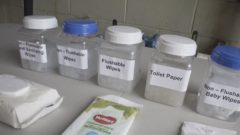
Massive buildups of wipes and hygiene products congealed with greases and oils can cause significant damage to sewer systems and recently prompted the Public Works Commissioner in southeast Michigan’s Macomb County to file a suit in circuit court against nine different manufacturers of so-called flushable wipes. Read the full story by Great Lakes Now.

Original Article

Great Lakes Commission

Great Lakes Commission

https://www.glc.org/dailynews/20200708-flushable-wipes

Jill Estrada

Multiple Michigan state agencies say they want to keep the public informed about what is going on with the Line 5 pipeline that runs under the Straits of Mackinac, so they have launched a website designed to provide information on proposed pipeline projects. Read the full story by MLive.

Original Article

Great Lakes Commission

Great Lakes Commission

https://www.glc.org/dailynews/20200708-line-5

Jill Estrada

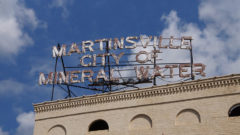
Contaminated Ground: Indiana’s City of Mineral Water faces specter of health threats

By Beth Edwards, Indiana Environmental Reporter

Once known as the City of Mineral Water for the healing power of its spring-fed spas, Martinsville, Indiana, now faces the specter of health threats caused by the contamination of its water supply.

For the past 20 years, slow-moving groundwater plumes contaminated with potentially dangerous chemicals have seeped into the city’s municipal well field and drinking water plant.

Read Now at Great Lakes Now.

Original Article

Great Lakes Now

Great Lakes Now

https://www.greatlakesnow.org/2020/07/contaminated-indiana-water-health-threats/

Indiana Environmental Reporter

...AREAS OF DENSE FOG EARLY THIS MORNING... Areas of dense fog, with visibilities as low as 1/4 mile, will continue across the area early this morning. The dense fog is expected to persist until about 7 am, followed by rapidly improving visibilities. Motorists traveling across the region can expect rapidly changing

Original Article

Current Watches, Warnings and Advisories for Brown (WIC009) Wisconsin Issued by the National Weather Service

Current Watches, Warnings and Advisories for Brown (WIC009) Wisconsin Issued by the National Weather Service

https://alerts.weather.gov/cap/wwacapget.php?x=WI125F5807D194.SpecialWeatherStatement.125F58082978WI.GRBSPSGRB.3b77a733acfe35fc01f412b80021d336

w-nws.webmaster@noaa.gov

...PATCHY DENSE FOG DEVELOPING EARLY THIS MORNING... Patchy dense fog, with visibilities as low as 1/4 mile, will continue to develop across the area early this morning. The dense fog is expected to continue through about 7 am, followed by rapidly improving visibilities. Motorists traveling across the region can expect rapidly changing

Original Article

Current Watches, Warnings and Advisories for Brown (WIC009) Wisconsin Issued by the National Weather Service

Current Watches, Warnings and Advisories for Brown (WIC009) Wisconsin Issued by the National Weather Service

https://alerts.weather.gov/cap/wwacapget.php?x=WI125F58076F24.SpecialWeatherStatement.125F58082978WI.GRBSPSGRB.3b77a733acfe35fc01f412b80021d336

w-nws.webmaster@noaa.gov

ANN ARBOR, MICH. (July 7, 2020)—The Healing Our Waters Great Lakes Coalition is strongly supporting the U.S. House Interior and Environment funding bill, which contains substantial increases in clean water priorities, including Great Lakes restoration, drinking water and wastewater infrastructure, and lead-reduction in drinking water. The House Appropriations Subcommittee on Interior, Environment, and Related Agencies today approved by voice vote its fiscal year 2021 bill. The bill’s modest year-over-year increases are bolstered substantially by more than $11 billion in emergency supplemental funding for clean water programs that were added to the bill.

“The Healing Our Waters-Great Lakes Coalition fully supports the House Interior and Environment funding bill,” said Laura Rubin, director of the Healing Our Waters-Great Lakes Coalition. “The bill substantially boosts federal investments in clean water priorities that will accelerate progress in restoring the Great Lakes, protecting our drinking water, improving access to affordable water, safeguarding public health, and bolstering the economy. The priorities in this bill have been long-term Coalition priorities, and we look forward to working with bipartisan members in the House to pass this legislation to better our environment and economy, and to protect our public health.”

The Interior and Environment funding bill, which was favorably reported by the subcommittee today is headed for full committee vote on Friday, includes:

Regular Appropriations:

  • Great Lakes Restoration Initiative: Up to $335 million — $15 million increase from Fiscal Year 2020 enacted (FY2020).
  • Clean Water State Revolving Fund: $1,638,826,000 — no increase from FY2020.
  • Drinking Water State Revolving Fund: $1,126,088,000 — no increase from FY2020.
  • Small and Disadvantaged Communities program: $26,000,000 — $592,000 increase from FY2020.
  • Lead testing in Schools program: $26,000,000 — no increase from FY2020.
  • Reducing Lead in Drinking Water program: $20,000,000 — $489,000 increase from FY2020.
  • Sec. 221 Sewer Overflow and Stormwater Reuse Municipal Grants: $56,700,000 — $28.7 million increase.

Additional Emergency Supplemental Funding:

  • Clean Water State Revolving Fund: $6,355,000,000
  • Drinking Water State Revolving Fund: $3,855,000,000
  • Lead Testing in Schools: $50,000,000
  • Reducing Lead in Drinking Water: $500,000,000
  • Sec. 221 Sewer Overflow and Stormwater Reuse Municipal Grants: $400,000,000

The clean water priorities in the bill have been long-standing priorities for the Healing Our Waters-Great Lakes Coalition. The bill includes funding for fiscal year 2021, which begins October 1, 2020, and ends September 30, 2021.

The post $11 Billion Boost for Drinking Water, Great Lakes in House Interior Bill appeared first on Healing Our Waters Coalition.

Original Article

Healing Our Waters Coalition

Healing Our Waters Coalition

https://healthylakes.org/11-billion-boost-for-drinking-water-great-lakes-in-house-interior-bill/

Pavan Vangipuram

I’m a memoir junkie and also a fan of cooking shows (though I don’t cook much myself—go figure). These interests dovetail in books written by chefs, food critics and others chronicling their personal journeys to and through the professional world of food.

Along these lines, I greatly enjoyed Amy Thielen’s 2017 book “Give a Girl a Knife,” her tale of growing up in the small town of Park Rapids, Minnesota, and, for the latter part of high school, the Twin Cities suburbs. After finishing college in St. Paul, she headed to New York for culinary school and spent several years in the trenches of high-end restaurants there, eventually returning to her home state and the even smaller town of Two Inlets.
More precisely, though: even during her New York years, Thielen and her artist husband bounced between Brooklyn and the Northwoods, where, over the years, they improved on a rustic home he had begun building. Eventually, they found their nomadic lifestyle too unwieldy—and the lure of home too strong—and committed full-time to Minnesota.

I first became aware of Thielen from her former Food Network program, The Heartland Table, and later stumbled upon her blog post about the joys of eelpout (aka burbot or lawyer, an often underrated fish) after finally getting to try some at a fish market in northern Minnesota.

Not only is Thielen a vivid and engaging narrator whose willingness to follow her passions has paid off, I appreciate her resolute pride in the traditions and flavors of the Upper Midwest. While there is some truth to the jokes about gloppy casseroles and Jello salads, the Midwest does have rich and varied food traditions of its own—including many surrounding the freshwater fish found here—that reflect the heritage of its people, from original inhabitants to immigrant populations.

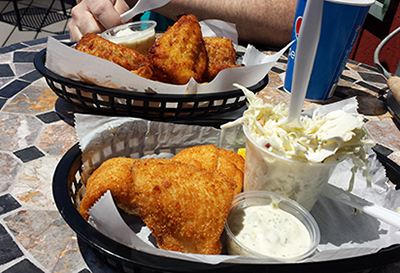
Baskets of crispy coated whitefish and eelpout on a summer’s day in northern Minnesota, 2019. (Photo: Jennifer Smith)

Here at Wisconsin Sea Grant, one of our efforts is the Eat Wisconsin Fish project, which encourages consumers to think local when they buy fish, whether that means wild-caught in the Great Lakes or sustainably farmed by Wisconsin fish farmers. (And, of course, we support those who like to catch their own fish!)

As someone who eats fish often and prefers it over many other proteins, I have found that Eat Wisconsin Fish has nudged me to shop more carefully and seek out Wisconsin (or other Great Lakes states’) products when possible. I even find that I now try more carefully to buy other local food products, too, from eggs to local coffee roasters. Especially in a volatile economy, I like knowing my choices are supporting regional companies and jobs.

In “Give a Girl a Knife,” Thielen offers a thoughtful approach to the flavors and landscapes of the Upper Midwest. Even better, she’s just plain entertaining to read. (For more from Amy Thielen, check out her James Beard award-winning cookbook, “The New Midwestern Table: 200 Heartland Recipes“, or find some of the recipes from her Food Network show online, like this one for Crispy Trout with Kitchen Butter Sauce.)

Happy reading and eating!

Original Article

Blog – Wisconsin Sea Grant

Blog – Wisconsin Sea Grant

https://www.seagrant.wisc.edu/blog/amy-thielens-give-a-girl-a-knife/

Jennifer Smith

...WIDELY SCATTERED THUNDERSTORMS THIS AFTERNOON... An upper level disturbance will produce widely scattered thunderstorms this afternoon through early evening. A few could produce very heavy rain and gusty winds.

Original Article

Current Watches, Warnings and Advisories for Brown (WIC009) Wisconsin Issued by the National Weather Service

Current Watches, Warnings and Advisories for Brown (WIC009) Wisconsin Issued by the National Weather Service

https://alerts.weather.gov/cap/wwacapget.php?x=WI125F57F9B3E8.SpecialWeatherStatement.125F57FA3B10WI.GRBSPSGRB.67e3eb939793527d055157bea4165466

w-nws.webmaster@noaa.gov

...WIDELY SCATTERED THUNDERSTORMS THIS AFTERNOON... An upper level disturbance will produce widely scattered thunderstorms this afternoon through early evening. A few could produce very heavy rain and gusty winds.

Original Article

Current Watches, Warnings and Advisories for Brown (WIC009) Wisconsin Issued by the National Weather Service

Current Watches, Warnings and Advisories for Brown (WIC009) Wisconsin Issued by the National Weather Service

https://alerts.weather.gov/cap/wwacapget.php?x=WI125F57F9B3E8.SpecialWeatherStatement.125F57FA3B10WI.GRBSPSGRB.4f170506e1f75e4d7de5ba3e21cd862a

w-nws.webmaster@noaa.gov

Slow Legislation: Flushable wipes become an issue in court and in law

Fatbergs — massive buildups of wipes and hygiene products congealed with greases and oils — make for a cringe-worthy topic. And the damage they cause to sewer systems can be a huge amount of trouble for the people in charge of those sewer systems.

That includes Candice Miller, the Public Works Commissioner in southeast Michigan’s Macomb County.

Read Now at Great Lakes Now.

Original Article

Great Lakes Now

Great Lakes Now

https://www.greatlakesnow.org/2020/07/legislation-flushable-wipes-court-law-fatberg/

Natasha Blakely

The Soo Locks had to be shut down for more than five hours early Sunday after a 736-foot Canadian freighter lost power as it approached the system’s big Poe Lock, striking the west center pier. According to officials from the U.S. Army Corps of Engineers, the impact damaged the freighter and the pier. Read the full story by MLive.

Original Article

Great Lakes Commission

Great Lakes Commission

https://www.glc.org/dailynews/20200707-soo-locks-shut-down

Samantha Tank

Scientists have predicted that warmer, wetter and wilder weather is coming and that this will be one of the greatest environmental challenges of the 21st Century. These high water levels are putting a human face on climate change in our region. Read the full story by Great Lakes Now.

Original Article

Great Lakes Commission

Great Lakes Commission

https://www.glc.org/dailynews/20200707-warmer-wetter-wilder-weather

Samantha Tank

...A LINE OF STRONG THUNDERSTORMS WILL AFFECT BROWN...KEWAUNEE... CALUMET...SOUTHEASTERN WINNEBAGO...EASTERN OUTAGAMIE AND MANITOWOC COUNTIES... At 1023 PM CDT, radar indicated strong thunderstorms were located along a line extending from 7 miles south of Pulaski to near Valders to 9 miles southwest of St Anna. Movement was east at 30 mph.

Original Article

Current Watches, Warnings and Advisories for Brown (WIC009) Wisconsin Issued by the National Weather Service

Current Watches, Warnings and Advisories for Brown (WIC009) Wisconsin Issued by the National Weather Service

https://alerts.weather.gov/cap/wwacapget.php?x=WI125F57F784EC.SpecialWeatherStatement.125F57F7A300WI.GRBSPSGRB.d65efe55088dd94d9c460efb2df919a6

w-nws.webmaster@noaa.gov

Great Lakes Moment: Warmer, wetter, wilder

Great Lakes Moment is a monthly column written by Great Lakes Now Contributor John Hartig. Publishing the author’s views and assertions does not represent endorsement by Great Lakes Now or Detroit Public Television.

Scientists have predicted that warmer, wetter and wilder weather is coming and that this will be one of the greatest environmental challenges of the 21st Century.

Read Now at Great Lakes Now.

Original Article

Great Lakes Now

Great Lakes Now

https://www.greatlakesnow.org/2020/07/water-levels-climate-change-warmer-wetter-wilder/

John Hartig

Reflecting on Juneteenth and the Environmental Movement

Crystal M.C. Davis, Alliance for the Great Lakes, Director for Policy and Strategic Engagement

July 19, 2020

The sounds of vibrant fireworks, smoky barbecues and patriotic parades make people across the nation excited about celebrating the 4th of July and our nation’s freedom from Great Britain’s rule. However for many African Americans, Juneteenth (June 19) is celebrated as Freedom Day.

On June 19, 1865, the Emancipation Proclamation, which had been issued over two years earlier on January 1, 1863, was read to enslaved African Americans in Texas who were among the last to learn of their freedom. In commemoration of that historic day, African Americans celebrate our freedom from the bondage of slavery and liberation as a people. Juneteenth is now getting attention like never before, precisely because it has never been clearer how far we have yet to go in the pursuit of true liberation.

The tragic incidents with George Floyd, Ahmaud Arbery and Christian Cooper gave the world a glimpse of the fears, risks and struggles that people of color endure daily. These fears are front and center – even today over 150 years later – and are felt regardless of socioeconomic status. The story of Christian Cooper, the black bird watcher who was threatened by a white woman in Central Park, especially resonates with me. Not only am I an unapologetically black woman – I’m also a proud environmentalist.

I have built a career around my belief that black liberation and environmental justice are intimately tied together. I am inspired and motivated by the unique ways that communities of color practice sustainability – making full meals of food waste and passing clothes down from one generation to the next. Sustainability was a cultural practice way before it was cool.

For me, the racist threats against Christian Cooper underscored two American realities: that racial minorities are often unwelcome in white-dominated spaces, and the unspoken understanding that the “outdoors” are really only for white people in the first place.

This realization isn’t new to me. I know the feeling of sitting in big rooms of environmentalists where I’m the only person of color, getting cold stares when I mention racial equity. I’ve had external colleagues insinuate that I am valued more for my ability to provide diversity to experts rather than as an expert myself. It is isolating. It is frustrating. But it’s also inspiring. Inspiring because my team of water warrior sisters – my beloved black women colleagues – understand that we’re in this together and insist on lifting each other up. Inspiring because my kids deserve a different world than the one I inherited and I am determined to deliver it for them.

As a first-generation college graduate from a working class family, I’m living my grandparents’ wildest dreams. Advocating for environmental justice is my passion and purpose. But fighting for change isn’t just the responsibility of people that look like me. We need everyone united in this movement for environmental and racial justice.

To my white colleagues: you’ve asked black and brown people to serve on your equity committees, to mentor you through authentic community engagement practices, and spend countless hours strategizing on ways to champion equity in environmental policies. We have obliged but now, right now, is your time to stand up and put actions behind thoughts and prayers. Equity should not be an afterthought.

For so many, the great outdoors is a symbol of freedom. On Juneteenth, Freedom Day, I am reminded that all are not free to share in nature’s gifts…free to bird watch, free to jog in their neighborhoods, free of worry about exorbitant bills for water that may or may not be safe to drink. And, I am reminded in my work each day that many are not free to enjoy the precious natural resources the Great Lakes offer. The Alliance for the Great Lakes’ leadership has designated Juneteenth as a paid annual holiday which will afford our staff the time to reflect and commit to advancing equity and justice. I’m grateful to work for an organization committed to using their privilege, voice and platforms to support marginalized communities. And, I also know that the work is not done.

As in years past, I will spend Juneteenth with family. We will dance to tunes created by our black musical legends, eat food that warms the soul, and dress the family in shirts that celebrate the pride of our people. While even being “okay” is tough these days, I still celebrate Juneteenth. I celebrate the resilience, ingenuity and brilliance of my people. I celebrate the opportunity to be a force in many movements fighting for change, understanding that they are all inextricably linked. I celebrate that the best is still yet to come.

Original Article

Blog – Freshwater Future

Blog – Freshwater Future

https://freshwaterfuture.org/uncategorized/environmental-justice-is-more-than-just-us-the-continued-quest-for-freedom/

Alexis Smith