PFAS News Roundup: MIT chemists designed a sensor that detects PFAS

Keep up with PFAS-related developments in the Great Lakes area with Great Lakes Now’s biweekly headline roundup.

Click on the headline to read the full story:


Indiana

A bill to secure industry use of toxic PFAS is dead – for now.

Read Now at Great Lakes Now.

Original Article

Great Lakes Now

Great Lakes Now

https://www.greatlakesnow.org/2024/03/pfas-news-roundup-mit-chemists-designed-a-sensor-that-detects-pfas/
Kathy Johnson, Great Lakes Now

Ontario weakens watershed protections (again) as natural resources minister gets new powers

By Fatima Syed, The Narwhal

The Great Lakes News Collaborative includes Bridge Michigan; Circle of Blue; Great Lakes Now at Detroit Public Television; Michigan Public, Michigan’s NPR News Leader; and The Narwhal who work together to bring audiences news and information about the impact of climate change, pollution, and aging infrastructure on the Great Lakes and drinking water.

Read Now at Great Lakes Now.

Original Article

Great Lakes Now

Great Lakes Now

https://www.greatlakesnow.org/2024/03/ontario-weakens-watershed-protections-again-as-natural-resources-minister-gets-new-powers/

The Narwhal

Discovery is part of first-ever study of viruses in healthy fish across the state.

Researchers at the University of Wisconsin-Madison have detected a suite of new viruses in five species of Wisconsin sport fish. Although none pose a threat to human health, one is a type of coronavirus usually associated with birds. It was found in healthy walleyes from Wisconsin lakes. The finding is part of a Wisconsin Sea Grant-funded study of the natural diversity of viruses (or virome) of fish in Wisconsin and is the first project of its kind in North America.

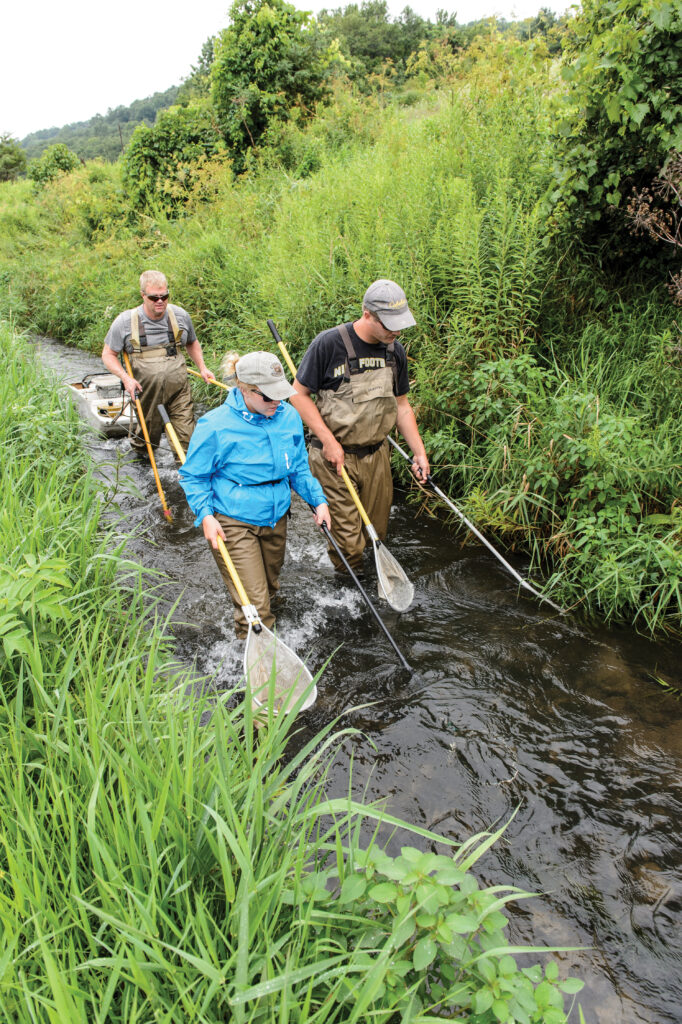
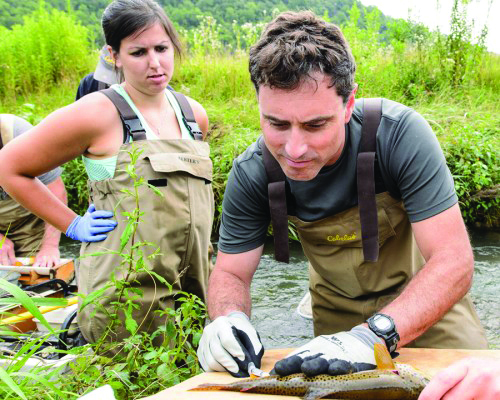
Tony Goldberg takes a blood sample in a non-lethal way from trout caught near Wauzeka, Wisconsin, while Whitney Theil observes. The fish was collected by DNR staff members to test for emerging diseases in the fish population. Image credit: Bryce Richter, UW-Madison

Tony Goldberg, a professor in the Department of Pathobiological Sciences, said his research group identified 19 viruses in blood samples from 103 Wisconsin bluegills, brown trout, lake sturgeon, northern pike and walleye. Seventeen of the 19 viruses were new to science. Among them was the first fish-associated coronavirus from the Gammacrononavirus genus, which differs from the type of virus that causes COVID. It was present in 11 out of 15 walleyes sampled by the Wisconsin Department of Natural Resources (DNR).

While the findings are novel, Goldberg stressed that anglers should not be worried. “None of these viruses can infect people. It’s not a risk for people to catch, handle and eat fish because of these viruses. There’s no evidence that these viruses are causing any problems. They may just be part of the natural ecosystem of these fish,” he said.

The results were recently published in the journal “Pathogens.” Of the different species of fish sampled, lake sturgeon blood contained the most viruses (97% of samples), with brown trout samples showing the least prevalence (6%).

Regarding the coronavirus found in walleye, Goldberg said, “There’s an important poultry disease called infectious bronchitis that is caused by a relative of this new virus, but this is the first example in fish and it is an honest-to-goodness coronavirus.”

This virus survey builds on previous Sea Grant-funded research in which Goldberg studied viral hemorrhagic septicemia in fish. The DNR took blood samples from healthy fish across Wisconsin to test for viral hemorrhagic septicemia antibodies. They saved the blood and used it for this current study on the viromes of Wisconsin fish.

The findings will aid fishery managers when they routinely test the health of fish about to be released into state lakes from hatcheries or for fish that are being shipped out of state.

Wisconsin Department of Natural Resources fisheries technicians collect trout from a creek near Viroqua, Wisconsin. Image credit: Bryce Richter, UW-Madison

“This is a huge problem for fisheries managers that happens all the time,” Goldberg said. “We recently had a case where there were thousands of muskies that were ready to be released and they came back with an unknown virus. So, do you release them? Do you just keep them there? Do you kill them all? Maybe there are viruses out there that are a normal part of the ecosystem and they just infect a lot of fish, but they don’t cause disease.” This study’s findings will help managers decide what is normal and what is concerning in terms of fish viruses.

Goldberg said that one thing anglers can do to ensure fish viruses aren’t spread is not to transport fish between water bodies “If you move a fish from one water body to another, you’re moving everything that lives on and in that fish, and potentially causing problems,” he said.

As a follow-up, Goldberg’s collaborators at the U.S. Fish and Wildlife Service have designed specific tests for the various viruses and the team will test a larger set of fish blood samples from around Wisconsin. They will map the viruses so that fisheries managers can tell what’s normal for a particular watershed and whether stocking can or should not proceed.

He also plans to develop a “Fish Get Sick, Too,” educational program. Goldberg said that fish are “animals, like anything else, and they get sick, too. I think if people were more aware of that, it might help reinforce some of the best-handling practices we do for catch-and-release fishing, some of the harvest practices, and food safety things we do.”

Other members of the research team include Charlotte Ford and Christopher Dunn with the UW-Madison Department of Pathobiological Sciences; and Eric Leis and Isaac Standish with the U.S. Fish and Wildlife Service, La Crosse Fish Health Center.

The post Wisconsin sport fish carry suite of new viruses first appeared on Wisconsin Sea Grant.

Original Article

News Releases | Wisconsin Sea Grant

News Releases | Wisconsin Sea Grant

https://www.seagrant.wisc.edu/news/wisconsin-sport-fish-carry-suite-of-new-viruses/

Marie Zhuikov

Every fish studied recently in two southeast Michigan watersheds contained at least one of a family of toxic and persistent health-threatening chemicals.

The chemicals - collectively known as per- and polyfluoroalkyl substances or PFAS - are found in some rivers, lakes, soils, drinking water, fish, cattle and crops.

The post High levels of toxic forever chemicals in Michigan fish alarm scientists first appeared on Great Lakes Echo.

Original Article

Great Lakes Echo

Great Lakes Echo

http://greatlakesecho.org/2024/03/26/high-levels-of-toxic-forever-chemicals-in-michigan-fish-alarm-scientists/

Guest Contributor

Waves of Change: Meet bird conservationist and migration counter Alison Vilag

Waves of Change is an online interview series highlighting the diverse faces and perspectives shaping the environmental justice movement throughout the Great Lakes region.

This month, we spoke with Alison Vilag, a bird conservationist and migration counter based in northern Michigan.

Listen to the full interview

She’s traveled all over the country and has helped document a loss of birds that scientists call staggering.

Read Now at Great Lakes Now.

Original Article

Great Lakes Now

Great Lakes Now

https://www.greatlakesnow.org/2024/03/waves-of-change-meet-bird-conservationist-and-migration-counter-alison-vilag/

Great Lakes Now

CHICAGO, IL (March 25, 2024) Last week on World Water Day, the Alliance for the Great Lakes, Ocean Conservancy, Illinois Environmental Council, and Loyola University scientists held a press conference with partners at the Museum of Science and Industry to discuss protecting the Great Lakes and waterways from the environmental and health risks of microfiber pollution. The Great Lakes provide drinking water for more than 30 million people and are home to diverse and increasingly threatened wildlife. However, the Great Lakes are in the midst of a plastic pollution crisis, with plastic waste increasingly accumulating in our waterways. To address this issue, Illinois lawmakers have introduced a bill that would require microfiber capture devices on all washing machines sold in Illinois by 2030.   

“What happens in Illinois impacts the ocean – whether through the Great Lakes, whose water flows through the St. Lawrence Seaway to the Atlantic, or through the Mississippi River flowing into the Gulf of Mexico. Microplastics can even be carried by evaporated water and spread through our weather systems around the world. Washing machines are a major contributor to plastic microfiber pollution, and Ocean Conservancy is proud to support this bill to stop microplastics at the source,” said Jeff Watters, Vice President, External Affairs at Ocean Conservancy. 

“For over 30 years, Alliance for the Great Lakes Adopt-a-Beach volunteers have been on the front lines of keeping litter off our beaches and out of the Great Lakes by removing over half a million pounds of litter from shorelines since 1991. Most of the litter collected is composed either partially or fully of plastic. The good news is that if we act now, we can stop the pollution before it makes its way into our waterways through simple washing machine filters like those used in dryers. Our dedicated volunteers shouldn’t be the only means to keep plastic pollution out of the Great Lakes. We need smart policies to reduce microplastic pollution, which is why we fully support Illinois House Bill 4269,” said Molly Flanagan, Chief Operating Officer & Vice President for Programs of the Alliance for the Great Lakes.  

“Our research group has been studying litter in our waterways for over 10 years. The vast majority of the trash we find is plastic, and increasingly, microfibers are the most common microplastic in our waterways. Preventing pollution at the source is critical; washing machine filters are a simple and cost-effective solution. This approach is important and can make meaningful improvements to reduce pollution,” said Dr. Tim Hoellein, Associate Professor, Loyola University, Director Aquatic Ecology Lab.  

Plastic microfibers that come from plastic-based textiles and clothing are of growing concern. Microfibers are the most prevalent form of microplastics in environmental samples and represent over 90% of microplastics ingested by marine animals.  In animals, ingestion of microfibers has been shown to reduce food consumption, reduce energy for growth, alter gene expression, and block digestive tracts

In many cases, microfibers that are shed from clothing during household and commercial laundering escape wastewater treatment plants (WWTPs) and flow with the discharge into our waterways. An existing technology, washing machine microfiber filters, have been shown to be a cost-effective solution that can capture up to 90% of microfibers from each load of laundry, leading to a significant reduction in microfibers in wastewater treatment plants. 

A fact sheet on microfibers can be found here.

Photos from the event can be found here.

### 

About Alliance for the Great Lakes 

The Alliance for the Great Lakes is a nonpartisan nonprofit working across the region to protect our most precious resource: the fresh, clean, and natural waters of the Great Lakes. For more information, visit greatlakes.org.  

About Ocean Conservancy   

Ocean Conservancy is working to protect the ocean from today’s greatest global challenges. Together with our partners, we create evidence-based solutions for a healthy ocean and the wildlife and communities that depend on it. For more information, visit oceanconservancy.org, or follow us on Facebook, Twitter or Instagram. 

Contact:

Don Carr, Media Director, Alliance for the Great Lakes, dcarr@greatlakes.org, +1 (651) 395-4270
Roya Fox, Communications Manager, Ocean Conservancy, rfox@oceanconservancy.org, +1 (206) 948-7874

Great Lakes Plastic Pollution

Plastic pollution is a serious problem for the Great Lakes. Learn more about plastic pollution and how to stop it.

Learn More

The post New Bill to Protect Great Lakes, Drinking Water from Microplastics Receives Support from Environmental Groups appeared first on Alliance for the Great Lakes.

Original Article

News - Alliance for the Great Lakes

News - Alliance for the Great Lakes

https://greatlakes.org/2024/03/new-bill-to-protect-great-lakes-drinking-water-from-microplastics-receives-support-from-environmental-groups/

Judy Freed

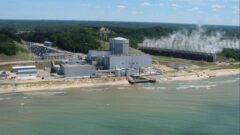
The owner of the decommissioned Palisades nuclear power plant on the shores of Lake Michigan about five miles south of South Haven, Michigan, is better known for decommissioning nuclear plants. Its endeavor to restart the plant is one that has never been attempted in the United States. Read the full story by Michigan Public.

Original Article

Great Lakes Commission

Great Lakes Commission

https://www.glc.org/dailynews/20240325-nuclear-plant-restart

James Polidori

Alongside the lack of ice coverage, unseasonable winter temperatures in the Great Lakes region are creating the conditions for the proliferation of invasive species, strain on the lakes’ natural, temperature-driven stratification process, and the rise of toxic algal blooms. Read the full story by the Daily Herald.

Original Article

Great Lakes Commission

Great Lakes Commission

https://www.glc.org/dailynews/20240325-climate-impacts

James Polidori

The regional grid operator that oversees electric reliability in 15 states, including nearly all of Michigan, recently released a series of proposed transmission projects aimed at stabilizing the power grid in the future as more renewables come online and coal plants retire. However, the up to $23 billion plan left out one notable project: an underwater cable across Lake Michigan connecting the lakeshore with eastern Wisconsin. Read the full story by Crain’s Grand Rapids Business.

Original Article

Great Lakes Commission

Great Lakes Commission

https://www.glc.org/dailynews/20240325-power-supply

James Polidori

On World Water Day, the Canadian government announced $800,000 in funding to improve water in the Saint Lawrence River. The money from is being used for initiatives that are part of the Saint Lawrence Action Plan that began in 2011 and runs until 2026. Read the full story by CTV News.

Original Article

Great Lakes Commission

Great Lakes Commission

https://www.glc.org/dailynews/20240325-water-quality-funding

James Polidori

Explorers from the Michigan Shipwreck Research Association have discovered and identified the remains of the steam barge Milwaukee, which sank in 1886, about 40 miles west of Holland, Michigan. Read the full story by WXMI-TV – Grand Rapids, MI.

Original Article

Great Lakes Commission

Great Lakes Commission

https://www.glc.org/dailynews/20240325-shipwreck-discovery

James Polidori

The northwestern Ontario site being considered for a nuclear waste repository is safe for that use, according to the industry-funded organization tasked with creating a repository. So is the other site on the shortlist for the proposed deep geological repository, according to the Nuclear Waste Management Organization. Read the full story by MidlandToday.

Original Article

Great Lakes Commission

Great Lakes Commission

https://www.glc.org/dailynews/20240325-nuclear-repository

James Polidori

Ohio’s Bowling Green State University recently received a new high-resolution mass spectrometer that university researchers call a “game-changer” for improving water quality in the Great Lakes region and beyond. Read the full story by The Blade.

Original Article

Great Lakes Commission

Great Lakes Commission

https://www.glc.org/dailynews/20240325-bgsu

Beth Wanamaker

The 2023-2024 season marked the warmest winter on record for the lower 48 states, according to the National Oceanic and Atmospheric Administration. The change in the weather has had an outsize impact on the festivals, events and tourism that define the Great Lakes identity. Read the full story by CNN.

Original Article

Great Lakes Commission

Great Lakes Commission

https://www.glc.org/dailynews/20240325-winter-impacts

James Polidori

The cover of the Northern Waters Smokehaus cookbook, “Smoke on the Waterfront.” Image credit: Amazon.comThe latest informative and fun 27-minute episode of The Fish Dish Podcast features interviews with the creators of “Smoke on the Waterfront: The Northern Waters Smokehaus Cookbook,” and with a staff member from Duluth, Minnesota’s Zenith Bookstore, who reviewed the book. A finalist for a 2024 Minnesota Book Award, the cookbook offers recipes for the Smokehaus’ famous fish and smoked meats.

The Minnesota-based Smokehaus has Wisconsin connections through its fish, provided by commercial fishermen in northern Wisconsin on Lake Superior’s South Shore. Podcast listeners will hear the launch event held for the cookbook; in-depth interviews with Smokehaus staff Ned Netzel and Nic Peloquin about their roles with the cookbook; an insightful review by Jean Sramek, bookseller with Zenith Bookstore; and information on how to cook the Lake Superior Chowder recipe featured in the book.

Wisconsin Sea Grant’s Fish Dish podcast has provided the latest “dish” about Great Lakes fish for over two years and 15 episodes. Hosted by Food Fish Outreach Coordinator Sharon Moen and Science Communicator Marie Zhuikov, the series introduces listeners to the people behind Wisconsin’s fishing and aquaculture industries. Each episode includes a “Fish-o-licious” section where the hosts cook a new fish recipe. Ska music by Twin Ports band, Woodblind, ties it together.

The Fish Dish is available on Google Play, Spotify, iTunes and on the Fish Dish website.

The post Northern Waters Smokehaus and Zenith Books featured on Wisconsin Sea Grant’s Fish Dish Podcast first appeared on Wisconsin Sea Grant.

Original Article

News Releases | Wisconsin Sea Grant

News Releases | Wisconsin Sea Grant

https://www.seagrant.wisc.edu/news/northern-waters-smokehaus-and-zenith-books-featured-on-wisconsin-sea-grants-fish-dish-podcast/

Marie Zhuikov

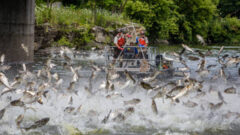
Illinois and Army Corps at an impasse over building barrier to prevent invasive carp

By Juanpablo Ramirez-Franco, WBEZ

This coverage is made possible through a partnership between WBEZ and Grist, a nonprofit, independent media organization dedicated to telling stories of climate solutions and a just future. Sign up for WBEZ newsletters to get local news you can trust.

Read Now at Great Lakes Now.

Original Article

Great Lakes Now

Great Lakes Now

https://www.greatlakesnow.org/2024/03/illinois-and-army-corps-at-an-impasse-over-building-barrier-to-prevent-invasive-carp/

WBEZ

Less than two miles past the Mackinac Bridge in Michigan’s Upper Peninsula are dozens of cedars stripped of their bark and left to die.

“It is probably the most obscene thing I’ve witnessed,” said Renee Dillard, an elder of the Little Traverse Bay Bands of Odawa Indians who recently discovered the damaged trees.

The post Desecrated cedar trees in Upper Peninsula lead to protections under Sault tribal code first appeared on Great Lakes Echo.

Original Article

Great Lakes Echo

Great Lakes Echo

http://greatlakesecho.org/2024/03/25/desecrated-cedar-trees-in-upper-peninsula-lead-to-protections-under-sault-tribal-code/

Daniel Schoenherr

Moderate to heavy snow will continue in east central Wisconsin through around 7pm, then diminish from south to north. Snow accumulations of a couple inches are likely on the grass, with some slush on roads and sidewalks. Travel with care.

Original Article

Current watches, warnings, and advisories for Brown County (WIC009) WI

Current watches, warnings, and advisories for Brown County (WIC009) WI

https://api.weather.gov/alerts/urn:oid:2.49.0.1.840.0.f832ea838dc8710214728567666798fd62b20c07.001.1.cap

NWS

Are Great Lakes cities ready for climate migrants?

This article was republished here with permission from Great Lakes Echo.

By Kayla Nelsen, Great Lakes Echo

A California woman on “The Daily Show” recently swapped her sandals for snowshoes after moving to Duluth to escape her state’s wildfires.

The Comedy Central show featured Duluth as a climate haven, an ideal place to live to avoid wildfires, droughts, hurricanes and extreme flooding.

Read Now at Great Lakes Now.

Original Article

Great Lakes Now

Great Lakes Now

https://www.greatlakesnow.org/2024/03/are-great-lakes-cities-ready-for-climate-migrants/

Great Lakes Echo

Energy News Roundup: State senators advocate for ‘community solar’ projects, proposed natural gas plant gets renewed scrutiny

Keep up with energy-related developments in the Great Lakes area with Great Lakes Now’s biweekly headline roundup.    

Click on the headline to read the full story:    


Illinois 

Illinois EPA announces grants to fund energy efficiency assessments in areas of environmental justice concern — Southerner 

An Illinois program will provide $500,000 in grants to local organizations that make energy efficiency investments in environmental justice communities. 

Read Now at Great Lakes Now.

Original Article

Great Lakes Now

Great Lakes Now

https://www.greatlakesnow.org/2024/03/energy-news-roundup-state-senators-advocate-for-community-solar-projects-proposed-natural-gas-plant-gets-renewed-scrutiny/

Kathy Johnson, Great Lakes Now

From the Ice Age to Now: A Lake Erie timeline

Lake Erie covers about 9,900 square miles and stretches 240 miles from southwest to northeast with an average depth of 62 feet. It borders four states and the province of Ontario. About 12 million people live in the watershed, including 17 major metropolitan areas. More than 10 million people rely on the lake as a source of drinking water.

Read Now at Great Lakes Now.

Original Article

Great Lakes Now

Great Lakes Now

https://www.greatlakesnow.org/2024/03/from-the-ice-age-to-now-a-lake-erie-timeline/

James Proffitt, Great Lakes Now

To prevent the movement of invasive carp into the Great Lakes, the states of Illinois and Michigan and the Army Corps of Engineers need to sign an agreement, but for months they have been locked in a stalemate over what comes next. Read the full story by WBEZ – Chicago, IL.

Original Article

Great Lakes Commission

Great Lakes Commission

https://www.glc.org/dailynews/20240322-invasive-carp-prevention

James Polidori

The U.S. Department of Justice and environmental groups filed two lawsuits against Campbell Soup in Napoleon, Ohio, accusing the company of allowing wastewater and pollutants to flow unchecked into the Maumee River, which flows into Lake Erie, for years. Read the full story by CBS News.

Original Article

Great Lakes Commission

Great Lakes Commission

https://www.glc.org/dailynews/20240322-pollution-lawsuit

James Polidori

Michigan Attorney General Dana Nessel is challenging a decision that federal courts have jurisdiction over the future of Enbridge Energy’s Line 5. That’s after a judge moved her legal challenge from the Ingham County Circuit Court to a U.S. district court. Read the full story by Michigan Public.

Original Article

Great Lakes Commission

Great Lakes Commission

https://www.glc.org/dailynews/20240322-pipeline-litigation

James Polidori

A combination of sand movement and awareness of who to contact are likely why so many more shipwrecks were discovered in Lake Michigan last year. It’s possible that water level changes caused the sand bars to shift dramatically, uncovering shipwrecks in shallower waters. Read the full story by the Milwaukee Journal Sentinel.

Original Article

Great Lakes Commission

Great Lakes Commission

https://www.glc.org/dailynews/20240322-shipwreck-discoveries

James Polidori

For World Water Day, the Ontario Salt Pollution Coalition is sounding the alarm on the damage done by road salt and is calling on the province of Ontario to do more to mitigate the risk of contamination to groundwater, rivers, lakes and drinking water. Read the full story by CBC News.

Original Article

Great Lakes Commission

Great Lakes Commission

https://www.glc.org/dailynews/20240322-water-advocacy

James Polidori

Staff from the Superior National Forest and three Bands of Chippewa Indigenous Nations recently met in Grand Portage, Minnesota, to engage together on “Shared Learning for Co-Stewardship.” The two-day training addressed Indigenous tribal sovereignty, treaty rights and trust obligations, traditional ecological knowledge, and tribal stewardship priorities. Read the full story by Red Lake Nation News.

Original Article

Great Lakes Commission

Great Lakes Commission

https://www.glc.org/dailynews/20240322-stewardship-training

James Polidori

Friends of the Thunder Bay Marine Sanctuary announced their children’s program lineup for this year’s Summer in the Sanctuary in Alpena, Michigan. The program is designed to get kids interested and involved with the Great Lakes through educational and immersive activities that get them near, on, and even under the water. Read the full story by The Alpena News.

Original Article

Great Lakes Commission

Great Lakes Commission

https://www.glc.org/dailynews/20240322-childrens-programs

James Polidori

The Wisconsin Shipwreck Coast National Marine Sanctuary is one of 15 places in the country that have received the marine sanctuary designation from the National Oceanic and Atmospheric Administration. Wisconsin’s Lake Michigan coast is home to dozens of shipwrecks that represent and preserve both a moment frozen in time and a window into the past. Read the full story by the Milwaukee Journal Sentinel.

Original Article

Great Lakes Commission

Great Lakes Commission

https://www.glc.org/dailynews/20240322-marine-sanctuary

James Polidori

On March 21, 1953, the now historic S.S. Badger set off on its maiden voyage on Lake Michigan. The S.S. Badger and its sister ships are the last — and the largest — coal-fired, steam engine car ferries built in the United States. Read the full story by WWTV-TV – Cadillac, MI.

Original Article

Great Lakes Commission

Great Lakes Commission

https://www.glc.org/dailynews/20240322-car-ferry-history

James Polidori

The solar eclipse is a great opportunity for students and citizen scientists alike

On April 8, a solar eclipse will march from Maine to Mexico, darkening the skies during midday. The moon’s shadow will black out the sun completely just south of Michigan, but folks in the southeast part of the state will be close to the action and also experience almost complete darkness.

Read Now at Great Lakes Now.

Original Article

Great Lakes Now

Great Lakes Now

https://www.greatlakesnow.org/2024/03/the-solar-eclipse-is-a-great-opportunity-for-students-and-citizen-scientists-alike/

Sarah Derouin, Great Lakes Now

...SPRING SNOW RESULTING IN A HAZARDOUS MORNING COMMUTE... * WHAT...Snow. Additional snow accumulations up to an inch. * WHERE...Marathon, Langlade, Lincoln, Brown, Door, Kewaunee, Menominee, Northern Oconto County, Shawano, Southern Marinette County, and Southern Oconto County Counties. * WHEN...Until 1 PM CDT this afternoon. * IMPACTS...Plan on slippery and snow covered roads. The hazardous conditions will result in a slow and difficult morning commute.

Original Article

Current watches, warnings, and advisories for Brown County (WIC009) WI

Current watches, warnings, and advisories for Brown County (WIC009) WI

https://api.weather.gov/alerts/urn:oid:2.49.0.1.840.0.1e16b9d2dc37847bc64fdbb8506e7caa9207b255.002.1.cap

NWS

...SPRING SNOW WILL RESULT IN A HAZARDOUS MORNING COMMUTE... * WHAT...Snow. Additional snow accumulations between 1 and 3 inches. * WHERE...Portions of central, north central, and northeast Wisconsin. * WHEN...Until 1 PM CDT this afternoon. * IMPACTS...Plan on slippery and snow covered roads. The hazardous conditions will result in a slow and difficult morning commute. * ADDITIONAL DETAILS...The greatest snowfall rates of a half inch to an inch per hour are expected through 6 AM.

Original Article

Current watches, warnings, and advisories for Brown County (WIC009) WI

Current watches, warnings, and advisories for Brown County (WIC009) WI

https://api.weather.gov/alerts/urn:oid:2.49.0.1.840.0.aeb85645532d539e02fa1922f292b122afbf8553.001.1.cap

NWS

...SPRING SNOW WILL RESULT IN A HAZARDOUS FRIDAY MORNING COMMUTE... * WHAT...Snow expected. Total snow accumulations between 2 and 4 inches. * WHERE...Portions of central, north central, and northeast Wisconsin. * WHEN...From 1 AM to 1 PM CDT Friday. * IMPACTS...Plan on slippery road conditions. The hazardous conditions will impact the Friday morning commute. * ADDITIONAL DETAILS...The greatest snowfall rates of a half inch per hour are expected between 2 AM and 8 AM.

Original Article

Current watches, warnings, and advisories for Brown County (WIC009) WI

Current watches, warnings, and advisories for Brown County (WIC009) WI

https://api.weather.gov/alerts/urn:oid:2.49.0.1.840.0.0b9d3191523424c7bf853d777bf5203037869702.001.1.cap

NWS

...SPRING SNOW WILL RESULT IN A SLOW FRIDAY MORNING COMMUTE... * WHAT...Snow expected. Total snow accumulations between 2 and 4 inches. * WHERE...Portions of central, north central, and northeast Wisconsin. * WHEN...From 1 AM to 1 PM CDT Friday. * IMPACTS...Plan on slippery road conditions. The hazardous conditions will impact the Friday morning commute. * ADDITIONAL DETAILS...The greatest snowfall rates of a half inch to an inch per hour are expected between 2 AM and 7 AM.

Original Article

Current watches, warnings, and advisories for Brown County (WIC009) WI

Current watches, warnings, and advisories for Brown County (WIC009) WI

https://api.weather.gov/alerts/urn:oid:2.49.0.1.840.0.933b9f367ec25036f071865efa38aff2b5ed41bb.001.1.cap

NWS

Composting, water access and backyard chickens: Detroit’s urban farming evolution

This article was republished here with permission from Planet Detroit.

By Nina Ignaczak, Planet Detroit

Detroit’s urban agriculture movement traces back to Hazen Pingree’s 1890s potato patch plan,World War II victory gardens, and Mayor Coleman Young’s Farm-A-Lot program in the 1970s.

Read Now at Great Lakes Now.

Original Article

Great Lakes Now

Great Lakes Now

https://www.greatlakesnow.org/2024/03/detroits-urban-farming-evolution/

Planet Detroit

How Beth Fuller turned a bandana into an outdoor rec business

We would like to think that Beth Fuller returned to Wisconsin simply to be one of River Alliance’s most enthusiastic volunteers. Truthfully, it was Wisconsin’s water, the beauty of the Northwoods, and delightful change of seasons that brought her home from California.

From ice skating on Lake Winnebago as a kid, to a fateful trip down the Stanislaus River, Beth’s life became more and more entwined with water as she navigated 25 years in the outdoor recreation gear industry.

Fox Valley childhood

Beth grew up in Neenah and Menasha where paper was the beating heart of the Fox Valley.

“We were all a kind of a big community whose livelihood came from that industry,” she remembers. “From founders of large companies like Kimberly-Clark to people who worked for smaller companies like Banta Publishing.”

The paper industry anchored the community, but she remembers how the influence of those businesses echoed throughout everyone’s lives. The strong industry supported local needs like having good schools.

“I remember having great teachers for Western Civilization, to chemistry, to our Thespian advisor. Many who received state and national awards. We could attract and pay really good teachers. It was quite the opportunity.”

Lake Winnebago afforded a lot of opportunity to engage in water related activities while she was growing up, from sailing to canoeing, kayaking, and swimming. Though she most loved to ice skate on Lake Winnebago in the winter, recreation on the local water had its limits.

“We had parks along the lake and you could swim in the lake, but not the river,” she said. “It was pretty polluted. I remember seeing white foam on the river. It was pollution from the paper mills. The management might not have thought about it affecting the environment at the time. But I look back and have visions of that foam. It was pretty gross.”

The Fox River has always been important to the Neenah and Menasha community traditions. After significant efforts to clean up and dredge the Fox River, there is now an abundance of recreational opportunities on the Fox.

Beth remembers attending the Venetian Festival on the 4th of July where local students were dubbed queens with their courts, and big sailboats were lit up and paraded before the fireworks. The Neenah-Menasha CommunityFest and Parade of Lights continues today.

“The whole community would come out for that,” she remembers. “Returning there and seeing the river in the condition it’s in now, you can see waterfront parks, walking paths, and boat clubs. It’s gorgeous. People are coming back to the river.”

How a bandana became a business 

Except for a Girl Scout trip, Beth had never really gone camping. It wasn’t until the 80s when she literally dove in.

Beth and her husband raft down a river“I went on my first raft trip with my husband, Dale, and some people from his law firm. We did the Stanislaus River, which no longer exists because it has been dammed. But we did this river and the four of us dumped out of the boat, I swam two rapids, and we camped at night. Shortly after that, we got involved with the river protection group, Friends of the River, mainly to try to stop the dam.”

Excited to do more river trips, she and her husband bought their own rafts and explored other places. The American River became a favorite destination which sparked a creative project.

“We had the idea of making bandanas with a map of the river on them,” Beth said. “I had no art skills, but I worked with a screen printer and their art department. Using USGS information, we made and sold the bandanas. Then we made t-shirts. They caught the eye of major retailers.”

Bandanas show a map of riversAs she worked to sell bandanas and t-shirts, she came into contact with people who wrote river guide books. The small publishers asked her to help get books into the shops that sold her products.

“That’s how we became a book distributor. Eventually we would get to know manufacturers and start to rep their products. We’d rep gear, dry bags, dry boxes, wet suits, and sandals to paddlesports stores and the small places along the rivers that would sell our books and bandanas. We distributed products mostly in western states, and it just kept growing for 25 years.”

The outdoor recreation gear industry may have appeared to be male-dominated, but Beth says she didn’t think about it much at the time.

“I’m more conscious today about women in these roles, but I was raised to be whatever I wanted to be,” she said. “What I saw were paddlesports stores that were typically owned by a couple where the lead owner was recognized as the man, but truthfully the shop was run by a really smart woman.”

“In 1989 an organization called Western River Guides elected a woman president. I asked a gentleman I knew what he thought about that and he said it’s about time since women have been running this industry for so long. He was right. Canoe magazine was owned by a woman. Mad River Canoe was owned by a woman. I heard about lots of success stories of women who cracked the glass ceiling in that business.”

Beth Fuller With Ron DayneReturning to Wisconsin

Beth went to college at the University of Wisconsin–Madison before she moved to California. Through the years, she says she always had a nagging feeling that she wanted to come back to Wisconsin. After her husband died, that feeling got stronger. Finally her friends told her to make the move.

“What drew me back were the seasons and the snow that feeds our rivers,” she said. “I’m a big Badger fan and I love the UW athletics. But I also love fish fries, cheese, supper clubs, and all those Wisconsin traditions. I really wanted to get back to the beautiful Northwoods with their abundant lakes, streams and outdoor life.”

In 2018, she attended a film screening at Fontana Sports that was hosted by River Alliance of Wisconsin. She knew then that she wanted to get involved with the statewide group that was so passionate about restoring and protecting Wisconsin’s water.

Beth Fuller At Football Game“That’s the other thing that brought me back to Wisconsin. The people here are passionate about their state. They have a love for Wisconsin and I do too.”


Community Shares of Wisconsin recognition for Beth Fuller’s River Alliance volunteerism

In March, Beth was recognized as a Community Shares of Wisconsin Backyard Hero. She was featured on the Community Shares of Wisconsin website and newsletter, Isthmus’ website and newsletter, 105.5 Radio announcements, and Madison Commons online news. She will also be recognized at the Community Shares Change-Maker Awards Celebration this fall.

– Stacy Harbaugh, Communications Director


This message is made possible by generous donors who believe people have the power to protect and restore water. Support our work with your contribution today.

The post How Beth Fuller turned a bandana into an outdoor rec business appeared first on River Alliance of WI.

Original Article

Blog - River Alliance of WI

Blog - River Alliance of WI

https://wisconsinrivers.org/beth-fuller-dane-county/

Allison Werner

The lack of ice on the Great Lakes could cause thunderstorms and tornadoes to occur earlier than usual in the region. 

Michigan is expected to see more severe weather in April and May, said Paul Pastelok, a meteorologist for AccuWeather.

The post Record low Great Lakes ice jump-starts Michigan’s severe weather season first appeared on Great Lakes Echo.

Original Article

Great Lakes Echo

Great Lakes Echo

http://greatlakesecho.org/2024/03/21/record-low-great-lakes-ice-jump-starts-michigans-severe-weather-season/

Clara Lincolnhol

Road salt use dips 37% in Michigan warm winter, saving millions, easing pollution

By Kelly House, Bridge Michigan

The Great Lakes News Collaborative includes Bridge Michigan; Circle of Blue; Great Lakes Now at Detroit Public Television; Michigan Public, Michigan’s NPR News Leader; and The Narwhal who work together to bring audiences news and information about the impact of climate change, pollution, and aging infrastructure on the Great Lakes and drinking water.

Read Now at Great Lakes Now.

Original Article

Great Lakes Now

Great Lakes Now

https://www.greatlakesnow.org/2024/03/road-salt-use-dips-37-in-michigan-warm-winter-saving-millions-easing-pollution/

Bridge Michigan

...SPRING SNOW WILL RESULT IN A SLOW FRIDAY MORNING COMMUTE... * WHAT...Snow expected. Total snow accumulations between 2 and 4 inches. * WHERE...Portions of central, north central, and northeast Wisconsin. * WHEN...From 1 AM to 1 PM CDT Friday. * IMPACTS...Plan on slippery road conditions. The hazardous conditions will impact the Friday morning commute. * ADDITIONAL DETAILS...The greatest snowfall rates of a half inch to an inch per hour are expected between 2 AM and 7 AM.

Original Article

Current watches, warnings, and advisories for Brown County (WIC009) WI

Current watches, warnings, and advisories for Brown County (WIC009) WI

https://api.weather.gov/alerts/urn:oid:2.49.0.1.840.0.04e03b57590a7f83b32794d5a9443bfe7c6168e9.001.1.cap

NWS

Learn about Marie Tharp, a pioneering ocean mapper who discovered the Mid-Atlantic Ridge and proved the validity of the theory of continental drift.

Original Article

NCEI News Feed

NCEI News Feed

https://www.ncei.noaa.gov/news/marie-tharp

lauren.carrolln

...SPRING SNOW WILL RESULT IN A SLOW FRIDAY MORNING COMMUTE... * WHAT...Snow expected. Total snow accumulations between 2 and 4 inches. * WHERE...Portions of central, north central, and northeast Wisconsin. * WHEN...From 1 AM to 1 PM CDT Friday. * IMPACTS...Plan on slippery road conditions. The hazardous conditions will impact the Friday morning commute. * ADDITIONAL DETAILS...The greatest snowfall rates of a half inch to an inch per hour are expected between 2 AM and 7 AM.

Original Article

Current watches, warnings, and advisories for Brown County (WIC009) WI

Current watches, warnings, and advisories for Brown County (WIC009) WI

https://api.weather.gov/alerts/urn:oid:2.49.0.1.840.0.bb660eeca12e6c2f73c1182ba024159a410b7b21.001.1.cap

NWS

International nuclear energy expert questions Michigan’s Palisades restart

Is investing a combined $1.8 billion in federal and state funds to restart the aged Palisades nuclear power plant on the Lake Michigan shore necessary to meet Michigan’s climate goals?

That’s what’s in the works, with the Department of Energy leading with a $1.5 billion dollar loan guarantee and Michigan budgeting $300 million to support the restart.

Read Now at Great Lakes Now.

Original Article

Great Lakes Now

Great Lakes Now

https://www.greatlakesnow.org/2024/03/international-nuclear-energy-expert-questions-michigans-palisades-restart/

Gary Wilson, Great Lakes Now

Sitting at 26 miles long and 24 miles wide with nearly one-third of the sport fishing catch annually in the Great Lakes region, Lake St. Clair should be a household name. While not as well-known as the Great Lakes, this lake has a lot to offer. Read the full story by Great Lake Echo.

Original Article

Great Lakes Commission

Great Lakes Commission

https://www.glc.org/dailynews/20240320-lake-st-clair

Theresa Gruninger

On World Water Day, March 22, the Alliance for the Great Lakes, Ocean Conservancy, Illinois Environmental Council, and Loyola University scientists will hold a briefing with partners at the Museum of Science and Industry to discuss protecting the Great Lakes and waterways from the environmental and health risks of microfiber pollution. Read the full story by the Ocean Conservancy.

Original Article

Great Lakes Commission

Great Lakes Commission

https://www.glc.org/dailynews/20240320-great-lakes-water

Theresa Gruninger

The Ford government is facing fresh questions over its plans to redevelop Ontario Place after new documents suggest the province considered filling in a portion of Lake Ontario to create a new development space. Read the full story by Global News.

Original Article

Great Lakes Commission

Great Lakes Commission

https://www.glc.org/dailynews/20240320-ontario-place

Theresa Gruninger

As national parks around the country try to raise awareness about climate change, those around Lake Superior are taking steps to cut their emissions. The foundation and the National Park Service announced last week that the parks are starting to implement plans to get their operations off fossil fuels. Read the full story by Michigan Advance.

Original Article

Great Lakes Commission

Great Lakes Commission

https://www.glc.org/dailynews/20240320-lake-superior-parks

Theresa Gruninger