NCEI Welcomes Summer 2024 Interns
NCEI News Feed
https://www.ncei.noaa.gov/news/ncei-welcomes-summer-2024-interns
NCEI News Feed
https://www.ncei.noaa.gov/news/ncei-welcomes-summer-2024-interns
NCEI News Feed
https://www.ncei.noaa.gov/news/ncei-welcomes-summer-2024-interns
NCEI News Feed
https://www.ncei.noaa.gov/news/ncei-welcomes-summer-2024-interns
NCEI News Feed
https://www.ncei.noaa.gov/news/ncei-welcomes-summer-2024-interns
NCEI News Feed
https://www.ncei.noaa.gov/news/ncei-welcomes-summer-2024-interns
NCEI News Feed
https://www.ncei.noaa.gov/news/ncei-welcomes-summer-2024-interns
NCEI News Feed
https://www.ncei.noaa.gov/news/ncei-welcomes-summer-2024-interns
NCEI News Feed
https://www.ncei.noaa.gov/news/ncei-welcomes-summer-2024-interns
NCEI News Feed
https://www.ncei.noaa.gov/news/ncei-welcomes-summer-2024-interns
NCEI News Feed
https://www.ncei.noaa.gov/news/ncei-welcomes-summer-2024-interns
NCEI News Feed
https://www.ncei.noaa.gov/news/ncei-welcomes-summer-2024-interns
NCEI News Feed
https://www.ncei.noaa.gov/news/ncei-welcomes-summer-2024-interns
NCEI News Feed
https://www.ncei.noaa.gov/news/ncei-welcomes-summer-2024-interns
NCEI News Feed
https://www.ncei.noaa.gov/news/ncei-welcomes-summer-2024-interns
NCEI News Feed
https://www.ncei.noaa.gov/news/ncei-welcomes-summer-2024-interns
NCEI News Feed
https://www.ncei.noaa.gov/news/ncei-welcomes-summer-2024-interns
NCEI News Feed
https://www.ncei.noaa.gov/news/ncei-welcomes-summer-2024-interns
NCEI News Feed
https://www.ncei.noaa.gov/news/ncei-welcomes-summer-2024-interns
NCEI News Feed
https://www.ncei.noaa.gov/news/ncei-welcomes-summer-2024-interns
NCEI News Feed
https://www.ncei.noaa.gov/news/ncei-welcomes-summer-2024-interns
NCEI News Feed
https://www.ncei.noaa.gov/news/ncei-welcomes-summer-2024-interns
NCEI News Feed
https://www.ncei.noaa.gov/news/ncei-welcomes-summer-2024-interns
NCEI News Feed
https://www.ncei.noaa.gov/news/ncei-welcomes-summer-2024-interns
NCEI News Feed
https://www.ncei.noaa.gov/news/ncei-welcomes-summer-2024-interns
NCEI News Feed
https://www.ncei.noaa.gov/news/ncei-welcomes-summer-2024-interns

By Emma McIntosh, The Narwhal
The Great Lakes News Collaborative includes Bridge Michigan; Circle of Blue; Great Lakes Now at Detroit Public Television; Michigan Public, Michigan’s NPR News Leader; and The Narwhal who work together to bring audiences news and information about the impact of climate change, pollution, and aging infrastructure on the Great Lakes and drinking water.
Great Lakes Now
https://www.greatlakesnow.org/2024/08/missed-calls-forgotten-instructions-inside-an-oil-spill-cleanup-on-toronto-waterways/
Current watches, warnings, and advisories for Brown County (WIC009) WI
https://api.weather.gov/alerts/urn:oid:2.49.0.1.840.0.4e96209d711f483d8b141b62f10b025cb0380acc.001.1.cap
Current watches, warnings, and advisories for Brown County (WIC009) WI
https://api.weather.gov/alerts/urn:oid:2.49.0.1.840.0.4383da288c1e7c711d0d1e67a7dcc50c39fef3e6.001.1.cap
By Gabrielle Nelson The only things that rival the popularity of bikes on Mackinac Island are horses and fudge. M-185 stretches around the island, hugging the coast with a clear view of Lake Huron’s crystal blue waters. The 8.2 miles is a perfect bike trail because it boasts a unique feature: It’s the only state […]
The post Disability rights advocates ask Mackinac Island to allow Class 2 e-bikes first appeared on Great Lakes Echo.Great Lakes Echo
http://greatlakesecho.org/2024/08/05/disability-rights-advocates-ask-mackinac-island-to-allow-class-2-e-bikes/

By Gabrielle Nelson, Bridge Michigan
The Great Lakes News Collaborative includes Bridge Michigan; Circle of Blue; Great Lakes Now at Detroit Public Television; Michigan Public, Michigan’s NPR News Leader; and The Narwhal who work together to bring audiences news and information about the impact of climate change, pollution, and aging infrastructure on the Great Lakes and drinking water.
Great Lakes Now
https://www.greatlakesnow.org/2024/08/michigans-electric-energy-future-could-be-wasting-away-in-a-junk-drawer/

Great Lakes Moment is a monthly column written by Great Lakes Now Contributor John Hartig. Publishing the author’s views and assertions does not represent endorsement by Great Lakes Now or Detroit PBS.
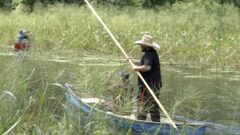
Manoomin (mah-NOO-mehn) or wild rice was once very common in coastal marshes along the Detroit River and has always been sacred to First Nations.
Great Lakes Now
https://www.greatlakesnow.org/2024/08/operation-manoomin-restoring-wild-rice-along-the-detroit-river/
NOAA Great Lakes Environmental Research Laboratory
https://noaaglerl.blog/2024/08/05/why-noaa-glerls-largest-vessel-is-one-of-its-most-critical-research-tools/
Each year in the United States, urban tree cover decreases by an estimated 36 million trees, or 175,000 acres. For perspective, New York City’s Central Park contains about 18,000 trees, meaning the U.S. loses 2,000 times the number of trees in Central Park each year to factors like urban development, industry, climate change impacts, and lack of tree maintenance.
This loss, which costs the U.S. economy approximately $96 million per year, increasingly deprives urban communities of the health benefits that tree canopies provide for humans, wildlife, and the environment.
“Trees are magical,” says Reverend Brian Sauder, president and CEO of nonprofit environmental advocacy organization Faith in Place. “You plant trees on the block, and you increase life expectancy because they bring shade in a heatwave. They help filter out the pollutants from diesel exhaust of the trucks going by, and the aesthetic beauty they provide for wellbeing and health is super important.”
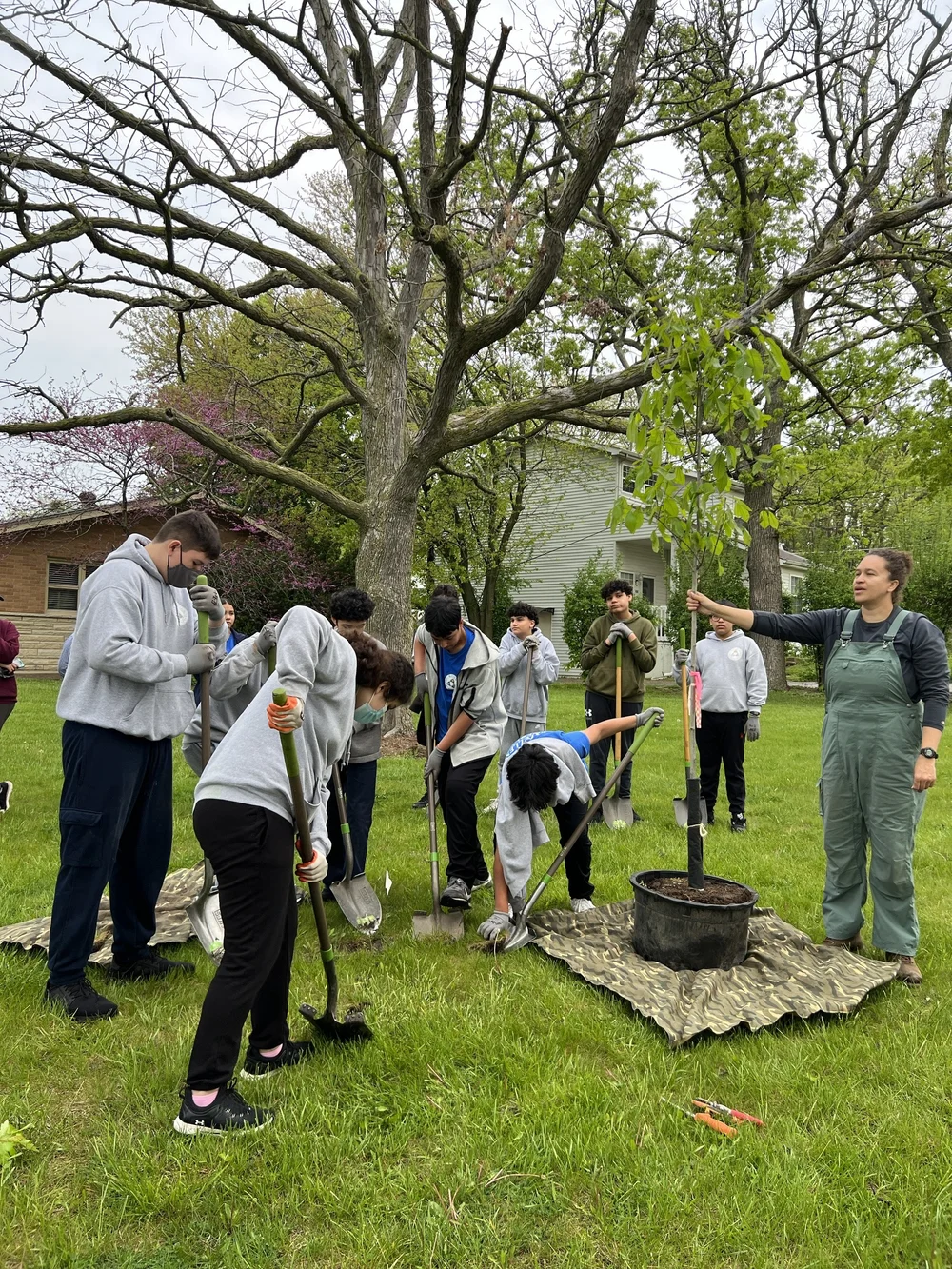
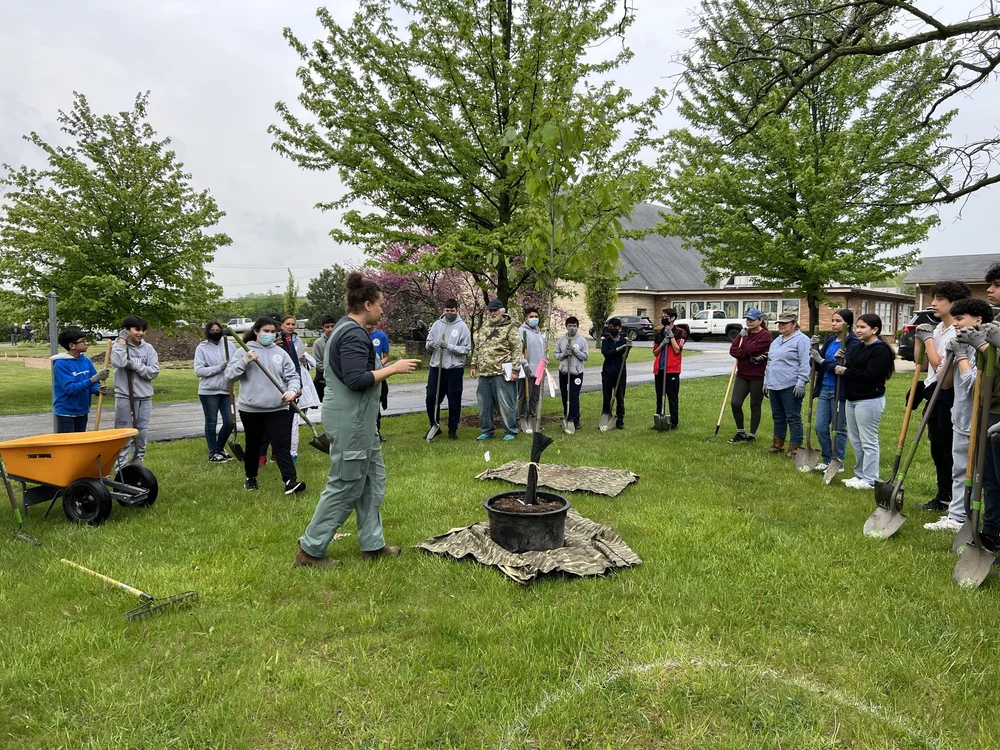
A tree planting facilitated by Faith in Place. Credit: Faith in Place.
Trees are also important tools in the effort to restore and protect the Great Lakes and the waters that feed the lakes. Trees filter rainwater, prevent stormwater runoff and soil erosion, increase property value, and provide important habitat for wildlife like birds and squirrels. Amid worsening climate change, adequate tree cover also conserves energy by reducing air conditioning needs as much as 30 percent, and can help cool cities by up to 10 degrees Fahrenheit.
In 2021, tree equity studies confirmed that socially and economically disadvantaged communities are more likely to experience the negative effects of urban tree loss. On average, communities with high levels of poverty have approximately 41 percent fewer trees than their wealthier counterparts.
“Where trees are planted in cities and municipalities and urban centers tends to be where the wealth resides,” explains Sauder. “The history of redlining, of racism, of disinvestment in communities for various reasons has led to less tree canopy in those communities. It kind of perpetuates this cycle.”
A tree planting facilitated by Faith in Place. Credit: Faith in Place.
To help combat this inequity, Faith in Place was awarded $1.99 million by the U.S. Forest Service’s Urban and Community Forestry Program to increase urban tree canopies in the Great Lakes region. Made possible by the Inflation Reduction Act, the federal law that is investing billions of dollars to help communities combat climate change, these funds will allow Faith in Place to facilitate tree planning and workforce development projects at faith institutions and 501(c)(3) nonprofit organizations serving disadvantaged communities throughout Illinois, Indiana, and Wisconsin. Through this grant, $1.6 million will be given to community organizations and Houses of Worship within environmental justice communities across these three states to plant and maintain trees on their properties.
A tree planting facilitated by Faith in Place. Credit: Faith in Place.
“We're supporting 65 to 85 community-led, community-based tree planting projects across the three states,” says Sauder. “One hundred percent of this funding will go to areas that have been historically divested from for building up a tree canopy.”
Faith in Place is the Illinois, Indiana, and Wisconsin affiliate of Interfaith Power and Light, a nationwide network of people of faith working together to combat climate change and environmental issues. For its tree planning projects, the organization anticipates applications from a variety of diverse community organizations and faith institutions, including churches, mosques, synagogues, religious schools, and community-based nonprofit organizations. To qualify for funding, applicants must be located in Illinois, Indiana, or Wisconsin and be located in and serve a disadvantaged community identified by the White House Council on Environmental Quality’s Climate and Economic Justice Screening Tool.
“Each community’s needs, tree canopies, and land are going to be different,” says Sauder. “The applicants that will be the strongest will support an equitable green workforce either in sharing about forestry careers with their community or through who they hire to maintain care for the trees.”
By spring 2025, accepted projects will receive up to $30,000 to invest in planting and maintaining trees for the tree canopy in their community. Once trees are planted, Faith in Place will partner with grantees for four years to facilitate workforce development in the form of tree maintenance like watering and mulching.
“That can look however the faith community wants it to look,” says Sauder. “Maybe they'll have a partnership in the community with a company that employs people coming out of prison, or maybe they'll want to work with their Sunday school class at a certain age to really learn about tree careers and take responsibility for the maintenance.”
Projects will plant non-invasive trees. Trees that are invasive in the regions will not be planted. Regional staples such as oaks and maples will likely be common choices, says Sauder, but these projects also offer the potential for applicants to create a neighborhood food source by investing in fruit orchards that produce apples, pears, cherries, persimmons, and other Midwestern fruits.
A row of trees planted in Danville, Illinois following facilitation by Faith in Place. Credit: Faith in Place.
Prior to the proposal deadline on November 21, 2024, Faith in Place will host both virtual and in-person workshops to educate its faith partners on the importance of urban tree cover. In addition to these workshops, prospective applicants can learn more about the application process through a 10-page online toolkit. This step-by-step guide includes information on grant eligibility, required submission materials, an evaluation rubric, a sample project proposal, and tips for developing a compelling project plan.
Once submitted, Faith in Place will review applications based on whether the applicant’s goals are clear and realistic, whether they include a workforce development component, the presumed environmental benefits of the project, cost efficacy, and the applicant’s chance of success in terms of tree health and longevity.
“It’s really about the long-term relationships with the trees and cultivating them so that they thrive,” Sauder says. “That’s really the focus from both the U.S. Forest Service and Faith in Place.”
Although Faith in Place has more than 350 established faith partners in its tri-state area, Sauder is hopeful the organization will meet some new faces through these projects.
“The vision is that you walk into any community, and you ask somebody on the street, ‘Who's leading the way for environmental and racial justice?’ and they point to the local mosque, synagogue, temple, church, or parish, and say, ‘Check out what the local faith institution is doing,’” Sauder explains. “That vision is what we work for every day.”
Visit FaithInPlace.org/tree-canopy-community-grant to learn more and apply.
Latest Updates - Healthy Lakes
https://www.healthylakes.org/latest-updates/tree-equity-grants-restore-urban-tree-canopies-in-illinois-indiana-and-wisconsin
A solitary bloody red shrimp was found in the Twin Ports Harbor, raising fears that the light-hating, zooplankton-eating invasive critters have found their way to Lake Superior. Read the full story by the Star Tribune.
Great Lakes Commission
https://www.glc.org/dailynews/20240805-bloodyredshrimp-lakesuperior-invasivespecies
In Lucas County, Ohio, advocates and local leaders brought people out to Lake Erie to see first-hand the lack of progress on the blue-green algae problems, which are still prevalent after 10 years. Read the full story by WTOL-TV – Toledo, OH.
Great Lakes Commission
https://www.glc.org/dailynews/20240805-lakeerie-health-toledowatercrisis
In a rare rebuke to the industrial farm sector, the Michigan Supreme Court this week ruled that state environmental regulators have full authority to require big livestock and poultry operations to improve their handling of billions of pounds of manure that contributes to serious contamination of state waters. Read the full story by Michigan Public.
Great Lakes Commission
https://www.glc.org/dailynews/20240805-michiganswaters-supremecourt
A contentious short-term housing rental ban is looming over one of Michigan’s most popular beach towns. Park Township, Michigan, home to Holland State Park beach, is still in litigation over enforcing a ban on short-term rentals. As it lingers in court, current rental owners are wary of the future of their investments. Read the full story by MLive.
Great Lakes Commission
https://www.glc.org/dailynews/20240805-lakemichigan-town-bans-rentals
After more than a year, the cause of a Lake Michigan diesel spill in Manistee, Michigan, has yet to be shared with the public. Read the full story by the Manistee News Advocate.
Great Lakes Commission
https://www.glc.org/dailynews/20240805-manitowoc-dieselspill
The attempted cheating during a Cleveland-based competition in September 2022 drew worldwide attention. The two Lake Erie walleye anglers lost their nearly $100,000 boat, were fined and lost fishing rights for three years. Read the full story by The Columbus Dispatch.
Great Lakes Commission
https://www.glc.org/dailynews/20240805-fishingscandal-lakeerie
Though there are many ways to enjoy Michigan’s waterways – swimming, fishing, paddling, boating and more – the Michigan Department of Natural Resources wants to ensure that your priority is safety in and around the water. Read the full story by Radio Results Network.
Great Lakes Commission
https://www.glc.org/dailynews/20240805-michigandnr-watersafety-hotweather
Whitefish numbers are declining in northern Michigan, and some scientists believe the heart of the problem lies with the invasive quagga and zebra mussels that have invaded our waters. Read the full story by WPBN-TV – Traverse City, MI.
Great Lakes Commission
https://www.glc.org/dailynews/20240805-declining-whitefish-northernmichigan
In Chicago, a volunteer group has been busy pulling discarded Divvy bikes from Lake Michigan, citing fears over the dangers these battery-powered bikes can pose to the water. Divvy is a bicycle sharing system in the Chicago metropolitan area. Read the full story by NBC Chicago.
Great Lakes Commission
https://www.glc.org/dailynews/20240805-divvybikes-dumped-lakemichigan
Bills to name the stonefly Michigan’s state insect are now before committees in both the state House and Senate, thanks to the work of 5th grade students and teachers from Grand Rapids, Michigan. If you see a stonefly, the water nearby is clean. Read the full story by the Detroit Free Press.
Great Lakes Commission
https://www.glc.org/dailynews/20240805-stonefly-michigansinsect
Current watches, warnings, and advisories for Brown County (WIC009) WI
https://api.weather.gov/alerts/urn:oid:2.49.0.1.840.0.391365a40773e264e568c359766da2c4793c429e.001.1.cap
Current watches, warnings, and advisories for Brown County (WIC009) WI
https://api.weather.gov/alerts/urn:oid:2.49.0.1.840.0.b83f018c16da60f1e3d3f903620380499d55e2f8.001.1.cap
By Ruth Thornton State wildlife agencies in Michigan and Ohio have received nearly $500,000 in federal funding to study rare turtles. The grant is part of more than $7 million distributed by the U.S. Fish and Wildlife Service to benefit rare and declining fish and wildlife and their habitats across the country. Other states receiving […]
The post Michigan and Ohio receive $500,000 to study rare turtles first appeared on Great Lakes Echo.Great Lakes Echo
http://greatlakesecho.org/2024/08/03/michigan-and-ohio-receive-500000-to-study-rare-turtles/

By Keith Schneider, Circle of Blue
The Great Lakes News Collaborative includes Bridge Michigan; Circle of Blue; Great Lakes Now at Detroit Public Television; Michigan Public, Michigan’s NPR News Leader; and The Narwhal who work together to bring audiences news and information about the impact of climate change, pollution, and aging infrastructure on the Great Lakes and drinking water.
Great Lakes Now
https://www.greatlakesnow.org/2024/08/in-significant-decision-for-michigans-waters-state-supreme-court-rules-egle-has-authority-to-do-its-job/

On August 2, it will be 10 years since officials in Toledo alerted residents in the early morning hours not to drink, bathe in or otherwise come into contact with tap water from the Collins Park Water Treatment Plant. For nearly three days chaos reigned, as bottled water sold out that first day before dawn and disappeared from shelves in the region the next day.
Great Lakes Now
https://www.greatlakesnow.org/2024/08/a-decade-after-crisis-algal-blooms-persist/
Ten years ago, Toledo shut down its water system because a toxic algae bloom had formed around its water intake structure in Lake Erie. Safeguards are now in place that will prevent a system shutdown from happening again, but a large reduction in cyanobacterial blooms has yet to be achieved. Read the full story by Michigan Public.
Great Lakes Commission
https://www.glc.org/dailynews/20240802-toxic-algae-blooms
The Glen Lake Association is on a three-year mission to remove invasive koi from the crystal-clear lake next to Sleeping Bear Dunes National Seashore. Read the full story by Bridge Michigan.
Great Lakes Commission
https://www.glc.org/dailynews/20240802-giant-koi