The most ambitious proposal for a marina along the Lake Erie shoreline in Hamburg, New York, includes two marinas on either side of Hoover Beach, creates small islands to protect the shore and moves Route 5 to the west. Read the full story by The Buffalo News.

Original Article

Great Lakes Commission

Great Lakes Commission

https://www.glc.org/dailynews/20240925-marina-development

Nichole Angell

A group of Michigan State students created a play with input from experts in conservation and environmental communication. The project is part of a larger trend that blends conservation and the arts to get communities thinking about their natural areas. Read the full story by Great Lakes Echo.

Original Article

Great Lakes Commission

Great Lakes Commission

https://www.glc.org/dailynews/20240925-theater-project

Nichole Angell

High concentrations of toxic PFAS chemicals were found in surface water foam this summer on Muskegon Lake in west Michigan. Although there are known legacy sources of PFAS in the Muskegon Lake watershed, experts say the recent increase in shoreline foaming is new and unexplained. Read the full story by MLive.

Original Article

Great Lakes Commission

Great Lakes Commission

https://www.glc.org/dailynews/20240925-pfas-lake-foam

Nichole Angell

You can fish on the Great Lakes, go boating, swim, and partake in water sports, all the while enjoying the spectacular views they provide. But how deep is each lake? You’d have to dive hundreds of feet below the surface to reach the bottom. Read the full story by the Akron Beacon Journal.

Original Article

Great Lakes Commission

Great Lakes Commission

https://www.glc.org/dailynews/20240925-lake-facts

Nichole Angell

By Daniel Schoenherr There’s always drama unfolding at Michigan State University’s Corey Marsh Ecological Research Center: Predators hunt prey, animals show off for potential mates and plants compete for sunlight. Later this month, though, visitors to the marsh will see a different kind of drama: a play, complete with a student cast, hand-crafted sets and […]

The post All the world’s a stage: Theater project in Michigan marsh aims to promote conservation first appeared on Great Lakes Echo.

Original Article

Great Lakes Echo

Great Lakes Echo

http://greatlakesecho.org/2024/09/24/all-the-worlds-a-stage-theater-project-in-michigan-marsh-aims-to-promote-conservation/

Daniel Schoenherr

Chicago, IL (September 24, 2024) – The U.S. Environmental Protection Agency’s (EPA) final rule regulating ballast water was signed on September 20th. The EPA’s final rule does not protect the Great Lakes from the threat of invasive species spreading.

The EPA’s rule is problematic because it exempts existing “Lakers” (vessels that do not leave the Great Lakes) from regulation, and the ballast water discharged from these ships accounts for over 95 percent of ballast water volumes transferred in the Great Lakes. Studies show that Lakers are a contributor to the spread of destructive invasive species in the lakes. EPA intends to regulate any new Lakers constructed after 2026.  These regulations are much less protective than those adopted by Canada which require all ships to have ballast water treatment systems installed and operating by 2030, including Lakers.

Invasive species are significant and immediate threats to the ecosystems and economies of the Great Lakes Basin. In 2018, Congress directed the Environmental Protection Agency through the Vessel Incidental Discharge Act (VIDA) to establish national standards for vessel discharges to protect the natural environment and the surrounding communities from the introduction and transfer of harmful aquatic invasive species or pathogens through the discharge of ballast water.

The following environmental groups find that EPA’s final VIDA rule does not protect the Great Lakes from aquatic invasive species:

“Exempting any Lakers from regulations is the wrong approach to combat invasive species. The shipping industry has asked repeatedly for many years for uniform regulations for ballast water across the United States and that they be harmonized with Canada. This rule is the opposite of that,” said Molly M. Flanagan, Chief Operating Officer and Vice President for Programs at the Alliance for the Great Lakes. “Exempting existing Lakers carves out this class of ship from regulation and puts the Great Lakes at risk. Most important, it fails to live up to our obligation to prevent new damage from the invasive species that have already cost the Great Lakes, and the people that rely on them,” Flanagan added.

“Invasive species introduced through ballast water are a clear and present danger to our Great Lakes.  Unfortunately, the EPA standard will not adequately protect the Great Lakes and other U.S. waters from ballast water invaders,” said Marc Smith, Great Lakes Policy Director for National Wildlife Federation. “By exempting Lakers, the EPA fails to protect water quality and leaves the door open for future harm to our fisheries, economy and way of life.”

“Protecting the Great Lakes from invasive species and plants requires effective EPA standards for ballast water discharges from all Lakers. That includes existing Lakers, not just those built in the future,” said Wendy Bloom, Senior Attorney at the Environmental Law & Policy Center. “Unfortunately, the rule’s exemption for existing Lakers risks creating a permanent class of polluting vessels that will cause damage to our Great Lakes from invasive species for many years to come. Indeed, the EPA’s rule repeats the historic failure to apply fair regulatory standards to old highly-polluting coal plants, which have kept running for years harming our environment and public health. The public and the Great Lakes deserve better.”

“Minnesotans are deeply concerned about the Laker exemption. Duluth-Superior is North America’s largest inland port and receives about 85 percent of the ballast water discharges in the Great Lakes system,” said Steve Morse, Executive Director of the Minnesota Environmental Partnership. “Over the last forty years, many harmful aquatic invasive species have come to the Duluth Harbor in ballast water. This exemption will allow existing Lakers to continue to dump untreated ballast water from other Great Lakes ports into the Duluth-Superior harbor for decades to come. The impact of this is significant. People in Duluth hope to feed their families with a walleye and instead catch the undesirable invasive ruffe. A new invader, the bloody red shrimp, arrived in Duluth in 2018 from another Great Lakes port. Every Laker that comes into port could be carrying the next invader. This is a form of Russian Roulette that none of us want to play.”

###

Contact:

Don Carr, Media Director, Alliance for the Great Lakes dcarr@greatlakes.org

Anna Marie Zorn, Great Lakes Communications Manager, National Wildlife Federation, ZornA@nwf.org

Judith Nemes, Environmental Law & Policy Center Senior Media Relations Specialist, jnemes@elpc.org

Keeping Invasive Species Out of the Great Lakes

Once invasive species are established in the Great Lakes, it is nearly impossible to remove them. Preventing them from ever entering is the best way to protect the Great Lakes.

Learn More

The post EPA Vessel Discharge Rule Once Again Fails to Protect the Great Lakes appeared first on Alliance for the Great Lakes.

Original Article

News - Alliance for the Great Lakes

News - Alliance for the Great Lakes

https://greatlakes.org/2024/09/epa-vessel-discharge-rule-once-again-fails-to-protect-the-great-lakes/

Judy Freed

By Grace Jenkins Indiana Dunes National Park is among the country’s five “lesser known national parks to add to your bucket list,” according to National Geographic.  With 2.7 million visitors in 2023, the park ranks 36th in attendance among 393 national parks, monuments and historic sites. Credited for its striking plant and bird diversity, the […]

The post National Geographic spotlights ‘lesser known’ Indiana Dunes National Park first appeared on Great Lakes Echo.

Original Article

Great Lakes Echo

Great Lakes Echo

http://greatlakesecho.org/2024/09/24/national-geographic-spotlights-lesser-known-indiana-dunes-national-park/

Grace Jenkins

Wisconsin officials ask the public to report algal blooms in Lake Superior

This article was republished here with permission from Great Lakes Echo.

By Anna Barnes, Great Lakes Echo

The Wisconsin Department of Natural Resources is banking on public oversight of the largest Great Lake to help gauge the threat of increasingly common algal blooms.

Read Now at Great Lakes Now.

Original Article

Great Lakes Now

Great Lakes Now

https://www.greatlakesnow.org/2024/09/wisconsin-officials-ask-the-public-to-report-algal-blooms-in-lake-superior/

Great Lakes Echo

A tiny, endangered fish lies on the path of Highway 413. Canada has a plan, but no new power to protect it

By Kathryn Peiman, The Narwhal

The Great Lakes News Collaborative includes Bridge Michigan; Circle of Blue; Great Lakes Now at Detroit Public Television; Michigan Public, Michigan’s NPR News Leader; and The Narwhal who work together to bring audiences news and information about the impact of climate change, pollution, and aging infrastructure on the Great Lakes and drinking water.

Read Now at Great Lakes Now.

Original Article

Great Lakes Now

Great Lakes Now

https://www.greatlakesnow.org/2024/09/a-tiny-endangered-fish-lies-on-the-path-of-highway-413-canada-has-a-plan-but-no-new-power-to-protect-it/

The Narwhal

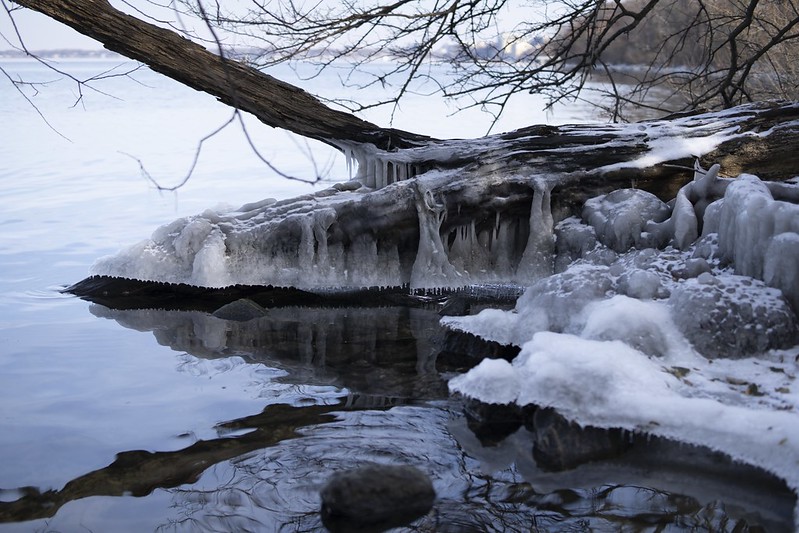
Ice forms on the shore of Lake Mendota. Image credit: Wisconsin Sea Grant

By Maddie Gaudette, Freshwater Collaborative summer research student

This summer, 35 undergraduate students from across the country conducted research with Freshwater@UW, the University of Wisconsin’s cross-site, cross-discipline research opportunities program. Freshwater@UW is supported by the Freshwater Collaborative, Wisconsin Sea Grant, Water@UW–Madison, the Water Resources Institute and the University of Wisconsin–Madison Graduate School. In the final weeks of the program, students reflected on what they learned. Here’s Maddie Gaudette, an undergraduate junior in environment, sustainability and geography from the University of Minnesota Duluth, who worked with Andrea Hicks at UW–Madison.

As a Midwesterner, I understand the importance of a frozen lake; it has brought me some of my fondest memories. From ice fishing with my dad to learning how to skate, ice in winter is a cornerstone of Upper Midwest culture. This connection to frozen lakes is a sentiment that is shared on the University of Wisconsin–Madison campus. Lake Mendota is an established hot spot for winter recreation and festivals, something I have observed firsthand changing as a result of decreased ice cover.

I have found myself drawn to the intersection between observable climate change and public perception of climate change. I could not be more grateful for the research team I have been a part of this summer. Andrea Hicks and my graduate student adviser, Monica, allowed me to expand on my interests in freshwater changes and climate perception, leading me to explore the connections between lake freeze-over rates and local climate perception in the Madison area. I focused on UW–Madison’s beloved Lake Mendota and used state climatology data in addition to local climate perception survey results to research a connection. 

Through my research, I found that changes in lake freezing and disruptions to lake activity such as ice fishing and the cancellation of local festivals have had profound impacts on the Madison area, which has increased local climate perception. The trends I found in the climatology data show a decrease in the annual ice coverage of Lake Mendota, with a strong likelihood of continued decreased ice coverage. In Madison, where so much of the city’s culture is connected to the area’s lakes, changes like this can have long-lasting effects on the city’s and university’s culture. 

This research has been incredibly engaging; I have felt the reverberations of the changes on Lake Mendota, even as a nonresident. I visited Madison last winter for two different events that both ended up being canceled due to a lack of ice coverage: the Winter Carnival and Lily’s Classic. Both events are university traditions and contribute to the culture of UW–Madison and the Madison area. Understanding how winters along Lake Mendota may be changing gives insight into how to get the community involved in climate issues and, at the very least, aware of climate change impacts in their backyard. Understanding the local changing climate is increasingly important in adapting traditions and recreation for the years to come. While Lake Mendota will long be beloved by the university and the community, my research has indicated that its frozen future may look quite different in the years to come. 

The post Lake Mendota serves up lessons in climate change and public perceptions first appeared on Wisconsin Sea Grant.

Original Article

Blog | Wisconsin Sea Grant

Blog | Wisconsin Sea Grant

https://www.seagrant.wisc.edu/blog/lake-mendota-serves-up-lessons-in-climate-change-and-public-perceptions/

Wisconsin Sea Grant

Retirements by water and wastewater plant operators are leading to workforce shortages

By Lester Graham, Michigan Public

The Great Lakes News Collaborative includes Bridge Michigan; Circle of Blue; Great Lakes Now at Detroit Public Television; Michigan Public, Michigan’s NPR News Leader; and The Narwhal who work together to bring audiences news and information about the impact of climate change, pollution, and aging infrastructure on the Great Lakes and drinking water.

Read Now at Great Lakes Now.

Original Article

Great Lakes Now

Great Lakes Now

https://www.greatlakesnow.org/2024/09/retirements-by-water-and-wastewater-plant-operators-are-leading-to-workforce-shortages/

Michigan Public

The Canadian federal government announced a “historic” $76 million in new funding for freshwater restoration on the Great Lakes, with investments targeted toward improving water quality and ecosystem health, as well as community-based science projects. Read the full story by the Windsor Star.

Original Article

Great Lakes Commission

Great Lakes Commission

https://www.glc.org/dailynews/20240923-canadian-gov-funding-greatlakes

Hannah Reynolds

The remains of the John Evenson, a wooden steam tug built in Milwaukee lie five miles northeast of Algoma, Wisconsin, 50 feet below Lake Michigan’s surface. Read the full story by the Milwaukee Journal Sentinel.

Original Article

Great Lakes Commission

Great Lakes Commission

https://www.glc.org/dailynews/20240923-wisconsin-maritime-tugboat-lakemichigan

Hannah Reynolds

Of the 188 aquatic non-native species in the Great Lakes, the species jeopardizing areas of Lake Erie the most is the zebra mussel. Scientists say that they are a great threat to the Great Lakes and their threat should not be minimized due to the loss of the native habitat of the lakes. Read the full story by the Akron Beacon Journal.

Original Article

Great Lakes Commission

Great Lakes Commission

https://www.glc.org/dailynews/20240923-sealamprey-quaggamussels-invasivespecies-lakeerie

Hannah Reynolds

Algal blooms beyond western Lake Erie aren’t particularly new, but they aren’t going away anytime soon, either. There are many lesser-known blooms closer to home for residents of Toledo, Ohio, that are short-lived yet still potentially serious with their own set of health advisories. Read the full story by the Toledo Blade.

Original Article

Great Lakes Commission

Great Lakes Commission

https://www.glc.org/dailynews/20240923-algalblooms-fiftystates

Hannah Reynolds

A new virtual book club is starting up with a specific interest in the Great Lakes. Called Great Lakes Great Read, the initiative encourages people to read a children’s and/or an adult book with a connection to the Great Lakes and join the authors for upcoming webinars. Read the full story by CollingwoodToday.

Original Article

Great Lakes Commission

Great Lakes Commission

https://www.glc.org/dailynews/20240923-greatlakes-bookclub-water

Hannah Reynolds

Instead of a swimming in the Chicago River, participants in the inaugural “Chicago River Swim” swam in Lake Michigan, raising $150,000 for ALS research and $50,000 to fund water safety lessons for 2,000 children in underserved communities. Read the full story by AP News.

Original Article

Great Lakes Commission

Great Lakes Commission

https://www.glc.org/dailynews/20240923-chicagoriverswim-lakemichigan

Hannah Reynolds

Protecting Northeast Wisconsin’s Waterways: Stormwater Management with NEWSC

At the Fox-Wolf Watershed Alliance, we’re excited to highlight the great work being done by the Northeast Wisconsin Stormwater Consortium (NEWSC). NEWSC is dedicated to stormwater management and reducing pollution in our local rivers, lakes, and streams, like the Fox River and Lake Winnebago. By working with municipalities, businesses, and the public, they play a big part in keeping our waterways clean and healthy across Northeast Wisconsin.

Northeast Wisconsin Stormwater Consortium (NEWSC) is all about keeping local waterways clean and healthy by managing stormwater runoff. They work with municipalities, businesses, and the public to help reduce pollution that can end up in rivers, lakes, and streams.

NEWSC logo - Northeast Stormwater Consortium

Here’s What They Do:

  • Education & Outreach: NEWSC runs programs to help people understand how stormwater impacts the environment and what we can all do to help. This includes public campaigns, workshops, and simple tips for homeowners and businesses.

  • Technical Support: They help cities and towns with stormwater plans to make sure they’re following the rules and doing what’s best for the environment.

  • Collaboration: NEWSC brings different groups together to share knowledge and work on stormwater issues as a team.

Here’s Who they serve:

  • Municipalities that need to manage stormwater runoff according to regulations.

  • Businesses that want to be more environmentally friendly.

  • Homeowners and the public who can help by taking small steps like using rain barrels or reducing chemical use in yards.

  • Schools where students can learn about stormwater and how to protect water quality.

  • Municipalities, including cities like Green Bay, Oshkosh, and Appleton, that need to manage stormwater runoff according to state and federal regulations.

By working together as a region, NEWSC is able to take on stormwater challenges in a more impactful way. Protecting water quality helps reduce flooding, keeps pollutants out of our waterways, and preserves the natural environment in Northeast Wisconsin. Whether it’s cities, businesses, schools, or individual homeowners, everyone has a part to play in keeping our waters clean and healthy for future generations!

NEWSC’s efforts make a big difference in protecting our water resources and reducing the impact of stormwater runoff. By working together, we can all do our part to keep our waterways clean and healthy for future generations. Whether you’re a city, business, or homeowner, there are simple steps everyone can take to help protect water quality in Northeast Wisconsin!

Follow the Fox Wolf Watershed Alliance on our Fox-Wolf Watershed Alliance Facebook page or @fox_wolf_watershed_alliance on Instagram! You can also sign-up for email updates at fwwa.org.

The Fox-Wolf Watershed Alliance is an independent nonprofit organization that identifies and advocates effective policies and actions that protect, restore, and sustain water resources in the Fox-Wolf River Basin.

Reporting invasive species is a first step in containing their spread. Maintaining and restoring our waters and landscapes can reduce the impacts even when we don’t have other management options to an invasive species.

The post Stormwater Week 2024 | NEWSC appeared first on Fox-Wolf Watershed Alliance.

Original Article

Fox-Wolf Watershed Alliance

Fox-Wolf Watershed Alliance

https://fwwa.org/2024/09/23/stormwater24newsc/?utm_source=rss&utm_medium=rss&utm_campaign=stormwater24newsc

Dan Beckwith

Library

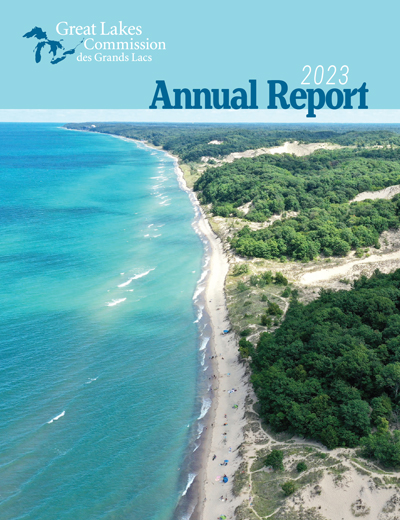
2023 Great Lakes Commission Annual Report

The 2023 Great Lakes Commission Annual Report includes highlights and key accomplishments from the year under the leadership of Chair Mary Mertz and Executive Director Erika Jensen. The Commission’s annual reports traditionally include a summary of highlights from the year as well as financial information and commissioner rosters.

Download PDF | Published September 2024


Original Article

Great Lakes Commission

Great Lakes Commission

https://www.glc.org/library/2023-glc-annual-report

Laura Andrews

News

Great Lakes Phragmites Adaptive Management Framework expanding to improve regional management of invasive Phragmites

Ann Arbor, Mich. –​ The Phragmites Adaptive Management Framework (PAMF) is initiating the first cycle of a new program that will improve Phragmites management across the Great Lakes basin and beyond. Through the PAMF Active Adaptive Management Program (AAMP), more than $239,000 will be awarded to support local organizations in implementing certain combinations of management actions on which PAMF is lacking data. PAMF will use the information gathered by participants to improve its guidance on management practices that are most likely to be effective in controlling invasive Phragmites.

Currently, invasive Phragmites are managed using a suite of approaches, including herbicide, cutting/crushing, flooding and burning. These actions are resource intensive and differ in effectiveness due to site-specific conditions and variations in implementation. The PAMF program utilizes a predictive model that incorporates participant data to continually ‘learn’ more about which management techniques are working against Phragmites in certain conditions and which are not. In turn, the PAMF model predicts optimal guidance for each site based on the most up-to-date data. This process repeats annually to optimize outcomes. Data provided to PAMF by the AAMP grantees will reduce the uncertainty surrounding management outcomes, increase the models predictive power, and improve regional best management practices.

“Nonnative Phragmites australis is one of the most aggressive plant species invading North America and is already well established in the Great Lakes basin,” said Timothy Bruno, vice chair of the Great Lakes Commission and Great Lakes Program Coordinator, Interstate Water Resources Management, at the Pennsylvania Department of Environmental Protection. The GLC provides backbone and administrative support to PAMF. “Its spread has negative impacts on wildlife, water levels and drainage, recreation and tourism and even public safety. The Active Adaptive Management Program will help expand and improve the management of Phragmites across our region.”

2024 is the first of at least two years that AAMP grants will be available for Phragmites management in Great Lakes states. Eligible grantees include tribal or U.S.-based local units of government, lake associations, watershed protection groups, nonprofit 501(c)(3) organizations, colleges, and conservation groups.

Seventeen grants have been awarded so far in 2024:

Grantee

Award

Jurisdiction

Chicago Park District

$22,684

IL

City of Goshen Department of Environmental Resilience

$12,145

IN

Chikaming Open lands

$8,572

MI

Conservation of Waterford Lands (COWL)

$19,276

MI

County of St. Clair Parks and Recreation Commission

$9,127

MI

Crescent Beach Landowners Association

$4,228

MI

Huron-Clinton Metropolitan Authority

$50,250

MI

LSC CISMA

$15,694

MI

Macomb County Public Works Department

$17,730

MI

Six Rivers Land Conservancy

$11,805

MI

Washtenaw County Parks & Recreation Commission

$7,175

MI

Fossil Park Phrag Fighters

$24,394

NY

Conneaut Port Authority

$10,836

OH

Great Lakes Community Conservation Corps

$5,000

WI

Outagamie County Highway Department

$11,121

WI

Pheasants Forever, Inc.

$7,196

WI

Weed Out! Racine

$2,386

WI

TOTAL

$239,621.61

Funding for the PAMF Active Adaptive Management Program is provided by the Great Lakes Restoration Initiative (GLRI) through a grant agreement between the Great Lakes Commission and the U.S. Geological Survey. For more information on AAMP, visit the program’s website.


The Great Lakes Commission, led by chair Mary Mertz, director of the Ohio Department of Natural Resources, is a binational government agency established in 1955 to protect the Great Lakes and the economies and ecosystems they support. Its membership includes leaders from the eight U.S. states and two Canadian provinces in the Great Lakes basin. The GLC recommends policies and practices to balance the use, development, and conservation of the water resources of the Great Lakes and brings the region together to work on issues that no single community, state, province, or nation can tackle alone. Learn more at www.glc.org.

Contact

For media inquiries, please contact Beth Wanamaker, beth@glc.org.

Recent GLC News

Upcoming GLC Events

View GLC Calendar

Archives

Original Article

Great Lakes Commission

Great Lakes Commission

https://www.glc.org/news/aamp-092024

Beth Wanamaker

Trying to build a more climate-resilient Chicago, one balloon at a time

By Juanpablo Ramirez-Franco, WBEZ

This coverage is made possible through a partnership between WBEZ and Grist, a nonprofit, independent media organization dedicated to telling stories of climate solutions and a just future. Sign up for WBEZ newsletters to get local news you can trust.

Read Now at Great Lakes Now.

Original Article

Great Lakes Now

Great Lakes Now

https://www.greatlakesnow.org/2024/09/trying-to-build-a-more-climate-resilient-chicago-one-balloon-at-a-time/

WBEZ

Chicago reveals climate havens don’t exist — they must be created

Experts now say “climate havens” are not places immune from climate change, but areas where adequate preparation is implemented to account for a drastically different climate than anticipated.

Great Lakes cities, like Chicago, are generally considered to be at a lower risk for extreme climate impacts such as wildfires and tropical storms.

Read Now at Great Lakes Now.

Original Article

Great Lakes Now

Great Lakes Now

https://www.greatlakesnow.org/2024/09/chicago-reveals-climate-havens-dont-exist-they-must-be-created/

Mia Litzenberg

In August, scientists with the National Oceanic and Atmospheric Administration’s Great Lakes Environmental Research Laboratory discovered around 40 large underwater features, most of which are about as long as an Olympic swimming pool. They’re cold, dark, and weirdly circular. Read the full story by WUWM – Milwaukee, WI.

Original Article

Great Lakes Commission

Great Lakes Commission

https://www.glc.org/dailynews/20240920-lake-michigan-sinkholes

Nichole Angell

In the only available wild rice spot on Lake Superior, Natives from different nations gather for the wild rice harvest season. The Great Lakes Indian Fish and Wildlife Commission brought their expertise for a harvest alongside representatives from the Mashkiiziibii Natural Resource Department. Read the full story by WDIO – TV – Duluth, MN.

Original Article

Great Lakes Commission

Great Lakes Commission

https://www.glc.org/dailynews/20240920-wild-rice-harvest

Nichole Angell

It’s been more than six weeks since the initial sighting of the Lake Erie alligator. There have been no confirmed sightings since. Wildlife experts review challenges the gator could face with the cold months ahead. Read the full story by the Erie Times-News.

Original Article

Great Lakes Commission

Great Lakes Commission

https://www.glc.org/dailynews/20240920-erie-alligator

Nichole Angell

In addition to serving as picturesque areas for watersports and relaxation, wetlands serve many purposes including flood control and water quality preservation. Today, many different governments, groups, and organizations are working to preserve and restore these crucial ecosystems in Southeast Michigan. Read the full story by Planet Detroit.

Original Article

Great Lakes Commission

Great Lakes Commission

https://www.glc.org/dailynews/20240920-wetland-restoration-detroit

Nichole Angell

The Alliance for the Great Lakes says there is momentum growing across the country to shift the responsibility of the trash burden of plastic production from consumers to producers, and manufacturers need to be a part of the solution. Read the full story by Great Lakes Now.

Original Article

Great Lakes Commission

Great Lakes Commission

https://www.glc.org/dailynews/20240920-sustainable-manufacturing

Nichole Angell

Cyanobacteria blooms are not normal for Lake Superior as the lake is nutrient-poor and the coldest of the Great Lakes, but warming temperatures and increased flooding have overridden its natural barrier against algal blooms. Read the full story by Great Lakes Echo.

Original Article

Great Lakes Commission

Great Lakes Commission

https://www.glc.org/dailynews/20240920-algal-bloom-reporting

Nichole Angell

In a significant stride toward bolstering environmental journalism, Michigan Public is amplifying its coverage of the Great Lakes and drinking water issues, thanks to a generous $200,000 grant. This funding breathes new life into the Great Lakes News Collaborative. Read the full story by Michigan Public Radio.

Original Article

Great Lakes Commission

Great Lakes Commission

https://www.glc.org/dailynews/20240920-great-lakes-news-funding

Nichole Angell

By Donté Smith The surge in electric bike (e-bike) sales has been nothing short of “obvious,” according to Rick Teranes, the co-owner of Bikes Blades & Boards in Grosse Pointe, Michigan “Sales of e-bikes have multiplied in recent years,” Teranes said, highlighting the significant shift in Metro Detroit’s cycling landscape driven by their growing popularity. […]

The post E-bike surge sparks safety concerns amid policy changes first appeared on Great Lakes Echo.

Original Article

Great Lakes Echo

Great Lakes Echo

http://greatlakesecho.org/2024/09/20/e-bike-surge-sparks-safety-concerns-amid-policy-changes/

Donte Smith

By Katie Finkbeiner Capital News Service In Iron Mountain, Michigan, Sandstone Terrace rooftop bar shares an alley with First National Bank and Trust. And hanging over the alley: a sky art installation. In the summer of 2023, the installation consisted of a rainbow assortment of umbrellas. In June 2024, the umbrellas were replaced by rotating […]

The post Small grants boost businesses, neighborhoods, in cities across the state first appeared on Great Lakes Echo.

Original Article

Great Lakes Echo

Great Lakes Echo

http://greatlakesecho.org/2024/09/20/small-grants-boost-businesses-neighborhoods-in-cities-across-the-state/

Katie Finkbeiner

Editor: In the public interest and in accordance with Federal Aviation Administration regulations, the USGS is announcing this low-level airborne project. Your assistance in informing the local communities is appreciated.

Original Article

Midcontinent Region

Midcontinent Region

https://www.usgs.gov/news/state-news-release/media-alert-low-level-airplane-flights-image-geology-sioux-falls-larger-tri?utm_source=comms&utm_medium=rss&utm_campaign=news

lrussell@usgs.gov

Celebrating Local Heroes: Fox-Wolf Watershed Alliance Announces 2024 Impact Award Winners

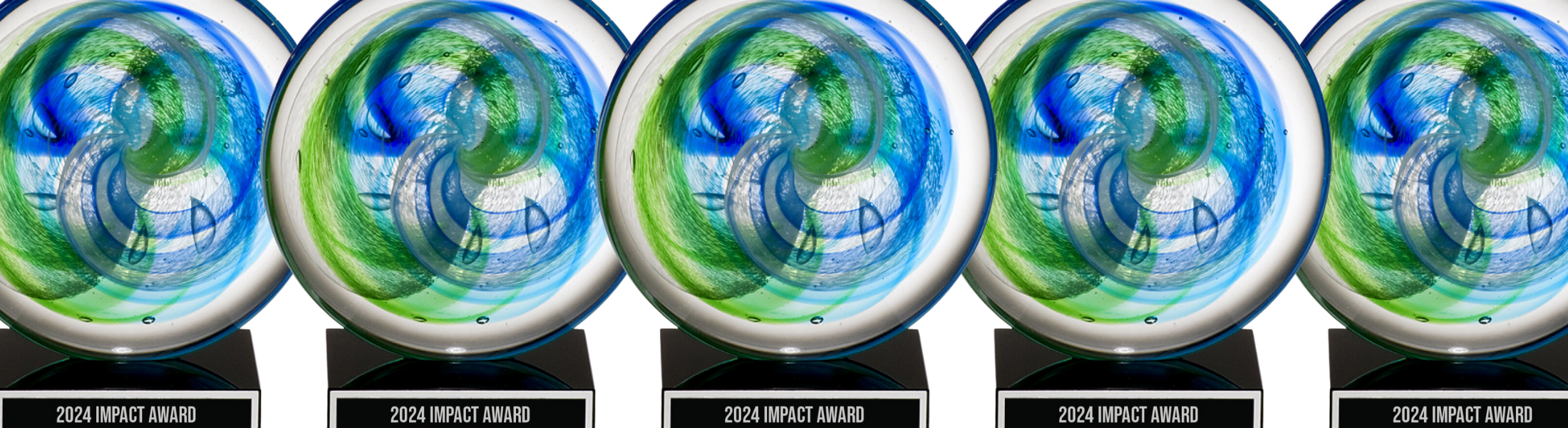
2024 Impact Award - A glass Circle with Green and Blue swirling inside

Fox-Wolf Watershed Alliance is excited to announce the 2024 Impact Award recipients, recognizing local leaders and organizations making significant strides in environmental conservation and sustainability.

Lifetime Achievement

Leading the awards is Hallet “Bud” Harris, who will receive the Lifetime Achievement Award for over 50 years of tireless work in water conservation. As a professor and advocate, Bud has played a pivotal role in major projects like the Fox River PCB cleanup, shaping the ecological future of the bay of Green Bay. Even after retirement, his efforts to raise over $1 million for water monitoring programs and continued leadership in the conservation community have left an enduring legacy that still inspires future generations.

Impact Awards

Alongside Harris, several others will be honored for their unique contributions:

Seven Oaks Dairy is being recognized for pioneering sustainable farming practices that improve soil health and water quality. Their work as part of the Climate Smart Dairy Study and commitment to sharing best practices is helping shape the future of sustainable agriculture.

Jeff Mazanec, a Senior Consultant at raSmith and long-time board member of Fox-Wolf Watershed Alliance, is honored for his contributions to stormwater management and community engagement. His passion for water-based recreation and innovative tools like PermiTrack have helped enhance local water quality efforts.

Community First Credit Union has earned recognition for its eco-friendly infrastructure. By integrating native plantings and permeable pavers at their facilities, they are setting a positive example of how sustainable business practices can benefit the environment.

Ryan Kudish, meteorologist at WFRV-TV Local 5, is receiving an award for his work on Sustainably Speaking, a news segment that raises awareness about environmental issues and inspires community action.

Happiest Hour

These honorees will be celebrated at The Happiest Hour on October 10 at The Hillside at Plamann Park in Appleton. Join us to celebrate their achievements and support sustainability!

The post 2024 Impact Award Winners appeared first on Fox-Wolf Watershed Alliance.

Original Article

Fox-Wolf Watershed Alliance

Fox-Wolf Watershed Alliance

https://fwwa.org/2024/09/20/2024-impact-award-winners/?utm_source=rss&utm_medium=rss&utm_campaign=2024-impact-award-winners

Dan Beckwith

After 10 million pieces of beach trash, Chicago advocates push for sustainable packaging

Plastic is the dominant source of beach trash in the Great Lakes region.

That’s the finding by the Chicago-based non-profit Alliance for the Great Lakes in a recently released report that analyzed beach litter picked up by its volunteers over the past 20 years.

“Twenty years of data collected by volunteers shows that 86% of the trash was either fully or partially made from plastic,” the Alliance said in a press release.

Read Now at Great Lakes Now.

Original Article

Great Lakes Now

Great Lakes Now

https://www.greatlakesnow.org/2024/09/after-10-million-pieces-of-beach-trash-chicago-advocates-push-for-sustainable-packaging/

Gary Wilson, Great Lakes Now

The Wisconsin Department of Natural Resources is banking on public oversight of the largest Great Lake to help gauge the threat of increasingly common algal blooms. Blue-green algae, also known as cyanobacteria, can produce toxins that pose a danger to public health, said Kait Reinl, research coordinator at the National Oceanic and Atmospheric Administration’s Lake […]

The post Wisconsin officials ask the public to report algal blooms in Lake Superior first appeared on Great Lakes Echo.

Original Article

Great Lakes Echo

Great Lakes Echo

http://greatlakesecho.org/2024/09/19/wisconsin-officials-ask-the-public-to-report-algal-blooms-in-lake-superior/

Anna Barnes

By Clara Lincolnhol “Be curious, not judgmental.” This quote from the popular comedy-drama “Ted Lasso” is how a professor of energy law recommends we approach conversations about energy policy and politics. “We can be a force that fights against demonization and the nastiness online and instead ask questions to people who introduce an idea that’s […]

The post Energy transition requires fight against disinformation, expert says first appeared on Great Lakes Echo.

Original Article

Great Lakes Echo

Great Lakes Echo

http://greatlakesecho.org/2024/09/19/energy-transition-requires-fight-against-disinformation-expert-says/

Clara Lincolnhol

Energy News Roundup: Michigan, Michigan, Michigan

There’s a whole lot of energy stuff happening in Michigan.

The push to restart the Palisades nuclear reactor in the southwestern part of the state is gaining steam. So is the opposition. The plant, which shuttered in 2022 amid competition from cheaper energy sources, is now set to receive more than $2.4 billion in public subsidies.

Read Now at Great Lakes Now.

Original Article

Great Lakes Now

Great Lakes Now

https://www.greatlakesnow.org/2024/09/energy-news-roundup-michigan-michigan-michigan/

Nicole Pollack, Great Lakes Now

Patchy fog, locally dense with visibilities around one-quarter mile, was still impacting locations close to the bay and Lake Michigan. The dense fog will result in locally hazardous driving conditions through about 9 am. When driving in fog, slow down, use your low beam headlights and keep a safe distance from other vehicles, as the visibility may change rapidly in a short distance. Allow extra time to reach your destination during the morning commute.

Original Article

Current watches, warnings, and advisories for Brown County (WIC009) WI

Current watches, warnings, and advisories for Brown County (WIC009) WI

https://api.weather.gov/alerts/urn:oid:2.49.0.1.840.0.4f16d467b0fa166960d0d704d00db3c7a9ff5d10.001.1.cap

NWS

Patchy fog, locally dense with visibilities from one-quarter to one-half of a mile, were impacting locations close to the bay and Lake Michigan. The dense fog will result in locally hazardous driving conditions. Any fog will lift by 8 or 9 AM. When driving in fog, slow down, use your low beam headlights and keep a safe distance from other vehicles as the visibility may change rapidly in a short distance. Allow extra time to reach your destination.

Original Article

Current watches, warnings, and advisories for Brown County (WIC009) WI

Current watches, warnings, and advisories for Brown County (WIC009) WI

https://api.weather.gov/alerts/urn:oid:2.49.0.1.840.0.c0795e80f593fef12c2dddedcd73c295c7aa1b5c.001.1.cap

NWS

Who is working to preserve and restore wetlands in Metro Detroit?

By Erica Hobbs, Planet Detroit

This article was republished with permission from Planet Detroit. Sign up for Planet Detroit’s weekly newsletter here.

Wetlands don’t often come to mind when thinking about major metropolitan cities like Detroit. Bogs, marshes, vernal pools, and swamps contrast starkly with the city’s skyscrapers, roads, and industrial plants, and up to 90 percent of the area’s wetlands along the Detroit River have been lost since European settlement.

Read Now at Great Lakes Now.

Original Article

Great Lakes Now

Great Lakes Now

https://www.greatlakesnow.org/2024/09/who-working-to-preserve-and-restore-wetlands-in-metro-detroit/

Planet Detroit