The U.S. Coast Guard’s Great Lakes District on Tuesday announced the use of autonomous drones starting this month on the Great Lakes. The so-called “sail drones,” unmanned vessels powered by both wind and solar energy, will be on the lakes from May to October. Read the full story by The Detroit News.

Original Article

Great Lakes Commission

Great Lakes Commission

https://www.glc.org/dailynews/20260506-saildrones

Taaja Tucker-Silva

A federal judge has temporarily prevented the Lac du Flambeau Band of Lake Superior Chippewa from restricting musky and walleye fishing on 19 lakes within its reservation in northern Wisconsin. The state’s federal lawsuit came after the tribe passed resolutions seeking to bar musky and walleye fishing by anyone except tribal members, citing “critically low” populations. Read the full story by Wisconsin Public Radio.

Original Article

Great Lakes Commission

Great Lakes Commission

https://www.glc.org/dailynews/20260506-fishing-restrictions

Taaja Tucker-Silva

It’s been years since Lake Ontario water levels have drawn concern. However, with a wet spring and heavier-than-normal snowfall, officials in coastal areas along Wayne County, New York, are on the edge of activating emergency plans to protect shorelines. Read the full story by the Finger Lakes Times.

Original Article

Great Lakes Commission

Great Lakes Commission

https://www.glc.org/dailynews/20260506-ontario-rising

Taaja Tucker-Silva

Several Great Lakes and Mississippi River conservation groups are urging the federal government to take action against nitrate contamination in drinking water, which they say has reached “crisis levels” and is a public health emergency. Read the full story by the Milwaukee Journal Sentinel.

Original Article

Great Lakes Commission

Great Lakes Commission

https://www.glc.org/dailynews/20260506-nitrate

Taaja Tucker-Silva

The proposed fiscal year 2027 U.S. budget includes the elimination of Integrated Ocean Observing System (IOOS) Regional Observations — the backbone of Great Lakes monitoring systems. If enacted, the cuts would significantly disrupt data collection efforts across the Great Lakes. Read the full story by The Observer.

Original Article

Great Lakes Commission

Great Lakes Commission

https://www.glc.org/dailynews/20260506-monitoring-cuts

Taaja Tucker-Silva

Lake Huron yields hundreds of shipwrecks in places such as Thunder Bay’s “Shipwreck Alley.” Scientists and communities are working to explore, protect, and understand these underwater treasures, which face challenges from environmental change and human impact. Read the full story by Michigan Public.

Original Article

Great Lakes Commission

Great Lakes Commission

https://www.glc.org/dailynews/20260506-huron-shipwrecks

Taaja Tucker-Silva

The use of an uncrewed vessel known as a Saildrone has helped researchers learn about aquatic life in Lake Erie. The Saildrone proved to be a viable and safer alternative to traditional research boats for collecting data. Read the full story by the Erie Times-News.

Original Article

Great Lakes Commission

Great Lakes Commission

https://www.glc.org/dailynews/20260506-erie-saildrone

Taaja Tucker-Silva

Saginaw Bay, Michigan, reportedly generated more than $60 million in economic activity last year via recreational angling; saw the harvest of 500,000-plus walleye; and accounted for 1.84 million angler hours, representing 42% of the total fishing effort in all Michigan waters of the Great Lakes. Read the full story by the Iosco County News-Herald.

Original Article

Great Lakes Commission

Great Lakes Commission

https://www.glc.org/dailynews/20260506-saginaw-bay

Taaja Tucker-Silva

How can we ensure large water users such as data centers use our water resources sustainably and prevent pollution in our communities? As data centers proliferate across the Great Lakes region, federal, state and local governments are proposing new frameworks and policy solutions to manage their impact, including the POWER Act (SB4016/HB5513) in Illinois. At the same time, businesses are innovating sustainable solutions that reduce water use and prevent pollution. Hear from experts about the impact of these water users and solutions. Ask your questions on this virtual event.

This event is part of Chicago Water Week 2026, presented by Current.

Panelists:

  • Andrea Densham, Director of Regional Government Affairs, Alliance for the Great Lakes
  • Andrew Rehn, Director of Climate Policy, Prairie Rivers Network
  • Helena Volzer, Senior Source Water Policy Manager, Alliance for the Great Lakes

Related Links:

Protect the Great Lakes

Your contribution supports advocacy that protects the Great Lakes today and far into the future.

Give a gift today

The post Webinar: Protecting our water: New policies for data centers and large water users appeared first on Alliance for the Great Lakes.

Original Article

News - Alliance for the Great Lakes

News - Alliance for the Great Lakes

https://greatlakes.org/2026/05/webinar-protecting-our-water-new-policies-for-data-centers-and-large-water-users/

tfazzini

By Vivian La, IPR

This story is made possible through a partnership between Interlochen Public Radio and Grist, a nonprofit environmental media organization.


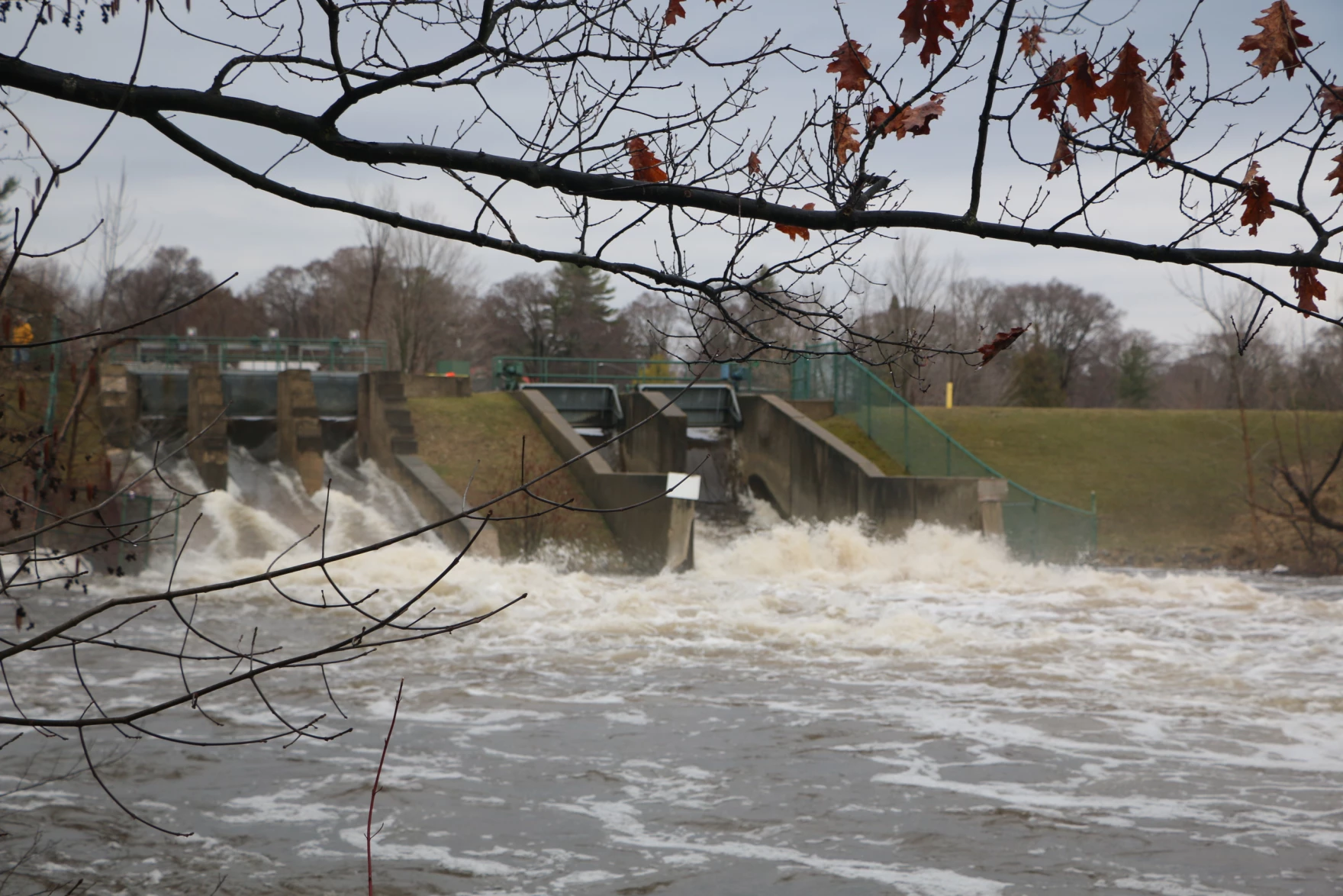
As waters recede across northern Michigan waterways from last week’s historic flooding, local leaders, advocates and experts are renewing calls to bolster safety regulations, upgrade or remove some of the state’s aging dams.

The record-high rainfall for some parts of northern Michigan — combined with melt from March’s above-average snow — pushed infrastructure to the brink across the region in CheboyganBellaire and other cities.

For some, the flooding was a reminder of our vulnerabilities in the face of extreme weather, which is expected to worsen as our climate continues to shift.

“This needs to be considered not the worst we can experience. This needs to be considered as typical of the future,” said Richard Rood, a professor emeritus at the University of Michigan who studies climate change.

More than half of Michigan’s 2,500 dams have reached the end of their 50-year design life, according to state data. And an estimated $1 billion is needed to pay for all the upgrades needed in the state.

‘Would have been far worse’

Bob Stuber, executive director of the Michigan Hydro Relicensing Commission, peers at the swollen Boardman-Ottaway River in downtown Traverse City. The river saw record-breaking levels from the flood, which came shy of a 500-year flood, according to the city.

“It’s really remarkable how quickly it’s recovered here,” he said.

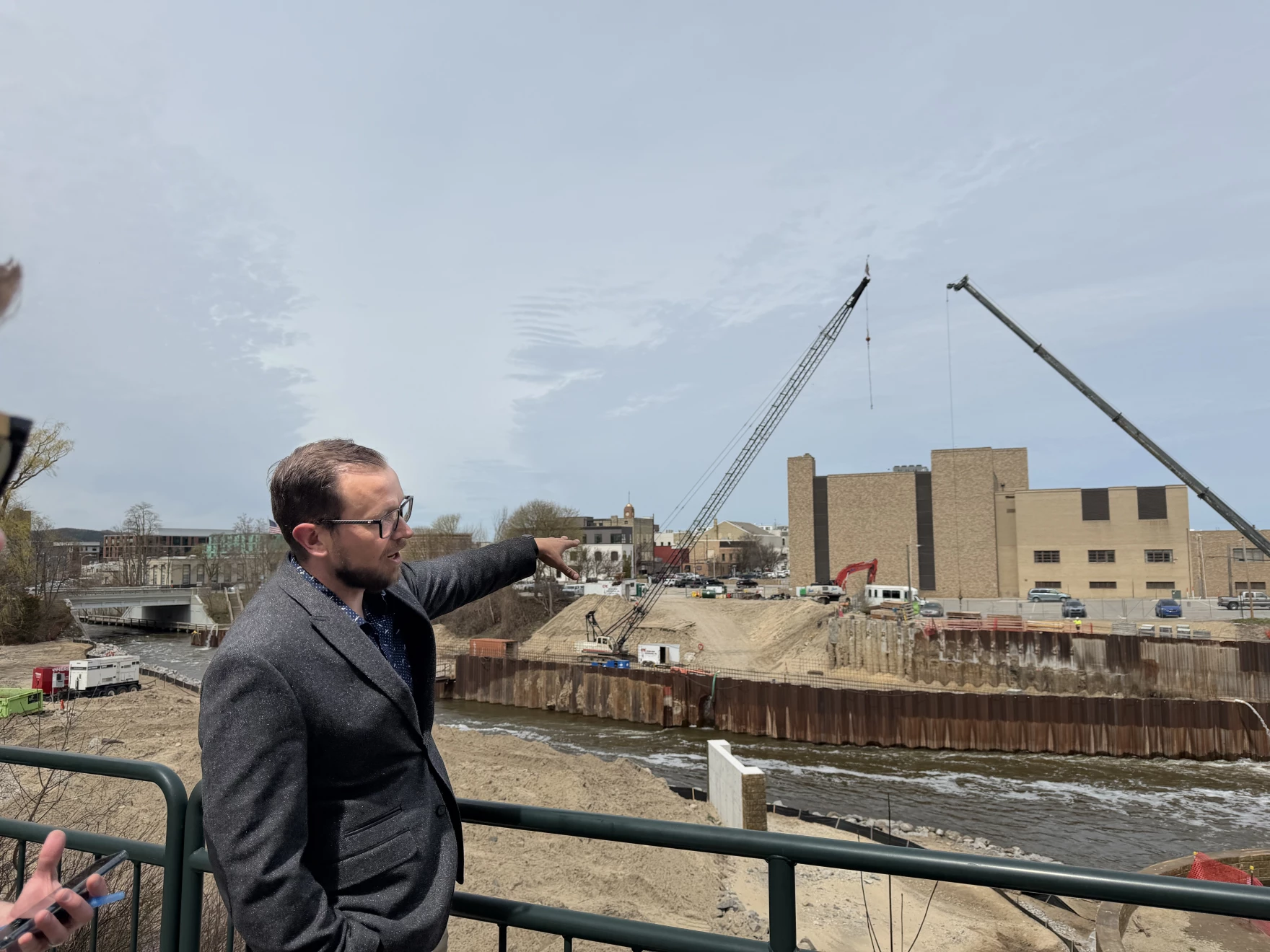
That recovery is largely thanks to the 2024 removal of the old Union Street Dam, said engineers at the Great Lakes Fishery Commission (GLFC). The old dam was upgraded to a different structure for FishPass, the final part of a river restoration project on the Boardman.

“Upstream would have been under two more feet of water, which would have been quite devastating,” said Daniel Zielinski, a principal engineer for GLFC. “We actually had a really great stress test of the system. It functioned really well.”

Dan Zielinski, a principal engineer for the Great Lakes Fishery Commission, points at the FishPass construction site in downtown Traverse City late April. The Boardman-Ottaway River saw record-breaking water levels from April flooding. (Photo: Vivian La/IPR News)

Stuber said the flooding at Boardman-Ottaway River signals what needs to happen across the state: more dam upgrades and dam removals where it makes sense.

“I think every opportunity we have to remove an aging dam, we should take advantage of it because it’s not going to get better. It’s just going to get worse,” he said.

Dam removals

Conservation organizations like Huron Pines help dam owners in northern Michigan remove small dams on their property. They’ve managed nine removals in the last 13 years.

The organization has seen more interest from dam owners in removals after the recent flooding, said Josh Leisen, senior project manager for Huron Pines.

“There are costs associated with repair, and there are risks associated with having a dam,” Leisen said. “Even if it seems to be in good condition, you get extreme weather events like we just had.”

Removal is often a win-win for waterways and dam owners, he said. Ecosystems get reconnected and owners don’t have to pay for expensive upkeep of aging dams.

But some dams are easier to remove than others. People are often reluctant to give up the lakefront access that dams often create.

“A lot of other industries are sustained by the fact that we have built dams in our systems,” said Heather Huffstutler, executive director for the environmental organization Tip of the Mitt Watershed Council.

Some dams also provide electricity, drinking water or are used for transportation. But Huffstutler sees a growing momentum around small dam removal, which could help mitigate future flood impacts.

“When a river is allowed to use its floodplain and then use those associated wetlands and headwater streams, the less flooding we will see,” she said.

A proposed legislative solution 

Upgrading or removing dams is also expensive. The Boardman-Ottway River dam removal — considered the largest removal effort in the state’s history — cost $25 million for three dams. Huron Pines is managing the removal of Sanback Dam in Rose City next month, with an estimated cost of $4 million.

Funding for half of the Sanback removal comes from a grant program through the Michigan Department of Environment, Energy and Great Lakes (EGLE) — as a response to the 2020 Edenville dam failure. The $44 million state program funded several dam removals, upgrades and engineering studies before it ended last year.

Now, local and state officials are renewing calls for more money and stronger safety regulations.

“Dam safety may be an issue that isn’t partisan,” said Phil Roos, director of EGLE.

Proposed legislation would bolster rules around inspections, private ownership, design standards, and create more funding opportunities for upgrades or dam removals.

“It’s so important to our state that we can come together, and whether it’s passing the legislation that was proposed, or improving procedures or ultimately funding,” Roos said.

State Sen. John Damoose, R-Harbor Springs, said at a Traverse City roundtable discussion on dam safety that he’s concerned about private dam ownership after the close call at Cheboygan Dam. Michigan owns about 1,000 dams in the state, others are privately owned.

“Somebody made a point, ‘Well, we can’t have private companies owning these things.’ I tend to believe in private ownership but they might be right,” Damooose said.

Flooding in a warming world

Climate change is likely to bring more frequent and intense storms capable of similar floods.

As the climate warms, more water is evaporating. And an atmosphere with increased moisture can fuel intense precipitation, according Rood at the University of Michigan.

Recent flooding “has shown an incredible vulnerability,” he said. “(Dams) are either going to have to be removed or reengineered. Or they’re going to become a set of slowly unfolding failures.”

Luke Trumble, chief of dam safety for Michigan, agrees we’re living in a different climate than when most dams in the state were built. But flooding will still happen, he said.

“It’s a little bit of a misconception that if we fix the dam issue, there’ll be no more flooding,” Trumble said. “There’s still going to be flooding on rivers whenever we get rain like this, or rain on snow.”

There’s still a solution, though.

“What we can do with dam safety legislation is help ensure that flooding is not made worse by a dam failure,” he said.

The post How do we adapt Michigan’s dams to climate change? appeared first on Great Lakes Now.

Original Article

Great Lakes Now

Great Lakes Now

https://www.greatlakesnow.org/2026/05/05/how-do-we-adapt-michigans-dams-to-climate-change/

Interlochen Public Radio and Grist

By Lily Cole Nationally, farmers markets are growing rapidly. The U.S. Department of Agriculture reported 2,863 markets in 2000, with that number rising to more than 8,700 in 2025. In Michigan alone, more than 200 markets offer amenities for patrons, including fresh produce and special events.

Original Article

Great Lakes Echo

Great Lakes Echo

https://greatlakesecho.org/2026/05/05/rooted-in-community-farmers-markets-continue-to-grow/

Lily Cole

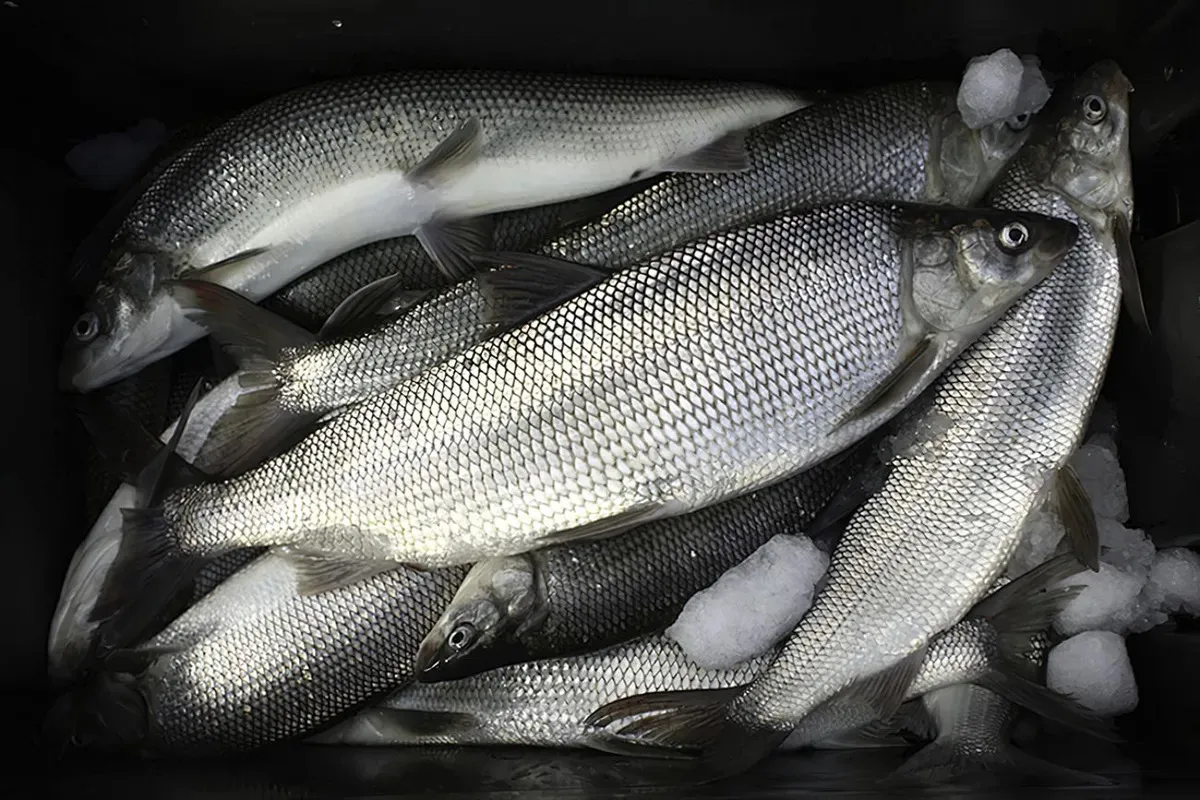
As lake whitefish teeter on the brink of collapse in the lower Great Lakes, Michigan lawmakers are considering investing in a last-ditch effort to save the iconic species before it’s too late.

An appropriations bill under consideration in the Democrat-controlled state Senate would allocate money to the Michigan Department of Natural Resources for a rearing and stocking program aimed at “supporting lake whitefish stock recovery.”

The line item includes a $100 allocation, which state Sen. John Cherry, D-Flint, described as a placeholder number pending further deliberations about how much money — if any — to devote to the effort.

“It could potentially be now or never for some of those genetic stocks,” Cherry said, noting that some whitefish bloodlines in lakes Michigan and Huron could vanish within years.

Budget deliberations are in their early phases and proposals from Gov. Gretchen Whitmer and the Republican-led House of Representatives do not include funding for whitefish.

State Reps. Ken Borton and Ann Bollin, who lead committees overseeing the DNR budget in the House, did not return calls from Bridge Michigan seeking comment.

The House approved a $76 billion budget last week that would cut DNR funding by $36.3 million. Whitmer’s budget proposal would increase DNR funding by $63.5 million.

The Senate could pass its version as soon as this week, setting up further negotiations as the two chambers face a September deadline to pass a unified budget.

The funding effort follows extensive reporting on the whitefish collapse in Bridge Michigan over the past year. 

“Quite frankly, your guys’s reporting was helpful in highlighting the issue,” Cherry told Bridge. “Otherwise, I think a lot of folks wouldn’t be aware of it.”

The fish are a revered symbol of the Great Lakes and the No. 1 commercial catch for what remains of the region’s once-robust commercial fishery.

Ecosystem changes wrought by invasive quagga and zebra mussels have transformed the Great Lakes, devastating whitefish populations and prompting fears that the species could virtually disappear from lakes Michigan and Huron. 

The mussel invasion is considered among the biggest threats to the Great Lakes in history. 

Yet Bridge found that, while the US government has spent mightily to combat other threats, the fight against mussels has received a comparative pittance: less than $1 million annually, or about a penny for every dollar devoted to guarding the Great Lakes against invasive carp.

In the wake of that reporting, US Reps. Debbie Dingell and Tim Walberg cosponsored legislation that aims to devote $500 million to mussel control research over the next decade.

State funding for whitefish recovery is likewise limited amid budget constraints and a DNR funding structure that prioritizes game species like salmon and trout ahead of primarily commercial species like whitefish.

At current funding levels, mussel control research may take decades to achieve a breakthrough. The lower lakes’ whitefish “don’t have the time to wait,” said DNR fisheries chief Randy Claramunt.

So tribal, state, federal and university officials have been discussing ways to raise whitefish in captivity until the Great Lakes are hospitable enough for them to thrive again. 

The effort likely would involve both a hatchery stocking program and an effort to establish captive whitefish populations for future breeding efforts.

“Who has facility space? Who can do something if funding is available? What could we do without having to build a new facility?” Claramunt said. “That’s what we’re all looking at right now as a stopgap measure to buy us time before we lose some of these stocks.”

There are 18 genetically distinct whitefish populations in lakes Michigan and Huron, 14 of which are considered imperiled. 

“The other four that were considered stable are now at risk of declining,” Claramunt said. 

That includes stocks in Green Bay, which was once considered a rare stronghold for Great Lakes whitefish.

So far, most recovery efforts have been small-scale, led by tribal natural resources agencies with limited budgets and staff. But as stocks have dwindled, whitefish advocates have increasingly pushed for bigger, bolder rescue efforts.

For each population rescued, Claramunt said, it would cost between $200,000 and $300,000 annually to collect spawning fish from the lakes, raise their offspring for stocking efforts, and hold some adults in captivity for future breeding.

The DNR may have space in its hatchery facilities to rescue up to three populations, Claramunt said. It’s possible other tribal, government or university agencies could lend more space.

“We’re concerned that a genetic rescue is necessary, and if we don’t do it as soon as possible … that these stocks will be lost,” Claramunt said.

Michigan has a long history of rescuing species under threat, Cherry said, from wild turkeys to moose. It has also had failures, such allowing the passenger pigeon to be hunted to extinction.

“We have an opportunity right now to figure out which direction we want to go,” Cherry said. “The direction of the passenger pigeon, or do we want to go the direction of the turkey?”

The post Michigan lawmakers may fund last-ditch effort to save whitefish appeared first on Great Lakes Now.

Original Article

Great Lakes Now

Great Lakes Now

https://www.greatlakesnow.org/2026/05/05/michigan-lawmakers-may-fund-last-ditch-effort-to-save-whitefish/

Kelly House, Bridge Michigan