Billions of cicadas will emerge in the Midwest this spring during a once-in-a lifetime event, but you may want to keep them off the menu.

Research shows the insects contain surprisingly high levels of mercury.

The post This year’s cicadas could contain contaminants—best to keep them off the dinner plate first appeared on Great Lakes Echo.

Original Article

Great Lakes Echo

Great Lakes Echo

http://greatlakesecho.org/2024/04/11/this-years-cicadas-could-contain-contaminants-best-to-keep-them-off-the-dinner-plate/
Clara Lincolnhol

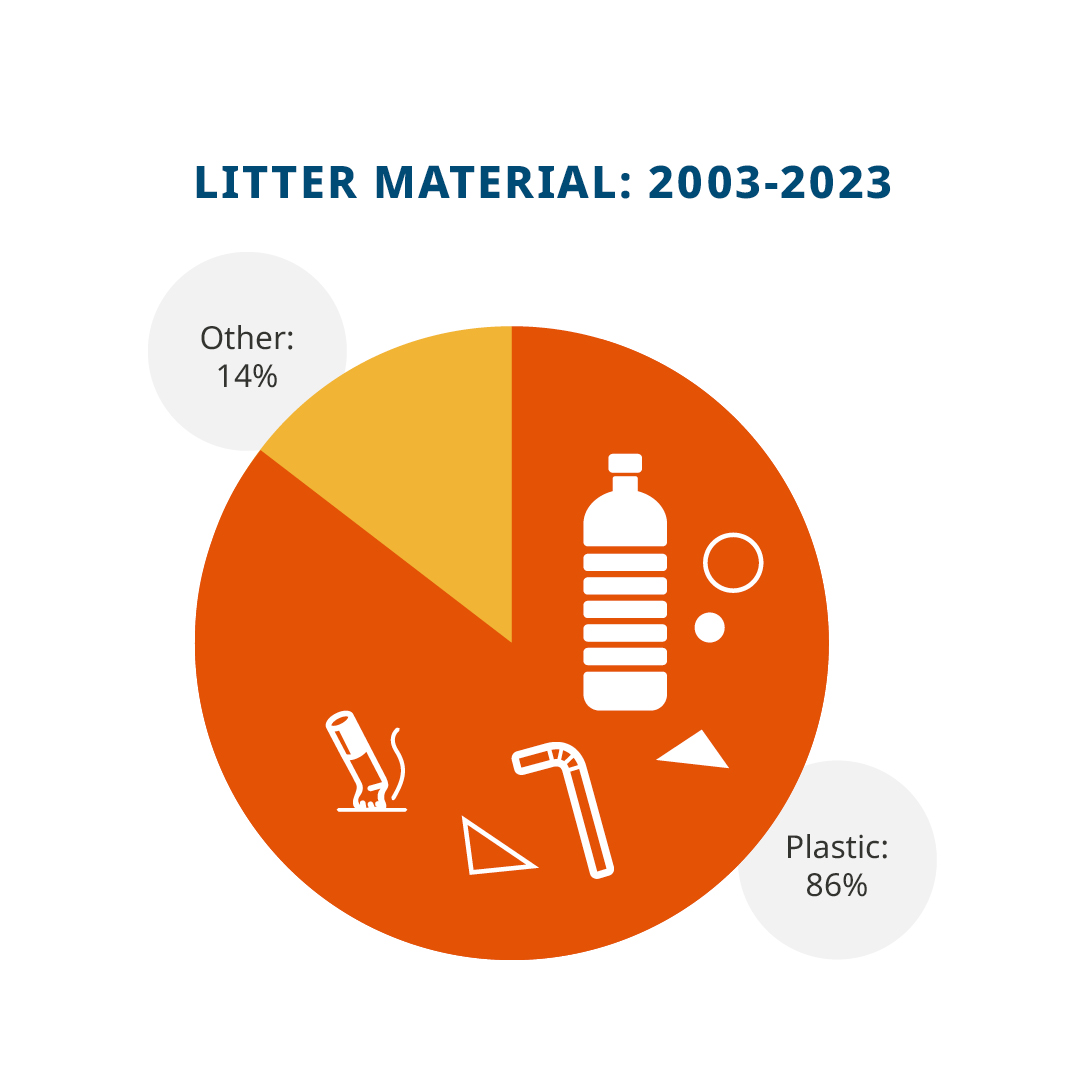
Litter Material: 2003-2023. Plastic: 86%. Other: 14%.

CHICAGO, IL (April 11, 2024) Eighty six percent of litter collected on Great Lakes beaches is composed either partially or fully of plastic, according to a new report released by the Alliance for the Great Lakes. The report is based on 20 years of data collected from more than 14,000 Adopt-a-Beach cleanups on all five Great Lakes. The new analysis details the most common types of plastic items found on Great Lakes shorelines and outlines potential solutions to reduce plastic pollution. In the environment, plastics never go away. Instead, they break down into toxic microplastic particles that make their way into the Great Lakes, a source of drinking water for 40 million people. 

Plastic pollution threatens human health & the environment

“Plastic pollution in the Great Lakes is a threat to both human health and the environment,” said Olivia Reda, the author of the report and the Volunteer Engagement Manager at the Alliance for the Great Lakes. “The volume of plastic found on our shorelines demonstrates the urgent need to pass federal, state, and local laws that reduce plastic pollution getting into the lakes. While our dedicated volunteers are cleaning up literally tons of litter each year, more of this plastic litter enters our waters, where it breaks down into tiny particles that are found in our drinking water.” 

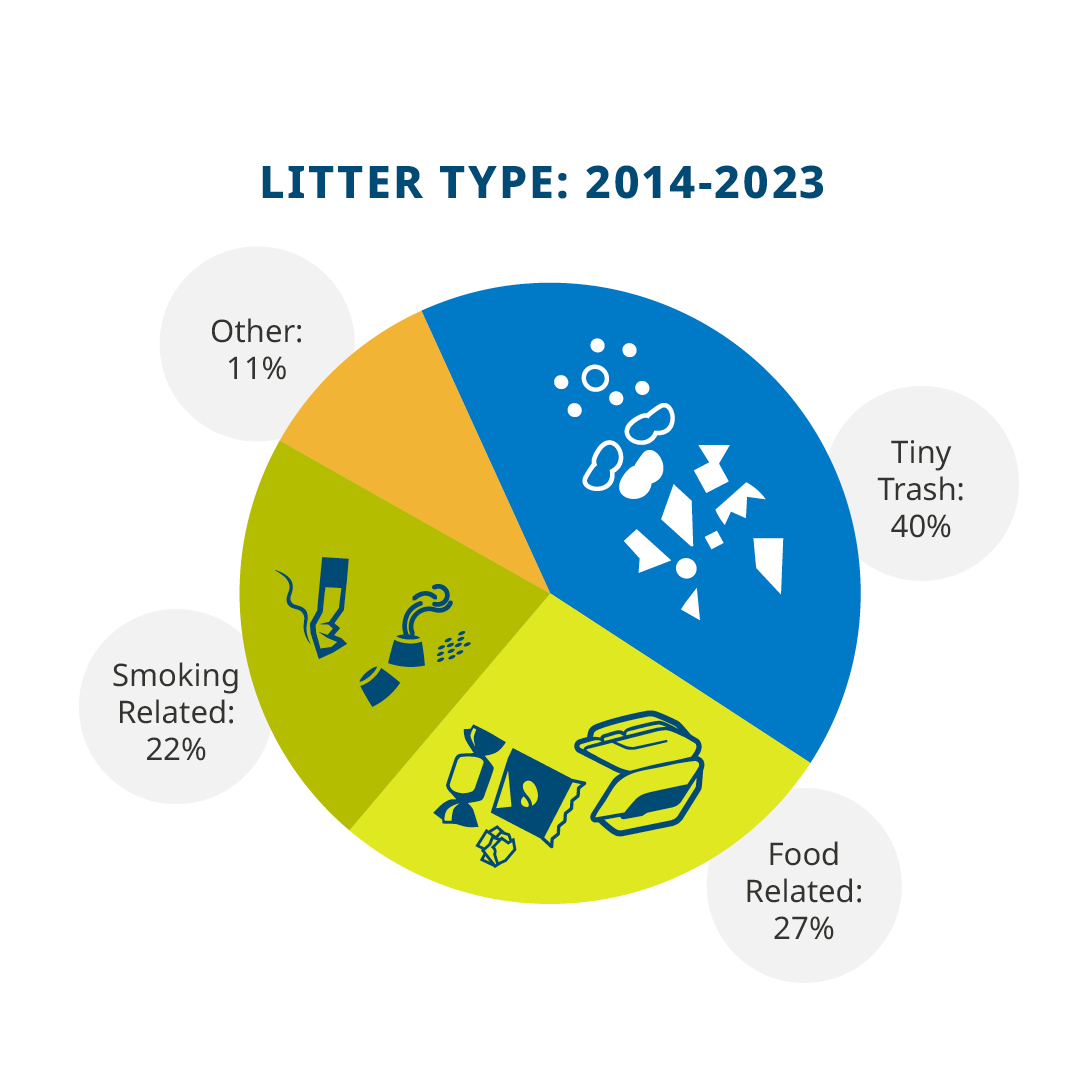
Litter type: 2014-2023. Tiny trash: 40%. Food related: 27%. Smoking related: 22%. Other: 11%.

The data in the report, Adopt-a-Beach: 20 Years of Great Lakes Litter Data, reveals alarming and consistent patterns. Most of the litter is plastic, and many are single-use items – used once and left behind – which contain plastic. Volunteers categorize each piece of litter into a type, such as cigarette butts, plastic beverage bottles, or “tiny trash” including plastic pieces, foam pieces, and glass pieces measuring 2.5 cm or less. For the last 10 years, the top litter items collected are tiny plastic pieces, followed by cigarette butts, tiny foam pieces, plastic bottle caps, and food wrappers. Forty percent of all litter is in the “tiny trash” category.  

Solutions require action beyond individual behavior change

While it’s important for individuals to reduce their plastic use, the report notes that substantially reducing plastic pollution will require action from businesses, governments, and manufacturers. The Alliance for the Great Lakes is calling for implementing Extended Producer Responsibility policies — holding producers responsible across the life cycle of their products and packaging from design and materials to end-of-life management. Such policies have been in place for years in Europe and the Canadian provinces of Ontario and Quebec. More recently California, Colorado, Maine, and Oregon have passed versions of these common-sense solutions, which are now being considered across the Great Lakes basin. 

Shorter-term solutions include reducing or eliminating the most problematic plastics like single-use bags and foam, deploying new technologies such as microfilters in washing machines to remove plastic microfibers before they enter our water systems, stopping the spills of industrial plastic pellets in the Great Lakes, and increasing access to water refilling stations as well as reuse and refill packaging. These types of policy solutions are moving forward in several Great Lakes states. 

The power of citizen science

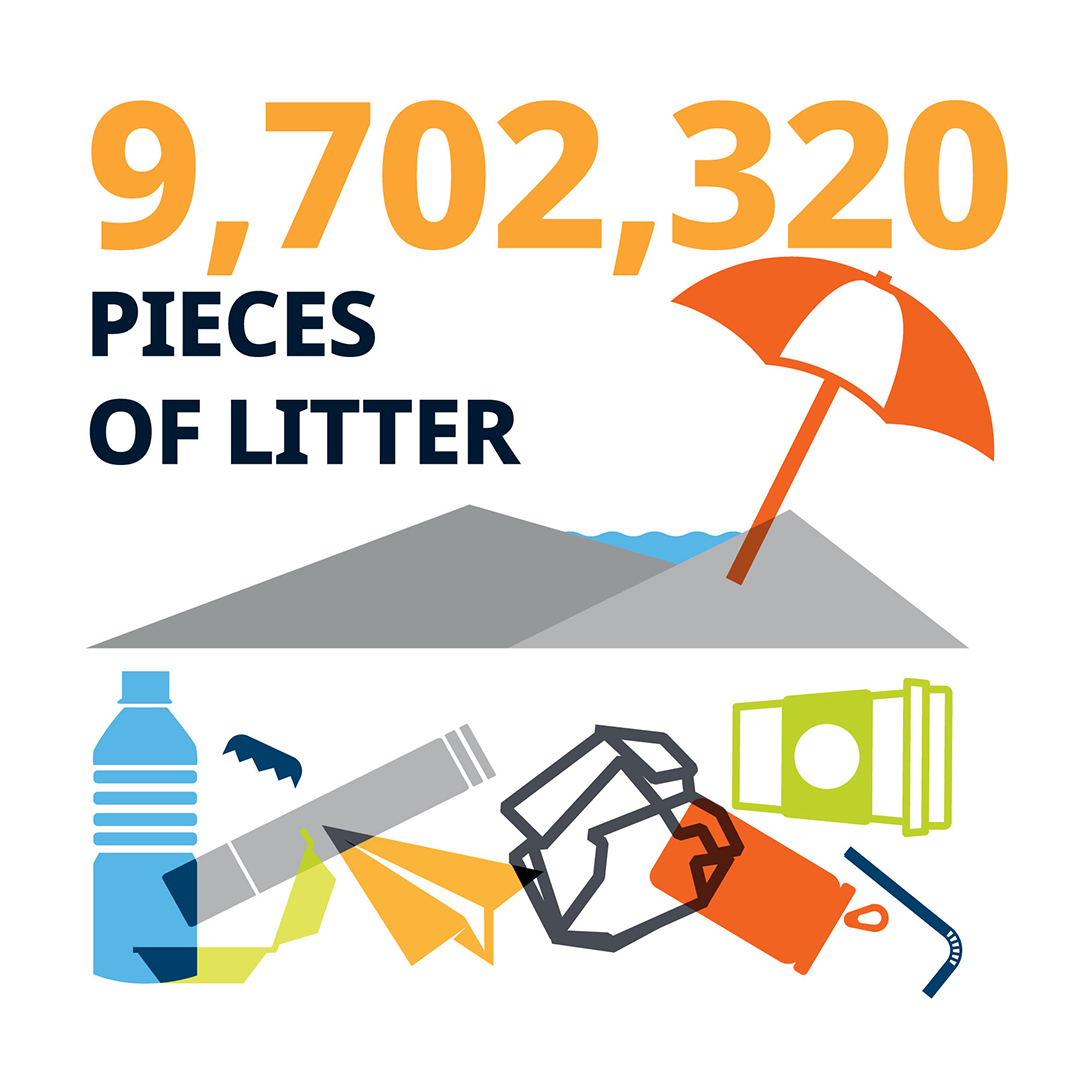
9,702,320 pieces of litter.

Since launching in 1991, the Alliance’s Adopt-a-Beach cleanups have evolved into the most extensive volunteer program ever to collect data on Great Lakes beach litter. Volunteers receive training and resources to host year-round cleanups in communities in all eight Great Lakes states. Since the start of the program, over 200,000 volunteers have participated in cleanups, removing over 9,700,000 individual pieces and over 535,000 pounds of litter from the shoreline. In 2003, Adopt-a-Beach launched an online database, which is now the largest litter dataset exclusively for the Great Lakes. The data is available publicly and has been used by educators, community advocates, policy makers, and academic researchers. 

“This dataset demonstrates the power of citizen science, when members of the public come together to collect datasets far larger than any single researcher could build,” said Reda. “We are so thankful to the hundreds of thousands of volunteers and supporters who participated in Adopt-a-Beach cleanups over the years. They are environmental heroes committed to reducing litter in their communities and are collecting one-of-a-kind data that will continue shining a light on plastic pollution.” 

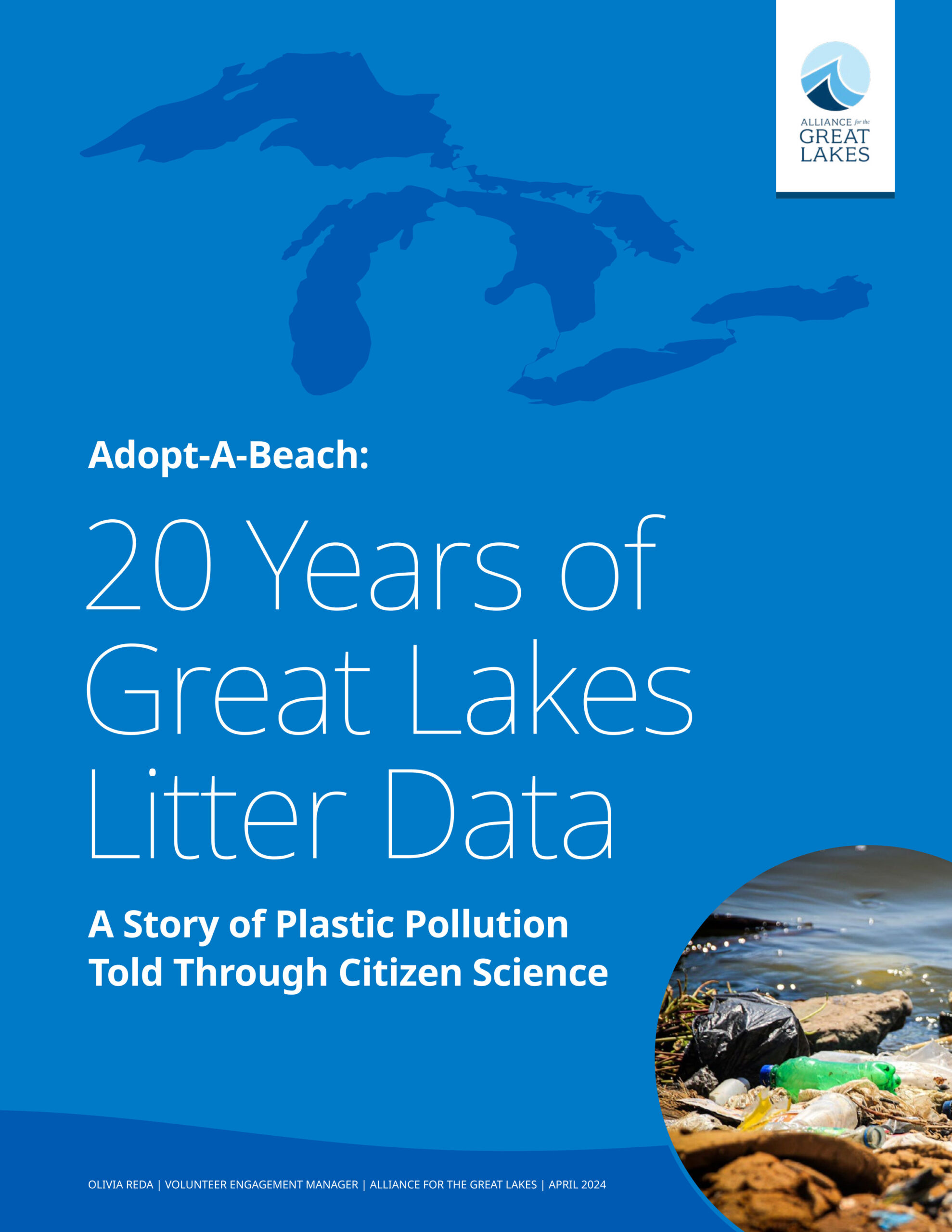
Report cover, Adopt-a-Beach: 20 Years of Great Lakes Litter Data.

Read the Report

Download the full report – Adopt-a-Beach: 20 Years of Great Lakes Litter Data, A Story of Plastic Pollution Told Through Citizen Science

Download the Executive Summary

If you would like to join the efforts, sign up for an Adopt-a-Beach cleanup. Learn more about plastic pollution here.

###

Contact: Don Carr, Media Director, dcarr@greatlakes.org


The post New Report: Vast Majority of Great Lakes Litter is Plastic appeared first on Alliance for the Great Lakes.

Original Article

News - Alliance for the Great Lakes

News - Alliance for the Great Lakes

https://greatlakes.org/2024/04/new-report-vast-majority-of-great-lakes-litter-is-plastic/

Judy Freed

The U.S. Environmental Protection Agency has finalized long-awaited national standards for toxic “forever chemicals” called PFAS. The standards allow only trace levels in public drinking water. It is the first time the EPA has regulated a contaminant under the Safe Drinking Water Act since the 1990s. Read the full story by MLive.

Original Article

Great Lakes Commission

Great Lakes Commission

https://www.glc.org/dailynews/20240410-pfas-limits

Nichole Angell

Global warming is fueling the spread of the peach blossom jellyfish in the Great Lakes region, which may foster harmful algae blooms and dead zones. Scientists are relying on community members to report jellyfish sightings across the Great Lakes region. Read the full story by Great Lakes Echo.

Original Article

Great Lakes Commission

Great Lakes Commission

https://www.glc.org/dailynews/20240410-jellyfish-invasion

Nichole Angell

After years of planning and legal delays, the FishPass Project in Traverse City, Michigan, is officially moving forward. The barrier will use technology to let “desirable” species pass while blocking invasive species like sea lamprey. Read the full story by Interlochen Public Radio.

Original Article

Great Lakes Commission

Great Lakes Commission

https://www.glc.org/dailynews/20240410-fish-passage

Nichole Angell

Environmentalists say that a proposed mine is putting the Great Lakes environment at risk. If it goes as planned, the Copperwood Mine will sit on the Wisconsin-Michigan border and become the closest metallic sulfide mine to Lake Superior, extracting copper as close as 100 feet from the lake. Read the full story by Milwaukee Journal Sentinel.

Original Article

Great Lakes Commission

Great Lakes Commission

https://www.glc.org/dailynews/20240410-copper-mine

Nichole Angell

Wildlife officials are reporting that the season’s first Great Lakes piping plover, a federally endangered species, has returned to his breeding grounds at Sleeping Bear Dunes on the northeast shore of Lake Michigan. Read the full story at WTTW – TV – Chicago, Illinois.

Original Article

Great Lakes Commission

Great Lakes Commission

https://www.glc.org/dailynews/20240410-piping-plover-return

Nichole Angell

Healing Our Waters-Great Lakes Coalition

Contact: Lindsey Bacigal, BacigalL@nwf.org, (734) 887-7113
Jordan Lubetkin, Lubetkin@nwf.org, (734) 904-1589

Coalition Applauds EPA Action to Protect People from Toxic PFAS

ANN ARBOR, MICH. (April 10, 2024)—The EPA today announced new clean water protections to prevent toxic PFAS chemicals from contaminating public drinking water supplies and threating the health of people and communities. Clamping down on toxic pollution like PFAS is a top priority for the Healing Our Waters-Great Lakes Coalition.

Laura Rubin, director of the Healing Our Waters-Great Lakes Coalition, said:

“We commend the EPA and Biden Administration for taking strong action to protect the health of people, communities, and the Great Lakes, by putting a stop to health-threatening and cancer-causing toxic PFAS pollution. Today’s action is a powerful reminder that in order to protect the health of the Great Lakes and the waters we all depend on for our drinking water, health, jobs, and quality of life, we need both robust federal investments and strong clean water protections to prevent new threats from harming people and undermining progress.

“The Biden Administration’s actions to clamp down on toxic pollution and to provide resources to water utilities to help protect drinking water supplies are important steps to ensure that people in cities and towns have access to clean, safe, and affordable drinking water. Today’s announcement builds on the federal government’s annual investments to restore and protect the Great Lakes, which have been producing results for communities across the region. But serious threats remain, which is why we need both robust federal investments and strong clean water protections so that problems don’t get worse and more expensive to solve.”

In addition to the new protections to keep toxic PFAS out of drinking water supplies, the Biden Administration is supplying billions of dollars of federal funding through the Bipartisan Infrastructure Law to help water utilities prevent toxic PFAS from contaminating drinking water.

Since 2004, the Healing Our Waters-Great Lakes Coalition has been harnessing the collective power of more than 185 groups representing millions of people, whose common goal is to restore and protect the Great Lakes. Learn more at HealthyLakes.org or follow us on Twitter, Facebook, Bluesky, Mastodon, and Threads @HealthyLakes.

Original Article

Latest Updates - Healthy Lakes

Latest Updates - Healthy Lakes

https://www.healthylakes.org/latest-updates/coalition-applauds-epa-action-to-protect-people-from-toxic-pfas

Lindsey Bacigal

The Bad River Band of Lake Superior Chippewa previously filed lawsuits against Enbridge Energy’s Line 5 oil pipeline project in an effort to shut it down. Later this month, Indigenous leaders will speak before a United Nations panel about their ongoing concerns with the project. Read the full story by Public News Service.

Original Article

Great Lakes Commission

Great Lakes Commission

https://www.glc.org/dailynews/20240410-line5-tribal-opposition

Nichole Angell

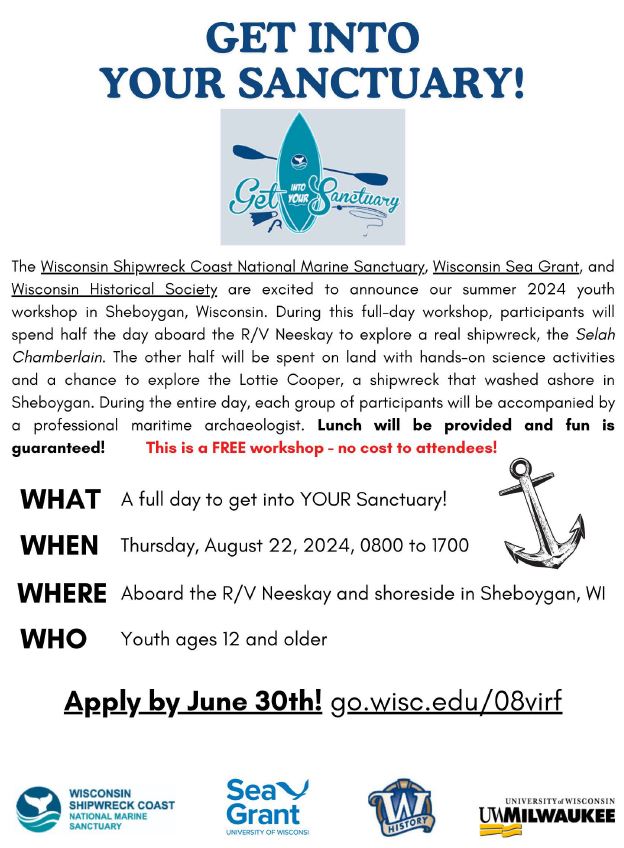
The post Get Into Your Sanctuary Workshop for youth first appeared on Wisconsin Sea Grant.

Original Article

Blog | Wisconsin Sea Grant

Blog | Wisconsin Sea Grant

https://www.seagrant.wisc.edu/blog/get-into-your-sanctuary-workshop-for-youth/

Marie Zhuikov

In New York, the Ogdensburg Bridge and Port Authority has to undertake a new environmental review for their port dredging project because they’ve changed where the dredged riverbed will be dumped. Read the full story by the Watertown Daily Times.

Original Article

Great Lakes Commission

Great Lakes Commission

https://www.glc.org/dailynews/20240410-dredging-project

Nichole Angell

Global warming is fueling the spread of a jellyfish in the Great Lakes region and may foster harmful algae blooms and dead zones.

The peach blossom jellyfish is native to warm freshwater in Southeast China, but it is present everywhere around the world except for Antarctica.

The post Citizen science may help uncover the mysteries of Great Lakes invasion of jellyfish first appeared on Great Lakes Echo.

Original Article

Great Lakes Echo

Great Lakes Echo

http://greatlakesecho.org/2024/04/10/citizen-science-may-help-uncover-the-mysteries-of-great-lakes-invasion-of-jellyfish/

Kayla Nelsen

Indiana attorney general fights EPA rule that would reduce pollution on Indy’s west side

Enrique Saenz, Mirror Indy

Mirror Indy is a part of Free Press Indiana, a nonprofit news organization dedicated to ensuring all Hoosiers have access to the news and information they need.

Mary Gutierrez and her husband moved to West Indianapolis in 2019, drawn by the promise of an affordable home and large yard where their two daughters could play.

Read Now at Great Lakes Now.

Original Article

Great Lakes Now

Great Lakes Now

https://www.greatlakesnow.org/2024/04/indiana-attorney-general-fights-epa-rule-that-would-reduce-pollution-on-indys-west-side/

Mirror Indy

Wild fish spring to life in Lake Ontario, despite dams, pollution and hatchery competitors

By Kathryn Peiman, The Narwhal

Photography by Kathryn Peiman

The Great Lakes News Collaborative includes Bridge Michigan; Circle of Blue; Great Lakes Now at Detroit Public Television; Michigan Public, Michigan’s NPR News Leader; and The Narwhal who work together to bring audiences news and information about the impact of climate change, pollution, and aging infrastructure on the Great Lakes and drinking water.

Read Now at Great Lakes Now.

Original Article

Great Lakes Now

Great Lakes Now

https://www.greatlakesnow.org/2024/04/wild-fish-spring-to-life-in-lake-ontario-despite-dams-pollution-and-hatchery-competitors/

The Narwhal

After a hot winter, Whitmer asks for more ways to get aid to businesses

By Izzy Ross, Interlochen Public Radio

This coverage is made possible through a partnership with IPR and Grist, a nonprofit independent media organization dedicated to telling stories of climate solutions and a just future.

A grassy, mud-streaked ski hill.

Snowmobile trails where dirt and fall leaves were still visible.

Read Now at Great Lakes Now.

Original Article

Great Lakes Now

Great Lakes Now

https://www.greatlakesnow.org/2024/04/after-a-hot-winter-whitmer-asks-for-more-ways-to-get-aid-to-businesses/

Interlochen Public Radio

Mercury levels in the Great Lakes are increasing as temperatures warm and extreme weather becomes more frequent, according to research in Minnesota’s Marcell Experimental Forest.

Mercury is a global pollutant released into the atmosphere through fossil fuel burning. It is then deposited onto land and water.

The post Climate change, other pollutants boost mercury’s Great Lakes health threat first appeared on Great Lakes Echo.

Original Article

Great Lakes Echo

Great Lakes Echo

http://greatlakesecho.org/2024/04/09/climate-change-other-pollutants-boost-mercurys-great-lakes-health-threat/

Kayla Nelsen

A recent lawsuit accusing Campbell Soup of discharging excessive amounts of phosphorus and other contaminants into Northwest Ohio waterways is highlighting challenges the state faces in targeting harmful algal blooms in Lake Erie. Read the full story by WVIZ-TV – Cleveland, OH.

Original Article

Great Lakes Commission

Great Lakes Commission

https://www.glc.org/dailynews/20240408-nutrient-pollution

James Polidori

Over the last ten years, the walleye fishery of Saginaw Bay has rebounded from a point of total collapse into a first-class sport fishery. It’s only gotten better since, aided by, among other factors, the collapse of introduced alewives that had preyed upon young walleyes. Read the full story by Midland Daily News.

Original Article

Great Lakes Commission

Great Lakes Commission

https://www.glc.org/dailynews/20240408-walleye-resurgence

James Polidori

The Minnesota Department of Natural Resources (DNR) is encouraging boaters to take caution as drought conditions persist throughout the state. According to the DNR, 40% of Minnesota is currently experiencing severe or moderate drought conditions. Read the full story by WCCO-TV – Minneapolis, MN.

Original Article

Great Lakes Commission

Great Lakes Commission

https://www.glc.org/dailynews/20240408-drought-impacts

James Polidori

The Soo Locks in Sault Ste. Marie, Michigan, opened to marine traffic on March 22, marking the start of the 2024 shipping season. Soon, ports in places like Manistee, Michigan, will welcome the first large vessels of the year. Read the full story by Manistee News Advocate.

Original Article

Great Lakes Commission

Great Lakes Commission

https://www.glc.org/dailynews/20240408-shipping-season

James Polidori

It has been nearly two years since the Illinois Department of Natural Resources (IDNR) announced its creative endeavor to rename invasive carp as copi and encourage people to eat the fish. Though the IDNR teamed up with chefs and food retailers, it’s still almost impossible to find on store shelves. Read the full story by WOOD-TV – Grand Rapids, MI.

Original Article

Great Lakes Commission

Great Lakes Commission

https://www.glc.org/dailynews/20240408-copi-sales

James Polidori

According to the United States Environmental Protection Agency (EPA), 18,091 gallons of diesel have been collected as part of a cleanup effort for last month’s diesel fuel spill at a gas station in Ottawa Lake, Michigan. Read the full story by WTOL-TV – Toledo, OH.

Original Article

Great Lakes Commission

Great Lakes Commission

https://www.glc.org/dailynews/20240408-leak-cleanup

James Polidori

The Ohio Division of Wildlife’s Lake Erie Fish Program administrator responded to an online controversy by reassuring the public that while various commercial cases have been brought over the last ten years, none have been for overharvesting perch. Read the full story by The Columbus Dispatch.

Original Article

Great Lakes Commission

Great Lakes Commission

https://www.glc.org/dailynews/20240408-perch-concern

James Polidori

When U.S. Rep.-to-be Debbie Dingell was growing up in St. Clair, she’d get in an inner tube and ride in the wake of freighters passing on the St. Clair River.

She fished there too.

The post Dingell talks environmental priorities in election year first appeared on Great Lakes Echo.

Original Article

Great Lakes Echo

Great Lakes Echo

http://greatlakesecho.org/2024/04/08/dingell-talks-environmental-priorities-in-election-year/

Eric Freedman

During the 2024 eclipse, biologists like us want to find out how birds will respond to darkness in the middle of the day

By Kimberly Rosvall, Indiana University and Liz Aguilar, Indiana University 

 is an independent and nonprofit source of news, analysis and commentary from academic experts.

The total solar eclipse on April 8, 2024, coincides with an exciting time for wild birds. Local birds are singing for mates and fighting for territories as they gear up for their once-a-year chance to breed.

Read Now at Great Lakes Now.

Original Article

Great Lakes Now

Great Lakes Now

https://www.greatlakesnow.org/2024/04/during-the-2024-eclipse-biologists-like-us-want-to-find-out-how-birds-will-respond-to-darkness-in-the-middle-of-the-day/

The Conversation

EPA head Regan defends $20B green bank: ‘I feel really good about this program’

By Matthew Daly, Associated Press

PHILADELPHIA (AP) — The head of the Environmental Protection Agency on Friday defended a new $20 billion federal “green bank” program, saying it will finance a variety of projects to create low-carbon solutions to combat climate change, including in disadvantaged communities that are most affected by pollution.

Read Now at Great Lakes Now.

Original Article

Great Lakes Now

Great Lakes Now

https://www.greatlakesnow.org/2024/04/epa-head-regan-defends-20b-green-bank-i-feel-really-good-about-this-program/

The Associated Press

Four Michigan tribes and the state and federal government renegotiated fishing rights in the Great Lakes last year without the Sault tribe’s consent. Now, the tribe is suing, arguing it cannot be held to an agreement it never approved. Read the full story by Bridge Michigan. 

Original Article

Great Lakes Commission

Great Lakes Commission

https://www.glc.org/dailynews/20240405-saultribe-michigan-fishingdeal

Hannah Reynolds

Great Lakes ports can be viable long-term alternatives to East Coast ports, port officials in Detroit and Monroe, Michigan, claim as shipping companies and manufacturers consider diversifying their supply chains to handle catastrophes such as the Baltimore bridge collapse. Read the full story by Axios Detroit.

Original Article

Great Lakes Commission

Great Lakes Commission

https://www.glc.org/dailynews/20240405-greatlakesports-boost-supplychain-diversify

Hannah Reynolds

The state of Great Lakes port infrastructure is one of the biggest issues facing the U.S. and Canadian maritime industries. Over the next five years Great Lakes navigation channels will require $540 million of dredging to maintain authorized channel dimensions. Read the full story by Maritime Logistics News.

Original Article

Great Lakes Commission

Great Lakes Commission

https://www.glc.org/dailynews/20240405-greatlakesports-infrastructure-portinsurance

Hannah Reynolds

Citizen-led testing near a polluted former military base in Oscoda, Michigan, has revealed high levels of toxic “forever chemicals” in Lake Huron’s beach foam, prompting calls for the state to better alert beachgoers to the danger. Read the full story by Bridge Michigan.

Original Article

Great Lakes Commission

Great Lakes Commission

https://www.glc.org/dailynews/20240405-pfas-huron

Hannah Reynolds

Lake Superior is an incredible resource which appears fresh and clean. However, a professor at the University of Minnesota Duluth and the Large Lakes Observatory is researching how many microplastics are floating through Lake Superior’s waters. Read the full story by WDIO-TV – Duluth, MN.

Original Article

Great Lakes Commission

Great Lakes Commission

https://www.glc.org/dailynews/20240405-microplastics-lakesuperior

Hannah Reynolds

State and federal partners announced that conservation practices will be implemented on over 1,700 acres of Indiana farmland through the Western Lake Erie Basin Regional Conservation Partnership. The primary goal of this project is to reduce phosphorus and sediment loading into Lake Erie. Read the full story by WBIW – Bedford, IN.

Original Article

Great Lakes Commission

Great Lakes Commission

https://www.glc.org/dailynews/20240405-soilconservation-fundsawarded-westernlakeeriebasin

Hannah Reynolds

Some community leaders say the original limestone steps at Promontory Point are functioning and don’t need to be replaced, just repaired. The U.S. Army Corps of Engineers has already replaced much of Chicago’s shoreline barriers with concrete revetments to repair damage and erosion from the crashing waves of Lake Michigan. Promontory Point is the only spot where the original limestone steps remain. Read the full story by WLS-TV – Chicago, IL.

Original Article

Great Lakes Commission

Great Lakes Commission

https://www.glc.org/dailynews/20240405-promontorypoint-chicago-lakefront

Hannah Reynolds

The Biden administration recently announced a goal to protect 30 percent of lands and waters throughout the United States by 2030. This includes continued protection from mining impacts near wilderness areas such as the Boundary Waters Canoe Area (BWCA) in northeastern Minnesota. Read the full story by the Quetico Superior Foundation.

Original Article

Great Lakes Commission

Great Lakes Commission

https://www.glc.org/dailynews/20240405-biden-cleanwater-efforts-historic

Hannah Reynolds

The Kirtland’s warbler has an expansive conservation program, draws tourists from across the globe and even has an annual festival in Roscommon, Michigan.

Yet what is perhaps Michigan’s most well-known endangered bird is slated to lose its name.

The post New names slated for birds, including Michigan’s Kirtland’s warbler first appeared on Great Lakes Echo.

Original Article

Great Lakes Echo

Great Lakes Echo

http://greatlakesecho.org/2024/04/05/new-names-slated-for-birds-including-michigans-kirtlands-warbler/

Clara Lincolnhol

Sault tribe challenges Michigan fishing deal, chides ‘preposterous’ rules

By Kelly House, Bridge Michigan

The Great Lakes News Collaborative includes Bridge Michigan; Circle of Blue; Great Lakes Now at Detroit Public Television; Michigan Public, Michigan’s NPR News Leader; and The Narwhal who work together to bring audiences news and information about the impact of climate change, pollution, and aging infrastructure on the Great Lakes and drinking water.

Read Now at Great Lakes Now.

Original Article

Great Lakes Now

Great Lakes Now

https://www.greatlakesnow.org/2024/04/sault-tribe-challenges-michigan-fishing-deal-chides-preposterous-rules/

Bridge Michigan

Energy News Roundup: Even the solar eclipse is an energy issue

In Ohio and other states in the path of Monday’s total solar eclipse, tons of harried officials are busy dealing with concerns like traffic congestion and hotel capacity. At least a few are also conscious of the fact that demand for electricity is going to spike at the same time that the supply of solar power temporarily plummets.

Read Now at Great Lakes Now.

Original Article

Great Lakes Now

Great Lakes Now

https://www.greatlakesnow.org/2024/04/energy-news-roundup-even-the-solar-eclipse-is-an-energy-issue/

Nicole Pollack, Great Lakes Now


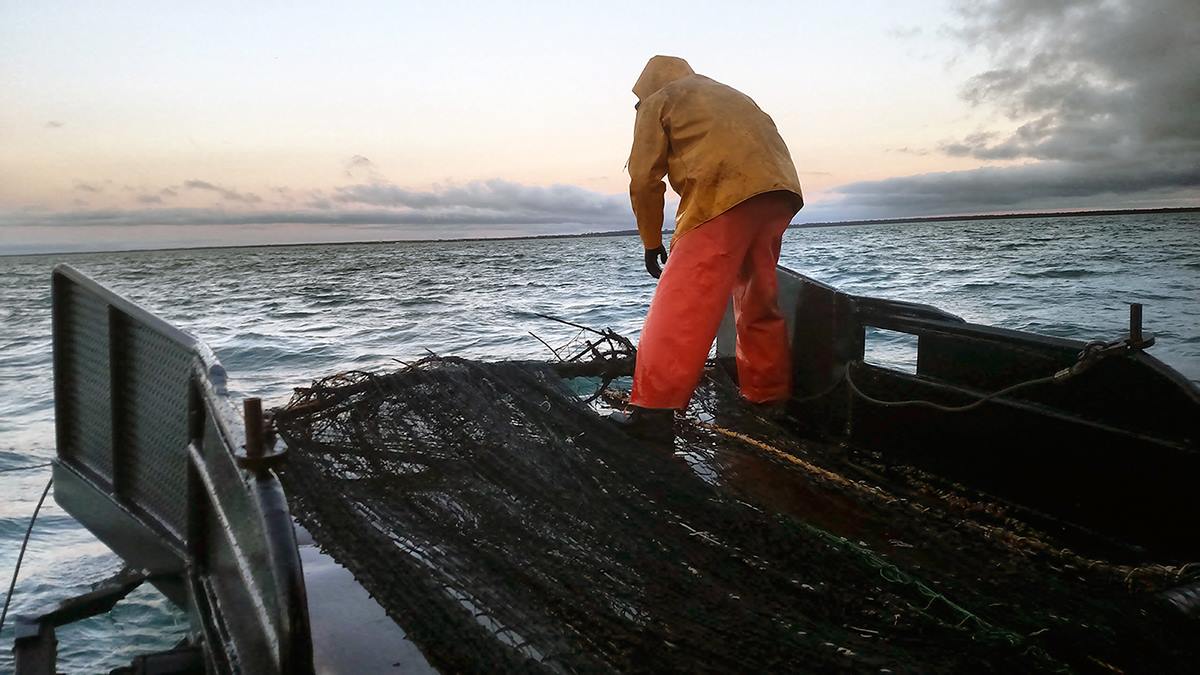
A fisher in bright orange work clothes cleans a fishing net

A Great Lakes commercial fisher cleans a fishing net. Photo credit: Wisconsin Sea Grant

A new publication from a team of Sea Grant researchers lays out a framework for training the future fleet of small-scale commercial fishers and processors in the Great Lakes.

The study, published in the March issue of the Fisheries magazine, proposes place-based, adaptable training content for the Great Lakes Future Fishers Initiative, an apprenticeship program aimed at recruiting and preparing young people for commercial fishing.

The initiative responds to the industry’s concerns about the lack of a future workforce.

“It’s an aging fleet. It’s definitely a hard business,” said Titus Seilheimer, fisheries outreach specialist with Wisconsin Sea Grant and coauthor of the study. “We talked to the industry folks and found out what they needed. And you know, what they need is people.”

Seilheimer, alongside Wisconsin Sea Grant’s Food–Fish Outreach Coordinator Sharon Moen and Michigan Sea Grant’s Lauren Jescovitch, surveyed and conducted focus groups with those involved in the Great Lakes commercial fishing industry, including Anishinaabe fishers, multigenerational fishing families and staff from regulatory agencies, to learn more about workforce challenges and what’s needed to be successful in the job.

“A message we heard was that everyone’s needs were different,” said Seilheimer. “Different businesses wanted different things.”

As a result, the Great Lakes Future Fishers Initiative framework is designed to be used more as a menu rather than a curriculum, meaning businesses can select training content that is relevant to their workforce. Content is categorized into three topic areas: fundamental skills (e.g., business planning and marketing), processing skills (e.g., food safety training and knife handling), and deckhand skills (e.g., gear repair and boat navigation).

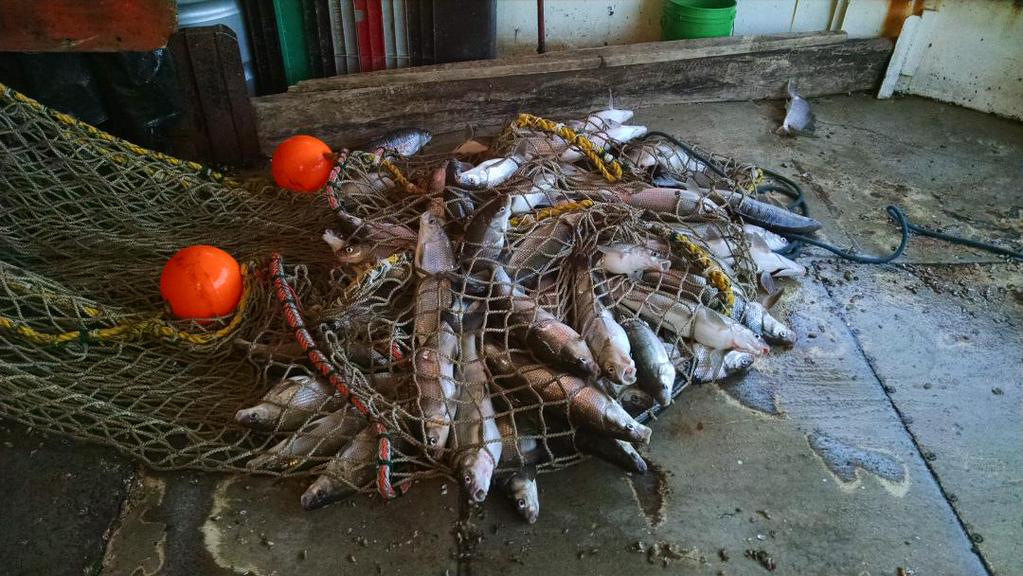
A harvest of lake whitefish in a net.

Lake whitefish are the most valuable fishery in the Great Lakes commercial fishing industry in Wisconsin. Photo credit: Wisconsin Sea Grant

Another major takeaway from the survey was the importance of exposing people to industry at a young age. Of those that took the survey, 92% had some sort of interaction with commercial fishing and processing prior to doing it themselves.

“It wasn’t just a random job posting that they saw and applied to,” said Jescovitch. “Almost everybody that works in the industry had some previous exposure to [it.]”

Jescovitch said that’s where Sea Grant is well positioned to help.

“We can go into schools or even younger groups and [say], ‘hey, this is a possible career path,’ and make sure that people are just even aware that it exists.”

The Great Lakes commercial fishery is a multimillion-dollar industry in Wisconsin, with lake whitefish netting the highest value. Nearly 2 million pounds of lake whitefish were harvested from Lake Michigan and Lake Superior in 2020.

While the industry is small compared to that of the salty coasts, the research team emphasized just how embedded it is in the communities where it occurs. Losing fishing means losing part of the culture.

“This has been a part of our coastal communities for as long as people have lived on the shores of the Great Lakes,” said Seilheimer, pointing out that some communities, like Two Rivers, Wisconsin, have fishing imagery on their town logos and welcome signs.

For tribal fishing businesses, like the Red Cliff Fish Co., commercial fishing and processing is also a way to preserve Indigenous knowledge and traditions.

And much of the fish stays local. The study found that a little over 68% of processed fish—which refers to fish sold as filets or made into other products—stays within 100 km or 62 miles of where it’s caught.

Local harvest means local food security, and as Moen also pointed out, local pride. Commercial fishers and processors can enjoy knowing they put food on the plates of their neighbors. It’s a perk of the job.

“You’re providing good, healthy food for families in a community that you care about,” said Moen. “You can go home at the end of the day feeling like, ‘Wow, I made a difference in some family’s life.’”

The research team is currently applying for grant funding to get the program off the ground—and into coastal communities across the Great Lakes.

The post Training the next generation of Great Lakes commercial fishers first appeared on Wisconsin Sea Grant.

Original Article

News Releases | Wisconsin Sea Grant

News Releases | Wisconsin Sea Grant

https://www.seagrant.wisc.edu/news/training-the-next-generation-of-great-lakes-commercial-fishers/

Jenna Mertz

Michigan’s corn farmers rejected a recent proposed assessment increase amid low prices, blocking additional funds for research and lobbying.

The proposal would have raised the assessment from 1 cent per bushel to 2 cents. 

The post Corn farmers again reject assessment bump amid “bad timing” for industry first appeared on Great Lakes Echo.

Original Article

Great Lakes Echo

Great Lakes Echo

http://greatlakesecho.org/2024/04/04/corn-farmers-again-reject-assessment-bump-amid-bad-timing-for-industry/

Guest Contributor