On this episode of Great Lakes Now, explore a project on a Michigan river that keeps undesirable fish away. Then take a canoe out onto the Au Sable River to harvest wild rice. Plus, see what a drifting buoy revealed about winter on the lakes.

Great Lakes Now first reported on this story in 2020. Contributor Kathy Johnson visited the site to get an update on the construction progress which began in 2024 and will be completed in 2026.

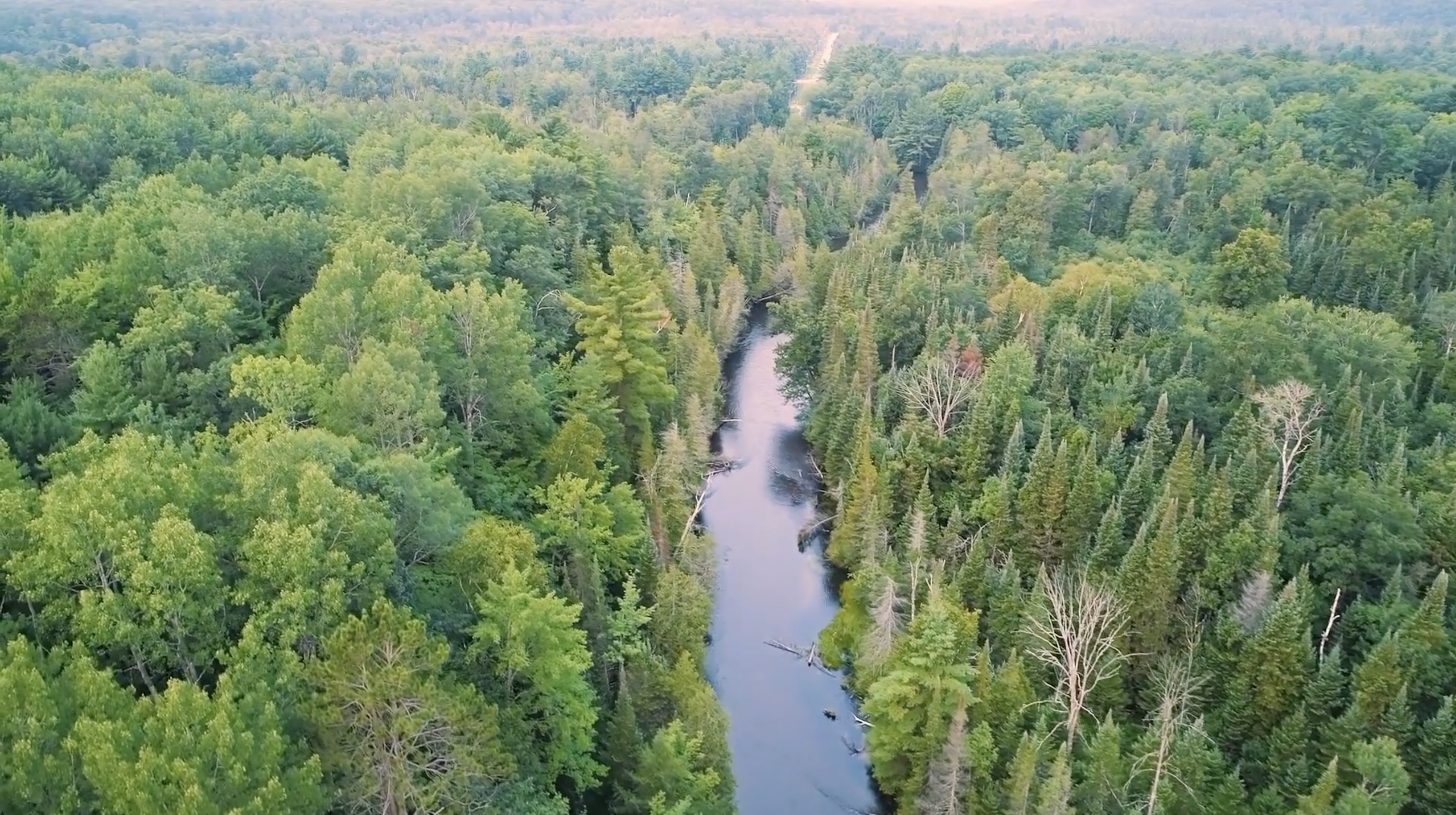
Reconnecting the Boardman/Ottaway River in Traverse City, MI with Lake Michigan has taken over two decades of planning. One of the key concerns for residents, researchers and Native communities was finding a way to allow native species to move freely between the river and the lake while at the same time blocking access to the river for non-native fish and invasive species.

To achieve this goal, the project team would need to develop some type of selection technology to enable them to sort the fish. The project’s lead engineer turned to the recycling industry for ideas. Recycling facilities use an assortment of technologies to separate all shapes and sizes of materials. And the project’s leaders determined that similar technology could be developed to sort fish.

FishPass is a complete barrier that will have the ability to sort and selectively pass desirable fish while blocking harmful invasive species. Researchers from around the world have contributed to the fish sorting technologies being implemented and there is a waitlist of researchers interested in using FishPass to develop more.

Manoomin—or wild rice—once grew abundantly throughout the Great Lakes region. It’s an important cultural food for the native Anishinaabe tribes and was recently named as Michigan’s official native grain. But over the last century, its existence has been threatened by the construction of dams and other environmental pressure. Today, there’s an effort to bring it back.

One Detroit producer and BridgeDetroit reporter Jena Brooker took a trip to Michigan’s Au Sable River to learn how manoomin is harvested and prepared.

This story was produced in collaboration with One Detroit and BridgeDetroit.

A breakaway buoy gave researchers a glimpse into how the lakes behave in the winter.

As a response to the sinking of the Edmund Fitzgerald, a network of buoys was established to give freighter captains, fishing boats, and researchers real-time data about wave and wind conditions on the Great Lakes.

This data is especially valuable in the winter, when ice, waves, and high winds make the lakes particularly treacherous. But there’s a problem: those same harsh conditions can destroy the buoys, which means many of them are removed from the water before the winter. But spotter buoys are smaller and more durable, allowing them to be deployed in harsher conditions.

One spotter buoy off the coast of Muskegon, Michigan, broke free from its mooring and drifted almost to the center of Lake Michigan. The data it collected is helping researchers better understand how the lakes behave during the winter.

The post Sorting Fish and Breakaway Buoys appeared first on Great Lakes Now.

Original Article

Great Lakes Now

Great Lakes Now

https://www.greatlakesnow.org/2026/01/26/sorting-fish-and-breakaway-buoys/

Great Lakes Now

Lawmakers from Michigan and Illinois are seeking answers from federal administrators this month about an “administrative review” pause in the Brandon Road Interbasin Project, a $1.5 billion project that aims to keep invasive carp out of Lake Michigan. Read the full story by MLive.

Original Article

Great Lakes Commission

Great Lakes Commission

https://www.glc.org/dailynews/20260126-carp-barrier-delays

Nichole Angell

Lawmakers from Michigan and Illinois are seeking answers from federal administrators this month about an “administrative review” pause in the Brandon Road Interbasin Project, a $1.5 billion project that aims to keep invasive carp out of Lake Michigan. Read the full story by MLive.

Original Article

Great Lakes Commission

Great Lakes Commission

https://www.glc.org/dailynews/20260126-carp-barrier-delays

Nichole Angell

An Ontario park known for its sandy beaches in the summer transforms during the winter months, turning its landscape into a snowy wonderland with possible sightings of rare ice formations called ice volcanoes. Read the full story by Toronto.com.

Original Article

Great Lakes Commission

Great Lakes Commission

https://www.glc.org/dailynews/20260126-ice-volcanoes

Nichole Angell

The Executive Director and Chief Research Scientist of the River Institute is featured in a in a special edition of Canadian Geographic magazine celebrating individuals working to understand and protect the Great Lakes. Read the full story by Seaway News.

Original Article

Great Lakes Commission

Great Lakes Commission

https://www.glc.org/dailynews/20260126-scientist-highlight

Nichole Angell

The Executive Director and Chief Research Scientist of the River Institute is featured in a in a special edition of Canadian Geographic magazine celebrating individuals working to understand and protect the Great Lakes. Read the full story by Seaway News.

Original Article

Great Lakes Commission

Great Lakes Commission

https://www.glc.org/dailynews/20260126-scientist-highlight

Nichole Angell

By Kelly House, Bridge Michigan

The Great Lakes News Collaborative includes Bridge Michigan; Circle of Blue; Great Lakes Now at Detroit PBS; Michigan Public, Michigan’s NPR News Leader; and The Narwhal who work together to bring audiences news and information about the impact of climate change, pollution, and aging infrastructure on the Great Lakes and drinking water. This independent journalism is supported by the Charles Stewart Mott Foundation. Find all the work HERE.

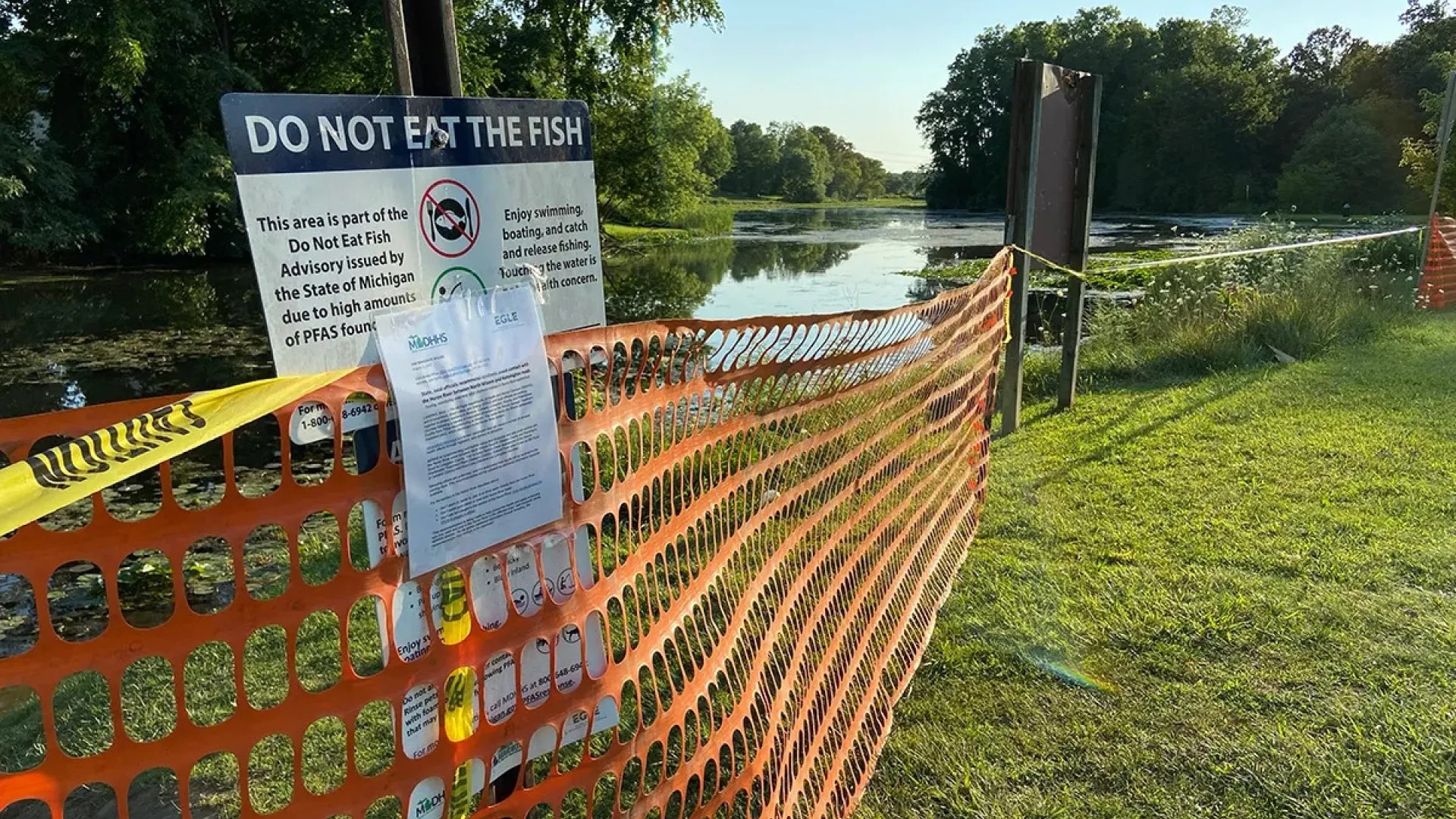
In the years since Michigan’s PFAS crisis became public knowledge, widespread contamination has prompted a growing list of “do not eat” advisories in waterways across the state.

But a study published this month in the Journal of Great Lakes Research offers hope that, one day, the fish could be safe to eat again.

The study was conducted by researchers in the former US Environmental Protection Agency Office of Research and Development, which the Trump administration has since dismantled amid a broad push to curtail federal oversight and loosen regulations on a host of chemicals, including PFAS.

Using decades’ worth of archived lake trout and walleye samples originally collected to track older pollutants like mercury and PCBs, scientists discovered PFAS levels in Great Lakes fish have declined significantly since the late 2000s, when manufacturers began phasing out once-common compounds like PFOS and PFOA amid growing regulatory pressure.

“The ecosystem responded very quickly to these changes in industrial production,” said Sarah Balgooyen, a lead author of the study and former EPA chemist who is now a researcher at the Colorado School of Mines.

A growing body of research has linked certain PFAS (an acronym for a class of thousands of chemicals known as per- and polyfluoroalkyl substances) to cancer, thyroid problems and developmental, fertility and immunity challenges.

The research team tested for 45 compounds, using fish taken from the Great Lakes between 1975 and 2020. They found that average contamination levels by 2020 had reached their lowest since the 1980s.

In Lake Erie, for example, PFAS levels in the freeze-dried tissue samples peaked at close to 450 nanograms per gram in 2005 but were closer to 50 nanograms per gram in 2020. In Lake Michigan, levels reached a high of about 150 nanograms per gram in 2010 before drifting down to about 80 nanograms per gram in 2020.

“We hope to see that trend continue,” Balgooyen said.

That’s welcome news to Chris Matteson, a 76-year-old from Muskegon who has been fishing in the Great Lakes since the days when factories lined the shore, spewing effluent so foul that, “if you could see a foot into the water, that was pretty good.”

“I’ve been through a lot of fish warnings,” Matteson said.

Although PFAS manufacturers have known their products are toxic since at least the 1970s, the public wouldn’t learn until decades later. Unregulated use of the so-called “forever chemicals” allowed them to escape into the environment, poisoning drinking water and embedding in the bodies of humans, fish and wildlife.

Only in recent years — after a series of contamination scandals — have state and federal governments begun regulating PFAS and investigating the extent of the pollution.

In 98 Michigan water bodies, some fish species are so full of PFAS that state health officials say it’s not safe to eat them. Health advisories in hundreds more water bodies call for limiting meals to anywhere from 16 servings a month to six a year.

Michigan Department of Health and Human Services spokesperson Lynn Sutfin said agency staff are reviewing the study.

For now, she said, “our advice for anglers remains the same: To learn how to choose safer fish to eat, follow the Eat Safe Fish Guides.”

Find out whether your local fishing spot is affected here.

Gary Ankley, a former EPA research toxicologist and coauthor on the study, said the declining PFAS levels are encouraging. But there is no way to know how low PFAS levels will ultimately fall.

Known as “forever chemicals” because they don’t break down readily in the environment, some amount of PFAS will remain in the lake indefinitely, Ankley predicted.

Balgooyen cautioned that the study offers only a partial picture of PFAS risks in the lakes.

While manufacturers have largely stopped using the so-called “long-chain” PFAS compounds that tend to bioaccumulate in fish, many have switched to new “short-chain” compounds that do not.

The health risks of those newer compounds have not been well-studied.

“We’re seeing decreases in these compounds that we know are harmful, which is great,” Balgooyen said. “But there’s still this unknown component of the replacement chemicals.”

Citing evidence that PFAS is more toxic than previously thought, state and federal regulators in recent years have lowered allowable PFAS levels in drinking water and taken other steps to discourage the chemicals’ use.

Seeking to make the EPA more business-friendly, the Trump administration has reversed some of those actions, announcing plans to loosen PFAS drinking water standards and requirements for manufacturers to report their PFAS use.

EPA Administrator Lee Zeldin called those “commonsense” changes that would lower costs for industries and water providers while still protecting the public.

But Matteson, the Muskegon fisherman, views the administration’s loosening of environmental regulations differently.

“The companies will go back to the easiest, cheapest way to do anything,” he said. “Most likely, it isn’t environmentally friendly.”

The post PFAS levels are declining in Great Lakes fish, new research shows appeared first on Great Lakes Now.

Original Article

Great Lakes Now

Great Lakes Now

https://www.greatlakesnow.org/2026/01/26/pfas-levels-are-declining-in-great-lakes-fish-new-research-shows/

Bridge Michigan

On this episode of Great Lakes Now, explore a project on a Michigan river that keeps undesirable fish away. Then take a canoe out onto the Au Sable River to harvest wild rice. Plus, see what a drifting buoy revealed about winter on the lakes.

#GreatLakes #Fish #Science #WildRice #Indigenous #Food #Environment

===========================================
Website: https://greatlakesnow.org
Facebook: https://www.facebook.com/greatlakesnow
X: https://www.x.com/greatlakesnow
Instagram: https://www.instagram.com/greatlakesnoworg
Newsletter: https://www.greatlakesnow.org/great-lakes-now-newsletter/

To learn more about supporting Detroit PBS and Great Lakes Now, visit https://www.detroitpbs.org/

The post Sorting Fish and Breakaway Buoys | Great Lakes Now | Full Episode appeared first on Great Lakes Now.

Original Article

Great Lakes Now

Great Lakes Now

https://www.greatlakesnow.org/2026/01/26/sorting-fish-and-breakaway-buoys-great-lakes-now-full-episode/

Great Lakes Now

The U.S. House and Senate recently passed a significant budget package that rejects steep cuts proposed by the White House that would have slashed many federal programs essential to the health of our lakes and the people who depend on them. Ultimately, members of Congress from both parties came together to support hard-won investments, following a tradition of bipartisan support for the world’s largest freshwater resource that sits at the center of our region’s economy.  

This does not happen by chance; it is the result of decades of work to increase the Great Lakes region’s influence in the Congress. The Alliance for the Great Lakes, our supporters, and numerous regional partners raised our collective voices to make this win possible. 

Impact of cuts 

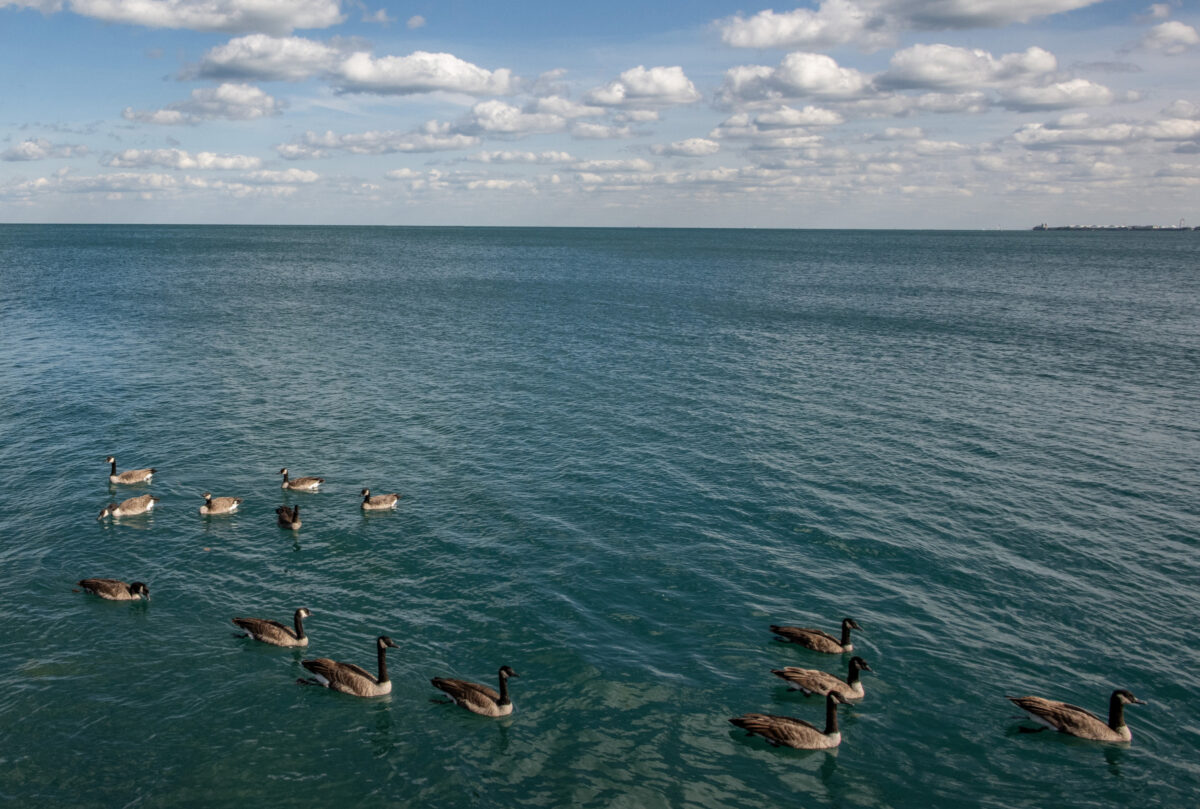
Canada Geese swim on lake water that stretches far into the horizon.

After a comprehensive analysis of the cuts proposed by the President and in subsequent appropriations bills in the House and Senate, we sounded the alarm about the potential impacts of slashing funding that protects communities from flooding, sewage backups in homes, and lead pipes. We highlighted the value of science and research to monitor water quality, support fishery management, and prevent harmful algal blooms. And we called out the necessity of protecting the federal agencies that administer these critical Great Lakes programs. Our supporters sent over 7,000 messages calling on their senators and representatives to protect the lakes. 

Funding to protect the lakes 

To their credit, our elected representatives in Congress listened. When it came time to vote on the FY26 budget, many fought back drastic cuts, redoubled their commitment to the Great Lakes, and passed bipartisan bills that notably include: 

  • A $1 million increase for the Great Lakes Restoration Initiative ($369 million for the year). 
  • Steady water infrastructure funding, including for State Revolving Funds (Clean Water: $1.639 billion; Drinking Water: $1.126 billion), and nearly $100 million for disadvantaged communities, lead service line replacement, sewer overflow mitigation, and workforce training. 
  • Modest increases for Clean Water Act programs that control water pollution and support public water systems supervision. 
  • Funding for specific U.S. Army Corps projects, including for Brandon Road Lock and Dam to prevent invasive carp from entering Lake Michigan. 
  • Flat funding to the Department of the Interior for fish and wildlife restoration, Great Lakes science, and invasive species work.  
  • Increase for the Integrated Ocean Observing System, which includes the Great Lakes Observing System (GLOS).

You can find a detailed analysis of Great Lakes provisions in the FY26 appropriations bills from the Northeast Midwest Institute here

These investments will provide real, direct benefits for 30 million people who rely on a clean and thriving Great Lakes region – for their health, local economies, and continued enjoyment of these precious natural resources.  

Looking ahead 

Now Congress will need to ensure that appropriations are spent by the agencies as directed, with no more “pocket recissions” or slow walking the release of funds. We must also recognize that funding alone is not enough; it takes federal workers to ensure that programs are implemented successfully. The federal government lost over 220,000 workers last year (a ten percent cut), with the potential for more Reductions in Force on the horizon. Congress will also need to stand up against regulatory pullbacks and reduced enforcement on clean water protections and permitting, holding agencies like the U.S. EPA accountable to their core mission. 

So while we celebrate our region’s success in holding the line on Great Lakes funding so far, this is also a moment to reflect on the bigger picture: where we want to go as a region, and how that vision informs our funding needs to the future. We are facing big questions like:  

  • Whether the shifting federal landscape – marked by the most significant rollback of federal Great Lakes institutions and policies since the early 1970s – changes the roles that federal agencies and States should play in Great Lakes protection and, if so, how? 
  • Clean water should be available for all. Is our region adequately prepared to make the $290 billion in water infrastructure investments the EPA estimates is needed for critical stormwater, wastewater and drinking water projects over the next 20 years – particularly as we exhaust the one-time infusion of federal funding through the Bipartisan Infrastructure Law and as escalating extreme weather pummels the region?   
  • Under the Great Lakes Restoration Initiative (GLRI), we have seen major progress on restoration work to clean up legacy contamination over the past two decades. Having nearly achieved this initial purpose, what should the vision be for collaboration to address today’s most significant ecological challenges and community needs, especially in places most burdened by pollution? 

In the months ahead, the Alliance for the Great Lakes will be watching for the President’s FY 2027 budget blueprint and how Congress responds, as well as monitoring the ways federal agencies implement funded programs and use their regulatory and enforcement powers. We will continue to collaborate with elected officials and partners from across the region to develop a future-forward vision for the Great Lakes in preparation for mid-term elections in 2026. 

Protect Our Drinking Water

Your contribution supports protections that keep the waters of the Great Lakes clean today and far into the future.

Give a Gift Today

The post Congress protects Great Lakes programs from proposed cuts appeared first on Alliance for the Great Lakes.

Original Article

News - Alliance for the Great Lakes

News - Alliance for the Great Lakes

https://greatlakes.org/2026/01/congress-protects-great-lakes-programs-from-proposed-cuts/

tfazzini

The U.S. and Canada this week released the 2025 State of the Great Lakes report, outlining successes and ongoing threats to the Great Lakes. The report scores each lake based on indicators established in the Great Lakes Water Quality agreement, a commitment between the two countries to protect and restore the Great Lakes. Read the full story by the Milwaukee Journal Sentinel.

Original Article

Great Lakes Commission

Great Lakes Commission

https://www.glc.org/dailynews/20260123-great-lakes-report

James Polidori

Oil and gas company officials continue cleaning up a crude oil and brine spill in the Pigeon River Country State Forest in Gaylord, Michigan, that turned out to be more than four times larger than initially estimated. Those leaked materials totaled 221 barrels, amounting to more than 9,200 gallons. Read the full story by MLive.

Original Article

Great Lakes Commission

Great Lakes Commission

https://www.glc.org/dailynews/20260123-oil-spill

James Polidori

Ohio ranks fifth in the nation when it comes to the number of data centers being constructed to power the rise of artificial intelligence and other computer services. But with that growth comes environmental concerns regarding both power and water usage. Read the full story by The Plain Dealer.

Original Article

Great Lakes Commission

Great Lakes Commission

https://www.glc.org/dailynews/20260123-data-center-impacts

James Polidori

The U.S. Coast Guard Great Lakes escorted the freighter American Spirit through Lake Erie Wednesday after it requested assistance. The Coast Guard said it dispatched the Neah Bay, an ice cutter, which assisted in breaking ice, enabling the American Spirit to safely transit the lake. Read the full story by WTOL-TV – Toledo, OH.

Original Article

Great Lakes Commission

Great Lakes Commission

https://www.glc.org/dailynews/20260123-ice-breaking

James Polidori

Employees with the Pennsylvania Fish and Boat Commission collected steelhead trout in the cold waters of Trout Run on Wednesday morning. One fish culturist said the trout species doesn’t reproduce enough to keep up with the demand of fishing, and their efforts keep the population steady. Read the full story by WJET-TV – Erie, PA.

Original Article

Great Lakes Commission

Great Lakes Commission

https://www.glc.org/dailynews/20260123-trout-collection

James Polidori

Construction is still underway at the environmental DNA (eDNA) lab expansion that is taking shape at the River Institute’s main site on the St. Lawrence College Cornwall, Ontario, campus. The concept for the eDNA lab evolved out of the River Institute’s Fish Identification Nearshore Survey (FINS) program, which used traditional methods, such as seine netting, to catch and identify fish and collect and analyze water samples. Read the full story by the Cornwall Standard Freeholder.

Original Article

Great Lakes Commission

Great Lakes Commission

https://www.glc.org/dailynews/20260123-environmental-lab

James Polidori

As of this Tuesday, 25.08% of the Great Lakes were ice-covered, with Lake Erie recording the most ice at 76.57%., according to the National Oceanic and Atmospheric Administration’s Great Lakes Environmental Research Laboratory. Read the full story by The Detroit Free Press.

Original Article

Great Lakes Commission

Great Lakes Commission

https://www.glc.org/dailynews/20260123-ice-coverage

James Polidori

A partnership between North Central Michigan College, the Little Traverse Conservancy, the State of Michigan and the Little Traverse Bay Bands of Odawa Indians will protect and preserve nearly 13 acres and 1,700 feet of Crooked Lake frontage in Emmet County, Michigan. Read the full story by the Petoskey News-Review.

Original Article

Great Lakes Commission

Great Lakes Commission

https://www.glc.org/dailynews/20260123-conservation-partnership

James Polidori