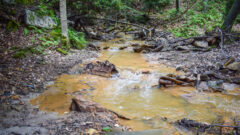
Turning Fields into Filters New Project alert! Turning Fields into Filters Exciting news! Fox-Wolf Watershed Alliance and Waushara County Land Conservation Department are partnering on our new project - Turning Fields into Filters. We're working with 3 local agriculture landowners to transform over 80 acres of marginal [...]

The post Turning Fields into Filters┃New Project Announcement appeared first on Fox-Wolf Watershed Alliance.

Original Article

Fox-Wolf Watershed Alliance

Fox-Wolf Watershed Alliance

https://fwwa.org/2025/10/28/turningfieldsintofiltersannouncement/?utm_source=rss&utm_medium=rss&utm_campaign=turningfieldsintofiltersannouncement
Tim Burns

Pauline McCleary has been caring for water her whole life, long before she was raising beetles in the kiddie pools in her backyard. Raised on a farm with a spring-fed well, she learned early that water wasn’t just something that came from a tap. “If it goes in the lake, you’ll drink it later,” [...]

The post Pauline’s Butterfly Effect, with Beetles appeared first on Fox-Wolf Watershed Alliance.

Original Article

Fox-Wolf Watershed Alliance

Fox-Wolf Watershed Alliance

https://fwwa.org/2025/10/27/paulines-butterfly-effect/?utm_source=rss&utm_medium=rss&utm_campaign=paulines-butterfly-effect

Fox-Wolf Watershed Alliance

Access to clean drinking water is essential for everyone, which is why the Alliance for the Great Lakes supports a bipartisan Ohio bill designed to eliminate all lead water lines that still exist in the state.  

At a recent hearing on the bill, Meleah Geertsma, Director of Clean Water & Equity, submitted testimony that outlined how the legacy of lead pipes that run through Great Lakes communities are dangerous to our health and our economy.  

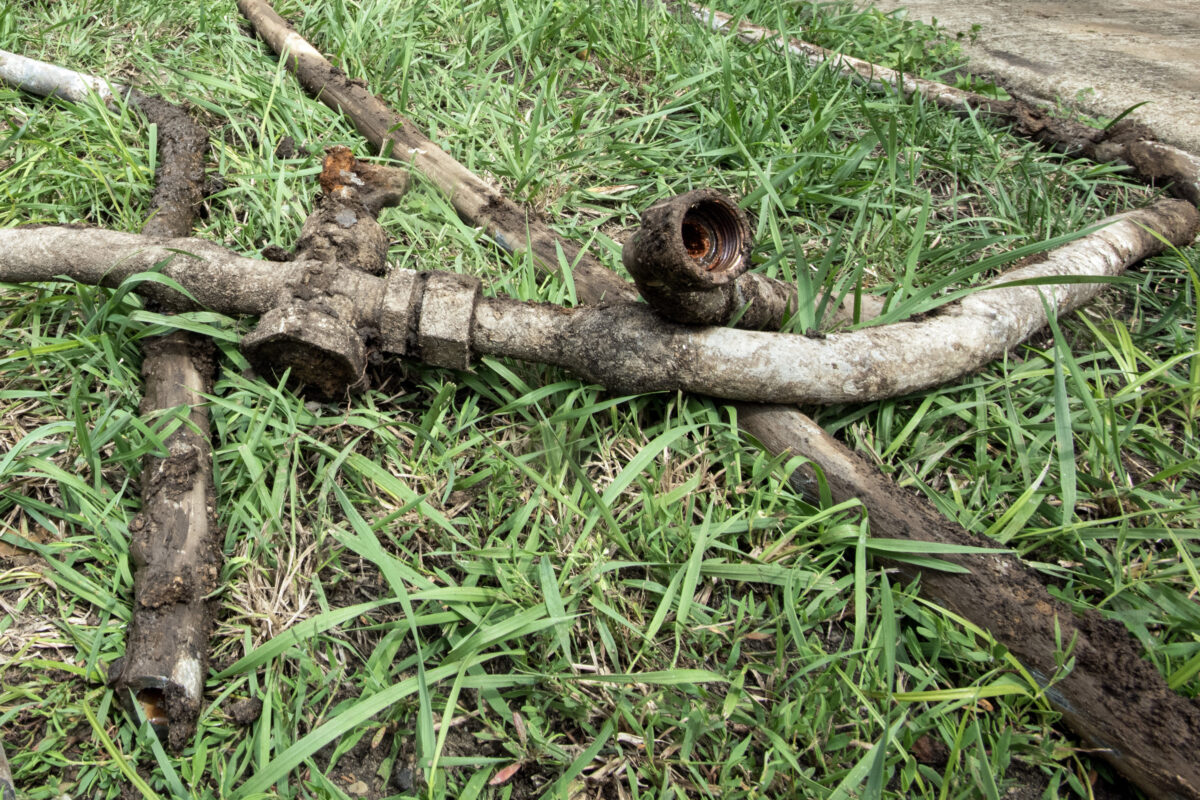
Old lead water pipes lie on a lawn.
Sections of the pulled lead pipe sit on the homeowner’s lawn. Photo by Lloyd DeGrane.

Ohio currently ranks in the top 3 states in the nation for the most lead pipes serving households, with an estimated 745,000 still in use. This problem harms communities throughout Ohio, from smaller and more rural communities like Scio and Delphos, to mid-size communities like Lima and Marion, to Ohio’s larger cities. Communities like this are getting the lead out with the help of funding from Ohio EPA and H2Ohio, Ohio’s flagship program to address water quality issues including lead service line replacement. Lead poisoning from consuming contaminated water can cause irreversible brain damage in children that may take years to emerge. Exposure during adulthood increases the risk of heart disease, as well as kidney and nervous system problems.   

The below testimony was submitted to the Ohio House Development Committee on HB307, the Lead Line Replacement Act, 10/1/25, on behalf of the Alliance for the Great Lakes: 

Chairman Hoops, Vice Chair Lorenz, Ranking Member Abdullahi, and esteemed members of the House Development Committee, my name is Meleah Geertsma and I am submitting written testimony in support of House Bill 307, the Lead Line Replacement Act, on behalf of the Alliance for the Great Lakes, where I direct the Water Infrastructure Team. I hold a bachelor’s degree in public health, as well as a law degree and a master’s of public health. I also bring over two decades of public health, legal and policy experience to the Alliance, including working on lead in drinking water issues at the local, state, and federal levels for nearly a decade. The Alliance, in turn, is a regional organization committed to protecting the health of the Great Lakes and the people and communities that depend on them. 

One of the greatest threats to the health of our region’s people from water is the legacy of lead that runs through our Great Lakes communities. This harmful history continues to negatively impact the health of children and adults today, limiting their potential and putting a drain on our economy. Now is the time for Ohio to do its part to address this legacy once and for all, along with other Great Lakes states like Michigan and Illinois that have stepped up to get the lead out. 

From the outset of my work to understand lead in drinking water, I dug deep into the science and data behind the issue, learning how short we’d fallen as a country and region in adequately identifying, testing for, and controlling or removing lead, despite significant efforts. From my public health training, I already knew that there is no “safe” level of lead exposure – meaning that there are harms to health documented by the scientific research at all levels of exposure.(1) The impacts include not only profound harms to developing fetuses and young children at even low levels of exposure, but also threats to adults’ cardiac, neurological and reproductive health, such as behavioral problems, hypertension, reduced fertility, and miscarriages.(2) 

I learned that lead service lines are still ubiquitous in homes and neighborhoods across our Great Lakes region, and that in many cases, systems did not have a complete picture of how many of their service lines are still made of lead and where those lines are located. In Ohio, important recent work on mapping and reporting lead lines has shed new light on this widespread problem.(3) I also learned that lead levels in residential drinking water can vary widely from sample to sample and day to day and house to house even within the same water system, and that lead service lines are consistently the greatest source of lead in household drinking water – an understanding advanced in labs based in Ohio by scientists and engineers trained at Ohio universities.(4) And I learned that on the whole, Great Lakes water systems have hovered just below the older, inadequate federal action level under the Safe Drinking Water Act, meaning that they have significant amounts of harmful lead in their water even today.(5) 

I also learned that in too many places throughout our Great Lakes region, the burden of understanding the threats posed by lead in drinking water and addressing those threats falls on families and individuals. But not everyone has the resources or the information to understand let alone mitigate this threat. Nor should people have to rely solely on their own resources to protect themselves and their families against a public health emergency that arises from water infrastructure – a core public service – or worry that their children will be poisoned when visiting a friend’s or family member’s home. And water systems should not have to go it alone, but need the full support of the state to address this ongoing challenge. 

With this important bill and the leadership of Representatives Jarrells and Blasdel, Ohio has the opportunity to step up now and ensure that the legacy of lead that is still with us does not continue to harm current and future generations. I invite you to join them, and thank you for your time and attention to this important infrastructure and public health matter, as well as the opportunity to submit testimony on House Bill 307. 

Respectfully submitted, 

Meleah Geertsma, J.D., M.P.H. 

Director of Water Infrastructure, Alliance for the Great Lakes 

1) See Cleveland Clinic, “Lead Poisoning,” available at https://my.clevelandclinic.org/health/diseases/11312-lead-poisoning

2) See id.; see also Ohio State University, “Lead Safety Fact Sheet,” available at https://ehs.osu.edu/kb/lead-safety-fact-sheet

3) See Ohio Environmental Protection Agency, “Lead Lines Mapping,” available at https://epa.ohio.gov/divisions-and-offices/drinking-and-ground-waters/reports-and-data/lead-lines-mapping 

4) See, e.g., Lytle, et. al. (2019), “Sequential drinking water sampling as a tool for evaluating lead in Flint, Michigan,” available at https://www.sciencedirect.com/science/article/abs/pii/S0043135419302647 

5) See, e.g., Washington University McKelvey School of Engineering, “New lead testing method could reveal higher levels in water,” available at https://engineering.washu.edu/news/2021/New-lead-testing-method-could-reveal-higher-levels-in-water.html 

Replacing Lead Water Pipes

Lead pipes that carry drinking water into homes pose a serious health concern for many Great Lakes residents. Great Lakes states have some of the highest numbers of lead pipes in the nation.

Learn More

The post Testimony in Support of Bipartisan Bill to Eliminate Lead Water Lines in Ohio appeared first on Alliance for the Great Lakes.

Original Article

News - Alliance for the Great Lakes

News - Alliance for the Great Lakes

https://greatlakes.org/2025/10/testimony-in-support-of-bipartisan-bill-to-eliminate-lead-water-lines-in-ohio/

tfazzini

Because of the federal government shutdown, a trip to Sleeping Bear Dunes National Lakeshore along Lake Michigan or to Pictured Rocks National Lakeshore on the Lake Superior coast may look quite different this fall. Read the full story by the Detroit Free Press.

Original Article

Great Lakes Commission

Great Lakes Commission

https://www.glc.org/dailynews/20251027-shutdown-parks

Taaja Tucker-Silva

The opening of the Erie Canal 200 years ago was touted as an incredible achievement of human ingenuity, but the lakes would never be the same again. One particularly harmful invasive species that used the Erie Canal to access the Hudson River is the round goby. Read the full story by Democrat & Chronicle.

Original Article

Great Lakes Commission

Great Lakes Commission

https://www.glc.org/dailynews/20251027-erie-canal-invasives

Taaja Tucker-Silva

The Strawberry Creek Chinook Salmon Facility near Sturgeon Bay, Wisconsin, is the primary, and in some years only, site for chinook egg collection. Data collected at the facility helps biologists manage the fishery and make stocking decisions. Read the full story by the Milwaukee Journal Sentinel.

Original Article

Great Lakes Commission

Great Lakes Commission

https://www.glc.org/dailynews/20251027-chinook-eggs

Taaja Tucker-Silva

In a warm fall, the relatively warm waters of Lake Michigan and Lake Huron help us stay warmer overnight. This extra warmth and moisture off the Great Lakes slows down the leaf color-changing process and makes the vibrant colors last longer. Read the full story by MLive.

Original Article

Great Lakes Commission

Great Lakes Commission

https://www.glc.org/dailynews/20251027-fall-color

Taaja Tucker-Silva

The recent Fall Brawl and Walleye Slam fishing derbies usually attract more than 10,000 boat anglers to Lake Erie. But big northwesterly winds and 10-foot waves roiled the lake, and most boats likely remained on their trailers throughout the weekend. Read the full story by The Plain Dealer.

Original Article

Great Lakes Commission

Great Lakes Commission

https://www.glc.org/dailynews/20251027-erie-derbies

Taaja Tucker-Silva

By Karen Rivedal

Published with permission from the Wisconsin Center for Education Research

When Field Day Director David Gagnon wanted to explore making a new online learning game for young students about the Great Lakes, Gagnon’s campus colleague Anne Moser knew immediately what the game should be about — shipwrecks. 

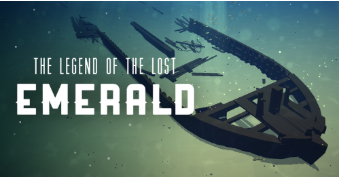
Video game-image of a shipwreck laying at the bottom of a lake

“I knew that shipwrecks really capture kids’ imaginations,” said Moser, the education coordinator and senior special librarian for Wisconsin Sea Grant, part of the Aquatic Sciences Center at the University of Wisconsin–Madison. “The game challenges the kids to solve a puzzle, and the cool thing is that the puzzle exactly mirrors the professional practice of maritime archaeology.” 

“The goal of education at Wisconsin Sea Grant is to spark a passion for the Great Lakes and to inspire the next generation of leaders, and I have seen how shipwreck stories do just that,” Moser said. “We were excited to share this with the educators and youth we work with throughout Wisconsin.” 

Wisconsin Sea Grant also provided seed money for the game and helped Field Day connect with content experts such as the Wisconsin Historical Society’s maritime archaeologists. With a game prototype in hand, Field Day and Sea Grant could then approach PBS Wisconsin, which became a major funding and distribution partner. 

“If it wasn’t for Sea Grant, this game wouldn’t exist,” said Jim Mathews, Field Day’s lead producer on the game, titled “Legend of the Lost Emerald.”

“Anne was interested in developing a game that would promote Great Lakes literacy and complement Wisconsin Sea Grant’s existing Great Lakes-related educational resources, including material aimed at K–12 teachers and students,” Mathews added. “One of the key ideas that emerged from this broad interest was developing a game for elementary-aged students that focused on shipwrecks in the Great Lakes.”  

“Legend of the Lost Emerald” is an immersive, boldly illustrated, point-and-click adventure game that teaches while it entertains. The free, award-winning game invites students to “step into the shoes of Jules,” a maritime archaeologist character working to recover the stories behind shipwrecks inspired by real Great Lakes history. The game gives learners in grades 4–6 the experience of using the same tools, practices, and skills that maritime archaeologists use to locate and dive for shipwrecks in the Great Lakes. Young students use critical thinking and historical inquiry skills in the game, meeting Wisconsin academic standards in English language arts and social studies. 

To kick off creative thinking for the game, Field Day sponsored a brainstorming event at the Wisconsin Maritime Museum in Manitowoc that brought together Field Day game designers with maritime archaeologists from the Wisconsin Historical Society, Sea Grant staff, and Wisconsin teachers who would eventually use the game in their classrooms. 

During that day’s activities, one group of teachers even learned to sing sea shanties, Field Day Creative Director Sarah Gagnon recalled, snippets of which would figure into the game’s music production. Key historical details for the game came from the historical society’s maritime preservation and archaeology program experts, especially maritime archaeologist Tamara Thomsen.  

“All the shipwrecks in the game are fictionalized but are based on real ships that we learned about through the amazing team at the Wisconsin Historical Society and Wisconsin Sea Grant,” Gagnon said, highlighting maritime archaeologists Caitlin Zant and Tori Kiefer, along with Thomsen and Moser. 

To learn more about “Legend of the Lost Emerald,” watch a minute-long, animated trailer for the game, and read the blog post Field Day published when the game was released in 2022. The game also won gold in the 2022 International Serious Play Awards Program.

Wisconsin Sea Grant is a statewide program of research, education, outreach and technology transfer dedicated to the stewardship and sustainable use of the nation’s Great Lakes, the world’s largest freshwater system. Headquartered at UW–Madison, the research institute is part of a national network of 34 university-based water programs and funded primarily through the National Oceanic and Atmospheric Administration, with contributions from participating states and the private sector. 

Field Day is a research lab and game design studio that brings contemporary research to the public, using game data to understand how people learn. Publicly funded through grants, the team at Field Day is committed to providing games to educators for free. Using an ethos that games turn complicated topics into fun, hands-on experiences that reach people, the lab aims to better understand how people learn with games, building out theory and designing effective interventions. 

Among its popular and award-winning games are “Headlines and High Waters,” designed to help students build media literacy, and “Wake: Tales From the Aqualab,” in which students take on the role of a scientist studying ocean ecosystems. Educators and students can access Field Day’s games in addition to many other free educational games in the Vault.

The Wisconsin Center for Education (WCER) at UW–Madison’s No.1 ranked public School of Education is one of the first and most productive education research centers in the world. It has assisted scholars and practitioners in developing, submitting, conducting, and sharing grant-funded education research for over 60 years. 


The post WCER’s Field Day collaborates with Wisconsin Sea Grant to develop shipwrecks game first appeared on Wisconsin Sea Grant.

Original Article

News Releases | Wisconsin Sea Grant

News Releases | Wisconsin Sea Grant

https://www.seagrant.wisc.edu/news/wcers-field-day-collaborates-with-wisconsin-sea-grant-to-develop-shipwrecks-game/

Wisconsin Sea Grant

The Great Lakes Fishery Commission has completed the construction of a 2.5-acre reef built from 20,000 tons of limestone in Lake Huron. Its purpose is to increase spawning habitat for native Great Lakes species such as walleye and whitefish. Read the full story by MLive.

Original Article

Great Lakes Commission

Great Lakes Commission

https://www.glc.org/dailynews/20251024-new-reef

Nichole Angell

In Michigan, the 1-mile segment between Petoskey and Bay Harbor on Lake Michigan’s shoreline has been closed since late 2019 due to erosion caused by record high lake levels. Reconstruction costs are estimated at $19.8 million. Read the full story by MLive.

Original Article

Great Lakes Commission

Great Lakes Commission

https://www.glc.org/dailynews/20251024-trail-reconstruction

Nichole Angell

A low water advisory was put in place for Western Lake Erie’s exposed shorelines after strong steady winds and gusts up to 40 mph pushed waters toward the opposite end of the lake. Read the full story by Lansing State Journal.

Original Article

Great Lakes Commission

Great Lakes Commission

https://www.glc.org/dailynews/20251024-lake-erie-seiche

Nichole Angell

For the first time, the Global Oceans Conference set up shop on the shores of the Great Lakes in Chicago. The Freshwater Research Center showed off its budding status as a blue tech hub. Read the full story by the Ticker.

Original Article

Great Lakes Commission

Great Lakes Commission

https://www.glc.org/dailynews/20251024-global-oceans-conference

Nichole Angell

Boardman High School in Ohio is being awarded $4,800 to fund high school students to learn hands-on at Lake Erie’s Stone Laboratory through the “Great Lakes, Great Futures: Inspiring the Next Generation of Environmental Stewards” program. Read the full story by WFJM – Youngstown, OH.

Original Article

Great Lakes Commission

Great Lakes Commission

https://www.glc.org/dailynews/20251024-highschool-grant

Nichole Angell

The Lake Huron Coastal Centre’s Lake Huron Forever initiative hosted a successful One Water Gathering event in Goderich, Ontario, bringing together Canadian and U.S. partners to strengthen cross-border collaboration for the shared ecosystem. Read the full story by The Sarnia Journal.

Original Article

Great Lakes Commission

Great Lakes Commission

https://www.glc.org/dailynews/20251024-one-water-gathering

Nichole Angell

By Joe Lorenz

Electrification and tariffs mean rural Midwest communities can cash in on their mineral resources. But how can these ventures balance local benefit to the ecological cost?

The post New interest in domestic mining comes with call for sustainability in the market first appeared on Great Lakes Echo.

Original Article

Great Lakes Echo

Great Lakes Echo

https://greatlakesecho.org/2025/10/24/new-interest-in-domestic-mining-comes-with-call-for-sustainability-in-the-market/

Great Lakes Echo

* WHAT...Low temperatures between 29 and 34 degrees expected. * WHERE...Calumet, Manitowoc, Winnebago, Brown, Kewaunee, and Outagamie Counties. * WHEN...From 2 AM to 9 AM CDT Friday. * IMPACTS...Frost and freeze conditions could kill crops, other sensitive vegetation and possibly damage unprotected outdoor plumbing.

Original Article

Current watches, warnings, and advisories for Brown County (WIC009) WI

Current watches, warnings, and advisories for Brown County (WIC009) WI

https://api.weather.gov/alerts/urn:oid:2.49.0.1.840.0.23d6a38dbb72728da2a1ecf57028c8fe872d312c.001.1.cap

NWS

* WHAT...Low temperatures between 30 and 34 degrees expected. * WHERE...Calumet, Manitowoc, Winnebago, Brown, Kewaunee, and Outagamie Counties. * WHEN...From 2 AM to 9 AM CDT Friday. * IMPACTS...Frost and freeze conditions could kill crops, other sensitive vegetation and possibly damage unprotected outdoor plumbing.

Original Article

Current watches, warnings, and advisories for Brown County (WIC009) WI

Current watches, warnings, and advisories for Brown County (WIC009) WI

https://api.weather.gov/alerts/urn:oid:2.49.0.1.840.0.a5b6095b37389cde1858f3e4df9ec59535b5f8a0.001.1.cap

NWS

Help Monitor Salt Pollution in the Fox-Wolf River Basin This Winter! Winter brings snow, ice, and slippery sidewalks. Sodium chloride (salt), widely used on roads, parking lots, and sidewalks to keep us safe, can also harm our streams and wildlife when overused. Fox-Wolf is partnering with the Izaak Walton League to gather more data [...]

The post Join Fox-Wolf and Help Monitor for Chlorides(Salt) appeared first on Fox-Wolf Watershed Alliance.

Original Article

Fox-Wolf Watershed Alliance

Fox-Wolf Watershed Alliance

https://fwwa.org/2025/10/23/join-fox-wolf-and-help-monitor-for-chloridessalt-3/?utm_source=rss&utm_medium=rss&utm_campaign=join-fox-wolf-and-help-monitor-for-chloridessalt-3

Jessica Schultz

* WHAT...Low temperatures between 30 and 34 degrees expected. * WHERE...Calumet, Manitowoc, Winnebago, Brown, Kewaunee, and Outagamie Counties. * WHEN...From 2 AM to 9 AM CDT Friday. * IMPACTS...Frost and freeze conditions could kill crops, other sensitive vegetation and possibly damage unprotected outdoor plumbing.

Original Article

Current watches, warnings, and advisories for Brown County (WIC009) WI

Current watches, warnings, and advisories for Brown County (WIC009) WI

https://api.weather.gov/alerts/urn:oid:2.49.0.1.840.0.3f99abd61b6c15789ae7025388627e7132fd4bec.001.1.cap

NWS

The U.S. Geological Survey is planning to lay off 79% of the workforce of the Great Lakes Science Center that’s headquartered in Ann Arbor, Michigan, as part of a reduction in force across the U.S. Department of the Interior. Read the full story by The Detroit News.

Original Article

Great Lakes Commission

Great Lakes Commission

https://www.glc.org/dailynews/20251022-glsc-layoffs

Taaja Tucker-Silva

Ten Great Lakes Indigenous Nations have filed a brief before the U.S. Supreme Court, urging a finding against Enbridge on a case involving the Line 5 oil and gas pipeline in the Straits of Mackinac. A second federal lawsuit involving Michigan and Enbridge is pending. Read the full story by the Detroit Free Press.

Original Article

Great Lakes Commission

Great Lakes Commission

https://www.glc.org/dailynews/20251022-enbridge-brief

Taaja Tucker-Silva

As the federal government shutdown continues, most U.S. Environmental Protection Agency workers doing everyday work with air and water environmental protection in Michigan are furloughed, but emergency responders are still working. Read the full story by Michigan Public.

Original Article

Great Lakes Commission

Great Lakes Commission

https://www.glc.org/dailynews/20251022-epa-furloughed

Taaja Tucker-Silva

Two U.S. representatives from Michigan are asking the federal government to send at least one new icebreaker ship to the Great Lakes as part of a deal between the U.S. and Finland. Read the full story by WXYZ-TV – Detroit, MI.

Original Article

Great Lakes Commission

Great Lakes Commission

https://www.glc.org/dailynews/20251022-new-icebreaker

Taaja Tucker-Silva

The National Park Service, Pennsylvania officials, and other groups are working on an ambitious plan to create the Great Lakes Waterfront Trail in the United States. The U.S. trail would link to an existing trail, more than 3,600 kilometers long, in Canada. Read the full story by Erie Reader.

Original Article

Great Lakes Commission

Great Lakes Commission

https://www.glc.org/dailynews/20251022-waterfront-trail

Taaja Tucker-Silva

Field Report: Manitowish Waters Labor Day weekend rice camp

Every fall for hundreds of years, families and tribes have gathered for wild rice season on the lakes and streams of what is now known as northern Wisconsin. For the Anishinaabe—including Ojibwe and other related tribes—this annual gathering remains a vital cultural and social tradition, encompassing far more than food gathering.

Manoomin is not simply a “food that grows on water.” At the heart of tribal beliefs, it is recognized as a Sacred Living Being—and, unfortunately, it is very much under threat.

This year, following in the rice camp tradition, GLIFWC and UW–Trout Lake Station hosted an intergenerational, intertribal Manoomin/Manōmaeh (“Wild Rice”) Camp over Labor Day weekend at the North Lakeland Discovery Center in Manitowish Waters. Esiban Parent (GLIFWC), Sagen Quale (UW graduate student), and Dr. Gretchen Gerrish (UW–Trout Lake Station) did an outstanding job organizing the event.

Roger LaBine (member and elder of the Lac Vieux Desert Band of Lake Superior Chippewa) stands with River Alliance's Johnson Bridgwater next to forked branches handmade for push-pull poles used to steer canoes in manoomin harvests.
Roger LaBine (member and elder of the Lac Vieux Desert Band of Lake Superior Chippewa) stands with River Alliance’s Johnson Bridgwater next to forked branches handmade for push-pull poles used to steer canoes in manoomin harvests.

Rice camp is a deeply hands-on experience—a time when wisdom and knowledge about harvesting, processing, and cooking wild rice are passed down each fall. Because Manoomin is regarded as a Sacred Being, the camp also includes ceremony and other cultural practices that can only be learned firsthand or by invitation.

There are no spectators at rice camp—your moments are spent either learning, teaching, or building the tools essential for traditional wild rice gathering (or “ricing”). All the while, participants are storing and sharing knowledge that keeps this living tradition thriving.

The basic process of preparing wild rice begins with the harvest. Gathering wild rice is done from a canoe using a push pole, a pair of rice knockers, and two people working together. After harvesting, the rice is spread out in the sun to dry, giving rice worms and spiders a chance to leave before processing begins.

The traditional process of preparing wild rice involves three main steps: parching, threshing (also known as “dancing the rice” or “jigging”), and winnowing.

Paddlers in canoes gather a the edge of a lake with manoomin to learn from Kathleen Smith how to identify the plant that is central to the Ojibwe origin story and modern culture.

Parching—or roasting—dries the grain to preserve it and makes the hull brittle. Threshing removes the dried husks from the kernels, traditionally done by “dancing” or “jigging” on the rice. Winnowing uses wind to separate the loose, light chaff from the heavier, processed rice grains. At that point, you have ready-to-cook rice. All of these activities took place at this year’s camp, along with workshops where participants hand-crafted their own traditional ricing tools.

River Alliance's Evan Arnold sands whittled branches used as knockers to tap manoomin into birch baskets in canoes during wild rice harvests.
River Alliance’s Evan Arnold sands whittled branches used as knockers to tap manoomin into birch baskets in canoes during wild rice harvests.

“Whether I was carving rice knockers, building push poles, crafting birchbark baskets, enjoying delicious manoomin meals, or paddling through rice beds, my experiences at Rice Camp helped cement my connection to the unique and valuable waters we have right here in Wisconsin, and strengthened my resolve to continue to protect them.” – Evan Arnold, River Alliance Development Director

Saying rice camp is the heart and soul of Manoomin is a bit simplistic, but it is certainly appropriate. For anybody wanting a deeper connection to our world, or seeking new ways to grow your stewardship, a single weekend at rice camp can easily unlock a lifetime pursuit and passion. 

Please consider attending a rice camp next year, whether this camp in 2026 or another rice camp in the upper Midwest in September and October. Learn how to become a Manoomin Steward volunteer with River Alliance of Wisconsin and subscribe to our ManoomiNews newsletter today to get future stories like this one and more delivered to your inbox.


This message is made possible by generous donors who believe people have the power to protect and restore water. Subscribe to our Word on the Stream email newsletter to receive stories, action alerts and event invitations in your inbox. Take a deeper dive into the topic of manoomin by subscribing to our ManoomiNews newsletterSupport our work with your contribution today.

The post Field Report: Manitowish Waters Labor Day weekend rice camp appeared first on River Alliance of WI.

Original Article

Blog - River Alliance of WI

Blog - River Alliance of WI

https://wisconsinrivers.org/2025-intertribal-rice-camp-report/

Allison Werner

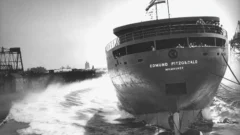
In “The Gales of November,” author John U. Bacon investigates the sinking of the Edmund Fitzgerald

By Doug Tribou, John U. Bacon and Caoilinn Goss, Michigan Public

The Great Lakes News Collaborative includes Bridge Michigan; Circle of Blue; Great Lakes Now at Detroit PBS; Michigan Public, Michigan’s NPR News Leader; and The Narwhal who work together to bring audiences news and information about the impact of climate change, pollution, and aging infrastructure on the Great Lakes and drinking water.

Read Now at Great Lakes Now.

Original Article

Great Lakes Now

Great Lakes Now

https://www.greatlakesnow.org/2025/10/in-the-gales-of-november-author-john-u-bacon-investigates-the-sinking-of-the-edmund-fitzgerald/

Michigan Public

By Anna Barnes
The Detroit River serves as an important geographic feature, connecting lakes St. Clair and Erie and creating a natural border between the U.S. and Canada. Despite its physical prominence in Detroit, its rich cultural significance is lost among many community residents. Programs are underway to address that disconnect.

The post Detroit River-based program aims to foster stewardship through community connection first appeared on Great Lakes Echo.

Original Article

Great Lakes Echo

Great Lakes Echo

https://greatlakesecho.org/2025/10/22/detroit-river-based-program-aims-to-foster-stewardship-through-community-connection/

Anna Barnes

Soil is more than just dirt under our feet; it's the foundation of our food, communities, and perhaps surprisingly, cleaner water. At Fox-Wolf, we know how important properly managed soil is for improved water quality, and farmers across the Basin know how important healthy soil is for growing good crops. We're working together [...]

The post Different Reasons, Same Results. Farming for Water Quality appeared first on Fox-Wolf Watershed Alliance.

Original Article

Fox-Wolf Watershed Alliance

Fox-Wolf Watershed Alliance

https://fwwa.org/2025/10/21/different-reasons-same-results-farming-for-water-quality/?utm_source=rss&utm_medium=rss&utm_campaign=different-reasons-same-results-farming-for-water-quality

Tim Burns

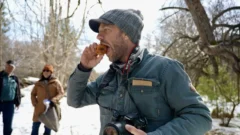
Points North: How ‘Bout Them Apples?

By Austin Rowlader, Interlochen Public Radio

Points North is a biweekly podcast about the land, water and inhabitants of the Great Lakes.

This episode was shared here with permission from Interlochen Public Radio. 

Luke Marion is on Beaver Island in Lake Michigan looking for apple trees.

Read Now at Great Lakes Now.

Original Article

Great Lakes Now

Great Lakes Now

https://www.greatlakesnow.org/2025/10/points-north-how-bout-them-apples/

Interlochen Public Radio

Ohio to fast-track energy at former coal mines and brownfields

By Kathiann M. Kowalski

This story was originally published by Canary Media.

A new law in Ohio will fast-track energy projects in places that are hard to argue with: former coal mines and brownfields.

But how much the legislation benefits clean energy will depend on the final rules for its implementation, which the state is working out now.

Read Now at Great Lakes Now.

Original Article

Great Lakes Now

Great Lakes Now

https://www.greatlakesnow.org/2025/10/ohio-to-fast-track-energy-at-former-coal-mines-and-brownfields/

Canary Media

Last week, Illinois announced it had acquired land needed to move forward with a $1.15 billion barricade aimed at keeping the invasive silver carp from entering the channel that connects the Mississippi River Basin with the Great Lakes. Read the full story by the Chicago Sun-Times.

Original Article

Great Lakes Commission

Great Lakes Commission

https://www.glc.org/dailynews/20251020-illinois-carp-progress

Autumn McGowan