Detroit’s Gordie Howe International Bridge is set to change the way people cross the Detroit River. For the first time in decades, residents will be able to walk or bike, in addition to driving, into Canada. Read the full story by Bridge Detroit.

Original Article

Great Lakes Commission

Great Lakes Commission

https://www.glc.org/dailynews/20250106-international-bridge

Taaja Tucker-Silva

Dozens of swimmers took to Lake Michigan in Ogden Dunes, Indiana, as part of an unofficial New Year’s Day polar plunge. The air temperature was 20 while the water temperature was about 35 as swimmers defied the weather to take a brief dip. Read the full story by the Post-Tribune.

Original Article

Great Lakes Commission

Great Lakes Commission

https://www.glc.org/dailynews/20250106-polar-plunge

Taaja Tucker-Silva

Thanks to a perfect mix of wind, waves, and freezing temperatures, Mother Nature has been busy sculpting some incredible ice formations along the Lake Erie shoreline near Cleveland, Ohio. Read the full story by The Plain Dealer.

Original Article

Great Lakes Commission

Great Lakes Commission

https://www.glc.org/dailynews/20250106-cleveland-ice

Taaja Tucker-Silva

When you think of archeology, you probably think of ancient Egypt or Rome. But in Michigan’s St. Joseph County, archeologists are searching for signs of Clovis People, some of the first inhabitants of North America.

Learn more on the Great Lakes Now YouTube channel.

#Michigan #Archeology #Artifacts #AncientHistory
===========================================
Website: https://greatlakesnow.org
Facebook: https://www.facebook.com/greatlakesnow
X: https://www.x.com/greatlakesnow
Instagram: https://www.instagram.com/greatlakesnoworg
Newsletter: https://www.greatlakesnow.org/great-lakes-now-newsletter/

To learn more about supporting Detroit PBS and Great Lakes Now, visit https://www.detroitpbs.org/

The post What archeologists found in this Michigan farm appeared first on Great Lakes Now.

Original Article

Great Lakes Now

Great Lakes Now

https://www.greatlakesnow.org/2026/01/02/what-archeologists-found-in-this-michigan-farm/

Great Lakes Now

This article was republished here with permission from Great Lakes Echo.

By Kyrmyzy Turebayeva, Great Lakes Echo

More than 30 years ago, a group of scientists planted just 4,200 seeds of the rare Pitcher’s thistle (Cirsium pitcheri) in the sandy dunes of the Great Lakes. At the time, no one knew if the new populations would survive.

Today, three decades later, the restored populations are thriving and spreading. This unexpected success became the foundation for a newly published scientific paper in Annals of Botany.

The study was authored by research ecologists with the U.S. Geological Survey Noel Pavlovic and A. Kathryn McEachern, along with conservation scientist Jeremy Fant at the Chicago Botanic Garden, whose genetic research made it possible to view the restoration of the rare plant not only as a field experiment, but as a long-term genetic survival strategy.

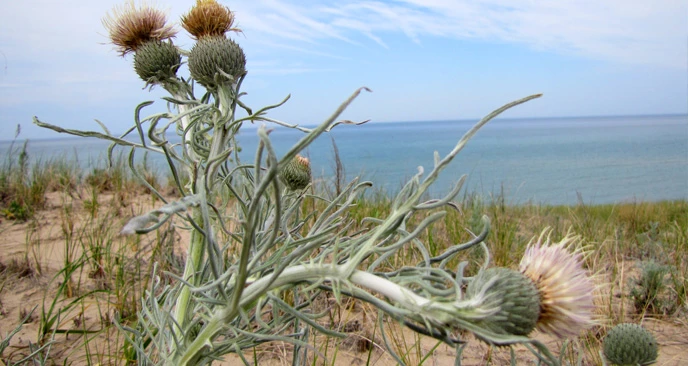
Pitcher’s thistle grows only on the Western Great Lakes sand dunes.

To most visitors, it looks like an ordinary wildflower: a spiky, silvery-green plant with cream-to-light-pink flowers.

To scientists, it represents the fragile coastal ecosystems of the region.

Sand mining, residential development and recreational activities have historically been threats to sand dunes which serve as a natural gateway to the shoreline and protect the coast from erosion.

In the late 1980s, Michigan designated areas along the Lake Michigan and Lake Superior shorelines as “critical dune areas” in an effort to protect these ecosystems.

In 1988, it was listed as threatened by the Fish and Wildlife Service.

“In 1988, I was working as a statistician for the National Park Service at Indiana Dunes National Park,” Pavlovic recalled.

“That’s when graduate student McEachern from the University of Wisconsin joined us,” he said.

“She was exploring research topics on dune ecosystems, and our supervisor suggested that we study Pitcher’s thistle, which was about to be listed as a threatened species. I hired a technician, and the three of us began studying this plant together.”
Once it was federally listed, a recovery team was established with representatives from federal and state agencies. Pavlovic became the team leader, helping shape the official recovery strategy for the species.

That meant Pavlovic was not only studying the plant – he was actively involved in defining how the government might protect it.

The plant became the focus of McEachern’s dissertation and took a job with the National Park Service in California after finishing her doctorate.

“Meanwhile, my colleague, a long-term technician, and I continued monitoring the plants at Indiana Dunes, while McEachern returned nearly every summer to help with field surveys,” Pavlovic said.

In 1994, the team launched a historic reintroduction effort.

They collected 4,200 seeds from 54 maternal lines and planted them at Indiana Dunes National Park – now part of the Portage Lakefront and Riverwalk – across three stages of habitat succession: early sites dominated by bare sand, mid-stage areas with a mix of marram grass and sand, and late successional habitat dominated by little bluestem grass.

“Everything begins at the foredune, where shifting sands are stabilized by marram grass, and Pitcher’s thistle thrives under the same conditions.”

“Farther inland,” he continued, “secondary dunes develop as the sand stabilizes, and over time grasses give way to shrubs and eventually forests.”

“This gradual transformation is known as ecological succession, and we placed our research plots across these different stages to understand how Pitcher’s thistle responds to changing habitats,” he said.

It was not a large number of seeds. And planting was done only during the first year.

After that, no more seeds or plants were introduced, and the scientists stepped back and let nature take over.

“Pitcher’s thistle has a very interesting life history,” Pavlovic explained. “Everything starts from seeds”

“In the first year, a tiny seedling appears. If it survives, the second year it becomes a juvenile plant. Over the next few years it continues to grow.”

“It can flower anywhere between 3 and 8years of age — and then it dies. Unlike many perennials, it only blooms once. It has a single chance to reproduce,” Pavlovic said.

The populations were monitored for more than 30 years, with genetic sampling of both native and reintroduced populations in 2009.

“The populations at Indiana Dunes were small, scattered and genetically vulnerable.We already knew from earlier studies that genetic diversity was especially low in southern Lake Michigan. That’s why we decided to mix seeds from different local populations,” Pavlovic said.

High seedling mortality, limited seed numbers and the risk of losing genetic diversity made failure a real possibility.

“We never expected these populations to survive this long,” he said.

“We used just 4,200 seeds, and seedling mortality was very high. We assumed genetic diversity would collapse. But it didn’t. The plants survived, and the populations began expanding. It’s truly remarkable.”

The two surviving populations, out of three, also showed higher genetic diversity than native populations, showing seed mixing was effective.

The researchers also discovered that deliberately sowing seeds into the sand was more effective than simply scattering seeds across the surface.

“These dunes are home to many unique species, and Pitcher’s thistle is symbolic of these ecosystems,” Pavlovic said.

“ Its flowers provide essential nectar for pollinators, and its seeds feed birds like American goldfinches. Many dune plants were also used by Indigenous peoples for food, dyes and crafts.”

This isn’t just about saving one rare flower — it’s about preserving an entire living landscape,” Pavlovic said.

The post How seeds from the past are saving a unique flower of the Great Lakes appeared first on Great Lakes Now.

Original Article

Great Lakes Now

Great Lakes Now

https://www.greatlakesnow.org/2026/01/02/how-seeds-from-the-past-are-saving-a-unique-flower-of-the-great-lakes/

Great Lakes Echo

A bomb cyclone winter storm brought wind gusts over 50 mph to much of Michigan and those winds pushed water out of western Lake Erie in a massive way exposing the lake bottom and leading to all sorts of odd discoveries. Read the full story by the Detroit Free Press.

Original Article

Great Lakes Commission

Great Lakes Commission

https://www.glc.org/dailynews/20250102-erie-seiche

Nichole Angell

Gale force winds producing waves not seen since the sinking of the Edmund Fitzgerald in 1975 are hitting the Great Lakes. Giant waves in some parts of Lake Superior were more dangerous than ocean waves.  Read the full story by the Milwaukee Journal Sentinel.

Original Article

Great Lakes Commission

Great Lakes Commission

https://www.glc.org/dailynews/20250102-risky-waves

Nichole Angell

Michigan has a mussel expert who wants to save the native filter feeders from being smothered by invasive mussels now in the Great Lakes. The state scientist will discuss during an upcoming free webinar how Michigan can prevent invasive mussels from harming native populations. Read the full story by MLive.

Original Article

Great Lakes Commission

Great Lakes Commission

https://www.glc.org/dailynews/20250102-invasive-mussels

Nichole Angell

By Kyrmyzy Turebayeva

More than 30 years ago, a group of scientists planted just 4,200 seeds of the rare Pitcher’s thistle in the sandy dunes of the Great Lakes. At the time, no one knew if the new populations would survive. Today, three decades later, the restored populations are thriving and spreading.

The post How seeds from the past are saving a unique flower of the Great Lakes first appeared on Great Lakes Echo.

Original Article

Great Lakes Echo

Great Lakes Echo

https://greatlakesecho.org/2025/12/31/how-seeds-from-the-past-are-saving-a-unique-flower-of-the-great-lakes/

Kyrmyzy Turebayeva

By Kelly House, Bridge Michigan

The Great Lakes News Collaborative includes Bridge Michigan; Circle of Blue; Great Lakes Now at Detroit PBS; Michigan Public, Michigan’s NPR News Leader; and The Narwhal who work together to bring audiences news and information about the impact of climate change, pollution, and aging infrastructure on the Great Lakes and drinking water. This independent journalism is supported by the Charles Stewart Mott Foundation. Find all the work HERE.

Changes to Michigan’s energy sector are expected to dominate the headlines in 2026, with big implications for the state’s environment.

From data centers, coal plants and solar arrays to petroleum pipelines and aging dams, energy-related decisions next year that could shape Michigan’s environment for decades to come, affecting everything from which fish can survive in rivers to how quickly the state’s utilities ditch planet-warming fossil fuels. 

Here are the topics to watch:  

Data centers

Swift and secretive dealmaking involving some of the world’s most powerful corporations. 

Vast quantities of money, land and electricity. 

Promises of prosperity from a booming industry, coupled with fears that Michiganders could be left holding the bag in a bust.

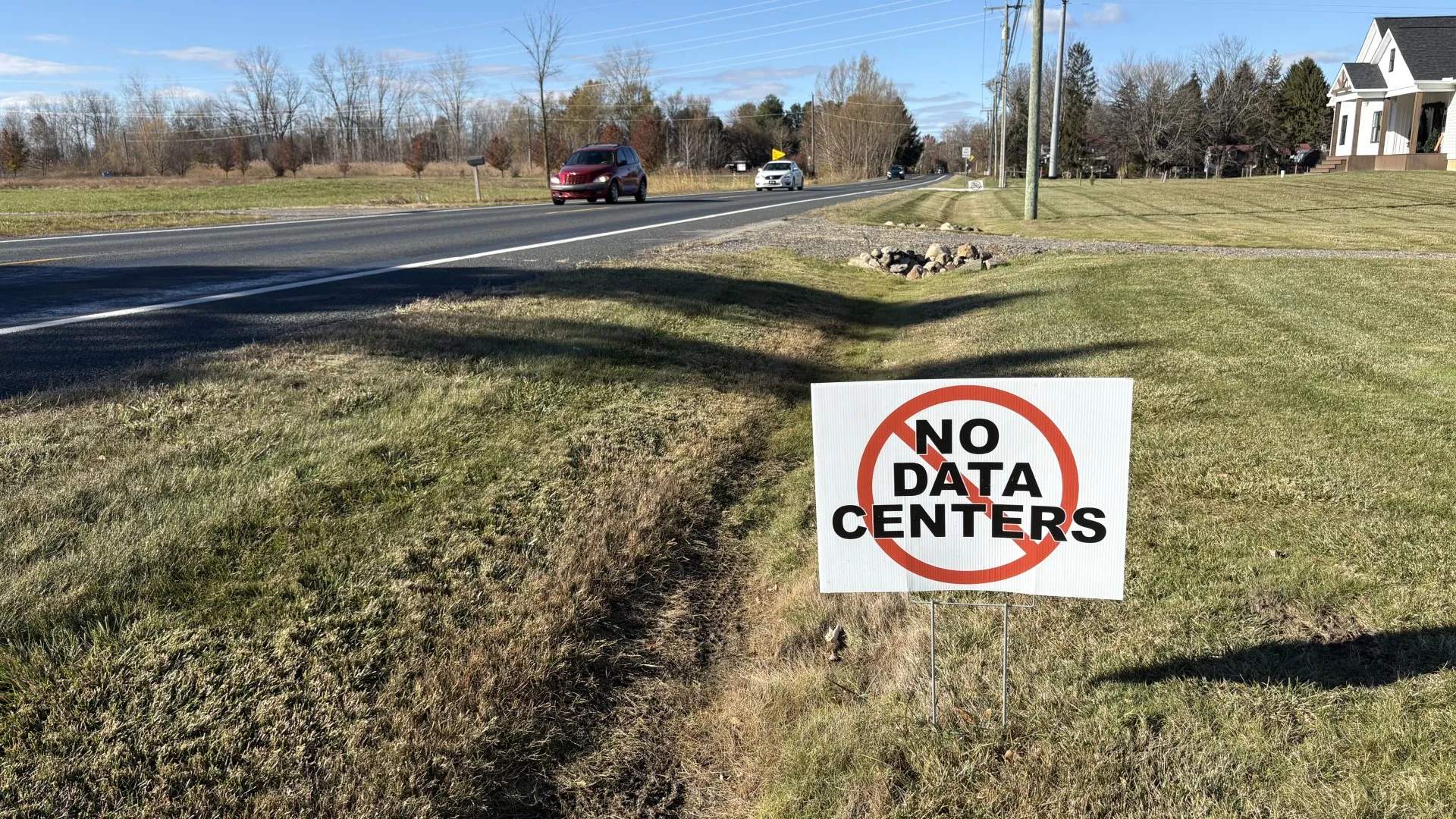
Given those dynamics, it’s no wonder data centers became one of Michigan’s biggest environmental and political issues in 2025. And the debate shows no signs of letting up in 2026.

“It’s not going away,” said Sarah Mills, a land use planning expert at the University of Michigan who advises local officials as they consider how to respond to the data center boom.

“I’m telling you, like, two weeks ago, the priest talked about it at church.”

Tech giants OpenAI, Oracle and Related Digital expect to break ground soon on Michigan’s first hyperscale data center in Saline Township, a milestone hailed by some as a win for Michigan, and maligned by others as an example of corporations railroading communities.

Developers have approached multiple other communities with data center proposals, prompting pushback from neighbors and fears that rapid expansion of the energy and water-hungry industry could imperil Michigan’s environment and drive up utility rates.

Support and opposition blurs party lines. Data center supporters include President Donald Trump, a Republican, and Gov. Gretchen Whitmer, a Democrat. Both contend the facilities are important to state and national economic development and national security interests.

Meanwhile, bipartisan criticism has emerged in response to Michigan’s tax breaks for the industry and regulators’ approval of data center deals with limited public scrutiny. They note that the facilities employ few permanent workers and have overtaxed water and energy supplies in some other data center-heavy states.

Michigan’s two largest utilities, Consumers Energy and DTE Energy, both say they’re in late-stage negotiations to bring on several gigawatts’ worth of new data centers in the near future.

“We’re talking about doubling our entire electricity demand,” said Bryan Smigielski, a Michigan organizer with the Sierra Club. “There’s no way to do that in a sustainable manner.”

The next year will be crucial for both sides, as developers continue to pursue deals and local governments decide whether to grant them access to the land they need to operate.

Michigan’s energy transition

More than two years after state lawmakers passed a law requiring utilities to get all of their power from designated “clean” sources by 2040, Michiganders will get their first glimpse next year at how the largest utilities plan to meet that goal.

Both DTE Energy and Consumers Energy, the monopoly utilities that provide electricity to the vast majority of Michigan households, are scheduled to file so-called integrated resources plans next year with the Michigan Public Service Commission. 

The long-range planning documents spell out how utilities plan to meet demand over the next 20 years. Because of the new climate law, they also must include details about how they’ll invest in clean energy to get off fossil fuels.

Both utilities contend they’re on track to meet the 2040 deadline, along with an interim deadline to reach 50% renewables by 2030. 

But they have a long way to go. Right now, about 12% of Michigan’s in-state electricity generation is from renewable sources.

Concern has emerged recently that growing demand from data centers could make it harder for utilities to make the transition. A single hyperscale facility typically consumes as much power as a large American city.

And at least in the near-term, DTE Energy is planning to power the Saline Township facility largely with fossil fuel energy generated by ramping up production at existing power plants.

“We cannot build renewables fast enough to avoid at least a temporary increase in greenhouse gas emissions” from data centers, said Douglas Jester, managing partner at the energy consulting firm 5 Lakes Energy.

Over the longer term, utilities will need to build even more solar arrays, wind farms or other approved clean energy to meet rising data center demand while still complying with the state’s clean energy law. Adding a single 1 gigawatt data center to the grid would require an extra 10,000 acres of solar arrays if utilities looked to power it exclusively with solar.

That raises big questions about where that energy infrastructure might be built and how utilities will add it to a power grid that’s already facing lengthy interconnection backlogs.

Palisades power plant

Against that backdrop, the Palisades nuclear plant has emerged as a controversial answer to Michigan’s energy supply conundrum.

It seems all but certain that the shuttered facility on Michigan’s southwestern shoreline will reopen in 2026, as the federal and state governments pour money into an effort to boost Michigan’s supply of carbon-free energy during a time of rising demand.

Subsidies for the project now top $3.5 billion. 

A nuclear plant control room
A training facility at the Palisades nuclear plant includes technology dating back to the 1970s, when the plant came online. Nuclear energy proponents want Michigan to be ground zero for an industrywide renaissance. (Kelly House/Bridge Michigan)

The federal government has authorized a $1.5 billion loan plus $1.3 billion in grants to help two rural electric cooperatives buy power from the plant and another $400 million to build additional reactors at the site. Michigan taxpayers have chipped in another $300 million. 

“I’ll keep working with anyone to grow Michigan’s economy and build a more affordable, clean energy future right here in Michigan,” said Whitmer, a supporter of the restart plan. 

Officials with Holtec Energy, the plant’s owner, began refueling the facility in October and say they’re on track to start generating power as soon as year’s end. But as of early December, federal officials were still inspecting the plant and opponents were fighting on multiple fronts to prevent the restart. 

Arguing the promise of emissions-free energy is not worth the risk of reopening a 54-year-old plant that has a history of problems, three anti-nuclear groups filed a November lawsuit contending the restart scheme should never have received regulatory approval.

“They’re making a mockery of safety regulations and even laws,” said Kevin Kamps, a Kalamazoo-based radioactive waste specialist with Beyond Nuclear. His group will likely file additional suits if the Nuclear Regulatory Commission allows the plant to reopen.

And then there’s the issue of what to do with the spent nuclear fuel. The United States still has no permanent storage location for the stuff, so, for now, it’d be held indefinitely in storage casks situated on concrete pads near the Great Lakes shoreline. 

Line 5

After years of delays, cost overruns, lawsuits and political controversy, 2026 could be the year Michigan learns for sure whether Enbridge Energy will build the Line 5 tunnel.

Federal regulators say they’ll decide by spring whether to grant key permits for the proposed concrete-lined tunnel beneath the Straits of Mackinac, where Enbridge has said since 2018 it plans to reroute the petroleum pipeline that currently poses an oil spill risk in the open water of the Straits. 

But this fall, they announced they’re also studying a separate option that would involve drilling a narrow borehole hundreds of feet underground and snaking the pipeline through it.

While pipeline fans and foes await decisions on the federal permit and a separate state permit that Enbridge needs to begin tunnel construction, the US Supreme Court is preparing to issue a key ruling pertaining to Attorney General Dana Nessel’s yearslong effort to shut down the pipeline.

The court will decide which court  — federal or state — should decide whether the pipeline shuts down. 

It may sound insignificant, but onlookers widely agree that a state court is more likely to side with Nessel, while a federal court is more likely to side with Enbridge.

Climate change

So far, Michigan is seeing its most normal winter in years, by historic standards.

Snowpack across much of the state is at or above average, temperatures have been seasonally chilly, and a brave few are already augering fishing holes into the ice as Great Lakes bays freeze over.

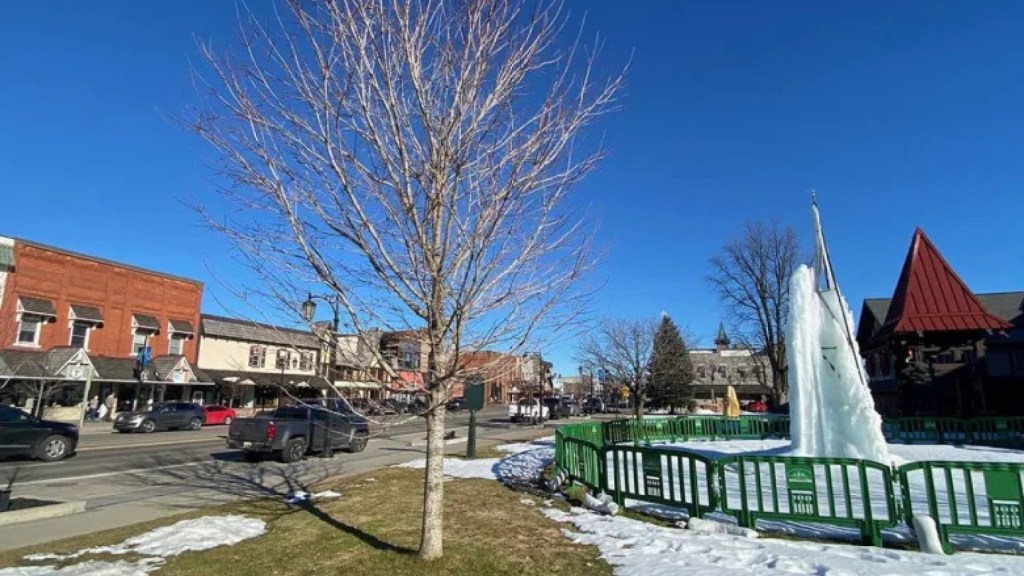
Downtown Gaylord
Michigan has endured a string of lackluster winters, including in 2024, when the ice spire outside Gaylord City Hall was rapidly melting on an early February day. (Kelly House/Bridge Michigan)

But the respite from a string of lackluster winters and smoky, hot summers can’t mask the fact that Earth’s atmosphere is steadily warming, with consequences reverberating into the Great Lakes region’s ecosystem.

Bridge has written extensively about how climate change affects Michigan, from lost winter pastimes to disappearing fish and worsening storm damage. It’s impossible to say what sort of climate disruption is in store for Michigan in 2026, but you can bet on more coverage about how the global changes are hitting home locally. 

The post 5 Michigan environment stories to watch in 2026 appeared first on Great Lakes Now.

Original Article

Great Lakes Now

Great Lakes Now

https://www.greatlakesnow.org/2025/12/30/5-michigan-environment-stories-to-watch-in-2026/

Kelly House, Bridge Michigan

As 2025 comes to a close, we looked back at the blog posts that resonated most with our community this year. These stories rose to the top not because of hype, but because they answered real questions, explained complex issues clearly, and showed what protecting water looks like in practice across the Fox-Wolf watershed. [...]

The post Our Top Blogs of 2025 appeared first on Fox-Wolf Watershed Alliance.

Original Article

Fox-Wolf Watershed Alliance

Fox-Wolf Watershed Alliance

https://fwwa.org/2025/12/30/top-blogs-2025/?utm_source=rss&utm_medium=rss&utm_campaign=top-blogs-2025

Fox-Wolf Watershed Alliance

At Farrand Hall, flavors come from the land just outside the door.

In addition to a vegetable garden, the kitchen forages for herbs and ingredients on the property’s twelve acres. The result is a truly local menu that shifts with the seasons.

Learn more on the Great Lakes Now YouTube channel.

#Food #Foraging #Cooking #Dining #Restaurant #FarmToTable #FineDining
===========================================
Website: https://greatlakesnow.org
Facebook: https://www.facebook.com/greatlakesnow
X: https://www.x.com/greatlakesnow
Instagram: https://www.instagram.com/greatlakesnoworg
Newsletter: https://www.greatlakesnow.org/great-lakes-now-newsletter/

To learn more about supporting Detroit PBS and Great Lakes Now, visit https://www.detroitpbs.org/

The post When the forest is your pantry appeared first on Great Lakes Now.

Original Article

Great Lakes Now

Great Lakes Now

https://www.greatlakesnow.org/2025/12/29/when-the-forest-is-your-pantry/

Great Lakes Now

By Kyrmyzy Turebayeva

In the late 1970s, when most wildlife conservation programs in the United States focused almost exclusively on game species, a quiet but historic shift began in Minnesota. It was here that one of the nation’s first state programs dedicated to protecting so-called nongame wildlife emerged from butterflies and bats to bald eagles and river otters. That story is now told in detail by Carrol Henderson in his new book, “A National Legacy: Fifty Years of Nongame Wildlife Conservation in Minnesota."

The post From otters to butterflies: How Minnesota became a pioneer in nongame wildlife conservation first appeared on Great Lakes Echo.

Original Article

Great Lakes Echo

Great Lakes Echo

https://greatlakesecho.org/2025/12/28/from-otters-to-butterflies-how-minnesota-became-a-pioneer-in-nongame-wildlife-conservation/

Kyrmyzy Turebayeva

As a child, Thomas Nelson became fascinated by the Edmund Fitzgerald after seeing one of its lifeboats in a museum. As an adult and elected official, he realized that the Edmund Fitzgerald was more than a maritime tragedy, it was a chapter in America’s story of deindustrialization. This realization led him to write Wrecked: The Edmund Fitzgerald and the Sinking of the American Economy.

Watch our full conversation with Nelson on the Great Lakes Now YouTube channel.

#EdmundFitzgerald #GreatLakes #Shipping #Freighter #Economy
===========================================
Website: https://greatlakesnow.org
Facebook: https://www.facebook.com/greatlakesnow
X: https://www.x.com/greatlakesnow
Instagram: https://www.instagram.com/greatlakesnoworg
Newsletter: https://www.greatlakesnow.org/great-lakes-now-newsletter/

To learn more about supporting Detroit PBS and Great Lakes Now, visit https://www.detroitpbs.org/

The post The Edmund Fitzgerald is More Than a Maritime Tragedy appeared first on Great Lakes Now.

Original Article

Great Lakes Now

Great Lakes Now

https://www.greatlakesnow.org/2025/12/26/the-edmund-fitzgerald-is-more-than-a-maritime-tragedy/

Great Lakes Now

Michigan’s Department of Environment, Great Lakes, and Energy has released the annual State of the Great Lakes Report. The report covers environmental cleanup, waterfront restoration, invasive species, groundwater management, and wildlife protection. Read the full story by Michigan Public.

Original Article

Great Lakes Commission

Great Lakes Commission

https://www.glc.org/dailynews/20251224-sogl-report

Taaja Tucker-Silva

In Michigan, the first payments from a more-than $600 million fund to settle Flint water crisis lawsuits have been made. It’s another step in the years-long effort to compensate people who were hurt by elevated lead levels in the city’s water supply. Read the full story by Michigan Public.

Original Article

Great Lakes Commission

Great Lakes Commission

https://www.glc.org/dailynews/20251224-flint-claims

Taaja Tucker-Silva

Technology from Chicago and around the world promises to clean up water. An effort in Illinois is trying to speed it to market while navigating new federal funding challenges. Read the full story by Inside Climate News.

Original Article

Great Lakes Commission

Great Lakes Commission

https://www.glc.org/dailynews/20251224-water-startups

Taaja Tucker-Silva

U.S. Representatives recently introduced a bipartisan bill that seeks to strengthen the Port Infrastructure Development Program to bring critical investments for port infrastructure and intermodal improvements to ports in the Great Lakes. Read the full story by The Ripon Advance.

Original Article

Great Lakes Commission

Great Lakes Commission

https://www.glc.org/dailynews/20251224-port-bill

Taaja Tucker-Silva

After 25 years, the Great Lakes Aquarium in Duluth, Minnesota, is celebrating a standout season that’s benefited the local economy. The year brought record crowds and nearly $43 million for Duluth and officials say even more tourism-related growth is on the way. Read the full story by Northern News Now.

Original Article

Great Lakes Commission

Great Lakes Commission

https://www.glc.org/dailynews/20251224-aquarium-attendance

Taaja Tucker-Silva

The Great Lakes Water Authority (GLWA) has started building a new tunnel in southwest Detroit. To reduce the risk of flooding, the project will divert excess stormwater from a large sewer line along the Rouge River to a retention and treatment basin nearby. Read the full story by WDET – Detroit, MI.

Original Article

Great Lakes Commission

Great Lakes Commission

https://www.glc.org/dailynews/20251224-glwa-tunnel

Taaja Tucker-Silva

Little Sable Point Lighthouse near Pentwater, Michigan, went dark this fall and remained in shadow for about a month. Thanks to the unexpected help of a neighbor, this Lake Michigan lighthouse is shining bright again. Read the full story by MLive.

Original Article

Great Lakes Commission

Great Lakes Commission

https://www.glc.org/dailynews/20251224-michigan-lighthouse

Taaja Tucker-Silva

A historic lighthouse on Lake Superior’s north shore was dropped from cruise ship itineraries after Canada suspended an agreement with a charity managing the site. The move relates to a Pays Plat First Nation land claim that includes Battle Island near Rossport, Ontario. Read the full story by SNnewswatch.

Original Article

Great Lakes Commission

Great Lakes Commission

https://www.glc.org/dailynews/20251224-superior-lighthouse

Taaja Tucker-Silva

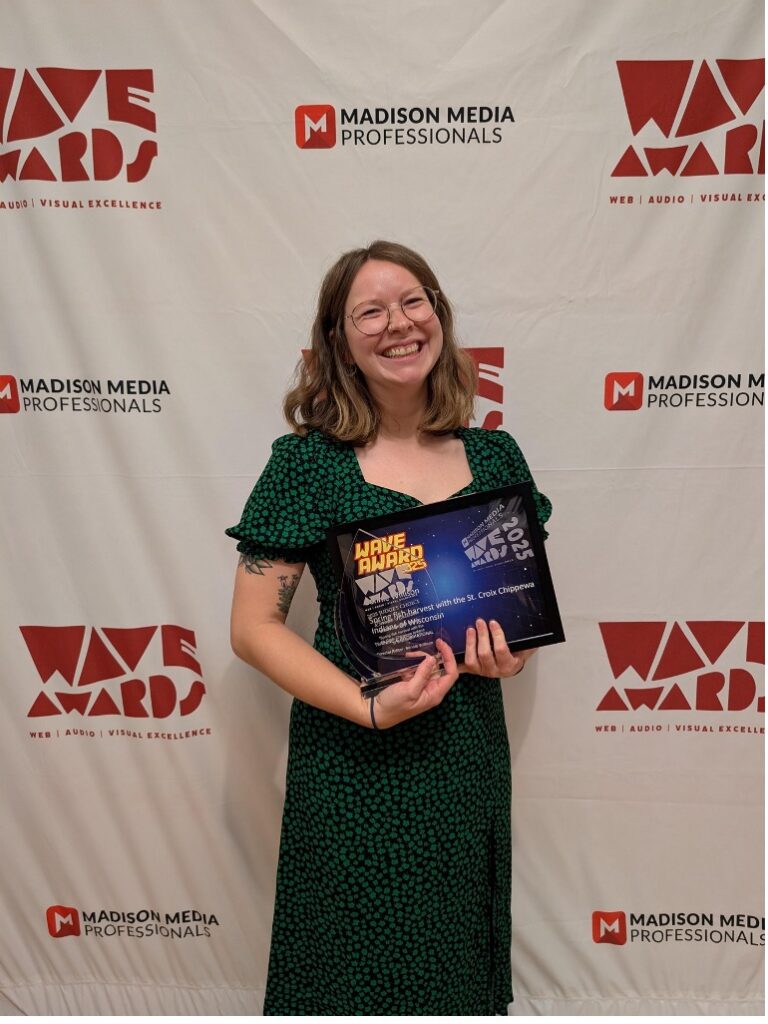
Bonnie Willison holding her two WAVE video awards.

Bonnie Willison with two of her four WAVE video awards. (Submitted photo)

Spring Fish Harvest with the St. Croix Chippewa Indians of Wisconsin,” a University of Wisconsin-Madison Aquatic Sciences Center video, has won the 2025 WAVE Visual Excellence and Judges Choice awards.

The WAVE awards are a celebration honoring excellence in the Madison-area video production industry and web, multimedia, audio, and graphic design fields.

Aquatic Sciences Center videographer Bonnie Willison produced the video.

“We are proud of Bonnie and excited she has been recognized for her exceptional talent,” said ASC Director Christy Remucal.  “Our ASC communications team does a great job showcasing the center’s research and education efforts.”

Willison  also won two WAVE Merit Awards for her videos “Curious About Aquatic Plants?” and “How Tree Rings and Community Conversations are Bringing Fire Back to Lake Superior’s Coast.”

***

The University of Wisconsin Aquatic Sciences Center administers Wisconsin Sea Grant, the Wisconsin Water Resources Institute, and Water@UW. The center supports multidisciplinary research, education, and outreach for the protection and sustainable use of Wisconsin’s water resources. Wisconsin Sea Grant is one of 34 Sea Grant programs supported by the National Oceanic and Atmospheric Administration in coastal and Great Lakes states that encourage the wise stewardship of marine resources through research, education, outreach, and technology transfer.


The post Spearfishing Video Nets WAVE Visual Excellence and Judges Choice Awards first appeared on Wisconsin Sea Grant.

Original Article

News Releases | Wisconsin Sea Grant

News Releases | Wisconsin Sea Grant

https://www.seagrant.wisc.edu/news/spearfishing-video-nets-wave-visual-excellence-and-judges-choice-awards/

Andrew Savagian

Library

Original Article

Great Lakes Commission

Great Lakes Commission

https://www.glc.org/library/2025-12-seasons-greetings

Laura Andrews

Rachel grew up chasing frogs in the low, wet corner of her family’s farm in Waupaca County. Her family called it “the swamp.” To Rachel, it was a place for tadpoles, muddy boots, and watching water that felt alive. Her farm sits in the Fox-Wolf watershed, where rain and snowmelt eventually flow into the [...]

The post Watershed Moments: Chasing frogs, Choosing water appeared first on Fox-Wolf Watershed Alliance.

Original Article

Fox-Wolf Watershed Alliance

Fox-Wolf Watershed Alliance

https://fwwa.org/2025/12/23/watershed-moments-chasing-frogs/?utm_source=rss&utm_medium=rss&utm_campaign=watershed-moments-chasing-frogs

Fox-Wolf Watershed Alliance

In a small Michigan town, a unique restaurant offers truly local flavors.

At Farrand Hall, executive chef Ken Miller leads the kitchen in crafting menus based on what the landscape and the season has to offer. The result is an evolving selection of flavors, many of them from right outside the door.

Learn more on the Great Lakes Now YouTube channel.

#Food #Foraging #Cooking #Dining #Restaurant #FarmToTable #FineDining
===========================================
Website: https://greatlakesnow.org
Facebook: https://www.facebook.com/greatlakesnow
X: https://www.x.com/greatlakesnow
Instagram: https://www.instagram.com/greatlakesnoworg
Newsletter: https://www.greatlakesnow.org/great-lakes-now-newsletter/

To learn more about supporting Detroit PBS and Great Lakes Now, visit https://www.detroitpbs.org/

The post This Chef Forages for Your Food appeared first on Great Lakes Now.

Original Article

Great Lakes Now

Great Lakes Now

https://www.greatlakesnow.org/2025/12/22/this-chef-forages-for-your-food/

Great Lakes Now

Some mornings, the small stream her class monitored sounded less like a science lab and more like a playground. Teenagers in chest waders shuffled into the water, trying not to splash each other. A football arced over a shallow stretch near the far bank. Someone shouted they had seen a frog, hands spread wide [...]

The post Watershed Moments: Waders, footballs, and a stream worth keeping appeared first on Fox-Wolf Watershed Alliance.

Original Article

Fox-Wolf Watershed Alliance

Fox-Wolf Watershed Alliance

https://fwwa.org/2025/12/22/watershed-moments-stream-worth-keeping/?utm_source=rss&utm_medium=rss&utm_campaign=watershed-moments-stream-worth-keeping

Fox-Wolf Watershed Alliance

The Great Lakes Fishery Research Reauthorization Act, introduced by Ohio Republican Senator Jon Husted and Michigan Democratic Senator Gary Peters, has been passed by the U.S. House of Representatives after Senate approved it last month, sending the bipartisan bill to President Donald Trump for his signature. The program provides dedicated funding to the USGS’s Great Lakes Science Center to conduct research supporting the region’s fishing industry. Read the full story by the Cleveland Plain Dealer.

Original Article

Great Lakes Commission

Great Lakes Commission

https://www.glc.org/dailynews/20251222-fisheries-research-bill

Autumn McGowan

The Onondaga County Water Authority is urging customers in six towns to conserve water after a major break in a large-diameter transmission main that carries Lake Ontario water from a pump station in Clay, New York, to reservoirs.  Read the full story by Syracuse.com.

Original Article

Great Lakes Commission

Great Lakes Commission

https://www.glc.org/dailynews/20251222-ny-water-break

Autumn McGowan

New York Governor Kathy Hochul and Ontario Premier Doug Ford signed a groundbreaking nuclear energy agreement Friday in Buffalo, marking the first advanced nuclear power initiative in New York state in over a generation. Read the full story by WKBW – Buffalo, NY.

Original Article

Great Lakes Commission

Great Lakes Commission

https://www.glc.org/dailynews/20251222-newyork-ontario-nuclear

Autumn McGowan

The Community Foundation for Northeast Michigan has launched the Lake Huron Fund with a $25,000 seed to back projects protecting the lake’s watershed and wildlife across nine counties in Michigan’s northeast region. Read the full story by Cheboygan Daily Tribune.

Original Article

Great Lakes Commission

Great Lakes Commission

https://www.glc.org/dailynews/20251222-lake-huron-fund

Autumn McGowan

Buffalo will welcome its first Great Lakes cruise ship on May 27 when a 250-passenger American Cruise Lines ship pulls into the Erie Basin Marina for an eight-hour stopover and will host four Great Lakes ships during the summer of 2026. Read the full story by WBEN – Buffalo, NY.

Original Article

Great Lakes Commission

Great Lakes Commission

https://www.glc.org/dailynews/20251222-buffalo-cruises

Autumn McGowan

Last month, state legislators from around the country came together in Chicago to strategize state-level solutions to the growing plastic pollution crisis. The summit was organized by the National Caucus of Environmental Legislators, a nonpartisan network of state lawmakers, and supported by the Alliance for the Great Lakes.  

Attendees at the National Caucus of Environmental Legislators plastics summit in Chicago in November 2025.
Attendees at the National Caucus of Environmental Legislators plastics summit in Chicago in November 2025. Courtesy: NCEL

Plastic pollution is a growing problem in the Great Lakes region – the lakes hold 20% of the world’s surface fresh water, and plastic pollution is found throughout them. Data from our Adopt-a-Beach cleanups finds that 86% of the litter collected along shorelines is either fully or partially made of plastic. Plastic never fully goes away. Instead, it breaks up into toxic microplastics that infiltrate our waterways. Researchers have found microplastics in the food we eat, the water we drink, the air we breathe, and in our bodies.   

The summit provided state legislators with the latest knowledge and data on the health and community impacts of plastics. Discussions covered state-level policy, source reduction, increasing innovative reuse solutions, and impactful legislative and regulatory solutions, including those supported by the Alliance such as extended producer responsibility — holding producers accountable for the waste they create. The summit participants also discussed how to effectively counter false narratives surrounding plastic production and the end of life of plastics. 

The good news is we are seeing the Great Lakes state legislatures leading the way and taking action. In 2024, Minnesota passed a comprehensive extended producer responsibility law for packaging to reduce the worst of the worst single-use plastics. 

In Illinois, proposed legislation aims to shrink foam foodware and plastic bag use, while supporting innovative manufacturing that promotes reuse.  

Lawmakers in Michigan introduced legislation this year that will monitor drinking water for microplastics and provide scientific tools and strategies to keep our drinking water safe. The bills follow recent recommendations from the International Joint Commission, an independent binational organization established by the U.S. and Canada to help manage the Great Lakes.  

At a gathering during the conference, Joel Brammeier, President and CEO of the Alliance, spoke about the importance of taking swift action on plastic pollution. Investments in sustainable solutions can reduce plastic pollution at its source, while supporting innovative partnerships between our region’s universities, start-ups, and manufacturers to create new markets for their products. Civic leaders and legislators across the Great Lakes region can be the catalyst to keep this critical momentum moving forward.  As we move into the new year, keep an eye on the impact our Great Lakes states will have on reducing plastic pollution and advancing innovative solutions. 

The post National Leaders & State Legislators in Chicago to Combat Plastic Pollution appeared first on Alliance for the Great Lakes.

Original Article

News - Alliance for the Great Lakes

News - Alliance for the Great Lakes

https://greatlakes.org/2025/12/national-leaders-state-legislators-in-chicago-to-combat-plastic-pollution/

tfazzini

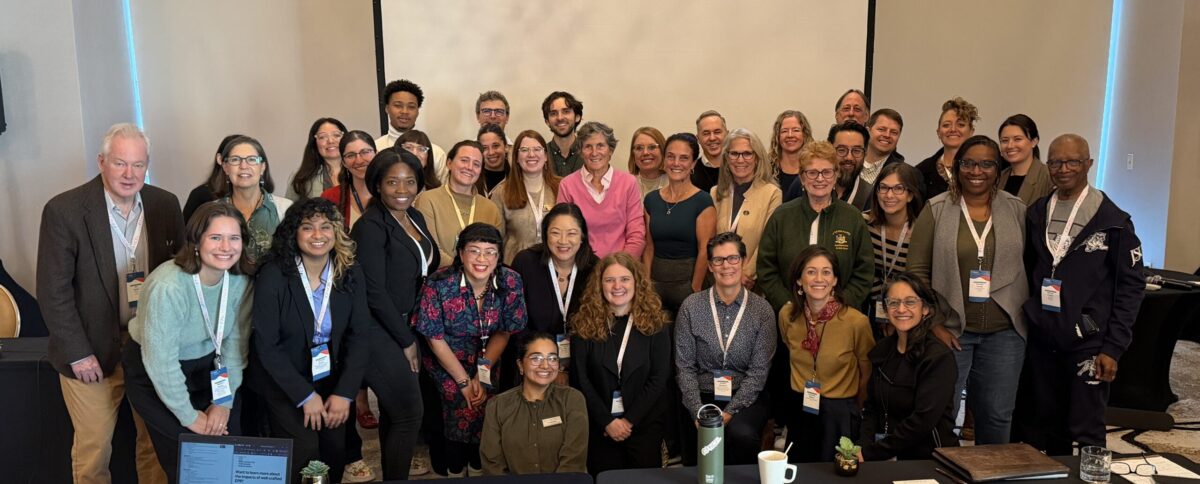
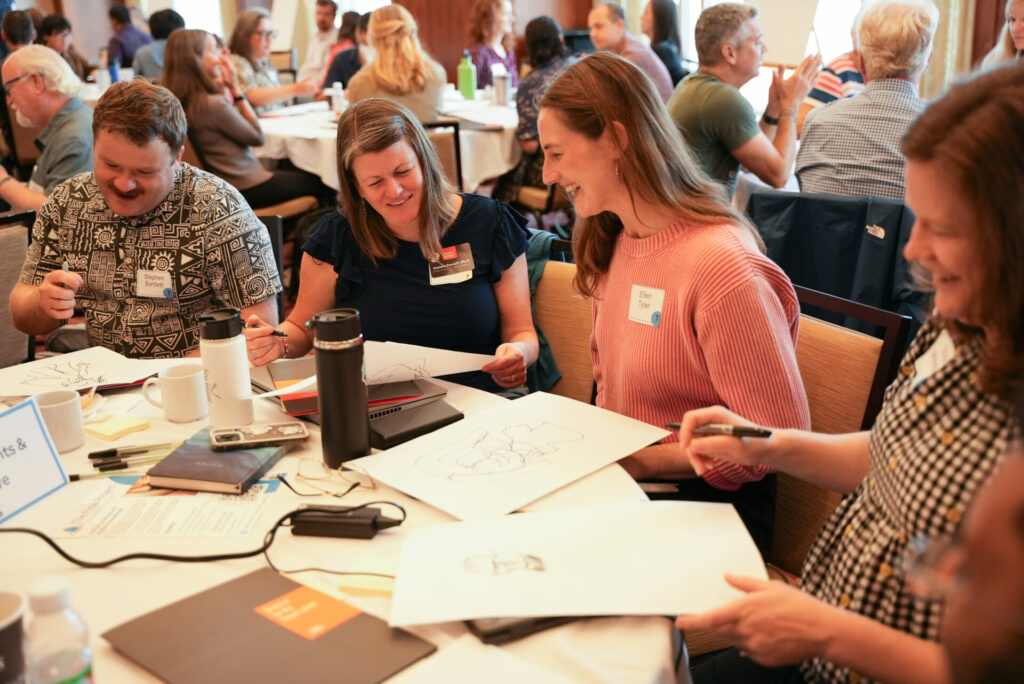
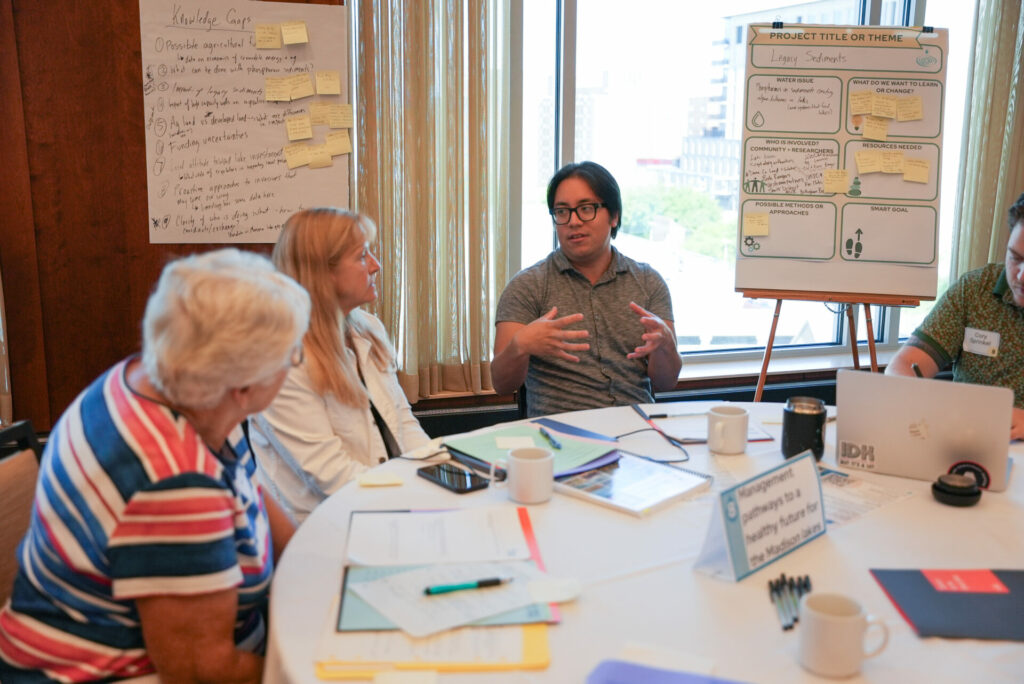
Participants at the Water Partnership Workshop talk and smile at a paper-strewn table

The Water Partnership Workshop gathered in September as part of an overall effort to turn scientific inquiry directly toward the priorities and needs of others, an approach known as community-engaged research. (Photo by Bonnie Willison / ASC)

By Alison Mikulyuk, Water@UW–Madison Research Program Coordinator, and Sarah Peterson, Community Engagement and Professional Development Manager

Alison Mikulyuk headshot

Alison Mikulyuk, Water@UW–Madison Research Program Coordinator (Photo by Bonnie Willison / ASC)

Sarah Peterson headshot

Sarah Peterson, Community Engagement and Professional Development Manager (Photo by Bonnie Willison / ASC)

Last fall, more than 70 water professionals, researchers, and community leaders gathered on the University of Wisconsin–Madison campus for the first-ever Water Partnership Workshop, hosted by Water@UW–Madison and Wisconsin Sea Grant. The energy in the room was apparent: conversations buzzed and ideas flowed freely as participants leaned into the opportunity to shape Wisconsin’s water future.

The lively discussion revolved around one question: What should we research — together — next?

This type of collaboration is a reflection of the growing desire to turn scientific inquiry directly toward the priorities and needs of others. Known as community-engaged research (CER), this approach centers community voices and fosters collaboration in science.

CER requires us to evaluate whether science is asking the right questions. Are research projects grounded in concerns and priorities shared by the community? Are researchers answering them in ways that are fair and useful? When done well, CER also helps build trust in science and the scientific process, empowers communities to take action and build strength, and can help democratize knowledge production so that more people have access and stand to benefit.

A growing number of scientists are inspired to participate in CER; however, many don’t know where to begin. In our roles at the Aquatic Sciences Center, we often hear the same question from scientists: How do I get started in a collaborative partnership with a community group?

Our attempts to answer that question led us to organize the Water Partnership workshop in September.

Matchmaking researchers with community partners

Designing the workshop took several months and started with brainstorming about how we as coordinators could help build relationships between campus researchers and community partners. Early on, we decided to offer a full-day workshop structured around a set of topics that scientists and community members wanted to tackle together. Our goal was to spark new connections, foster collaboration, and provide a space where community-engaged water research projects could begin to take shape. 

Three workshop participants discuss water quality around a round table.

Water professionals and community members discuss phosphorus in Madison-area lakes. (Photo by Bonnie Willison / ASC)

We reached out to over 40 contacts within Wisconsin’s diverse water network, who then reached out across their networks in turn. Participants were almost always excited about the opportunity to connect. After a series of one-on-one meetings with community representatives, we identified a collection of eight organizations eager to participate, each with their own unique concerns related to water. 

Behind the scenes, we began to match researcher expertise with the questions posed by community guests. As we recruited and aligned participants, we found ourselves creating a topic-specific seating chart that resembled something you’d see at a wedding reception. We aligned the participants on topic and interest, then balanced the groups to include experts and community members from a range of career stages and disciplines. 

The multigenerational, multidisciplinary groups that emerged set the stage for what we hoped would be a set of really interesting and productive conversations. 

Moving at the speed of trust

The eight groups that came together on September 11 arrived with a wide range of water topics that mattered to them. 

  • Representatives from the Wisconsin Farmers Union discussed agricultural trade-offs between organic and conventional practices. 
  • The Coon Creek Community Watershed Council explored ways of rethinking flood management to address aging dams throughout the watershed. 
  • Wisconsin EcoLatinos discussed culturally relevant communication about environmental contaminants in Latino communities. 
  • Representatives from the Black Earth Creek Watershed Association explored the impact of neonicotinoid pesticides on aquatic invertebrates in trout streams. 
  • Southern Wisconsin Trout Unlimited discussed the relationship between urban stormwater management and trout streams. 
  • A member of the Lac du Flambeau Band of Lake Superior Chippewa Indians spoke about tribal water rights and imagining ecology beyond a Western scientific framework. 
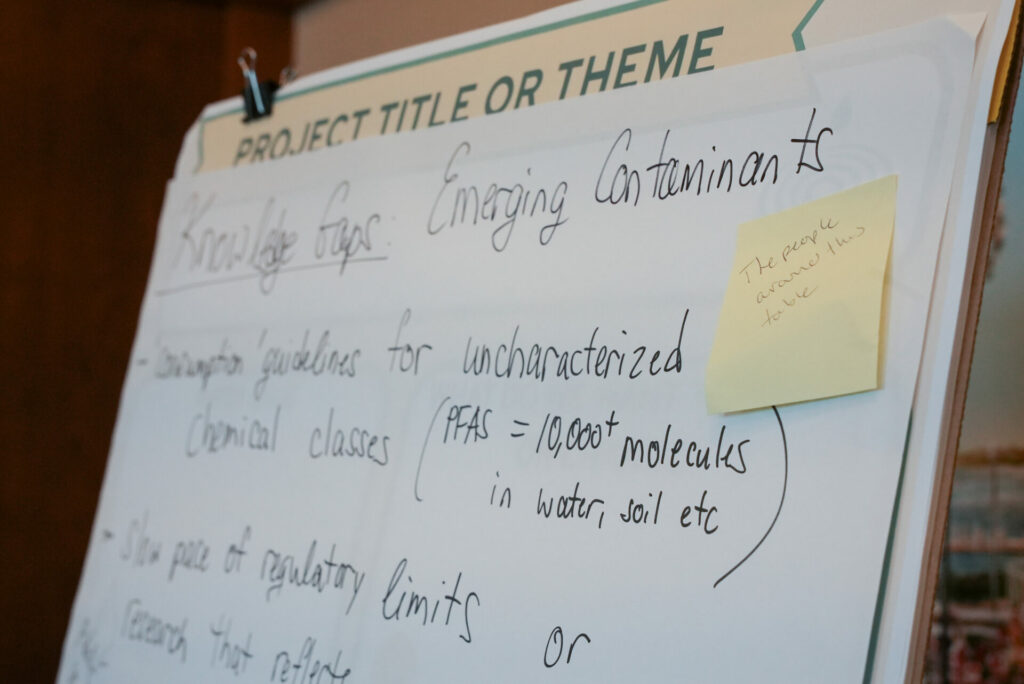
  • Staff from the Great Lakes Inter-Tribal Epidemiology Center engaged in a discussion on emerging contaminants and cumulative impacts to tribal communities across Wisconsin. 
  • Volunteers with two Madison-based lake associations spoke about phosphorus contamination and future management pathways. 

Over the course of six hours, the workshop revealed some cross-cutting challenges. One theme that surfaced was that scientific data and tools are often too complex for practical use. There was shared consensus that researchers must prioritize translating research into simple, actionable decision-support tools. 

Another theme spoke to how essential trust is for developing effective solutions, requiring two-way communication and the involvement of trusted community messengers. It highlighted how academic research operates at a certain pace, often driven by grant cycles, project management milestones or tenure review timelines. However, CER is not only in the hands of researchers, so it must always strive to move at what we’ve come to call the “speed of trust.”

Future collaborations

It’s our hope that we helped forge lasting connections that day. While we don’t know yet what will come of the projects and ideas that were generated, we know we’re learning more about a model by which to facilitate trust and exchange.

We hope that the Water Partnership Workshop was more than a one-day event — we envision it as a catalyst, demonstrating the power of bringing many voices together around shared water interests. We hope it helped lay groundwork for future collaborations that are community-initiated, interdisciplinary, and action-oriented.

We are already planning our next collaborative event, refining the model using feedback we received from participants. We strongly believe that this is what water research should look like: people coming together, listening deeply, honoring community agency, and building something better, together. If you’re interested, reach out to water@mailplus.wisc.edu to join us.

Notes collected on a large sticky note

Emerging contaminants were just one of the topics discussed at the workshop. (Photo by Bonnie Willison / ASC)

The post Researchers and communities working together first appeared on Wisconsin Sea Grant.

Original Article

News Releases | Wisconsin Sea Grant

News Releases | Wisconsin Sea Grant

https://www.seagrant.wisc.edu/news/researchers-and-communities-working-together/

Wisconsin Sea Grant