Quagga mussels are destroying shipwrecks deep in the depths of the lakes, forcing archeologists and amateur historians into a race against time to find as many sites as they can before the region touching eight U.S. states and the Canadian province of Ontario loses any physical trace of its centuries-long maritime history. Read the full story by Milwaukee Independent.

Original Article

Great Lakes Commission

Great Lakes Commission

https://www.glc.org/dailynews/2023-1016-maritime-shipwrecks-quaggamussels

Hannah Reynolds

Director Dave Applegate visited the Upper Midwest Water Science Center October 10-12, 2023.

Original Article

Upper Midwest Water Science Center

Upper Midwest Water Science Center

https://www.usgs.gov/centers/upper-midwest-water-science-center/news/usgs-director-david-applegate-visits-upper-midwest?utm_source=comms&utm_medium=rss&utm_campaign=news

jvelkoverh@usgs.gov

Michigan’s population is less healthy than the national average, ranking below most other states, including its Midwestern neighbors, in premature death rates, infant mortality rates and access to health care. 

The post State’s public health ranks low, study finds first appeared on Great Lakes Echo.

Original Article

Great Lakes Echo

Great Lakes Echo

http://greatlakesecho.org/2023/10/16/states-public-health-ranks-low-study-finds/

Guest Contributor

Michigan water rights advocate questions effectiveness of proposed affordability legislation

Details matter for water rights advocate Monica Lewis-Patrick when it comes to terminology in Michigan’s long-awaited drinking water legislation. Critical issues have to be addressed in a manner that improves people’s lives.

The recently introduced legislation is designed to remedy the need for water shutoffs in limited cases, It’s also meant to address the cost of water for residents across the state who don’t have the means to pay seemingly ever increasing water bills.

Read Now at Great Lakes Now.

Original Article

Great Lakes Now

Great Lakes Now

https://www.greatlakesnow.org/2023/10/michigan-water-rights-advocate-questions-effectiveness-proposed-legislation/

Gary Wilson

Historical redlining of neighborhoods still poses health threats to present-day residents, such as increased risk of diabetes, hypertension and early death from heart disease, according to a recent study by the National Library of Medicine. 

While redlining practices are not legal anymore, the effects still linger in historically redlined areas that typically have a high concentration of minority residents.

The post Historical redlining impacts still felt nearly a century later first appeared on Great Lakes Echo.

Original Article

Great Lakes Echo

Great Lakes Echo

http://greatlakesecho.org/2023/10/15/historical-redlining-impacts-still-felt-nearly-a-century-later/

Guest Contributor

The U.S. Environmental Protection Agency announced a roughly $450 million effort to remove almost 2 million cubic yards of contaminated sediments from the Milwaukee Harbor and three rivers in the area surrounding Milwaukee, Wisconsin. EPA leaders called the project a “once in a generation” opportunity to address pollution that’s existed for more than 150 years including polychlorinated biphenyls (PCBs), petroleum compounds, and heavy metals like mercury and lead. Read the full story by Wisconsin Public Radio.

Original Article

Great Lakes Commission

Great Lakes Commission

https://www.glc.org/dailynews/20231013-milwaukee-restoration

Taaja Tucker-Silva

The Huronton, a steel freighter that sank to the bottom of Lake Superior 100 years ago, was discovered this summer by the Great Lakes Shipwreck Historical Society. The recently announced discovery tells the tale of misfortune and bravery of the crews of two freighters that collided in 1923 amid heavy fog and forest fire smoke. Read the full story by the Detroit Free Press.

Original Article

Great Lakes Commission

Great Lakes Commission

https://www.glc.org/dailynews/20231013-huronton-shipwreck

Taaja Tucker-Silva

A water affordability crisis looms over Benton Harbor, Michigan, according to a new report from the Benton Harbor Community Water Council. The report criticized the state and federal government’s response to the lead crisis that started in 2018 and called for a slate of reforms to prevent and respond to future drinking water issues and to ensure water will be affordable for city residents. Read the full story by the Detroit News.

Original Article

Great Lakes Commission

Great Lakes Commission

https://www.glc.org/dailynews/20231013-water-affordability

Taaja Tucker-Silva

On one day last week, over 100 birds migrating south over Lake Erie crashed into buildings in downtown Cleveland, Ohio. Lights Out, a volunteer group from the Lake Erie Nature and Science Center, has recovered 927 birds from August 15 to October 4: 286 that have survived and have been rehabilitated, 558 found dead on the sidewalks, and the rest either died in captivity or are currently in care. Most of those have been warblers and sparrows. Read the full story by Cleveland Scene.

Original Article

Great Lakes Commission

Great Lakes Commission

https://www.glc.org/dailynews/20231013-bird-collisions

Taaja Tucker-Silva

Following three spills of drilling fluids onto the Iroquois National Wildlife Refuge, the U.S. Fish and Wildlife Service has halted wastewater pipeline drilling for the Science, Technology and Advanced Manufacturing Park (STAMP) in Genesee County, New York. The 9-mile pipeline would deposit wastewater into Oak Orchard Creek, a tributary of Lake Ontario in Orleans County, New York. Read the full story by The Buffalo News.

Original Article

Great Lakes Commission

Great Lakes Commission

https://www.glc.org/dailynews/20231013-stamp-pipeline

Taaja Tucker-Silva

The number of boaters utilizing harbors and marinas in Northeast Michigan continues to climb, while the number of transient boaters from out of the area who use local marinas appears to have dipped. Not long ago, marinas struggled to fill their slips, but now some marinas have waiting lists for people who want a slip for the season. Read the full story by The Alpena News.

Original Article

Great Lakes Commission

Great Lakes Commission

https://www.glc.org/dailynews/20231013-michigan-harbors

Taaja Tucker-Silva

The city of Waukesha, Wisconsin, began drawing in lake water on Monday, October 9, marking the start of a controversial lake diversion that required approval from eight states. Waukesha plans to pull up to 8.2 million gallons from the lake daily to serve as its public water supply. It will return treated wastewater to the lake, resulting in what the Wisconsin Department of Natural Resources says will be a minimal net water loss. Read the full story by MLive.

Original Article

Great Lakes Commission

Great Lakes Commission

https://www.glc.org/dailynews/20231013-waukesha-water

Taaja Tucker-Silva

The Great Armistice Day Storm of 1940 is one of many shipwreck stories in a new book, “Too Much Sea for Their Decks.” The book covers prominent shipwrecks in Minnesota’s north shore region of Lake Superior and expands to cover shipwreck stories in Michigan’s Isle Royale. Read the full story by Great Lakes Echo.

Original Article

Great Lakes Commission

Great Lakes Commission

https://www.glc.org/dailynews/20231013-shipwreck-novel

Taaja Tucker-Silva

The Minnesota Department of Natural Resources has officially certified a new state record holder for catching the largest coho salmon. Weighing in at 10 pounds, 14 ounces, the coho broke the previous record of 10 pounds, 6.5 ounces, which has been in the books since 1970. Read the full story by KARE-TV – Minneapolis, MN.

Original Article

Great Lakes Commission

Great Lakes Commission

https://www.glc.org/dailynews/20231013-record-salmon

Taaja Tucker-Silva

At the Alliance for the Great Lakes Board of Directors meeting on October 6, 2023, in Chicago, the Board welcomed Timothy Alston for a three-year term.

New Board Member: Timothy Alston

Timothy is a process controls engineer at the Gary Sanitary District, one of the largest wastewater utilities in the State of Indiana and one of the few majority-black employees utilities in the region. He provides direct technical and advisory support to the Plant Superintendent on wastewater treatment plant improvements and optimizing plant processes. He also helps manage the Operations and Maintenance Department, which is the heartbeat of the utility. Timothy was an environmental consultant for CDM Smith Inc. in the Chicago Office from 2018-2020.

As a young professional living in Chicago, Timothy has demonstrated a passion for mentorship to underserved communities through his work as an undergraduate mentor and the Director of Programs for the Chicago Chapter of the National Society of Black Engineers (NSBE), as well as spearheading the American Society of Civil Engineers (ASCE) Student Outreach Mentorship Program from 2019-2021. 

Timothy is a Co-Founder of the Black Water Professionals Alliance Inc. (BWPA), which has grown to over 200 members across the country. The mission of BWPA is to increase diversity, equity, and inclusion by fostering a community focused on networking, professional development, and leadership opportunities for Black people in the water industry. He has personally mentored over 100 students in developing their STEM academic and professional skills over the past several years through a nonprofit called SMASH Academy.

Originally from Maryland, Timothy received his B.S. in Environmental Science from Claflin University, a historic HBCU in South Carolina, and his M.S. in Environmental Engineering from the University of Illinois Urbana-Champaign. 

He and his wife currently live in South Loop, Chicago, and just tied the knot this past July 23, 2023.

New & Returning Officers

Laura Payne was elected to a second two-year term as Vice Chair of Development. Bill Henry was elected to a second two-year term as Board Secretary.

Leaving Office
The board also said farewell to term-limited board director Quentin James and expressed special gratitude for his six years of service.

“I extend a heartfelt thank you to our board members—past and present—for their unwavering dedication and exceptional leadership,” said Joel Brammeier, President & CEO of the Alliance. “Their invaluable time and expertise are fundamental to the achievements of the Alliance in safeguarding and revitalizing the Great Lakes. We eagerly anticipate the valuable contributions of our newest board member and extend our deepest appreciation to those transitioning on.”

For a complete listing of Alliance for the Great Lakes directors and officers, visit our Board of Directors page.

The post Alliance for the Great Lakes Board of Directors Welcomes Newly Elected Board Member & Returning Officers appeared first on Alliance for the Great Lakes.

Original Article

News - Alliance for the Great Lakes

News - Alliance for the Great Lakes

https://greatlakes.org/2023/10/alliance-for-the-great-lakes-board-of-directors-welcomes-newly-elected-board-member-returning-officers/

Michelle Farley

As if climate change-related rising lake levels, extreme weather and threats to biodiversity weren’t enough to worry about, now we can also worry about the public health threat of invading mosquitoes.

North America has about 250 species of mosquitoes, of which about 70 are found in Michigan.

The post Disease-carrying mosquitoes moving north first appeared on Great Lakes Echo.

Original Article

Great Lakes Echo

Great Lakes Echo

http://greatlakesecho.org/2023/10/13/disease-carrying-mosquitoes-moving-north/

Eric Freedman

RESTON, Va. — The U.S. Geological Survey will invest more than $3.5 million to map critical mineral resources in partnership with the geological surveys of Arkansas, Kentucky, Illinois, Indiana, Missouri and Tennessee.

Original Article

Midcontinent Region

Midcontinent Region

https://www.usgs.gov/news/national-news-release/usgs-partners-six-states-map-critical-mineral-potential-cutting-edge?utm_source=comms&utm_medium=rss&utm_campaign=news

apdemas@usgs.gov

Plummeting temperatures, blinding snow and ferocious winds ripped through the air as three freighters struggled on Lake Michigan’s frigid surface.  

Unsuspecting and dangerously underprepared passengers braced for the worst, baffled at the stark contrast from the serene weather of the morning. 

The post Author preserves Great Lakes shipwrecks by writing novels about them first appeared on Great Lakes Echo.

Original Article

Great Lakes Echo

Great Lakes Echo

http://greatlakesecho.org/2023/10/12/author-preserves-great-lakes-shipwrecks-by-writing-novels-about-them/

Mya Smith

Don’t let cooler fall temperatures fool you: Western Lake Erie’s 2023 algal bloom is still out there. The bloom continues to hug the western Lake Erie shoreline from Stony Point, Michigan, north of Monroe, to Maumee Bay water just east of Toledo. Read the full story by The Blade.

Original Article

Great Lakes Commission

Great Lakes Commission

https://www.glc.org/dailynews/20231011-algae

Beth Wanamaker

When a municipality builds a new road and damages wetlands in the process, Michigan state law says new wetlands have to be constructed somewhere else. That’s led to establishing “wetland banks” for city, township, and county road agencies. Read the full story by Michigan Radio.

Original Article

Great Lakes Commission

Great Lakes Commission

https://www.glc.org/dailynews/20231011-wetlands

Beth Wanamaker

Proposals are calling for the construction of a large housing complex on a former industrial site on Michigan’s Muskegon Lake, but old contamination concerns have surfaced. Per environmental data compiled by surveyors prior to the property’s ownership transfer, toxic materials, explosive gasses and industrial contaminants were still present in large concentrations. Read the full story by WZZM-TV – Grand Rapids, MI.

Original Article

Great Lakes Commission

Great Lakes Commission

https://www.glc.org/dailynews/20231011-pfas-muskegon

Beth Wanamaker

For decades, the beaches adjacent to Lake Michigan were acclaimed as a special place and carried the designation of Indiana Dunes National Lakeshore. When the lakeshore became a national park in 2019, everything was altered in the public eye. Read the full story by The Tribune.

Original Article

Great Lakes Commission

Great Lakes Commission

https://www.glc.org/dailynews/20231011-indiana-dunes

Beth Wanamaker

The University of Wisconsin-Superior Lake Superior Research Institute’s Ballast Water Treatment Testing Facility is researching a filter technology that can be used to help keep invasive aquatic species out of the lake. Read the full story by Spectrum News.

Original Article

Great Lakes Commission

Great Lakes Commission

https://www.glc.org/dailynews/20231011-lake-superior-state

Beth Wanamaker

Wetland banks save cities, townships, and counties money for building roads

By Lester Graham, Michigan Radio

The Great Lakes News Collaborative includes Bridge Michigan; Circle of Blue; Great Lakes Now at Detroit Public Television; and Michigan Radio, Michigan’s NPR News Leader; who work together to bring audiences news and information about the impact of climate change, pollution, and aging infrastructure on the Great Lakes and drinking water.

Read Now at Great Lakes Now.

Original Article

Great Lakes Now

Great Lakes Now

https://www.greatlakesnow.org/2023/10/wetland-banks-save-cities-townships-counties-money-building-roads/

Michigan Radio

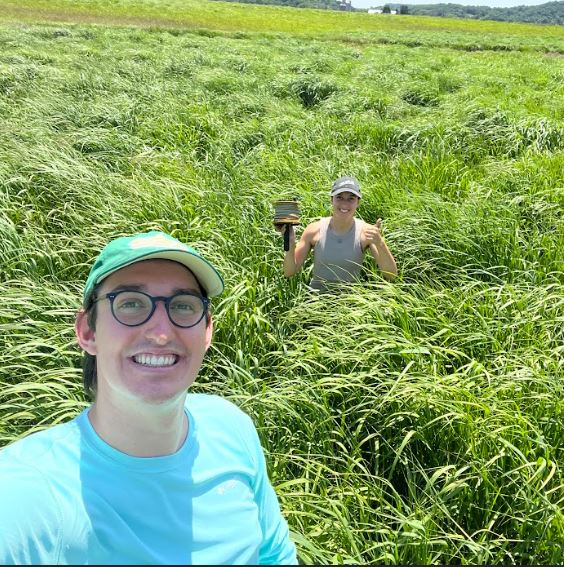
Melina Dennis (center) conducting field research this summer. Image credit: Submitted photo

By Melina Dennis, Freshwater Collaborative summer research student

This summer, 31 students from across the country were chosen for the University of Wisconsin-Madison’s Freshwater@UW Summer Research Opportunities Program, which is affiliated with Wisconsin Sea Grant, the University of Wisconsin Water Resources Institute and the University of Wisconsin-Madison Graduate School. Many of the students provided reflections on what they learned. We’ll share several over the coming months. Here’s the third, from Melina Dennis, an undergraduate senior in environmental engineering from the Oneida Reservation in Wisconsin.

This summer I worked in UW-Madison’s Hydroecology Lab, which is in the Civil and Environmental Engineering Department under Steve Loehide. I worked with my grad student mentor, Eric Kastelic, on studying groundwater flooding in Dane County.

Before this program, I had limited knowledge about graduate school. I was interested in furthering my education, but I didn’t know how graduate school worked or what it looked like for the fields I am interested in. I have since learned an enormous amount from working in a research lab, and from the professional development seminars the program hosted.

At the beginning of the program, we had a seminar on science communication. The seminar touched on the importance of making science accessible to nonscientists and gave me a point of resonance for why I am doing this in the first place: to help people. As I went through the program, I was pleasantly surprised to meet more and more people who felt the same way. At the forefront of a lot of people’s work was the hope of making the world a better place for others.

My mentor hosted a graduate student panel for one of the seminars. I gained insight into the life of graduate students, the process of finding a graduate program, differences between types of graduate degrees, how funding works, and so much more. Another seminar covered funding more in depth. I learned more about the many sources of it, differences in funding across degrees and programs, how to have conversations about funding your degree, and how to apply for common types of grants.

We also had seminars focused on career development. Staff from the U.S. Geological Survey (USGS) came in and gave us information about working in the federal government. I got a lot of useful and intriguing information about careers with USGS, paths to employment with them, and benefits of working for a federal agency. I can see myself working for USGS after graduate school, as what they do aligns with the goals and values I have for my career. By working in the research lab with my mentor, I developed technical skills that are directly applicable to my career goals, including computer programs and physical tools used in research and the public sector of my field. I had many fun field days where I got to see how data is collected and collect some of my own.

I now have a much better picture of graduate school and how it can help me achieve my career goals. I also feel more prepared in pursuing graduate school. I am grateful for this program and all the valuable information I received.

The post Making the world a better place first appeared on Wisconsin Sea Grant.

Original Article

Blog | Wisconsin Sea Grant

Blog | Wisconsin Sea Grant

https://www.seagrant.wisc.edu/blog/making-the-world-a-better-place/

Wisconsin Sea Grant

Enbridge Energy last week sought help from a state oversight panel due to the “inexplicably lethargic” permit review by federal regulators for the company’s Great Lakes Tunnel Project to replace Line 5 under the Straights of Mackinac. Read the full story by WDET – Detroit, MI.

Original Article

Great Lakes Commission

Great Lakes Commission

https://www.glc.org/dailynews/20231011-line5

Beth Wanamaker

The smell of cigar smoke lingers as visitors walk through the dark living quarters of Gulliver’s Seul Choix Point Lighthouse.

“There are so many public ghost towns,” Tedsen said. “But to me, paranormal is very important — it begs the question ‘is there life after death?’”

The post The tale of a haunted lighthouse first appeared on Great Lakes Echo.

Original Article

Great Lakes Echo

Great Lakes Echo

http://greatlakesecho.org/2023/10/11/haunted-lighthouse/

Guest Contributor

Episode 2309 Lesson Plans: Great Lakes gradients

This lesson will explore the phenomenon of natural gradient, as students learn about how the natural flow of the Great Lakes landscape can provide a smooth path for mountain bike riding. They will explore the physics of accelerated motion, explore the math of slope, and investigate existing and planned trails in the Great Lakes before building a slow, smooth-rolling trail to move marbles, modeling the design of mountain biking trails.

Read Now at Great Lakes Now.

Original Article

Great Lakes Now

Great Lakes Now

https://www.greatlakesnow.org/2023/10/episode-2309-great-lakes-gradients-lesson-plan/

Gary Abud Jr.

PFAS News Roundup: Ridding groundwater of ‘forever chemicals’ with ultrasound, increasing PFAS monitoring in rivers

Keep up with PFAS-related developments in the Great Lakes area with Great Lakes Now’s biweekly headline roundup.

Click on the headline to read the full story:


Illinois

Forever Chemicals and Cancer Risk — Chicago Health Magazine

The managing partner at a Chicago-based law firm started getting calls from firefighters last year: men and women with kidney, prostate, and bladder cancers.

Read Now at Great Lakes Now.

Original Article

Great Lakes Now

Great Lakes Now

https://www.greatlakesnow.org/2023/10/pfas-news-roundup-ridding-groundwater-forever-chemicals-ultrasound-increasing-pfas-monitoring-rivers/

Kathy Johnson

Milwaukee suburb begins pulling millions of gallons per day from Lake Michigan

WAUKESHA, Wis. (AP) — A Milwaukee suburb has finally started to pull millions of gallons of water per day from Lake Michigan after spending years seeking approval from regulators.

The city of Waukesha began the diversion Monday. City officials say 90% of the city will be using Lake Michigan’s water within five days.

Read Now at Great Lakes Now.

Original Article

Great Lakes Now

Great Lakes Now

https://www.greatlakesnow.org/2023/10/ap-milwaukee-suburb-pulling-millions-gallons-lake-michigan/

The Associated Press

US EPA okays Ohio plan to reduce toxic cyanobacterial blooms; Environmentalists say it won’t work

By Lester Graham, Michigan Radio

The Great Lakes News Collaborative includes Bridge Michigan; Circle of Blue; Great Lakes Now at Detroit Public Television; and Michigan Radio, Michigan’s NPR News Leader; who work together to bring audiences news and information about the impact of climate change, pollution, and aging infrastructure on the Great Lakes and drinking water.

Read Now at Great Lakes Now.

Original Article

Great Lakes Now

Great Lakes Now

https://www.greatlakesnow.org/2023/10/epa-okays-ohio-plan-reduce-toxic-cyanobacterial-blooms-environmentalists-say-wont-work/

Michigan Radio

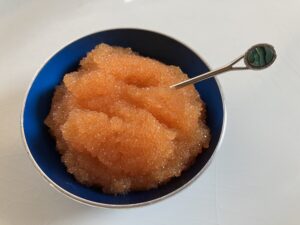
Dish and small spoon. Dish contains orange-pink fish eggs, known as caviar.

Wisconsin commercial fishermen will again have access to a lucrative European market for their fish roe, otherwise known as caviar, thanks to Wisconsin Sea Grant. Photo: Sharon Moen

Swedish hospitality wouldn’t be complete without a spread of crackers or bread and accompanying roe, the eggs from fish and also known as caviar. Because of Sea Grant’s role in facilitating the exchange of information, some of this roe will be coming from the Great Lakes.

A Sept. 28 decision from the World Wildlife Fund-Sweden to rank Wisconsin commercial lake whitefish and cisco fisheries as “best choice” with regard to sustainability means the roe from these fish can grace Swedish tables as a tasty, salty treat of skirom or löjrom without obstacles.  

Prior to that release of a “green, best choice” ranking for commercial fisheries in the Wisconsin and Michigan waters of Lake Superior the lake whitefish fishery, which yields sikrom, was in jeopardy. The cisco fishery of Lake Superior, which yields löjrom, was also in question. Great Lakes commercial fishers rely on the international sale of roe, a high-value product, to make ends meet.

Sharon Moen, Sea Grant’s food fish outreach coordinator, explained: “About two years ago, I was contacted by a fish processor/seafood importer/exporter operating in Door County. Because lake whitefish and cisco were rated red (unsustainable) by the World Wildlife Fund-Sweden, roe sales were plummeting as the products were being pulled from Swedish markets. The vigor with which red-rated products are leaving the Swedish marketplace has escalated each year since then. If the ratings didn’t change this year, the Great Lakes roe industry would have been devastated.”

Thanks to Moen’s intervention that rating changed from red to green early in the morning on Sept. 28 when new rankings were released. What led up to that change were Moen’s presentations to the Swedish Seafood forum, production and distribution of fact sheets on the fishery and lengthy facilitated conversations. She brought together Great Lakes fisheries managers, roe processors, the Monterey Bay Aquarium’s Seafood Watch staff, World Wildlife Fund-EU, World Wildlife Fund-Sweden and Swedish seafood industry leaders.

There is another “green” to celebrate, green to the tune of $15 million annually. That’s the estimate from domestic tribal and commercial fishers and processors about the worth of their anticipated roe export to Europe.

“Within minutes of my Sept. 28 joint presentation with Andy Edwards, treaty natural resources manager with the Red Cliff Band of Lake Superior Chippewa, the two largest retail chains in

Close-up of smiling person

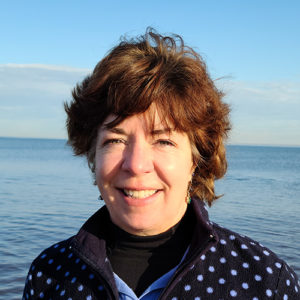
Sharon Moen is the food fish outreach coordinator and brought together many parties to discuss Lake Superior lake whitefish and cisco.

Sweden contacted an importer to place orders,” said Moen.

One of those importers reached out to Moen and said, “It’s thanks to your hard work and extraordinary presentation our deepest wishes came true!,” said Tony Hartwig, CEO of Olle Hartwig Aktiebolag. “Now, we have busy days working out a market plan to promote roe again from Lake Superior, Wisconsin!”

Moen is pleased the ranking has been changed because she wholeheartedly stands by the science behind the management of the fishery and the professionalism of the commercial fishers. “From my perspective, the red rating reflected communication challenges, the complexity of Great Lakes fisheries management and the scarcity of money for a due-diligence assessment.”

As Dan Grooms said, “Fishing the Apostle Islands for food had been an integral part of the Anishinaabe’s way of life. Our fishers and our tribe depend on responsible fisheries management for sustainability for future generations.” Grooms was formerly the business manager of Red Cliff Fish Co., a business owned by the Red Cliff Band of Lake Superior Chippewa.

The post Sea Grant education on fishery expected to lead to $15 million in exports to Sweden first appeared on Wisconsin Sea Grant.

Original Article

News Releases | Wisconsin Sea Grant

News Releases | Wisconsin Sea Grant

https://www.seagrant.wisc.edu/news/sea-grant-education-on-fishery-expected-to-lead-to-15-million-in-exports-to-sweden/

Moira Harrington

Feral cats have colonies across the state, and their inbreeding, overpopulation and constant pregnancies have caused these strays to multiply. 

Some feral cats are born with defects due to inbreeding. Misshapen heads, extra toes or crossed eyes could be results of incest among them.

The post Curbing feral cat populations in Michigan first appeared on Great Lakes Echo.

Original Article

Great Lakes Echo

Great Lakes Echo

http://greatlakesecho.org/2023/10/10/curbing-feral-cat-populations-in-michigan/

Guest Contributor

Summary 

Title: Executive Assistant 

Status: Full-time, Exempt  

Location: Great Lakes State, Chicago area preferred   

Role: The Executive Assistant (EA) provides support to the President/CEO and COO to maximize the strategic use of their time and supports the President/CEO and COO to maximize the strategic use of their time and assists the Operations team in seamlessly integrating the Operations team in the seamless integration of essential administrative work into the Alliance’s mission-driven culture and workplace. This position reports to the President/CEO and works closely with the COO, VP of Finance & Operations, and Office Manager on meeting logistics and scheduling, document creation and management, Board of Directors administrative support, as well as human resources, financial, and office management matters. The Executive Assistant performs a wide variety of functions independently, exercising confidential discretion and sound judgment in performing these duties. Administrative services may be provided to other department staff as required. Additionally, this person will assist with special projects as assigned by the President and CEO. 

Structure: The Executive Assistant works directly with the President/CEO, COO, Office Manager and reports to the President & CEO.   

Compensation and Benefits: Salary range begins at $75,000, with the starting salary determined commensurate with experience. Medical, dental, short- and long-term disability, life insurance, FSA, 11 paid holidays plus the business days between 12/26 and 12/30 (staff who must work on any holidays may take those holidays at another time subject to the employee handbook), 3 weeks vacation to start + PTO, Fidelity 401(k) with employer match of up to 6% of salary.  

Work Environment: This is a primarily remote position with a strong preference for location in the Chicago area. The EA may work primarily from their home and should expect to be in the Alliance’s Chicago office once per week on average.   

_________________________________________________________________________________  

Overview 

A typical week might begin with a meeting with the CEO to review the status of projects and upcoming engagements requiring his participation. Later, the EA pivots to reviewing requests the COO has received for input from Program staff. The EA schedules these tasks and follows up with staff members as needed to understand timelines and any outstanding action items. On Tuesday, the Board Development Committee is meeting, so the EA sends the VP of Development & Communications the latest RSVP list and logs into the meeting a few minutes early to manage the Zoom and prepare to take minutes. After the meeting, the EA ensures the minutes are accurate and concise before distributing them to the committee. The EA knows that a lobbying report is due on Wednesday, and a communication is being sent out to our VIP supporters, so they send a few emails to ensure all the required materials for both projects are available before logging off for the day. On Wednesday, the EA files the lobbying report and then turns their attention to the mailing. They have a few questions on the recipient list, which they work through with the Individual Giving Manager before sending the message on the President & CEO’s behalf. The Alliance has a board meeting coming up, so Thursday and Friday are spent preparing the presentation for the meeting and working with the catering team, office of the building, and venue for our Board dinner to finalize logistics. On Friday afternoon, the EA sits down with the COO to review her schedule for the upcoming weeks and ensure she has the relevant materials to accomplish any major projects she’s tagged to complete before logging off for the week. 

The Executive Assistant contributes to the successful execution of the Alliance’s strategic plan by supporting top leadership in their responsibilities across the organization and directly contributing to the Operations team’s defined outcomes around administrative and board support.   

Responsibilities 

Executive Assistance 

  • Maintain general knowledge of all activities and projects the President/CEO and COO are involved in and accurately respond to routine inquiries from staff. 
  • Develop and implement systems to ensure the needs and expectations of the President and CEO are met in a timely and efficient manner. 
  • Plan, coordinate, and ensure calendars for the President/CEO and COO are managed effectively. 
  • Work closely with the President/CEO and COO to keep them well informed of upcoming commitments and responsibilities with appropriate follow-up. 
  • Schedule internal and external meetings, including preparing agendas, inviting attendees, scheduling meeting rooms, ordering equipment, taking and transcribing meeting minutes, monitoring action and follow-up items, and keeping permanent records as appropriate. 
  • Arrange and schedule travel logistics for the President/CEO, COO, and other staff, as needed. 
  • Proofread and ensure accurate formatting of all correspondence going out under the President/CEO’s signature. 
  • Serve as a liaison between the President/CEO and staff for purposes of contracts, agreements, and other official documents. 
  • Prepare expense reports and assist with time entry as needed. 
  • Compose correspondence. 
  • Serve as the primary staff liaison with the Alliance’s external administrative legal counsel, ensuring that staff needs are effectively prioritized and advanced with the Alliance’s law firm and track the established retainer.  
  • Manage the registration and reporting requirements for the Alliance’s staff lobbyists, including assessing registration and reporting requirements and advising on any new or changing needs. 
  • Other projects/duties as assigned by the President/CEO and COO. 

Board Liaison 

  • Coordinate meetings and special events logistics for board members.  
  • Take minutes for meetings on calls and in person. 
  • Coordinate with the President/CEO to assemble and distribute communications to Board of Directors members prior to each of the quarterly board meetings and retreats. 
  • Maintain board SharePoint site and ensure accurate record keeping. 
  • Assist with logistics for new board member orientation process and details related to exiting board members. 
  • Administer the Board Nominating Committee recruitment process in collaboration with the President & CEO and Nominating Committee Chair, including the process for board members to recommend potential new directors and tracking candidate interactions and follow-ups.    

Knowledge/Skills  

  • Minimum of 5 years in administrative assistance or office management at the executive level.  
  • Experience working for senior leaders of the organization and Board members is preferred.  
  • Exceptional planning and organization skills.  
  • Ability to compose, edit, and organize documents and presentations using professional, clear, and succinct language and structure.   
  • A demonstrated commitment to timely and accurate performance.  
  • Attention to detail and ability to anticipate and proactively solve problems is critical.  
  • Willingness and desire to provide customized service for individual board members and leadership staff based on work style and needs.  
  • Microsoft Office Suite (Outlook, Word, and PowerPoint emphasized). 
  • Ability to learn new software applications quickly. 
  • Experience with SharePoint and Asana is helpful but not required.  
  • The Alliance for the Great Lakes values community, relationships, courage, integrity, optimism, and the principles of justice, equity, diversity, and inclusion in all our work.   

Job Parameters 

  • This position is full-time and consistent with Alliance employment policy. The salary range begins at $75,000, with a starting salary determined commensurate with experience. 
  • Excellent benefits, including medical, dental, short- and long-term disability, life insurance, FSA, 11 paid holidays plus the business days between 12/26 and 12/30 (staff who must work on any holidays may take those holidays at another time subject to the employee handbook), 3 weeks vacation to start + PTO, and Fidelity 401(k) with employer match of up to 6% of salary, eligible after 30 days. 
  • This is a primarily remote position with a strong preference for location in the Chicago area. The EA may work mostly from their home and should expect to be in the Alliance’s Chicago office once per week on average. 

Application Process 

Please email a cover letter, resume, references and writing sample to: hr@greatlakes.org

Include job title in the subject line. 

Writing Sample: As part of our evaluation process, we kindly request that you provide a writing sample showcasing your ability to communicate with clarity and professionalism. This sample can be in the form of a memo, an email to board members, or any relevant work from your portfolio.

Applications will be accepted until the position is filled – we are looking to fill immediately. Materials should be compatible with Microsoft Word or Adobe Acrobat. Applicants will receive confirmation of receipt of their materials and further guidance and updates about the hiring process by email, with interviews provided for finalists. No phone inquiries please. 

The Alliance for the Great Lakes is an Equal Opportunity Employer. The search process will reinforce the Alliance’s belief that achieving diversity requires an enduring commitment to inclusion that must find full expression in our organizational culture, values, norms, and behaviors.  

About the Alliance for the Great Lakes 

Our vision is a thriving Great Lakes and healthy water that all life can rely on today and far into the future. We aspire to be a voice for the lakes, and to support the voices of the communities that depend on the lakes and their waters.

The missionof the Alliance for the Great Lakes is to protect, conserve and restore the Great Lakes, ensuring healthy water in the lakes and in our communities for all generations of people and wildlife. We advance our mission as advocates for policies that support the lakes and communities by building the research, analysis and partnerships that motivate action and by educating and uniting people as a voice for the Great Lakes.   

To achieve our vision and mission, everyone in our organization will live our values of Community, Relationships, Courage, Integrity and Optimism and weave the principles of Justice, Equity, Diversity and Inclusion into all our work. Each value and principle is backed by measurable goals and expectations for our Board of Directors and staff.  

The post Executive Assistant  appeared first on Alliance for the Great Lakes.

Original Article

News - Alliance for the Great Lakes

News - Alliance for the Great Lakes

https://greatlakes.org/2023/10/executive-assistant-2/

Michelle Farley

Bird songs may ease the blues

This article was republished here with permission from Great Lakes Echo.

By Daniel Schoenherr, Great Lakes Echo

The Great Lakes region’s more than 300 bird species may provide valuable mental health benefits.

A recent study from Carleton University in Ontario shows there are fewer mental health-related hospitalizations in Michigan areas with high bird diversity.

Read Now at Great Lakes Now.

Original Article

Great Lakes Now

Great Lakes Now

https://www.greatlakesnow.org/2023/10/bird-songs-may-ease-the-blues/

Great Lakes Echo