Illinois and Chicago leaders announced the dispersal of $336 million to Chicago to aid efforts in removing lead service lines across the city. There are about 9 million lead service lines nationally, of which 400,000 are in Chicago. Read the full story by WGN-TV – Chicago, IL.

Original Article

Great Lakes Commission

Great Lakes Commission

https://www.glc.org/dailynews/20231106-chicago-water
Taaja Tucker-Silva

House Bill 5108, introduced in October, would overhaul Michigan’s outdated commercial fishing statute to add popular game fish such as walleye, lake trout and yellow perch to the state’s Great Lakes commercial fishing allowance. Read the full story by MLive.

Original Article

Great Lakes Commission

Great Lakes Commission

https://www.glc.org/dailynews/20231106-michigan-fishing

Taaja Tucker-Silva

There’s a growing effort to reintroduce wild rice to the state of Michigan after years of damage caused by logging, development, and wildlife wiped out the plant in some parts of the state.
Read the full story by the Detroit Free Press.

Original Article

Great Lakes Commission

Great Lakes Commission

https://www.glc.org/dailynews/20231106-michigan-manoomin

Taaja Tucker-Silva

According to a new study, 71% of water samples drawn from 450 private wells across Wisconsin in 2022 were contaminated with PFAS chemicals. About 96% of the contaminated samples contained PFAS levels below limits that the EPA is considering adopting. Read the full story by Spectrum News 1 – Milwaukee, WI.

Original Article

Great Lakes Commission

Great Lakes Commission

https://www.glc.org/dailynews/20231106-wisconsin-pfas

Taaja Tucker-Silva

A crumbling railroad grade abandoned nearly a century ago has been removed in a project aimed at protecting fish spawning habitat in Nebagamon Creek near Douglas, Wisconsin. The project rebuilt and naturalized 500 feet of Nebagamon Creek, the largest tributary to the Brule River, which is among the best spawning rivers for Lake Superior trout and salmon. Read the story by the Duluth News Tribune.

Original Article

Great Lakes Commission

Great Lakes Commission

https://www.glc.org/dailynews/20231106-brule-river

Taaja Tucker-Silva

Now that Waukesha, Wisconsin, has fully transitioned to Lake Michigan as its water source, some local businesses are starting to see the benefits, including an aquarium shop that relies on large quantities of water. The business’ reverse osmosis filter should function longer with less hard water in the system. Read the full story by Spectrum News 1 – Milwaukee, WI.

Original Article

Great Lakes Commission

Great Lakes Commission

https://www.glc.org/dailynews/20231106-waukesha-business

Taaja Tucker-Silva

St. Lawrence Seaway labor strike ends

A strike by about 350 members of UNIFOR, Canada’s largest private-sector union, ended when its members ratified a new contract on Nov. 2. The agreement will give them wage increases of 5, 4 and 4 percent annually over the next three years and offer them better protections against the St.

Read Now at Great Lakes Now.

Original Article

Great Lakes Now

Great Lakes Now

https://www.greatlakesnow.org/2023/11/st-lawrence-seaway-labor-strike-ends/

James Proffitt

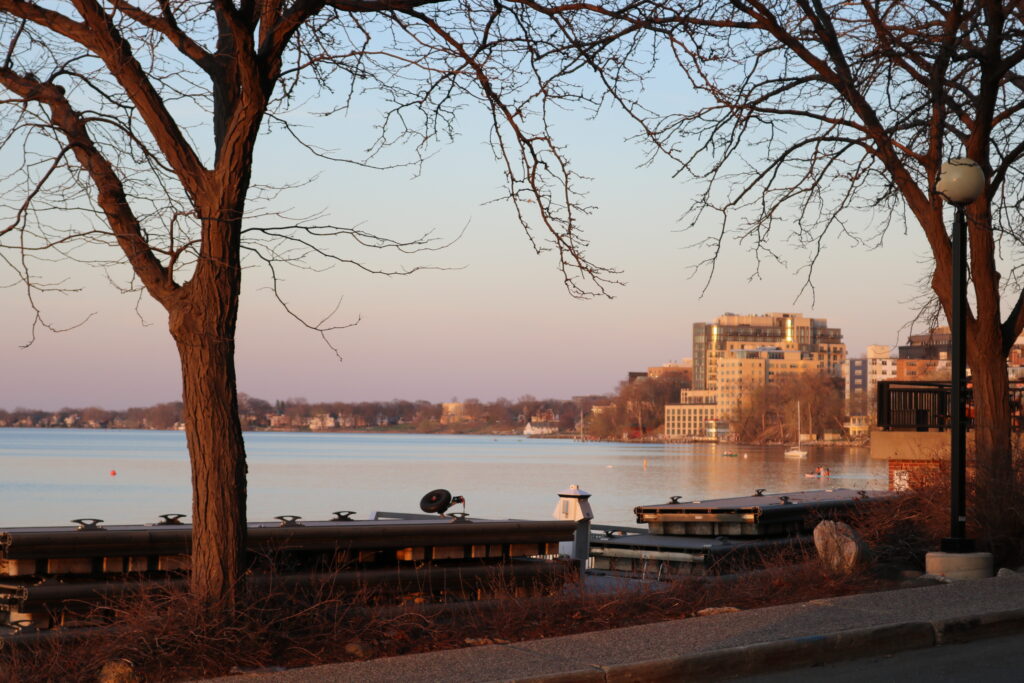
An evening view of Lake Mendota from outside UW-Madison’s Water Science and Engineering Laboratory. Image credit: Andrew Glasgow

This summer, 31 students from across the country were chosen for the University of Wisconsin-Madison’s Freshwater@UW Summer Research Opportunities Program, which is affiliated with Wisconsin Sea Grant, the University of Wisconsin Water Resources Institute and the University of Wisconsin-Madison Graduate School. Many of the students provided reflections on what they learned. We’ll share several over the coming months. Here’s Andrew Glasgow, an undergraduate in civil and environmental engineering from the University of Wisconsin-Madison.

When people hear that I spent my summer on the shore of Madison’s Lake Mendota, many imagine leisurely days basking in the sunshine. While many of my evenings were spent outdoors with colleagues and new friends, the bulk of my daylight hours were instead spent indoors at UW-Madison’s lakeside Water Science and Engineering Laboratory—where matters far removed from summer fun weighed upon my mind.

As part of the Freshwater@UW research program this summer, I worked to develop an inexpensive, accessible method for detection of PFAS in drinking water. PFAS, also known as “forever chemicals,” are a group of over 4,000 toxic, synthetic substances with high persistence and ubiquity in the environment and drinking water. However, due to the cost and time constraints of current detection methods, many communities—especially those without access to financial resources—cannot monitor their water supply for PFAS contamination. As such, these communities may unknowingly continue to ingest high levels of PFAS, potentially leading to cancer and other health issues. Through my involvement in this project, I sought to help protect human health by combating this state of affairs.

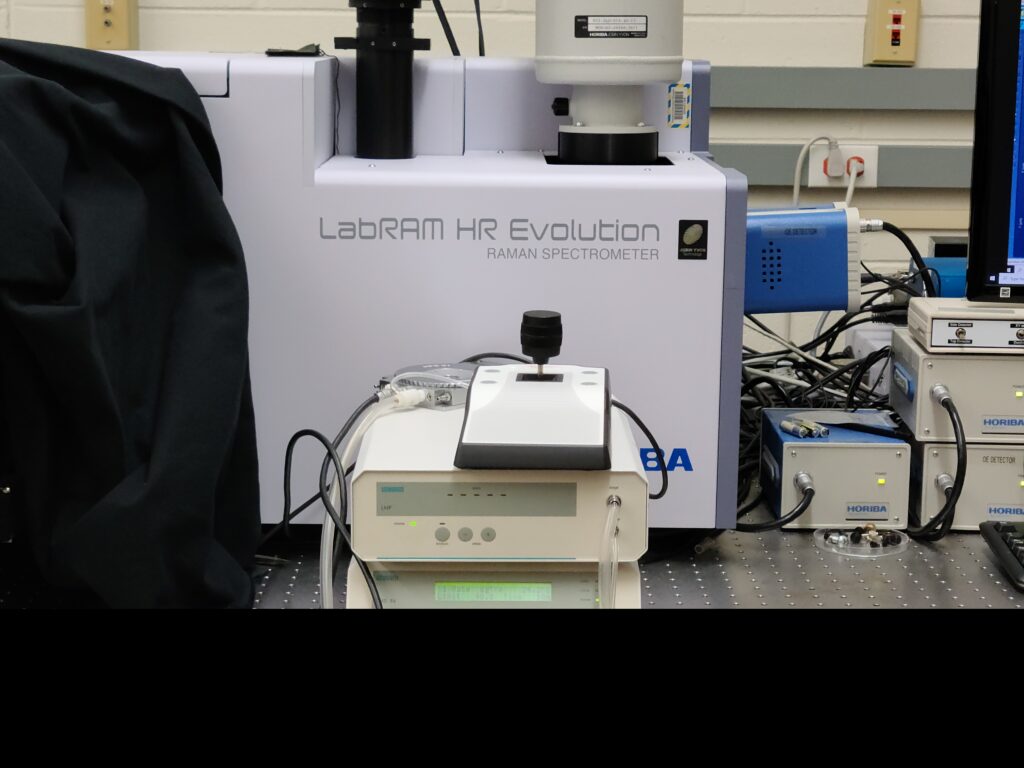
The Ramen Spectrometer used by Glasgow in Wei’s lab. Image credit: Marie Zhuikov, Wisconsin Sea Grant

My mentor, Haoran Wei, and I hoped to detect PFAS using surface-enhanced Raman spectroscopy (SERS): a rapid, inexpensive technique that uses a laser to detect different molecules. While prepared for failure, we had high hopes for success; SERS’ usage had facilitated the detection of other micropollutants in the past. And to our great encouragement, our hopes seemed to be affirmed by the initial results. With further research, we discovered that these groundbreaking results were not as they seemed; our method had been detecting another substance instead and was thus unsuccessful.

One half of the program had passed when we made this discovery—one month spent performing dangerous and tedious work, in service of an illusion waiting to be shattered. Considering the mental tolls of PFAS work, learning the truth of our results was a disorienting blow, as our confidence and endurance of those struggles now felt purposeless. Not only would our work not improve the current detection methods for PFAS in drinking water, but it could likely not be published for other researchers (despite its value), due to publication bias and the optics of “failed” results.

While my mentor and I still attempted to analyze why PFAS could not be detected, technological limitations unfortunately prevented final confirmation after weeks of analysis. Our project ended on this anticlimactic note.

Despite this conclusion, however, if given the opportunity to live the entire experience over, I would do so in a heartbeat. Although the final research outcome was disappointing, I developed essential skills and learned powerful lessons that I will carry throughout my career. Even more valuable was the opportunity to become integrated into a research community—which, as I discovered, is an opportunity to cherish. When there are new undergraduate and graduate friends to connect with, to mutually share excitements and failures, the weight of any personal defeat pales in comparison. I am very grateful for both the research and the friendships that the Freshwater@UW program provided me.


The post A PFAS conundrum first appeared on Wisconsin Sea Grant.

Original Article

Blog | Wisconsin Sea Grant

Blog | Wisconsin Sea Grant

https://www.seagrant.wisc.edu/blog/a-pfas-conundrum/

Wisconsin Sea Grant

Strolling Michigan State University’s campus after a weekend of football would leave your mouth agape a decade ago.

David Smith took that stroll when he started 11 years ago as the university’s new recycling coordinator. He was shocked by the aftermath of a Labor Day weekend game.

The post Deposit laws and voluntary initiatives prompt tailgaters to clean up their act first appeared on Great Lakes Echo.

Original Article

Great Lakes Echo

Great Lakes Echo

http://greatlakesecho.org/2023/11/06/deposit-laws-and-voluntary-initiatives-prompt-tailgaters-to-clean-up-their-act/

Wajeeha Kamal

Coastal erosion researcher appeals for help in finding her remote-control boat

Chelsea Volpano’s coastal erosion study began drawing attention on social media last week, but not for the reasons you would expect.

The University of Wisconsin-Madison student was gathering the final data set for her Ph.D. on October 30 when her small boat stopped responding to the remote control.

Read Now at Great Lakes Now.

Original Article

Great Lakes Now

Great Lakes Now

https://www.greatlakesnow.org/2023/11/coastal-erosion-researcher-appeals-for-help-in-finding-her-remote-control-boat/

Sharon Oosthoek

Flint residents have spent years trying and failing to get the U.S. Environmental Protection Agency to enforce laws that could prevent communities of color from bearing the brunt of pollution. They had hope when President Joe Biden took office, but then nothing happened. Read the full story by Bridge Michigan.

Original Article

Great Lakes Commission

Great Lakes Commission

https://www.glc.org/dailynews/20231103-epa-environmentalracism-flint

Hannah Reynolds

The U.S. Environmental Protection Agency, reversing a Trump-era decision, is restarting a human health assessment of nitrate and nitrite, a move that has potentially far-reaching regulatory implications for one of the country’s most pervasive drinking water contaminants. Read the full story by Circle of Blue.

Original Article

Great Lakes Commission

Great Lakes Commission

https://www.glc.org/dailynews/20231103-epa-assessment-nitrate-drinkingwater

Hannah Reynolds

Michigan is close to having its first official state grain in manoomin, a naturally-occurring rice that holds special significance to the tribes and people of the Great Lakes region. Read the fully story by WWMT-TV – Kalamazoo, MI.

Original Article

Great Lakes Commission

Great Lakes Commission

https://www.glc.org/dailynews/20231103-michigan-manoomin-officialstategrain

Hannah Reynolds

Federal money will help accelerate habitat protection near Ontario’s Bruce Peninsula National Park, one of 10 parks prioritized in a new program announced last week. The area surrounding the park is renown for its diversity of native orchids and ferns and is considered one of the Great Lakes’ biodiversity hot spots. Read the full story by The Shoreline Beacon.  

Original Article

Great Lakes Commission

Great Lakes Commission

https://www.glc.org/dailynews/20231103-nationalpark-federalfunds-greatlakes

Hannah Reynolds

On Monday, while running a survey for data collection off the shore of Lake Michigan, a University of Wisconsin student lost connection to her research boat. Now, she’s asking for the community’s help to find it. Read the full story by WISN-TV – Milwaukee, WI.

Original Article

Great Lakes Commission

Great Lakes Commission

https://www.glc.org/dailynews/20231103-um-madison-research-boat-lakemichigan

Hannah Reynolds

On Sunday the Union ended the strike that shut down a key North American trade route when it agreed to the tentative deal with the St. Lawrence Seaway Management Corp covering engineering, maintenance and other worker groups in Ontario and Quebec provinces. Read the full story by Reuters.

Original Article

Great Lakes Commission

Great Lakes Commission

https://www.glc.org/dailynews/20231103-canada-unifor-union-stlawrenceseaway

Hannah Reynolds

The Alliance for the Great Lakes is proud to announce that we’ve been awarded top charitable ratings from Charity Navigator, Guidestar, and GreatNonprofits. The ratings recognize our organization’s financial health, accountability, and transparency, as well as feedback from volunteers and donors.

Charity Navigator four-star rating badge.

Charity Navigator, America’s largest independent charity evaluator, awarded the Alliance for the Great Lakes a top Four-Star Rating. This rating designates the Alliance as an official “Give with Confidence” charity, indicating that our organization is using donations effectively based on Charity Navigator’s criteria. Nonprofits can earn Charity Navigator scores for Impact & Results, Accountability & Finance, Culture & Community, and Leadership & Adaptability.

Guidestar's Candid Platinum Transparency 2023 seal.

Guidestar, the worlds’ largest source of nonprofit information, awarded the Alliance for the Great Lakes its Platinum Seal of Transparency, the highest level of recognition. The award recognizes organizations with a high level of fiscal and programmatic accountability and transparency.

GreatNonprofits 2023 Top-Rated Nonprofit badge.

GreatNonprofits, the leading website for community recommendations of charities and nonprofits, named Alliance for the Great Lakes a 2023 Top-Rated Nonprofit. The Top-Rated Nonprofit Award is based on the rating and number of reviews that the Alliance received from volunteers and donors.

The post Alliance Earns Three Top Charity Ratings appeared first on Alliance for the Great Lakes.

Original Article

News - Alliance for the Great Lakes

News - Alliance for the Great Lakes

https://greatlakes.org/2023/11/alliance-earns-three-top-charity-ratings/

Judy Freed

Energy News Roundup: States rebrand energy to meet electricity targets, Ohio legislation to declare nuclear power as ‘green energy’

Keep up with energy-related developments in the Great Lakes area with Great Lakes Now’s biweekly headline roundup.

Click on the headline to read the full story:


Illinois

Chicago-area startup banks on ethanol-fueled trucking as alternative to battery electric — Energy News Network

A Chicago-area startup develops technology to retrofit diesel engines to run on ethanol, betting that it’s a faster path to decarbonize heavy-duty trucking than waiting for electric replacements.

Read Now at Great Lakes Now.

Original Article

Great Lakes Now

Great Lakes Now

https://www.greatlakesnow.org/2023/11/energy-news-roundup-states-rebrand-energy-to-meet-electricity-targets-ohio-legislation-to-declare-nuclear-power-as-green-energy/

Kathy Johnson

Thank you for sponsoring the Watershed Cleanup! This registration form is only for those who wish to pay by invoice. Please complete all information. Your sponsorship is pending until we receive payment.

Thanks for being a sponsor!

The post Sponsor the 2024 Fox-Wolf Watershed Cleanup by invoice appeared first on Fox-Wolf Watershed Alliance.

Original Article

Fox-Wolf Watershed Alliance

Fox-Wolf Watershed Alliance

https://fwwa.org/2023/11/02/sponsor-cleanup-invoice/?utm_source=rss&utm_medium=rss&utm_campaign=sponsor-cleanup-invoice

Sharon Cook

Supervisory Hydrologist Margaret Zimmer started at UMid in August 2023 and was recently awarded the 2023 Kohout Early Career Award from the Hydrogeology Section of the Geological Society of America.

Original Article

Upper Midwest Water Science Center

Upper Midwest Water Science Center

https://www.usgs.gov/centers/upper-midwest-water-science-center/news/staff-feature-margaret-zimmer-recently-awarded-gsa?utm_source=comms&utm_medium=rss&utm_campaign=news

jvelkoverh@usgs.gov

A recent U.S. Supreme Court ruling that struck down race-conscious college admissions has some environmental justice activists on edge.

They say the decision could make it harder to protect marginalized communities that are victims of disproportionate environmental harm.

The post Affirmative action ruling worries some environmental justice advocates. first appeared on Great Lakes Echo.

Original Article

Great Lakes Echo

Great Lakes Echo

http://greatlakesecho.org/2023/11/02/affirmative-action-ruling-worries-some-environmental-justice-advocates/

Jada Vasser

Thank you for your interest in exhibiting at the Watershed Conference! This registration form is only for those who wish to pay by invoice. Please complete all information. Your exhibiting booth and registration is pending until we receive payment.

Thanks for being an exhibitor!

The post Exhibit at the 2024 Watershed Conference by invoice appeared first on Fox-Wolf Watershed Alliance.

Original Article

Fox-Wolf Watershed Alliance

Fox-Wolf Watershed Alliance

https://fwwa.org/2023/11/01/exhibit-conference-invoice/?utm_source=rss&utm_medium=rss&utm_campaign=exhibit-conference-invoice

Chris Acy

To commemorate the 48th anniversary of the sinking of the Edmund Fitzgerald, the Michigan Maritime Museum will be hosting a commemoration ceremony in South Haven, Michigan, later this month. The event will include the traditional ringing of the bell, a guest speaker, and a special display of materials from the museum’s collections. Read the full story by WPBN-TV – Traverse City, MI.

Original Article

Great Lakes Commission

Great Lakes Commission

https://www.glc.org/dailynews/20231101-museum-commemoration

Nichole Angell

In Ohio, officials from the city of Conneaut and state of Ohio plus various contractors celebrated the completion of work on the Conneaut Creek Dredge Reclamation Facility with a ribbon-cutting ceremony this week. The facility helps to maintain the port of Conneaut on Lake Erie and reduce dumping of dredge material into the lake. Read the full story by the Star Beacon.

Original Article

Great Lakes Commission

Great Lakes Commission

https://www.glc.org/dailynews/20231101-dredge-facility

Nichole Angell

Pumped from the vast layers of bedrock beneath our feet, groundwater is the source of drinking water for two-thirds of people living in Wisconsin. According to geochemist Matt Ginder-Vogel, what’s in that water is largely influenced by what’s in the rock.

A headshot of Matt Ginder-Vogel
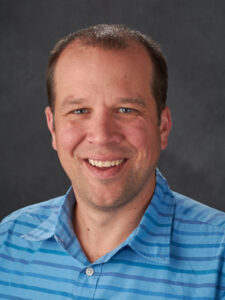
Matt Ginder-Vogel is researching geogenic contaminants in public wells across Wisconsin. Photo credit: UW–Madison Department of Civil & Environmental Engineering

“Groundwater is not a lake underneath the ground. It’s water that’s in tiny pore spaces in the rock,” said Ginder-Vogel, an associate professor in the UW–Madison Department of Civil and Environmental Engineering. “So, it really interacts with the rocks around it.”

Under the right conditions, this interaction can cause naturally occurring or “geogenic” contaminants—like radium, arsenic, uranium and manganese—to leach from bedrock into groundwater.

Just where geogenic contamination is occurring in the state and how are the questions Ginder-Vogel and his team of graduate students are hoping to answer in new research funded by the University of Wisconsin Water Resources Institute.

Savannah Finley and Juliet Ramey-Lariviere are both graduate students working on the project. They’re digging through drinking water quality data from the Wisconsin Department of Natural Resources to identify municipal wells with high levels of contaminants. The goal is to provide a snapshot of geogenic contamination across the state so that folks know what’s in their water.

“We want to give a health progress report of our overall aquifer and say—here’s what we have. Here are the contaminants that we’re looking at,” said Finley.


A headshot of Juliet Ramey-Lariviere
Juliet Ramey-Lariviere. Submitted photo.
A headshot of Savannah Finley.
Savannah Finley. Submitted photo.

She and Ramey-Lariviere are working on a map that will show contaminant hotspots and the underlying bedrock in those locations to determine if there is a relationship between the two.

“The hope is, once we have this data, to lay it all out on top of one another and look at the different bedrock formations and hopefully try to tie in the bedrock formation with the different contaminants that we’re seeing,” said Finley.

The team is focused on public wells in the Midwestern Cambrian Ordovician Aquifer System, a horseshoe-shaped region that roughly occupies the southern two-thirds of Wisconsin. Once wells are identified, they’ll collect both water and rock samples and begin experiments in the lab, which will reveal the amount of contamination leaching from the samples and how fast it’s occurring.

“We’ll be taking rock sections and grinding them up and looking to see what comes off the rocks,” said Ginder-Vogel. “You expose them to water and see what partitions into the water. Then you can manipulate the conditions of water to release other contaminants.”

The team will then use these findings to create a model that identifies hotspots around the state prone to geogenic contamination. Ginder-Vogel hopes the model will raise awareness of the problem even if water utilities aren’t currently experiencing issues. Concentrations of naturally occurring contaminants can change over time. Take, for example, the city of Waukesha.

“[Waukesha] didn’t always have troubles with radium. But when they started pumping more groundwater—and the Chicago suburbs were also pumping more groundwater and were changing the flow path of the water—[Waukesha] started to have more and more trouble with radium,” said Ginder-Vogel.

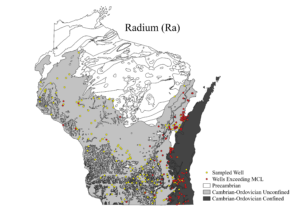
A map of Wisconsin showing wells tested for radium and those that exceed drinking water standards. Wells that exceed standards are concentrated in the eastern half of the state.
A map of Wisconsin showing wells tested for radium and those with drinking water that exceeds the Maximum Contaminant Level (MCL) standard set by the EPA. Wells exceeding MCL are concentrated in eastern Wisconsin. Image credit: Savannah Finley and Juliet Ramey-Lariviere

“Once you’ve seen that, you can’t help but ask, is it happening with other things, other naturally occurring contaminants like arsenic?”

Ginder-Vogel said increased water use is what’s driving the changing concentrations. Pumping more water pulls groundwater through the aquifer in different ways and allows water to interact with bedrock it hadn’t before, picking up new contaminants.

“People who think about groundwater often think about it being this unchanging pool beneath the ground, but with all the water that we use and the way we move water around right now, there’s the possibility for lots of change,” he said.

Unfortunately for water utilities dealing with high levels of geogenic contaminants, the solution isn’t an easy or cheap one. Geogenic contaminants don’t biodegrade or go away. “They’re metals,” said Ginder-Vogel. “You can’t destroy them and remediate them. You can only move them from one place to another.”

One solution is to install treatment systems that remove contaminants from drinking water. It’s an expensive option, however, and small municipalities may not have the resources to support such an endeavor. Water utilities may also choose to rebuild a well in such a way that it avoids rock formations with high amounts of contaminants.

Ginder-Vogel’s hope is that the team’s research helps municipalities develop a plan before geogenic contamination becomes a problem. While they can’t change the bedrock, they can be strategic about how they pump water.

Said Ginder-Vogel, “We’re trying to be smart about our water resources.”

The post Groundwater on the rocks: WRI-funded research will map naturally occurring contaminants in public wells across Wisconsin first appeared on WRI.

Original Article

News Release | WRI

News Release | WRI

https://www.wri.wisc.edu/news/groundwater-on-the-rocks-wri-funded-research-will-map-naturally-occurring-contaminants-in-public-wells-across-wisconsin/

Jenna Mertz

Summary 

Title: Communications Director 

Reports to: Vice President of Development  

Classification / Status: Full-time, Exempt 

Level: Director 

Location: Hybrid / Office – occasional meetings in Chicago, Great Lakes State or Washington, D.C.   

The Communications Director will develop and execute communications and marketing strategies to grow the size of and deepen engagement with our constituent base and increase our brand awareness across the Great Lakes region. The Director manages owned and paid media to grow our volunteer, advocate and donor constituencies that support our program work. The Director ensures that all our supporters receive consistent and targeted information about the Alliance’s work so that we can retain and upgrade their engagement. The Director is the Alliance’s brand steward and serves as editor-in-chief for institutional communications. They are part of the development, communications, and volunteer management team. They work closely with the Media Director, providing owned and paid media to advance program and advocacy goals and campaigns, while leveraging media campaign materials to facilitate storytelling and engagement with our supporters. 

The Director guides and manages the internal communications team. As a team leader, the Director energizes staff members by inspiring and motivating direct reports and by evolving constituent engagement strategies and tactics throughout the organization. The Director is also a capable public figure for the organization who can speak credibly to our constituents. The Director collaborates with other Alliance campaign and program leaders. They will interact with the Board of Directors and external partners in support of strategic communications planning and to aid fundraising efforts. 

This role reports to the Vice President for Development. 

Major priorities for the role include: 

  1. Increase brand awareness of the Alliance for the Great Lakes in priority markets 
  1. Grow the size of our supporter base, including digital advocates, active email recipients, and social media followers 
  1. In partnership with our Development staff, leverage growing supporter base growth to increase smaller donor acquisition. 
  1. Deepen the engagement of our supporter base with Alliance activities and programs. 
  1. Advance success of Alliance program priorities  

Structure: The Director reports to the Vice President of Development (VPD) and works closely with other senior program staff leaders, especially the Media Director. The Director of Communications supervises the following staff: Senior Communications Manager and Staff Writer, as well as occasional affiliates and contractors. 

Compensation and Benefits: Salary range begins at $100,000, with starting salary determined commensurate with experience. Medical, dental, short- and long-term disability, life insurance, FSA, 11 paid holidays plus the business days between 12/26 and 12/30 (staff who must work on any holidays may take those holidays at another time subject to the employee handbook), 3 weeks vacation to start + PTO, Fidelity 401(k) with employer match of up to 6% of salary.  

Work Environment: Fully remote with some travel required. If based in Chicago, an office is available downtown for use. 

_________________________________________________________________________________  

Overview 

The Director will start work from a position of strength. Our staff and Board of Directors include some of the country’s leading Great Lakes advocates, experts and communicators. Our organization has a well-regarded record of recent and historic successes dating to 1970. The Alliance’s capacity stands tall among state and regional environmental advocacy organizations across the country, with more than $10 million in assets of which more than 70% is unrestricted. The Alliance is growing toward an operating budget of $5 million by the end of 2024. 

Representative goals of this position include:  

By the end of 2024: 

  • Ensure constituent communications strategies are built into all appropriate campaigns under the new strategic plan. 
  • Develop a new social media strategy that will advance our strategic planning goals and empower supporters to advocate for the Alliance and our priorities. 
  • Achieve a 10% increase in number of digital donors, 10% increase in number of new email signups, 10% increase in engaged email list, and 15% increase in website traffic 
  • Conduct a constituent survey to identify ways to improve relationships with our supporters. 
  • Review our digital communications tools and add/delete/replace as needed. (Determine capacity needs for our new strategic plan. 

Within five years: 

  • Key partner and constituent voices and stories are regularly woven into all relevant program campaigns. 
  • The Alliance becomes well-known in terms of overall brand recognition and has a highly engaged (and growing) base of supporters.  

A typical week for the Director might include: 

  • Meeting with Media Director for a briefing on a recent policy development and upcoming press conference; creating a plan to support the campaign and engage our constituents with owned and/or paid media.  
  • Reviewing copy for the monthly e-newsletter; adding a quick new story about the policy development before approval the e-newsletter to be sent. 
  • Leading a Dev/C&E brainstorming session about how to engage a new audience with the Alliance. 
  • Meeting with VP of Development and Staff Writer to determine the story budget and timeline for the annual report. 

Responsibilities 

Strategist: The Director ensures that every aspect of the organization’s public outreach – including issue and program work, volunteer and advocacy growth & leadership, and fundraising – furthers our mission and is aligned with our program goals. They will lead strategic communications and engagement planning, set long-range measurable goals and implement regularly updated work plans appropriate to achieving them. They will: 

  • Develop responsive communication-driven programs and help staff members understand their role in and contribution to the overall marketing effort. 
  • Identify key targets for Alliance communications and implement strategies to link those targets to achievement of the organization’s environmental issue and fundraising goals. 
  • Create / advise on direct mail and paid media (search engine ads, social ads, magazine ads, paid list acquisitions, PSAs, ect.)  
  • Leverage media and business partnerships for brand/issue awareness and constituency growth 
  • Vet, select and manage contracts for the Alliance’s communications tools: website, digital advocacy, platform, email service provider, social media channels, social monitoring and posting tool, photo/video library, and donation platform.  
  • Find ways to raise the competitive profile of the Alliance. 
  • Ensure that all engagement of volunteers and advocates educates them to act, grows the quality and quantity of constituent leadership, and creates capacity for advancing overall program strategy. 
  • Present and report (in tandem with the VP for Development) on Alliance’s communications strategy and outputs to the Board. 
  • Collect and ensure the regular acquisition of quantitative and qualitative data from constituents to shape future strategies 
  • Brainstorm communications strategies in tandem with social media engagement and website goals, drive small donor strategy 

Communicator: The Director partners with the Media Director to cultivate opportunities for publicity, recognition, and constituency engagement. They will: 

  • Serve as the “Editor in Chief” and the lead in content strategy, ensuring accuracy and correct voice,  
  • Create, lead and manage the overall organizational content calendar. 
  • Deploy social media and other owned and paid communications in support of earned media for program campaigns in collaboration with Media Director. 
  • Tailor look, feel, and performance of all Alliance communication vehicles for advocacy, volunteering and fundraising purposes to target audiences. 
  • Align all constituent engagement with organizational brand and values. 
  • Create a culture of listening and responsiveness to constituent voices and seek out ways to equitably serve all constituents. 
  • When a Great Lakes crisis or urgent opportunity arises, demonstrating the ability to think calmly and collaboratively in an all hands-on deck demonstrate demonstrates/media. 

Motivator: The Director of Communications leads the Alliance’s communications team to ensure strong collaboration, performance and job satisfaction. They will: 

  • Build staff capability to communicate independently and credibly. 
  • Allocate communications staff across a variety of campaigns and other efforts to ensure team skills are aligned to organizational needs 
  • Evaluate and reports the performance of overall communications effort and individual team members using organization-wide tools and metrics. 
  • Identify needs and opportunities for supporting professional development of staff as a team and individuals 
  • Ensure internal digital systems are maintained and updated regularly to support our constituent engagement and communications goals 
  • Engage a diverse set of audiences and influence acknowledgement strategy post-event and post-donation 

Work Relationships 

The Director of Communications works closely with a wide variety of Alliance for the Great Lakes staff members, particularly the Media Director and the communications and development staff 

Supervisor Responsibilities 

The Director of Communications supervises the following staff: Senior Communications Manager and Staff Writer, as well as occasional affiliates and contractors. 

Physical Demands/Work Environment 

Remote office work environment with occasional overnight travel required. Office space available if located in Chicago. 


Knowledge/Skills  

  • Minimum of 7 years of experience culminating in proven leadership of regional or national scale advocacy, political or marketing campaigns.  
  • Minimum of 3 years leading a team. 
  • Persuasive, with excellent written and oral communication skills. 
  • Ability to understand and motivate multiple constituencies, including government, private sector, elected officials, volunteers, and issue advocates. 
  • Demonstrated cultivation and driving of successful collaborative staff teams. 
  • Clear and proven ability to use, test, and adapt electronic platforms to engage thousands of individual constituents and move those constituents offline for additional cultivation. 
  • Demonstrated success in using communications and marketing tools to move decision-makers on policy agendas. 
  • Track record of understanding of constituent demand and preferences and using this to shape successful engagement strategies.  
  • Eagerness to work at both the “nuts and bolts” and strategic levels of our engagement effort. 
  • Bachelor’s degree required; advanced degree preferred. 

NICE TO HAVE: 

  • Strong portfolio of strategic advocacy writing, with an emphasis on converting technical and policy agendas to compelling public messages. 
  • Ability to work independently, quickly, and in keeping with the news cycle regardless of time of day. 
  • Driven by a strong commitment to the value of individual and collective constituent action and the values of the organization. 
  • Experience and comfort with setting and working within an annual budget at the regional non-profit scale. 
  • Proficiency in creating social media campaigns and driving engagement online into real-life actions 

Job Parameters 

  • This position is full-time and consistent with Alliance employment policy. Salary range begins at $100,000 with a starting salary determined commensurate with experience. 
  • Excellent benefits, including medical, dental, short- and long-term disability, life insurance, FSA, 11 paid holidays plus the business days between 12/26 and 12/30 (staff who must work on any holidays may take those holidays at another time subject to the employee handbook), 3 weeks vacation to start + PTO, and Fidelity 401(k) with employer match of up to 6% of salary, eligible after 30 days. 
  • This is a remote position for candidates living in a Great Lakes state or in Washington, D.C., with occasional travel required. If located in Chicago, an office is available downtown for use.  

Application Process:

Please email a cover letter, resume, references, and writing sample to hr@greatlakes.org

Include job title in the subject line. 

Applications will be accepted until the position is filled – we are looking to fill immediately. Materials should be compatible with Microsoft Word or Adobe Acrobat. Applicants will receive confirmation of receipt of their materials and further guidance and updates about the hiring process by email, with interviews provided for finalists. No phone inquiries, please. 

The Alliance for the Great Lakes is an Equal Opportunity Employer. The search process will reinforce the Alliance’s belief that achieving diversity requires an enduring commitment to inclusion that must find full expression in our organizational culture, values, norms, and behaviors.  

About the Alliance for the Great Lakes 

The Alliance for the Great Lakes is an Equal Opportunity Employer. The search process will reinforce the Alliance’s belief that achieving diversity requires an enduring commitment to inclusion that must find full expression in our organizational culture, values, norms, and behaviors.  

Our vision is a thriving Great Lakes and healthy water that all life can rely on, today and far into the future. We aspire to be a voice for the lakes and to support the voices of the communities that depend on the lakes and their waters. 

The missionof the Alliance for the Great Lakes is to protect, conserve, and restore the Great Lakes ensuring healthy water in the lakes and in our communities for all generations of people and wildlife. We advance our mission as advocates for policies that support the lakes and communities by building the research, analysis, and partnerships that motivate action, and by educating and uniting people as a voice for the Great Lakes.   

To achieve our vision and mission, everyone in our organization will live our values of Community, Relationships, Courage, Integrity and Optimism and weave the principles of Justice, Equity, Diversity and Inclusion into all our work. Each value and principle is backed by measurable goals and expectations for our Board of Directors and staff.  

The post Communications Director  appeared first on Alliance for the Great Lakes.

Original Article

News - Alliance for the Great Lakes

News - Alliance for the Great Lakes

https://greatlakes.org/2023/11/communications-director/

Michelle Farley

Note: This blog was co-written by President & CEO Joel Brammeier and Vice President of Policy and Strategic Engagement Crystal M.C. Davis.

For four days in Cleveland on the shores of Lake Erie last week, many of the Great Lakes region’s leading advocates and decision-makers gathered for discussions on the future of our waters. We were privileged to be part of those gatherings at the Healing Our Waters (HOW) – Great Lakes Coalition’s annual conference, followed by the biennial Summit of Great Lakes St. Lawrence Governors and Premiers. 

Building a Path to Protect the Great Lakes 

Forums like these occasionally yield big breakthroughs. The 2015 Summit was where Ohio, Michigan and Ontario agreed to reduce nutrient pollution to Lake Erie by 40%. More often, they are a place for people like us to build consensus with our colleagues on the next major phases of our long-term work to protect the Great Lakes.  

With the HOW Conference and the Governors and Premiers Summit held back-to-back in one place, there were great opportunities to confab among the hundreds of elected officials, senior agency staff, philanthropists, and private sector and nonprofit leaders from across the region.

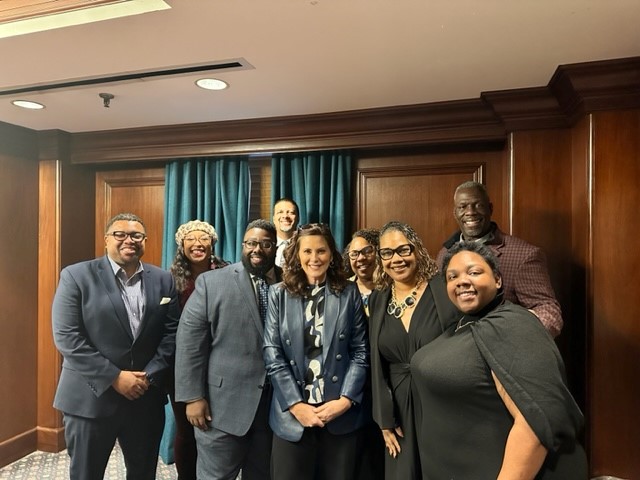
Crystal and other community leaders engaged in a powerful roundtable discussion hosted by the Cleveland NAACP, joined by Governor Whitmer.

Crystal was honored to join in a small roundtable discussion with Governor Whitmer led by the Cleveland NAACP, bringing her voice to elevate the Alliance’s water policy priorities. Additionally, we had the opportunity to speak directly with Ohio Governor Mike DeWine about his state’s H2Ohio water funding program, the Ohio Lake Erie Commission, and other pressing water policy matters. 

Three Key Takeaways

Three things stood out to us among the countless speeches, panels, and meetings.  

First, attendees learned that to be successful at protecting the Great Lakes, we must pay attention to how they intersect with so many other needs in our communities.  

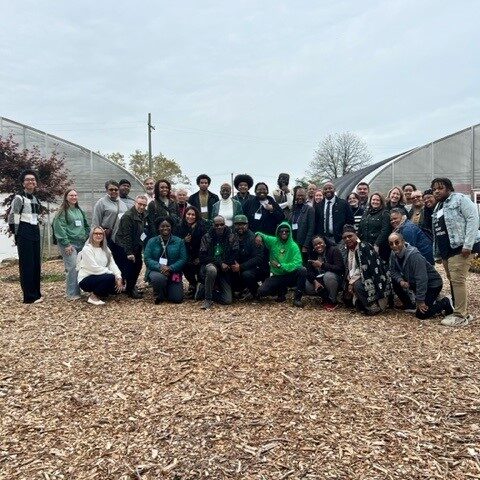
Field trip to Rid-All-Farm

The HOW coalition asked Crystal to organize the opening plenary for the conference. The audience applauded a diverse panel from the financial, health, environmental and economic development sectors that outlined the complex relationship between water policy and needs for economic, racial, and educational justice in Cleveland and communities across our region. The Alliance also organized the ‘Green N Tha Ghetto’ field trip to the renowned Rid-All Farm in Cleveland. This trip highlighted a black-owned urban farm’s groundbreaking aquaponics and thriving crops, and a farm that stands as a testament to the rich intersection of Great Lakes water, cultivation of community, and economic development. 

Second, the composition of some of the rooms is changing to better reflect all the voices of the region. Truly inclusive representation of Great Lakes communities is critical for these high-level gatherings to be worth their weight. We saw and heard many younger faces and voices that were new to us – always a positive sign. And the Great Lakes movement is catching up to the fact that leaders from Black, Indigenous, Latino and more communities of color have been pivotal in advocating for our water for many years. When organizations like HOW and the Alliance truly value and practice authentic engagement, this fosters long-lasting and sustainable relationships, paving the way for more Great Lakes success. 

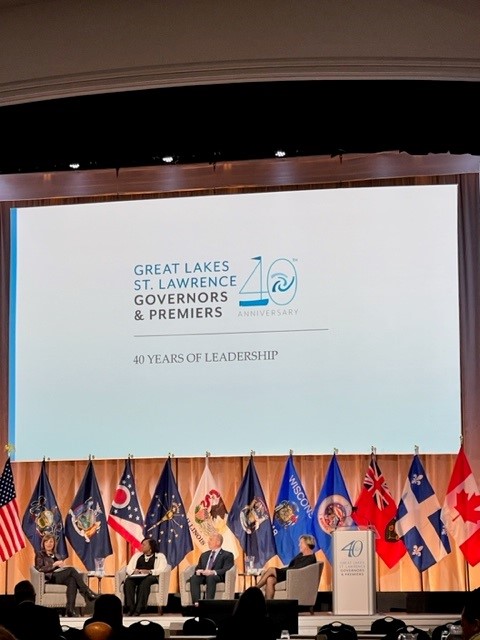
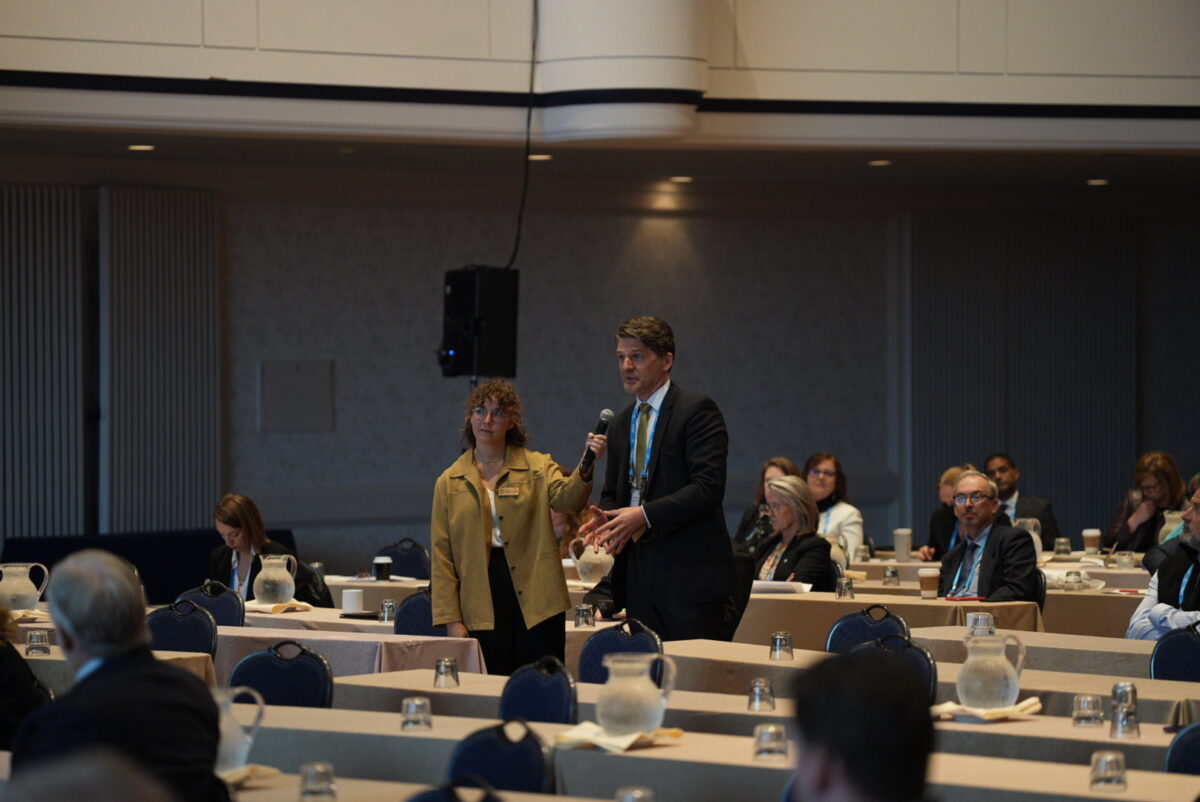
Joel at Great Lakes St. Lawrence Governors and Premiers Summit

Finally, we saw attention not just to what needs to happen but how the work gets done. The governors and premiers summit was the launch pad for a new commitment to planting 250 million trees across the Great Lakes region over the next decade. A laudable goal for sure, and one that can play a part in meeting our climate and clean water challenges. What we found most illuminating about the launch were the reflections from leaders from the Cleveland Trees Coalition and National Indian Carbon Coalition. Trees can help heal urban heat islands in Cleveland or support wild rice habitat on tribal lands in Minnesota. Tree planting is good, but it can become great when it starts with and is sustained by community leadership to address community-identified needs. 

The Power of Great Lakes Gathering

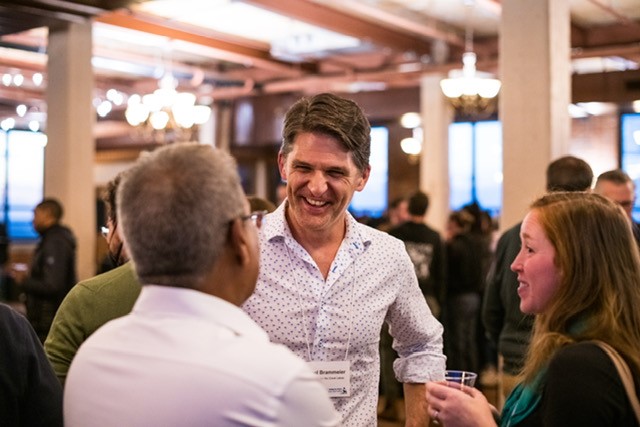
Joel chatting with other Great Lakes St. Lawrence Governors and Premiers Summit attendees.

The power of these gatherings hit home for Joel on Saturday at the Great Lakes St. Lawrence Governors and Premiers luncheon. A video testimonial from the two surviving founders of the organization, former Michigan Governor Jim Blanchard and former Ohio Governor Dick Celeste, described the economic conditions of the Great Lakes region in the early 1980s – severe recession, high unemployment, and deep uncertainty facing residents and leaders across the lakes. The governors chose this moment to convene for the first time to build on one asset that was recession-proof: our shared freshwater foundations. Their choice to come together in a time of uncertainty so many decades ago reminds us that protecting the Great Lakes takes time and that choices we make today can have incredible staying power.  

We are proud to be part of bringing a greater diversity of voices to these critical Great Lakes conversations than ever before, ensuring the next generation of Great Lakes protection meets the needs of everyone who relies on the lakes every day.  

Protect the Great Lakes & Our Communities

Too many Great Lakers experience polluted water – whether it is lead-tainted water coming from taps in homes or algal blooms fouling beaches. Visit our Action Center and learn how you can take action.

Take Action

The post Charting the Future of the Great Lakes: Insights from the HOW Conference and Governors’ Summit  appeared first on Alliance for the Great Lakes.

Original Article

News - Alliance for the Great Lakes

News - Alliance for the Great Lakes

https://greatlakes.org/2023/11/charting-the-future-of-the-great-lakes-insights-from-the-how-conference-and-governors-summit/

Michelle Farley

No convictions for Flint: Attorney general ends water crisis prosecutions

By Kelly House, Bridge Michigan

The Great Lakes News Collaborative includes Bridge Michigan; Circle of Blue; Great Lakes Now at Detroit Public Television; and Michigan Radio, Michigan’s NPR News Leader; who work together to bring audiences news and information about the impact of climate change, pollution, and aging infrastructure on the Great Lakes and drinking water.

Read Now at Great Lakes Now.

Original Article

Great Lakes Now

Great Lakes Now

https://www.greatlakesnow.org/2023/11/no-convictions-for-flint-attorney-general-ends-water-crisis-prosecutions/

Bridge Michigan

PFAS News Roundup: Push to find ‘forever chemicals’ replacements in manufacturing

Keep up with PFAS-related developments in the Great Lakes area with Great Lakes Now’s biweekly headline roundup.

Click on the headline to read the full story:

Michigan

Michigan State University to host PFAS symposium: Educating farmers on forever chemicals — WWMT

Michigan State University is hosting an upcoming symposium to educate farmers on the impact of PFAS.

Read Now at Great Lakes Now.

Original Article

Great Lakes Now

Great Lakes Now

https://www.greatlakesnow.org/2023/11/pfas-news-roundup-push-to-find-forever-chemicals-replacements-in-manufacturing/

Kathy Johnson

Public transportation is suffering from a lack of drivers in communities across Michigan. 

Clark Harder, the executive director of the Michigan Public Transit Association, said it’s a statewide problem.

The post Michigan struggles to fill public bus driver positions first appeared on Great Lakes Echo.

Original Article

Great Lakes Echo

Great Lakes Echo

http://greatlakesecho.org/2023/11/01/michigan-struggles-to-fill-public-bus-driver-positions/

Guest Contributor

...A BRIEF BURST OF MODERATE SNOW EXPECTED IN BROWN, KEWAUNEE, MANITOWOC AND SOUTHERN DOOR COUNTIES EARLY THIS AFTERNOON... An area of lake enhanced snow will move south across Southern Door and Kewaunee counties into Brown and Manitowoc counties during the early afternoon hours. The snow could be moderate at times, and could make elevated roads slick for a time and reduce

Original Article

Current Watches, Warnings and Advisories for Brown (WIC009) Wisconsin Issued by the National Weather Service

Current Watches, Warnings and Advisories for Brown (WIC009) Wisconsin Issued by the National Weather Service

https://alerts.weather.gov/cap/wwacapget.php?x=WI1266676D3500.SpecialWeatherStatement.1266676D77CCWI.GRBSPSGRB.afc8e87e6c80db8a22a2ffbdb408f41d

w-nws.webmaster@noaa.gov

...A BRIEF BURST OF MODERATE SNOW EXPECTED IN BROWN, KEWAUNEE, MANITOWOC AND SOUTHERN DOOR COUNTIES EARLY THIS AFTERNOON... An area of lake enhanced snow will move south across Southern Door and Kewaunee counties into Brown and Manitowoc counties during the early afternoon hours. The snow could be moderate at times, and could make elevated roads slick for a time and reduce

Original Article

Current Watches, Warnings and Advisories for Brown (WIC009) Wisconsin Issued by the National Weather Service

Current Watches, Warnings and Advisories for Brown (WIC009) Wisconsin Issued by the National Weather Service

https://alerts.weather.gov/cap/wwacapget.php?x=WI1266676D3500.SpecialWeatherStatement.1266676D77CCWI.GRBSPSGRB.176ff32f6d68e42ba8c58090bd33adbe

w-nws.webmaster@noaa.gov

Points North: Pier pressure

Points North is a biweekly podcast hosted by Daniel Wanschura and Morgan Springer about the land, water and inhabitants of the Upper Great Lakes.

This episode was shared here with permission from Interlochen Public Radio. 

On September 21, 2020, twelve-year-old Lane Frame and his brothers were seeing the Great Lakes for the first time.

Read Now at Great Lakes Now.

Original Article

Great Lakes Now

Great Lakes Now

https://www.greatlakesnow.org/2023/10/points-north-pier-pressure/

Interlochen Public Radio

...HAZARDOUS TRAVEL POSSIBLE IN THE SOUTHERN FOX VALLEY... Snow will continue in the Fox Valley, including the Green Bay, Appleton, Oshkosh, and Chilton areas through early afternoon. There could be some further small additional accumulation south of Green Bay, and make for slick bridges and overpasses.

Original Article

Current Watches, Warnings and Advisories for Brown (WIC009) Wisconsin Issued by the National Weather Service

Current Watches, Warnings and Advisories for Brown (WIC009) Wisconsin Issued by the National Weather Service

https://alerts.weather.gov/cap/wwacapget.php?x=WI1266676CFFE0.SpecialWeatherStatement.1266676D3564WI.GRBSPSGRB.670272ffdeab82d92d5ab990673d0435

w-nws.webmaster@noaa.gov