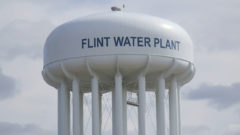
An engineering company being sued by Flint residents over consultation it provided following the city’s switch to the Flint River for drinking water will settle the case for $25 million — a decision that comes about two weeks before class action litigation was set to go to a second trial. Read the full story by The Detroit News.   

Original Article

Great Lakes Commission

Great Lakes Commission

https://www.glc.org/dailynews/20240202-veolia-settlement-flintwatercrisis
Hannah Reynolds

The poor ice conditions on Wisconsin waters this winter continue to adversely affect winter fishing opportunities, including the cancellation of ice fishing tournaments. Read the full story by Milwaukee Journal Sentinel.

Original Article

Great Lakes Commission

Great Lakes Commission

https://www.glc.org/dailynews/20240202-icefishing-poorconditions

Hannah Reynolds

This week’s windy, warmer winter weather helped to melt the ice cover around the Western Basin of Lake Erie and its Lake Erie Island area. That prompted the U.S. Coast Guard to suspend its rule requiring boaters to seek permission to 72 hours before they launch. Read the full story by The Plain Dealer.

Original Article

Great Lakes Commission

Great Lakes Commission

https://www.glc.org/dailynews/20240202-lakeerie-anglers-ohio-fishingreport

Hannah Reynolds

A new report estimates it will cost several billion dollars to remove 12.7 million cubic yards of copper mining waste called stamp sands which are slowly smothering an important fish spawning reef in Lake Superior along the Keweenaw Peninsula coastline. Read the full story by MLive.   

Original Article

Great Lakes Commission

Great Lakes Commission

https://www.glc.org/dailynews/20240202-lakesuperior-miningwaste

Hannah Reynolds

Points North: Doe, A Deer, A (Sterilized) Female Deer

By Ellie Katz, Interlochen Public Radio

Points North is a biweekly podcast about the land, water and inhabitants of the Great Lakes.

This episode was shared here with permission from Interlochen Public Radio. 

White-tailed deer are one of a few species that have managed to thrive as we urbanize and suburbanize the Midwest.

Read Now at Great Lakes Now.

Original Article

Great Lakes Now

Great Lakes Now

https://www.greatlakesnow.org/2024/02/points-north-doe-a-deer-a-sterilized-female-deer/

Interlochen Public Radio

Congratulations to NOAA Great Lakes Environmental Research Laboratory Deputy Director Jesse Feyen on receiving an American Meteorological Society (AMS) award this week! Dr. Feyen was awarded the Scientific and Technological Activities Commission (STAC) 2023 Committee on Coastal Environment Outstanding Service … Continue reading

Original Article

NOAA Great Lakes Environmental Research Laboratory

NOAA Great Lakes Environmental Research Laboratory

https://noaaglerl.blog/2024/02/02/noaa-glerl-deputy-director-jesse-feyen-receives-ams-stac-2023-coastal-environment-committee-outstanding-service-award/

Gabrielle Farina

The calendar has flipped to 2024. Our staff members are already tackling new projects. Before they move too deeply into the new year, however, some staff members took a moment to retain the glow of their favorite 2023 project. Anne Moser, senior special librarian and education coordinator, shared her thoughts. This is the final post in this series.

My favorite project in 2023 was the Maadagindan! Start Reading! book club. Each month, educators, librarians, parents (anyone who loves to read with children) meet on Zoom to explore a children’s book written by an Ojibwe author.

Anne Moser. Image credit: Wisconsin Sea Grant

The book club was launched in the spring of 2022 and was created by Morgan Coleman, an intern shared between the Great Lakes Indian Fish and Wildlife Commission and Wisconsin Sea Grant. The project has been a labor of love since the start, and I owe much of its success to two groups of people: the incredible students I have mentored over the years and the inspiring honored guests that join us for discussions.

Two community-engaged scholars planned our 2023 meetings: Maya Reinfeldt chose the books in the spring and India-Bleu Neihoff in the fall. Neither had experience in choosing books for discussion or in researching and writing supporting materials for our meetings but both took on the challenge with passion. Mentoring these talented students is an inspiration for me.

The other key to our success was the honored guests who shared their knowledge, insights and wisdom. It is essential that we include a Native voice in our meetings to guide our conversation. In 2023, we were fortunate to have both authors and illustrators join us. Two of our guests stand out: Denise Lajimodiere, author of Josie Dances and enrolled Citizen of the Turtle Mountain Band of Chippewa, Belcourt, North Dakota, and Nicole Neidhardt, a Diné (Navajo) of Kiiyaa’áanii clan and illustrator of Braiding Sweetgrass for Young Adults. Both talked about their craft of writing and illustration, their own experiences as a young Native person reading books by Native and non-Native authors and their connections to the words and pictures in these beautiful stories. Each left us with thoughts on how to integrate the work into our lives and how to move forward in the world with a new perspective.

Every month when our meeting ends, I can’t wait to meet again. It has transformed the way I do my work as an educator and a librarian.

Please join us! Visit our web page to learn more.

The post Ojibwe book club inspires and educates first appeared on Wisconsin Sea Grant.

Original Article

Blog | Wisconsin Sea Grant

Blog | Wisconsin Sea Grant

https://www.seagrant.wisc.edu/blog/ojibwe-book-club-inspires-and-educates/

Anne Moser

Michigan may have a sustainable answer to the contentious issue of fixing its roads: asphalt made from recycled rubber tires.

A partnership between state regulators, Michigan Technological University and county road commissions has been looking for ways to reduce the piles of used tires around Michigan

The post Thousands of tires hitting Michigan roads may someday be in them first appeared on Great Lakes Echo.

Original Article

Great Lakes Echo

Great Lakes Echo

http://greatlakesecho.org/2024/02/02/thousands-of-tires-hitting-michigan-roads-may-someday-be-in-them/

Guest Contributor

Flint residents reach $25M settlement with engineers in water crisis case

By Kelly House, Bridge Michigan

The Great Lakes News Collaborative includes Bridge Michigan; Circle of Blue; Great Lakes Now at Detroit Public Television; Michigan Public, Michigan’s NPR News Leader; and The Narwhal who work together to bring audiences news and information about the impact of climate change, pollution, and aging infrastructure on the Great Lakes and drinking water.

Read Now at Great Lakes Now.

Original Article

Great Lakes Now

Great Lakes Now

https://www.greatlakesnow.org/2024/02/flint-residents-reach-25m-settlement-with-engineers-in-water-crisis-case/

Bridge Michigan

The University of Wisconsin Sea Grant College Program today announced the investment of $4.6 million into Great Lakes research, education and outreach for 2024-26.

In that time, Sea Grant will fund 11 research projects and one education project, totaling $2.8 million, along with 46 outreach projects on seven Universities of Wisconsin campuses.

Close-up of person with long hair.

Interim Sea Grant Director calls the Great Lakes a true treasure and praises the investment of research dollars to study them.

“The inland seas and their coastal ecosystems are true treasures. This investment is a critical one as we seek to more deeply understand the Great Lakes, enhance their use and foster conservation,” said Christy Remucal, interim director of Sea Grant. “In a 2022 analysis, the National Oceanic and Atmospheric Administration (NOAA) Office of Coastal Management valued the Great Lakes regional economy at $3.1 trillion. So, for the actual dollar value of the lakes, as well as the perhaps more intangible cultural value, all Wisconsin residents will see a return on investment from this new freshwater-focused work.”

Thanks to funding from Sea Grant, other entities will participate in the research projects—the Wisconsin Historical Society conducting shipwreck research; Great Lakes Indian Fish and Wildlife Commission engaging in microplastics and contaminants research; Mole Lake Sokaogon Chippewa Community determining more efficient ways to cultivate walleye; and governmental bodies, the Wisconsin Department of Natural Resources, Wisconsin Department of Health Services and town of Campbell, on investigations into PFAS in waterways and various questions surrounding the Great Lakes fishery.

Researchers will also look into microbial pollutants on recreational beaches, angler ice safety, creating a tool to measure the levels of microplastics in the Great Lakes, flooding and the 2,000-year-old history of Great Lakes fishing.

In all, nearly 100 scientists, staff and students will be engaged in this work. It is also rewarding, Remucal said, to see new researchers as part of the portfolio. Eight of the 11 projects will be led by scientists who have not previously secured Sea Grant funding.

The participating campuses within the Universities of Wisconsin system are Green Bay and its campus in Manitowoc, La Crosse, Madison, Milwaukee, Stevens Point and Superior.

The NOAA, Department of Commerce, provides funding for this work through the National Sea Grant College Program.


The post Sea Grant to fund $4.6 M in Great Lakes research, education and outreach first appeared on Wisconsin Sea Grant.

Original Article

News Releases | Wisconsin Sea Grant

News Releases | Wisconsin Sea Grant

https://www.seagrant.wisc.edu/news/sea-grant-to-fund-4-6-m-in-great-lakes-research-education-and-outreach/

Moira Harrington

* WHAT...Visibility one quarter mile or less in dense fog. * WHERE...Portage, Waushara, Wood, Calumet, Manitowoc, Winnebago, Brown, Outagamie, and Waupaca Counties. * WHEN...Until 11 AM CST this morning. * IMPACTS...Low visibility could make driving conditions hazardous. Low visibility could make driving conditions hazardous. The fog could freeze on some pavement and make roads slick. Air travel delays are possible.

Original Article

Current watches, warnings, and advisories for Brown County (WIC009) WI

Current watches, warnings, and advisories for Brown County (WIC009) WI

https://api.weather.gov/alerts/urn:oid:2.49.0.1.840.0.dc21c6f8c3f2f54d0cec22a45416b40aa7dffc9e.002.1.cap

NWS

* WHAT...Visibility one quarter mile or less in dense fog. * WHERE...Marathon, Portage, Wood, Brown, Outagamie, and Waupaca Counties. * WHEN...Until 10 AM CST this morning. * IMPACTS...Low visibility could make driving conditions hazardous. The fog could freeze on some pavement and make roads slick. Air travel delays are possible.

Original Article

Current watches, warnings, and advisories for Brown County (WIC009) WI

Current watches, warnings, and advisories for Brown County (WIC009) WI

https://api.weather.gov/alerts/urn:oid:2.49.0.1.840.0.5f8d4747adb7404a470fa270c2e589dc0751941f.002.1.cap

NWS

Do you ever wonder what our intrepid scientists run into while taking streamgage measurements in winter? Read one of our hydrologic technicians' favorite stories below, and learn about the upcoming USGS streamgage competition. Gage Greatness!

Original Article

Upper Midwest Water Science Center

Upper Midwest Water Science Center

https://www.usgs.gov/centers/upper-midwest-water-science-center/news/gage-greatness-2023-and-2024?utm_source=comms&utm_medium=rss&utm_campaign=news

jvelkoverh@usgs.gov

Meet our staff at the UMid Gladstone Field Office!

The Upper Midwest Water Science Center (UMid) Gladstone Field office is our Northern most field office within UMid’s Eastern Data section servicing Northern Michigan. Our office is co-located with the Forest Service office, on the scenic shores of Little Bay de Noc, in Gladstone, Michigan.

Original Article

Upper Midwest Water Science Center

Upper Midwest Water Science Center

https://www.usgs.gov/centers/upper-midwest-water-science-center/news/meet-staff-gladstone-michigan-field-office?utm_source=comms&utm_medium=rss&utm_campaign=news

jvelkoverh@usgs.gov

* WHAT...Visibility a quarter mile or less in dense fog. * WHERE...Brown and Outagamie Counties. * WHEN...Until 10 AM CST this morning. * IMPACTS...Low visibility could make driving conditions hazardous.

Original Article

Current watches, warnings, and advisories for Brown County (WIC009) WI

Current watches, warnings, and advisories for Brown County (WIC009) WI

https://api.weather.gov/alerts/urn:oid:2.49.0.1.840.0.f532542fd080c476d79095fcdc400df0afa43b1c.001.1.cap

NWS

Areas of dense fog were being reported in parts of east central Wisconsin early this morning. It should dissipate a few hours after sunrise. Until then, be alert for areas of reduced visibility.

Original Article

Current watches, warnings, and advisories for Brown County (WIC009) WI

Current watches, warnings, and advisories for Brown County (WIC009) WI

https://api.weather.gov/alerts/urn:oid:2.49.0.1.840.0.3712525fdab1272d5c184f27d88c7ea666bec9d1.002.1.cap

NWS

Chicago could be first major Midwestern city to ban gas in new construction

By Juanpablo Ramirez-Franco, WBEZ

This coverage is made possible through a partnership between WBEZ and Grist, a nonprofit, independent media organization dedicated to telling stories of climate solutions and a just future. 

Read Now at Great Lakes Now.

Original Article

Great Lakes Now

Great Lakes Now

https://www.greatlakesnow.org/2024/01/chicago-could-be-first-major-midwestern-city-to-ban-gas-in-new-construction/

Grist

The Biden administration is poised to lend $1.5 billion for what would be the first restart of the shuttered Palisades nuclear plant in Covert, Michigan, on the shore of Lake Michigan, the latest sign of strengthening federal government support for the atomic industry. Read the full story by The Associated Press.

Original Article

Great Lakes Commission

Great Lakes Commission

https://www.glc.org/dailynews/20240131-palisades-nuclear

Taaja Tucker-Silva

Lake Erie is the first of the Great Lakes getting connected to the internet with a series of offshore “smart” buoys via the Smart Lake Erie Watershed Initiative. The buoy project is providing invaluable data to researchers and anglers. Read the full story by Great Lakes Echo.

Original Article

Great Lakes Commission

Great Lakes Commission

https://www.glc.org/dailynews/20240131-smart-buoys

Taaja Tucker-Silva

Ohio Governor Mike DeWine is partnering with a Columbus-based company to destroy stockpiles of toxic firefighting foams containing PFAS. The program will destroy the aqueous foam and return PFAS-contaminated wastewater to non-detectable levels. Read the full story by Ideastream Public Media.

Original Article

Great Lakes Commission

Great Lakes Commission

https://www.glc.org/dailynews/20240131-pfas-annihilator

Taaja Tucker-Silva

A bill unanimously passed by an Indiana Senate committee would require the installation of ring life buoys on Lake Michigan piers and public access points. The goal is to have one life ring for every quarter mile of Indiana’s 26 miles of publicly accessible beach. Read the full story by WNDU-TV – South Bend, IN.

Original Article

Great Lakes Commission

Great Lakes Commission

https://www.glc.org/dailynews/20240131-rescue-equipment

Taaja Tucker-Silva

The Michigan Department of Environment, Great Lakes and Energy has designated 250 miles of shoreline along Lakes Michigan, Superior, and Huron as high risk for erosion. The debate on how states should protect the shoreline is complex, and is highlighted in Douglas, Michigan, where 200 sandbags protect the beach. Read the full story by Great Lakes Now.

Original Article

Great Lakes Commission

Great Lakes Commission

https://www.glc.org/dailynews/20240131-beach-erosion

Taaja Tucker-Silva

The Fox River in Green Bay, Wisconsin, contributes more phosphorus to Lake Michigan than any other tributary. And while Wisconsin has strict rules to limit the amount of phosphorus flowing into its waterways, a new report shows that it hasn’t been enough to turn the tide on the problem. Read the full story by the Milwaukee Journal Sentinel.

Original Article

Great Lakes Commission

Great Lakes Commission

https://www.glc.org/dailynews/20240131-fox-phosphorus

Taaja Tucker-Silva

PFAS News Roundup: Researchers fear PFAS factory air emissions contribute to widespread contamination in North Carolina

Keep up with PFAS-related developments in the Great Lakes area with Great Lakes Now’s biweekly headline roundup. 

Click on the headline to read the full story: 


Indiana 

Bill to allow industry use of some toxic PFAS passes Indiana House  — WFYI 

A bill that would change the definition of toxic PFAS to exclude chemicals Indiana manufacturers want to continue using passed the House on Tuesday. 

Read Now at Great Lakes Now.

Original Article

Great Lakes Now

Great Lakes Now

https://www.greatlakesnow.org/2024/01/pfas-news-roundup-researchers-fear-pfas-factory-air-emissions-contribute-to-widespread-contamination-in-north-carolina/

Kathy Johnson

Reporting on environmental problems and controversies remains a perilous endeavor, as demonstrated by a series of incidents around the globe.

Journalists are physically assaulted, jailed, interrogated by police, kidnapped, fired, sued for libel, harassed and even murdered for seeking to expose environmental crimes

The post Environmental journalism danger commentary first appeared on Great Lakes Echo.

Original Article

Great Lakes Echo

Great Lakes Echo

http://greatlakesecho.org/2024/01/31/environmental-journalism-danger-commentary/

Eric Freedman

The calendar has flipped to 2024. Our staff members are already tackling new projects. Before they move too deeply into the new year, however, some staff members took a moment to retain the glow of their favorite 2023 project. Sharon Moen, food-fish outreach coordinator, shared her thoughts.

Image credit: Sharon Moen, Wisconsin Sea Grant

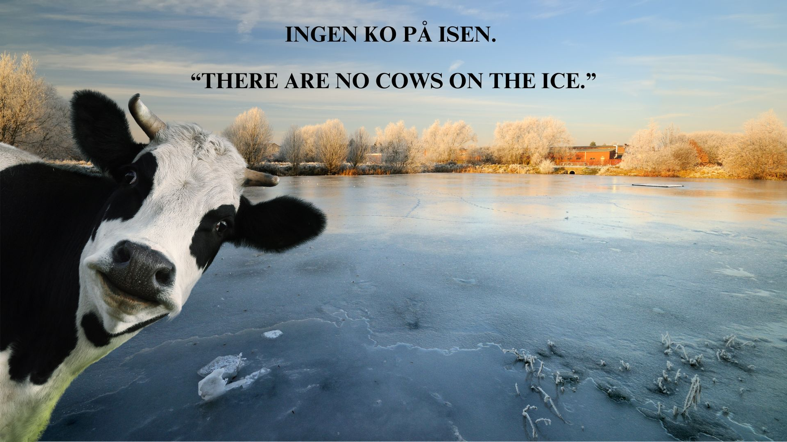
There’s a Swedish saying: ingen ko på isen. “There are no cows on the ice.” It means a situation is under control. I know this phrase not because I have Scandinavian ancestry but because it helped me facilitate seafood sustainability conversations among the World Wildlife Fund-Sweden, the Swedish Seafood Forum, Monterey Bay Aquarium’s Seafood Watch, the Great Lakes commercial fishing industry and Great Lakes natural resource managers.

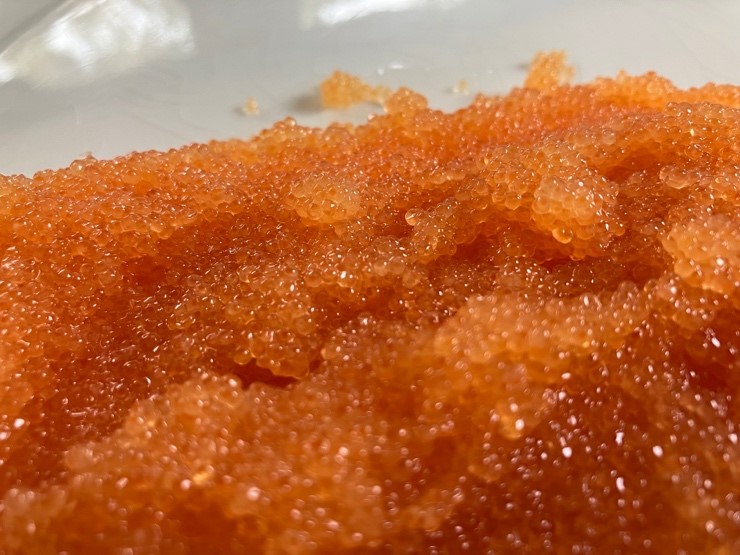
My work to clarify the sustainable management of Great Lakes cisco and lake whitefish fisheries began two years ago when a Wisconsin fish processor asked for help. The WWF-Sweden had red-rated these Great Lakes species, labeling the fisheries “unsustainable” and asking consumers to avoid purchasing products related to these fish, namely roe (fish eggs), which is popular in Sweden and valuable to the small-scale fishers of lakes Superior, Michigan and Huron. Swedes take seafood sustainability seriously. Roe sales plummeted as markets pulled product from their shelves.

Roe sales are important part of the annual income of fishers plying the waters of lakes Superior, Michigan and Huron. Image credit: Sharon Moen, Wisconsin Sea Grant

My efforts to facilitate the exchange of evidence-based information through presentations, fact sheets, emails, letters, conference calls and phone calls prompted the WWF-Sweden to reassess Wisconsin and Michigan’s lake whitefish fisheries and Wisconsin’s Lake Superior cisco fishery.

The reassessment was released in September. Lake Superior’s Wisconsin and Michigan fisheries leapt from red (do not) to green (good choice) and Lake Michigan’s lake whitefish fisheries improved to yellow (be careful). People in the industry estimate the mostly overseas sale of cisco and lake whitefish roe generates about $15 million in the U.S.

Working with communication challenges related to fisheries sustainability made me realize how distance, misunderstandings, the complexity of multi-jurisdictional fisheries and the scarcity of funds for accurate assessments can damage the livelihoods of small-scale fishers and the economic viability of coastal communities.

Read more about this project here.

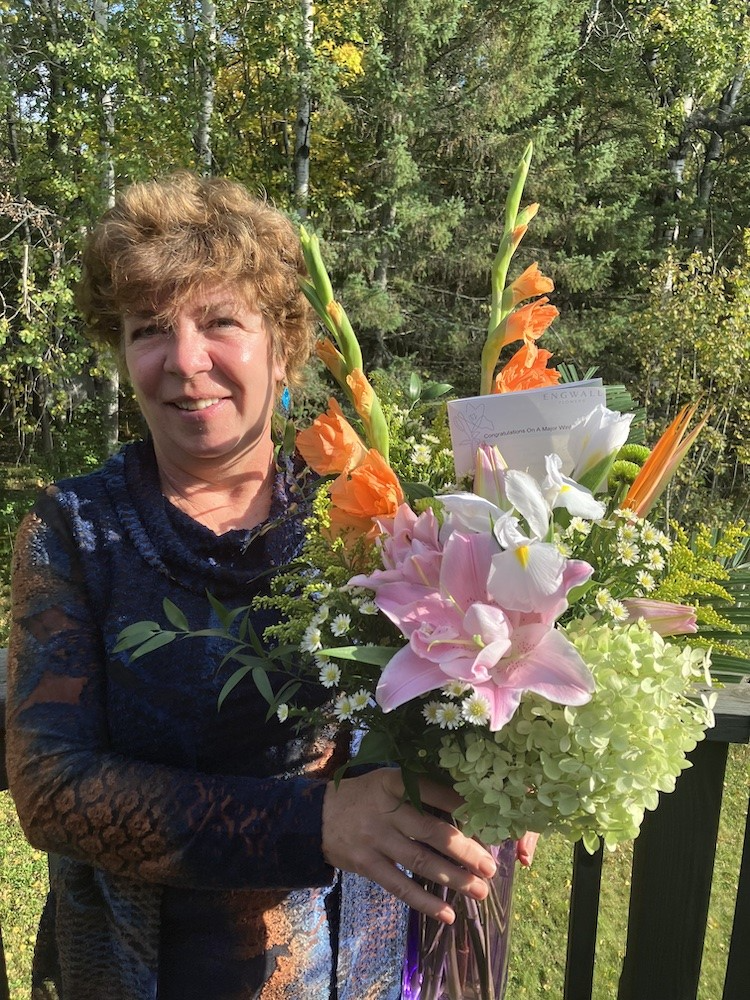
Industry representatives surprised Sharon with flowers. The card reads “Congratulations on a major win!” Image credit: Sharon Moen, Wisconsin Sea Grant


The post Ciscoes, Sweden and Sustainability first appeared on Wisconsin Sea Grant.

Original Article

Blog | Wisconsin Sea Grant

Blog | Wisconsin Sea Grant

https://www.seagrant.wisc.edu/blog/ciscoes-sweden-and-sustainability/

Sharon Moen

Below are all products released by the Upper Midwest Water Science Center from December 1, 2023 through February 29, 2024.

Original Article

Upper Midwest Water Science Center

Upper Midwest Water Science Center

https://www.usgs.gov/centers/upper-midwest-water-science-center/news/upper-midwest-water-science-center-products-4?utm_source=comms&utm_medium=rss&utm_campaign=news

jvelkoverh@usgs.gov

Parts of Detroit could be radically transformed by city solar plan, for better or worse

This article was republished here with permission from Planet Detroit.

By Brian Allnutt, Planet Detroit

Neighborhoods east of Palmer Park could soon be transformed by a city plan to power municipal buildings with six solar fields, and neighbors are divided over the prospect.

Read Now at Great Lakes Now.

Original Article

Great Lakes Now

Great Lakes Now

https://www.greatlakesnow.org/2024/01/parts-of-detroit-could-be-radically-transformed-by-city-solar-plan-for-better-or-worse/

Planet Detroit

Mandated East Palestine creek cleanup is entering final phase, environmental officials say

By Zaria Johnson, Ideastream Public Media

This story was originally published by Ideastream.

Norfolk Southern is making progress on the next phase of its mandated cleanup of East Palestine’s creeks, according to Ohio environmental officials, following the company’s train derailment nearly a year ago.

Read Now at Great Lakes Now.

Original Article

Great Lakes Now

Great Lakes Now

https://www.greatlakesnow.org/2024/01/mandated-east-palestine-creek-cleanup-is-entering-final-phase-environmental-officials-say/

Ideastream Public Media

Smart buoys help brace Great Lakes for environmental challenges

This article was republished here with permission from Great Lakes Echo.

By Daniel Schoenherr, Great Lakes Echo

Lake Erie is the first of the Great Lakes getting connected to the internet with a series of offshore “smart” buoys.

And it’s not just for sending texts on the water.

Read Now at Great Lakes Now.

Original Article

Great Lakes Now

Great Lakes Now

https://www.greatlakesnow.org/2024/01/smart-buoys-help-brace-great-lakes-for-environmental-challenges/

Great Lakes Echo

Consortium of Great Lakes universities and tech companies gets $15M to seek ways to clean wastewater

MADISON, Wis. (AP) — The National Science Foundation has given a consortium of Great Lakes-area universities and tech companies $15 million to develop ways to extract harmful substances from wastewater.

The foundation announced Monday that it has named the Great Lakes ReNEW group as one of 10 regional innovation engines across the country.

Read Now at Great Lakes Now.

Original Article

Great Lakes Now

Great Lakes Now

https://www.greatlakesnow.org/2024/01/ap-consortium-of-great-lakes-universities-and-tech-companies-gets-15m-to-seek-ways-to-clean-wastewater/

The Associated Press

You can’t stop the lake

In Douglas, Michigan, houses dot the coast of Lake Michigan, with wooden stairs — some newly built, others with broken steps — descending the steep hillside to give shoreline residents access to the narrow sandy beach. When winds grow fierce, waves crash against the boulders and large sandbags stacked along the base of these homes.  

Read Now at Great Lakes Now.

Original Article

Great Lakes Now

Great Lakes Now

https://www.greatlakesnow.org/2024/01/you-cant-stop-the-lake/

Astrid Code

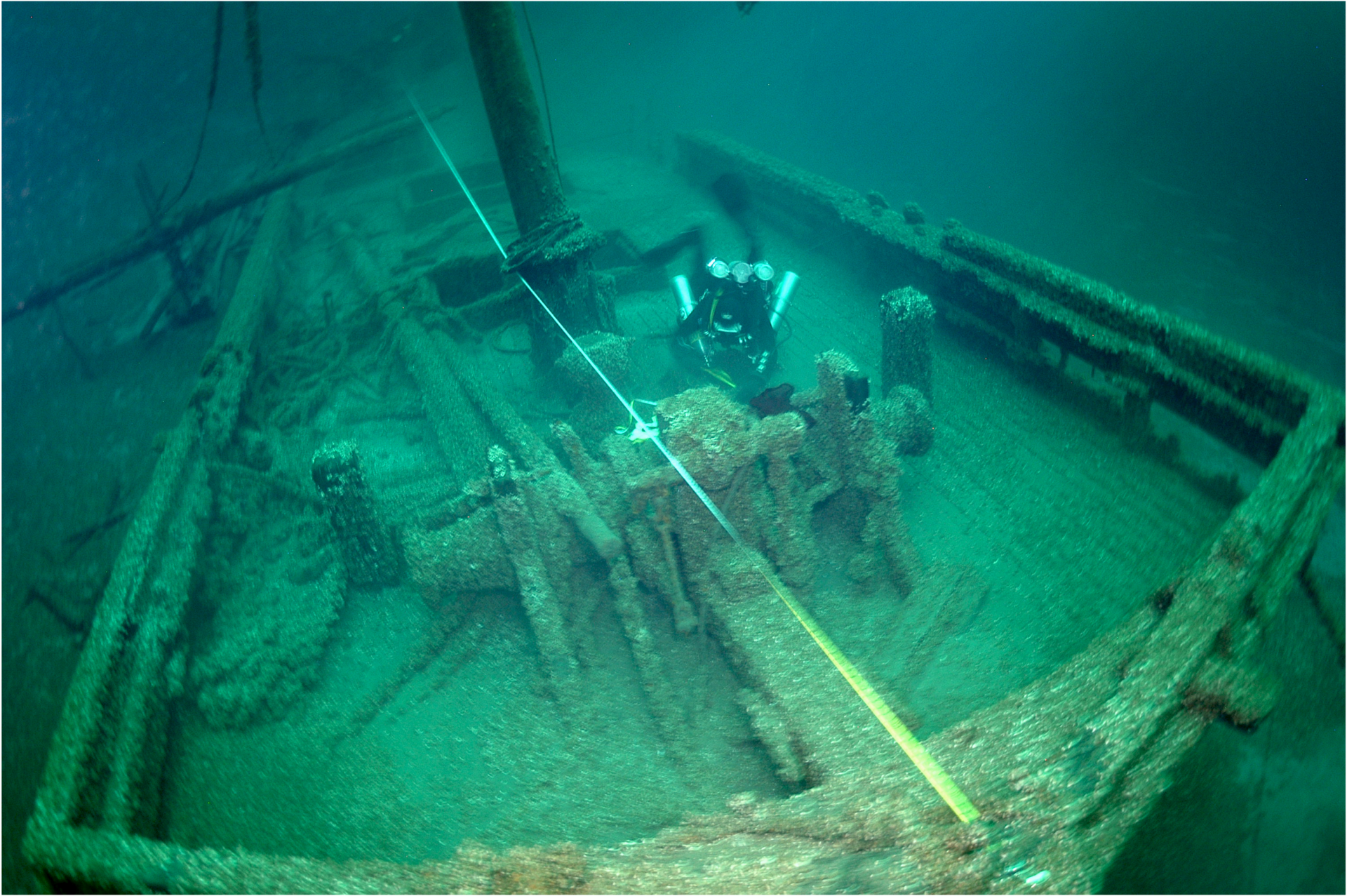
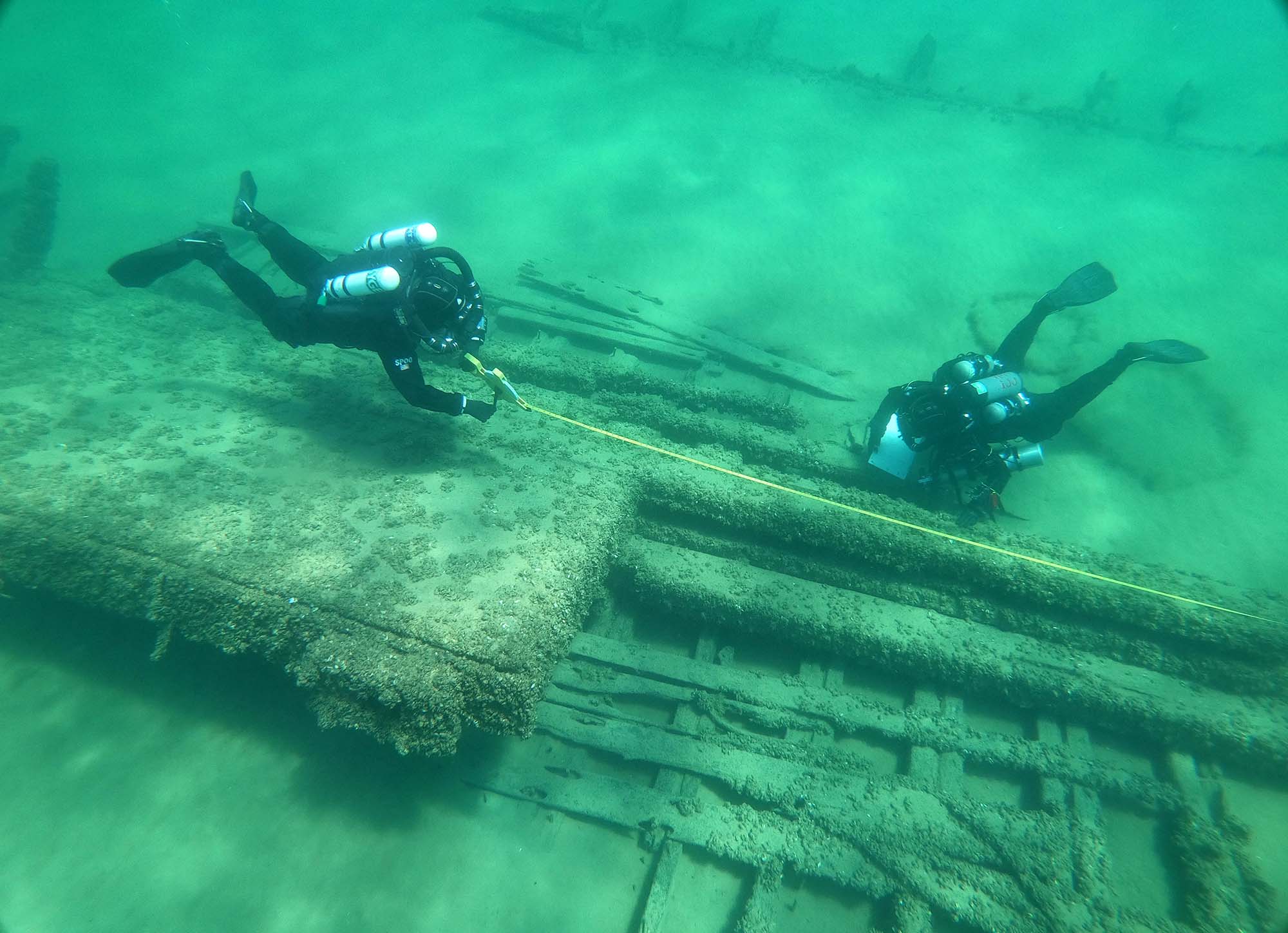
A diver measures the wreck of the Silver Lake, a double centerboard scow schooner.

A diver measures the wreck of the Silver Lake, a double centerboard scow schooner. Photo credit: Wisconsin Historical Society

When sailing ships were the primary mode of transportation across the Great Lakes in the mid-1800s, there floated an odd duck: the double centerboard schooner.

Equipped with not one but two centerboards, these ships could haul lumber more quickly across Lake Michigan. The extra centerboard, a fin-like appendage that could be lowered from the bottom of the boat, enabled a more direct and less zig-zaggy route when sailing into the wind. 

It was a rare feature on a Great Lakes ship and a short-lived one. Wisconsin Historical Society Maritime Archaeologist Tamara Thomsen said double centerboards faded from use by the 1870s, and many questions about their evolution and decline remain. But with grant funding from Sea Grant, Thomsen has been working to piece together the life history of these unusual vessels.

“We’re looking for these crumbs of evidence that are sort of scattered all over the place,” said Thomsen.

One of those places? The bottom of Lake Michigan.


Diving for answers

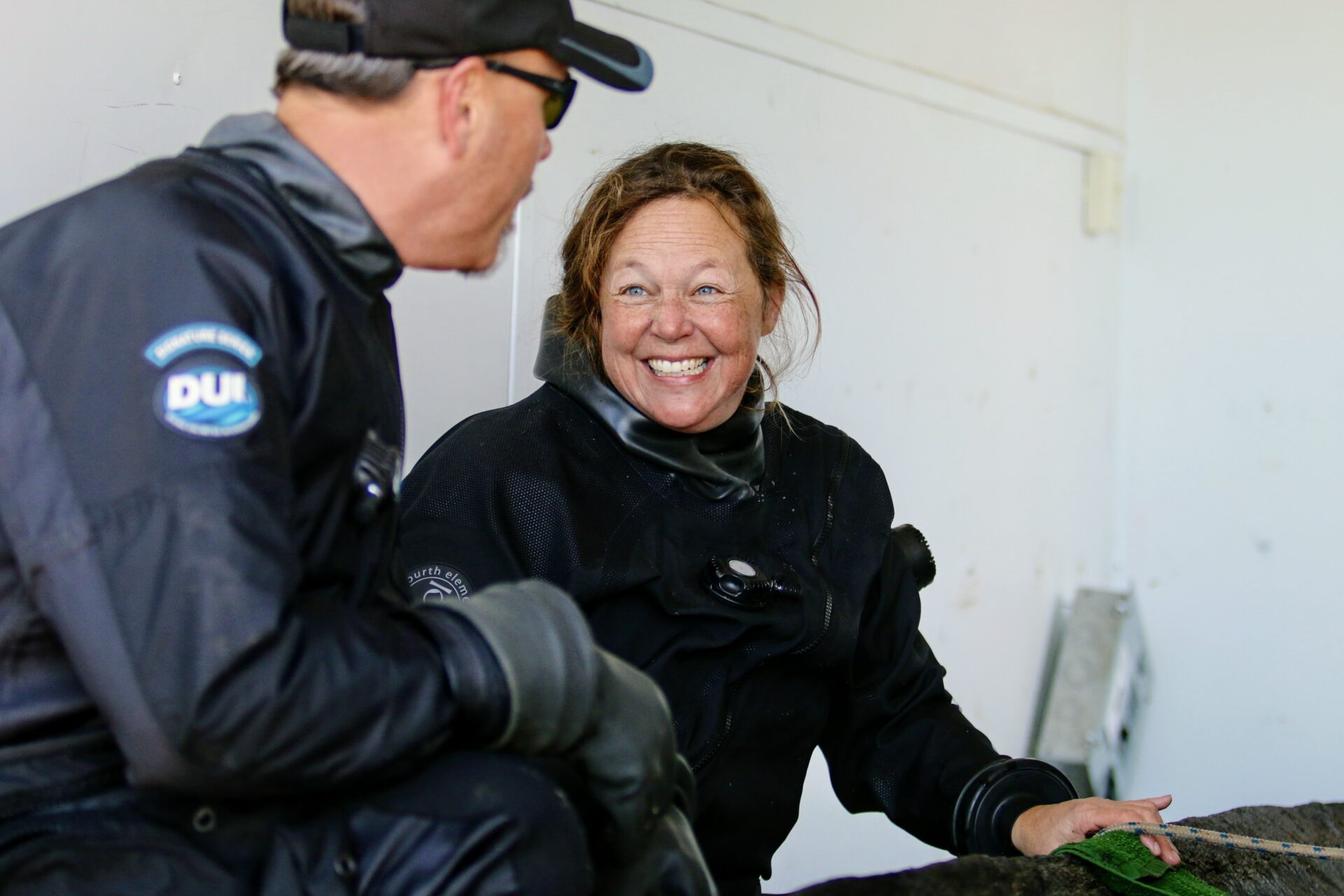
Maritime archaeologist Tamara Thomsen smiles in wet suit

Maritime archaeologist Tamara Thomsen is completing a Sea Grant-funded research project on double centerboard schooners. Submitted photo.

For the past two years, Thomsen and a team of volunteer scuba divers have been busy resurveying the six known double centerboard schooner shipwrecks in Lake Michigan: the Boaz, Emeline, Lumberman, Montgomery, Rouse Simmons and Silver Lake. The team collected data on construction features, such as the location of centerboards, and took photos and footage that will be used to create 3D models of the wrecks.

“It’s a combination of photography, videography, photogrammetry [calculating measurements from photos], and then also … engineering drawings, which we create on the bottom,” said Thomsen. She also emphasized that the data her team collected is, in fact, the only way to understand how these ships were built.

“Vessels that were constructed in the 1800s were very, very rarely constructed by blueprint, and those blueprints do not exist today,” said Thomsen. “So, our understanding of how they were constructed and how this evolution of construction happened is all through the archaeological record.”

While resurveying the wrecks, Thomsen also positively identified the wreck of the Emeline (previously known as the Anclam Pier wreck), and she successfully listed both the Emeline and Boaz wrecks on the National Register of Historic Places.

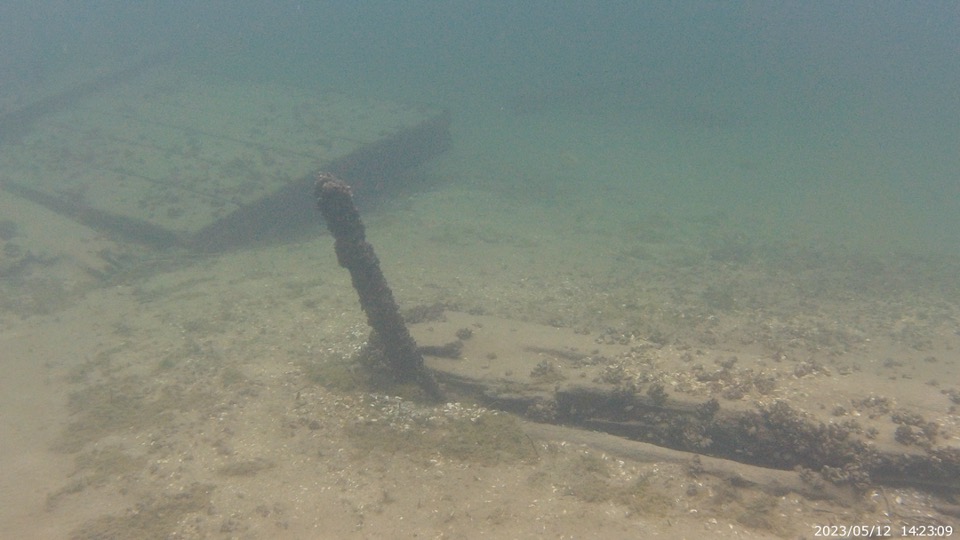
A piece of a shipwreck points upward from the lake sediment under which it is buried.

The Horseshoe Island wreck. Photo credit: Bob Jaeck

Identifying the Emeline wasn’t the only thrill of Thomsen’s field research. The lake held another surprise: an undiscovered wreck.

While attending one of Thomsen’s training sessions for divers interested in surveying wrecks, volunteer Bob Jaeck alerted Thomsen to unidentifiable debris he encountered off Horseshoe Island in the bay of Green Bay. Having finished training early, Thomsen took the group to check it out.

It didn’t take long to figure out what they were looking at. There, submerged in the sediment, was another double centerboard schooner—the seventh in the state. The discovery was a high point for Thomsen.

“That was pretty cool,” she said. 

So far, the identity of the vessel remains a “complete mystery.” Thomsen noted that there’s no recorded wreck at this location, but they’ve got a shortlist of ships lost in the general vicinity to guide their investigation.


A different kind of immersive research

When Thomsen isn’t diving into shipwrecks for her research, she’s diving into the archives. Much of her work on double centerboard schooners is, what she calls, “searching for breadcrumbs” in old ship papers.

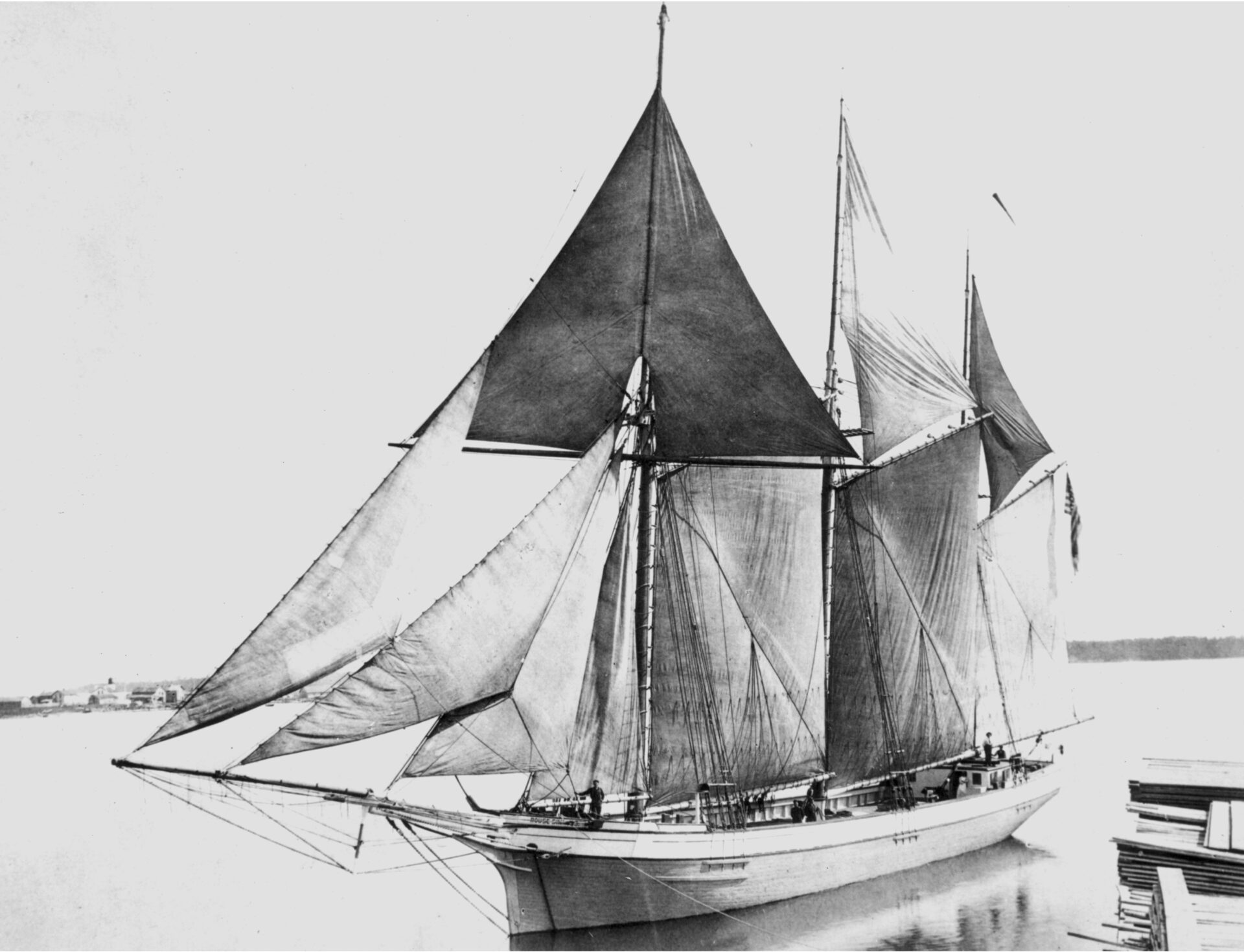
A black and white photo of a ship with sails: the Rouse Simmons

The Rouse Simmons, a double centerboard schooner that transported lumber across Lake Michigan. Photo credit: Wisconsin Historical Society

Finding documents about the construction and eventual decline of double centerboards on the Great Lakes proved challenging. One roadblock? Registration documents for ships didn’t record anything about centerboards.

“So, you’re looking for scraps of information that might appear in newspapers,” said Thomsen, or notes from shipyards that repaired damaged double centerboards.

Thomsen did find clues in the Rules of Construction, a government document that regulated the construction of ships. The first edition published in 1855 made no mention of double centerboards, but the 1876 version did, saying “no vessel of the first class should have more than one” centerboard.

“First class” refers to how vessels were insured: the lower the class, the less money you received if your ship was in an accident.

“So, your insurance value on your vessel decreased if you had a second centerboard,” said Thomsen.

Why the downgrade? The additional centerboard, it turns out, was risky. It structurally weakened the ship by putting a lot of pressure on the keel—or the backbone—of the vessel. An influential Wisconsin shipbuilder at the time, William Bates of Manitowoc, also argued it was unnecessary. Ship builders could make more structurally sound changes, like lengthening the first centerboard, to mimic the effect of having the second.

Thomsen believes Bates’s vocal dislike of double centerboard schooners—he wrote letters advocating insurance companies downgrade the rating—led to the ship falling out of favor on the Great Lakes. But no evidence has been definitive.

Histories, like shipwrecks, sometimes exist in fragments.


A shipshape team

As one of two maritime archaeologists with the Wisconsin Historical Society, Thomsen is busy traveling across the state from April to November surveying newly reported wrecks. It’s a big undertaking—one she accomplishes with a team of skilled volunteers.

Two archeologists in scuba gear measure a shipwreck underwater

Two divers take measurements of the Emeline shipwreck. Photo credit: Wisconsin Historical Society

Thomsen has long-standing partnerships with the Wisconsin Underwater Archaeology Association and Great Lakes Shipwreck Preservation Society to train 10 to 12 volunteer divers how to survey shipwrecks. Last spring, she held a workshop at a shallow-water wreck, where she taught participants how to draw vessels to scale and take scientific photos and video. Their skills are vital to the marine archaeology enterprise in the state.

It was a volunteer, after all, who tipped off Thomsen to the Horseshoe Island wreck.

“We would not be able to do the amount and definitely the quality … of work that we do without the assistance of these volunteers,” said Thomsen.

In addition to shipwreck survey trainings, the grant also supported outreach and education efforts. Thomsen was able to bring on maritime archaeologist Jordan Ciesielczyk-Gibson to adapt online educational activities about shipwrecks to in-person programming for kids. The “grab bag” for facilitators included a game with Great Lakes basin map, 3D-printed boats, puzzles and more.

Ciesielczyk-Gibson also co-created the first Wisconsin maritime educators workshop with Anne Moser, Wisconsin Sea Grant education coordinator, this past summer. The event gave educators the opportunity to network and share ideas for getting young people excited about Wisconsin’s rich maritime history.

A history, as evidenced by Thomsen’s research on double centerboard schooners, that continues to take shape.

Thomsen said she’s fortunate to do the work she does. Underwater with a shipwreck, she feels reverence.  

“These are places of great tragedy and loss, and sometimes people died on them,” said Thomsen. “To be tasked with protecting them is just such an honor.”

The post A deep dive into the double centerboard schooner shipwrecks of the Great Lakes first appeared on Wisconsin Sea Grant.

Original Article

News Releases | Wisconsin Sea Grant

News Releases | Wisconsin Sea Grant

https://www.seagrant.wisc.edu/news/a-deep-dive-into-the-double-centerboard-schooner-shipwrecks-of-the-great-lakes/

Jenna Mertz

ake Erie is the first of the Great Lakes getting connected to the internet with a series of offshore “smart” buoys.

And it’s not just for sending texts on the water.

The post Smart buoys help brace Great Lakes for environmental challenges first appeared on Great Lakes Echo.

Original Article

Great Lakes Echo

Great Lakes Echo

http://greatlakesecho.org/2024/01/30/smart-buoys-help-brace-great-lakes-for-environmental-challenges/

Daniel Schoenherr

Waves of Change: Meet Wisconsin Green Muslims founder and director Huda Alkaff

Waves of Change is a new online interview series highlighting the diverse faces and perspectives shaping the environmental justice movement throughout the Great Lakes region.

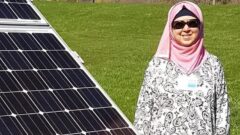
This month, we spoke with Huda Alkaff, an ecologist, environmental educator and the founder and director of Wisconsin Green Muslims. The group’s work touches a variety of climate issues, including renewable energy.

Read Now at Great Lakes Now.

Original Article

Great Lakes Now

Great Lakes Now

https://www.greatlakesnow.org/2024/01/waves-of-change-meet-wisconsin-green-muslims-founder-and-director-huda-alkaff/

GLN Editor

United States Army Corps of Engineers researchers looked across 24 sites and over 20 years of data to determine the frequency of certain scale seiches. Research on seiche is important because it helps residents and agencies to prepare for strong surge, which can create flash flooding-like hazards. Read the full story by WTVG-TV – Toledo, OH.

Original Article

Great Lakes Commission

Great Lakes Commission

https://www.glc.org/dailynews/20240129-seiche-research

James Polidori

A project that encompasses Ohio, Illinois and Wisconsin is getting a $15 million National Science Foundation regional innovation engine award for a project to develop smart water recovery systems that will save water and make Great Lakes manufacturing more sustainable. Read the full story by The Plain Dealer.

Original Article

Great Lakes Commission

Great Lakes Commission

https://www.glc.org/dailynews/20240129-sustainable-manufacturing

James Polidori

Massena, New York’s tourism director says millions of dollars have flowed into towns and villages along the St. Lawrence River due to the success of bass fishing tournaments. State officials indicated that the tournaments have generated $140 million of revenue for communities along the St. Lawrence River. Read the full story by North Country Now.

Original Article

Great Lakes Commission

Great Lakes Commission

https://www.glc.org/dailynews/20240129-fishing-revenue

James Polidori

Under the recent period of colder air advecting from the North Pole, shorelines along every Great Lake experienced notable ice accumulation, though ice cover remains historically low. A number of reasons exist for the shortage of sea ice this year within the lakes, most notably the mild temperatures brought on by a strong and persistent El Niño pattern. Read the full story by WBND-TV – South Bend, IN.

Original Article

Great Lakes Commission

Great Lakes Commission

https://www.glc.org/dailynews/20240129-ice-conditions

James Polidori

Residents in Lakeshore, Ontario, have experienced increased flooding as warmer temperatures caused ice jams on Puce River and runoff from rain caused water levels to rise. The regional Conservation Authority noted that drains across the county are observed to be slow draining and are nearly or entirely full. Read the full story by CBC News.

Original Article

Great Lakes Commission

Great Lakes Commission

https://www.glc.org/dailynews/20240129-ice-jams

James Polidori

The Narwhal’s Ontario bureau became the fifth member of the Great Lakes News Collaborative, a group of news outlets working together to enhance coverage of the Great Lakes basin. Funded by the Michigan-based Charles Stewart Mott Foundation, the collaborative was established in 2020 and has collectively already achieved a 47-percent increase in the number of Great Lakes and water-related stories published by the outlets. Read the full story by The Narwhal.

Original Article

Great Lakes Commission

Great Lakes Commission

https://www.glc.org/dailynews/20240129-news-collaborative

James Polidori

More than 100 environmentalists turned up for Save the River’s 35th annual Winter Environmental Conference in Clayton, New York to discuss topics like contaminants, slaughterhouses, and eels. Read the full story by WWNY-TV – Carthage, NY.

Original Article

Great Lakes Commission

Great Lakes Commission

https://www.glc.org/dailynews/20240129-environmental-conference

James Polidori

The Wisconsin Department of Natural Resources and University of Wisconsin-Extension are asking anglers to help prevent the spread of aquatic invasive species in Wisconsin’s lakes and rivers while fishing this winter. Aquatic invasive species such as curly-leaf pondweed and Eurasian watermilfoil remain hardy under the ice in the winter, giving them an advantage over native aquatic plants. Read the full story by the Lake Geneva Regional News.

Original Article

Great Lakes Commission

Great Lakes Commission

https://www.glc.org/dailynews/20240129-invasive-species-prevention

James Polidori

This year’s Lake Superior Ice Festival in Superior, Wisconsin, had more ice than snow, though with temperatures right around freezing, it was cold enough to keep the ice sculptures from melting. Although most activities were landlocked this year, select portions of the ice were open for fishing and even skating. Read the full story by KBJR-TV – Superior, WI.

Original Article

Great Lakes Commission

Great Lakes Commission

https://www.glc.org/dailynews/20240129-ice-festival

James Polidori