Last week, fourteen Milwaukee high school students went out on a UW-Milwaukee (UWM) research vessel as part of UWM’s Watershed Expedition Program. The weeklong program provides students with knowledge about water’s impact on the economy, recreational activities, and public health. Read the full story by the Milwaukee Journal Sentinel.

Original Article

Great Lakes Commission

Great Lakes Commission

https://www.glc.org/dailynews/20240717-watershed-expedition

Taaja Tucker-Silva

The MI Healthy Climate Corps sends civil servants to help local communities prepare for the devastating effects of climate change. The first class of corps members are tackling climate problems related to food waste, public transportation, and habitat loss. Read the full story by Bridge Michigan.

Original Article

Great Lakes Commission

Great Lakes Commission

https://www.glc.org/dailynews/20240717-climate-corps

Taaja Tucker-Silva

Members of the U.S. Coast Guard are cleaning pollution from the St. Marys River after receiving a report of an “oily sheen” at the river. The source of the pollution is currently unknown and is under investigation by the Coast Guard. Read the full story by WPBN/WGTU-TV – Traverse City, MI.

Original Article

Great Lakes Commission

Great Lakes Commission

https://www.glc.org/dailynews/20240717-oily-sheen

Taaja Tucker-Silva

There is no verifiable account of sharks ever reaching the Great Lakes, and multiple hoaxes have been exposed and urban legends debunked over the years. A Great Lakes shark is virtually impossible—but not quite. Read the full story by The Detroit Free Press.

Original Article

Great Lakes Commission

Great Lakes Commission

https://www.glc.org/dailynews/20240717-great-lakes-sharks

Taaja Tucker-Silva

Lake Erie Charter Life

Captains were few and far between in 1979, when Tibbels Marina in Marblehead, Ohio got into the fishing charter business on Lake Erie. A few years earlier, in 1975, the state had 46 captains on Lake Erie. A few years later, when the Tibbels family launched its first boat, there were about 156.

Read Now at Great Lakes Now.

Original Article

Great Lakes Now

Great Lakes Now

https://www.greatlakesnow.org/2024/07/lake-erie-charter-life/

James Proffitt, Great Lakes Now

Originally founded to preserve the famous Northwest Indiana sand dunes around Lake Michigan, nonprofit conservation organization Save the Dunes has evolved over 72 years of environmental stewardship to address a myriad of additional challenges facing the region, including threats to biodiversity and native habitats. 

In 2019, Save the Dunes joined forces with the Indiana Dunes National Park and other regional partners to increase habitat connectivity and migration pathways for pollinators—some of the most important creatures in the global ecosystem.

“One out of every three bites [of food] you take is made possible by a pollinator,” explains Katie Hobgood, program director at Save the Dunes. “Humans as a species depend on pollinators, and they are in decline.”

Worldwide, approximately 35% of produce and more than 75% of flowering plants rely on pollinators like bees, butterflies, hummingbirds, beetles, bats, and wasps to reproduce. Indiana alone is home to more than 430 species of bees, 2,000 species of moths, and 144 species of butterflies, among many others. These essential creatures not only pollinate food sources for humans, but also help produce the fruit and seeds that make up the diet of an estimated 25% of birds and many mammals.

“The [pollinators] of the world really are the linchpin in our global ecosystem, so seeing them decline is very scary,” says Hobgood. “They're what keep the plants going because they're pollinating them, and then they're also keeping the food chain above them going as well. It’s a very key role they play.”

Today, more than 40% of invertebrate pollinators like bees, butterflies and moths and 16.5% of vertebrate pollinators like birds and bats are considered highly threatened. Factors like climate change, widespread habitat loss and fragmentation, and the increased use of herbicides and pesticides have contributed to population decline for all types of pollinators.

To help address these concerns, Save the Dunes works with the national park to distribute grant dollars from the Great Lakes Restoration Initiative to Northwest Indiana partners like Shirley Heinze Land Trust and the Northern Indiana Public Service Company (NIPSCO). These funds have made it possible for Save the Dunes and its partners to improve up to 367 acres per year and protect pollinators by planting native plant prairies and removing invasive species.

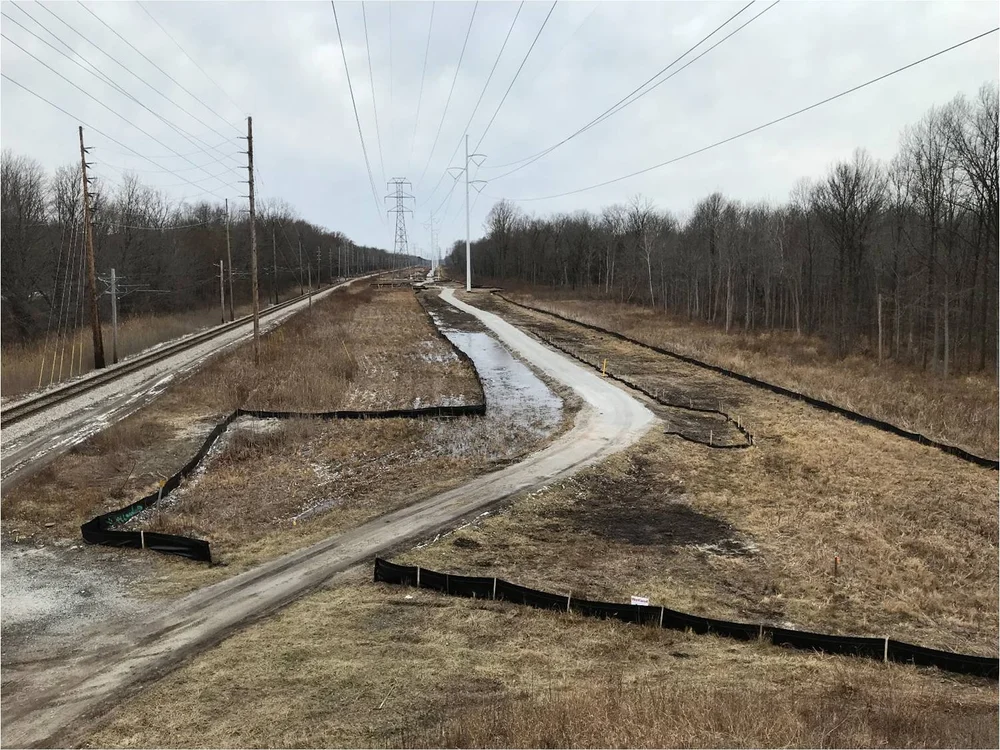
The “before” of an area in Northwest Indiana improved through GLRI funding. Credit: Steve Barker, NIPSCO

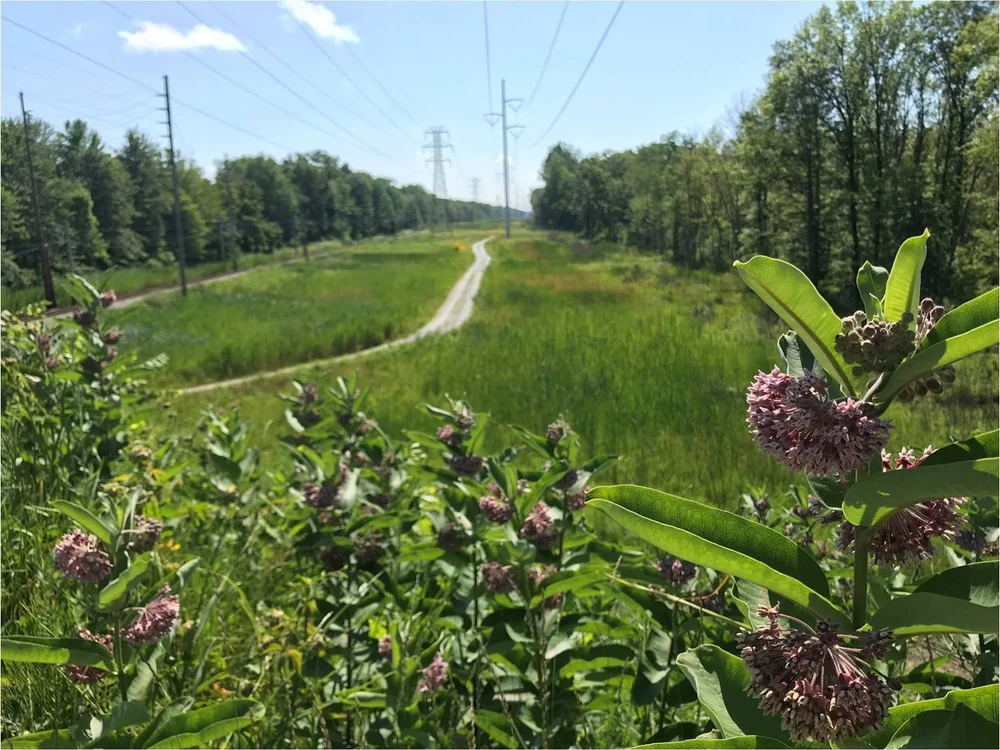
The “after” of an area in Northwest Indiana improved through GLRI funding. Credit: Steve Barker, NIPSCO

“The purpose of this project is to connect high quality natural areas by improving marginal lands so they can serve as corridors for pollinators,” explains Hobgood. “Because of how much development there is in our region, it makes it even more important that we take any opportunity we have to restore habitats and put in high quality ecosystems.”

So far, the project has improved habitats on national park property, Shirley Heinze nature preserves, and NIPSCO-owned utility rights-of-way. These rights-of-way “run through everything,” says Hobgood, and present unique opportunities to establish habitat connectivity along roadsides, beneath powerlines, and in other traditionally overlooked places.

Restoring habitat connectivity allows migrating pollinators like butterflies, hummingbirds, and bats to overwinter in other locations, a process that protects them from extreme temperatures and provides safe passage to necessary food sources and breeding grounds.

“[NIPSCO] owns or manages miles and miles of rights-of-way,” Hobgood says. “[This project] is literally connecting the entire region.”

As an additional environmental boon, investing in native plants requires less human intervention than traditional lawn grasses, helping conserve resources that would otherwise be used for maintenance like mowing, fertilizer, and watering.

“That's one of the perks of planting natives. They've evolved to live here without your help,” Hobgood explains. “In other areas, there’s all this mowed grass everywhere. It serves no ecological purpose.”

Native plants not only feed and house wildlife, but also play other vital roles for the environment, like cleaning and storing soil and water via their root systems and filtering the air by absorbing carbon dioxide.

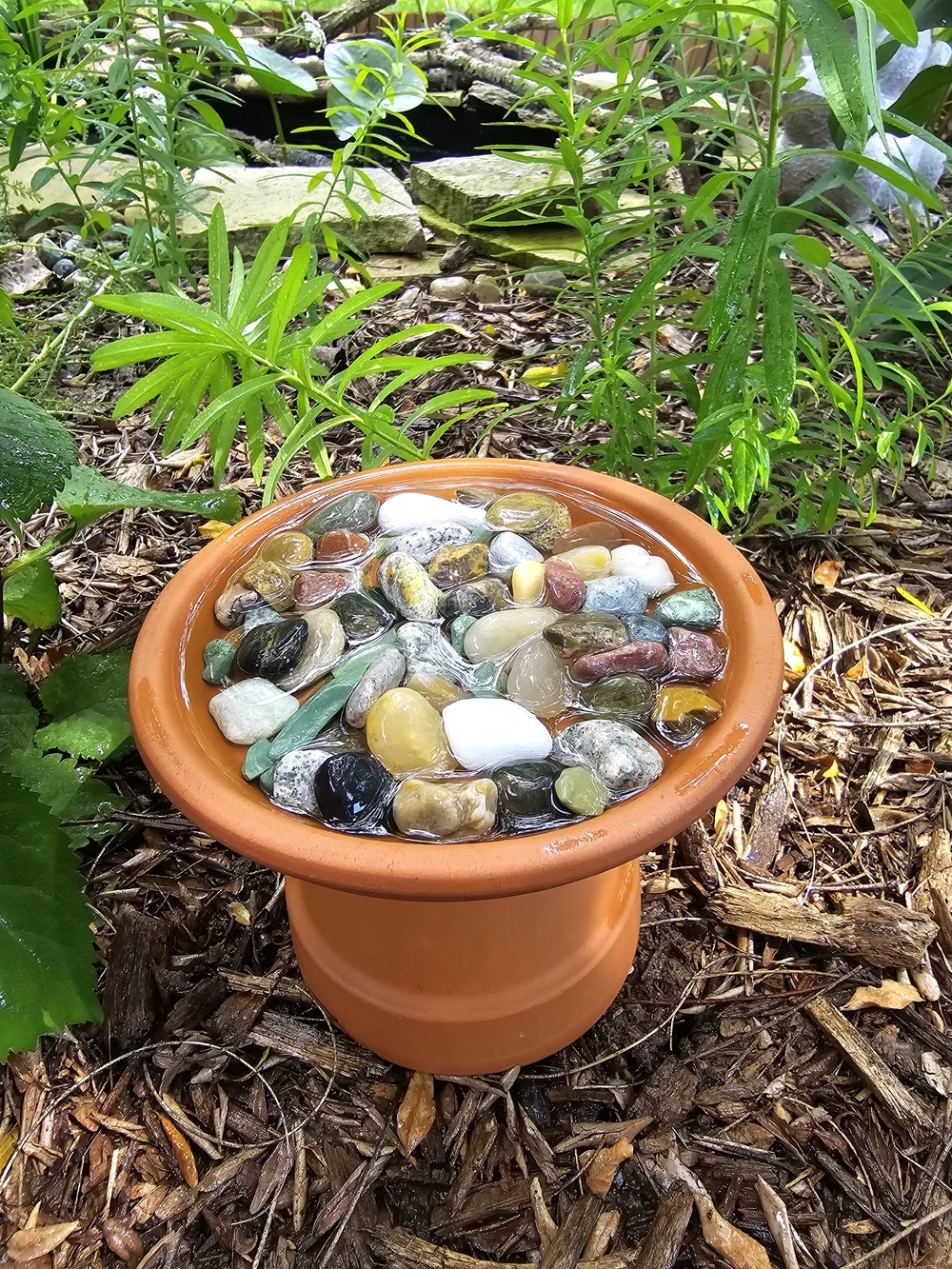
A pollinator watering station. Credit: Save the Dunes

“Native plants are great sponges for storm runoff and improve soil health, which in turn improves water,” says Hobgood. “It's all connected. Habitat restoration has a really positive impact on our rivers and streams—and eventually Lake Michigan.”

Each year, Save the Dunes supplements this work by hosting events such as pollinator presentations and garden clean ups that educate the community on the importance of these habitats and the creatures that rely on them. In 2024, Hobgood and her team are installing a pollinator garden at their headquarters in Michigan City, Indiana, and have invited the community to participate in activities like killing grass, installing new native plants, and creating pollinator watering stations. The finished garden will include informational plaques to give visitors insight into the native plants and pollinators on site.

Hobgood says she hopes projects like these encourage people to think about small changes they can make to protect pollinators on their own properties.

“We’re trying to lead by example and show people how it works so that it’s a little bit easier for them to replicate at home,” she says. “Your backyard is a waystation. … It's on all of us to do our part.

In addition to planting native species, Hobgood recommends eliminating pesticides, providing water sources, and creating homes for insects in the form of fallen leaves and wood piles.

The cover of Save the Dunes’ free pollinator guide. Credit: Save the Dunes

To demystify that process, Save the Dunes has published a free pollinator guide, which includes photos and detailed information about a variety of native pollinators—such as sweat bees, hummingbird moths, and monarch butterflies—and native plants like wild geranium, witch hazel, and great blue lobelia. The visual guide also features proposed garden layouts and provides readers with a list of ten of the region’s most invasive plants, making them easier to avoid.

“We create a ton of free resources to try and get information in the hands of the people who need it,” Hobgood says. “We're trying to connect with communities to educate them when that's appropriate and help them become stewards of the land themselves.”

Save the Dunes, which currently operates in Indiana’s Lake, Porter, and LaPorte counties, also addresses water and industrial pollution in and around Lake Michigan. Hobgood says the organization’s projects in conservation, advocacy, and community engagement aim to “highlight for the general public the incredible [natural landscapes] that we have here in Northwest Indiana.”

Visit SaveTheDunes.org

Original Article

Latest Updates - Healthy Lakes

Latest Updates - Healthy Lakes

https://www.healthylakes.org/latest-updates/protecting-pollinators-native-plant-prairies-preserve-vital-indiana-ecosystems

Lindsey Bacigal

By Eric Freedman A Detroit-built sailing ship that sank in Lake Michigan during an 1864 storm has been added to the National Register of Historic Places. The three-masted Mojave, only 1 year old at the time, went down in heavy weather while northbound on the route from Chicago to Buffalo with a load of grain. […]

The post Ship doomed on Lake Michigan now moored on National Register of Historic Places first appeared on Great Lakes Echo.

Original Article

Great Lakes Echo

Great Lakes Echo

http://greatlakesecho.org/2024/07/16/ship-doomed-on-lake-michigan-now-moored-on-national-register-of-historic-places/

Eric Freedman

Great Lakes Learning: All about aquaculture

This lesson will explore the phenomenon of whitefish population decline in the Jordan River by Green Bay, Wisconsin. Whitefish are an important source of food and commerce in the Great Lakes, but for over a century the population has been in flux due to a number of factors ranging from human impact to invasive species and climate change.

Read Now at Great Lakes Now.

Original Article

Great Lakes Now

Great Lakes Now

https://www.greatlakesnow.org/2024/07/great-lakes-learning-all-about-aquaculture/

Gary Abud Jr.

Foraged Flavors of the Sun: High Summer Wild Herbs and Plants

This story is a part of “A Year in the Wild Kitchen of the Great Lakes,” a series in partnership with expert forager Lisa M. Rose, with the mission of nurturing a deeper connection with the natural world through foraging. To get started with your foraging journey, begin here with our “Framework to Sustainable and Safe Practices.”

High summer brings an explosion of wild herbs and edible flowers like elderflower, Queen Anne’s lace, monarda, and chicory.

Read Now at Great Lakes Now.

Original Article

Great Lakes Now

Great Lakes Now

https://www.greatlakesnow.org/2024/07/foraged-flavors-of-the-sun-high-summer-wild-herbs-and-plants/

Lisa M. Rose

A new study has unveiled surprising findings about mercury pollution: where it comes from and how it moves through the environment varies significantly depending on the ecosystem. 

Original Article

Midcontinent Region

Midcontinent Region

https://www.usgs.gov/news/national-news-release/dragonflies-reveal-surprising-insights-mercury-pollution?utm_source=comms&utm_medium=rss&utm_campaign=news

jlavista@usgs.gov

A family with two young sons poses in a field of tall grasses.

Jon Lamers hopes his sons one day want to be the 5th generation of farmers on his land.

The closer a farm is to a river, the greater an impact it has on that surface water. The larger a farm is, the greater an impact it has. Local farmer Jon Lamers has a large farm close to a river, and he is keenly aware that the large impact of his farm means he has a great responsibility to manage things well. But for Jon, the extra work is all worth it.

“I have the ability to learn all these things,” Jon said. “The challenge provides bleeding-edge learning. It makes it fun!” He got that attitude from his parents, who taught him how to care for the farm.

Jon is a 4th generation farmer in Wisconsin, so he has been part of conservation practices for a long time. So long, in fact, that he doesn’t remember exactly how he got started. He can readily point out how those practices have changed over time.

“Growing up, conservation looked more like being frugal. Not being wasteful with food or resources,” said Jon.

For his generation, he’s seen more of a focus on implementing practices in the field. He proudly participates in no-till and cover crop practices. “We’re using the best ways that we know today to do the best job we can,” Jon said. “In the future, it may be proven that we weren’t doing enough, but we’re doing the best we can with the knowledge we have now.”

Jon’s motivated to do the best he can now for the future, because his sons could be the 5th generation of farmers on this land. He wants to prepare them with skills they will need beyond agricultural knowledge. “I hope we provide them with knowledge and opportunity, and expose them to as many different people and things as we can,” he said. “I want to give them the emotional intelligence to foster relationships so they can do what they want in life.”

Jon’s best guess is that whatever comes next, it’s going to require communication and cooperation. He already works with neighboring farms to co-own equipment, and stresses that decisions need to be for the benefit of everyone, not just for him or his dairy.

This spring when there was a barn fire in the community, Jon and his team showed up with equipment to help out. And that’s not unusual.

“The biggest risk,” Jon said, “is not working together as a team. It’s not us versus the world.”

That’s part of why Jon likes working with Fox-Wolf Watershed Alliance. “Fox-Wolf brings a collaborative effort that brings together rural and urban concerns. They bring all people to the table with a goal of having a clean water supply, and they create a non-threatening environment for everyone,“ said Jon.

Jon readily invites everyone to be part of the collaboration of improving water quality. “It all helps the greater good to have good water,” he said. “The best part of Fox-Wolf is understanding that all of us have to exist. They’re not trying to get rid of problems by getting rid of people. All sides have a part to play, and we can all make a huge difference.”

Watershed Moments is a publication of Fox-Wolf Watershed Alliance, sharing the stories of how your donations have impacted lives in our community. Read our latest project updates, make a secure online donation, or become a member at www.fwwa.org

The post Watershed Moments: Collaborative Effort appeared first on Fox-Wolf Watershed Alliance.

Original Article

Fox-Wolf Watershed Alliance

Fox-Wolf Watershed Alliance

https://fwwa.org/2024/07/16/watershed-moments-collaborative-effort/?utm_source=rss&utm_medium=rss&utm_campaign=watershed-moments-collaborative-effort

Sharon Cook

To tackle climate change, Michigan enlists a ‘corps’ of volunteers

By Gabrielle Nelson, Bridge Michigan

The Great Lakes News Collaborative includes Bridge Michigan; Circle of Blue; Great Lakes Now at Detroit Public Television; and Michigan Public, Michigan’s NPR News Leader; who work together to bring audiences news and information about the impact of climate change, pollution, and aging infrastructure on the Great Lakes and drinking water.

Read Now at Great Lakes Now.

Original Article

Great Lakes Now

Great Lakes Now

https://www.greatlakesnow.org/2024/07/to-tackle-climate-change-michigan-enlists-a-corps-of-volunteers/

Bridge Michigan

I Speak for the Fish: The Quest for a Largemouth

I Speak for the Fish is a monthly column written by Great Lakes Now Contributor Kathy Johnson, coming out the third Monday of each month. Publishing the author’s views and assertions does not represent endorsement by Great Lakes Now or Detroit Public Television. 

Read Now at Great Lakes Now.

Original Article

Great Lakes Now

Great Lakes Now

https://www.greatlakesnow.org/2024/07/i-speak-for-the-fish-the-quest-for-a-largemouth/

Kathy Johnson, Great Lakes Now

The National Oceanic and Atmospheric Administration (NOAA) is seeking people to give advice about a proposed national marine sanctuary in Lake Erie adjacent to Erie, Pennsylvania. Adding a sanctuary would enable NOAA to protect the region’s maritime heritage resources, including a nationally significant collection of shipwrecks, according to the agency. Read the full story by Erie Times-News.

Original Article

Great Lakes Commission

Great Lakes Commission

https://www.glc.org/dailynews/20240715-erie-marine-sanctuary

Nichole Angell

The Wisconsin Department of Administration’s Wisconsin Coastal Management Program is donating nearly $1.3 million in grants to 31 communities to support quality of life, foster economic development, and protect and improve Great Lakes resources. Read the full story by WLUK-TV – Green Bay, WI.

Original Article

Great Lakes Commission

Great Lakes Commission

https://www.glc.org/dailynews/20240715-wisconsin-coastal-grants

Nichole Angell

As a result of warming waters, increasingly variable seasonal changes and lakeshore development, walleye numbers in some lakes are dwindling. Losing the species would mean losing a food source for Great Lakes community members, a sovereign right to fish, and a deep connection to tradition and nature. Read the full story by Great Lakes Now.

Original Article

Great Lakes Commission

Great Lakes Commission

https://www.glc.org/dailynews/20240715-spearfish-future

Nichole Angell

New York Sea Grant and the Center for Great Lakes Literacy have announced 20 teachers and educators representing 17 school districts and organizations will participate in the first of five professional development workshops focused on New York’s unique Great Lakes’ ecosystem, species and climate. Read the full story by Niagara Frontier Publications.

Original Article

Great Lakes Commission

Great Lakes Commission

https://www.glc.org/dailynews/20240715-professional-development-workshops

Nichole Angell

The Great Lakes 360 living museum is now open in Niagara Falls, New York. It is located inside the former Gorge Discovery Center at Niagara Falls State Park. There are 16 interactive exhibits featuring turtles, amphibians, insects and many species of fish, representing the diverse ecosystems of the Great Lakes. Read the full story by Spectrum News 1 Buffalo.

Original Article

Great Lakes Commission

Great Lakes Commission

https://www.glc.org/dailynews/20240715-great-lakes-exhibit

Nichole Angell

According to legend, the whitefish were once “so bountiful in the St Mary’s River Rapids that you could walk on their backs.” Now, the fish are struggling to survive. But this month, over a million more walleye and whitefish swim through northern Michigan waters thanks to a release by the Sault Ste. Marie Tribe of Chippewa Indians. Read the full story by Bridge Michigan.

Original Article

Great Lakes Commission

Great Lakes Commission

https://www.glc.org/dailynews/20240715-tribal-fish-stocking

Nichole Angell

First-of-its-kind documentary All Too Clear: Beneath the Surface of the Great Lakes will mark its world premiere at the Stockey Centre in Parry Sound, Ontario. The immersive film uses cutting-edge underwater drones to explore how quadrillions of tiny invasive mussels, known as quaggas, are re-engineering the ecosystem of the Great Lakes at a scale not seen since the glaciers.  Read the full story by Muskoka411.

Original Article

Great Lakes Commission

Great Lakes Commission

https://www.glc.org/dailynews/20240715-great-lakes-documentary

Nichole Angell

The Great Lakes region’s potential future as a water technology leader has gotten a big boost this year with new funding and projects leading to new investment opportunities, businesses, technologies, and thousands of good-paying jobs in the process. Read the full story by the Brookings Institution.

Original Article

Great Lakes Commission

Great Lakes Commission

https://www.glc.org/dailynews/20240715-blue-belt

Nichole Angell

After many years of planning, a state-of-the-art scientific facility has broken ground in Traverse City, Michigan. FishPass is an experimental fish passage system that will replace the aging Union Street Dam with a barrier that has the ability to sort and selectively pass native fish while blocking harmful, invasive species like sea lamprey. Read the full story by Northern Express.

Original Article

Great Lakes Commission

Great Lakes Commission

https://www.glc.org/dailynews/20240715-fishpass-history

Nichole Angell

What happens when emergency managers, tree planters and community scientists walk into a room? A discussion about rainfall, naturally.

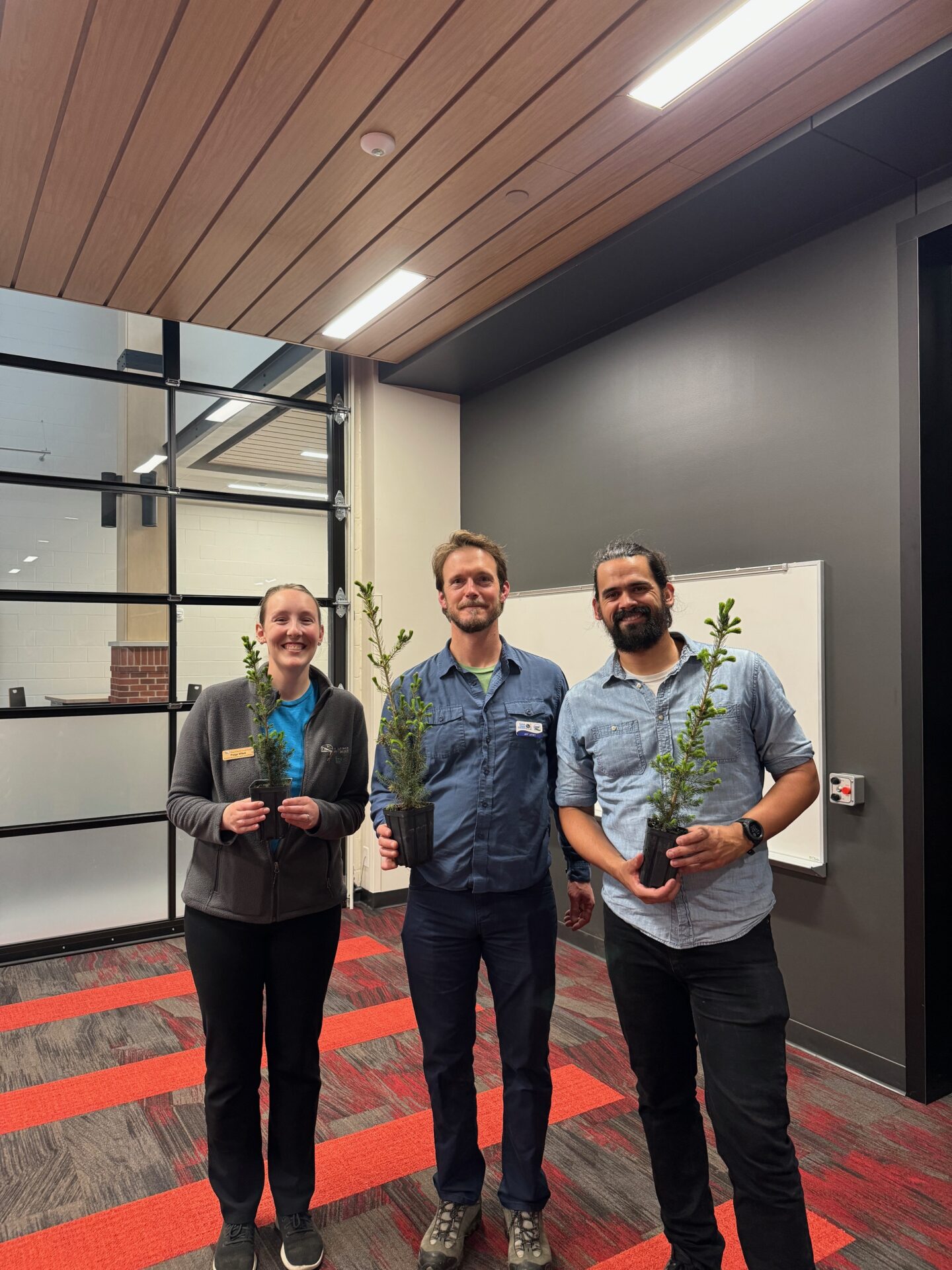
Flood resilience fellow Jackson Parr stands alongside Paige Witek of Door County Land Trust and Jeff Lutsey of the Door County Big Plant, all of whom hold tree saplings.

The hosts of the “Weather, Climate and Community” event: Paige Witek of Door County Land Trust, Jeff Lutsey and Jackson Parr.

In mid-May, Wisconsin Sea Grant Flood Resilience Fellow Jackson Parr partnered with the Door County Land Trust and the Climate Change Coalition of Door County to lead a community event about local rainfall trends and to recruit volunteers to measure precipitation in their backyards. Parr, a former Keillor Fellow, organized the talk as part of a National Sea Grant Office-funded project on disaster preparedness in northeastern Wisconsin. He said the event brought together folks with diverse environmental interests in conservation, community science and climate change.   

“In the other counties I’ve worked through with this grant, the audiences have tended to be emergency management, first responders, municipal staff — the professionals that are more frontline folks in disaster mitigation, preparedness and response,” said Parr.

“[This] was somewhat of a different audience that still had an interest in these topics — climate change, rainfall, citizen science — but otherwise probably wouldn’t have thought too much about, you know, NOAA Atlas 14 precipitation estimates.”

The “Weather, Climate and Community” event was born of a mutual desire for precipitation data and community engagement. Parr connected with Jeff Lutsey, Director of the Door County Climate Change Coalition, who organizes the Door County Big Plant, an event that gets thousands of trees into the ground each year. Lutsey wanted to know where and how much rain falls across the county to better allocate water to thirsty new trees. Parr wanted more spatial information about extreme rainfall to help municipalities plan for floods. 

The problem? Precipitation data across northeastern Wisconsin is sparse.

So, Parr and Lutsey partnered with a local conservation nonprofit, the Door County Land Trust, to recruit volunteers for the Community Collaborative Rain, Hail and Snow Network (CoCoRaHS), a national network of community scientists who measure and record precipitation. More volunteers mean more data points on the map, which means a more complete picture of rainfall across the county.

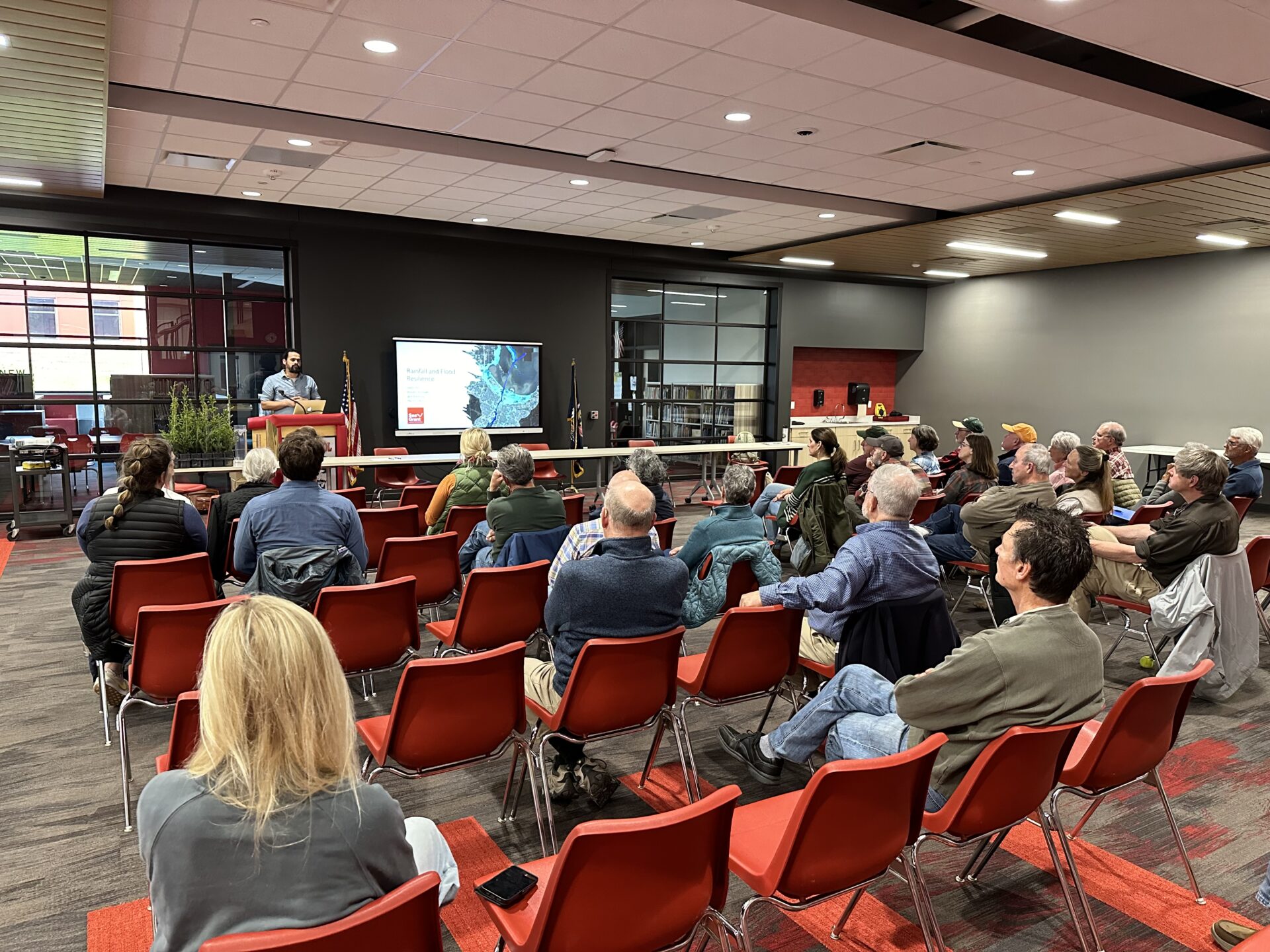
Jackson Parr delivers a talk at a podium in front of a room of people sitting in red chairs.

Jackson Parr presents findings from a rainfall and flood vulnerability analysis for Door County and Sturgeon Bay at the event. Photo: Jackson Parr

The event was successful in filling those gaps. Parr said 13 people signed up for rain gauges, more than doubling the current number of weather observers in Door County. Those are important numbers for a region experiencing more intense rainfall.

“We’re seeing the number of 2-inch rain events increase, particularly in the last decade,” said Parr.

Being prepared to handle increased rainfall and flooding is at the center of Parr’s grant-funded project. For the last two years, he’s been working with coastal communities in northeast Wisconsin on natural disaster planning, paying special attention to policy and planning documents.

“What are ways in which we can improve the policy language in those plans to better account for coastal hazards?” said Parr. He’s currently drafting recommendations and sample language for municipalities to use in updating comprehensive and hazard mitigation plans.

Parr is continuing similar work as a climate hazards planning educator with the University of Wisconsin–Madison Division of Extension’s Natural Resources Institute, where he’s helping rural communities prepare for extreme weather on a project funded by the Rural Partnerships Institute.

He’s also busy installing 13 new rain gauges across Door County. While the new volunteers may be more interested in well-watered gardens than flood resilience planning, Parr is excited to see folks getting involved, whatever the reason. The data is useful for gardeners, tree planters and emergency planners alike.

“In addition to checking your rain gauge to see how much your tomatoes got, you can log on to an app and take 10 seconds to tell us how much rainfall you see,” said Parr.


The post Gauging risk with rain gauges: Flood resilience fellow recruits volunteer weather observers at Door County event first appeared on Wisconsin Sea Grant.

Original Article

News Releases | Wisconsin Sea Grant

News Releases | Wisconsin Sea Grant

https://www.seagrant.wisc.edu/news/gauging-risk-with-rain-gauges-flood-resilience-fellow-recruits-volunteer-weather-observers-at-door-county-event/

Jenna Mertz

At 805 PM CDT, Doppler radar was tracking strong thunderstorms along a line extending from 8 miles southwest of Denmark to near Southern Lake Winnebago. Movement was east at 30 mph. HAZARD...Wind gusts up to 50 mph and half inch hail. SOURCE...Radar indicated. IMPACT...Gusty winds could knock down tree limbs and blow around unsecured objects. Minor hail damage to vegetation is possible. Strong thunderstorms will be near... Valders around 830 PM CDT. St. Nazianz around 835 PM CDT. Manitowoc around 840 PM CDT. Two Creeks and Camp Rokilio Scout Camp around 845 PM CDT. Cleveland around 900 PM CDT. Other locations impacted by these storms include Louis Corners, St Nazianz, Mishicot, Kellners Corners, Kellnersville, Maribel, Larrabee, Wayside, Morrison, and Two Rivers.

Original Article

Current watches, warnings, and advisories for Brown County (WIC009) WI

Current watches, warnings, and advisories for Brown County (WIC009) WI

https://api.weather.gov/alerts/urn:oid:2.49.0.1.840.0.375463b84c354eb6fdefbb38bcf053db885c4437.001.1.cap

NWS

* WHAT...Urban area and small stream flooding caused by excessive rainfall is expected. * WHERE...Portions of east central and northeast Wisconsin, including the following counties, in east central Wisconsin, northern Calumet and northern Winnebago. In northeast Wisconsin, southwestern Brown, southern Outagamie and southeastern Waupaca. * WHEN...Until 1030 PM CDT. * IMPACTS...Minor flooding in low-lying and poor drainage areas. Ponding of water in urban or other areas is occurring or is imminent. * ADDITIONAL DETAILS... - At 731 PM CDT, Doppler radar indicated heavy rain due to thunderstorms. This will cause urban and small stream flooding. Between 0.5 and 1 inch of rain has fallen. - Additional rainfall amounts of 0.5 to 1 inch are expected over the area. This additional rain will result in minor flooding. - Some locations that will experience flooding include... Appleton, Menasha, Kaukauna, Little Chute, New London, Kimberly, Brillion, Fremont, Northern Lake Winnebago, Darboy, Neenah, De Pere, Greenville, Combined Locks, Wrightstown, Dale, Sherwood, Hortonville, Weyauwega and Holland. - http://www.weather.gov/safety/flood

Original Article

Current watches, warnings, and advisories for Brown County (WIC009) WI

Current watches, warnings, and advisories for Brown County (WIC009) WI

https://api.weather.gov/alerts/urn:oid:2.49.0.1.840.0.495bfb6888d9586aa2c4f0329ed92d9a7bd00d68.001.1.cap

NWS

SEVERE THUNDERSTORM WATCH 523 REMAINS VALID UNTIL 10 PM CDT THIS EVENING FOR THE FOLLOWING AREAS IN WISCONSIN THIS WATCH INCLUDES 6 COUNTIES IN CENTRAL WISCONSIN WAUSHARA IN EAST CENTRAL WISCONSIN CALUMET WINNEBAGO IN NORTHEAST WISCONSIN BROWN OUTAGAMIE WAUPACA THIS INCLUDES THE CITIES OF APPLETON, AURORAVILLE, BORTH, CLINTONVILLE, DARBOY, DUNDAS, GREEN BAY, KING, LIND CENTER, MACKVILLE, MENASHA, NEENAH, NEW LONDON, NORTHERN LAKE WINNEBAGO, NORTHPORT, OSHKOSH, RURAL, SILVER LAKE, WAUPACA, WAUTOMA, WINNEBAGO, AND WITTMAN FIELD.

Original Article

Current watches, warnings, and advisories for Brown County (WIC009) WI

Current watches, warnings, and advisories for Brown County (WIC009) WI

https://api.weather.gov/alerts/urn:oid:2.49.0.1.840.0.775c442be4b35a1f1472a1a435c2e7d1f8f5dafe.003.1.cap

NWS

At 628 PM CDT, Doppler radar was tracking strong thunderstorms along a line extending from 8 miles east of Pulaski to 7 miles north of Kaukauna. Movement was east at 30 mph. HAZARD...Wind gusts up to 50 mph and penny size hail. SOURCE...Radar indicated. IMPACT...Gusty winds could knock down tree limbs and blow around unsecured objects. Minor hail damage to vegetation is possible. Strong thunderstorms will be near... Green Bay and Bellevue Town around 635 PM CDT. Bay Shore Park around 645 PM CDT. Luxemburg and Denmark around 655 PM CDT. Other locations impacted by these storms include Wayside, Morrison, Rose Lawn, Humboldt, Freedom, Ledgeview, Leo Frigo Bridge, Howard, Shirley, and Frazer Corners.

Original Article

Current watches, warnings, and advisories for Brown County (WIC009) WI

Current watches, warnings, and advisories for Brown County (WIC009) WI

https://api.weather.gov/alerts/urn:oid:2.49.0.1.840.0.9f5b17ce97f7c70c7665ae7a1da900f0057c46af.001.1.cap

NWS

THE NATIONAL WEATHER SERVICE HAS ISSUED SEVERE THUNDERSTORM WATCH 523 IN EFFECT UNTIL 10 PM CDT THIS EVENING FOR THE FOLLOWING AREAS IN WISCONSIN THIS WATCH INCLUDES 12 COUNTIES IN CENTRAL WISCONSIN MARATHON PORTAGE WAUSHARA WOOD IN EAST CENTRAL WISCONSIN CALUMET WINNEBAGO IN NORTHEAST WISCONSIN BROWN MENOMINEE OCONTO OUTAGAMIE SHAWANO WAUPACA THIS INCLUDES THE CITIES OF ANGELICA, APPLETON, ARNOTT, AURORAVILLE, BAKERVILLE, BORTH, BROOKSIDE, CLINTONVILLE, DARBOY, DUNDAS, GREEN BAY, HOFA PARK, KESHENA, KING, LIND CENTER, LITTLE SUAMICO, MACKVILLE, MARSHFIELD, MENASHA, NEENAH, NEOPIT, NEW LONDON, NORTHERN LAKE WINNEBAGO, NORTHPORT, OCONTO, OSHKOSH, PENSAUKEE, PLOVER, RURAL, SHAWANO, SILVER LAKE, SOBIESKI, STEVENS POINT, THORNTON, WAUPACA, WAUSAU, WAUTOMA, WINNEBAGO, WISCONSIN RAPIDS, AND WITTMAN FIELD.

Original Article

Current watches, warnings, and advisories for Brown County (WIC009) WI

Current watches, warnings, and advisories for Brown County (WIC009) WI

https://api.weather.gov/alerts/urn:oid:2.49.0.1.840.0.a9a3aa047b61d6631da364b97cc13735025191f4.001.1.cap

NWS

New Michigan law requires homeowners associations to allow rooftop solar

By Izzy Ross, Interlochen Public Radio

This coverage is made possible through a partnership with IPR and Grist, a nonprofit independent media organization dedicated to telling stories of climate solutions and a just future.

People who want to install solar panels on their roofs have to consider a lot: sunlight, cost, and coordinating with contractors and utilities.

Read Now at Great Lakes Now.

Original Article

Great Lakes Now

Great Lakes Now

https://www.greatlakesnow.org/2024/07/new-michigan-law-requires-homeowners-associations-to-allow-rooftop-solar/

Interlochen Public Radio

What is a liquid? Utilities sue to avoid coal ash cleanup — and lose

By Gautama Mehta, Grist

This story was originally published by Grist. Sign up for Grist’s weekly newsletter here.

Across America, millions of tons of toxic waste are sitting in pits next to coal plants. But whether they will get cleaned up has come down to a legal debate over the definitions of words.

Read Now at Great Lakes Now.

Original Article

Great Lakes Now

Great Lakes Now

https://www.greatlakesnow.org/2024/07/what-is-a-liquid-utilities-sue-to-avoid-coal-ash-cleanup-and-lose/

Grist

News

Great Lakes Commission releases user-friendly, secure Great Lakes water use database

Ann Arbor, Mich. – The Great Lakes Commission (GLC) announced today that it has released an updated Great Lakes Water Use Database website that is more secure and will make it easier for the public to access water use data. Upgrades to the site include: a streamlined, more intuitive process for water use data managers to report their jurisdictions’ data and metadata; an improved public-facing “create your own query” tool that will allow users to create charts based on their specific data selections; and enhanced security features to better protect data before it is published.

“More than 30 million people in the basin rely on the Great Lakes for drinking water, jobs, industry and more,” said Loren Wobig, Great Lakes Commissioner and Illinois Governor JB Pritzker’s alternate on the Great Lakes-St. Lawrence River Basin Water Resources Council (Compact Council) and Designee on the Great Lakes-St. Lawrence River Water Resources Regional Body (Regional Body). “This new website will help regional decision-makers better manage our water resources responsibly for all the basin’s residents.”

“One of the key goals of the Great Lakes-St. Lawrence water management compact and agreement was facilitating the exchange of data and strengthening the scientific information upon which decisions are made,” said Peter Johnson, Deputy Director of the Great Lakes St. Lawrence Governors and Premiers (GSGP), the organization that serves as secretariat to the Compact Council and Regional Body. “This upgrade to the water use database is an important step in further advancing the Governors’ and Premiers’ water management priorities.”

For nearly 40 years, as part of the historic water agreements, the eight states and two provinces in the Great Lakes-St. Lawrence River basin have provided water use data to the regional water use database. The GLC compiles and summarizes these datasets into an annual report that is submitted to the Compact Council and Regional Body, which manage the agreements to sustainably manage Great Lakes water.

To view the new website, visit waterusedata.glc.org.


The Great Lakes Commission, led by chair Mary Mertz, director of the Ohio Department of Natural Resources, is a binational government agency established in 1955 to protect the Great Lakes and the economies and ecosystems they support. Its membership includes leaders from the eight U.S. states and two Canadian provinces in the Great Lakes basin. The GLC recommends policies and practices to balance the use, development, and conservation of the water resources of the Great Lakes and brings the region together to work on issues that no single community, state, province, or nation can tackle alone. Learn more at www.glc.org.

Contact

For media inquiries, please contact Beth Wanamaker, beth@glc.org.

Recent GLC News

Upcoming GLC Events

View GLC Calendar

Archives

Original Article

Great Lakes Commission

Great Lakes Commission

https://www.glc.org/news/wudb-071224

Beth Wanamaker

Environmental and administrative lawyers say that efforts to protect Wisconsin’s water from contaminants such as PFAS could be harmed by the U.S. Supreme Court’s decision last week to overturn the 40-year-old precedent known as Chevron deference. Read the full story by the Wisconsin Examiner.

Original Article

Great Lakes Commission

Great Lakes Commission

https://www.glc.org/dailynews/20240712-court-decision-impact

James Polidori

A Wisconsin state law forbids lead pipe replacement when a private water utility is involved. Superior Water, Light & Power – the only private water utility statewide – and local officials are pushing to change the law in order to accelerate lead pipe replacement. Read the full story by the Superior Telegram.

Original Article

Great Lakes Commission

Great Lakes Commission

https://www.glc.org/dailynews/20240712-lead-removal

James Polidori

The Bad River Band of Lake Superior Chippewa has proposed a new project to mitigate the immediate risks of erosion along the Line 5 oil pipeline, a move that comes amid fraught conflict between the Band and the Canadian oil giant Enbridge. Read the full story by the Milwaukee Journal Sentinel.

Original Article

Great Lakes Commission

Great Lakes Commission

https://www.glc.org/dailynews/20240712-erosion-prevention

James Polidori

The U.S. Nuclear Regulatory Commission (NRC) has launched an environmental review of the potential impacts of repowering the Palisades Nuclear Power Plant in west Michigan’s Covert Township. Read the full story by The Detroit News.

Original Article

Great Lakes Commission

Great Lakes Commission

https://www.glc.org/dailynews/20240712-nuclear-plant-restart

James Polidori

The historic 1,000-pound anchor from the Oak Leaf, a schooner-turned-barge that sank in Wisconsin’s Sturgeon Bay in 1928, was recently moved to Bullhead Point, a small spit of land jutting into the Sturgeon Bay channel which is now on the National Register of Historic Places as a Historical and Archaeological District. Read the full story by the Green Bay Press-Gazette.

Original Article

Great Lakes Commission

Great Lakes Commission

https://www.glc.org/dailynews/20240712-anchor-relocation

James Polidori

As of Wednesday, eight Michigan beaches were closed due to high Escherichia coli, or E. coli, levels in the water within Arenac, Bay, Macomb, Oakland, Lenawee, and Allegan counties. Beach closure information is updated regularly on BeachGuard, a site run by the Department of Environment, Great Lakes and Energy. Read the full story by The Alpena News.

Original Article

Great Lakes Commission

Great Lakes Commission

https://www.glc.org/dailynews/20240712-beach-closures

James Polidori