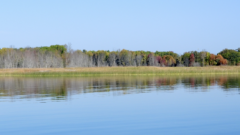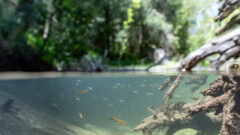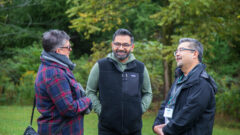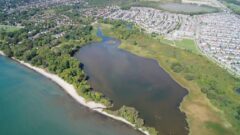
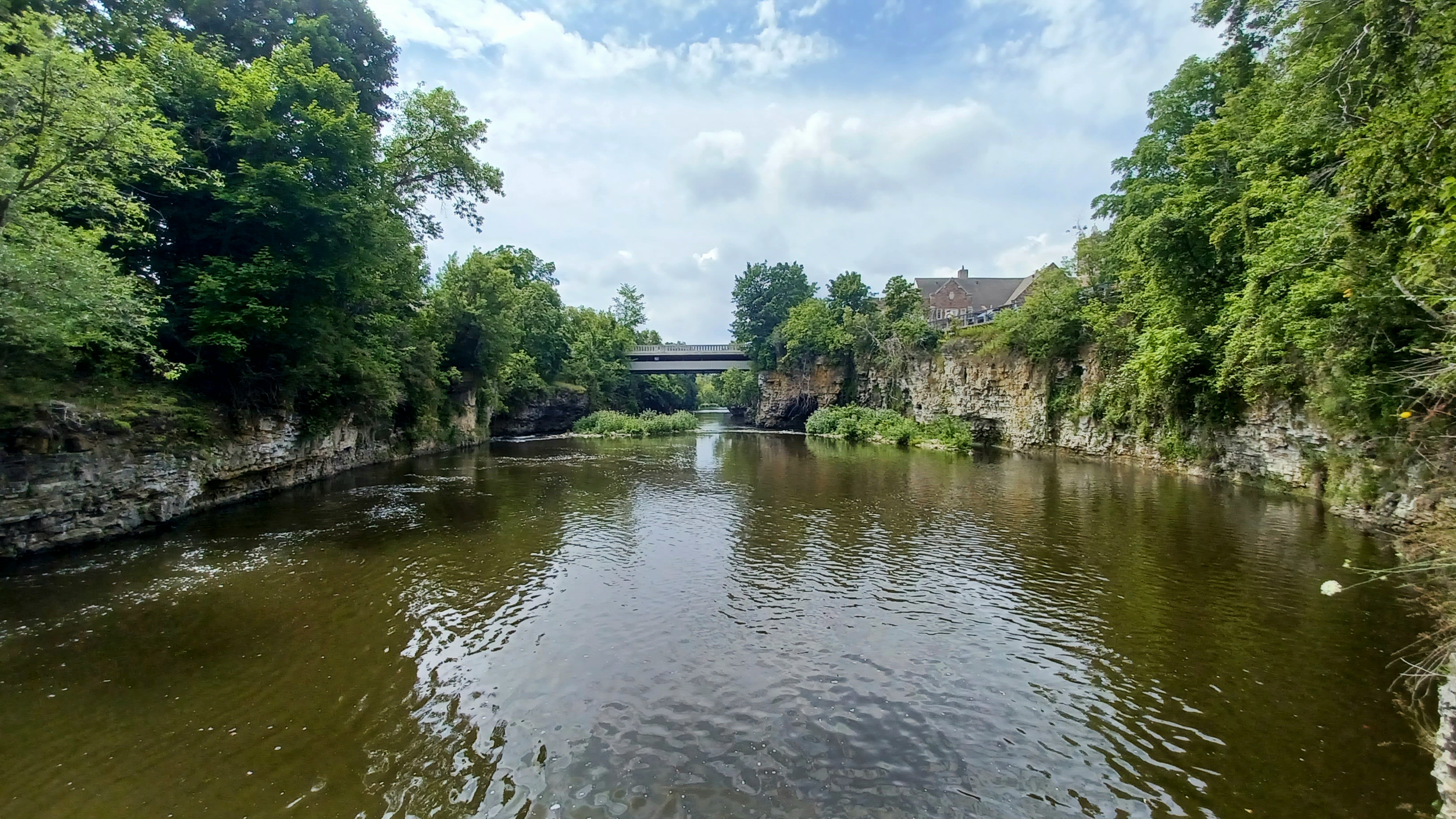
Six Nations of the Grand River is one of the most highly populated Indigenous communities in Canada with around 29,000 residents. A primary source of water is from the McKenzie Creek, which is mostly used for agricultural purposes for the Six Nations and non-Indigenous communities throughout the watershed. 

According to a recent study, Ontario’s McKenzie Creek watershed is likely to face increasing levels of water scarcity throughout the rest of the century. This research examines how water scarcity, due to factors like climate change, land use and water consumption, will have impacts for agricultural production for the Six Nations.

“I live on reserve and it’s just something that you don’t really think about on a daily basis until you’re actually living it, where you see your appliances die early because of the hardness of the water,” said Six Nations Senior Manager of the Environment Sara Curley-Smith.

Of the water available for Six Nations, the people here also face ongoing challenges with water quality. This compounds the effects of water insecurity.

“You have the majority of families at Six Nations that are water insecure already, so if they’re water insecure in good times, you can’t imagine what’s coming our way in the next 50 years,” said emeritus professor of Indigenous Studies at McMaster University Dawn Martin-Hill, who was also involved with the study.

Martin-Hill leads the Ohneganos Indigenous Water Research Program, which the study was a part of. She is also part of an initiative to create a Haudenosaunee Environmental Research Institute that centers Indigenous knowledge to better understand these issues. Part of her interview is also featured in the article, “Water is Life, Six Nations lead international approach to long-standing water insecurity.”

“In the design of the project we consulted with the environmental folks at Six Nations, the fish and wildlife folks, leaders, traditional knowledge holders, we just got a sense of what their concerns and priorities were,” Martin-Hill said. “Climate change came up quite a bit because cities and towns have access to that information and modeling, whereas reserves and reservations do not.”

Throughout the project process, Indigenous traditional knowledge holders helped guide the scientists on where and when to conduct the research, Martin-Hill said.

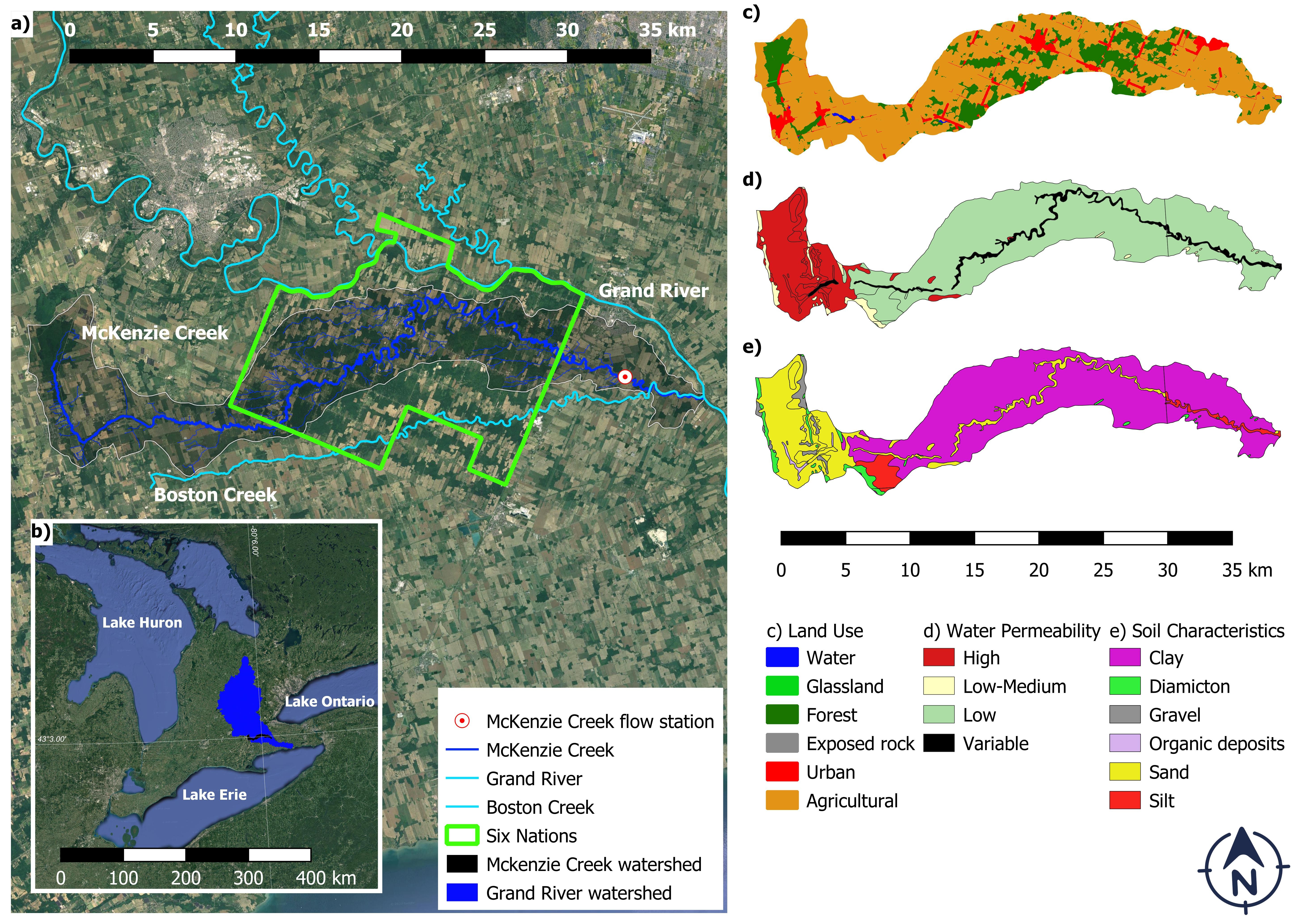
This led to a focus on the McKenzie Creek subwatershed, which was understudied compared to the Grand River watershed, according to Tariq Deen, lead author of the study at McMaster University.

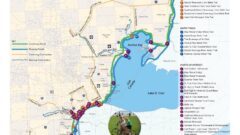
Map of the study area for “Blue and Green Water Scarcity in the McKenzie Creek Watershed of the Great Lakes Basin.” Credit: Dr. Tariq Deen

“That’s why that project was so beneficial in terms of process, because traditional ecological knowledge was the foundation of it,” said Smith.

Traditional ecological knowledge incorporates Western and Indigenous knowledge together in dialogue, Martin-Hill said, to better understand the environment.

The McMaster University study based its projections of water scarcity off of the Intergovernmental Panel on Climate Change (IPCC) Representative Concentration Pathway scenarios 4.5 and 8.5, which signify medium and high greenhouse gas emission and climate warming levels. 

The study by hydrologists and geographers looks at the projected levels for two types of water; blue and green water. While the study anticipates increased levels of water scarcity for both types of water in the future, Six Nations has already experienced these challenges. 

Blue water is fresh water that can be extracted for human activities.

To account for blue water scarcity, the study used two scenarios. The first was a low estimate scenario using monthly agricultural water consumption patterns. The second scenario estimated higher water consumption using the maximum amount of water that could be extracted, assuming this would occur with warming climate trends and an increase in agriculture.

“Under that scenario, we saw that blue water scarcity would increase to a level where it would negatively affect the ecosystem,” said Deen.

Another study on the Grand River watershed from the University of Guelph found similar trends in blue water scarcity considering increasing water demands due to climate change.

“This is a common trend where if you have more withdrawals and more agriculture use, there would be some scarcity that would be coming in,” said author and University of Guelph associate professor in water resources engineering Prasad Daggupati.  

However, water use data for the Six Nations was not included in the water scarcity estimates of the McMaster University study. This is because the Grand River Conservation Authority, who manages the McKenzie Creek watershed, does not collect water use data for the Six Nations. This means the water scarcity levels projected in both blue water scenarios are a low estimate.

“Under climate change scenarios, we saw that green water scarcity would increase throughout the next century,” Deen said.

Similar future patterns for green water scarcity were also found in the University of Guelph study, which used the same Representative Concentration Pathways to account for future impacts of climate change. 

Green water is the type of water that remains in the soil for plant growth.

“Moving into the future, obviously with increased precipitation, there would be more evapotransportation happening up, which would result in having less soil water available, which is green water,” said Daggupati.

Evapotranspiration is the process where water on land and in plants evaporates into the air.  

On top of agriculture and climate factors, corporations like Nestlé and BlueTriton have a history of extracting water without consulting and securing consent from Six Nations.

“We believe there are good veins of water that are much deeper than what wells were dug to, and that’s the water that Nestlé had been taking which we didn’t know about – 3.6 million liters every day for the last decade,” Martin-Hill said. 

The Six Nations pursued legal action and were able to get Nestlé and BlueTriton to stop their water extraction operations under previous laws requiring Indigenous consultation.

“The problem however has been made much worse because of the Bill 5 that the new federal government and Doug Ford passed so that they can bypass any kind of consultation for development, such as water extraction,” Martin-Hill said. 

According to Smith, this is a big issue because 70% of the community relies on groundwater. This issue is further exacerbated by the potential for wells running dry and the inability to support the agriculture that a lot of people at Six Nations rely on.

“I think our people have a problem with the way Western science compartmentalizes and silos things such as water,” Martin-Hill said. “We see ourselves as a part of the natural world.”

The post Climate change is worsening water crisis for Canada’s largest First Nations population appeared first on Great Lakes Now.
Original Article

Great Lakes Now

Great Lakes Now

https://www.greatlakesnow.org/2026/03/04/climate-change-is-worsening-water-crisis-for-canadas-largest-first-nations-population/
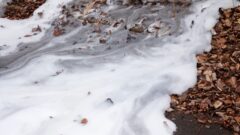
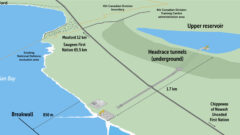
Mia Litzenberg, Great Lakes Now

$18M approved in bill credits for Pennsylvania customers in ‘forever chemicals’ settlement

Catch the latest updates on what’s happening with PFAS in the Great Lakes region. Check back for more PFAS news roundups every other week on our website.


The Pennsylvania Public Utility Commission recently approved a proposal from the Pennsylvania-American Water Company (PAWC) to issue over $18 million in bill credits to customers.

Read Now at Great Lakes Now.

Original Article

Great Lakes Now

Great Lakes Now

https://www.greatlakesnow.org/2025/11/more-than-18m-approved-in-bill-credits-for-pennsylvania-customers-in-forever-chemicals-settlement/

Lisa John Rogers, Great Lakes Now

Ontario is subsidizing an energy project in Georgian Bay despite expert advice

By Fatima Syed, The Narwhal

The Great Lakes News Collaborative includes Bridge Michigan, Circle of Blue, Great Lakes Now at Detroit PBS, Michigan Public and The Narwhal who work together to bring audiences news and information about the impact of climate change, pollution, and aging infrastructure on the Great Lakes and drinking water.

Read Now at Great Lakes Now.

Original Article

Great Lakes Now

Great Lakes Now

https://www.greatlakesnow.org/2025/11/ontario-is-subsidizing-an-energy-project-in-georgian-bay-despite-expert-advice/

The Narwhal

What’s going on in Wasaga Beach? Profit, piping plovers and an Ontario town’s complicated future

By Fatima Syed, The Narwhal

The Great Lakes News Collaborative includes Bridge Michigan, Circle of Blue, Great Lakes Now at Detroit PBS, Michigan Public and The Narwhal who work together to bring audiences news and information about the impact of climate change, pollution, and aging infrastructure on the Great Lakes and drinking water.

Read Now at Great Lakes Now.

Original Article

Great Lakes Now

Great Lakes Now

https://www.greatlakesnow.org/2025/09/wasaga-beach-ontario-park-plan/

Fatima Syed, The Narwhal

Why we don’t bike like the Dutch — yet

How did you get to work today?

Maybe, like 14% of Americans, you didn’t have to go anywhere because you work from home. But most people do need some form of transportation to earn a living. By far the biggest group is the 69% of people who drive to work alone.

Read Now at Great Lakes Now.

Original Article

Great Lakes Now

Great Lakes Now

https://www.greatlakesnow.org/2025/07/why-we-dont-bike-like-the-dutch-yet/

Sean Ericson, Great Lakes Now

How Ontario could have cracked down on Chemical Valley pollution — but chose not to

By Emma McIntosh, The Narwhal

The Great Lakes News Collaborative includes Bridge Michigan, Circle of Blue, Great Lakes Now at Detroit PBS, Michigan Public and The Narwhal who work together to bring audiences news and information about the impact of climate change, pollution, and aging infrastructure on the Great Lakes and drinking water.

Read Now at Great Lakes Now.

Original Article

Great Lakes Now

Great Lakes Now

https://www.greatlakesnow.org/2025/07/how-ontario-could-have-cracked-down-on-chemical-valley-pollution-but-chose-not-to/

The Narwhal

Thunder Bay is bringing its Great Lake shoreline back

My first glimpse of Lake Superior, in all its lore-and-song-inspiring glory, is a blurry one from the backseat of a taxi driving through Thunder Bay. 

Superior, or Gitchigumi, which means Great Lake in Anishinaabemowin, is the largest of those lakes, and the second largest lake in the world, containing 10 per cent of the planet’s fresh surface water.

Read Now at Great Lakes Now.

Original Article

Great Lakes Now

Great Lakes Now

https://www.greatlakesnow.org/2025/05/thunder-bay-is-bringing-its-great-lake-shoreline-back/

Fatima Syed, The Narwhal

Buses vs. Trains: The Future of Public Transit in the Great Lakes Region

Cities around the Great Lakes region are trying to make transportation cheaper for riders and more environmentally friendly by expanding their public transit networks. Two modes that are often pitted against each other are light rail and bus rapid transit (BRT). While not every BRT line meets the same standards, in general, they have been upgraded for higher capacity and speed, although they have fewer stations.

Read Now at Great Lakes Now.

Original Article

Great Lakes Now

Great Lakes Now

https://www.greatlakesnow.org/2025/05/buses-vs-trains-the-future-of-public-transit-in-the-great-lakes-region/

Sean Ericson, Great Lakes Now

Meet the people trying to keep a prehistoric fish alive

By Leah Borts-Kuperman, The Narwhal

The Great Lakes News Collaborative includes Bridge Michigan, Circle of Blue, Great Lakes Now at Detroit PBS, Michigan Public and The Narwhal who work together to bring audiences news and information about the impact of climate change, pollution, and aging infrastructure on the Great Lakes and drinking water.

Read Now at Great Lakes Now.

Original Article

Great Lakes Now

Great Lakes Now

https://www.greatlakesnow.org/2025/04/meet-the-people-trying-to-keep-a-prehistoric-fish-alive/

The Narwhal

Can these invasive reeds be stopped?

Invasive phragmites are overwhelming Ontario’s wetlands, choking out native plants and wildlife. Towering up to 15 feet (5 meters) tall and spreading in dense clusters, this plant outcompetes native species, disrupts ecosystems, and threatens wildlife. But a team of dedicated experts and community members are fighting back.

Wetland ecologist Janice Gilbert is leading efforts at Kettle and Stony Point First Nation to combat phragmites.

Read Now at Great Lakes Now.

Original Article

Great Lakes Now

Great Lakes Now

https://www.greatlakesnow.org/2025/04/can-these-invasive-reeds-be-stopped/

Great Lakes Now

Fish, mines and Indigenous Rights ensnared in court case in northern Ontario

By Emma McIntosh, The Narwhal

Emma and photographer Christopher Katsarov Luna spent four days in northwestern Ontario, including visits to White Lake and Netmizaaggamig Nishnaabeg.

The Great Lakes News Collaborative includes Bridge Michigan, Circle of Blue, Great Lakes Now at Detroit PBS, Michigan Public and The Narwhal who work together to bring audiences news and information about the impact of climate change, pollution, and aging infrastructure on the Great Lakes and drinking water.

Read Now at Great Lakes Now.

Original Article

Great Lakes Now

Great Lakes Now

https://www.greatlakesnow.org/2025/04/fish-mines-and-indigenous-rights-ensnared-in-court-case-in-northern-ontario/

The Narwhal

What would the Great Lakes region be like with bullet trains?

A few months ago, I was riding on Amtrak’s new Borealis line from St. Paul, Minn., to Chicago. The train was packed that day, and the new line has proved popular.

My coach seat was much nicer than any airline. Plus, I didn’t have to go through security.

Read Now at Great Lakes Now.

Original Article

Great Lakes Now

Great Lakes Now

https://www.greatlakesnow.org/2025/03/what-would-the-great-lakes-region-be-like-with-bullet-trains/

Sean Ericson, Great Lakes Now

How Trump’s trade war could impact US electricity prices — and state climate plans

By Zoya Teirstein

This story was originally published by Grist. Sign up for Grist’s weekly newsletter here.

On Tuesday, President Donald Trump initiated a trade war with Canada and Mexico, America’s two largest trading partners. Following through on weeks of threats, he imposed 25 percent tariffs on imported goods from Mexico and Canada and a lower 10 percent tariff on imports of Canadian energy resources.

Read Now at Great Lakes Now.

Original Article

Great Lakes Now

Great Lakes Now

https://www.greatlakesnow.org/2025/03/how-trumps-trade-war-could-impact-us-electricity-prices-and-state-climate-plans/

Grist

Nibi Chronicles: Invisible Borders

“Nibi Chronicles,” a monthly Great Lakes Now feature, is written by Staci Lola Drouillard. A Grand Portage Ojibwe direct descendant, she lives in Grand Marais on Minnesota’s North Shore of Lake Superior. Her nonfiction books “Walking the Old Road: A People’s History of Chippewa City and the Grand Marais Anishinaabe” and “Seven Aunts” were published 2019 and 2022, and the children’s story “A Family Tree” in 2024.

Read Now at Great Lakes Now.

Original Article

Great Lakes Now

Great Lakes Now

https://www.greatlakesnow.org/2025/02/nibi-chronicles-invisible-borders/

Staci Lola Drouillard, Great Lakes Now

Tackling environmental racism in Chemical Valley

By Emma McIntosh, The Narwhal

The Great Lakes News Collaborative includes Bridge Michigan, Circle of Blue, Great Lakes Now at Detroit PBS, Michigan Public and The Narwhal who work together to bring audiences news and information about the impact of climate change, pollution, and aging infrastructure on the Great Lakes and drinking water.

Read Now at Great Lakes Now.

Original Article

Great Lakes Now

Great Lakes Now

https://www.greatlakesnow.org/2025/02/tackling-environmental-racism-in-chemical-valley/

The Narwhal

Life on the frontlines of Ontario’s critical mineral boom

By Emma McIntosh, The Narwhal

Photography by Christopher Katsarov Luna

The Great Lakes News Collaborative includes Bridge Michigan, Circle of Blue, Great Lakes Now at Detroit PBS, Michigan Public and The Narwhal who work together to bring audiences news and information about the impact of climate change, pollution, and aging infrastructure on the Great Lakes and drinking water.

Read Now at Great Lakes Now.

Original Article

Great Lakes Now

Great Lakes Now

https://www.greatlakesnow.org/2025/01/life-on-the-frontlines-of-ontarios-critical-mineral-boom/

The Narwhal

The past, present and future of a changing Lake Ontario

By Daniel Macfarlane

This story is an excerpt from Daniel Macfarlane’s book The Lives of Lake Ontario: An Environmental History.

The Great Lakes News Collaborative includes Bridge Michigan, Circle of Blue, Great Lakes Now at Detroit PBS, Michigan Public and The Narwhal who work together to bring audiences news and information about the impact of climate change, pollution, and aging infrastructure on the Great Lakes and drinking water.

Read Now at Great Lakes Now.

Original Article

Great Lakes Now

Great Lakes Now

https://www.greatlakesnow.org/2024/12/the-past-present-and-future-of-a-changing-lake-ontario/

The Narwhal

Spotlight on complexity of bottled water issues, as BlueTriton exits Ontario

Activist group, Water Watchers, had reason to celebrate last month when water bottler BlueTriton announced it will cease operations in Puslinch, Ontario in January, 2025. The group’s website beamed “We Won” and said the exit was a “historic win for water justice.”

To get a better understanding of the issues surrounding bottled water in Ontario, Canada, Great Lakes Now contacted Arlene Slocombe, executive director of Water Watchers and McMaster University Professor, Dawn Martin-Hill and founder of the Indigenous Studies Program at McMaster University. 

Read Now at Great Lakes Now.

Original Article

Great Lakes Now

Great Lakes Now

https://www.greatlakesnow.org/2024/12/spotlight-on-complexity-of-bottled-water-issues-as-bluetriton-exits-ontario/

Gary Wilson, Great Lakes Now

Canada is one step closer to burying nuclear waste in northwestern Ontario

By Fatima Syed, The Narwhal

The Great Lakes News Collaborative includes Bridge Michigan, Circle of Blue, Great Lakes Now at Detroit PBS, Michigan Public and The Narwhal who work together to bring audiences news and information about the impact of climate change, pollution, and aging infrastructure on the Great Lakes and drinking water.

Read Now at Great Lakes Now.

Original Article

Great Lakes Now

Great Lakes Now

https://www.greatlakesnow.org/2024/12/canada-is-one-step-closer-to-burying-nuclear-waste-in-northwestern-ontario/

The Narwhal

The fight to keep grass carp out of the Great Lakes

By Matt McIntosh, The Narwhal

The Great Lakes News Collaborative includes Bridge Michigan, Circle of Blue, Great Lakes Now at Detroit PBS, Michigan Public and The Narwhal who work together to bring audiences news and information about the impact of climate change, pollution, and aging infrastructure on the Great Lakes and drinking water.

Read Now at Great Lakes Now.

Original Article

Great Lakes Now

Great Lakes Now

https://www.greatlakesnow.org/2024/11/the-fight-to-keep-grass-carp-out-of-the-great-lakes/

The Narwhal

4 things to know about a youth-led court case against Ontario’s climate plans

By Fatima Syed, The Narwhal

The Great Lakes News Collaborative includes Bridge Michigan, Circle of Blue, Great Lakes Now at Detroit PBS, Michigan Public and The Narwhal who work together to bring audiences news and information about the impact of climate change, pollution, and aging infrastructure on the Great Lakes and drinking water.

Read Now at Great Lakes Now.

Original Article

Great Lakes Now

Great Lakes Now

https://www.greatlakesnow.org/2024/11/4-things-to-know-about-a-youth-led-court-case-against-ontarios-climate-plans/

The Narwhal

Public hearing draws on big questions about Upper Peninsula copper mining

By Izzy Ross, Interlochen Public Radio

This coverage is made possible through a partnership with IPR and Grist, a nonprofit independent media organization dedicated to telling stories of climate solutions and a just future.

In Gogebic County, on the western end of Michigan’s Upper Peninsula, towering old-growth evergreens carpet the landscape as it rolls down toward the deep blue of Lake Superior.

Read Now at Great Lakes Now.

Original Article

Great Lakes Now

Great Lakes Now

https://www.greatlakesnow.org/2024/11/public-hearing-draws-on-big-questions-about-upper-peninsula-copper-mining/

Interlochen Public Radio

Two high school students want to keep trash out of the Great Lakes. They think rivers are the key

By Fatima Syed, The Narwhal

The Great Lakes News Collaborative includes Bridge Michigan, Circle of Blue, Great Lakes Now at Detroit PBS, Michigan Public and The Narwhal who work together to bring audiences news and information about the impact of climate change, pollution, and aging infrastructure on the Great Lakes and drinking water.

Read Now at Great Lakes Now.

Original Article

Great Lakes Now

Great Lakes Now

https://www.greatlakesnow.org/2024/10/two-high-school-students-want-to-keep-trash-out-of-the-great-lakes-they-think-rivers-are-the-key/

The Narwhal

The lonely Lake Superior caribou and a lesson in limits

By Emma McIntosh, The Narwhal

Emma and photographer Christopher Katsarov Luna spent four days in northwestern Ontario, reporting from the shore of Lake Superior.

The Great Lakes News Collaborative includes Bridge Michigan, Circle of Blue, Great Lakes Now at Detroit PBS, Michigan Public and The Narwhal who work together to bring audiences news and information about the impact of climate change, pollution, and aging infrastructure on the Great Lakes and drinking water.

Read Now at Great Lakes Now.

Original Article

Great Lakes Now

Great Lakes Now

https://www.greatlakesnow.org/2024/10/the-lonely-lake-superior-caribou-and-a-lesson-in-limits/

Mila Murray

A tiny, endangered fish lies on the path of Highway 413. Canada has a plan, but no new power to protect it

By Kathryn Peiman, The Narwhal

The Great Lakes News Collaborative includes Bridge Michigan; Circle of Blue; Great Lakes Now at Detroit Public Television; Michigan Public, Michigan’s NPR News Leader; and The Narwhal who work together to bring audiences news and information about the impact of climate change, pollution, and aging infrastructure on the Great Lakes and drinking water.

Read Now at Great Lakes Now.

Original Article

Great Lakes Now

Great Lakes Now

https://www.greatlakesnow.org/2024/09/a-tiny-endangered-fish-lies-on-the-path-of-highway-413-canada-has-a-plan-but-no-new-power-to-protect-it/

The Narwhal

‘These are not your lands to give away’: 6 First Nations take Ontario to court over mining law

By Emma McIntosh, The Narwhal

The Great Lakes News Collaborative includes Bridge Michigan; Circle of Blue; Great Lakes Now at Detroit Public Television; Michigan Public, Michigan’s NPR News Leader; and The Narwhal who work together to bring audiences news and information about the impact of climate change, pollution, and aging infrastructure on the Great Lakes and drinking water.

Read Now at Great Lakes Now.

Original Article

Great Lakes Now

Great Lakes Now

https://www.greatlakesnow.org/2024/08/these-are-not-your-lands-to-give-away-6-first-nations-take-ontario-to-court-over-mining-law/

The Narwhal

Missed calls, forgotten instructions: Inside an oil spill cleanup on Toronto waterways

By Emma McIntosh, The Narwhal

The Great Lakes News Collaborative includes Bridge Michigan; Circle of Blue; Great Lakes Now at Detroit Public Television; Michigan Public, Michigan’s NPR News Leader; and The Narwhal who work together to bring audiences news and information about the impact of climate change, pollution, and aging infrastructure on the Great Lakes and drinking water.

Read Now at Great Lakes Now.

Original Article

Great Lakes Now

Great Lakes Now

https://www.greatlakesnow.org/2024/08/missed-calls-forgotten-instructions-inside-an-oil-spill-cleanup-on-toronto-waterways/

The Narwhal

‘Containment breached’: How an oil spill in northwest Toronto made its way to Lake Ontario

By Emma McIntosh, The Narwhal

The Great Lakes News Collaborative includes Bridge Michigan; Circle of Blue; Great Lakes Now at Detroit Public Television; Michigan Public, Michigan’s NPR News Leader; and The Narwhal who work together to bring audiences news and information about the impact of climate change, pollution, and aging infrastructure on the Great Lakes and drinking water.

Read Now at Great Lakes Now.

Original Article

Great Lakes Now

Great Lakes Now

https://www.greatlakesnow.org/2024/07/containment-breached-how-an-oil-spill-in-northwest-toronto-made-its-way-to-lake-ontario/

The Narwhal

Ghostly Grey Specters

An eerie sight is blossoming throughout coastal wetlands in Georgian Bay: ghostly grey specters lining the shores behind otherwise healthy-looking wetlands.

“Do you see these dead trees?” asked Patricia Chow-Fraser. The McMaster University biologist was addressing attendees of a lecture at The Water Institute at the University of Waterloo in early March.

Read Now at Great Lakes Now.

Original Article

Great Lakes Now

Great Lakes Now

https://www.greatlakesnow.org/2024/04/ghostly-grey-specters/

Andrew Reeves

Wild fish spring to life in Lake Ontario, despite dams, pollution and hatchery competitors

By Kathryn Peiman, The Narwhal

Photography by Kathryn Peiman

The Great Lakes News Collaborative includes Bridge Michigan; Circle of Blue; Great Lakes Now at Detroit Public Television; Michigan Public, Michigan’s NPR News Leader; and The Narwhal who work together to bring audiences news and information about the impact of climate change, pollution, and aging infrastructure on the Great Lakes and drinking water.

Read Now at Great Lakes Now.

Original Article

Great Lakes Now

Great Lakes Now

https://www.greatlakesnow.org/2024/04/wild-fish-spring-to-life-in-lake-ontario-despite-dams-pollution-and-hatchery-competitors/

The Narwhal

‘You start with us’: Conservation authority head has parting message for Ontario government

By Fatima Syed, The Narwhal

The Great Lakes News Collaborative includes Bridge Michigan; Circle of Blue; Great Lakes Now at Detroit Public Television; Michigan Public, Michigan’s NPR News Leader; and The Narwhal who work together to bring audiences news and information about the impact of climate change, pollution, and aging infrastructure on the Great Lakes and drinking water.

Read Now at Great Lakes Now.

Original Article

Great Lakes Now

Great Lakes Now

https://www.greatlakesnow.org/2024/04/you-start-with-us-conservation-authority-head-has-parting-message-for-ontario-government/

The Narwhal

Ontario weakens watershed protections (again) as natural resources minister gets new powers

By Fatima Syed, The Narwhal

The Great Lakes News Collaborative includes Bridge Michigan; Circle of Blue; Great Lakes Now at Detroit Public Television; Michigan Public, Michigan’s NPR News Leader; and The Narwhal who work together to bring audiences news and information about the impact of climate change, pollution, and aging infrastructure on the Great Lakes and drinking water.

Read Now at Great Lakes Now.

Original Article

Great Lakes Now

Great Lakes Now

https://www.greatlakesnow.org/2024/03/ontario-weakens-watershed-protections-again-as-natural-resources-minister-gets-new-powers/

The Narwhal

Great Lakes Moment: Gordie Howe International Bridge becomes part of binational trail system

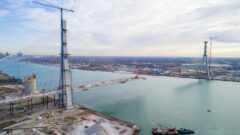
Imagine if the world’s longest trail (located in Canada) connected people even further, into another country, via Michigan’s longest trail. That happened last month when the Windsor Detroit Bridge Authority announced that the Gordie Howe International Bridge would become part of a binational trail system. 

When the initial discussions for a potential new bridge connecting Windsor and Detroit started about a decade ago, residents of Windsor and Detroit, and a coalition of organizations, came together to envision cross-border linkages.

Read Now at Great Lakes Now.

Original Article

Great Lakes Now

Great Lakes Now

https://www.greatlakesnow.org/2024/03/great-lakes-moment-gordie-howe-international-bridge-becomes-part-of-binational-trail-system/

John Hartig

Ontario sides with Enbridge Gas in fight to connect new homes to natural gas

By Fatima Syed, The Narwhal

The Great Lakes News Collaborative includes Bridge Michigan; Circle of Blue; Great Lakes Now at Detroit Public Television; Michigan Public, Michigan’s NPR News Leader; and The Narwhal who work together to bring audiences news and information about the impact of climate change, pollution, and aging infrastructure on the Great Lakes and drinking water.

Read Now at Great Lakes Now.

Original Article

Great Lakes Now

Great Lakes Now

https://www.greatlakesnow.org/2024/02/ontario-sides-with-enbridge-gas-fight-to-connect-new-homes-to-natural-gas/

The Narwhal

Points North: Can AI Caribou Lead Us To Our Prehistoric Past?

Points North is a biweekly podcast hosted by Daniel Wanschura and Morgan Springer about the land, water and inhabitants of the Great Lakes.

This episode was shared here with permission from Interlochen Public Radio. 

At the bottom of Lake Huron there’s a ridge that was once above water.

Read Now at Great Lakes Now.

Original Article

Great Lakes Now

Great Lakes Now

https://www.greatlakesnow.org/2024/01/points-north-can-ai-caribou-lead-us-to-our-prehistoric-past/

Interlochen Public Radio

Restoring Ontario’s lost grasslands is as important as planting trees

By Emma McIntosh, The Narwhal

The Great Lakes News Collaborative includes Bridge Michigan; Circle of Blue; Great Lakes Now at Detroit Public Television; Michigan Public, Michigan’s NPR News Leader; and The Narwhal who work together to bring audiences news and information about the impact of climate change, pollution, and aging infrastructure on the Great Lakes and drinking water.

Read Now at Great Lakes Now.

Original Article

Great Lakes Now

Great Lakes Now

https://www.greatlakesnow.org/2024/01/restoring-ontarios-lost-grasslands-important-as-planting-trees/

The Narwhal

Twenty companies pledge to use all parts of Great Lakes fish by 2025

This article was republished here with permission from Great Lakes Echo.

By Shealyn Paulis, Great Lakes Echo

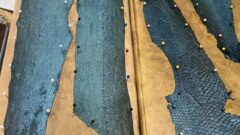
Fish-leather purses and wallets may make their way into Great Lakes fashion with an initiative to use 100% of commercially caught fish by 2025.

One of the latest projects of a binational Great Lakes organization is to fully use the region’s whitefish, lake trout, yellow perch, walleye and white sucker.

Read Now at Great Lakes Now.

Original Article

Great Lakes Now

Great Lakes Now

https://www.greatlakesnow.org/2024/01/twenty-companies-pledge-to-use-all-parts-of-great-lakes-fish-by-2025/

Great Lakes Echo

Science Says What? Pitcher plants feast on salamanders, unveiling a brutal side of botanical carnivory

Science Says What? is a monthly column written by Great Lakes now contributor Sharon Oosthoek exploring what science can tell us about what’s happening beneath and above the waves of our beloved Great Lakes and their watershed.

In the summer of 2017, Teskey Baldwin, a student at Ontario’s University of Guelph, was studying whether pitcher plants near water capture more insects than those farther away.

Read Now at Great Lakes Now.

Original Article

Great Lakes Now

Great Lakes Now

https://www.greatlakesnow.org/2023/12/science-says-what-pitcher-plants-feast-on-salamanders-unveiling-a-brutal-side-of-botanical-carnivory/

Sharon Oosthoek

Lake Erie is full of algae again. Southwestern Ontario’s exploding greenhouse sector won’t help

By Matt McIntosh, The Narwhal

Photography by Kati Panasiuk

This story first ran on The Narwhal, a non-profit news organization that publishes in-depth stories about Canada’s natural world.

For a couple of decades at the end of the last century, it seemed like the blue-green algae problem in Lake Erie had been solved, or at least managed, thanks to a concerted cross-border effort.

Read Now at Great Lakes Now.

Original Article

Great Lakes Now

Great Lakes Now

https://www.greatlakesnow.org/2023/12/lake-erie-is-full-of-algae-again-southwestern-ontarios-exploding-greenhouse-sector-wont-help/

The Narwhal

We’re going to need a bigger fishbowl

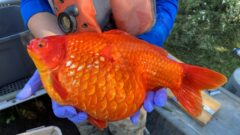
A tiny goldfish might look cute in a fishbowl on your shelf, but if released into the wild it can grow to a terrifying size and become a menace to the ecosystem. They eat pretty much anything and everything, root up plants causing the water to become cloudy and dark, and reproduce and grow so quickly that almost no predators can stop them.

Read Now at Great Lakes Now.

Original Article

Great Lakes Now

Great Lakes Now

https://www.greatlakesnow.org/2023/11/were-going-to-need-a-bigger-fishbowl/

Brian Owens

Canada says it can fight climate change and be major oil nation. Massive fires may force a reckoning

By Suman Naishadham and Victor Caivano, Associated Press

FORT MCMURRAY, Canada (AP) — During a May wildfire that scorched a vast swath of spruce and pine forest in northwestern Canada, Julia Cardinal lost a riverside cabin that was many things to her: retirement project, gift from from her husband, and somewhere to live by nature, as her family had done for generations.

Read Now at Great Lakes Now.

Original Article

Great Lakes Now

Great Lakes Now

https://www.greatlakesnow.org/2023/11/ap-canada-says-it-can-fight-climate-change-and-be-major-oil-nation/
The Associated Press

Great Lakes imports and exports halted by strike

A strike by about 350 members of UNIFOR, Canada’s largest private sector union, could cripple thousands of businesses and cause the loss of billions in economic activity if it continues, according to shipping officials.

“Every day is a critical time,” said Jayson Hron, communications director for Port of Duluth-Superior, the U.S.’ furthest inland seaport.

Read Now at Great Lakes Now.

Original Article

Great Lakes Now

Great Lakes Now

https://www.greatlakesnow.org/2023/10/great-lakes-imports-and-exports-halted-by-strike/
James Proffitt

Great Lakes Moment: University of Windsor to build capacity for Canada’s national urban parks

Eighty percent of Canadians live in urban areas, and most are disconnected from nature. To help address this, Canada is creating a network of national urban parks not only to conserve nature, but to connect people with it, and advance reconciliation with Indigenous peoples.

Now, the University of Windsor has become a partner by creating the first university-based National Urban Park Hub.

Read Now at Great Lakes Now.

Original Article

Great Lakes Now

Great Lakes Now

https://www.greatlakesnow.org/2023/09/great-lakes-moment-university-windsor-build-capacity-canada-national-urban-parks/

John Hartig

Energy News Roundup: Climate action plan in Illinois, Offshore wind project in Lake Erie

Keep up with energy-related developments in the Great Lakes area with Great Lakes Now’s biweekly headline roundup.

Click on the headline to read the full story:


Illinois

Wind, solar training facility opens in Bloomington — Pantagraph

Officials unveil a new technical training center in Bloomington, Illinois, that will train at least 100 people annually for wind and solar jobs.

Read Now at Great Lakes Now.

Original Article

Great Lakes Now

Great Lakes Now

https://www.greatlakesnow.org/2023/08/energy-news-roundup-climate-action-plan-illinois-offshore-wind-lake-erie/

Kathy Johnson

Science Says What? The weight of the world rests on a small Canadian lake

Science Says What? is a monthly column written by Great Lakes now contributor Sharon Oosthoek exploring what science can tell us about what’s happening beneath and above the waves of our beloved Great Lakes and their watershed.

A tiny lake just an hour’s drive from Toronto made headlines earlier this summer as the best place in the world to illustrate the dawn of a new geological epoch – the Anthropocene.

Read Now at Great Lakes Now.

Original Article

Great Lakes Now

Great Lakes Now

https://www.greatlakesnow.org/2023/08/science-says-what-weight-world-rests-small-canadian-lake/

Sharon Oosthoek

I Speak for the Fish – Giddy up sucker

I Speak for the Fish is a monthly column written by Great Lakes Now Contributor Kathy Johnson, coming out the third Monday of each month. Publishing the author’s views and assertions does not represent endorsement by Great Lakes Now or Detroit Public Television. 

Read Now at Great Lakes Now.

Original Article

Great Lakes Now

Great Lakes Now

https://www.greatlakesnow.org/2023/08/i-speak-for-the-fish-giddy-up-sucker/

Kathy Johnson

PFAS News Roundup: Clermont County village files lawsuit over forever chemicals, Home testing kits debut in Chicago

Keep up with energy-related developments in the Great Lakes area with Great Lakes Now’s biweekly headline roundup.

Click on the headline to read the full story:


Illinois

Home Water Quality Testing Kits For Lead, Copper And PFAS To Debut In Chicago — Forbes

The National Science Foundation is backing a pilot study by Northwestern University to develop and distribute water quality testing kits to Chicago-area residents.

Read Now at Great Lakes Now.

Original Article

Great Lakes Now

Great Lakes Now

https://www.greatlakesnow.org/2023/08/pfas-news-roundup-clermont-county-village-lawsuit-forever-chemicals-testing-kits-debut-chicago/

Kathy Johnson

FRESH: As Chicago Broils, Citizens and Scientists Study ‘Heat Island’ Effect

August 8, 2023

Fresh is a biweekly newsletter from Circle of Blue that unpacks the biggest international, state, and local policy news stories facing the Great Lakes region today. Sign up for Fresh: A Great Lakes Policy Briefing, straight to your inbox, every other Tuesday.

Read Now at Great Lakes Now.

Original Article

Great Lakes Now

Great Lakes Now

https://www.greatlakesnow.org/2023/08/fresh-chicago-broils-citizens-scientists-study-heat-island-effect/

Circle of Blue

PFAS News Roundup: U.S. Military proposes health benefits to veterans, How to identify contaminated foam

PFAS, short for per- and polyfluoroalkyl substances, are a group of widespread man-made chemicals that don’t break down in the environment or the human body and have been flagged as a major contaminant in sources of water across the country.

Keep up with PFAS-related developments in the Great Lakes area.

Read Now at Great Lakes Now.

Original Article

Great Lakes Now

Great Lakes Now

https://www.greatlakesnow.org/2023/07/pfas-news-roundup-u-s-military-proposes-health-benefits-to-veterans-how-to-identify-contaminated-foam/

Kathy Johnson

Great Lakes Moment: A business case for The Great Lakes Way

Great Lakes Moment is a monthly column written by Great Lakes Now Contributor John Hartig. Publishing the author’s views and assertions does not represent endorsement by Great Lakes Now or Detroit Public Television.

A business case is a document that outlines whether a project is worth undertaking.

Read Now at Great Lakes Now.

Original Article

Great Lakes Now

Great Lakes Now

https://www.greatlakesnow.org/2023/07/great-lakes-moment-a-business-case-for-the-great-lakes-way/

John Hartig