A celebration is underway for farmers, scientists, and other conservation professionals as they mark the 10-year anniversary of Wisconsin’s “Lower Fox Demonstration Farm Network.” The effort is geared toward improving the quality of the water throughout the region and reducing sediment and phosphorus loading into Green Bay. Read the full story by WLUK-TV – Green Bay, Wisconsin.

Original Article

Great Lakes Commission

Great Lakes Commission

https://www.glc.org/dailynews/20231117-lower-fox-demonstration-farm-network
Theresa Gruninger

The Cuyahoga River was labeled an “area of concern” in 1987. Since then, the river has made remarkable progress, eliminating five of its designated shortcomings, the latest having to do with the health of fish. Read the full story by The Plain Dealer.

Original Article

Great Lakes Commission

Great Lakes Commission

https://www.glc.org/dailynews/20231117-cuyahoga-river

Theresa Gruninger

Due to a strike of unionized Canadian Seaway workers, the St. Lawrence Seaway is preparing for its latest seasonal closing date in its 64-year history. This has sparked concern among environmentalists along the St. Lawrence River who worry about the safety and regulation of winter navigation. Read the full story by WWT-TV – Watertown, NY.

Original Article

Great Lakes Commission

Great Lakes Commission

https://www.glc.org/dailynews/20231117-late-seaway-closure

Theresa Gruninger

This week, work began on the long-awaited redevelopment of the marina and ferry terminal serving Grand Portage, Minnesota, and Isle Royale. The project includes demolishing the existing site to rehabilitate the dock structures and construct a new boat launch. Read the full story by Bring Me The News.

Original Article

Great Lakes Commission

Great Lakes Commission

https://www.glc.org/dailynews/20231117-grand-portage-marina

Theresa Gruninger

Officials with the Michigan Department of Natural Resources are pleased with egg harvest efforts this season at the Little Manistee River Weir. Eggs collected at the weir are then sent to fish hatcheries in Michigan where the fish are reared and later stocked throughout the state. Read the full story by the Manistee News Advocate.

Original Article

Great Lakes Commission

Great Lakes Commission

https://www.glc.org/dailynews/20231117-fishery-egg-collection

Theresa Gruninger

A Kingsville, Ontario based brewery has taken the expression ‘having a cold one’ to the extreme. Last winter, The Grove Brewing Company sank 500 bottles of beer to the bottom of Lake Erie and left them to age for three months Nearly a year later, that brew is finally being made available to adventurous craft beer enthusiasts. Read the full story by the Windsor Star.

Original Article

Great Lakes Commission

Great Lakes Commission

https://www.glc.org/dailynews/20231117-lake-eriebeer

Theresa Gruninger

Conservation groups are sounding an alarm that a land swap between the state and a private company along Lake Michigan’s shores could set a harmful precedent for state parks and conserved lands, and are asking Wisconsin Governor Tony Evers for help. Read the full story by the Milwaukee Journal Sentinel.

Original Article

Great Lakes Commission

Great Lakes Commission

https://www.glc.org/dailynews/20231117-land-swap

Theresa Gruninger

At the end of September, the employees at the Upper Midwest Water Science Center met in Madison for the first Center-wide face to face meeting since merging in 2017.

Original Article

Upper Midwest Water Science Center

Upper Midwest Water Science Center

https://www.usgs.gov/centers/upper-midwest-water-science-center/news/upper-midwest-water-science-center-hosted-center?utm_source=comms&utm_medium=rss&utm_campaign=news

jvelkoverh@usgs.gov

Northern Michigan is home to two unique land preserves, one in Harbor Springs and the other in Traverse City – both originating from golf courses. 

Golf has strong ties to Michigan, with around 650 courses. Enthusiasts have nicknamed it “America’s Summer Golf Capital,” according to The Travel Magazine. 

The post Michigan golf courses returned to their natural state first appeared on Great Lakes Echo.

Original Article

Great Lakes Echo

Great Lakes Echo

http://greatlakesecho.org/2023/11/17/michigan-golf-courses-returned-to-their-natural-state/

Guest Contributor

...GUSTY WINDS EXPECTED FOR THE REMAINDER OF EVENING... A strong cold front moving across the area will bring gusty winds to the area for the remainder of the evening. Southwest winds gusting to 25 to 35 mph will shift to the northwest as the front moves east of the area. A few gusts to 40 mph are still possible. The winds will gradually subside after midnight.

Original Article

Current Watches, Warnings and Advisories for Brown (WIC009) Wisconsin Issued by the National Weather Service

Current Watches, Warnings and Advisories for Brown (WIC009) Wisconsin Issued by the National Weather Service

https://alerts.weather.gov/cap/wwacapget.php?x=WI12666C8B772C.SpecialWeatherStatement.12666C8BB7A0WI.GRBSPSGRB.c6a7d0ff65af1e9bc78bac6b54d4655b

w-nws.webmaster@noaa.gov

...GUSTY WINDS EXPECTED THIS EVENING... A strong cold front moving across the area was producing gusty southwest winds of 25 to 40 mph early this evening. The cold front is expected to move across the area by midnight. A period of gusty northwest winds of 25 to 40 mph are also expected behind the cold front before winds subside overnight. The gusty winds may

Original Article

Current Watches, Warnings and Advisories for Brown (WIC009) Wisconsin Issued by the National Weather Service

Current Watches, Warnings and Advisories for Brown (WIC009) Wisconsin Issued by the National Weather Service

https://alerts.weather.gov/cap/wwacapget.php?x=WI12666C8B20D8.SpecialWeatherStatement.12666C8B7B14WI.GRBSPSGRB.8a912f378fb16563976e7026f85ca5b7

w-nws.webmaster@noaa.gov

Science Communicator Marie Zhuikov attended a Wild Rice Symposium recently, along with hundreds of other people. Image credit: Marie Zhuikov, Wisconsin Sea Grant

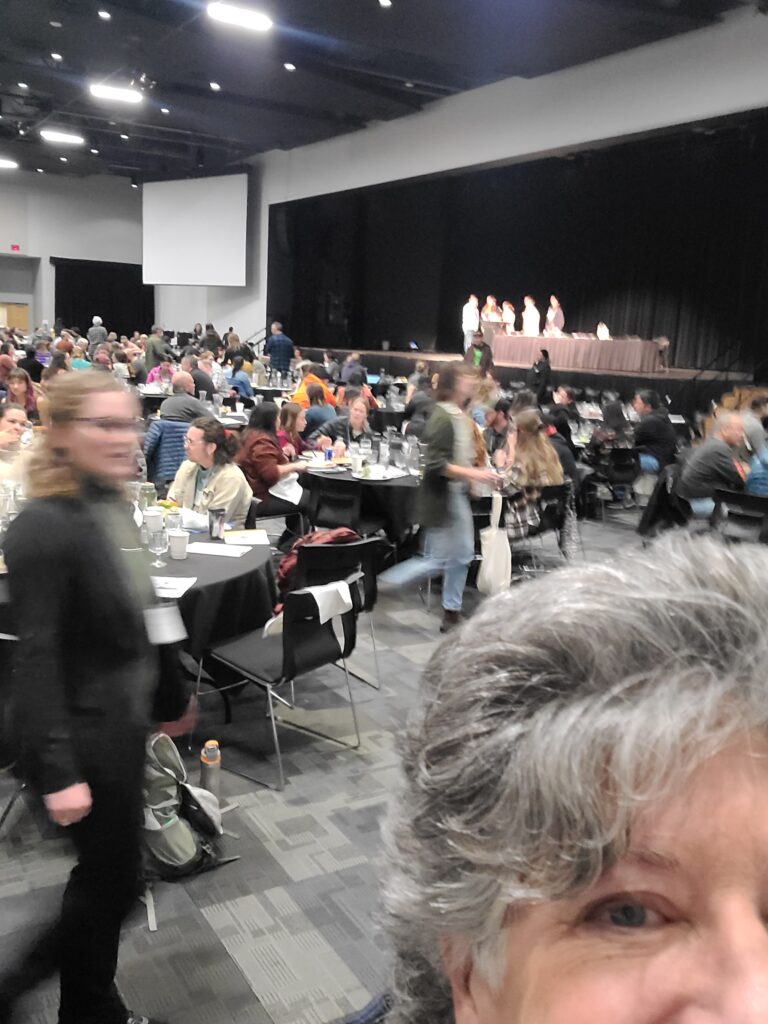
Wisconsin Sea Grant sponsored a recent symposium on wild rice, which I had the chance to attend as did Deidre Peroff, our social science outreach specialist. The “Manoomin/Psin Knowledge Symposium” was held at the Black Bear Resort in Carlton, Minnesota, in mid-November.

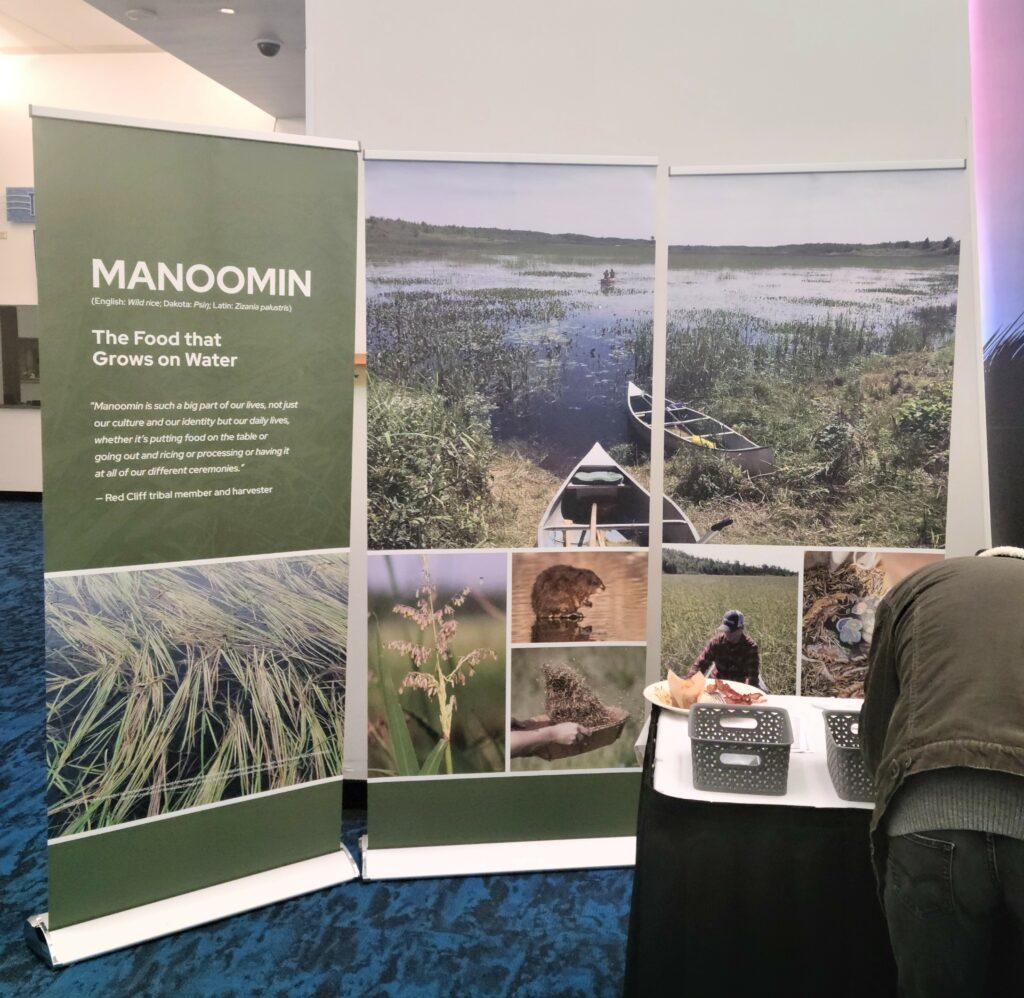
The manoomin display that Wisconsin Sea Grant and Nature Conservancy staff helped create. Image credit: Marie Zhuikov, Wisconsin Sea Grant

Symposium-goers were offered instant inspiration by a large manoomin display at the registration table, which was created by Peroff, our creative manager Sarah Congdon, and Kristen Blann with The Nature Conservancy.

Most interesting were sessions where speakers described what wild rice means to them and tips for harvesting it.

Here are seven key things to keep in mind when harvesting wild rice in the fall and the names of the people who offered the advice:

  • Unprocessed wild rice features a long tail-like barb that can have uncomfortable consequences for unwary harvesters. It can sometimes get stuck in people’s tear ducts, requiring careful extraction! If this happens to you, you’ll be crying “warrior tears.” (Donald Chosa, Bois Forte Band of Chippewa)
  • Harvesters sometimes also inhale the rice and the barbs get stuck in their throats, making it hard to breathe and eliciting coughing. It’s a good idea to bring bread along while harvesting in case this happens. Eating the bread can dislodge the rice barb from a person’s throat. (Deb Connell, ricer, Lac du Flambeau)
  • “Don’t harvest rice at your convenience. Harvest it when it’s ready.” (Todd Haley, Lac du Flambeau Band of Ojibwe)
  • If your canoe tips over while ricing, it does not have any special Ojibwe cultural meaning other than, “It means you’ll get wet!” (Donald Chosa, Bois Forte Band of Chippewa) (I was especially keen on this information after my recent “immersive” wild rice experience.)
  • Lift weights to strengthen your arms for ricing for about a month beforehand. (Donald Chosa, Bois Forte Band of Chippewa)
  • Having music playing in the canoe makes the ricing day go faster. (Various speakers)
  • The best way to learn how to rice better is to copy someone’s movements who is a good ricer. (Donald Chosa, Bois Forte Band of Chippewa)

I also learned about three projects in Wisconsin that were successful in bringing wild rice back to lakes where it had disappeared. These involved Spur Lake (Oneida County), Clam Lake (Burnett County), and Spring Lake (Washburn County).

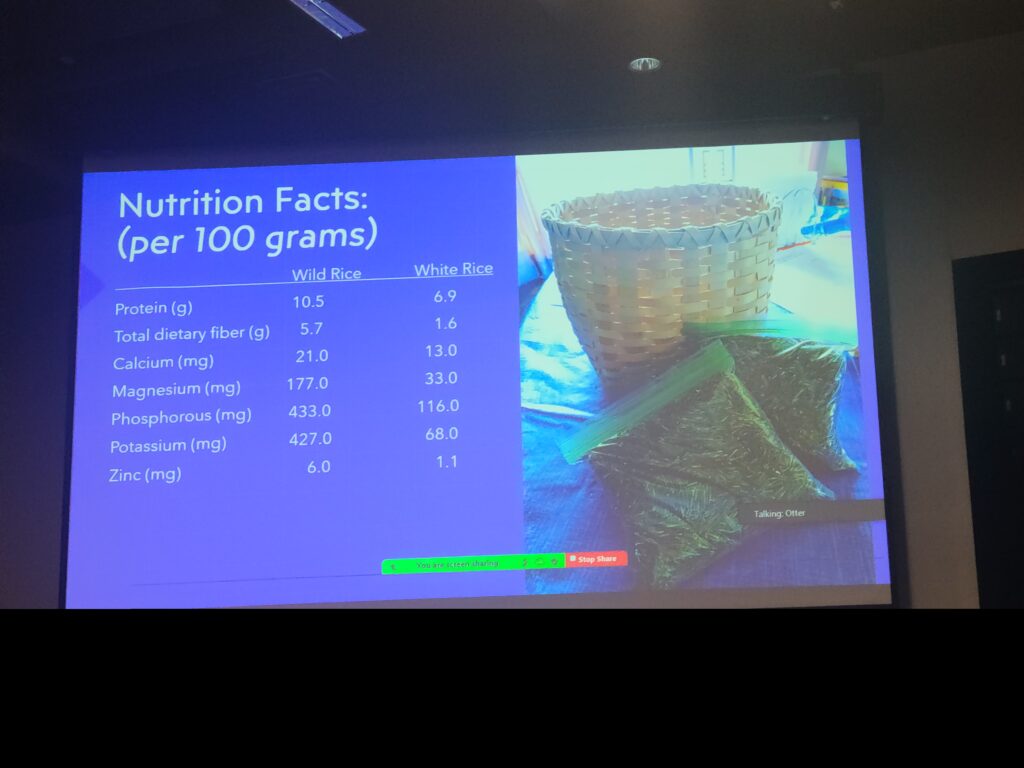
Nutritious wild rice is a true super food when compared to white rice, as noted in this image from one of the symposium speakers.

Carly Lapin with the Wisconsin Department of Natural Resources (DNR) said that Spur Lake, a historically important wild rice lake, began having trouble in 2009 when water levels became too high for wild rice to grow. She attributed this to beaver population recovery in the area and human alternations of the landscape. Also, aquatic invasive plant growth was out competing the wild rice.

Lapin said the DNR conducted a hydrologic study on the lake in cooperation with the Sokaogon Chippewa community to determine what was causing the water retention. In 2021, resource managers took advantage of naturally low water levels to remove competing vegetation with a mechanical harvester. The next year, they seeded the lake with wild rice and protected several plots with fencing to keep swans from eating the rice shoots. The protected areas grew successfully. A stream (Twin Lakes Creek) that provided outflow from the lake was restored and a harvest was able to occur in 2023.

Tony Havranek, an engineer with WSB, which is a design and consulting firm from Minneapolis, described the Clam Lake and Spring Lake projects. Clam Lake features two parts, an Upper and Lower Clam Lake. The lower part traditionally had wild rice, which declined from 2001-2009. In 2007 and 2008 the lake failed to grow any rice, which concerned the St. Croix Tribe. The tribe undertook studies with partners, who discovered that a steep rise in the population of common carp in the lake was the likely culprit. The age of the carp corresponded to the beginning of the rice crop failure. Havranek said the lake was home to 79,000 individuals, which equaled 670,000 pounds of fish.

“This is four times the tipping point for the lake environment,” Havranek said.

An integrated pest management plan was developed. Actions included installing barriers (nets) around the wild rice beds to keep out the carp, removing the carp from the lake and seeding the beds with local wild rice. Havranek said that over several years, 76,000 carp were removed.

By 2017, rice abundance had increased. Originally, 288 acres of rice beds were in the lake. By 2017, 177 acres had regrown, and harvest was able to begin again.

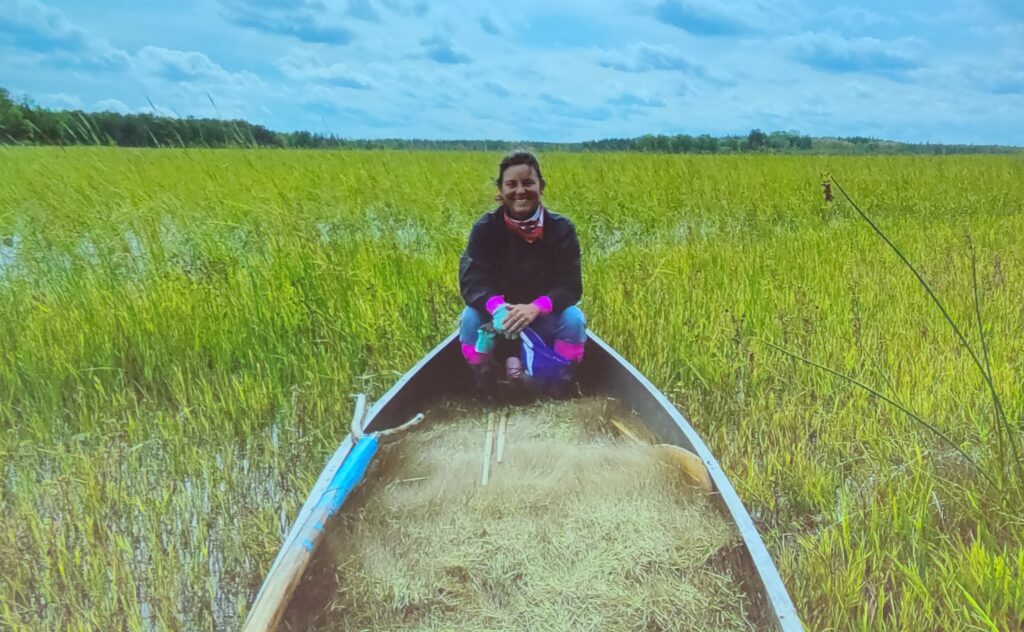
A successful wild rice harvest. Image credit: Thomas Howes, Fond du Lac Resource Management

Wild rice recovery at Spring Lake is still a work in progress. Problems began in 2000 when the outlet of the lake was changed. Floating leaf vegetation began taking over the lake. Herbicide was applied and unwanted plants were physically removed. After these actions, in 2005, rice was harvested.

However, rice production has declined recently (2016) due to cattail encroachment on the rice habitat. The cattails were mechanically removed and used for compost. Havernak said the rice harvest returned in 2017-2020 but that the lake is still struggling with rice production.

“We hope to remove more cattails and then put the lake on a monitoring schedule,” Havernak said.

Peroff and I staffed a table of publications at the symposium, which included our “ASC Chronicle” newsletter and a wild rice poster that features Ojibwe names for the different life stages of wild rice. The poster was very popular. It’s available online for free download here, or if you want a professionally printed version, you can contact Peroff at dmperoff@aqua.wisc.edu.

I left the event with a new appreciation for the complexities of wild rice management and harvesting. For a foraged food that’s strong enough to cause “warrior tears” or even choking, it remains incredibly fragile and needs our attention and care.

The post Lessons in wild ricing and wild rice lake restoration first appeared on Wisconsin Sea Grant.

Original Article

Blog | Wisconsin Sea Grant

Blog | Wisconsin Sea Grant

https://www.seagrant.wisc.edu/blog/lessons-in-wild-ricing-and-wild-rice-lake-restoration/

Marie Zhuikov

...STRONG WINDS EXPECTED THIS AFTERNOON INTO THIS EVENING... South to southwest winds will gust to 40 to 45 mph through early evening. The strong winds will make travel difficult for high profile vehicles, especially on west to east oriented roads, bridges and overpasses. The winds should gradually diminish during the mid to late

Original Article

Current Watches, Warnings and Advisories for Brown (WIC009) Wisconsin Issued by the National Weather Service

Current Watches, Warnings and Advisories for Brown (WIC009) Wisconsin Issued by the National Weather Service

https://alerts.weather.gov/cap/wwacapget.php?x=WI12666C7E31E8.SpecialWeatherStatement.12666C7EA9D4WI.GRBSPSGRB.090d30219d89be200cd64ad9fd99cd48

w-nws.webmaster@noaa.gov

...STRONG WINDS EXPECTED TODAY INTO THIS EVENING... South to southwest winds will gust to 40 to 45 mph from late this morning through early evening. The strong winds will make travel difficult for high profile vehicles, especially on west to east oriented roads, bridges and overpasses. The winds should gradually diminish during the mid to late

Original Article

Current Watches, Warnings and Advisories for Brown (WIC009) Wisconsin Issued by the National Weather Service

Current Watches, Warnings and Advisories for Brown (WIC009) Wisconsin Issued by the National Weather Service

https://alerts.weather.gov/cap/wwacapget.php?x=WI12666C7CFB5C.SpecialWeatherStatement.12666C7E4A20WI.GRBSPSGRB.090d30219d89be200cd64ad9fd99cd48

w-nws.webmaster@noaa.gov

As the winter season approaches, counties across Michigan are preparing to handle the inevitable dumping of snow, especially on roadways. 

Technology and processes employed have helped plows become more efficient, said Bradley Wieferich, the director of the Department of Transportation. 

The post Reducing salt use on snowy roads proves challenging first appeared on Great Lakes Echo.

Original Article

Great Lakes Echo

Great Lakes Echo

http://greatlakesecho.org/2023/11/16/reducing-salt-use-on-snowy-roads-proves-challenging/

Guest Contributor

There are a multitude of threats to water resources throughout the Great Lakes basin, which underscores the burden that falls on Indigenous Nations to protect their treaty rights even though they may not have the staffing, time, or money to do so. Read the full story by the Milwaukee Journal Sentinel.

Original Article

Great Lakes Commission

Great Lakes Commission

https://www.glc.org/dailynews/20231115-treaty-rights

Taaja Tucker-Silva

More than 210 years after the Battle of Lake Erie, a replica of the U.S. Brig Niagara still sails the Great Lakes, giving visitors a chance to learn the very old art of square-rig sailing, as well as a chance to engage with a key part of U.S. naval history. Read the full story by the Butler Eagle.

Original Article

Great Lakes Commission

Great Lakes Commission

https://www.glc.org/dailynews/20231115-brig-niagara

Taaja Tucker-Silva

The Oneida Nation reservation, located within the lower Fox River watershed which drains into Green Bay, Wisconsin, has successfully limited phosphorus in creeks for two consecutive years, with recent evidence of reproducing brook trout for the first time in decades. Read the full story by the Milwaukee Journal Sentinel.

Original Article

Great Lakes Commission

Great Lakes Commission

https://www.glc.org/dailynews/20231115-indigenous-agriculture

Taaja Tucker-Silva

The Detroit Riverfront Conservancy recently unveiled a half-mile expansion to Detroit’s Riverwalk that allows visitors to walk or bike 3.5 miles along the river, without interruption, from the Joe Louis Arena to the Belle Isle Bridge. Read the full story by WDET – Detroit, MI.

Original Article

Great Lakes Commission

Great Lakes Commission

https://www.glc.org/dailynews/20231115-detroit-riverwalk

Taaja Tucker-Silva

A Libertyville, Illinois, high school science teacher, known for incorporating real-world applications in her AP Environmental Science class, attended a weeklong workshop aboard the U.S. Environmental Protection Agency research vessel Lake Guardian on Lake Ontario. Read the full story by the Daily Herald.

Original Article

Great Lakes Commission

Great Lakes Commission

https://www.glc.org/dailynews/20231115-environmental-teacher

Taaja Tucker-Silva

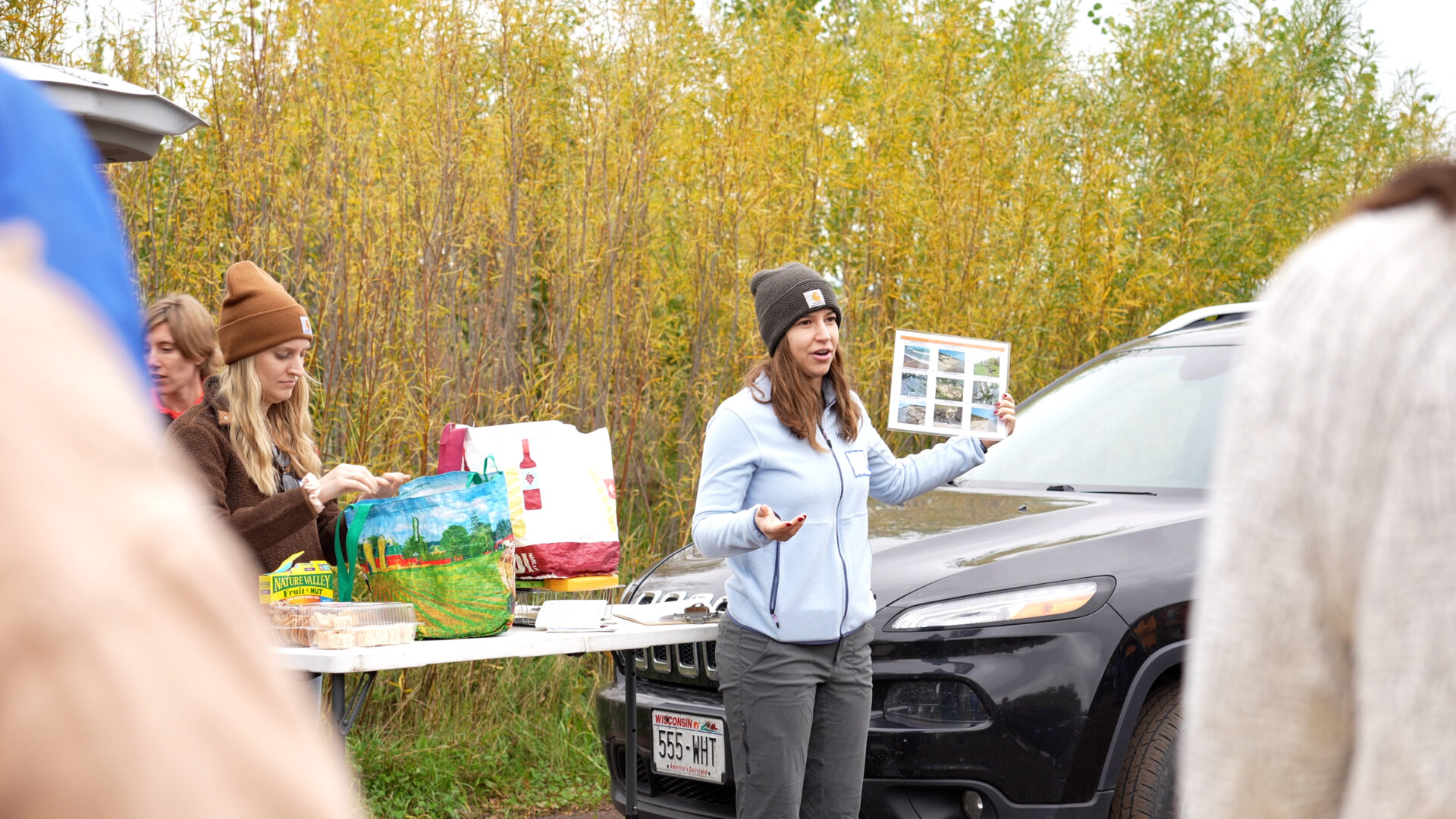
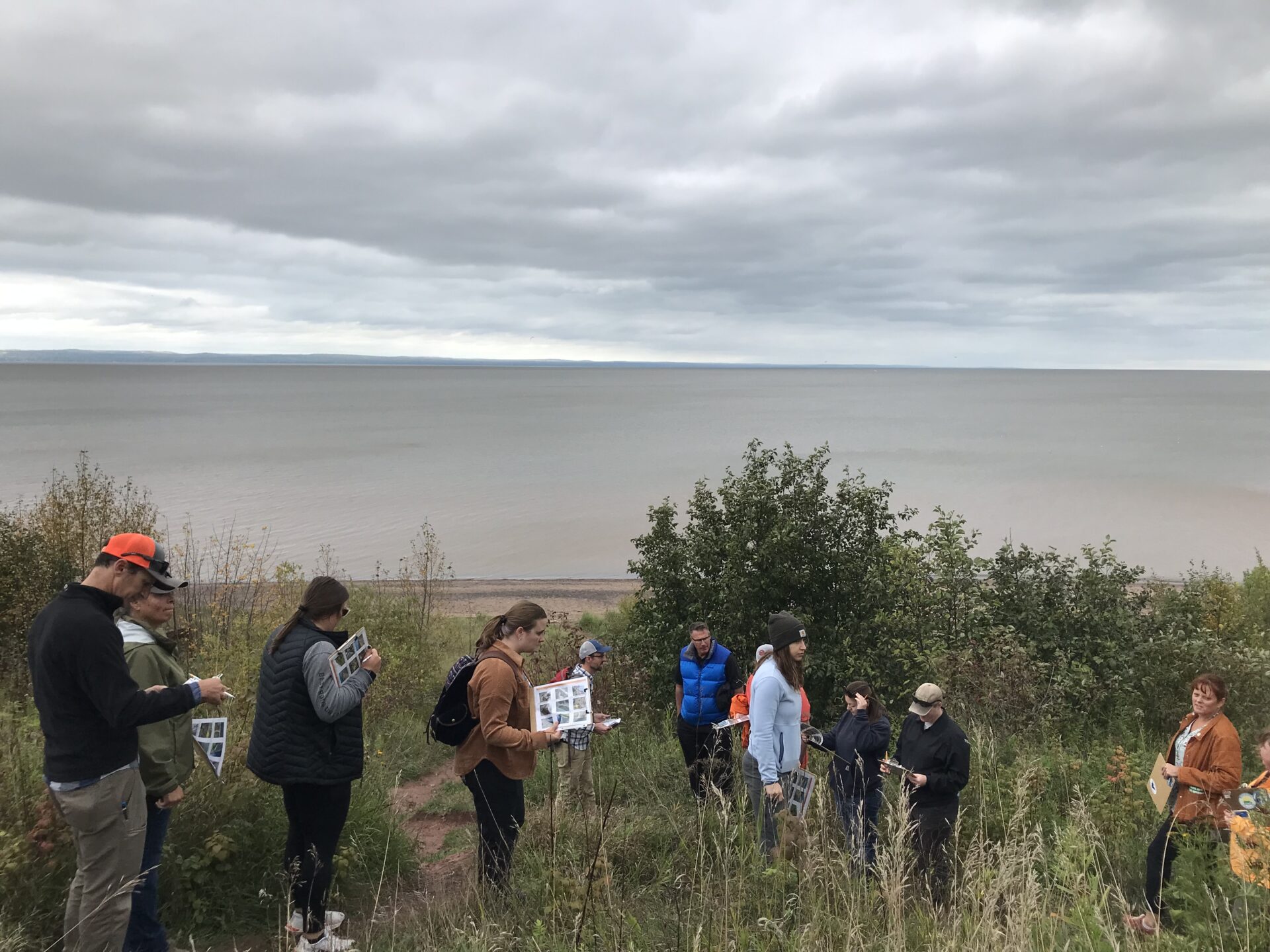
On Oct. 4, members of the Coastal Hazards of Superior (CHAOS) community of practice gathered atop a bluff overlooking Lake Superior to discuss the stability of the ground beneath their feet.

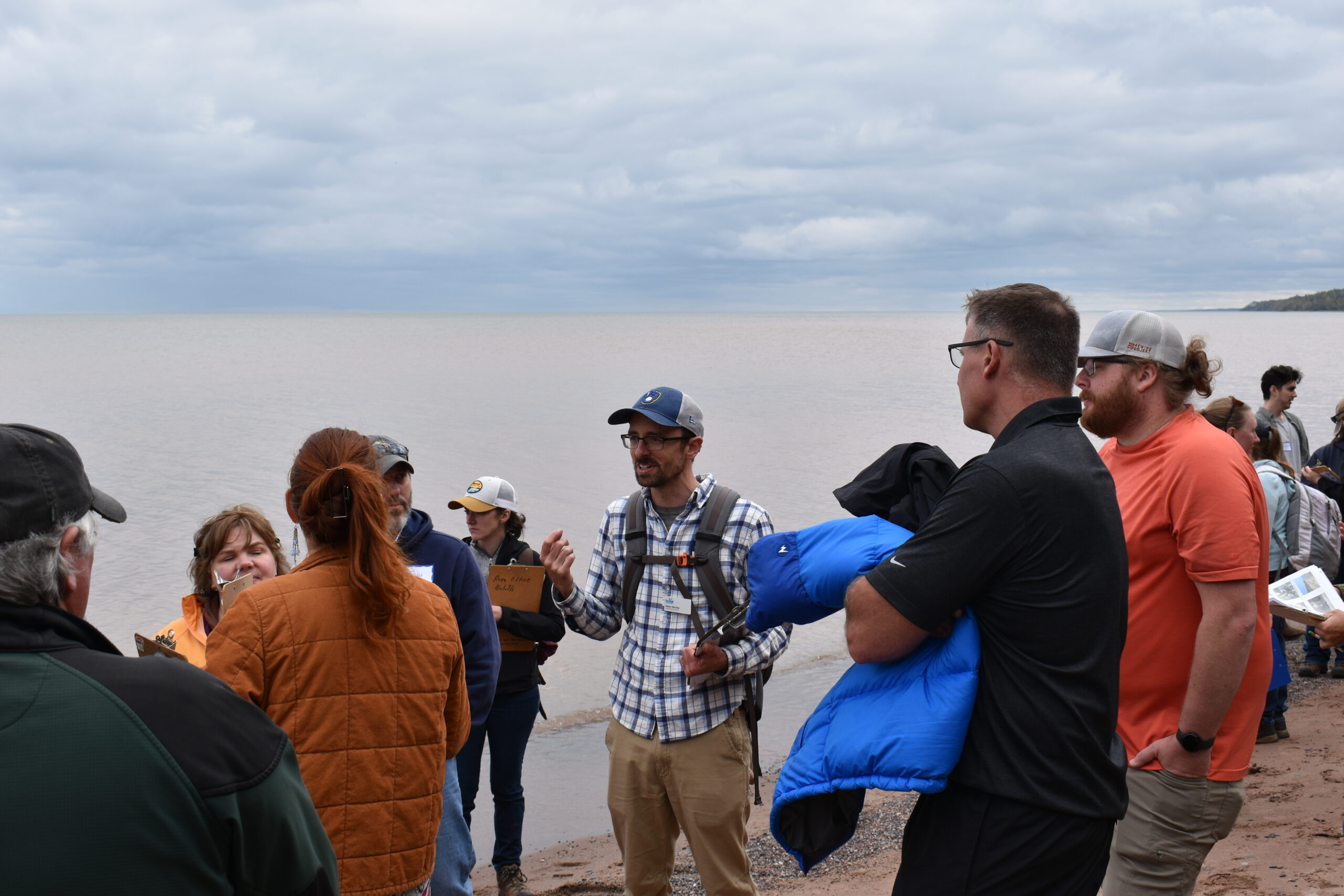
Coastal engineering specialist Adam Bechle discusses erosion with workshop participants on a cloudy day along Schafer Beach in Superior, WI.

Adam Bechle, center, discusses shoreline erosion with workshop participants along Schafer Beach. Photo: Cait Dettmann, Minnesota Sea Grant

The group brought together planners, zoning officials and individuals from local, state and federal government in both Minnesota and Wisconsin to share ideas and resources about coastal issues facing western Lake Superior. October’s meeting at Schafer Beach in Superior, Wisconsin, featured the debut of a new tool designed to document shoreline erosion, which threatens homes and other structures built atop bluffs.

Adam Bechle, coastal engineering outreach specialist with Wisconsin Sea Grant, and Hannah Paulson, the 2022–2023 J. Philip Keillor Coastal Management Fellow, developed the tool, which is a checklist that helps coastal property owners spot signs of erosion. It describes visual indicators like tilted trees and ground cracks and provides photos of each.

Said Bechle, “[It’s] a way to document what you see at the site. And if you’re a property owner, [it’s] something to refer back to and maybe do annually to look for signs of change.”

And atop a Great Lakes bluff, change is constant. Storms, wind, ice and wave action all impact how fast land erodes. High water levels, like the ones both Lake Superior and Lake Michigan have experienced in the past five years, exacerbate erosion and flooding.

Hannah Paulson holds up the erosion checklist and explains it to participants.

Hannah Paulson explains the erosion checklist. Photo: Cait Dettmann, Minnesota Sea Grant

Taking a longer look through history, lake levels have fluctuated even more drastically. Andy Breckenridge, a geology and environmental science professor at the University of Wisconsin-Superior who presented at the workshop, revealed that where participants stood atop the bluff used to be at the bottom of Lake Superior.

“Lake levels have been much higher than today, and they’ve been much lower than they’ve been today,” said Breckenridge. “And for that reason, this coastline has gone through dramatic changes. It has not looked like this for most of the last 12,000 years.”

With the long view in mind, CHAOS members snapped the erosion checklists to their clipboards and maneuvered down the bluff to give the tool a test run. Bechle and Paulson were joined by Todd Breiby and Lydia Salus of the Wisconsin Coastal Management Program, current Keillor Fellow Helena Tiedmann, Karina Heim of the Lake Superior National Estuarine Research Reserve and Madison Rodman of Minnesota Sea Grant in engaging CHAOS members about what they saw.

Tilted trees, a ground crack, lack of vegetation and a spot where groundwater was seeping through the bluff were some of the signs participants spotted. The activity sparked conversation about the importance of photos to explain erosion to property owners, with one participant noting the need for images of erosion after strong storm events.

A group of people in jackets and vests maneuver down a bluff along Lake Superior with clipboards in hand.

Workshop participants assess the bluff for signs of erosion. Photo credit: Wisconsin Sea Grant

Said Paulson, “I think we got some good suggestions for refining the tool even more.”

Returning to the top of the bluff, participants then cycled through three stations showcasing additional tools to assess bluff stability. One station showed how topography maps can be used to estimate slope—a helpful method if not physically on the property—and another demonstrated how to use an inclinometer to gather exact slope measurements on site. Participants also tried their hand at measuring the high point of the bluff using a reel tape.

While it may be tempting to frame erosion as the antagonist in this story, Bechle is careful to point out that without it, we wouldn’t have beautiful sand beaches, as much of that sand comes from eroded bluff soils. That’s why it’s important to make careful, informed decisions about if and where to build structures on bluffs and shorelines.

“Erosion is a natural process, and if we weren’t here, it would just be occurring,” said Bechle. “It’s not a bad thing; it’s just a bad thing because we have things we care about that might get impacted by it.”

Bechle and Paulson plan to include the checklist in an updated version of the “Coastal Processes Manual,” which is under development. In the meantime, coastal residents interested in maintaining and improving the stability of their bluff can refer to Wisconsin Sea Grant’s “A Property Owner’s Guide to Protecting Your Bluff.”

The post Convening CHAOS to spot signs of shoreline erosion   first appeared on Wisconsin Sea Grant.

Original Article

News Releases | Wisconsin Sea Grant

News Releases | Wisconsin Sea Grant

https://www.seagrant.wisc.edu/news/convening-chaos-to-spot-signs-of-shoreline-erosion/

Jenna Mertz

New publication alert!

Environmental surveillance and detection of viable highly pathogenic avian influenza virus in Iowa wetland.

Original Article

Upper Midwest Water Science Center

Upper Midwest Water Science Center

https://www.usgs.gov/centers/upper-midwest-water-science-center/news/new-publication-highlight-environmental?utm_source=comms&utm_medium=rss&utm_campaign=news

jvelkoverh@usgs.gov

An invasive insect increasingly threatens one of the Great Lakes region’s most important trees for storing the carbon that causes global warming.

Researchers have found that eastern hemlock trees felled by the invasive woolly adelgid could emit 4.5 tons of carbon across almost two and a half football fields.

The post Invasive insect threatens carbon storage in Great Lakes forests first appeared on Great Lakes Echo.

Original Article

Great Lakes Echo

Great Lakes Echo

http://greatlakesecho.org/2023/11/15/invasive-insect-threatens-carbon-storage-in-great-lakes-forests/

Guest Contributor

Worsening warming is hurting people in all regions, US climate assessment shows

By Seth Borenstein and Tammy Webber, Associated Press

Revved-up climate change now permeates Americans’ daily lives with harm that is “already far-reaching and worsening across every region of the United States,” a massive new government report says.

The National Climate Assessment, which comes out every four to five years, was released Tuesday with details that bring climate change’s impacts down to a local level.

Read Now at Great Lakes Now.

Original Article

Great Lakes Now

Great Lakes Now

https://www.greatlakesnow.org/2023/11/ap-worsening-warming-hurting-people-regions-us-climate-assessment/

The Associated Press

Concerns about Michigan steelhead populations prompt new catch limits

By Kelly House, Bridge Michigan

The Great Lakes News Collaborative includes Bridge Michigan; Circle of Blue; Great Lakes Now at Detroit Public Television; and Michigan Radio, Michigan’s NPR News Leader; who work together to bring audiences news and information about the impact of climate change, pollution, and aging infrastructure on the Great Lakes and drinking water.

Read Now at Great Lakes Now.

Original Article

Great Lakes Now

Great Lakes Now

https://www.greatlakesnow.org/2023/11/concerns-about-michigan-steelhead-populations-prompt-new-catch-limits/

Bridge Michigan

Gloria Araya Photography 
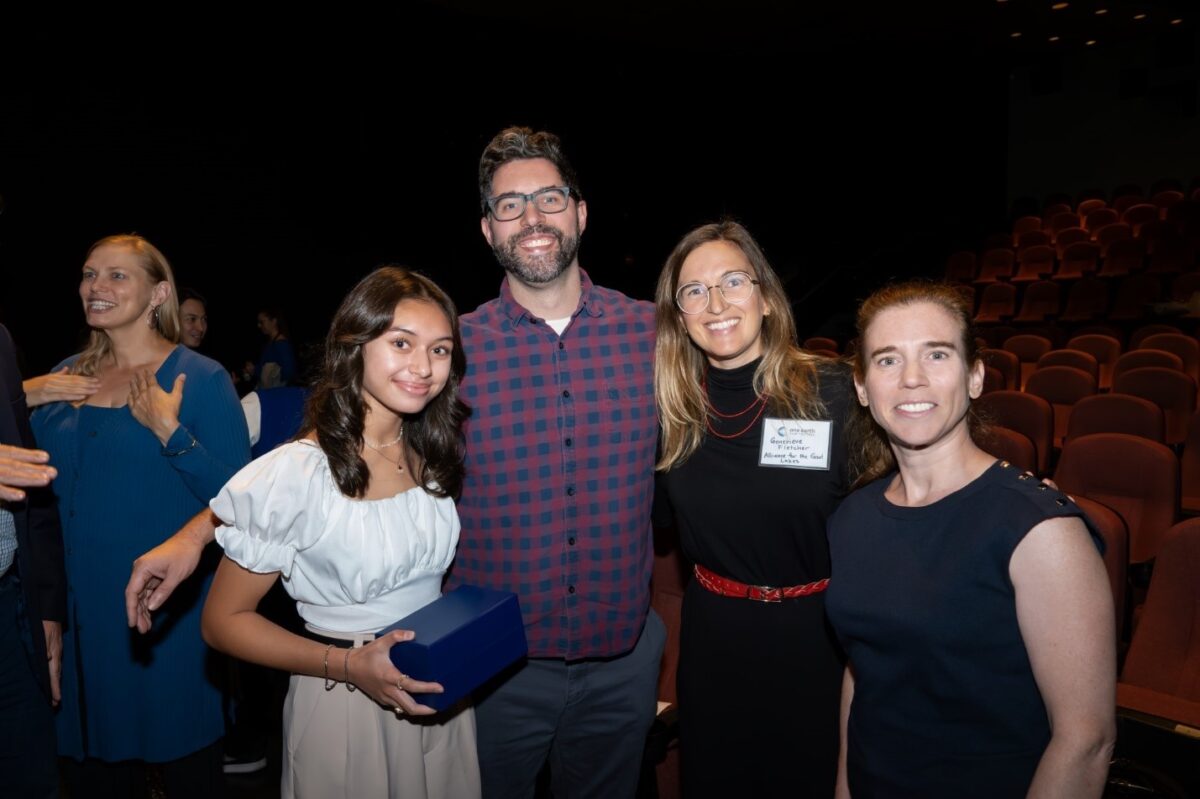
From left to right: Asiana Spaw, One Earth Young Filmmakers Contest Winner; Matt Altstiel, Alliance for the Great Lakes Vice President for Development; Genevieve Fletcher, Individual Giving Manager; Molly Flanagan, Chief Operating Officer & Vice President for Programs 

The One Earth Young Filmmakers Contest invites inspiring young filmmakers across the world, from grades three through post-grad, to submit films that address today’s most pressing environmental challenges. The contest winners receive a financial award for their winning films, which premiered in front of a live and virtual audience at the Gene Siskel Film Center in Chicago this September.  

In accompaniment to their own award, the winners choose an environmental nonprofit whose mission aligns with the subject of their film to receive a matching grant. This year, the Alliance was the grateful recipient of a matching grant award chosen by high school senior, Asiana Spaw, the winner of the 2023 One Earth Young Filmmakers Contest College Level Award for her short film, Microplastics: Not a Small Problem. Several Alliance staff attended the Awards Celebration and were able to meet Asiana and her parents and see her film along with nine other outstanding films by students across the country and the world. 

Asiana is a 12th-grader from Northwest Indiana who grew up visiting Lake Michigan. Her film addresses the issue of microplastics in the Great Lakes and its effect on marine life and human populations. The film highlights the need to not only reduce single-use plastic but also the need for legislative action. Her message aligns well with the Alliance for the Great Lakes’ work to reduce plastic pollution both on the ground and through policy and advocacy. 

Another winning student, 8th grader, Andrew Older, from River Forest, Illinois, received an Honorable Mention Award for his three-minute short film titled, Invasive Fish in the Des Plaines River. In his film, Andrew explained how invasive carp and goby fish got into the river and how they are outcompeting native species, threatening the local ecology. He also included information on organizations that work to prevent the spread of invasive species, including the Alliance for the Great Lakes, and encouraged viewers to donate to the cause (Thank you, Andrew!). His film premiered at the One Earth Young Filmmakers Honorable Mention Awards Virtual Screening on November 4th

Read on to hear from the students in their own words and watch their 3- and 4-minute short films!  

Asiana Spaw 

“I am a 12th grade filmmaker from Northwest Indiana. Most of my work is narrative, and I love to include social issues and my intersectional experiences. Besides classes and filmmaking, I spend my time competing on the Speech team, coxing for crew, and playing the oboe! 

I made this short documentary over a few days for the One Earth Young Filmmaker’s Contest to call attention to an issue local to me. Before my research, I had little familiarity with how plastic pollution can affect lakes differently from the ocean, which tends to gain more media attention. As I live near Lake Michigan, I both want to see less trash along the shores and know that my drinking water is free from unknown contaminants. I chose the Alliance for the Great Lakes because they lead excellent efforts, like the Adopt-a-Beach cleanups, to preserve our Great Lakes. I look forward to seeing their continued work to mitigate the threats to these bodies of water.” 

Andrew Older 

Andrew Older is an 8th-grade student at Roosevelt Middle School. He lives in River Forest with his parents, sister, and dog Theo. He loves spending time outside and Thatcher Woods is a favorite spot. 

“I created this video to raise awareness about invasive species in the Des Plaines River, a local river near my house where I regularly fish. One time, while fishing, I noticed that most of the fish I was catching were Gobi fish. After learning from my teacher, Mr. Schlacter, that they were an invasive fish species, I submitted a video on the topic to the One Earth Film Festival, a global environmental film competition. I learned that even one action, even if it is small, can make a difference because it can inspire others to take action. If we all do something, it can have an impact on the environment.” 

The Alliance is inspired by the work of Asiana and Andrew to spread awareness about these important Great Lakes issues. We commend them and the One Earth Film Festival for encouraging environmental activism as well as environmental philanthropy through film.  

To watch the full screening of the 2023 One Earth Young Filmmakers First-Place Contest Awards and Honorable Mention Awards short films, click the below links: 

The post One Earth: Young Filmmakers Shine A Light on Great Lakes Issues  appeared first on Alliance for the Great Lakes.

Original Article

News - Alliance for the Great Lakes

News - Alliance for the Great Lakes

https://greatlakes.org/2023/11/one-earth-young-filmmakers-shine-a-light-on-great-lakes-issues/

Michelle Farley

When you reminisce about the Thanksgiving season, it’s easy to envision a belly stuffed with turkey, then leaning all the way back in your favorite recliner for a nap.

The hard work of small-town turkey farmers around Michigan is likely to go unnoticed when many consumers head to the supermarket for their frozen bird

The post Local farms compete with imported turkeys during Thanksgiving first appeared on Great Lakes Echo.

Original Article

Great Lakes Echo

Great Lakes Echo

http://greatlakesecho.org/2023/11/14/local-farms-compete-with-imported-turkeys-during-thanksgiving/

Guest Contributor

PFAS News Roundup: How ‘forever chemicals’ affect the human body

Keep up with PFAS-related developments in the Great Lakes area with Great Lakes Now’s biweekly headline roundup.


Click on the headline to read the full story:

Michigan

EGLE establishes new surface water values for two additional PFAS chemicals — State of Michigan

The Michigan Department of Environment, Great Lakes, and Energy has set human health water quality parameters, which measure the maximum substance concentrations before adverse health effects.

Read Now at Great Lakes Now.

Original Article

Great Lakes Now

Great Lakes Now

https://www.greatlakesnow.org/2023/11/pfas-news-roundup-how-forever-chemicals-affect-human-body/

Kathy Johnson

Wisconsin environmental regulators are proposing to add 51 new water bodies to the state’s list of polluted waters for 2024, as well as 81 new listings for pollutants in waterways. Phosphorus and aquatic plants account for the majority of pollution under new listings. Read the full story by Wisconsin Public Radio.

Original Article

Great Lakes Commission

Great Lakes Commission

https://www.glc.org/dailynews/20231113-wisconsindnr-pollutedwaterways

Hannah Reynolds

An effort to block invasive grass carp from spawning in the Sandusky River will be explained during a public information session in Fremont, Ohio, on Monday. Officials are doing a study to see if sound waves, bubble curtains, and other barriers can deter the fish from spawning. Read the full story by the Toledo Blade.  

Original Article

Great Lakes Commission

Great Lakes Commission

https://www.glc.org/dailynews/20231113-efforts-deter-grasscarp-spawning

Hannah Reynolds

It’s a tricky balance: get enough salt on the roads to protect drivers, but also be environmentally conscious. Salt alternatives — like beet juice, or sugar and corn by-products — are an option, but not a cheap option. Read the full story by WXYZ-TV – Detroit, MI.

Original Article

Great Lakes Commission

Great Lakes Commission

https://www.glc.org/dailynews/20231113-beetjuice-salt-michigan-roads-winter

Hannah Reynolds

Manoomin is the word in Native language Anishinaabemowin for wild rice, which is on the cusp of being designated Michigan’s state native grain. It is perhaps the most culturally significant plant species among Great Lakes tribes. Read the full story by MLive.

Original Article

Great Lakes Commission

Great Lakes Commission

https://www.glc.org/dailynews/20231113-tribalefforts-wildrice-mi-state-symbol

Hannah Reynolds

Southeast Chicago residents joined members of the Alliance of the Southeast and Friends of the Parks to protest the 25-foot-tall waste dump the U.S. Army Corps of Engineers wants to build on the existing confined disposal facility off of Steelworkers Park. Read the full story by WBBM – Chicago, IL.

Original Article

Great Lakes Commission

Great Lakes Commission

https://www.glc.org/dailynews/20231113-toxicwaste-environmental-rejectedplan

Hannah Reynolds

The St. Lawrence Seaway announced Friday the shipping channel’s St. Lawrence River section will close on January 5, 2024. That’s the latest scheduled closing since the Seaway opened in 1959. Read the full story by North Country Public Radio.  

Original Article

Great Lakes Commission

Great Lakes Commission

https://www.glc.org/dailynews/20231113-stlawrence-seaway-latestclosingdate

Hannah Reynolds

Check your car, kayak or a nearby rail car – it might be providing free transportation for an invasive pest or plant. And you can be part of a renewed effort to stop the invaders as the Midwest Invasive Species Information Network needs help finding and identifying invasive species. Read the full story by The Mining Journal.

Original Article

Great Lakes Commission

Great Lakes Commission

https://www.glc.org/dailynews/20231113-land-water-invasivespecies

Hannah Reynolds

Michigan is the second-most agriculturally diverse state, with farmers growing a wide variety of produce and specialty crops, such as cherries, asparagus and blueberries. 

One bonus of buying locally grown produce is that the community’s economy benefits. 

The post Buying local fresh produce benefits farmers first appeared on Great Lakes Echo.

Original Article

Great Lakes Echo

Great Lakes Echo

http://greatlakesecho.org/2023/11/13/buying-local-fresh-produce-benefits-farmers/

Guest Contributor

Former director of the University of Wisconsin Water Resources Institute (WRI), Jim Hurley, last week received a certificate of appreciation for his service on the State of Wisconsin’s Groundwater Coordinating Council (GCC).

Hurley spent 11 years as a member of the body that was created by the state legislature in 1984 to both facilitate interagency cooperation of those departments that have jurisdiction over water and foster research, monitoring and education around Wisconsin’s 1.2 quadrillion gallons of groundwater. Hurley was the GCC representative from the Universities of Wisconsin.

In highlighting his contributions, Jim Zellmer said Hurley was invaluable to “funding efforts, placement of postgraduate fellows and really supporting all of the research, education and outreach that has benefited the Groundwater Coordinating Council, the agencies that participate in the council and the state as a whole.”

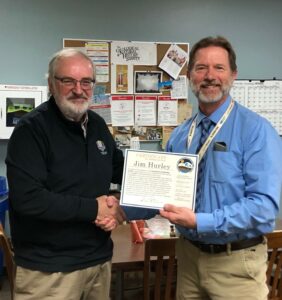
Two people standing together and both holding a certificate.
Jim Hurley (left) received a certificate of recognition from Jim Zellmer, Wisconsin Department of Natural Resources, on behalf of the Groundwater Coordinating Council.

Zellmer chairs the GCC and is a deputy division administrator for the Wisconsin Department of Natural Resources (DNR), overseeing drinking water and groundwater and water quality programs, as well as the Office of Great Waters.

Hurley said the GCC is an amazing resource that brings entities together to solve problems. He said many other states look to Wisconsin as a model for cooperative groundwater study and ongoing monitoring.

In particular, he called out the research that led to better understanding the scope of naturally occurring radium compromising drinking water in Waukesha, Wisconsin. That work led to the unprecedented approval from Great Lakes governors and premiers to allow residents of this southeastern Wisconsin community outside of the basin to draw drinking water from Lake Michigan as a solution to protect public health.

Hurley also invoked a study about per- and polyfluoroalkyl substances (PFAS) that was released in early November. He complimented the research team for recognizing the value of drawing on both state and federal agency knowledge along with that of academia. The study presented an important picture of PFAS prevalence and levels in private drinking water wells across the state.

“It was great to see how quickly the state, and a little bit of the feds in there too, and universities responded to PFAS” in the groundwater, Hurley said.

In October, Hurley retired as the WRI director. During his years on the GCC, he managed a groundwater research competition that allows potential investigators to submit to several funding sources simultaneously. Then, the WRI arranges for peer review of all submitted proposals, easing funding decision-making for those providing the dollars for the eventual projects.

During Hurley’s tenure there were 82 research projects funded by the universities and the state of Wisconsin departments of Natural Resources, as well as Agriculture, Trade and Consumer Protection (DATCP). The research topics were diverse but can be broadly characterized as addressing groundwater quantity, quality and management.

In addition to the DNR, DATCP and the universities, other GCC members include the Wisconsin Geological and Natural History Survey and the state of Wisconsin departments of Safety and Professional Services, Health Services and Transportation.

The post Honor for former WRI director first appeared on WRI.

Original Article

News Release | WRI

News Release | WRI

https://www.wri.wisc.edu/news/honor-for-former-wri-director/

Moira Harrington

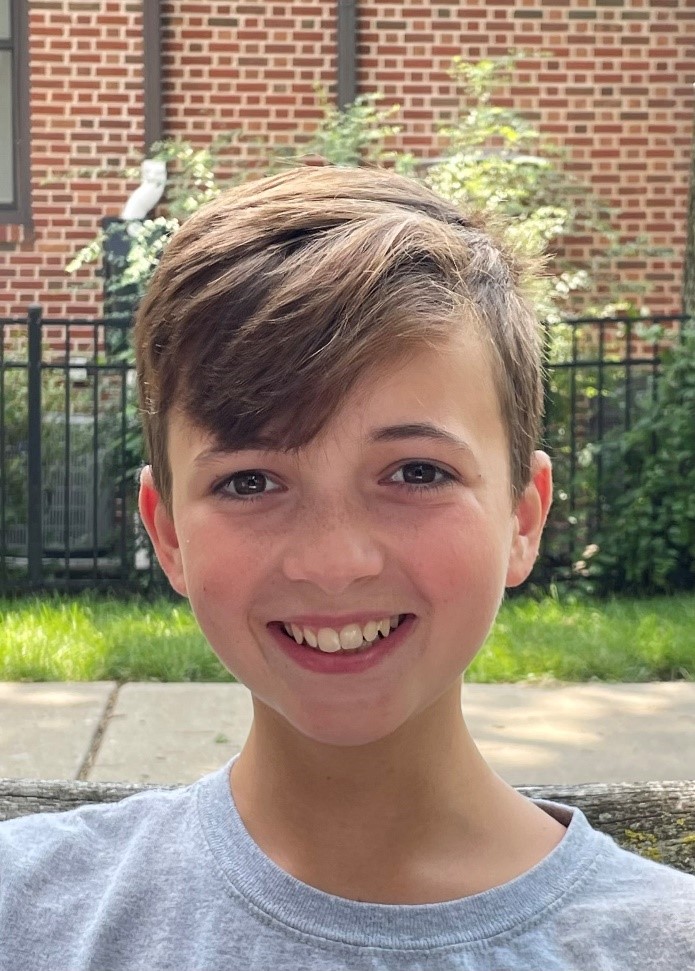
Most kids are not too excited about cleaning. I know my kids groan when I remind them of their daily chores. That’s why it was remarkable, and certainly noteworthy, to see a fifth grade student cleaning up litter on their own. Meet Rean: Rean is a fifth grade student in elementary school in Oshkosh. The crossing guard at her school had noticed that she was picking up trash around her school and neighborhood both before and after school hours. Her good deeds were reported to the school’s counselor and from there, I was contacted at the Fox-Wolf Watershed Alliance because the Trash Free Waters program loves to highlight those who help protect our waters from trash and debris.

This past week, I was able to sit down with Rean and learn more about her and why she believes it’s important to keep her neighborhood clean. When asked why she started picking up trash on her way to school, she said,

“I saw so much trash on the ground, and saw it every day. I started picking it up because nobody else would.”

Since she started cleaning up, she has been accompanied by her friend and fellow 5th grader, Vicky. When asked about her favorite lake or river, she said she loves all water bodies, but she especially loves spending time at Menominee Park–located  along Lake Winnebago’s east shore. I wanted to get her thoughts on how she believes littering can be reduced and prevented. She reponded,

“People could have trash cans they bring along with them. We need more trash and recycle cans in more places. I want to make biodegradable plastic that grows trees if thrown on the ground.”

Finally, I told her she’s doing something that not many adults are doing, and asked her if she had any advice for adults. Rean responded,

“Please don’t litter, it’s bad for the planet. Make sure it goes in the trash can, [and] please use reusable items. You should join the watershed cleanup event in the spring.”

Rean received some trash bags, trash grabbers, and gloves from Fox-Wolf to make her efforts cleaner and more efficient. Thank you Rean for your hard work and for inspiring others to do the same.


Written by: Kelly Reyer, Trash Free Waters Program Coordinator
Fox-Wolf Watershed Alliance, kelly@fwwa.org.

The post Doing the Right Thing: An interview with a 5th Grader appeared first on Fox-Wolf Watershed Alliance.

Original Article

Fox-Wolf Watershed Alliance

Fox-Wolf Watershed Alliance

https://fwwa.org/2023/11/12/doing-the-right-thing-an-interview-with-a-5th-grader/?utm_source=rss&utm_medium=rss&utm_campaign=doing-the-right-thing-an-interview-with-a-5th-grader

Kelly Reyer

Episode 2310 Lesson Plans: Dynamic populations

This lesson will explore the phenomenon of the moose-wolf population dynamics on Isle Royale, as students learn about how one of our lesser-known national parks provides a firsthand opportunity to witness biology, ecology, and history in action. They will explore the dynamics of predator-prey relationships, conduct field observations about populations in their own area, and mathematically model the moose-wolf population biology over time.

Read Now at Great Lakes Now.

Original Article

Great Lakes Now

Great Lakes Now

https://www.greatlakesnow.org/2023/11/episode-2310-dynamic-populations-lesson-plan/

Gary Abud Jr.

Scientists at Laboratory for Infectious Disease and the Environment are collaborating with Polk County Conservation in central Iowa to estimate the health risk posed to recreators in the Des Moines River and tributaries.

Original Article

Upper Midwest Water Science Center

Upper Midwest Water Science Center

https://www.usgs.gov/centers/upper-midwest-water-science-center/news/collaborative-usgs-study-informs-development-water?utm_source=comms&utm_medium=rss&utm_campaign=news

jvelkoverh@usgs.gov

The American Courage, a 617-foot U.S.-flagged bulk freighter, was refloated from its grounding in the St. Clair River with the help of several tugboats around 7 p.m. on Tuesday, November 7. The ship grounded Tuesday morning around 7:20 a.m. while attempting to make port at the St. Clair Aggregates dock in Marine City, Michigan. Read the full story by MLive.


Original Article

Great Lakes Commission

Great Lakes Commission

https://www.glc.org/dailynews/20231110-freighter-refloated

James Polidori