Assessing the U.S. Climate in May 2024
2024-06-10
During May, the average contiguous U.S. temperature was 62.3°F, 2.1°F above the 20th-century average.
NCEI News Feed
https://www.ncei.noaa.gov/news/national-climate-202405
NCEI News Feed
https://www.ncei.noaa.gov/news/national-climate-202405
NCEI News Feed
https://www.ncei.noaa.gov/news/national-climate-202405
NCEI News Feed
https://www.ncei.noaa.gov/news/national-climate-202405
NCEI News Feed
https://www.ncei.noaa.gov/news/national-climate-202405
NCEI News Feed
https://www.ncei.noaa.gov/news/national-climate-202405
NCEI News Feed
https://www.ncei.noaa.gov/news/national-climate-202405
NCEI News Feed
https://www.ncei.noaa.gov/news/national-climate-202405
NCEI News Feed
https://www.ncei.noaa.gov/news/national-climate-202405
NCEI News Feed
https://www.ncei.noaa.gov/news/national-climate-202405
NCEI News Feed
https://www.ncei.noaa.gov/news/national-climate-202405
NCEI News Feed
https://www.ncei.noaa.gov/news/national-climate-202405
NCEI News Feed
https://www.ncei.noaa.gov/news/national-climate-202405
NCEI News Feed
https://www.ncei.noaa.gov/news/national-climate-202405
NCEI News Feed
https://www.ncei.noaa.gov/news/national-climate-202405
NCEI News Feed
https://www.ncei.noaa.gov/news/national-climate-202405
NCEI News Feed
https://www.ncei.noaa.gov/news/national-climate-202405
NCEI News Feed
https://www.ncei.noaa.gov/news/national-climate-202405
NCEI News Feed
https://www.ncei.noaa.gov/news/national-climate-202405
NCEI News Feed
https://www.ncei.noaa.gov/news/national-climate-202405
NCEI News Feed
https://www.ncei.noaa.gov/news/national-climate-202405
NCEI News Feed
https://www.ncei.noaa.gov/news/national-climate-202405
NCEI News Feed
https://www.ncei.noaa.gov/news/national-climate-202405
NCEI News Feed
https://www.ncei.noaa.gov/news/national-climate-202405
NCEI News Feed
https://www.ncei.noaa.gov/news/national-climate-202405
NCEI News Feed
https://www.ncei.noaa.gov/news/national-climate-202405
NCEI News Feed
https://www.ncei.noaa.gov/news/national-climate-202405
NCEI News Feed
https://www.ncei.noaa.gov/news/national-climate-202405
NCEI News Feed
https://www.ncei.noaa.gov/news/national-climate-202405
NCEI News Feed
https://www.ncei.noaa.gov/news/national-climate-202405
NCEI News Feed
https://www.ncei.noaa.gov/news/national-climate-202405
NCEI News Feed
https://www.ncei.noaa.gov/news/national-climate-202405
NCEI News Feed
https://www.ncei.noaa.gov/news/national-climate-202405
NCEI News Feed
https://www.ncei.noaa.gov/news/national-climate-202405
NCEI News Feed
https://www.ncei.noaa.gov/news/national-climate-202405
NCEI News Feed
https://www.ncei.noaa.gov/news/national-climate-202405
NCEI News Feed
https://www.ncei.noaa.gov/news/national-climate-202405
NCEI News Feed
https://www.ncei.noaa.gov/news/national-climate-202405
NCEI News Feed
https://www.ncei.noaa.gov/news/national-climate-202405
NCEI News Feed
https://www.ncei.noaa.gov/news/national-climate-202405
NCEI News Feed
https://www.ncei.noaa.gov/news/national-climate-202405
NCEI News Feed
https://www.ncei.noaa.gov/news/national-climate-202405
SAULT STE. MARIE, Mich. (AP) — A freighter in Lake Superior hit something underwater on Saturday and started taking on water, according to the U.S. Coast Guard.
The Coast Guard Great Lakes district received reports about 6:53 a.m. that a 689-foot-long (210-meter-long) ship called the Michipicoten had collided with something about 35 miles (56 kilometers) southwest of Isle Royale, which is part of the state of Michigan.
Great Lakes Now
https://www.greatlakesnow.org/2024/06/a-freighter-ship-in-lake-superior-collided-with-something-underwater-coast-guards-says/
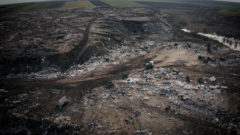
Coal ash is packed with harmful pollutants. Residents of a northern Indiana town less than a mile from Lake Michigan may have been exposed to unsafe levels of contamination for almost a decade, even after being told that they were safe, an IndyStar investigation found. A coal ash cleanup plan developed in 2016 by electric utility NIPSCO was based on flawed data included by a hired consultant with ties to the coal industry, according to the investigation.
Great Lakes Now
https://www.greatlakesnow.org/2024/06/energy-news-roundup-coal-ash-still-a-concern-in-indiana-superfund-town-near-lake-michigan/
The National Oceanic and Atmospheric Administration this week designated a 1,722-square-mile area in eastern Lake Ontario as America’s 16th national marine sanctuary. The Lake Ontario National Marine Sanctuary is the first such sanctuary in New York, and only the third in the Great Lakes region. Read the full story by The Post-Standard.
Great Lakes Commission
https://www.glc.org/dailynews/20240607-marine-sanctuary
Emissions targets set by the International Maritime Organization mean the shipping industry must find a way to decarbonize by 2050. A new, cleaner ship points way as U.S. ports in the Great Lakes region are spending millions on upgrades in pursuit of net zero. Read the full story by The Guardian.
Great Lakes Commission
https://www.glc.org/dailynews/20240607-shipping-emissions
Rain and contaminated air are major sources of PFAS contamination detected by a team of researchers in the Great Lakes. Airborne concentrations of PFAS are much higher near Chicago and other urban areas than at rural monitoring stations in northern Michigan and upstate New York. Read the full story by the Chicago Tribune.
Great Lakes Commission
https://www.glc.org/dailynews/20240607-pfas-rain
Governor Gretchen Whitmer had pledged to crack down on bottled water companies taking water at the same time Flint, Michigan, faced a water crisis. Six years later and in her second term, little has changed. Read the full story by ProPublica.
Great Lakes Commission
https://www.glc.org/dailynews/20240607-bottled-water
Scientists at University of Toledo’s (UToledo) Lake Erie Center have studied lake ecology for years, but after the 2014 water crisis, the center has added new goals for water safety: protecting the water supply and understanding the toxins harmful algae produce. Read the full story by WTOL-TV – Toledo, OH.
Great Lakes Commission
https://www.glc.org/dailynews/20240607-utoledo-science
Fish fly season has begun, bringing thousands, if not millions, of the winged insects to swarm the backyards, screen doors and car windows of metro Detroiters. Considered by many to be a messy inconvenience, the mayfly swarms are an indicator of nearby freshwater ecosystems’ health. Read the full story by The Detroit Free Press.
Great Lakes Commission
https://www.glc.org/dailynews/20240607-fish-flies
Global warming is fueling the spread of the nonnative peach blossom jellyfish in the Great Lakes region. Researchers urge the public to submit sightings to various online databases so that their changing distribution can be understood. Read the full story by The Mining Journal.
Great Lakes Commission
https://www.glc.org/dailynews/20240607-invasive-jellyfish