Healing Our Waters-Great Lakes Coalition

Contact: Lindsey Bacigal, BacigalL@nwf.org, (734) 887-7113
Jordan Lubetkin, Lubetkin@nwf.org, (734) 904-1589

Great Lakes Coalition: House Proposed Budget Would Be a ‘Disaster for Clean Water’

ANN ARBOR, MICH. (June 27, 2024)—The U.S. House of Representatives Committee on Appropriations released its proposed fiscal year 2025 Interior and Environment funding bills. The Republican budget being considered would hold Great Lakes Restoration Initiative funding at $368 million (level with current funding) but would eviscerate other core clean water programs by cutting the EPA budget by 20 percent. The $1.8 billion cut would set back critical environmental protections, public health, and slash state and Tribal assistance programs that help communities most impacted by pollution and invest in critical water infrastructure projects.

The Healing Our Waters-Great Lakes Coalition is urging members of Congress to reject the budget.

Laura Rubin, director of the Healing Our Waters-Great Lakes Coalition, said:

“The proposed budget is a disaster for the millions of people who still grapple with unsafe drinking water due to toxic pollution and lead, contaminated fish due to cancer-causing chemicals, and closed beaches due to sewage contamination. At a time when so many cities and towns are living with unsafe water, we need to be doing more, not less, to protect our drinking water and the health of our communities.”

“While federal investments to restore and protect the Great Lakes are producing results, serious threats remain—which is why cutting funding and scaling back clean water programs is a huge mistake. Cutting funding will only make the problems worse and more expensive to solve. We urge members of the Great Lakes congressional delegation to reject this budget and to work to craft a funding bill is commensurate with the task at hand—a funding bill that supports clean water programs that benefit our environment, economy, and communities that have been most impacted by pollution and environmental harm.”

The bill’s release today begins the House’s legislative process with the House Appropriations Interior Subcommittee expected to consider the bill this Friday before advancing the legislation to a full committee markup, currently scheduled for next month. The Senate is expected to release its own budget proposal in July.

The Healing Our Waters-Great Lakes Coalition is urging public officials to support robust funding for core clean water programs in a series of letters.

Since 2004, the Healing Our Waters-Great Lakes Coalition has been harnessing the collective power of more than 180 groups representing millions of people, whose common goal is to restore and protect the Great Lakes. Learn more at HealthyLakes.org or follow us on social media @HealthyLakes.

Original Article

Latest Updates - Healthy Lakes

Latest Updates - Healthy Lakes

https://www.healthylakes.org/latest-updates/great-lakes-coalition-house-proposed-budget-would-be-a-disaster-for-clean-water

Lindsey Bacigal

The Healing Our Waters-Great Lakes Coalition and 48 of our member organizations urged House appropriations subcommittees to support robust funding for Great Lakes restoration and clean water priorities in their Fiscal Year 2024 appropriations bills. The subcommittees that received letters were: Interior, Environment, and Related Agencies; Commerce, Justice, Science, and Related Agencies; Energy and Water Development, and Related Agencies; Agriculture, Rural Development, Food and Drug Administration, and Related Agencies; and State, Foreign Operations, and Related Programs.

Original Article

Latest Updates - Healthy Lakes

Latest Updates - Healthy Lakes

https://www.healthylakes.org/latest-updates/coalition-submits-fy25-appropriations-letters

Lindsey Bacigal

From Waters to Table: The story of the Great Lakes whitefish

Whitefish, a pale, silvery and green-brown freshwater fish is Native to the Great Lakes Basin and a staple in the community, food, and culture of Native tribes surrounding the Great Lakes. The Anishinaabe people have held the whitefish in high regard since creation. 

“Whitefish is one of the species that is a part of our creation story,” explained Doug Craven, Natural Resources Director for Little Traverse Bay Bands of Odawa. 

Read Now at Great Lakes Now.

Original Article

Great Lakes Now

Great Lakes Now

https://www.greatlakesnow.org/2024/06/from-waters-to-table-the-story-of-the-great-lakes-whitefish/

Neely Bardwell

Expecting smoke to be a more frequent part of seasonal planning

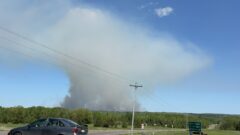
I was taking out the trash one evening this May when I noticed it. The sky had a reddish tint, and the air smelled faintly of smoke. Like many people across the Great Lakes region, I learned last summer to recognize the telltale signs of wildfire smoke. Amid a big year for wildfires in Canada, many of us got used to outbreaks of pollution caused by smoke from up north.

Read Now at Great Lakes Now.

Original Article

Great Lakes Now

Great Lakes Now

https://www.greatlakesnow.org/2024/06/expecting-smoke-to-be-a-more-frequent-part-of-seasonal-planning/

Sean Ericson, Great Lakes Now

At beaches in northern Michigan, alerts about unsafe E. coli levels in lake water are often issued the day after water is tested. The Health Department of Northwest Michigan is pivoting to a new type of test for E. coli which yields results in under six hours. Read the full story by Interlochen Public Radio.

Original Article

Great Lakes Commission

Great Lakes Commission

https://www.glc.org/dailynews/20240626-ecoli-testing

Taaja Tucker-Silva

The Wisconsin Department of Natural Resources is urging boaters to prevent invasive species spread during the Great Lakes Landing Blitz. Boat inspectors will educate boaters at Wisconsin boat landings from June 26 to July 6. Read the full story by WBAY-TV – Green Bay, WI.

Original Article

Great Lakes Commission

Great Lakes Commission

https://www.glc.org/dailynews/20240626-landing-blitz

Taaja Tucker-Silva

The Michipicoten freighter rescued in Lake Superior this month after water poured into 13-foot gash in its hull is currently dry-docked for inspection, with a decision on repairs or scrapping hanging in the balance. Read the full story by The Plain Dealer.

Original Article

Great Lakes Commission

Great Lakes Commission

https://www.glc.org/dailynews/20240626-michipicoten-freighter

Taaja Tucker-Silva

Tour boats that have been stuck for months behind a damaged bridge in Kingston, Ontario, were finally released into the St. Lawrence River late last week. The bridge was damaged during maintenance in late March and was closed to all traffic. Read the full story by North Country Public Radio.

Original Article

Great Lakes Commission

Great Lakes Commission

https://www.glc.org/dailynews/20240626-kingston-bridge

Taaja Tucker-Silva

Volunteers in Thunder Bay, Ontario, planted native species to restore wildlife habitats and improve the shoreline. The initiative, part of the North Shore of Lake Superior Remedial Action Plan, aims for significant ecological recovery over the next few years. Read the full story by CBC News.

Original Article

Great Lakes Commission

Great Lakes Commission

https://www.glc.org/dailynews/20240626-superior-planting

Taaja Tucker-Silva

Earlier this month, hundreds attended a public hearing in Wisconsin about Enbridge’s proposed reroute of a section of its Line 5 pipeline. These types of environmental concerns could be a deciding factor for some voters. Read the full story by WUWM – Milwaukee, WI.

Original Article

Great Lakes Commission

Great Lakes Commission

https://www.glc.org/dailynews/20240626-pipeline-debated

Taaja Tucker-Silva

Plans to reopen Menasha lock on hold

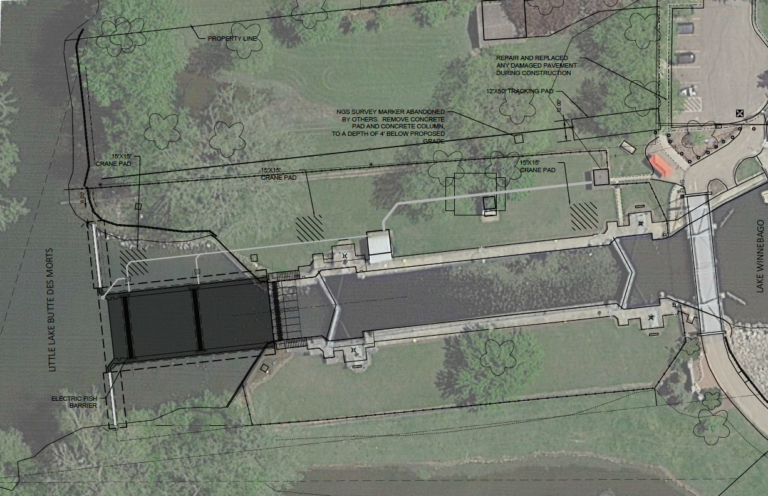
Plans for re-opening the Menasha lock are formally on hold. Today, the board of directors of the Fox River Navigational System Authority (FRNSA) voted to stop work on the project and gave no date for resuming plans to develop an electric barrier in the lock channel.

The board voluntarily closed the lock in 2015 after the invasive round goby was found in the Fox River just north of the Menasha lock. Since 2015, FRNSA has been working with experts in aquatic ecosystem management to design a plan using a system of an electric deterrent barrier and water flow regulation at the Menasha lock. Finalizing the plan and constructing the barrier are estimated to cost about $7 million. Annual operating costs for the system are estimated at $300,000-$400,000.

Board members indicated further work on the proposal was not within the organization’s budget. 

“We could not complete the design and construction of the barrier without significant funds from the state and federal governments,” said Phil Ramlet, executive director of FRNSA. Ramlet said the authority has already expended $750,000 to develop the plan and another $250,000 to continue a program of testing the Fox River for invasive species.

In the last ten years, the round goby has become abundant in the Fox River and Little Lake Butte des Morts. When the fish was discovered in the waters around Neenah, the lock system was not open to the Great Lakes due to the permanent barrier at the Rapide Croche lock.

“It’s possible the goby got into the Fox River through a bait bucket or a boat that was not properly cleaned,” Ramlet said. “There’s no guarantee that we could invest in building an electric barrier only to later find the goby in Lake Winnebago and render the system obsolete.”  

Prior to closing the Menasha lock, it had been the busiest lock on the system; now the DePere lock is the busiest. The locks are the only way the Fox River is navigable—from Menasha to the Bay of Green Bay the river drops in elevation 168 feet. From the Menasha lock to the Rapide Croche lock the river has 17 miles of navigable water. On the northern end of the river from Rapide Croche to the Bay of Green Bay the river is navigable for 20 miles.

“Our goal has always been to restore navigation of the Fox River through the lock system, but we also want to ensure we are protecting the waterways,” Ramlet said. He added FRNSA has maintained a testing program for invasive species for years.

If the round goby does populate Lake Winnebago, we will work with DNR representatives to determine the best course of action regarding the Menasha lock.

Original Article

Blog – Fox Locks

Blog – Fox Locks

https://foxlocks.org/blog/menasha-lock-to-remain-closed/

Fox Locks

Surviving a metro Detroit summer in the climate change era

This article was republished here with permission from Planet Detroit.

By Nina Ignaczak, Planet Detroit

Summer is here. Planet Detroit, in partnership with Great Lakes Now, hosted a compelling panel featuring experts from the National Weather Service, Eastside Community Network, Michigan Department of Environment, Great Lakes and Energy, and the Dearborn Department of Health.

Read Now at Great Lakes Now.

Original Article

Great Lakes Now

Great Lakes Now

https://www.greatlakesnow.org/2024/06/surviving-a-metro-detroit-summer-in-the-climate-change-era/

Planet Detroit

Perched on the shores of Lake Superior, the largest freshwater lake in the world by surface area, life in Duluth, Minnesota, is ruled by the whims of the lake. And the lake likes to keep things cool. Read the full story by CNN.  

Original Article

Great Lakes Commission

Great Lakes Commission

https://www.glc.org/dailynews/20240624-coolerbylake-duluth-superior-travel

Hannah Reynolds

On Saturday, hundreds of history buffs and veterans descended upon Tiscornia Park in St. Joseph, Michigan, for a large-scale D-Day reenactment, eighty years after the largest amphibious invasion in military history altered the course of World War II, signaling the beginning of the end of Hitler’s hold on Europe. Read the full story by WXMI-TV – Grand Rapids, MI.

Original Article

Great Lakes Commission

Great Lakes Commission

https://www.glc.org/dailynews/20240624-dday-reenactment-lakemichiganbeach

Hannah Reynolds

The Cleveland Water Alliance has deployed 13 smart buoys along Ohio’s Lake Erie coast, including one in the Toledo area and others as far east as Ashtabula, and Ohioans who are curious may text each of them to get real time information. Read the full story by The Courier.

Original Article

Great Lakes Commission

Great Lakes Commission

https://www.glc.org/dailynews/20240624-lakeerie-buoy-waterwind-info

Hannah Reynolds

Most of the litter picked up by volunteers during beach cleanups is plastic. Volunteers with the Alliance for the Great Lakes have removed more than 9.7 million pieces of litter — more than 535,000 pounds — since its Adopt a Beach Program was launched in 1991. Read the full story by WOOD-TV – Grand Rapids, MI.

Original Article

Great Lakes Commission

Great Lakes Commission

https://www.glc.org/dailynews/20240624-lakemichigan-beachcleanups

Hannah Reynolds

People in Detroit advocating against water shutoffs in 2014. Credit: We the People of Detroit

On the heels of Detroit, Michigan’s famous Chapter 9 bankruptcy in 2013, the Detroit Water and Sewerage Department shut off water to more than 120,000 residents over the course of three years, marking what is now considered the largest residential water shut off in United States history.

The utility cited $89 million in unpaid bills as their reason for the shut offs, but Kristy Meyer, campaign director at Water Equals Life (WEL) Coalition, says this decision put residents who were already struggling at risk for illness, psychological and social harm, and further economic suffering.

“People don't fully understand how a lack of access to water in your tap can impact individual lives and everybody else's lives, too,” says Meyer. “Nationally, as a result of water insecurity, there are 219,000 cases of waterborne illnesses and 71,000 cases of mental illness that cost our economy 68.7 million work hours and an estimated 610 lives [each year].”

To help address the impacts of water insecurity, the WEL Coalition was created by three founding organizations—We the People of Detroit, Freshwater Future, and the National Wildlife Federation—to advocate for water justice and affordability in Michigan and beyond.

Today, the WEL Coalition is comprised of 26 local, state, regional, and national partner organizations working together to advocate for policies that address water affordability for all Michigan residents. WEL members also address public health concerns, infrastructure needs, climate change, and other compounding issues that contribute to the water crisis. These people-centric elements of Great Lakes restoration work are often underprioritized but make up a vital aspect of well-being for communities throughout the region.

“This is not just an individual crisis, this is all of our crisis,” says Meyer. “We need to be able to solve this problem collectively together. Everyone should have clean, safe water. No exceptions.”

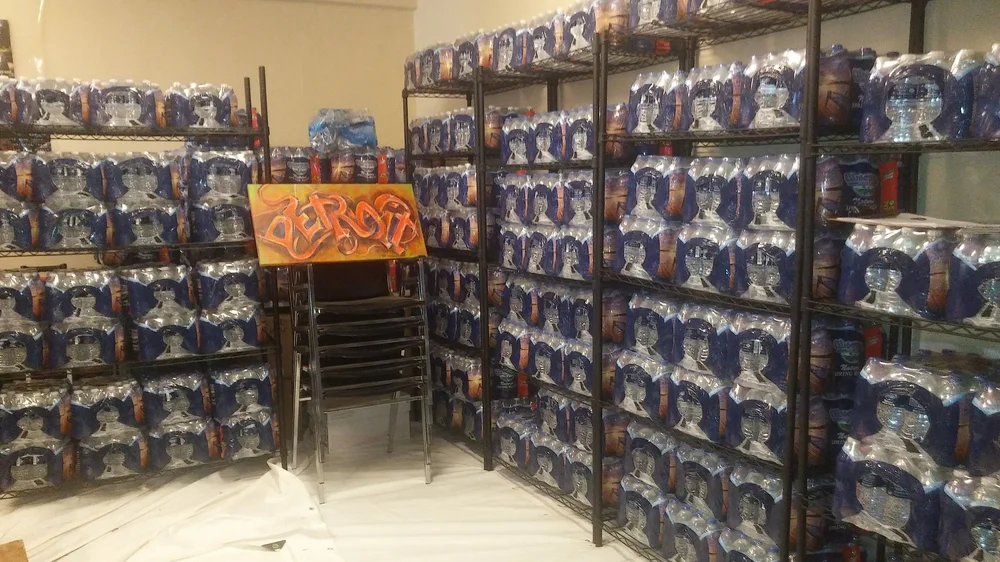
A room full of bottled water that was handed out to Detroit residents at the beginning of the COVID crisis. Credit: We the People of Detroit

Since 1977, federal investment in water has declined from 63% of capital spending to just 9% in 2017. With less federal support, the burden of water infrastructure upgrades has increasingly been placed on local ratepayers in the form of skyrocketing utility bills.

Tiana Starks, chair of the communications committee for the WEL Coalition and director of communications at We the People of Detroit, explains that water costs in Michigan have risen to consume as much as 25% of residents’ disposable household income in some areas, including Detroit.

“Water insecurity is not just something that impacts people in Detroit and in urban areas. People all across the state of Michigan are being impacted by the increase in water costs,” she says. “The cost of water has gone up over 188% over the last 10 years in Michigan, and in some places that can be as much as 320%.”

During the first wave of mass water shut offs in Detroit in 2014, several founding members of the WEL Coalition were active in grassroots efforts to distribute bottled water to residents. There, they witnessed the effect of these rising costs firsthand.

“When they were distributing water, they would go through the neighborhoods and see water hoses connecting from one family's home to another to try and help,” says Starks. “It was like a system.”

When bottled water was accessible, families often rationed the supplies. First, Starks explains, a family might use some of the water to brush their teeth in the morning. Remaining water would then be used to cook a meal before that same water was recycled to wash dishes. Finally, the dirty dishwater would be used to flush the toilet, ridding the home of waste that had accumulated throughout the day.

The inability to maintain personal or household hygiene practices has a tangible impact on long-term public health. Studies conducted by We the People of Detroit’s Community Research Collective found that the probability of contracting communicable diseases increases dramatically in communities impacted by water shut offs.

“We learned that if you live on a block where one house is shut off from water, you are 1.5 times more likely to get a waterborne illness,” says Starks.

Lack of access to water also increases the likelihood that children will not attend school and that adults will be unable to maintain work, further exacerbating their inability to afford the rising cost of water. According to Michigan law, families may face losing their children if the home is without water for three days. If bills are unpaid long enough, collection agencies may even place liens on resident’s homes.

“It’s really quite devastating what people have to go through,” says Starks. “There is a direct impact on mothers and families when people don't have water in the state of Michigan.”

To combat these impacts, the WEL Coalition hopes to create a statewide water affordability program through the Michigan Department of Health & Human Services. The plan will have four primary goals: to implement a tiered water rate based on household income and the federal poverty line, to lower the cost of water bills, to limit water shut offs, and to provide a path to debt forgiveness.

To pave the road, Meyer says the coalition is working to educate public health officials, legislators, activists, and other interested parties on the difference between water affordability and water assistance. She defines assistance as short-term funding that helps people get back on their feet, whereas affordability is “about permanently lowering water rates.”

Over the course of the last decade, several city-based programs have been introduced across the Great Lakes states to combat rising water rates. The City of Philadelphia, Pennsylvania, launched its Tiered Assistance Program (TAP) in 2017. In response to local water shut offs, the Detroit Water and Sewerage Department followed suit with its income-based Lifeline Plan in 2022. By evaluating the success of these existing programs, the WEL Coalition can learn more about what works well and what can be improved upon for a statewide affordability plan.

With climate change, increased pollutants like PFAS, and Michigan’s approximately $19 billion need for water infrastructure upgrades, Meyer acknowledges that utility companies are facing greater challenges than ever to provide residents with affordable clean water.

“If there is a true water affordability program, utilities win, as well,” she says. “That's because there is a large amount of people that can't pay their water bill right now, so water utilities aren't getting that money, no matter what.”

She looks to TAP as an example of how water affordability programs can benefit all parties.

“In Philadelphia, people in the TAP program are able to pay their bills,” she says. “The Philadelphia Water Department netted nearly $5 million from people they hadn't in the past because they had a water affordability program in place.”

In the meantime, the WEL Coalition plans to continue its outreach efforts and promote its Water Affordability Pledge, which contains nine tenets in support of clean, affordable water. Meyer says both individuals and entities are welcome to sign.

“If you get to the very core of it, we're made up of 60% water,” she adds. “Water is the very foundation of all of our lives.”

Visit welcoalition.org.

Original Article

Latest Updates - Healthy Lakes

Latest Updates - Healthy Lakes

https://www.healthylakes.org/latest-updates/tackling-michigans-water-crisis

Lindsey Bacigal

* WHAT...Flash flooding caused by excessive rainfall continues to be possible. * WHERE...Portions of central, east central, and northeast Wisconsin, including the following counties, in central Wisconsin, Portage, Waushara and Wood. In east central Wisconsin, Calumet, Manitowoc and Winnebago. In northeast Wisconsin, Brown, Kewaunee, Outagamie and Waupaca. * WHEN...Until 10 PM CDT this evening. * IMPACTS...Excessive runoff may result in flooding of rivers, creeks, streams, and other low-lying and flood-prone locations. Flooding may occur in poor drainage and urban areas. * ADDITIONAL DETAILS... - http://www.weather.gov/safety/flood

Original Article

Current watches, warnings, and advisories for Brown County (WIC009) WI

Current watches, warnings, and advisories for Brown County (WIC009) WI

https://api.weather.gov/alerts/urn:oid:2.49.0.1.840.0.18d75d17863fe279ea0421d72bffb45cd2e1b4fb.002.1.cap

NWS

* WHAT...Flash flooding caused by excessive rainfall continues to be possible. * WHERE...Portions of central, east central, and northeast Wisconsin, including the following counties, in central Wisconsin, Marathon, Portage, Waushara and Wood. In east central Wisconsin, Calumet, Manitowoc and Winnebago. In northeast Wisconsin, Brown, Kewaunee, Outagamie, Shawano and Waupaca. * WHEN...Until 10 PM CDT this evening. * IMPACTS...Excessive runoff may result in flooding of rivers, creeks, streams, and other low-lying and flood-prone locations. Flooding may occur in poor drainage and urban areas. * ADDITIONAL DETAILS... - Another complex of thunderstorms will move across the area late this afternoon and evening, bringing another round of heavy rain to the area. Rainfall rates in the stronger storms will be in the 1 to 2 inch range, which could result in additional flooding into this evening. - http://www.weather.gov/safety/flood

Original Article

Current watches, warnings, and advisories for Brown County (WIC009) WI

Current watches, warnings, and advisories for Brown County (WIC009) WI

https://api.weather.gov/alerts/urn:oid:2.49.0.1.840.0.cd7046527df82412832a703fc91c7a44ba561a47.001.1.cap

NWS

* WHAT...Flash flooding caused by excessive rainfall continues to be possible. * WHERE...Portions of central, east central, and northeast Wisconsin, including the following counties, in central Wisconsin, Marathon, Portage, Waushara and Wood. In east central Wisconsin, Calumet, Manitowoc and Winnebago. In northeast Wisconsin, Brown, Kewaunee, Outagamie, Shawano and Waupaca. * WHEN...Until 7 PM CDT this evening. * IMPACTS...Excessive runoff may result in flooding of rivers, creeks, streams, and other low-lying and flood-prone locations. Flooding may occur in poor drainage and urban areas. * ADDITIONAL DETAILS... - Many locations in the watch area have seen between 1 and 4 inches of rain over the last 24 hours. Occasional showers and isolated thunderstorms will gradually diminish early this afternoon. Additional showers and thunderstorms are again possible late this afternoon into early this evening that could bring additional locally heavy rain with rainfall rates of 1 to 2 inches per hour possible. This could result in flooding of urban areas and small streams. - http://www.weather.gov/safety/flood

Original Article

Current watches, warnings, and advisories for Brown County (WIC009) WI

Current watches, warnings, and advisories for Brown County (WIC009) WI

https://api.weather.gov/alerts/urn:oid:2.49.0.1.840.0.ec709d7255d85c5ab37457f7f9edb7eaac15d937.001.1.cap

NWS

* WHAT...Flash flooding caused by excessive rainfall continues to be possible. * WHERE...Portions of central, east central, and northeast Wisconsin, including the following counties, in central Wisconsin, Marathon, Portage, Waushara and Wood. In east central Wisconsin, Calumet, Manitowoc and Winnebago. In northeast Wisconsin, Brown, Kewaunee, Outagamie, Shawano and Waupaca. * WHEN...Through this evening. * IMPACTS...Excessive runoff may result in flooding of rivers, creeks, streams, and other low-lying and flood-prone locations. * ADDITIONAL DETAILS... - Occasional thunderstorms are expected through early this evening. They could produce rainfall rates of an inch or more per hour. This could result in flooding of urban areas and small streams. - http://www.weather.gov/safety/flood

Original Article

Current watches, warnings, and advisories for Brown County (WIC009) WI

Current watches, warnings, and advisories for Brown County (WIC009) WI

https://api.weather.gov/alerts/urn:oid:2.49.0.1.840.0.878432fc1ef2bb6fa2d938aaad210903392873df.001.1.cap

NWS

* WHAT...Flash flooding caused by excessive rainfall continues to be possible. * WHERE...Portions of central, east central, and northeast Wisconsin, including the following counties, in central Wisconsin, Marathon, Portage, Waushara and Wood. In east central Wisconsin, Calumet, Manitowoc and Winnebago. In northeast Wisconsin, Brown, Kewaunee, Outagamie, Shawano and Waupaca. * WHEN...Through Saturday evening. * IMPACTS...Excessive runoff may result in flooding of rivers, creeks, streams, and other low-lying and flood-prone locations. * ADDITIONAL DETAILS... - A lull in the heavy rain is expected this evening. Another round or two of heavy rain is expected early Saturday morning through early Saturday evening. - http://www.weather.gov/safety/flood

Original Article

Current watches, warnings, and advisories for Brown County (WIC009) WI

Current watches, warnings, and advisories for Brown County (WIC009) WI

https://api.weather.gov/alerts/urn:oid:2.49.0.1.840.0.ea1a8a7f3f50d35549c0ee78fabc04882fd78d38.001.1.cap

NWS