Assessing the U.S. Climate in June 2024
2024-07-09
During June, the average contiguous U.S. temperature was 71.8°F, 3.4°F above the 20th-century average.
NCEI News Feed
https://www.ncei.noaa.gov/news/national-climate-202406
NCEI News Feed
https://www.ncei.noaa.gov/news/national-climate-202406
NCEI News Feed
https://www.ncei.noaa.gov/news/national-climate-202406
NCEI News Feed
https://www.ncei.noaa.gov/news/national-climate-202406
NCEI News Feed
https://www.ncei.noaa.gov/news/national-climate-202406
NCEI News Feed
https://www.ncei.noaa.gov/news/national-climate-202406
NCEI News Feed
https://www.ncei.noaa.gov/news/national-climate-202406
NCEI News Feed
https://www.ncei.noaa.gov/news/national-climate-202406
NCEI News Feed
https://www.ncei.noaa.gov/news/national-climate-202406
NCEI News Feed
https://www.ncei.noaa.gov/news/national-climate-202406
NCEI News Feed
https://www.ncei.noaa.gov/news/national-climate-202406
NCEI News Feed
https://www.ncei.noaa.gov/news/national-climate-202406
NCEI News Feed
https://www.ncei.noaa.gov/news/national-climate-202406
NCEI News Feed
https://www.ncei.noaa.gov/news/national-climate-202406
NCEI News Feed
https://www.ncei.noaa.gov/news/national-climate-202406
NCEI News Feed
https://www.ncei.noaa.gov/news/national-climate-202406
NCEI News Feed
https://www.ncei.noaa.gov/news/national-climate-202406
NCEI News Feed
https://www.ncei.noaa.gov/news/national-climate-202406
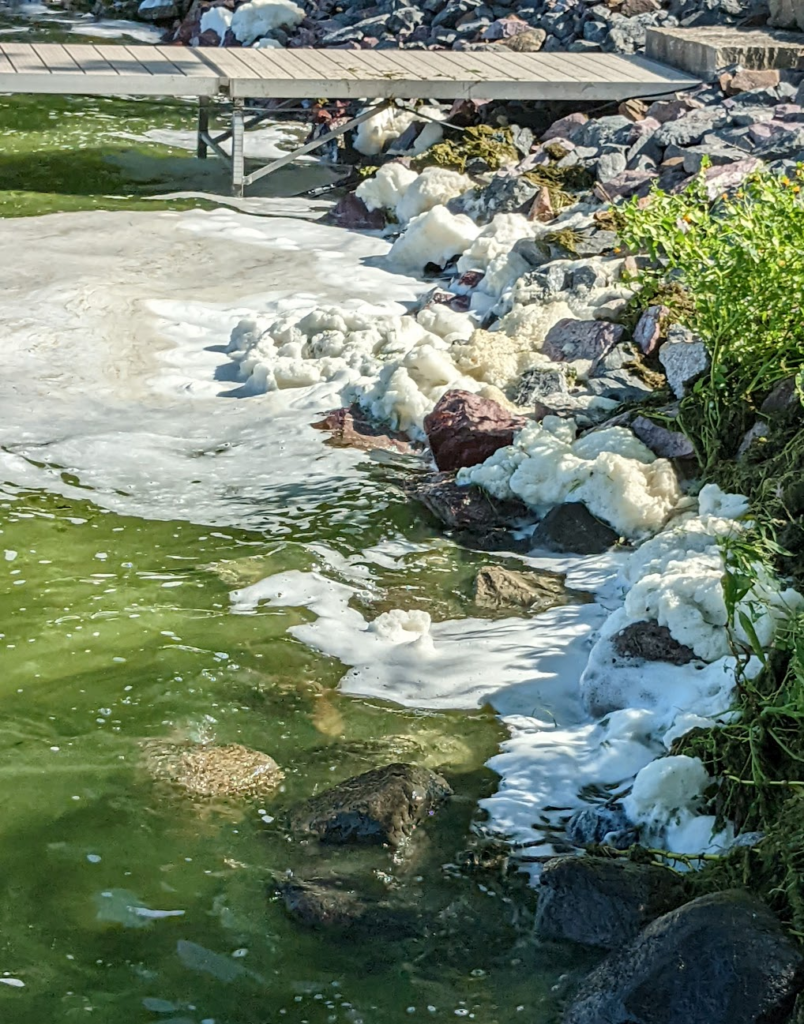
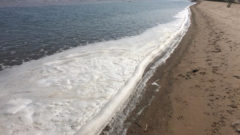
Foam on Lake Monona. Image credit: Doug Bach
A new study of natural foams and water surface microlayers of 43 Wisconsin rivers and lakes quantified 36 compounds in a group of chemicals known as PFAS. While PFAS were detected in both types of samples, it is the foams that the researcher said were “orders of magnitude higher in PFAS concentration compared to water,” while urging people and their pets to avoid them. The study also revealed that foams, generally off-white and found along shorelines on windy days, are not an indicator of elevated contamination levels in the entire water body.
“We studied many different lakes and found PFAS in all of them. The PFAS concentrations were high in the foams even if the concentrations in the water were relatively low,” said Christy Remucal with the University of Wisconsin–Madison Department of Civil and Environmental Engineering and interim director of the University of Wisconsin Aquatic Sciences Center.
Remucal stressed the need to avoid the foams because of the contaminants’ warning-worthy levels. “The chemical we found most in the foam is PFOS, which is one of the chemicals that’s driving fish advisories and driving drinking water regulations,” she said. “The highest PFOS concentrations we measured in foam were almost 300,000 nanograms per liter and, for comparison, the federal drinking water regulation is 4 nanograms per liter.”
She continued, “The main way people are exposed to PFAS is through ingestion…Obviously, people aren’t drinking foam. I would be more concerned about, for example, a kid who plays in the foam and then goes to grab a handful of snacks. You could potentially have some oral exposure that way.”
There are more than 9,000 PFAS compounds, which are often referred to as “forever chemicals” because they do not readily break down in the environment. For decades, they have been used to make a wide range of products resistant to water, grease, oil and stains and are also found in firefighting foams, which are a major source of environmental PFAS contamination. PFAS have been shown to have adverse effects on human health and higher incidence of cancer.
The levels in the new study validate a current Wisconsin Department of Natural Resources warning, as well as a similar freshwater foam warning in Michigan and one for saltwater foam in the Netherlands. They are timely cautions as spring and summer come to Wisconsin and people and their pets spend more time hiking along open water or engaging in paddle sports and swimming where foams can be found.
Remucal, postdoctoral co-investigators Summer Sherman-Bertinetti and Sarah Balgooyen and graduate students Kaitlyn Gruber and Edward Kostelnik published their work in the journal “Environmental Science & Technology.” It was funded by a grant from the Wisconsin Sea Grant College Program.
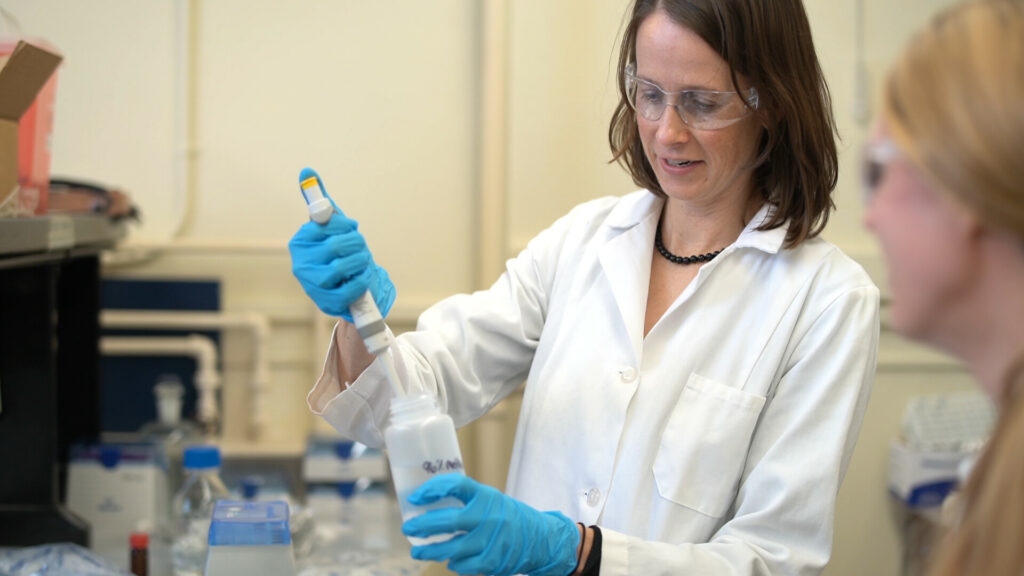
Christy Remucal and Sarah Balgooyen work with PFAS samples in the lab. Image credit: Wisconsin Sea Grant
Integral to the study were dozens of citizen volunteers who alerted the research team to the presence of foams. This was critical, Remucal said, because sampling was opportunistic—foams are fleeting, stirred up by wind and mixing with water, they can dissipate as quickly as they appear.
She also credited the Wisconsin Department of Natural Resources with assistance in foam sightings.
The work also illuminates the efforts of other research groups exploring a possible path of PFAS cleanup. Because PFAS are surfactants, which means they are drawn to the air and water interface, they may move out of the water below and toward the bubbles in foam. When concentrated like this, the contaminants could be removed.
Remucal and her team also looked at water surface microlayers and found PFAS levels were slightly higher than underlying water but that the bigger take-away message remains the contaminant level in foams. She was pleased they explored the microlayers question, though, because the air and water interface dictates how PFAS move in groundwater. Now, the science community has an understanding of how PFAS movement in surface water compares to their movement in groundwater.
The post Lake and river foams study reveals high PFAS levels, even though underlying water may be less contaminated first appeared on Wisconsin Sea Grant.
News Releases | Wisconsin Sea Grant
News Releases | Wisconsin Sea Grant
https://www.seagrant.wisc.edu/news/lake-and-river-foams-study-reveals-high-pfas-levels-even-though-underlying-water-may-be-less-contaminated/
By Izzy Ross, Interlochen Public Radio
This coverage is made possible through a partnership with IPR and Grist, a nonprofit independent media organization dedicated to telling stories of climate solutions and a just future.
A project off the shore of Beaver Island could harness the power of Lake Michigan’s waves to generate renewable energy.
Great Lakes Now
https://www.greatlakesnow.org/2024/07/beaver-island-takes-early-steps-to-test-wave-energy-in-its-waters/
This article was republished here with permission from Planet Detroit.
By Brian Allnutt, Planet Detroit
Great Lakes Now
https://www.greatlakesnow.org/2024/07/this-scotus-decision-may-make-it-harder-to-protect-michigan-air-and-water/
The 100th running of the Bayview Mackinac Race, where boats sail from Lake Huron off Port Huron, Michigan, and Sarnia, Ontario, to the finish line at Mackinac Island, will be its largest. Read the full story by The Sarnia Observer.
Great Lakes Commission
https://www.glc.org/dailynews/20240708-mackinacisland-sailboatrace
Foam on lakeshores is often a natural occurrence, usually caused by dying aquatic plants or algae that’s stirred up by waves. Natural foam is usually off-white and has an earthy smell, but some foam — that’s artificially white — contains toxic “forever chemicals.” Read the full story by Midland Daily News.
Great Lakes Commission
https://www.glc.org/dailynews/20240708-pfas-contamination
The Great Lakes vary significantly in depth, but exactly how deep are they, and where does Lake Ontario fit in? Read the full story by the Rochester Democrat and Chronicle.
Great Lakes Commission
https://www.glc.org/dailynews/20240708-greatlakes-depth-lakeontario
The Aquarium of Niagara in Niagara Falls, New York, has set a date for the grand opening of its “Great Lakes 360” project. The long-awaited and first-ever expansion will welcome the public for the first time on July 13. Read the full story by WGRZ-TV – Buffalo, NY.
Great Lakes Commission
https://www.glc.org/dailynews/20240708-newaquarium-greatlakes360
An effort continues to help stop the spread of aquatic invasive species in waterways around the Great Lakes. At the Shawano Lake County Park Boat Landing in Wisconsin, conservationists search for unwanted animals like zebra mussels. Read the full story by WLUK-TV – Green Bay, WI.
Great Lakes Commission
https://www.glc.org/dailynews/20240708-ais-landingblitz-shawanolake
The shallowest of the Great Lakes — which was just named the top lake in the U.S. by USA Today’s 10Best — is now being recognized as a top spot for bass fishermen. Read the full story by The Canton Repository.
Great Lakes Commission
https://www.glc.org/dailynews/20240708-bestbassfishing-lakeerie
The Mark W. Barker, a 639-foot lake freighter built by the Bay Shipbuilding Company, is slated to make stops at the Wirt Stone Docks in Bay City and Saginaw, Michigan. The Barker was the first Great Lakes freighter to be built on the lakes in 35 years when it was put together in 2022. Read the full story by MLive.
Great Lakes Commission
https://www.glc.org/dailynews/20240708-freighter-greatlakes-saginaw
When the Environmental Protection Agency research vessel Lake Guardian arrives in Presque Isle Bay in Erie, Pennsylvania, it will be carrying not only scientists but also three Pennsylvania educators. The educators will have hands-on opportunities to explore microplastics, benthic organisms, cyanobacteria and other Lake Erie-specific topics. Read the full story by the Erie Times-News.
Great Lakes Commission
https://www.glc.org/dailynews/20240708-pa-educators-researchvessel-epa
What if a high-voltage transmission line were built beneath Lake Michigan, connecting major power infrastructure on either side of the Great Lake? Officials at Wolverine Power Cooperative say regional grid operators should consider the concept. Read the full story by MLive.
Great Lakes Commission
https://www.glc.org/dailynews/20240708-powerline-michigan-wisconsin
Current watches, warnings, and advisories for Brown County (WIC009) WI
Current watches, warnings, and advisories for Brown County (WIC009) WI
https://api.weather.gov/alerts/urn:oid:2.49.0.1.840.0.d79d9fa3f38abea2d438f55a86fa67a2d0f9faf9.001.1.cap
Green Bay, WI
https://www.weather.gov/grb/070524_flashflood_event
Current watches, warnings, and advisories for Brown County (WIC009) WI
Current watches, warnings, and advisories for Brown County (WIC009) WI
https://api.weather.gov/alerts/urn:oid:2.49.0.1.840.0.bc32f620200b2e717476332f29f3f01fbe3d6a11.001.1.cap
Current watches, warnings, and advisories for Brown County (WIC009) WI
Current watches, warnings, and advisories for Brown County (WIC009) WI
https://api.weather.gov/alerts/urn:oid:2.49.0.1.840.0.439d66cd6acfdfedf100c2f3f8afc99b837d37c6.001.1.cap
Current watches, warnings, and advisories for Brown County (WIC009) WI
Current watches, warnings, and advisories for Brown County (WIC009) WI
https://api.weather.gov/alerts/urn:oid:2.49.0.1.840.0.ef97074b8e3b9b53687ffcc1c9709936205108f8.002.1.cap
Current watches, warnings, and advisories for Brown County (WIC009) WI
Current watches, warnings, and advisories for Brown County (WIC009) WI
https://api.weather.gov/alerts/urn:oid:2.49.0.1.840.0.6c5254a325c005f5c8b75dc1ba78f0b3f747bb16.001.1.cap
Current watches, warnings, and advisories for Brown County (WIC009) WI
Current watches, warnings, and advisories for Brown County (WIC009) WI
https://api.weather.gov/alerts/urn:oid:2.49.0.1.840.0.5f8cef01d5c44cd154ac96f39d86574f548d3806.001.1.cap
Current watches, warnings, and advisories for Brown County (WIC009) WI
Current watches, warnings, and advisories for Brown County (WIC009) WI
https://api.weather.gov/alerts/urn:oid:2.49.0.1.840.0.77dfad581f116da0857df3a6e345cce277743d4f.001.1.cap
Current watches, warnings, and advisories for Brown County (WIC009) WI
Current watches, warnings, and advisories for Brown County (WIC009) WI
https://api.weather.gov/alerts/urn:oid:2.49.0.1.840.0.ae75f7c288436bfa13a0a6cbde07f056c033eea1.001.1.cap
By Todd Richmond, Associated Press
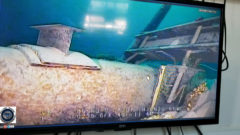
Environmentalists are challenging Michigan regulators’ decision to approve encasing part of an aging Enbridge Energy oil pipeline that runs beneath a channel connecting two Great Lakes, arguing that they failed to properly consider alternatives that would minimize climate impacts.
The Environmental Law & Policy Center and the Michigan Climate Action Network filed a brief with a state appellate court Thursday.
Great Lakes Now
https://www.greatlakesnow.org/2024/07/environmentalists-appeal-michigan-regulators-approval-of-pipeline-tunnel-project/

“Nibi Chronicles,” a monthly Great Lakes Now feature, is written by Staci Lola Drouillard. A Grand Portage Ojibwe direct descendant, she lives in Grand Marais on Minnesota’s North Shore of Lake Superior. Her nonfiction books “Walking the Old Road: A People’s History of Chippewa City and the Grand Marais Anishinaabe” and “Seven Aunts” were published 2019 and 2022, and the children’s story “A Family Tree” in 2024.
Great Lakes Now
https://www.greatlakesnow.org/2024/07/a-symbol-of-survival-red-pine-peels-and-ojibwe-canoe-factories/
A new funding agreement between the state governments of Michigan and Illinois and the U.S. Army Corps of Engineers will provide $388 million to start the $1.1 billion Brandon Road Interbasin Project, aimed at preventing invasive species from entering the Great Lakes through the Brandon Road Lock and Dam near Joliet, Illinois. Read the full story by the Detroit Free Press.
Great Lakes Commission
https://www.glc.org/dailynews/20240703-brandon-road
The Ports of Indiana landed U.S. Customs and Border Protection approval to establish an international sea cargo container terminal, the first in Chicagoland and the first on Lake Michigan. The Port of Indiana-Burns Harbor will be able to unload containers, creating an all-water container route for ocean vessels to reach the Chicago market. Read the full story by The Times of Northwest Indiana.
Great Lakes Commission
https://www.glc.org/dailynews/20240703-cargo-port
The Ohio House approved H.B. 599, naming the walleye Ohio’s state fish, by a vote of 94-2. Ohio is one of only three states, along with Indiana and Iowa, without a state fish. Read the full story by The Columbus Dispatch.
Great Lakes Commission
https://www.glc.org/dailynews/20240703-ohio-state-fish
The FishPass project in Traverse City, Michigan, replaces the city’s failing dam with a new barrier that allows passage of desirable fish while blocking harmful invaders. $1 million from Michigan’s 2025 state budget will support the final phases of construction of the FishPass, including most of its publicly accessible features. Read the full story by WWTV-TV – Cadillac, MI.
Great Lakes Commission
https://www.glc.org/dailynews/20240703-fishpass-funding
Michigan is looking at ways to reduce the amount of agricultural nutrient pollution getting into Lake Erie, including large- and small- scale wetland restoration projects in southeast Michigan. Read the full story by Great Lakes Now.
Great Lakes Commission
https://www.glc.org/dailynews/20240703-ag-pollution
The cleanup of an oily spill in the Flint River in Michigan continues a week after it was first detected, and officials said Tuesday they still don’t know the source. Flint city officials speculate that soil contamination or illegal dumping could be the source of the spill. Read the full story by Michigan Public.
Great Lakes Commission
https://www.glc.org/dailynews/20240703-flint-spill
The first week of August will mark ten years since the water crisis in Toledo, Ohio, when many were instructed not to drink, cook with, or bathe in the water for three days. Water quality advocates are disappointed major improvements haven’t been seen in the lake yet. Read the full story by WTOL-TV – Toledo, OH.
Great Lakes Commission
https://www.glc.org/dailynews/20240703-erie-progress
Eight years ago, Oscoda, Michigan, residents were informed that PFAS “forever chemicals” had made their way into the town’s drinking water. The discovery’s impact on tourism is difficult to measure, but both data from the time and sources from the region say it did affect the economy. Read the full story by The Alpena News.
Great Lakes Commission
https://www.glc.org/dailynews/20240703-pfas-oscoda
The 20-minute ferry ride across Lake Superior to Madeline Island, Wisconsin, offers not only summer fun but also a glimpse into Great Lakes history. A new exhibit at the Madeline Island Museum highlights the Ojibwe people’s journey and their connection to the island. Read the full story by the Milwaukee Journal Sentinel.
Great Lakes Commission
https://www.glc.org/dailynews/20240703-ojibwe-exhibit
Cruise ship season in the Great Lakes is in full swing, and Alpena, Michigan, has seen its fair share of cruise ships anchoring in its waters. Each year since 2022, the number of stops in Alpena has increased because of positive feedback. Read the full story by the Huron Daily Tribune.
Great Lakes Commission
https://www.glc.org/dailynews/20240703-cruise-benefits