NCEI Scientist at Sea: From Collection to Archive
2024-07-31
Web story discussing a NCEI scientist’s experiences aboard the Okeanos Explorer.
NCEI News Feed
https://www.ncei.noaa.gov/news/NCEIScientistatSea
NCEI News Feed
https://www.ncei.noaa.gov/news/NCEIScientistatSea
NCEI News Feed
https://www.ncei.noaa.gov/news/NCEIScientistatSea
NCEI News Feed
https://www.ncei.noaa.gov/news/NCEIScientistatSea
NCEI News Feed
https://www.ncei.noaa.gov/news/NCEIScientistatSea
NCEI News Feed
https://www.ncei.noaa.gov/news/NCEIScientistatSea
NCEI News Feed
https://www.ncei.noaa.gov/news/NCEIScientistatSea
NCEI News Feed
https://www.ncei.noaa.gov/news/NCEIScientistatSea
NCEI News Feed
https://www.ncei.noaa.gov/news/NCEIScientistatSea
NCEI News Feed
https://www.ncei.noaa.gov/news/NCEIScientistatSea
NCEI News Feed
https://www.ncei.noaa.gov/news/NCEIScientistatSea
NCEI News Feed
https://www.ncei.noaa.gov/news/NCEIScientistatSea
NCEI News Feed
https://www.ncei.noaa.gov/news/NCEIScientistatSea
NCEI News Feed
https://www.ncei.noaa.gov/news/NCEIScientistatSea
NCEI News Feed
https://www.ncei.noaa.gov/news/NCEIScientistatSea
NCEI News Feed
https://www.ncei.noaa.gov/news/NCEIScientistatSea
NCEI News Feed
https://www.ncei.noaa.gov/news/NCEIScientistatSea
NCEI News Feed
https://www.ncei.noaa.gov/news/NCEIScientistatSea
NCEI News Feed
https://www.ncei.noaa.gov/news/NCEIScientistatSea
NCEI News Feed
https://www.ncei.noaa.gov/news/NCEIScientistatSea
NCEI News Feed
https://www.ncei.noaa.gov/news/NCEIScientistatSea
NCEI News Feed
https://www.ncei.noaa.gov/news/NCEIScientistatSea
NCEI News Feed
https://www.ncei.noaa.gov/news/NCEIScientistatSea
NCEI News Feed
https://www.ncei.noaa.gov/news/NCEIScientistatSea
NCEI News Feed
https://www.ncei.noaa.gov/news/NCEIScientistatSea
NCEI News Feed
https://www.ncei.noaa.gov/news/NCEIScientistatSea
NCEI News Feed
https://www.ncei.noaa.gov/news/NCEIScientistatSea
NCEI News Feed
https://www.ncei.noaa.gov/news/NCEIScientistatSea
By Ruth Thorton Standing together at Pierce Cedar Creek Institute near Hastings, Michigan, two students stared intently at the screen, looking for the subtle signs of the small rattlesnake they were trying to find. The eastern massasauga, Michigan’s only rattlesnake, typically hides in dense vegetation in wetlands, and conservation biologists are concerned about trampling their […]
The post Researchers use drones to find elusive Michigan rattlesnake first appeared on Great Lakes Echo.Great Lakes Echo
http://greatlakesecho.org/2024/07/31/researchers-use-drones-to-find-elusive-michigan-rattlesnake/
The National Oceanic and Atmospheric Administration has been working to collect new mapping data on Lake Superior since 2020. This survey is part of a large effort to update the mapping of the coastal and nearshore water of the Great Lakes. Read the full story by WDIO-TV – Duluth, MN.
Great Lakes Commission
https://www.glc.org/dailynews/20240731-superior-mapping
Governor Whitmer of Michigan signed off on state funding to support an early warning system along the 80-mile Lake Huron-to-Lake Erie corridor. The program involves physical monitors at treatment plants in the region that ultimately serves half the state’s population. Read the full story by the Port Huron Times Herald.
Great Lakes Commission
https://www.glc.org/dailynews/20240731-water-monitoring-funding
Momentum for transitioning away from single use plastic is building in the Great Lakes. The Alliance for the Great Lakes is calling for implementing extended producer responsibility policies — holding producers responsible across the life cycle of their products. Read the full story by the Chicago Sun-Times.
Great Lakes Commission
https://www.glc.org/dailynews/20240731-plastic-trash
Just when Michiganders think they know all the invasive plants and bugs to watch out for, another one gets added to the list. Lesser celandine is an aquatic plant with pretty yellow flowers found heavily in mid-Michigan near streams and in forested floodplains. Read the full story by WDRG – Grand Rapids, MI.
Great Lakes Commission
https://www.glc.org/dailynews/20240731-new-invasive-mi
Ten years ago this Friday, Toledo, Ohio, residents woke up to an algae-driven water crisis that brought unwanted attention from other parts of the world and inflicted a scar on the city’s reputation. Despite knowing the cause of the crisis, similar problems remain today. Read the full story by the Toledo Blade.
Great Lakes Commission
https://www.glc.org/dailynews/20240731-erie-algal-blooms
In Ohio, the Columbus Recreation and Parks Department drained the pond at Whetstone Park following the discovery of an invasive round goby in the water. Read the full story by The Columbus Dispatch.
Great Lakes Commission
https://www.glc.org/dailynews/20240731-pond-drain
To help better understand which of the almost 200 aquatic invasive species roaming the Great Lakes pose the greatest threat, scientists at various Michigan-based research groups ranked the top 10 species that have the greatest impact. Read the full story by WJBK – Detroit, MI.
Great Lakes Commission
https://www.glc.org/dailynews/20240731-ranked-invasives
Enbridge Line 5 has spilled 35 times, releasing over 1.3 million gallons of toxic oil. Extending the 70-year-old Line 5 pipeline through the company’s proposed re-route is not a solution. Read the full story by the Wisconsin Examiner.
Great Lakes Commission
https://www.glc.org/dailynews/20240731-enbridge-threat
All aboard the rolling robot! An autonomous electric bus will begin a monthlong deployment at Sleeping Bear Dunes National Lakeshore in northern Michigan as part of a grant-funded project by a self-driving software company. Read the full story by MLive.
Great Lakes Commission
https://www.glc.org/dailynews/20240731-driverless-bus

This August marks the 10-year anniversary of when residents of Toledo, Ohio awoke to urgent warnings not to drink or use their tap water. Half a million people were unable to drink their water, cook with it, or brush their teeth. The cause? Toxins from a harmful algal bloom growing in Lake Erie.
Fueled by nutrient pollution, largely from agriculture, and exacerbated by climate change, toxic algal blooms are a growing threat across America. Chronic blooms persist on Lake Erie and are now appearing on all Great Lakes – which contain 22% of the world’s supply of fresh surface water.
One approach has been to spend government funds at both the state and federal levels on farm-level conservation practices. These initiatives aim to stem the deluge of nitrogen and phosphorous – the two main components of farm fertilizer that fuel blooms – from entering the lakes.
Despite years of work and hundreds of millions in taxpayer funds spent, that approach has largely failed. In 2015, the governors of Michigan and Ohio pledged to reduce phosphorus runoff to Lake Erie by 40% in ten years. It is widely understood by all parties with an interest in cleaning up algal blooms that we will not meet those reduction targets by a wide margin. Alliance for the Great Lakes research shows that farm conservation measures in Ohio and Michigan are woefully underfunded and that despite years of investment, adoption rates of conservation practices are still far behind where they need to be. The current approach – inadequate funding and not enough farms following best practices – is failing to protect our water.
Given the magnitude of the problem and the inadequate funding, states must prioritize and target funding to the highest priority fields and the most cost-efficient practices. In partnership with the engineers and scientists at LimnoTech, and with guidance from Michigan’s Department of Agriculture and Rural Development and Department of Environment, Great Lakes, and Energy, we’ve developed tools aimed at improving our ability to reduce phosphorus loads from five priority subwatersheds feeding Lake Erie and ultimately Michigan’s entire portion of the Western Lake Erie Basin.
Over the past two years, we developed a two-pronged approach to aid in nutrient reduction planning in Michigan. First, we created maps that help identify possible priority fields for conservation implementation based on field characteristics in a subset of Michigan’s portion of the Western Lake Erie Basin. These maps are not intended to definitively identify fields that are losing phosphorus. Their utility exists as a starting point for outreach efforts to the agriculture community. Second, the report lays out a methodology and rationale for targeting efforts in one area over another.
Traditionally, state and federal agencies have funded conservation implementation without prioritizing locations. By identifying fields that are most at risk of losing phosphorus, and by giving the state and agencies tools to prioritize outreach efforts, we aim to make a bigger impact using the limited funds available. Our analysis also identifies the cost and acres of conservation practices necessary to meet the phosphorus targets that Michigan and Ohio agreed to in 2015.
Understanding current water quality in the subwatersheds of the Western Lake Erie Basin is critical for making informed decisions on future conservation spending. Earlier this year the Alliance, in partnership with LimnoTech and Michigan State University’s Institute of Water Research, launched a five-year water quality monitoring effort in the headwaters of the Western Lake Erie Basin. This monitoring is funded through the Department of Agriculture and Rural Development ($4.86M) and the Erb Family Foundation ($600,000). The investment from the Department is its largest in water quality monitoring. Sensors will be deployed that will measure nutrient pollution in real time, and the results of this monitoring can be used to further understand where interventions can have the biggest impact in keeping water clean. While this work is focused in Michigan, we believe the methodology is transferable throughout the Great Lakes region.
We hope that state agencies can use this information to better prioritize how they spend their limited time and money. If an agency can start moving towards a more targeted approach to spending money, more of our water will be protected and states will move closer to meeting their existing commitments.
The post New Targeting Strategies to Fight Algal Blooms appeared first on Alliance for the Great Lakes.
News - Alliance for the Great Lakes
News - Alliance for the Great Lakes
https://greatlakes.org/2024/07/new-targeting-strategies-to-fight-algal-blooms/

By Emma McIntosh, The Narwhal
The Great Lakes News Collaborative includes Bridge Michigan; Circle of Blue; Great Lakes Now at Detroit Public Television; Michigan Public, Michigan’s NPR News Leader; and The Narwhal who work together to bring audiences news and information about the impact of climate change, pollution, and aging infrastructure on the Great Lakes and drinking water.
Great Lakes Now
https://www.greatlakesnow.org/2024/07/containment-breached-how-an-oil-spill-in-northwest-toronto-made-its-way-to-lake-ontario/
By Izzy Ross, Interlochen Public Radio
This coverage is made possible through a partnership with IPR and Grist, a nonprofit independent media organization dedicated to telling stories of climate solutions and a just future.
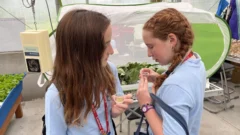
Magnolia Montgomery, age 12, peered into a rectangular enclosure covered with white mesh.
Great Lakes Now
https://www.greatlakesnow.org/2024/07/raising-monarch-butterflies-in-interlochen/

By Henry Redman, Wisconsin Examiner
A former Wisconsin state toxicologist who was involved in creating the state’s nitrate standards for drinking water in the 1980s alleges the science that has informed those standards for decades is deeply flawed and the standards should be stricter.
Dave Belluck, who worked as a toxicologist for multiple states and the federal government, says that “the science is the science” and regulating agencies, including the U.S.
Great Lakes Now
https://www.greatlakesnow.org/2024/07/former-state-toxicologist-says-nitrate-drinking-water-standards-are-too-lax/

By Brett Walton, Circle of Blue
When an early summer heat wave enveloped the Great Lakes region last month, Cleveland officials stepped in to offer relief.
They reminded residents of the availability of splash pads for outdoor water recreation. And they extended hours at air-conditioned recreation centers designated as public places to cool off.
Great Lakes Now
https://www.greatlakesnow.org/2024/07/when-the-heat-is-on-water-can-still-be-off-in-great-lakes-cities/

The United States Supreme Court recently overturned a 40-year-old precedent that could have major implications for the Great Lakes. In deciding two cases this term related to herring fishing and regulatory fees — Loper Bright Enterprises v. Raimondo and Relentless, Inc. v. Department of Commerce — the nation’s highest court overturned its 1984 holding also known as the “Chevron precedent” or “Chevron deference.” In Chevron v.
Great Lakes Now
https://www.greatlakesnow.org/2024/07/what-the-overturning-chevron-deference-means-for-the-great-lakes/
Authorities have detected an oil spill in the St. Lawrence River in Montreal’s east end, less than two weeks after an oil spill in the same area. The root cause of the oil spill near Pointe-aux-Trembles on July 25 is unknown, but authorities say they found the pipe that led the contaminant to the river. Read the full story by CBC News.
Great Lakes Commission
https://www.glc.org/dailynews/20240729-oil-spills
Funded through grants and the Ohio Department of Education, the University of Toledo (UT) is conducting a study that will collect air from Lake Erie, where it will then be transported back to UT for testing. The study focuses on how algal blooms affect humans by analyzing the effect of the toxins on human cells in a lab. Read the full story by WTOL-TV – Toledo, OH.
Great Lakes Commission
https://www.glc.org/dailynews/20240729-habs-study
A developer based in Holland, Michigan, attempting to build a marina and high-end housing at the Kalamazoo River mouth has sued the leader of the Saugatuck Dunes Coastal Alliance, a nonprofit organized in 2007 to oppose development at the river mouth. Read the full story by MLive.
Great Lakes Commission
https://www.glc.org/dailynews/20240729-development-litigation
Throughout the Michigan Brown Trout Festival, U.S. Fish and Wildlife Service researchers were busy gathering vital data on the fish populations in Lake Huron. Festival participants helped with this research as some anglers offered their catches as samples. Read the full story by The Alpena News.
Great Lakes Commission
https://www.glc.org/dailynews/20240729-festival-research
Two remote-controlled robotic devices are being deployed in Milwaukee to try and alleviate plastic pollution. The supermarket chain Meijer donated $250,000 to the Council of the Great Lakes Region Foundation for the technology, which was given to Milwaukee Riverkeeper. Read the full story by Wisconsin Public Radio.
Great Lakes Commission
https://www.glc.org/dailynews/20240729-cleanup-robots
The last wild clutch of Great Lakes piping plover eggs recently hatched, but the scientific details read more like a daytime soap opera script. It’s a tale of one female plover who bred this season with two males on two different Lake Michigan beaches – only the second time scientists documented that behavior. Read the full story by MLive.
Great Lakes Commission
https://www.glc.org/dailynews/20240729-piping-plover-breeding
The Lake Erie Waterkeepers will host various stakeholders and local press aboard a ferry boat on August 4 to mark the 10th anniversary of the 2014 Toledo Water Crisis. Other boaters are invited to join them while monitoring marine channel 68 as they lead a boat parade in a show of support for solving the HAB problem. Read the full story by the Sandusky Register.
Great Lakes Commission
https://www.glc.org/dailynews/20240729-water-crisis-anniversary