When winter descends, traveling the lakes becomes a dangerous proposition for freighters. Ice can trap even the largest ships in place, and it’s up to a small fleet of U.S. and Canadian Coast Guard icebreakers and tugboats working in tandem to keep vital shipping routes moving.

#Freighters #Shipping #Winter #Ice #GreatLakes ===========================================
Website: https://greatlakesnow.org Facebook: https://www.facebook.com/greatlakesnow X: https://www.x.com/greatlakesnow Instagram: https://www.instagram.com/greatlakesnoworg Newsletter: https://www.greatlakesnow.org/great-lakes-now-newsletter/ To learn more about supporting Detroit PBS and Great Lakes Now, visit https://www.detroitpbs.org/ ===========================================
Produced and Written by
Kathy Johnson

Narrated by
Mila Murray

Edited by
Jordan Wingrove

Camera
Greg Lashbrook

Additional Material
Captain Paul LaMarre III
PolkaDot Perch
U.S. Coast Guard
Lance Aerial
Jonathan Ellsworth
Cody Ames

The post How Icebreakers Keep Freighters Moving All Winter Long appeared first on Great Lakes Now.

Original Article

Great Lakes Now

Great Lakes Now

https://www.greatlakesnow.org/2026/05/11/how-icebreakers-keep-freighters-moving-all-winter-long/

Great Lakes Now

By Beatrice Lawrence, Wisconsin Public Radio

This article was republished here with permission from Wisconsin Public Radio.


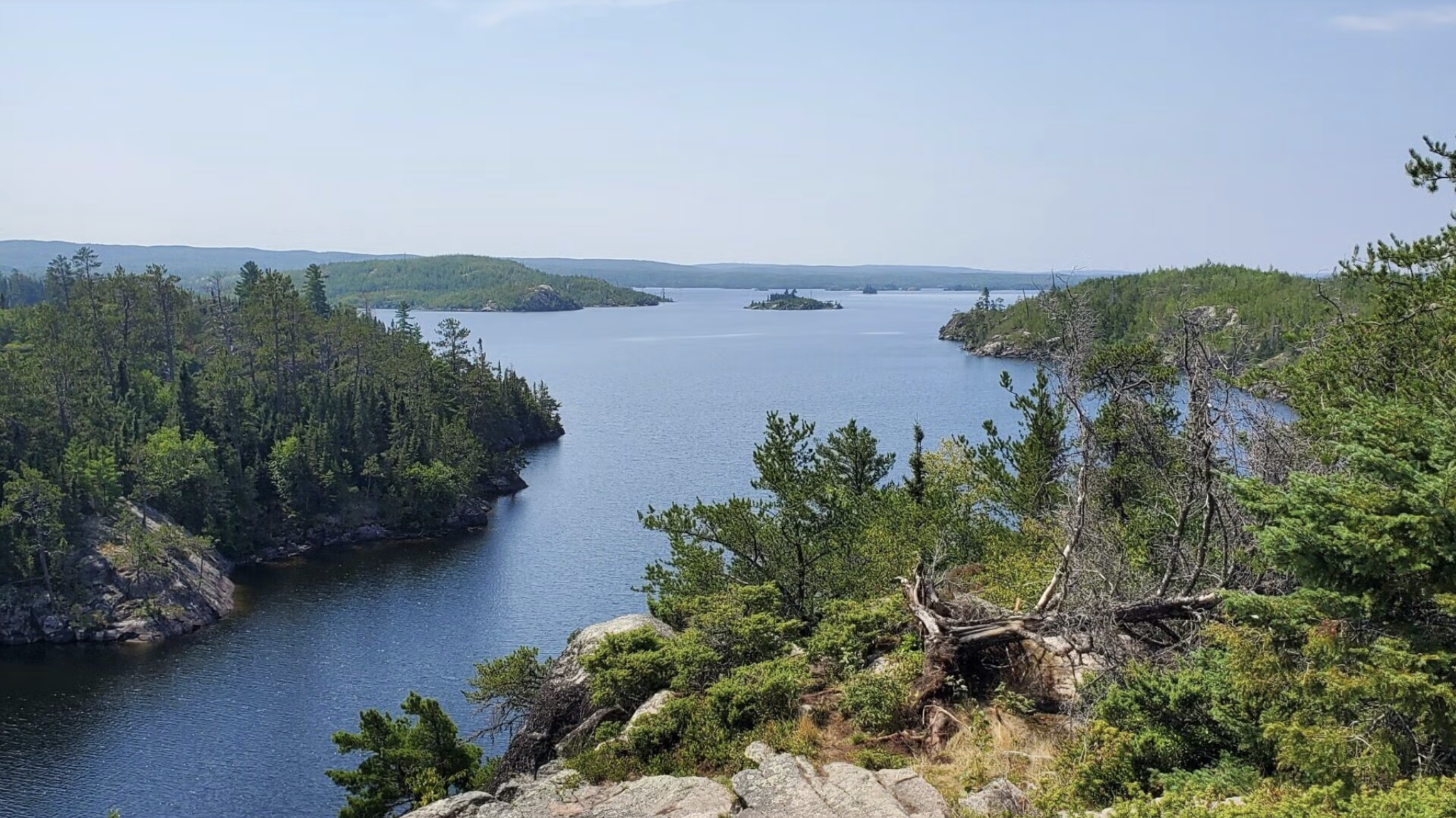
Johnson Bridgwater celebrated his 50th birthday by spending a full month in the wilderness, paddling and camping in the hundreds of thousands of acres that make up the Boundary Waters Canoe Area Wilderness in northeastern Minnesota.

It’s a place that reminds him of his father, whom Bridgwater lost when he was in his 20s.

“My father, who was a zoologist, considered it one of the last places in North America that you could truly get to some place pristine that had not been impacted by settlers or industry,” Bridgwater said.

He’s not alone. Among the more than 150,000 visitors the region sees each year, a significant portion of them come from Wisconsin. 

On Tuesday, President Donald Trump signed a bill overturning a 20-year mining ban in the area surrounding the Boundary Waters. The decision paves the way for the Chilean company Twin Metals to build a copper and nickel mine in the area, which is the world’s largest known undeveloped copper, nickel, cobalt and platinum group metals deposit. Supporters of the idea hope for a boom in jobs, but critics worry about pollution and contamination, and an economic impact on tourism and recreation.

Wisconsin lawmakers in both chambers of Congress voted on the bill along party lines — Republicans voted to overturn the ban, Democrats to sustain it.

Bridgwater, who is the water advocates organizer for River Alliance of Wisconsin, said that the decision doesn’t only affect Minnesota.

“All water is connected, and I’m not sure that the general population truly understands how big that connection is,” Bridgwater told WPR’s “Wisconsin Today.” “Up north — northern Minnesota, northern Wisconsin, the Upper Peninsula of Michigan — they carry (one) water identity. It also has very busy state lines. People are traveling across all three of those states daily.”

Economic boom or environmental disaster?

After Congress designated the Boundary Waters as a wilderness area in 1964, a robust outdoor industry sprung up in northeastern Minnesota as people flocked there every year to paddle, camp, fish and enjoy nature in the uniquely pristine and remote setting.

Critics of the Twin Metals mining project say that the recreation economy of the area will be put at risk if companies are allowed to mine nearby.

“This area is beloved,” said Minnesota Public Radio reporter Dan Kraker, who has been covering mining projects near the Boundary Waters for 15 years. “People are extraordinarily concerned about the potential pollution impacts on this amazing landscape. … They argue, even without the pollution concerns, that these mines surrounding the wilderness area could be a detractor to investment and recreational development.”

But advocates for the projects say that these mines will instead boost the area’s economy by creating thousands of jobs in both mining and construction, and will provide the U.S. with vital resources. 

“This progress ensures our state remains competitive when it comes to workforce and jobs, not to mention the global impact of reducing foreign dependence for these critical minerals,” Dave Lislegard, Jobs for Minnesotans executive, said in a statement

A 2020 Harvard study compared the projected economic impact of a 20-year mining ban in the area with a scenario in which the Twin Metals mine is developed. That study found that introducing copper-nickel mining would likely have a negative overall effect on the regional economy.

Northern Minnesota has a rich mining history. But copper and nickel mining carry different environmental risks than the traditional iron ore mining in the area.

“When sulfide-bearing ore is brought up from under the ground, and it reacts with air and water, it can create sulfuric acid and result in what’s known as acid mine drainage, and this can leach heavy metals out of the ground and potentially into the water,” Kraker said.

In 2023, the Biden administration enacted a 20-year ban on mining in the 225,000 acres surrounding the Boundary Waters. Twin Metals claimed this “locked up” necessary resources and negatively impacted communities in the area. The new law repeals that ban.

Twin Metals said that the protections already in place are sufficient enough to prevent significant environmental impact.

“Projects must prove they can meet the stringent environmental standards that have long been in place in Minnesota before moving forward,” said Kathy Graul, director of public affairs and communications for Twin Metals. 

But Bridgwater pointed to a report assembled by mining researcher Steven Emerman for the Friends of the Boundary Waters Wilderness, which found that even “model” sulfide ore mines have extensive records of environmental contamination.

Bridgwater is concerned not only about recreation in the Boundary Waters, but also the wild rice economy that exists in the region and how it intersects with the hunting and gathering rights of tribes in the Midwest.

“What you’re looking at is this overlay of uses that have been functioning and doing what they were intended to do for hundreds of years,” Bridgwater said. “We would like to see anything that can be done to stop metallic sulfide mining that could potentially impact these water environments.”

Even with the mining ban being repealed, it’s not clear if or when the mine will be approved, Kraker said.

“The state will have ultimate say on whether this goes forward, in addition to federal regulators also having to sign off on any potential mines in this area,” Kraker said. “So there is a long story yet to be written.”


The post Why mining in Minnesota’s Boundary Waters matters to Wisconsin appeared first on Great Lakes Now.

Original Article

Great Lakes Now

Great Lakes Now

https://www.greatlakesnow.org/2026/05/08/why-mining-in-minnesotas-boundary-waters-matters-to-wisconsin/

Wisconsin Public Radio

Fox Locks Open 2026 Season

The Fox River Lock System officially opens Saturday, May 16 and this season boaters and pedestrians have a lot to see!

Without the lock system, boaters on the Fox River would not be able to navigate the system of locks that cover 39 miles and drops in elevation 168 feet—a vertical drop equal in height to the total drop of Niagara Falls.

The locks give boaters about 20 miles of navigable waterway from just south of Wrightstown to the Bay of Green Bay; boaters have about 17 miles of navigable riverway from south of Wrightstown to Menasha.

Non-motorized boat traffic on the system has grown and kayakers and canoers are discovering how easy it is to travel the river. Kayak portages have been funded by grants from several community organizations including the David L. and Rita E. Nelson Family Fund within the Community Foundation for the Fox Valley Region, Fox Cities Greenways, and the Fox Valley Convention and Visitors Bureau. Completed portages include:

  • All four Appleton locks,
  • Little Chute,
  • All five Kaukauna locks have new portages constructed last fall,
  • Existing portages that are slated for future restoration are at De Pere and Cedars locks.

Additional updates for the 2026 season:

  • Annual passes are on sale now and ONLY available online. Boaters can enjoy five months of cruising the locks for only $150. A season pass gets you through any lock during any hour of operation from May-October; a $15 day pass gives you the same access for a single day of cruising.
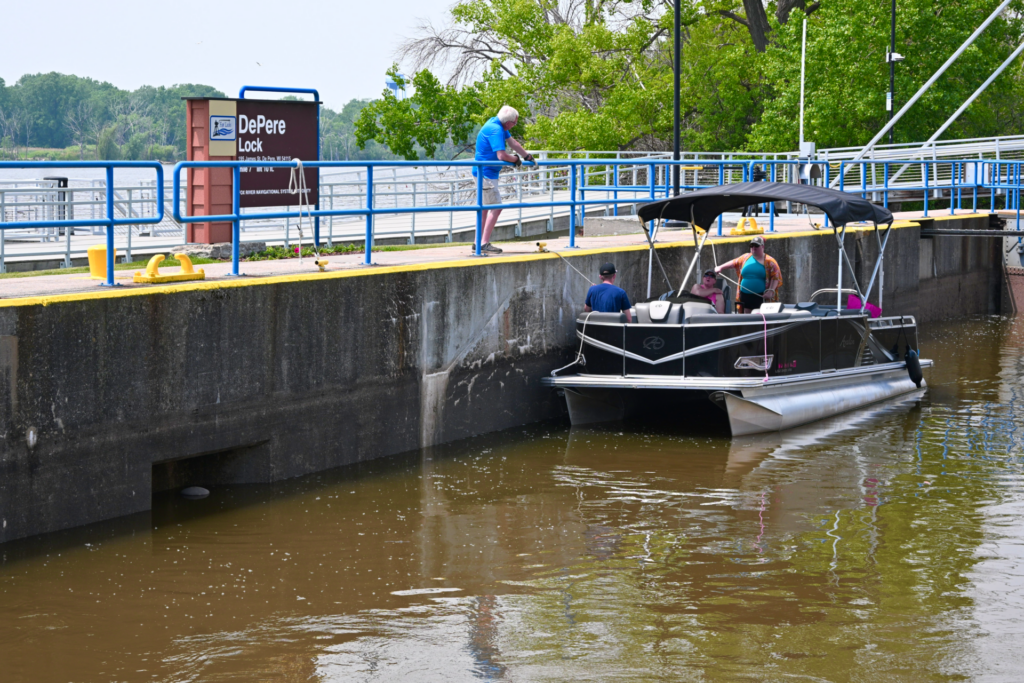
  • Locks in Little Kaukauna and De Pere are the busiest locks and are open seven days a week 10 a.m. to 8 p.m. May 16-Labor Day. In September and October, these locks are only open weekends until 6 p.m.
  • Locks in Appleton, Little Chute, Cedars, Combined Locks, and all five Kaukauna locks are open weekends 11 a.m. to 6 p.m. May 16-Labor Day.
  • Of special note are summer’s big holidays: Memorial Day, the 4th of July, and Labor Day. All locks will be operational on these holidays.
  • Public docks are available at Appleton Lock 2, Appleton Lock 4, at the Appleton Yacht Club, at the Little Chute Guard Lock, and at the De Pere Lock.


For a full schedule of lock hours, please visit foxlocks.org.

Original Article

Blog – Fox Locks

Blog – Fox Locks

https://foxlocks.org/blog/elementor-260522/

Fox Locks