An Ontario family paddled for 195 kilometres downstream on the St. Lawrence River this summer, in pursuit of a mission to canoe all the way from Guelph, Ont., to the Atlantic Ocean. Their canoe journey started six years ago, when some members of the family decided to explore the rivers near Guelph, their hometown. Read the full story by CBC News.

Original Article

Great Lakes Commission

Great Lakes Commission

https://www.glc.org/dailynews/20220822-ontariofamilypaddles-stlawrenceriver

Hannah Reynolds

There have been more beach advisories issued this week along parts of Lake Superior. The Minnesota Department of Health says the only current advisory to not enter the water is at Twin Points Public Access Beach, north of Gooseberry Falls State Park, which began on Tuesday.  The alert is due to water testing finding elevated E. coli bacteria levels. Read the full story by Fox 21 Online.  

Original Article

Great Lakes Commission

Great Lakes Commission

https://www.glc.org/dailynews/20220822-ripcurrentrisks-ecolioutbreaks

Hannah Reynolds

The Great Lakes Water Authority announced that the boil water advisory, which has been in effect for seven communities since a water main break was discovered on Aug. 13, has been lifted. Only one business in Greenwood remains under a boil water advisory. Read the full story by The Detroit News.

Original Article

Great Lakes Commission

Great Lakes Commission

https://www.glc.org/dailynews/20220822-watermainbreak-boiladvisorylifted

Hannah Reynolds

The 2022-23 school year is just around the corner. For a group of 10 undergraduate students, a big corner in their academic careers has already been rounded—a 10-week Sea Grant summer internship probing freshwater science topics, which recently concluded.

The undergraduates were selected through a competitive process that drew interest from students across the U.S. and territories. Sea Grant staff, and collaborators from the U.S. Environmental Protection Agency’s (EPA) Great Lakes Toxicology and Ecology Division Laboratory; Lake Michigan Stakeholders; and Great Lakes Indian Fish and Wildlife Commission provided mentorship and helped advance work on projects that:

  • Shared dangerous current information with Great Lakes beachgoers.
  • Communicated about Wisconsin farm-raised and wild-caught fish.
  • Expanded the voices heard in the Wisconsin Water Library.
  • Advanced the goals of the Lake Michigan Stakeholders nongovernmental agency.
  • Conducted a literature search on the linkages between mental health and climate change to prepare for future work.
  • Explored a mutual shared history and sense of place in Great Lakes communities
  • Coordinated on GIS projects to understand ecosystems.
  • Considered manoomin harvest in the context of climate adaption and resilience.
  • Assessed the risk of spreading aquatic invasive species in the used-watercraft marketplace.

Meet the interns who made a difference this summer. They answered some questions about the experience, and then threw in a comment about their preferred superpower:  

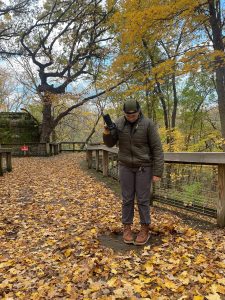
woman standing among fall leaves

Korynne Wilson. Submitted photo.

Korynne Wilson will be a junior at Beloit College this fall, majoring in biology and double minoring in public health and education. She spent the summer acting as an ambassador for water safety and water quality on Milwaukee’s Great Lakes beaches, having conversations with beachgoers. Wilson said it was rewarding to provide people with water safety resources that they may not have had before, especially families with young children. When not on the beach, Wilson undertook equity-related projects within Milwaukee, including addressing transportation barriers to lakefront recreation areas. Going into the medical field, Wilson said the internship opened her eyes to just how much lack of access and resources to water is a public health and safety issue, predominantly affecting minority populations. If Wilson had a superpower, she would be most satisfied with teleportation.

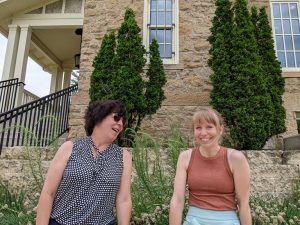
Two women sitting outdoors

Emma Kraco (right) with mentor Eat Wisconsin Fish Specialist Sharon Moen, who is with Sea Grant. Photo: Jennifer Smith

Spring 2022 graduate of the University of Wisconsin-Milwaukee, Emma Kraco put her biology degree and extensive experience working with aquaculture systems to use as part of the Eat Wisconsin Fish initiative. The initiative connects consumers, fish farmers and commercial fishers through information about local fish available for purchase in Wisconsin. It seeks to create a safe and sustainable seafood supply to meet consumer demand, as well as foster informed consumers who understand the health benefits of seafood consumption and how to evaluate the safety and sustainability of the seafood they buy. Kraco led data management efforts that fuel directories and the map on the Eat Wisconsin Fish website. She said, “The most rewarding thing was connecting with local producers and hearing their needs. I loved being able to connect people to resources to make their work easier.” The internship also sparked future goals, with Kraco saying, “This opportunity has inspired me to continue to hone my skills in science communication. I believe that having the chance to connect with producers in this way has made me a better scientist. This internship also tipped the scales on my decision to pursue a master’s in geographic information services.” Finally, if possessing a superpower was a reality, Kraco said she would be breathing underwater “without all the pesky gear.”

Smiling woman outdoors, wearing glasses

Maya Reinfeldt. Submitted photo.

Over the course of 10 weeks, Maya Reinfeldt explored the collections and programming of the Wisconsin Water Library with a critical eye towards ensuring multicultural perspectives and approaches. One project was the expansion of the Maadagindan! Start Reading! Book Club, which serves librarians and educators and is focused on children’s books about Ojibwe culture and the Great Lakes. (go.wisc.edu/e964d6). The book club resumes in the fall and Reinfeldt put plans in place for those upcoming talks. She is a 2002 International Relations and Russian Literature degree-holder from the University of Wisconsin-Madison. Reinfeldt said the internship, “Solidified my conviction that cultural and linguistic diversity and exchange be a facet of any career I may develop. In my professional and academic career thus far, nothing else has felt more purposeful, hopeful and fulfilling (than the internship).” She said her superpower of choice is, “Not getting tired while biking to work!”

The Lake Michigan Stakeholders organization is made up of professionals in the fields of environmental management, academic research, education, community outreach, outdoor advocacy, agriculture and private industry. Its members collaborate to promote and celebrate the health and viability of Wisconsin’s Lake Michigan basin through stewardship and education. Sea Grant forged a partnership with the group and supported two interns this summer—Hali Jama and Isabella Blanco—who in turn supported the goals of Lake Michigan stewardship and education.

Smiling woman

Hali Jama. Submitted photo. 

Jama will be a junior this fall at the University of Wisconsin-Madison, where she is majoring in business, an academic path she recently broadened. “Honestly, a year ago today, my plan was to pursue business and business only, but since working with Wisconsin Sea Grant, I have added environmental studies as a minor,” she said. “I am excited to continue to learn and immerse myself in work that makes a difference.” Through a concurrent internship, Jama also produced Sea Grant podcasts on environmental justice. Her No. 1 pick for a superpower is teleportation. “I am a very time-strict person, and if I could just snap my fingers and be where I am supposed to be then my life would be much easier.”


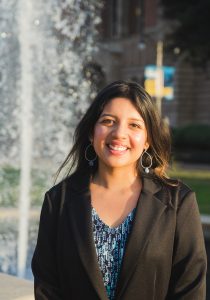
Smiling woman

Isabella Blanco. Submitted photo.

The second Lake Michigan Stakeholders intern, Blanco, said, “My experience with Wisconsin Sea Grant has been an informative and engaging look into water education and management in Wisconsin. By collaborating with the Lake Michigan Stakeholders, I have worked on their communication strategies and developed environmental equity toolkits.” The rising senior who is majoring in environmental science at the University of California Los Angeles went on to note, “The most rewarding aspect of this experience has been being able to plan Lake Michigan Day and reach out to organizations in Wisconsin about collaborating with Lake Michigan Stakeholders.” Like her fellow Lake Michigan Stakeholder intern, Blanco selected teleportation as a dream superpower. “I would be saving gas emissions and traveling the world!”


Smiling woman with long curly hair.

Genesis Perez. Submitted photo.

Genesis Perez is a recent graduate of the Inter American University of Puerto Rico, Arecibo Campus with a degree in biotechnology and minors in biology and chemistry. She said, “The most rewarding part of my internship was definitely being able to work more independently and create my own research project from scratch. It was such an interesting process from going to just a broad idea to getting to the point of having specific research questions.” That research project centered on the intersection of mental health and climate change. The goal of the project was to build understanding of how climate change is impacting mental health in Wisconsin, especially in the state’s northern coastal communities, and ways that community outreach can be responsive to mental health. And a superpower? “If I had a superpower, it would be teleportation. This would be handy because commuting is tiresome at times, and I would love to just appear where I need to be! Plus, the benefit of just appearing in a new city for a weekend would be exciting,” said Perez.

Smiling woman wearing glasses

Jaycie Hudson. Submitted photo.

For Jaycie Hudson, August is winding down, but planning for the future continues to ramp up. She said the internship, “Gave me has some really strong experience in researching a specific topic and doing something meaningful with the information. This internship has helped me prepare for applying to graduate school, because I now feel more comfortable coming up with research topics and reaching out for help to actualize them.” She credited the support from Katie Williams and Tom Hollenhorst, with the EPA in Duluth, Minnesota. “They have been flexible and willing to teach me things outside of just the internship. I have learned a lot more than I expected, and I can see how I will be able to use the skills from the internship in the future,” said Hudson, a rising senior at the University of Minnesota Duluth. She is majoring in biology and community health, and through the internship Hudson developed existing and new tools and platforms for crowdsourced local knowledge and sense of place in the Great Lakes Basin. The work explored how crowdsourcing with public participation geographic information systems and social media analysis can reveal local knowledge and history as well as local community values, placed-based memories and experiences. Zooming in on those local memories would be easier using Hudson’s superpower of choice—microscopic vision.

The final three interns were Mansi Patel, a 2022-23 junior at the University of California Santa Barbara who researched activities associated with a variety of Great Lakes ecosystems; Justin Azure, a chemical engineering major at the University of Minnesota Duluth who researched the history of manoomin and its importance to Indigenous people, and helped plan events and workshops; and Isabella Noyle, who will be a 2022-23 senior at Concordia College, and who collected data on the risk of moving aquatic invasive species from place to place via the sale of used recreational watercraft.

The post Summer scholars benefit from mentoring during internship first appeared on Wisconsin Sea Grant.

Original Article

News Releases | Wisconsin Sea Grant

News Releases | Wisconsin Sea Grant

https://www.seagrant.wisc.edu/news/summer-scholars-benefit-from-mentoring-during-internship/?utm_source=rss&utm_medium=rss&utm_campaign=summer-scholars-benefit-from-mentoring-during-internship

Moira Harrington

...PATCHY DENSE FOG MAY POSE A HAZARD TO MOTORISTS EARLY THIS MORNING... Patchy dense fog may impact the early morning commute. Poor or rapidly changing visibility may result in locally hazardous travel conditions. If driving, be alert for abrupt changes in the visibility,

Original Article

Current Watches, Warnings and Advisories for Brown (WIC009) Wisconsin Issued by the National Weather Service

Current Watches, Warnings and Advisories for Brown (WIC009) Wisconsin Issued by the National Weather Service

https://alerts.weather.gov/cap/wwacapget.php?x=WI126406EAD2FC.SpecialWeatherStatement.126406EB8D50WI.GRBSPSGRB.3b77a733acfe35fc01f412b80021d336

w-nws.webmaster@noaa.gov

...PATCHY DENSE FOG MAY POSE A HAZARD TO MOTORISTS EARLY MONDAY MORNING... Patchy dense fog is expected to develop across the area during the early morning hours. The fog could reduce the visibility to less than 1/4 mile in places, resulting in locally hazardous travel conditions.

Original Article

Current Watches, Warnings and Advisories for Brown (WIC009) Wisconsin Issued by the National Weather Service

Current Watches, Warnings and Advisories for Brown (WIC009) Wisconsin Issued by the National Weather Service

https://alerts.weather.gov/cap/wwacapget.php?x=WI126406EA2EEC.SpecialWeatherStatement.126406EAFCC8WI.GRBSPSGRB.3b77a733acfe35fc01f412b80021d336

w-nws.webmaster@noaa.gov

...PATCHY DENSE FOG WILL CONTINUE ACROSS CENTRAL AND EAST CENTRAL WISCONSIN EARLY THIS MORNING... Areas of fog will impact travel over central and east central Wisconsin early this morning. Patchy dense fog, with visibilities of 1/4 mile or less, can be expected at times. The fog will continue through 8 am or 9 am before mixing out.

Original Article

Current Watches, Warnings and Advisories for Brown (WIC009) Wisconsin Issued by the National Weather Service

Current Watches, Warnings and Advisories for Brown (WIC009) Wisconsin Issued by the National Weather Service

https://alerts.weather.gov/cap/wwacapget.php?x=WI126406DB9CD8.SpecialWeatherStatement.126406DC7220WI.GRBSPSGRB.494cf03b682e092eb57578d83349b4a7

w-nws.webmaster@noaa.gov

Professor emeritus of environment and sustainability at the University of Michigan Don Scavia explains why voluntary measures to control the nutrient runoff from farms that fuels the blooms haven’t worked and are unlikely to, and called on the EPA to shift its focus from practices to outcomes. Read the full story by Great Lakes Now.

Original Article

Great Lakes Commission

Great Lakes Commission

https://www.glc.org/dailynews/20220819-alagl-blooms

Theresa Gruninger

Work is underway on two projects meant to bolster the flood resiliency of parks in the Cayuga County village of Fair Haven, New York, in response to flooding along Lake Ontario and the St. Lawrence River. Read the full story by The Citizen.

Original Article

Great Lakes Commission

Great Lakes Commission

https://www.glc.org/dailynews/20220819-flood-resiliency

Theresa Gruninger

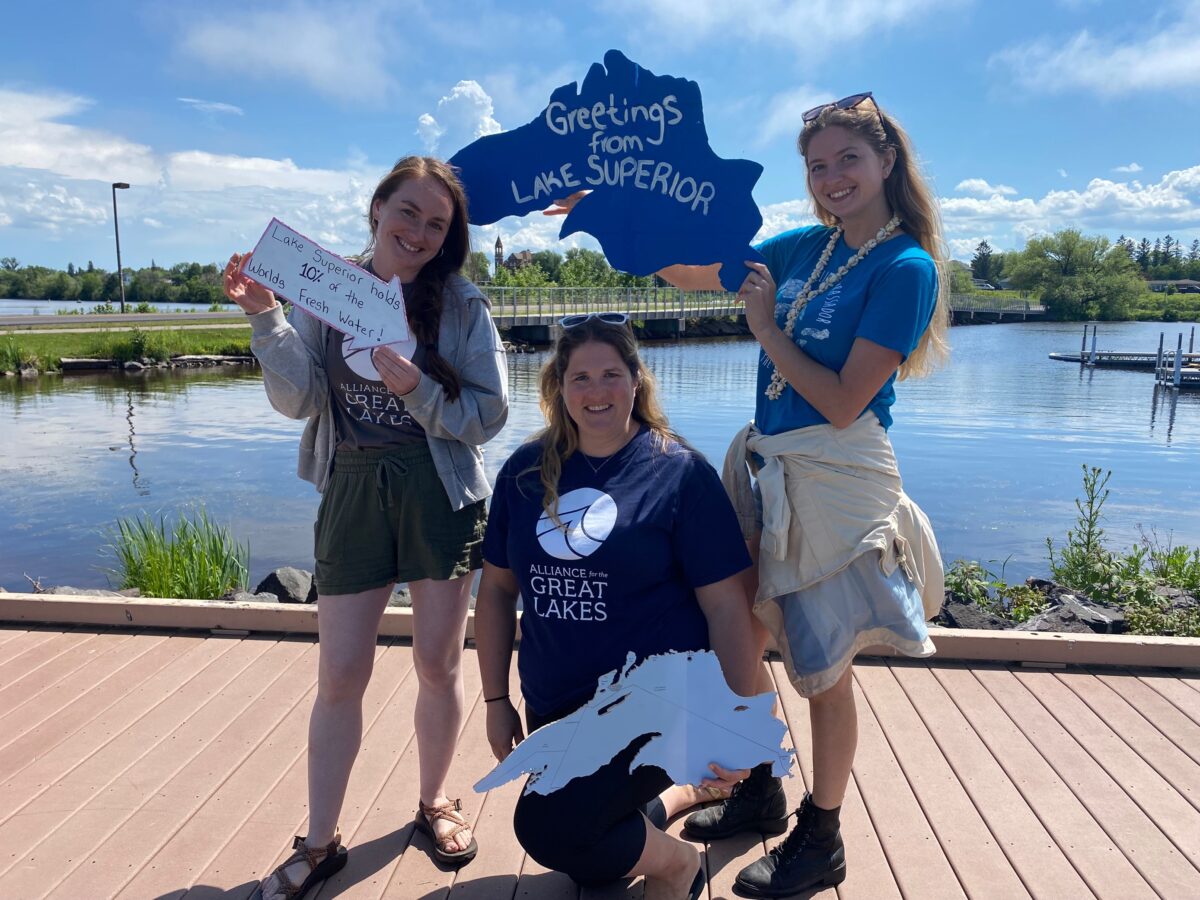
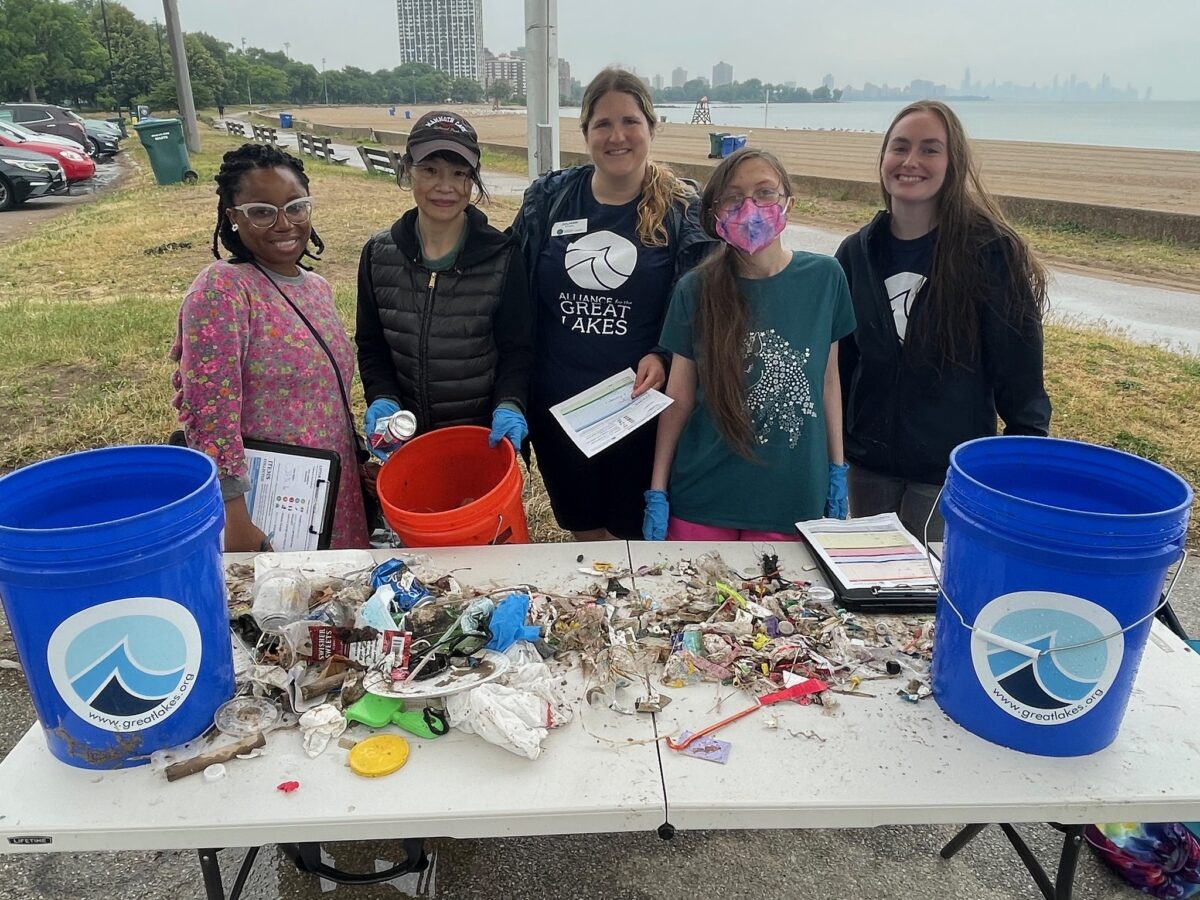
This summer Juliann Krupa, Volunteer Engagement Manager, and Oliva Reda, Volunteer Engagement Coordinator, set out to clean beaches and meet volunteers around the Great Lakes region. They cleaned up trash, heard from communities, and built new connections. We chatted with the Volunteer team to hear some of the highlights of their travels so far, the program’s goal to collect a half million pounds of litter, and what’s next for the Adopt-a-Beach program. 

Alliance: What was the catalyst for taking a cleanup road trip this summer?  

Juliann: After two years of the pandemic, Olivia and I wanted to make an intentional effort to get out and connect face-to-face with people and groups around the region. The Alliance for the Great Lakes works to represent the entire Great Lakes region. So that means all the way from New York to Minnesota. We felt it was essential to get on the ground in many places, reconnect with partners old and new, and hear directly what issues people are talking about in various regions.  

Olivia: It was helpful for us to see a lot of the locations that we may send different Adopt-a-Beach groups that cleanups happen at, or a lot of times, volunteers will reach out wanting some recommendations in a particular area. So, it’s helpful for us to see some of these locations and help potential volunteers as they’re also seeking out participation in programs. 

Alliance: Were you able to ask the volunteers questions about why they got involved? 

Olivia  Yes, we did. It’s super helpful to speak to volunteers on the ground in their areas. We learned a lot about what volunteers care about in each area. So, it’s beneficial to see the locations ourselves and hear from local communities and volunteers about what’s most pressing for them in those areas.  

Alliance: Were there any interesting volunteer stories or volunteer adventures this summer?  

Juliann: We had one experience in Rochester, NY, where we met a volunteer at a cleanup. Afterward, they offered and were willing to show us around some sites where they had seen a lot of plastic pollution build-up.  

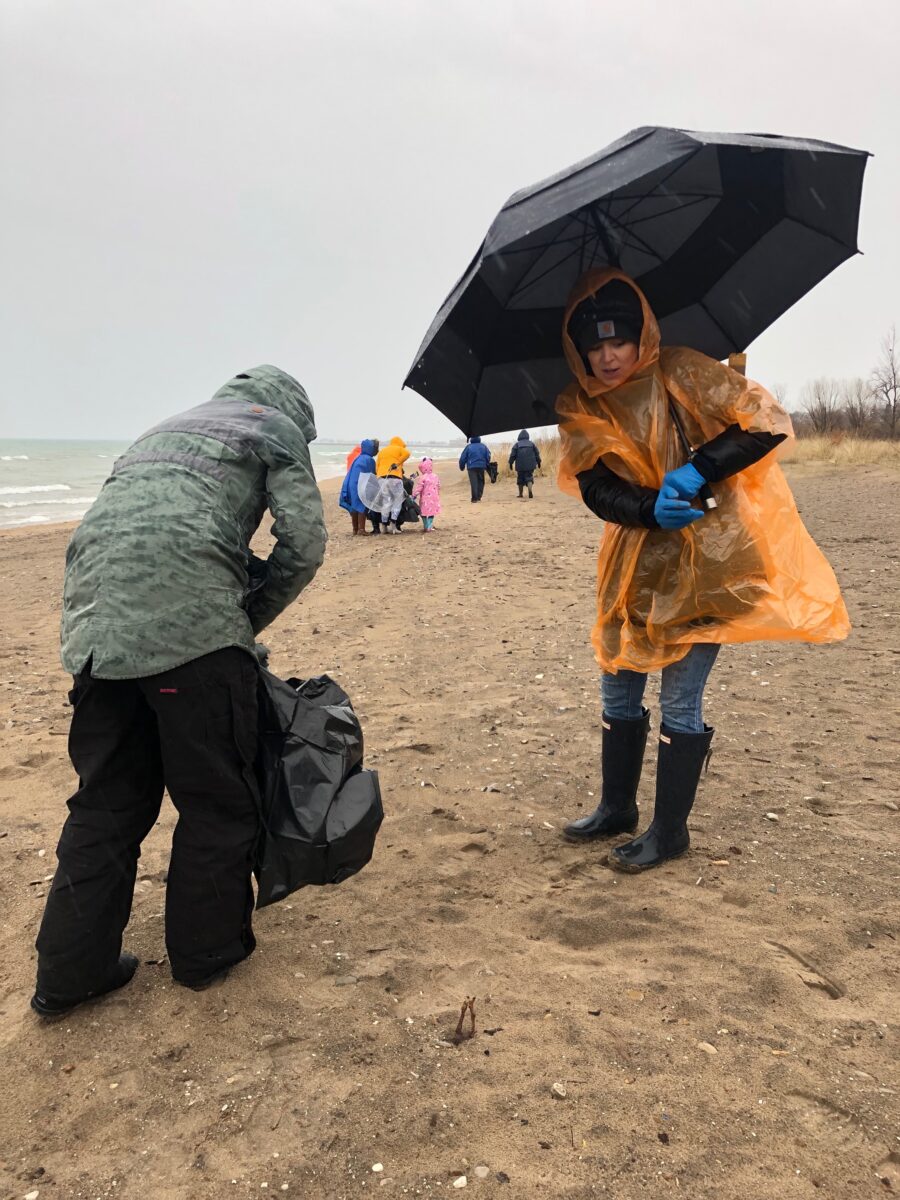
Olivia: For our first Spring Kick-Off cleanup this year, we had one of our corporate cleanups with Merz Pharma at Racine Zoo Beach. It was pouring rain, and it was not the warmest either, but they were real troopers. Moments like those emphasize how awesome our volunteers are and how they’re willing to help rain or shine.  

Alliance: Let’s talk about September Adopt–a–Beach a little bit. The date is approaching. Are there any specific goals you hope to achieve this year? 

Juliann: September Adopt-a-Beach is the most important day of action for the Great Lakes. Thousands of Adopt-a-Beach volunteers will clean and celebrate Great Lakes shorelines as part of the International Coastal Cleanup, which is held on the third Saturday of September each year.  

The Alliance is the Great Lakes coordinator for this effort. We hope to have around 5000 volunteers across the Great Lakes on September 17th working to keep their coastlines clean and collecting data on what they find that goes back into our regional coastal litter dataset.  

This year we’re working to reach our goal of collecting half a million pounds of litter from Great Lakes shorelines. So, we’re close, and hoping September Adopt–a–Beach will bring us over that number.  

Olivia: We’re hoping to reach this goal and will shine a powerful spotlight on the magnitude of plastic pollution and continue to educate and inspire people to take action on this issue.  

Alliance: For people who are thinking about volunteering for cleanups like September Adopt-a-Beach to do their part to keep our beaches and shorelines clean, how can they get involved? 

Olivia: It’s super easy to get started with us. There are a couple of different options to get involved with September Adopt–a–Beach; you can find a cleanup to attend in your area. So, you can go to adopt.greatlakes.org and find a cleanup near you to attend and register. 

Juliann: You can also become a team leader by hosting a cleanup with us. So, you can choose a date and beach location where you would like to lead a cleanup and invite your community members to attend. We have a lot of resources available to support you. 

Olivia: We also have a virtual team leader training coming up that you can attend and get some tips on the process of being a team leader and leading a cleanup. 

Alliance: What is the biggest takeaway from your summer road trip experience? 

Juliann: It was a great learning experience for both of us. We learned a lot more about the Lakes, and it was great to make new connections and rekindle old relationships. We’re inspired by how much advocacy and action there is for the Lakes and how many people care about this resource and human health. 

Juliann and Olivia are not done touring the Great Lakes region. They have additional stops planned for the rest of August and September and look forward to keeping the conversations going over the winter. 

The post To the Beach: Adopt-a-Beach Cleanup Road Trip Recap  appeared first on Alliance for the Great Lakes.

Original Article

News - Alliance for the Great Lakes

News - Alliance for the Great Lakes

https://greatlakes.org/2022/08/to-the-beach-adopt-a-beach-cleanup-road-trip-recap/

Michelle Farley

After a decade long hiatus, residents and tourists will soon be able to enjoy boat tours on the Canadian side of the St. Marys River again. Sault Lock Tours says it is excited to present the ‘Miss Marie,’ a 100-person capacity vessel that recently arrived at the Roberta Bondar dock. Read and listen to the full story by Soo Today.

Original Article

Great Lakes Commission

Great Lakes Commission

https://www.glc.org/dailynews/20220819-boat-tours

Theresa Gruninger

The Wisconsin Department of Natural Resources is hosting a public meeting to gather feedback on the management of salmon and trout on Lake Michigan on Tuesday, Aug. 30, where DNR staff members will present the latest Lake Michigan survey information. Read the full story by the Ozaukee Press.

Original Article

Great Lakes Commission

Great Lakes Commission

https://www.glc.org/dailynews/20220819-trout-meeting

Theresa Gruninger

A combined $4.5 million in funding will allow five projects in Ozaukee Country, Wisconsin to get funded including Lion’s Den Gorge Nature Preserve along Lake Michigan. Read the full story by the Milwaukee Journal Sentinel.

Original Article

Great Lakes Commission

Great Lakes Commission

https://www.glc.org/dailynews/20220819-ozaukee-county

Theresa Gruninger

As the largest lake entirely within Wisconsin’s borders, Lake Winnebago spans nearly 132,000 acres across three counties. Fed by the Wolf and Fox rivers, it’s a place rich in significance for several tribal nations, including the Ho Chunk, Meskwaki, Fox, Sauk, Menominee, Oneida, Stockbridge-Munsee, Brothertown and others.

It is this importance to multiple nations that led Mark Denning (Oneida/Menominee) to describe Lake Winnebago and its tributaries as “international waters.” Said Jessica Ryan, vice chair of the Brothertown Indian Nation, who recounted hearing this comment from Denning, “That (statement) really stuck out to us… We know that all these nations have called these waterways home, but that was really impactful. This is how all the trading happened, and the water sustained us. It’s the lifeblood of Earth.”

Ryan is part of a team working on an effort known as the Lake Winnebago InterTribal Connectivity Project, which is receiving Wisconsin Sea Grant support during Sea Grant’s 2022-24 research funding cycle. Her partners in this work include Dr. Jessie Conaway of the University of Wisconsin-Madison; Skip Blanc, a Brothertown tribal council member; and other members of the Brothertown Nation. They are joined by a vast network of partners from other Native nations, UW-Madison students, non-tribal partners, and agencies like the U.S. Fish and Wildlife Service. This large, multifaceted collaborative is focusing on revitalizing wild rice in the Lake Winnebago area.

Wild rice grows in a coastal wetland

Wild rice grows in a coastal wetland in Peshtigo, Wisconsin, in summer 2022. A collaborative effort supported in part by Wisconsin Sea Grant will consider wild rice revitalization at Lake Winnebago. (Photo: Titus Seilheimer)

While still present, particularly in Lake Poygan (just west of Lake Winnebago), wild rice is not what it used to be in the area. Ryan recounted coming across an old journal that described Lake Winnebago as “teeming with rice such that the boats could not pass.” That vivid image stuck in her mind due to its disconnect with current reality.

Project work will include assessing water quality, sediments and wild rice habitat. Said Blanc of the wide-ranging effort, “It’s going to take all of us, Native and non-native, from all spectrums of life to do this.”

Building a network, looking ahead

Ryan and the UW’s Conaway first met back in 2015 and had kept in touch. The current work on Lake Winnebago got off the ground in 2019, in part due to help from Ashley Gries, a UW graduate student at the time. “Students can really be the engines of our work and very inspirational,” said Conaway.

In 2021, the Brothertown Nation, Conaway and Gries formed a strategy and invited 12 tribal nations to come together to discuss wild rice work and Lake Winnebago; eight were able to attend. Sea Grant support began in 2022 to help keep this effort moving forward.

Gries described wild rice as a “persnickety plant” that is sensitive to environmental changes. She sees water levels, water quality, nutrient loading, sedimentation and possible user conflicts as just some of the facets for the collaboration to consider. The team will need to weigh appropriate locations for reseeding plants.

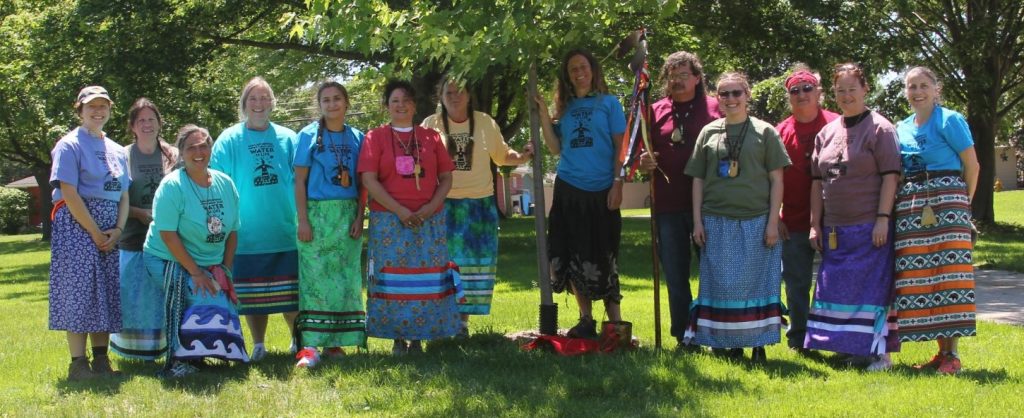
Participants in the 2022 Lake Winnebago Water Walk draw attention to water as a vital, precious resource. All are welcome at the event coordinated by the Brothertown Indian Nation, whose vice chair, Jessica Ryan, is pictured third from the left. Ryan is also a key organizer for the Lake Winnebago InterTribal Connectivity Project.

The project will take a long view, considering not only what is feasible given current conditions and uses of the lake, but also what would be sustainable over many years to come.

“I want to see the rice restored, but I don’t know if that’s practical; I don’t know if it can be done long-term,” said Ryan. Yet it is a cherished goal given the cultural importance of wild rice to many peoples (and also its importance to other living beings that depend on it).

Conaway stressed the need to organize around conservation and tribal priorities. “This area is rich with history, stories and connections. It’s a large project, and it can feel unwieldy, but we know we’re on a good path… and I’m grateful for the opportunity. We’re in it for the long haul,” she said.

The Lake Winnebago InterTribal Connectivity Project will bring together resources, equipment and knowledge from its many partners to learn as much as possible and consider future plans. To learn more, contact Jessie Conaway at jessie.conaway@wisc.edu.

The post Reviving rice: Large collaborative effort will investigate possible wild rice restoration around Lake Winnebago first appeared on Wisconsin Sea Grant.

Original Article

News Releases | Wisconsin Sea Grant

News Releases | Wisconsin Sea Grant

https://www.seagrant.wisc.edu/news/reviving-rice-lake-winnebago/?utm_source=rss&utm_medium=rss&utm_campaign=reviving-rice-lake-winnebago

Jennifer Smith

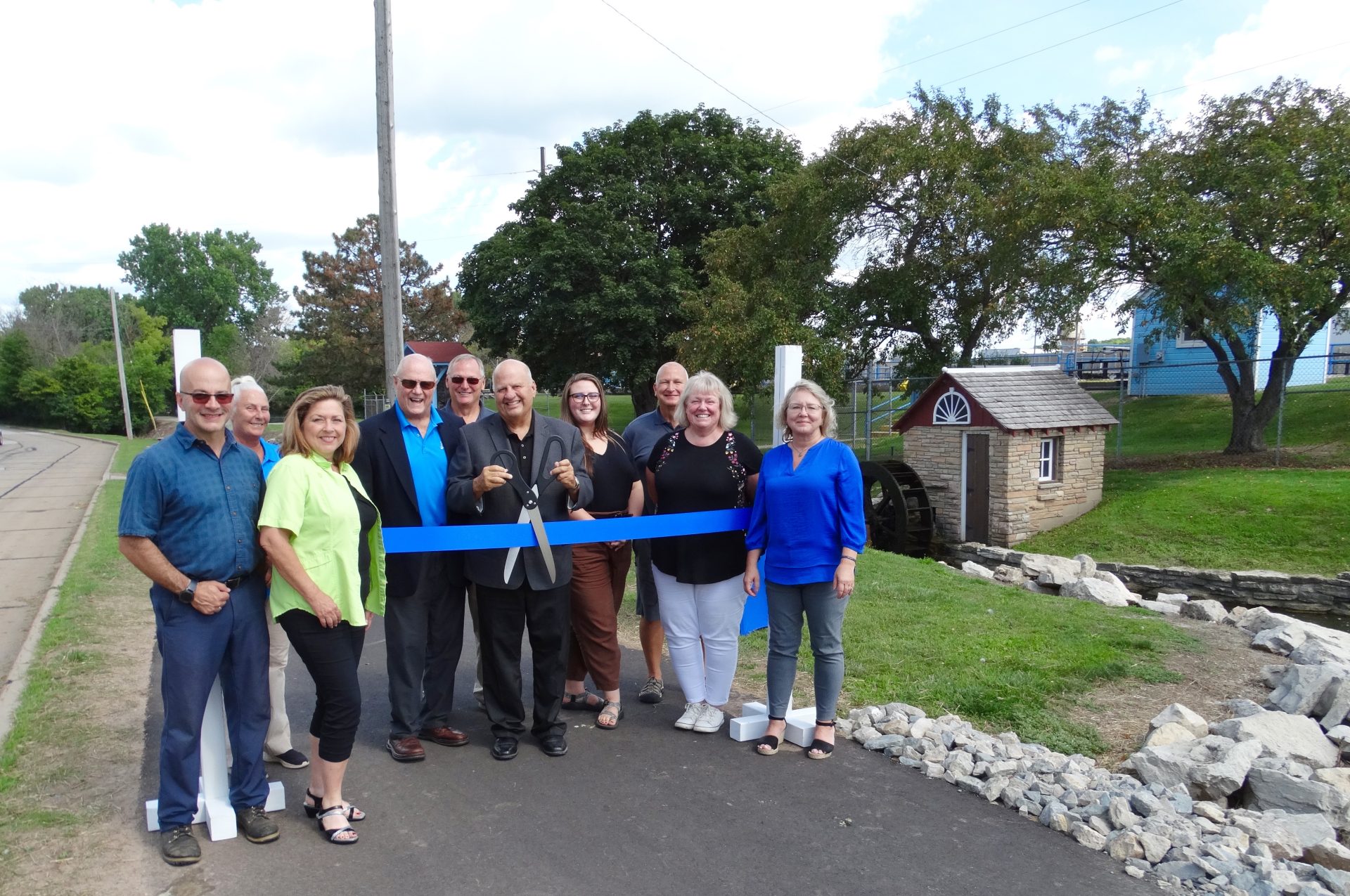
Years of hard work and extreme generosity from funders made the Kaukauna Locks Trail a reality today! Representatives from the Fox Locks board of directors, community leaders, elected officials, and regional attractions gathered in Kaukauna today to dedicate and cut the ribbon on the new trail.
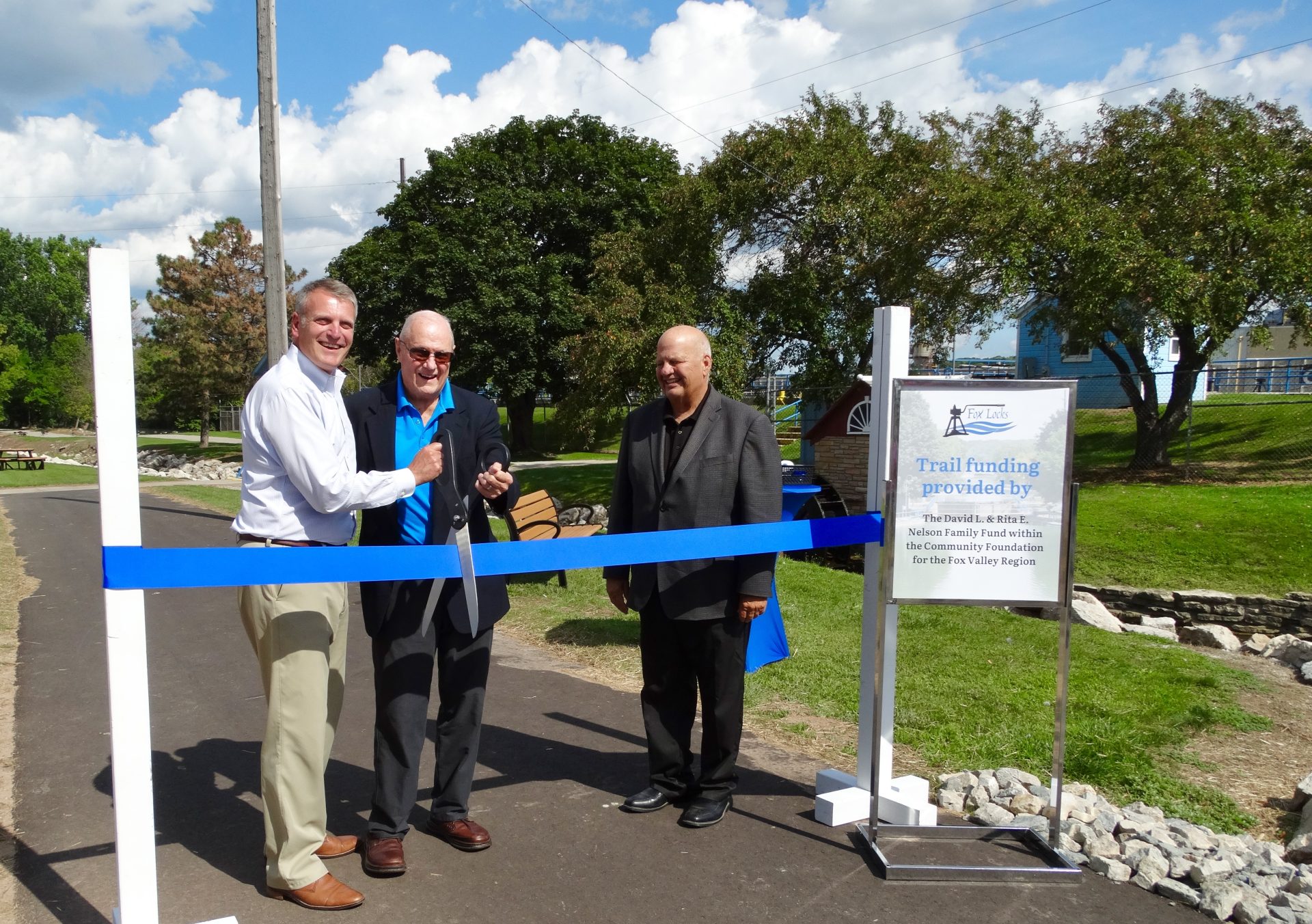
The 1.3-mile recreational trail runs adjacent to the five Kaukauna locks and is a reality thanks to a $300,000 grant from the David L. and Rita E. Nelson Family Fund within the Community Foundation for the Fox Valley Region (CFFVR). CEO of the Community Foundation Curt Detjen thanked the board members and partners of the Fox Locks for making the trail a reality and said it was part of the Nelson family’s vision to aid organizations in the Kaukauna region.
The trail is now open for public use!

FRNSA board of directors members and staff pose in front of the ribbon ready to dedicate the Kaukauna Locks Trail
L-R, CEO of the Community Foundation Curt Detjen and FRNSA Board Chair Ron Van De Hey get ready to cut the ribbon while FRNSA Executive Director Phil Ramlet looks on.

Original Article

Blog – Fox Locks

Blog – Fox Locks

http://foxlocks.org/2022/08/17/kaukauna-locks-trail-opens-to-public/

Fox Locks

FRNSA board of directors members and staff pose in front of the ribbon ready to dedicate the Kaukauna Locks Trail

Years of hard work and extreme generosity from funders made the Kaukauna Locks Trail a reality today! Representatives from the Fox Locks board of directors, community leaders, elected officials, and regional attractions gathered in Kaukauna today to dedicate and cut the ribbon on the new trail.

The 1.3-mile recreational trail runs adjacent to the five Kaukauna locks and is a reality thanks to a $300,000 grant from the David L. and Rita E. Nelson Family Fund within the Community Foundation for the Fox Valley Region (CFFVR). CEO of the Community Foundation Curt Detjen thanked the board members and partners of the Fox Locks for making the trail a reality and said it was part of the Nelson family’s vision to aid organizations in the Kaukauna region.

The trail is now open for public use!

L-R, CEO of the Community Foundation Curt Detjen and FRNSA Board Chair Ron Van De Hey get ready to cut the ribbon while FRNSA Executive Director Phil Ramlet looks on.

Original Article

Blog – Fox Locks

Blog – Fox Locks

http://foxlocks.org/2022/08/17/kaukauna-locks-trail-opens-to-public/

Fox Locks

A boil-water advisory could last up to two weeks for more than 130,000 people in southeastern Michigan as crews repair a water pipe break affecting 23 communities. The break was discovered Saturday on a critical pipe in St. Clair County, which carries treated water from Lake Huron and is the largest in the Great Lakes Water Authority system. Read the full story by The Associated Press.

Original Article

Great Lakes Commission

Great Lakes Commission

https://www.glc.org/dailynews/20220817-water-advisory

Patrick Canniff

Shimmy, a Blanding’s turtle, had been tracked numerous times by biologists on the north shore of Lake Erie, who remarked on his “odd characteristics”: two missing feet, at the front left and rear right. So, when Shimmy, whose species is classified as “threatened” in Ontario, showed up more than 100 kilometres at the Royal Botanical Gardens in Burlington, Ontario, how he managed to traverse roads, towns and farmland presented a mystery. Read the full story by CBC News.

Original Article

Great Lakes Commission

Great Lakes Commission

https://www.glc.org/dailynews/20220817-turtle

Patrick Canniff

Officials for the City of Hamilton announced plans to start dredging operations to remove hazardous sediment from Chedoke Creek, which received 24 billion liters of sewage from a combined sewer overflow between 2014 and 2018. The spill originated where Chedoke Creek connects with Lake Ontario at Princess Point.  Read the full story by CBC News.

Original Article

Great Lakes Commission

Great Lakes Commission

https://www.glc.org/dailynews/20220817-dredging

Patrick Canniff

A pair of bright orange unmanned watercraft created by the California-based company Saildrone, will be plying the waters of western Lake Superior for the next month as part of a fish population study for the United States Geological Survey. Read the full story by MLive.

Original Article

Great Lakes Commission

Great Lakes Commission

https://www.glc.org/dailynews/20220817-saildrone

Patrick Canniff

On the weekend of July 29, Tribar Manufacturing in Wixom, Michigan, released hexavalent chromium into the Wixom Sewage Treatment Facility, which discharges into the Huron River system. After almost two weeks, the Michigan Department of Health and Human Services has lifted its no-contact recommendation on parts of the Huron River following the chemical spill. Read the full story by Michigan Advance.

Original Article

Great Lakes Commission

Great Lakes Commission

https://www.glc.org/dailynews/20220817-chromium-spill

Patrick Canniff

In an update to a harmful algal bloom detection in Lake Erie, Michigan’s Monroe County has lifted a whole-body contact advisory for Sterling State Park but retained the advisory at Luna Pier Beach, both of which border Lake Erie. The public is advised to keep aware of changing conditions and to avoid water activities in areas where the advisory remains. Read the full story by The Monroe News.

Original Article

Great Lakes Commission

Great Lakes Commission

https://www.glc.org/dailynews/20220817-algae

Patrick Canniff

For the past 10 years or so, entomologists have been looking for a way to control the population of spotted wing drosophila, a fruit fly that feeds on healthy cherries and blueberries. They say they may have found their answer in releasing the samba wasp, which kills fruit flies by laying its eggs inside them.

The post Tiny wasp could give hope to Northern Michigan cherry growers first appeared on Great Lakes Echo.

Original Article

Great Lakes Echo

Great Lakes Echo

http://greatlakesecho.org/2022/08/17/tiny-wasp-could-give-hope-to-northern-michigan-cherry-growers/

Guest Contributor

Contact: Lindsey Bacigal, BacigalL@nwf.org, (734) 887-7113
Jordan Lubetkin, Lubetkin@nwf.org, (734) 904-1589

Biden Signs Climate Bill into Law, a Historic Win for Great Lakes Restoration, Clean Drinking Water, Public Health

Great Lakes Coalition: ‘This is a monumental day that will hopefully turn the tide in our nation’s fight against climate change.’

ANN ARBOR, MICH. (August 16, 2022)—President Joe Biden signed the Inflation Reduction Act of 2022 into law today, a sweeping bill that confronts the climate crisis, supports Great Lakes restoration, and prioritizes assistance to communities most impacted by climate pollution and harm. The Healing Our Waters-Great Lakes Coalition heralded the bill.

Laura Rubin, director of the Healing Our Waters-Great Lakes Coalition, said:

“This is a monumental day that will hopefully turn the tide in our nation’s fight against climate change. For the millions of people in the region, who have borne the brunt of climate-induced heat waves and flooding that have exacerbated water pollution, threatened drinking water, destroyed homes and businesses, and hurt local economies, this bill is a sign of hope. The historic investments in this bill will help the nation and local communities confront the climate crisis, while supporting Great Lakes restoration, clean drinking water, and healthy communities. This bill is a game-changer, and we hope it sets the stage for continued action, before climate-induced problems get worse and more expensive to solve.”

Since 2004, the Healing Our Waters-Great Lakes Coalition has been harnessing the collective power of more than 170 groups representing millions of people, whose common goal is to restore and protect the Great Lakes. Learn more at HealthyLakes.org or follow us on Twitter @HealthyLakes.

The post Biden Signs Climate Bill into Law, a Historic Win for Great Lakes Restoration, Clean Drinking Water, Public Health appeared first on Healing Our Waters Coalition.

Original Article

Healing Our Waters Coalition

Healing Our Waters Coalition

https://healthylakes.org/biden-signs-climate-bill-into-law-a-historic-win-for-great-lakes-restoration-clean-drinking-water-public-health/

Lindsey Bacigal

Despite the ongoing work being done to clean up the Great Lakes since the Great Lakes Water Quality Agreement was signed in 1972, the people of the U.S. and Canada have become complacent too soon after the pact’s early success. Read the full story by the Erie Times-News.

Original Article

Great Lakes Commission

Great Lakes Commission

https://www.glc.org/dailynews/20220815-great-lakes-pollution

Jill Estrada

At the annual “We Are Water” event in Milwaukee, Wisconsin, groups highlighted work to be done to clean up the South Shore Beach which is part of the Milwaukee Estuary Area of Concern. Read and hear the full story by WITI – TV – Milwaukee, WI.

Original Article

Great Lakes Commission

Great Lakes Commission

https://www.glc.org/dailynews/20220815-milwaukee-estuary

Jill Estrada

Cody Bertrand’s sighting while practicing for an Angler’s Choice tournament on Lake Calumet led to the finding and removal of a 22-pound silver carp; plus a primer on what to do in such cases Read the full story by the Chicago Sun Times.

Original Article

Great Lakes Commission

Great Lakes Commission

https://www.glc.org/dailynews/20220815-silver-carp

Jill Estrada

Julia Noordyk, Sea Grant’s water quality and coastal communities specialist, was named a Lake Michigan Champion of Conservation in an awards ceremony Friday as part of the annual Lake Michigan Day event, held this year in Manitowoc. The Lake Michigan Stakeholders bestowed the award.

“I am humbled by this honor and know that any success would not have been possible without the inspiration and partnership of all of my excellent colleagues. I am also extremely grateful to the municipalities for their commitment in improving their communities through green infrastructure and look forward to continuing to support their visions,” Noordyk said.

Man and two women sitting outside looking at a laptop computer

Julia Noordyk (right) engages with colleagues, discussing coastal resilience concerns while sitting on the shore of Lake Michigan. Photo: Narayan Mahon

Noordyk has been with Sea Grant for more than nine years, coming from the Maine Coastal Program where she worked as a senior planner focused on outreach programs in offshore wind energy, water quality and coastal public access.

Now based in Green Bay, she has devoted herself to public engagement. Noordyk serves on the Green Bay Sustainability Commission. She said she counts among the most-rewarding actions in her time on the commission the support offered to city staff to build flood resilience, removal of green infrastructure barriers and the March 2, 2021, common council adoption of a resolution to value and protect local waters.

She is also co-leading the East River Collaborative, which is committed to building resilience in Brown County’s East River watershed. The area has seen repeated flooding. The collaborative is developing a hydrologic computer model to understand current and future flood risk; forming an East River Watershed Resilience Community of Practice; structuring a community-based watershed resilience framework that is establishing a vision, goals and near-term actions for building community capacity and flood resilience; and accelerating nature-based solutions designed to improve flood-resistance, water quality and quality of life.

The awarding organization also noted Noordyk’s leadership as the Wisconsin Clean Marina Program manager on clean marina protocols that both boost a marina’s bottom line and keep the waters cleaner. Example practices are reducing fuel spills, properly storing hazardous materials, capturing boat wash water and managing stormwater. Last year, Noordyk and partners added a marina resiliency checklist to the clean marina certification process. The self-assessment identifies risks, vulnerabilities and information gaps. It provides a blueprint for coastal communities and marinas to prioritize, plan and initiate enhancements to ensure marina resiliency to coastal hazards

Sea Grant’s Fisheries Specialist Titus Seilheimer said, “In my decade of working with Julia, she has been a constant inspiration for me. Every time I hear about what she is working on and the impacts that it is having, I think, ‘Wow, how can I be more like Julia?’ She is the definition of a Lake Michigan Champion.”

This is the sixth year champion awards have been given. In addition to Noordyk, other 2022 winners are the Glen Hills Youth Team, Bill Moren and Clean Farm Families of Ozaukee County, led by Andy Holschbach and Mike Paulus.

The Lake Michigan Stakeholders organization is made up of professionals in the fields of environmental management, academic research, education, community outreach, outdoor advocacy, agriculture and private industry. Its members collaborate to promote and celebrate the health and viability of Wisconsin’s Lake Michigan basin through stewardship and education.

The post Noordyk named a Lake Michigan Champion of Conservation first appeared on Wisconsin Sea Grant.

Original Article

News Releases | Wisconsin Sea Grant

News Releases | Wisconsin Sea Grant

https://www.seagrant.wisc.edu/news/noordyk-named-a-lake-michigan-champion-of-conservation/?utm_source=rss&utm_medium=rss&utm_campaign=noordyk-named-a-lake-michigan-champion-of-conservation

Moira Harrington

...FLOOD ADVISORY NOW IN EFFECT UNTIL 3 PM CDT THIS AFTERNOON... * WHAT...Flooding caused by excessive rainfall continues. * WHERE...A portion of northeast Wisconsin, including the following counties, Brown, Oconto, Outagamie and Shawano. * WHEN...Until 300 PM CDT. * IMPACTS...Minor flooding in low-lying and poor drainage areas.

Original Article

Current Watches, Warnings and Advisories for Brown (WIC009) Wisconsin Issued by the National Weather Service

Current Watches, Warnings and Advisories for Brown (WIC009) Wisconsin Issued by the National Weather Service

https://alerts.weather.gov/cap/wwacapget.php?x=WI12640662E810.FloodAdvisory.126406634A80WI.GRBFLSGRB.203131f4d52a52275680600be27ce9fd

w-nws.webmaster@noaa.gov

...FLOOD ADVISORY REMAINS IN EFFECT UNTIL 1 PM CDT THIS AFTERNOON... * WHAT...Flooding caused by excessive rainfall continues. * WHERE...A portion of northeast Wisconsin, including the following counties, Brown, Oconto, Outagamie and Shawano. * WHEN...Until 100 PM CDT. * IMPACTS...Minor flooding in low-lying and poor drainage areas.

Original Article

Current Watches, Warnings and Advisories for Brown (WIC009) Wisconsin Issued by the National Weather Service

Current Watches, Warnings and Advisories for Brown (WIC009) Wisconsin Issued by the National Weather Service

https://alerts.weather.gov/cap/wwacapget.php?x=WI12640662B930.FloodAdvisory.12640662FC60WI.GRBFLSGRB.203131f4d52a52275680600be27ce9fd

w-nws.webmaster@noaa.gov