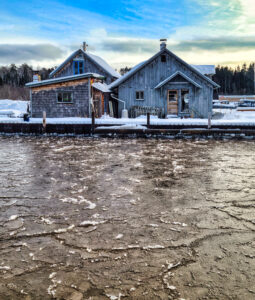
The Peoria, a cargo ship that ended up returning to the scene of its accident, and sinking yet again, is the most recent shipwreck in Door County, Wisconsin to be recognized and protected by the state. Read the full story by the Green Bay Press Gazette.

Original Article

Great Lakes Commission

Great Lakes Commission

https://www.glc.org/dailynews/20231218-the-peoria

Theresa Gruninger

The Michigan Department of Natural Resources is seeking landowners in the Lake Erie and Saginaw Bay watersheds willing to add wetlands to their property. The DNR is hosting a webinar on Friday, Jan. 12 to talk with property owners interested in helping restore wetlands. Read the full story by MLive.

Original Article

Great Lakes Commission

Great Lakes Commission

https://www.glc.org/dailynews/20231218-wetland-restoration

Theresa Gruninger

Ice-covered lakes are used for recreation during the winter. No matter whether large or small, many waterways are experiencing ice coverage that is below normal. The Great Lakes usually have around 3% ice coverage in mid-December, but data from NOAA indicates coverage is just above 0% this year. Read the full story by FOX Weather.

Original Article

Great Lakes Commission

Great Lakes Commission

https://www.glc.org/dailynews/20231218-thin-ice

Theresa Gruninger

Lifeguards at Presque Isle, Pennsylvania play a crucial role in making sure people can enjoy the park without harm but staffing those beaches has been difficult. The Lifeguard Association at Presque Isle, they’ve been doing everything they can to stay competitive with those other organizations and offer a unique experience. Read the full story by WJET-TV – Erie, PA.

Original Article

Great Lakes Commission

Great Lakes Commission

https://www.glc.org/dailynews/20231218-presque-isle-lifeguards

Theresa Gruninger

The United States Environmental Protection Agency recently approved the Wisconsin Department of Natural Resources Northeast Lakeshore Total Maximum Daily Loads for Total Phosphorus and Total Suspended Solids study. The study will investigate ways to reduce the amount of nutrients entering waters within the Lake Michigan watershed. Read the full story by the Door County Pulse.

Original Article

Great Lakes Commission

Great Lakes Commission

https://www.glc.org/dailynews/20231218-tc-phosphorus

Theresa Gruninger

TC Energy has an ambitious plan for Georgian Bay: to draw water up through a clay escarpment, store it in a reservoir, then send it down back into the bay past underwater turbines to create power for southern Ontario when it’s needed. To make this happen, the Calgary-based oil and gas behemoth wants the greenlight from multiple groups, including the Saugeen Ojibway Nation. Read the full story by The Narwhal.

Original Article

Great Lakes Commission

Great Lakes Commission

https://www.glc.org/dailynews/20231218-tc-energy

Theresa Gruninger

Ohio Gov. Mike DeWine plans to include the health of the state’s large rivers in the ongoing H2Ohio program aimed at water efforts. The H2Ohio program will expand to research PFAS contamination, remove eroding dams, conserve forest buffers and more. Read the full story by the Cleburne Times-Review.

Original Article

Great Lakes Commission

Great Lakes Commission

https://www.glc.org/dailynews/20231218-h2ohio

Theresa Gruninger

An annual survey by New York’s Thousand Islands International Tourism Council shows that nearly 80% of tourism operators were either satisfied or pleased with the 2023 tourist season, a large increase from how operators felt in 2020.  Read the full story by the Watertown Daily Times.

Original Article

Great Lakes Commission

Great Lakes Commission

https://www.glc.org/dailynews/20231218-thousand-islands-tourism

Theresa Gruninger

...SNOW SHOWERS COULD MAKE FOR SLIPPERY ROADS AND SIDEWALKS THIS MORNING... An upper level disturbance was producing snow showers this morning. While snow accumulations will be minimal in most places, the snow showers could make roads and sidewalks slick. Use caution is you will be traveling this morning. The snow showers should end by noon.

Original Article

Current Watches, Warnings and Advisories for Brown (WIC009) Wisconsin Issued by the National Weather Service

Current Watches, Warnings and Advisories for Brown (WIC009) Wisconsin Issued by the National Weather Service

https://alerts.weather.gov/cap/wwacapget.php?x=WI126672921B30.SpecialWeatherStatement.126672926180WI.GRBSPSGRB.3b84abab2a0e5f76f50745403b6c3daf

w-nws.webmaster@noaa.gov

With holiday travel approaching, the Department of Agriculture and Rural Development is urging dog owners to be aware of a “mystery illness” that is sweeping the nation.

The illness affects dogs’ respiratory systems, causing an unusual increase in coughing, sneezing, loss of appetite, eye and nasal discharge, fever and lethargy.

The post Caution urged for holiday travel with dogs due to virus first appeared on Great Lakes Echo.

Original Article

Great Lakes Echo

Great Lakes Echo

http://greatlakesecho.org/2023/12/18/caution-urged-for-holiday-travel-with-dogs-due-to-virus/

Guest Contributor

...MODERATE TO BRIEFLY HEAVY SNOW SHOWERS EARLY THIS MORNING... A strong upper level disturbance will produce quick moving snow showers across portions of central, east-central and north- central WI early this morning. While snow accumulations should be an inch or less in most places, visibilities under 1 mile, wind gusts up to 35 mph, and rapid snow accumulation on roads is

Original Article

Current Watches, Warnings and Advisories for Brown (WIC009) Wisconsin Issued by the National Weather Service

Current Watches, Warnings and Advisories for Brown (WIC009) Wisconsin Issued by the National Weather Service

https://alerts.weather.gov/cap/wwacapget.php?x=WI1266729105D8.SpecialWeatherStatement.126672917720WI.GRBSPSGRB.c7af4845f2e9eb88e57e1747a63d15f5

w-nws.webmaster@noaa.gov

...SNOW SHOWERS COULD MAKE FOR HAZARDOUS TRAVEL TONIGHT... A strong upper level disturbance will produce snow showers tonight. They will begin by late evening in central and northcentral Wisconsin, and after midnight across the eastern part of the state. While snow accumulations should be an inch or less in most places, the snow showers could be briefly heavy, making roads and sidewalks slippery. Gusty

Original Article

Current Watches, Warnings and Advisories for Brown (WIC009) Wisconsin Issued by the National Weather Service

Current Watches, Warnings and Advisories for Brown (WIC009) Wisconsin Issued by the National Weather Service

https://alerts.weather.gov/cap/wwacapget.php?x=WI12667283D0FC.SpecialWeatherStatement.126672908CC0WI.GRBSPSGRB.3b84abab2a0e5f76f50745403b6c3daf

w-nws.webmaster@noaa.gov

...WIDESPREAD FOG, LOCALLY DENSE, WILL CONTINUE ACROSS NORTHEAST WISCONSIN... Widespread fog will continue early this morning. Locally dense fog, with visibilities under one half mile, is expected at times. Motorists should be prepared for poor visibilities while traveling. Remember to turn on your low-beam headlights and allow

Original Article

Current Watches, Warnings and Advisories for Brown (WIC009) Wisconsin Issued by the National Weather Service

Current Watches, Warnings and Advisories for Brown (WIC009) Wisconsin Issued by the National Weather Service

https://alerts.weather.gov/cap/wwacapget.php?x=WI1266728210F0.SpecialWeatherStatement.126672828EB8WI.GRBSPSGRB.3b77a733acfe35fc01f412b80021d336

w-nws.webmaster@noaa.gov

...AREAS OF DENSE FOG EXPECTED ACROSS NORTHEAST WISCONSIN TONIGHT... Areas of dense fog, with visibilities of one half of a mile or less, is expected across northeast Wisconsin overnight. Motorists traveling across the region overnight can expect rapidly changing and poor visibilities at times. Remember to turn

Original Article

Current Watches, Warnings and Advisories for Brown (WIC009) Wisconsin Issued by the National Weather Service

Current Watches, Warnings and Advisories for Brown (WIC009) Wisconsin Issued by the National Weather Service

https://alerts.weather.gov/cap/wwacapget.php?x=WI1266728137C0.SpecialWeatherStatement.126672820DD0WI.GRBSPSGRB.3b77a733acfe35fc01f412b80021d336

w-nws.webmaster@noaa.gov

2024 Farmer Roundtables

A Little About the Keynote Duo

John Koepke is a 5th generation dairy farmer from Waukesha County, WI. He has implemented regenerative agricultural practices throughout his operation. John is committed to protecting the land and the environment. Amber Radatz works for the Discovery Farms Program, a part of UW-Extension. Her background is in manure and nutrient management.

Schedule of Events

9:30am– Registration and Welcome

10:00am– Keynote Speech: Amber Radatz & John Koepke

11:30am– Lunch

12:30pm– Farmer Panel

1:30pm- Lightning Talks and Roundtable Discussion

3:00pm– Happy Hour

Thank you to our event sponsors!

Platinum

Gold

Silver

Event Partners

This event is being organized and hosted by the Winnebago Waterways and Low Fox River Agriculture Outreach Workgroups. This is a collaborative initiative by multiple conservation partners and farmers working to increase farmer adoption of regenerative agriculture practices in the Fox-Wolf Basin.

The post 2024 Winnebago Waterways and Lower Fox River Farmer Roundtables appeared first on Fox-Wolf Watershed Alliance.

Original Article

Fox-Wolf Watershed Alliance

Fox-Wolf Watershed Alliance

https://fwwa.org/2023/12/15/2024farmerroundtable/?utm_source=rss&utm_medium=rss&utm_campaign=2024farmerroundtable

Tim Burns

Michigan farm czar: Our fight against Lake Erie pollution isn’t working

By Kelly House, Bridge Michigan

The Great Lakes News Collaborative includes Bridge Michigan; Circle of Blue; Great Lakes Now at Detroit Public Television; and Michigan Radio, Michigan’s NPR News Leader; who work together to bring audiences news and information about the impact of climate change, pollution, and aging infrastructure on the Great Lakes and drinking water.

Read Now at Great Lakes Now.

Original Article

Great Lakes Now

Great Lakes Now

https://www.greatlakesnow.org/2023/12/michigan-farm-czar-our-fight-against-lake-erie-pollution-isnt-working/

Bridge Michigan

Researchers documented two baby lake sturgeon in the Grand River in 2022, indicating that the species is successfully reproducing in that river. During the 2023 research season, the team documented an additional 15 sturgeon in the river. Read the full story by Michigan Radio.

Original Article

Great Lakes Commission

Great Lakes Commission

https://www.glc.org/dailynews/20231215-lakesturgeon-grandriver

Hannah Reynolds

The Michigan Department of Natural Resources is investing $4 million to advance wetland restoration and reduce harmful algal blooms in both Lake Erie and Saginaw Bay watersheds to improve drinking water and wildlife habitat. Read the full story by WXYZ-TV – Detroit, MI.

Original Article

Great Lakes Commission

Great Lakes Commission

https://www.glc.org/dailynews/20231215-dnr-michiganwetlands-investment-habs

Hannah Reynolds

Wisconsin archaeologists are crediting a man and his daughter with discovering the remains of what could be George L. Newman, which sank more than 150 years ago. Read the full story by the Associated Press.

Original Article

Great Lakes Commission

Great Lakes Commission

https://www.glc.org/dailynews/20231215-lakemichigan-sonar-shipwreck

Hannah Reynolds

The EPA has chosen the Great Lakes Community Conservation Corps (GLCCC) to receive a grant to recruit and train workers for community revitalization projects, including multiple green infrastructure initiatives and monitoring PFAS contaminants. Read the full story by the Journal Times.

Original Article

Great Lakes Commission

Great Lakes Commission

https://www.glc.org/dailynews/20231215-greatlakes-communitycorps-epa-grant

Hannah Reynolds

In a crucial step toward reintroducing Arctic grayling to Michigan waters, 2,000 young, healthy fish were stocked in three Michigan lakes last month. The initiative has been underway since the Little River Band of Ottawa Indians and the Michigan Department of Natural Resources partnered to reintroduce the “iconic” species to Michigan waters in 2015. Read the full story by the Manistee News Advocate.

Original Article

Great Lakes Commission

Great Lakes Commission

https://www.glc.org/dailynews/20231215-michigan-cherishedsalmon

Hannah Reynolds

The U.S. Army Corps of Engineers recently awarded a contract for the dredging of Erie’s harbor in 2024. The Corps’ Buffalo District awarded the $682,000 contract to Michigan-based Ryba Marine Construction Co. on Dec. 6 for the work on the federal navigation channel in Erie Harbor. Read the full story by the Erie Times-News.

Original Article

Great Lakes Commission

Great Lakes Commission

https://www.glc.org/dailynews/20231215-us-armycorp-erieharbor-dredging

Hannah Reynolds

Since 1964, the Niagara River of Lake Erie has installed an ice boom for each winter. The New York Power Authority could install the ice boom as-early-as December 16 for the 2023-2024 ice season. When it is installed, the ice boom will be near the outlet of Lake Erie where crews plan to reduce the amount of ice entering the Niagara River. The boom helps to strengthen the formation of a naturally made ice arch. Read the full story by WGRZ-TV – Buffalo, NY. 

Original Article

Great Lakes Commission

Great Lakes Commission

https://www.glc.org/dailynews/20231215-lakeerie-iceboom

Hannah Reynolds

In July 2010, one of the largest U.S. inland oil spills struck Michigan’s Kalamazoo River. The U.S. Environmental Protection Agency estimated the spill was upwards of 4.5 million gallons. As part of a wildlife rescue, the Michigan Department of Natural Resources and the U.S. Fish and Wildlife Services relocated more than 700 northern map turtles to similar habitats along the Kalamazoo River. Over a decade later and researchers are learning just how far map turtles will move in response to environmental disasters. Read the full story by Great Lakes Echo. 

Original Article

Great Lakes Commission

Great Lakes Commission

https://www.glc.org/dailynews/20231215-turtles-slowandsteady-race

Hannah Reynolds

The turtles had a long journey ahead.

They fought for 45 miles against the strong Kalamazoo River current. They left the river and walked up and over a dam blocking their path.

The post Slow and steady wins the race, even one that takes 10 years to move 45 miles first appeared on Great Lakes Echo.

Original Article

Great Lakes Echo

Great Lakes Echo

http://greatlakesecho.org/2023/12/15/slow-and-steady-wins-the-race-even-one-that-takes-10-years-to-move-45-miles/

Reese Carlson

Note: This blog was written by Vice President of Policy and Strategic Engagement Crystal M.C. Davis.

Attending the COP28 UN Climate Change Conference in Dubai was an incredible experience, one that I was fortunate to be a part of thanks to the Black Environmental Leaders Association (BEL). As a founding member and board member, it was amazing to see how the organization’s support brought our mission to a global stage, showing just how far our collective efforts in environmental advocacy can reach.

Celebrating the Role of Black Environmental Leaders

Our delegation’s presence at COP28 was a testament to the organization’s commitment to environmental advocacy and its impact on a global scale. I was privileged to represent not only the Alliance for the Great Lakes but also the voices and perspectives that BEL leaders bring to the forefront of environmental justice.

Global and Local Interplay: Understanding Our Collective Impact

At COP28, the interconnectedness of local and global environmental efforts became increasingly clear. The insights I gained there have deepened my understanding of how our regional work across states and cities aligns with national and global environmental initiatives. It’s evident now more than ever that our individual efforts have profound global implications. This revelation was a recurring theme throughout the conference, emphasizing the significant impact of water stewardship and innovation on a global scale. COP28 was not just about global dialogues; it was about finding local relevance in these discussions. The insights gained from the conference will be instrumental in shaping our approach to water and climate issues in the Great Lakes region. The shared knowledge and strategies from the global stage will help us develop more effective local solutions.

Water Stewardship: An Economic Imperative

The conference illuminated an essential truth: water stewardship and innovation are not only environmental responsibilities but also make sound economic sense. This alignment of environmental, racial, health, and economic justice was a key focus, with several sessions exploring the financial aspects of climate action. The discussions at COP28 reinforced the notion that environmental conservation is intrinsically linked to broader economic strategies.

The Alliance for the Great Lakes: Bridging Justice and Environmental Action

At the Alliance for the Great Lakes, we’ve recognized the intertwined nature of environmental, racial, health, and economic justice. COP28 served to reaffirm this understanding, highlighting how environmental initiatives, especially those focused on water, are crucial in building a just and sustainable economic future. Our commitment to these principles was echoed in the global discourse at the conference, reinforcing the value and urgency of our work.

Forward with Renewed Vision

Reflecting on the experiences and lessons from COP28, I am filled with a renewed sense of purpose and clarity. As we move forward, the Alliance for the Great Lakes is more equipped than ever to play a pivotal role in fostering environmental justice and economic sustainability, both regionally and globally.

Together, we are making strides toward a future where environmental stewardship and economic progress go hand in hand.

The post Reflections from COP28: A Journey of Global Impact and Local Stewardship appeared first on Alliance for the Great Lakes.

Original Article

News - Alliance for the Great Lakes

News - Alliance for the Great Lakes

https://greatlakes.org/2023/12/reflections-from-cop28-a-journey-of-global-impact-and-local-stewardship/

Michelle Farley

Guinness World Records recently announced that the world’s new hottest pepper is a veggie known as Pepper X, grown by Puckerbutt Pepper Co. of Fort Mill, South Carolina.

But Ryan Karcher, a veteran pepper grower from Howell, Michigan, is contesting Pepper X’s spice and flavor with his own pepper. It will be featured in a January 22 television show called Superhot: The Spicy World of Pepper People. 

The post Pepper wars: Michigan grower disputes Pepper X’s record for world’s hottest pepper; says his may be hotter first appeared on Great Lakes Echo.

Original Article

Great Lakes Echo

Great Lakes Echo

http://greatlakesecho.org/2023/12/14/pepper-wars-michigan-grower-disputes-pepper-xs-record-for-worlds-hottest-pepper-says-his-may-be-hotter/

Daniel Schoenherr

The Illinois Department of Natural Resources says a record amount of invasive silver carp have been pulled from an Illinois River impoundment using seine nets, marking the single largest fish removal ever undertaken by the agency. Read the full story by MLive.

Original Article

Great Lakes Commission

Great Lakes Commission

https://www.glc.org/dailynews/20231213-carp-harvest

Laura Andrews

Tens of thousands of acres within a remote forest in Michigan’s Upper Peninsula will become part of the state’s forestry program after grant funding from a national nonprofit. The vast, non-fragmented forestland includes hundreds of miles of streams and rivers, nearly 100 lakes and ponds, and dense boreal forest critical to climate resiliency. Read the full story by MLive.

Original Article

Great Lakes Commission

Great Lakes Commission

https://www.glc.org/dailynews/20231213-michigamme

Laura Andrews

Port Washington, Wisconsin, will get nearly $1 million to stabilize Valley Creek, which is prone to flash flooding and has been experiencing harsh erosion, threatening key infrastructure. Read the full story by WDJT-TV – Milwaukee, WI.

Original Article

Great Lakes Commission

Great Lakes Commission

https://www.glc.org/dailynews/20231213-port-washington

Laura Andrews

A company that owns a Superior, Wisconsin, shipyard is moving ahead with plans to secure up to $40 million in financing to expand its operations, a move its chief executive says will create hundreds of jobs. Read the full story by Wisconsin Public Radio.

Original Article

Great Lakes Commission

Great Lakes Commission

https://www.glc.org/dailynews/20231213-shipyard

Laura Andrews

Michigan officials are urging the Flint City Council to approve a plan to secure American Rescue Plan Act funds, and a loan from the Clean Water State Revolving Fund, with the purpose of repairing and replacing two outdated city sewer lines. Read the full story by WNEM-TV – Saginaw, MI.

Original Article

Great Lakes Commission

Great Lakes Commission

https://www.glc.org/dailynews/20231213-flint-pipes

Laura Andrews

The Great Lakes Compact at 15: Region celebrates, veteran policy experts caution against complacency

The year is 1998 and a Canadian Broadcasting Corporation headline reads “Great Lake water deal draws criticism.”

The “deal” to which the CBC referred was an under-the-radar but legal endeavor by a Canadian company to tap Lake Superior water and ship it via tanker to Asia for profit.

Read Now at Great Lakes Now.

Original Article

Great Lakes Now

Great Lakes Now

https://www.greatlakesnow.org/2023/12/the-great-lakes-compact-at-15-region-celebrates-veteran-policy-experts-caution-against-complacency/

Gary Wilson

Helena Tiedmann’s interest in the Great Lakes began with a new city and a book. Tiedmann, who grew up on a small family farm in Connecticut, moved to Milwaukee after graduating from Beloit College with a degree in environmental geology and political science. It was there she became enamored with the big lake in her backyard.

A headshot of Keillor Fellow Helena Tiedmann

Helena Tiedmann is the 2023–2024 Wisconsin Coastal Management–Wisconsin Sea Grant Keillor Fellow. Submitted photo.

“I just really fell in love with Lake Michigan and loved being there,” said Tiedmann. “It was during that time that I read The Death and Life of the Great Lakes by Dan Egan, and that opened my eyes to what an incredible and complicated history this resource has.”

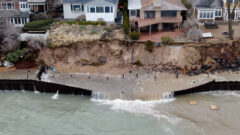
Now the J. Philip Keillor Wisconsin Coastal Management–Wisconsin Sea Grant Fellow, Tiedmann, who has a Ph.D. in civil engineering, works at the intersection of science and policy to help Great Lakes communities build their resilience to coastal hazards like bluff erosion, flooding and changing water levels. Her main project is updating the “Coastal Processes Manual”—a publication about the risk that storms and other coastal hazards pose to shoreline communities.

“I’m taking the lead on one of the remaining chapters, which is about resilience planning and strategies,” she said. “I’m really excited because that’s right in my wheelhouse.”

Tiedmann’s background is in water systems, specifically how they respond to natural disasters or unexpected crises. She experienced two of them while a graduate student at the University of Texas at Austin: the COVID-19 pandemic and Winter Storm Uri, which resulted in deadly power blackouts during some of the coldest temperatures the region has ever seen.

Tiedmann ended up studying both events. Her master’s thesis explored how water systems responded to the pandemic, and her dissertation, Winter Storm Uri. While Texas doesn’t have Great Lakes, she’s finding that what she learned during her graduate work can be applied to coastal environments in Wisconsin.

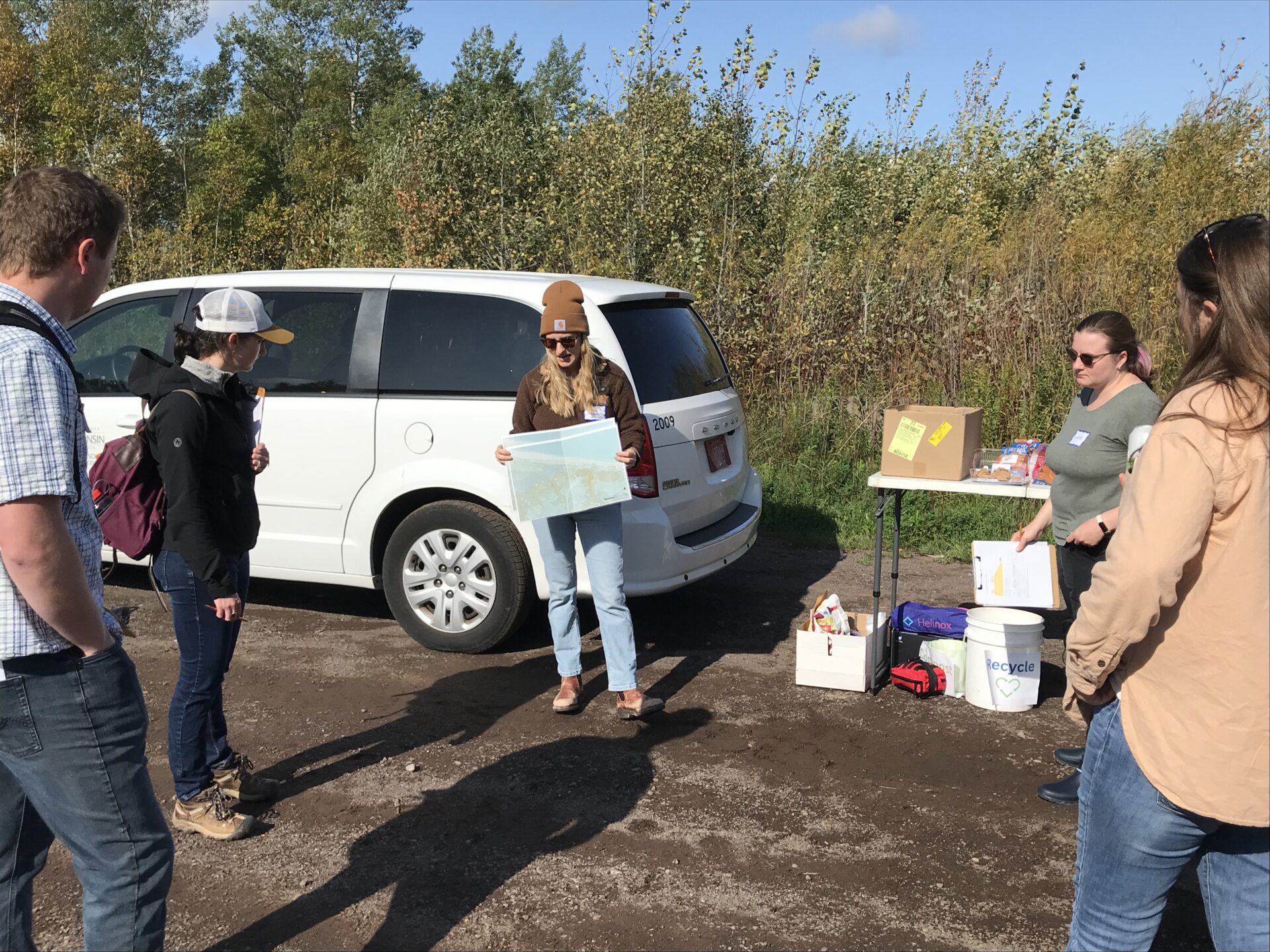
Tiedmann holds us a topographical map and discusses bluff erosion at Schafer Beach in Superior, Wisconsin.

Tiedmann holds us a topographical map and discusses bluff erosion at Schafer Beach in Superior, Wisconsin. Credit: Wisconsin Sea Grant

“A big part of my work that can be transferred here is looking at building resilience through a multidimensional approach,” she said. That means evaluating problems and solutions through multiple lenses and taking both infrastructure and economic, environmental, governance and social systems into account.

The fellowship is also giving Tiedmann an opportunity to work outside her wheelhouse and learn new things, like the “nitty, gritty details of coastal processes.”

“I’ve been really, really enjoying it because it’s a new set of problems to learn about,” she said.

One example is low water levels in the Great Lakes, which present a unique set of challenges.

“When the water levels are low, we often collectively forget that they will likely come back up again. So, there can be a temptation to build closer to the water,” which can cause future problems, said Tiedmann. Low water levels can also accelerate rotting of wooden docks and expose drinking water intakes.

If she has a question, Tiedmann can turn to an experienced team of mentors that includes Kate Angel and Todd Breiby of the Wisconsin Coastal Management Program and Wisconsin Sea Grant’s Coastal Engineering Outreach specialist Adam Bechle. Bechle himself is a former Keillor fellow, as are two of Tiedmann’s colleagues in the coastal management office—Lydia Salus and Hannah Paulson.

“We have kind of like, a Keillor club,” laughs Tiedmann. The small-but-mighty coastal planning community is one reason she feels energized about her work.

“Seeing what a vibrant, tight-knit community of people there [is] working to make life along the Great Lakes better—that’s super exciting to me.”


The post Keillor Fellow helps Great Lakes communities plan for coastal hazards first appeared on Wisconsin Sea Grant.

Original Article

News Releases | Wisconsin Sea Grant

News Releases | Wisconsin Sea Grant

https://www.seagrant.wisc.edu/news/keillor-fellow-helps-great-lakes-communities-plan-for-coastal-hazards/

Jenna Mertz

Hundreds of years ago a lord of the Tohoku region in Japan offered villagers a deal – equal weight in silver to any who could find a rare mushroom. 

The villagers danced with joy when they found the valuable fungus, inspiring the mushroom’s name, “maitake," or “the dancing mushroom.”

The post Scientists test mushrooms as cancer treatment first appeared on Great Lakes Echo.

Original Article

Great Lakes Echo

Great Lakes Echo

http://greatlakesecho.org/2023/12/13/scientists-test-mushrooms-as-cancer-treatment/

Jack Armstrong

Episode 2311 Lesson Plans: Shoreline science

This lesson will explore the phenomenon of shoreline erosion, as students learn about how bodies of water, like rivers, carve out the landscapes around them, moving and depositing sediment, supporting the aquatic ecosystem, and providing natural and man-made ways to interact with human activities and the environment.

  • Know how rivers sculpt the landscape, causing shoreline erosion
  • Understand how gradient relates to acceleration
  • Be able to engineer a circuitous path to allow a marble to roll downhill from one location to another at the slowest speed possible

View the entire lesson plan including teacher background information, worksheets and more below or download for free here.

Read Now at Great Lakes Now.

Original Article

Great Lakes Now

Great Lakes Now

https://www.greatlakesnow.org/2023/12/episode-2311-shoreline-science-lesson-plan/

Gary Abud Jr.

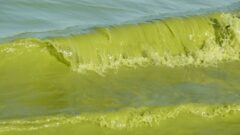
Lake Erie is full of algae again. Southwestern Ontario’s exploding greenhouse sector won’t help

By Matt McIntosh, The Narwhal

Photography by Kati Panasiuk

This story first ran on The Narwhal, a non-profit news organization that publishes in-depth stories about Canada’s natural world.

For a couple of decades at the end of the last century, it seemed like the blue-green algae problem in Lake Erie had been solved, or at least managed, thanks to a concerted cross-border effort.

Read Now at Great Lakes Now.

Original Article

Great Lakes Now

Great Lakes Now

https://www.greatlakesnow.org/2023/12/lake-erie-is-full-of-algae-again-southwestern-ontarios-exploding-greenhouse-sector-wont-help/

The Narwhal

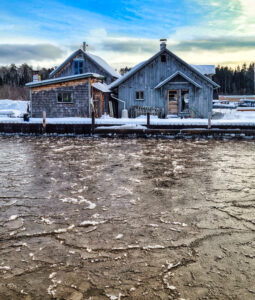
Two buildings near water.2023 is closing out, providing a time to pause to celebrate everyone who promotes the understanding and conservation of Wisconsin’s inland seas, our treasured Great Lakes. Here is a year in review of Sea Grant initiatives, along with others by our sister organization, the University of Wisconsin Water Resources Institute.
The post 2023 year in review first appeared on Wisconsin Sea Grant.

Original Article

News Releases | Wisconsin Sea Grant

News Releases | Wisconsin Sea Grant

https://www.seagrant.wisc.edu/news/2023-year-in-review/

Moira Harrington

Two buildings near water. 2023 is closing out, providing a time to pause to celebrate the researchers and water managers who promote understanding and conservation of Wisconsin’s liquid assets. Here is a year in review of University of Wisconsin Water Resources Institute projects, along with others by our sister organization, the Wisconsin Sea Grant College Program.

The post 2023, Year in Review first appeared on WRI.

Original Article

News Release | WRI

News Release | WRI

https://www.wri.wisc.edu/news/2023-year-in-review/

Moira Harrington

Sturgeon can live 50 years or more in rivers and lakes, but the first six months of one sturgeon’s life will be spent in Katie Bryant’s seventh grade science classroom. 

The kids love the program, and they’re “all about feeding the fish and taking care of the fish,” Bryant said.

The post Kids raise prehistoric fish as a science lesson first appeared on Great Lakes Echo.

Original Article

Great Lakes Echo

Great Lakes Echo

http://greatlakesecho.org/2023/12/12/kids-raise-prehistoric-fish-as-a-science-lesson/

Jack Armstrong

On December 6, 2023, the U.S. Environmental Protection Agency (“EPA”) took an important step in protecting public health by proposing to significantly strengthen national drinking water regulations for toxic lead and copper. Most notably, U.S. EPA is proposing a requirement to remove lead service lines within 10 years for most water systems.

Lead is a heavy metal and neurotoxin that harms the brain and nervous system, leading to slowed growth and development, learning and behavior problems, and hearing and speech problems in children. Lead is also linked to negative health impacts in adults, such as reproductive problems, increased risk of high blood pressure, cardiovascular effects, and harm to the kidneys. Experts widely agree that there is no safe level of lead exposure.

For decades, lead was used in service lines, fixtures and solder throughout water systems; it was not until 1986 that Congress banned the use of new lead pipes and fixtures. Following the Flint tragedy that helped propel the issue of lead in drinking water as a national priority, advocates including the Alliance for the Great Lakes have been calling on local, state and federal officials to get the lead out of water systems. A major focus has been to mandate the removal of lead service lines that are often the largest contributors to lead levels in home drinking water.

U.S. EPA is now proposing a national mandate that water systems remove their lead service lines, with a default timeline for removal of 10 years. However, that mandate is substantially weakened by a proposed exception to the time frame for cities with the most lead service lines – including a number of cities in the Great Lakes region. Under the proposed rule, these cities could get decades more to remove lead service lines, including over 40 years for Chicago. It’s unacceptable that EPA would allow this pollution to persist for so long in some of the most impacted communities in our region.

In addition to calling for removal of lead service lines, advocates have called on U.S. EPA to strengthen requirements around water sampling for lead and copper, including the levels that trigger a response by a water system (known as the “action levels”) and what actions water systems must take when sampling exceeds the action levels. Advocates also have demanded enhanced public notice and engagement, to ensure that communities have a real say in how their water utilities respond to high levels of lead and copper. Along with mandating removal of lead service lines, U.S. EPA’s proposed rule strengthens the sampling requirements and action levels while enhancing public notice and participation requirements. The Alliance will be seeking additional improvements in these areas in our comments to U.S. EPA. 

To help address lead in drinking water, Congress has increased the amount of federal money that is available for lead service line removal. For example, the Infrastructure Investment and Jobs Act of 2021 (IIJA) included $15 billion nationally for lead service line removal. EPA has been distributing this increased funding for lead service line removal to states for the last two years through the Drinking Water State Revolving Fund, with three more years of funding distributions left. That said, the need for additional action on funding for lead service line removal is significant – based on current lead line inventories, estimates for full removal range from $45-60 billion nationally.

U.S. EPA is accepting comments on the proposal through February 5, 2024, and is holding a virtual public hearing on the proposal on January 16, 2024 (to register, click here). The Alliance and our coalition partners will submit comments supporting, and requests for strengthening, the proposed rule. We hope U.S. EPA will move expeditiously to consider comments and adopt the strongest final rule possible, and we look forward to working closely with communities and water systems to ensure robust and speedy compliance.

More about Drinking Water

Read more about protecting drinking water in Great Lakes communities.

Learn More

The post Proposed EPA rule would strengthen protections against lead in drinking water, but timetable leaves too many Great Lakes residents in danger  appeared first on Alliance for the Great Lakes.

Original Article

News - Alliance for the Great Lakes

News - Alliance for the Great Lakes

https://greatlakes.org/2023/12/proposed-epa-rule/

Judy Freed

According to an annual report by the Great Lakes Commission, water use from the Great Lakes basin dropped 3% in 2022 compared to the year before. Water usage from the Great Lakes may have declined, but it was still a staggering amount — more than 40 billion gallons per day — nearly all of it returned to the basin. Read the full story by Michigan Radio.

Original Article

Great Lakes Commission

Great Lakes Commission

https://www.glc.org/dailynews/20231211-water-use

Taaja Tucker-Silva