Lake sturgeon have been listed as threatened in Michigan for decades, but now the federal government is considering a petition to list sturgeon as endangered throughout the region. The U.S. Fish and Wildlife Service will decide whether the petition moves forward to public comment by the end of June. Read the full story by WPBN-TV – Traverse City, MI.

Original Article

Great Lakes Commission

Great Lakes Commission

https://www.glc.org/dailynews/20240301-sturgeon-petition
Taaja Tucker-Silva

Starting July 1, service charges for water and wastewater services are going up 3-3.25% in southeast Michigan under a new budget approved by the region’s water authority to make up for cost hikes absorbed in the past. Read the full story by The Detroit News.

Original Article

Great Lakes Commission

Great Lakes Commission

https://www.glc.org/dailynews/20240301-water-charges

Taaja Tucker-Silva

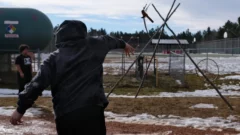
A new documentary, “Bad River,” details the fight of the Bad River Band of Lake Superior Chippewas to shut down the Line 5 oil pipeline that traverses their ancestral land. An interview with the filmmaker dives into the details of the film. Read the full story by Great Lakes Now.

Original Article

Great Lakes Commission

Great Lakes Commission

https://www.glc.org/dailynews/20240301-bad-river

Taaja Tucker-Silva

The Indiana House of Representatives on Tuesday unanimously passed a bill requiring life rings at Lake Michigan entry points. The Indiana Senate unanimously passed the bill earlier this month, meaning it will soon go to the Indiana governor. Read the full story by WBBM-TV – Chicago, IL.

Original Article

Great Lakes Commission

Great Lakes Commission

https://www.glc.org/dailynews/20240301-indiana-life-rings

Taaja Tucker-Silva

Ferries to Put-in-Bay and Middle Bass Island, Ohio, will start on March 2, nearly a month early, due to lack of ice on Lake Erie. The early start allows construction workers to get a head start on work and allows residents and businesses to re-stock supplies ahead of schedule. Read the full story by WJW-TV – Cleveland, OH.

Original Article

Great Lakes Commission

Great Lakes Commission

https://www.glc.org/dailynews/20240301-erie-ferries

Taaja Tucker-Silva

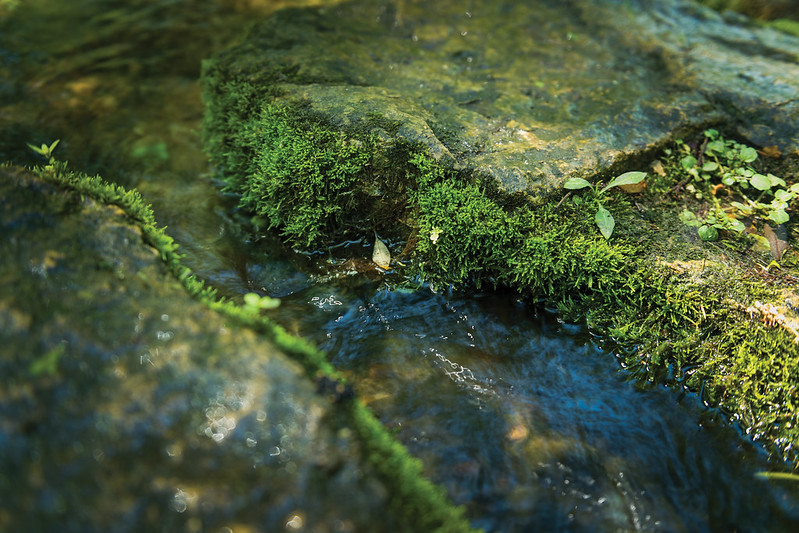
Groundwater is an important source of drinking water in Wisconsin. Image credit: David Nevala

When you turn on a faucet and a stream of cool, clear water pours out, that convenience can mask where the water comes from—underground. It’s there, and in great quantities. In fact, Wisconsin has so much groundwater – 1.2 quadrillion gallons – that if it were on the surface, it would submerge Packer fans in 100 feet of the wet stuff.

Just because groundwater is out of sight, doesn’t mean it’s out of mind – or use. Where does your drinking water come from? For 70 percent of us in the state, it’s thanks to the vast stores of groundwater in aquifers that not only quench our thirst but also fuel the operations of our power plants, breweries, factories and farms. The remaining 30 percent of Wisconsinites get their drinking water from the Great Lakes.

Wisconsin has more than 800,000 private wells and in excess of 11,000 public water systems. In all, Wisconsin’s annual average water withdrawal is 1.91 trillion gallons (some of that comes from surface water, such as lakes Michigan and Superior).

With so much demand and use, groundwater is clearly valuable. And, just as in the case of surface water, we need to be responsible stewards of it. That’s worth noting as the 2024 Groundwater Awareness Week (March 4 – 10) rolls around.

One manifestation of that stewardship is the work done by our sister organization, the University of Wisconsin Water Resources Institute (WRI). WRI runs a statewide research competition through the Groundwater Research Advisory Council (GRAC). As its basic function, the GRAC ensures that Wisconsin citizens have an adequate supply of high-quality groundwater and it funds university scientists to look into current topics such as per- and polyfluoroalkyl (PFAS) in numerous Wisconsin communities and pathogens in drinking water in the Driftless Area.

An example of past impactful GRAC research looked into naturally occurring radium in drinking water serving residents of Waukesha, which led to a binational decision a few years ago to allow that city to secure water from Lake Michigan, even though it lies outside of the Great Lakes Basin.

WRI also offers a robust information transfer program highlighting the work of water scientists through news stories, podcasts and videos. Finally, the WRI supports the Wisconsin Water Library, a resource with more than 30,000 holdings of all types of water-related material free for circulation to any state resident. The library further curates and distributes water-themed learning kits for children in the K-12 educational system.

To access these resources about the veritable tide below your feet—groundwater—and other water information, visit wri.wisc.edu.


The post During Groundwater Awareness Week (March 4-10), consider the tide under your feet first appeared on Wisconsin Sea Grant.

Original Article

Blog | Wisconsin Sea Grant

Blog | Wisconsin Sea Grant

https://www.seagrant.wisc.edu/blog/during-groundwater-awareness-week-march-4-10-consider-the-tide-under-your-feet/

Moira Harrington

Congratulations to Biologist Joel Stokdyk who is a coauthor on a recent paper about antibiotic resistance in well water.

Original Article

Upper Midwest Water Science Center

Upper Midwest Water Science Center

https://www.usgs.gov/centers/upper-midwest-water-science-center/news/quantitative-microbial-risk-assessment-ingestion?utm_source=comms&utm_medium=rss&utm_campaign=news

jvelkoverh@usgs.gov

Indiana conservation groups defend state’s wetlands that lost protection

This article was republished here with permission from Great Lakes Echo.

By Kayla Nelsen, Great Lakes Echo

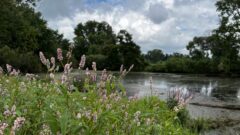
About 250 acres of Indiana wetlands have been lost in the two years since wetland protections were eased, according to the Hoosier Environmental Council.

Since the 2021 law passed, mitigation requirements have decreased.

Read Now at Great Lakes Now.

Original Article

Great Lakes Now

Great Lakes Now

https://www.greatlakesnow.org/2024/02/indiana-conservation-groups-defend-states-wetlands-that-lost-protection/

Great Lakes Echo

PFAS News Roundup: UW-Stevens Point researchers look to plants to solve PFAS contamination

Keep up with PFAS-related developments in the Great Lakes area with Great Lakes Now’s biweekly headline roundup.   

Click on the headline to read the full story:   

 Indiana  

Critics: Bill cutting protections from PFAS toxic chemicals a step backward for Indiana — IndyStar 

Hoosier lawmakers are advancing a bill to change the definition of PFAS — but only in Indiana.

Read Now at Great Lakes Now.

Original Article

Great Lakes Now

Great Lakes Now

https://www.greatlakesnow.org/2024/02/pfas-news-roundup-uw-stevens-point-researchers-look-to-plants-solve-pfas-contamination/

Kathy Johnson, Great Lakes Now

News

Request for Proposals: Great Lakes Sediment and Nutrient Reduction Program

Ann Arbor, Mich. – The Great Lakes Commission (GLC) today issued a request for proposals (RFP) for the 2024 Great Lakes Sediment and Nutrient Reduction Program (GLSNRP) grant program.

For more than 30 years, grants provided by GLSNRP have enabled local partners to reduce nutrients and sediments entering the Great Lakes. This year’s program will continue to help grantees take action to reduce nutrient loads from agricultural watersheds and eroding shorelines and streambanks in the Great Lakes basin.

Through the program, nonfederal units of government, Indigenous Nations, and incorporated nonprofit organizations are eligible to receive grants for up to $300,000, supporting work over a period of up to four years. Applicants are invited to submit proposals for activities associated with one of the following project types: agricultural nonpoint, or shoreline and streambanks.

A webinar for potential applicants will be held on March 13, 2024, at 2:00 p.m. Eastern. Applications are due at 5:00 p.m. Eastern on April 29, 2024 and will be reviewed by representatives from the eight Great Lakes states, as well as partners at the U.S. Department of Agriculture’s Natural Resource Conservation Service (NRCS) and U.S. Environmental Protection Agency (U.S. EPA). Final decisions on funded projects are anticipated in summer 2024, with work to begin no later than October 1, 2024.

The GLC has managed GLSNRP with funding support through the Great Lakes Restoration Initiative since 2010. Funded projects support progress toward the achievement of GLRI Action Plan objectives and goals. This program is a partnership between NRCS, U.S. EPA, and the Great Lakes states. Please visit www.nutrientreduction.org for more information or contact Connor Roessler at croessler@glc.org.


The Great Lakes Commission, led by chair Mary Mertz, director of the Ohio Department of Natural Resources, is a binational government agency established in 1955 to protect the Great Lakes and the economies and ecosystems they support. Its membership includes leaders from the eight U.S. states and two Canadian provinces in the Great Lakes basin. The GLC recommends policies and practices to balance the use, development, and conservation of the water resources of the Great Lakes and brings the region together to work on issues that no single community, state, province, or nation can tackle alone. Learn more at www.glc.org.

Contact

For media inquiries, please contact Beth Wanamaker, beth@glc.org.

Recent GLC News

Upcoming GLC Events

View GLC Calendar

Archives

Original Article

Great Lakes Commission

Great Lakes Commission

https://www.glc.org/news/rfp-glsnrp-022824

Beth Wanamaker

“Bad River” documentary combines historical treatment of indigenous people with the fight to protect Lake Superior 

For documentary filmmaker Mary Mazzio, the trek from her first film to making her new release, “Bad River,” took 20 years and included a near-epiphany when the Bostonian first viewed a Lake Superior sunrise. Mazzio, an Olympic rower and attorney, has directed 12 significant films, including the Gracie Award winning “A Most Beautiful Thing.”  

“Bad River” will run from March 15-21 in select AMC theaters.

Read Now at Great Lakes Now.

Original Article

Great Lakes Now

Great Lakes Now

https://www.greatlakesnow.org/2024/02/bad-river-documentary-combines-historical-treatment-of-indigenous-people-with-the-fight-to-protect-lake-superior/

Gary Wilson, Great Lakes Now

A coalition between the University of Michigan, Michigan State University and the National Oceanic and Atmospheric Administration has approved nearly $1.7 million in grants to fund six different studies along the Great Lakes. Read the full story by WOOD-TV – Grand Rapids, MI.

Original Article

Great Lakes Commission

Great Lakes Commission

https://www.glc.org/dailynews/20240228-michigan-sea-grant

Theresa Gruninger

New York’s Thousand Islands Land Trust said the lack of ice cover has had major impacts on the local environment, including drastic water temperature fluctuations, changes in animal behavior and shifts in migratory bird patterns. Read the full story by WROC-TV – Rochester, NY.

Original Article

Great Lakes Commission

Great Lakes Commission

https://www.glc.org/dailynews/20240228-low-ice

Theresa Gruninger

During the Anishinabek Nation Councils Panel at the Anishinabek Nation’s 8th Land and Resources Forum, Eshki-niigijig Advisory Council member Lance Copegog of Beausoleil First Nation discussed what is being done to protect the Great Lakes, including work on a program where bodies of water have the recognition of personhood. Read the full story by Anishinabek News.

Original Article

Great Lakes Commission

Great Lakes Commission

https://www.glc.org/dailynews/20240228-great-lakes-personhood

Theresa Gruninger

It may feel like ice fishing season just started, but Ontario Fish and Wildlife is reminding residents that ice fishing huts need to be taken down by specific dates in March. Anglers are also advised to closely monitor ice conditions. Read the full story by York Region News.

Original Article

Great Lakes Commission

Great Lakes Commission

https://www.glc.org/dailynews/20240228-ice-huts-removal

Theresa Gruninger

A much-delayed and controversial plan to build a gas-fired power plant in Superior, Wisconsin, now faces opposition from local leaders who previously supported it. The $700 million project is contentious for its location — bordering a Lake Superior estuary and an Anishinaabe mass grave — and for its potential harm to the environment, property values and health of area residents. Read the full story by the Star Tribune.

Original Article

Great Lakes Commission

Great Lakes Commission

https://www.glc.org/dailynews/20240228-power-plant

Theresa Gruninger

Ice coverage on Lake Superior is at about 3%, making it the lowest recorded coverage since the federal government began measuring it in 1973. The Superior Watershed Partnership says the lack of ice has possible impacts on fish populations come spring, specifically for hatchlings that will not be protected from powerful waves that can wash eggs away. Read the full story by WLUC-TV – Marquette, MI.

Original Article

Great Lakes Commission

Great Lakes Commission

https://www.glc.org/dailynews/20240228-fish-populations

Theresa Gruninger

Earlier this month, Wisconsin Legislature’s budget-writing committee shot down about $1 million in grants under the state’s stewardship program for a boat launch project in the city of Ashland. That’s despite the committee previously signing off on a similar amount of grant funding for another northern Wisconsin project. Read the full story by Wisconsin Public Radio.

Original Article

Great Lakes Commission

Great Lakes Commission

https://www.glc.org/dailynews/20240228-wi-boating-grants

Theresa Gruninger

Snow will shift east during the early to mid morning, with additional accumulations of a half inch to an inch expected in far eastern Wisconsin. Strong northwest winds gusting to 25 to 40 mph will continue to bring cold air into the region, so any untreated roads will remain snow or ice covered and hazardous through the morning commute. Motorists should be prepared for hazardous driving conditions for the morning commute to work or school. Allow some extra time to reach your destination.

Original Article

Current watches, warnings, and advisories for Brown County (WIC009) WI

Current watches, warnings, and advisories for Brown County (WIC009) WI

https://api.weather.gov/alerts/urn:oid:2.49.0.1.840.0.5e3450cf3adf8de4a94ccb7d08a8cdf27b19fcdf.001.1.cap

NWS

Carrie Givens was awarded the 2023 Journal of Environmental Quality Outstanding Associate Editor for excellent work in the performance of duties as an Associate Editor. 

Original Article

Midcontinent Region

Midcontinent Region

https://www.usgs.gov/centers/upper-midwest-water-science-center/news/carrie-givens-awarded-2023-journal-environmental?utm_source=comms&utm_medium=rss&utm_campaign=news

jvelkoverh@usgs.gov

A powerful cold front will sweep across the region tonight, resulting in sharply falling temperatures, strong northwest winds and mixed precipitation changing to snow. Any wet roads will likely freeze up, then become snow covered, resulting in hazardous travel conditions. The travel concerns will likely persist through the Wednesday morning commute. Much colder temperatures will arrive late tonight into Wednesday morning, with wind chills ranging from zero to 15 below. Total snow accumulations should range from a half inch to around 2 inches, with the highest accumulations in Vilas County and far northeast Wisconsin. Northwest winds will gust to 30 to 40 mph, which will make travel even more difficult for high profile vehicles. Motorists should be prepared for a return to hazardous winter driving conditions tonight into Wednesday morning.

Original Article

Current watches, warnings, and advisories for Brown County (WIC009) WI

Current watches, warnings, and advisories for Brown County (WIC009) WI

https://api.weather.gov/alerts/urn:oid:2.49.0.1.840.0.e796d05628432790b234898ad2ece179acd1b319.001.1.cap

NWS

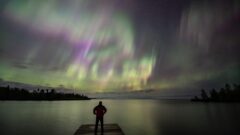
Not Just Pretty Pictures: Bearing witness to the night sky

Editor’s Note: “Nibi Chronicles,” a monthly Great Lakes Now feature, is written by Staci Lola Drouillard. A direct descendant of the Grand Portage Band of Ojibwe, she lives and works in Grand Marais on Minnesota’s North Shore of Lake Superior. Her two books “Walking the Old Road: A People’s History of Chippewa City and the Grand Marais Anishinaabe” and “Seven Aunts” were published 2019 and 2022, and she is at work on a children’s story.

Read Now at Great Lakes Now.

Original Article

Great Lakes Now

Great Lakes Now

https://www.greatlakesnow.org/2024/02/not-just-pretty-pictures-bearing-witness-to-the-night-sky/

Staci Lola Drouillard

River Alliance urges Governor Evers to veto PFAS bill

River Alliance of Wisconsin urges Governor Evers to veto Senate Bill 312.

“PFAS is an urgent issue that needs to be addressed in a serious way,” said River Alliance of Wisconsin Executive Director Allison Werner. “Instead we’ve watched the state legislature play partisan games to score political points with special interest groups like Wisconsin Manufacturers and Commerce. Senate Bill 312 is not the progress we need on PFAS.”

To be clear, Senate Bill 312 does not include an appropriation of funds. Without an appropriation, the bill does not spend the $125 million dollars that the Joint Finance Committee added to the state budget. It would take additional action by the legislature to approve the costs of the programs in SB 312. In addition, PFAS are widespread and expensive to clean up. $125 million is nowhere near enough to meet the current needs of homeowners and municipalities with polluted drinking wells.

If approved, SB 312 would make it harder for the state to hold those responsible for pollution accountable, and severely limit the amount of cleanup that can be done. SB 312 would also limit grant programs only to PFAS substances for which there are standards. As we have seen with the Department of Natural Resources’ past attempts to create groundwater standards for PFAS, this legislature has little interest in such standards being created, thus also limiting any potential impact of SB 312.

For those reasons, the Governor should veto SB 312.

For real progress on PFAS, the Joint Finance Committee should approve the DNR’s request from last December that would allow them to do more testing, get clean drinking water to those who need it, and begin cleanups. The state legislature can and should also let the DNR move ahead with improving groundwater standards on PFAS in drinking water.

“When we play a partisan game with our water, all Wisconsinites lose in the protection of our health and our environment,” said Werner.


This message is made possible by generous donors who believe people have the power to protect and restore water. Support our work with your contribution today.

The post River Alliance urges Governor Evers to veto PFAS bill appeared first on River Alliance of WI.

Original Article

Blog - River Alliance of WI

Blog - River Alliance of WI

https://wisconsinrivers.org/veto-sb-312/

Allison Werner

With parts of the Lake Erie coast eroding at a pace of four metres or more a year — some of the highest rates in the Great Lakes — one group is appealing for federal funding to fight it. Read the full story by the Norfolk and Tillsonburg News.

Original Article

Great Lakes Commission

Great Lakes Commission

https://www.glc.org/dailynews/20240226-thegrandcanyon-lakeerie-shoreline-erosion

Hannah Reynolds

Scientists are discovering that as we expel traces of pharmaceuticals, they may not be so good for the health of our aquatic wildlife, and perhaps us. A new report by researchers at the University of Montreal evaluates the occurrence and risks of 27 pharmaceuticals and metabolites in the St. Lawrence River watershed. Read the full story by the Watertown Daily Times.

Original Article

Great Lakes Commission

Great Lakes Commission

https://www.glc.org/dailynews/20240226-pharmaceuticalpollution-st-lawrence-region

Hannah Reynolds

Plenty of stories have been told about the mythical, mysterious Bermuda Triangle, but did you know that some claim Lake Michigan has one of its own? It is called the Lake Michigan Triangle. Read the full story by WOOD-TV – Grand Rapids, MI.  

Original Article

Great Lakes Commission

Great Lakes Commission

https://www.glc.org/dailynews/20240226-lakemichigantriangle-greatlakes

Hannah Reynolds

Started in 1976, more than 410,000 Fish Ohio pins have been handed to anglers who submit a catch matching or surpassing established length standards for individual species. Some anglers try to earn at least one every year. Read the full story by The Columbus Dispatch.

Original Article

Great Lakes Commission

Great Lakes Commission

https://www.glc.org/dailynews/20240226-ohiodnr-anglers-fish-rewards-pins

Hannah Reynolds

Congressional lawmakers are coming to Wisconsin later this week to talk about an important resource that keeps the Great Lakes region’s economy afloat: icebreaking. Senator Tammy Baldwin is set to host a hearing with U.S. Coast Guard officials and business leaders to testify on the need to expand icebreaking capacity on the Great Lakes. Read the full story by the Milwaukee Journal Sentinel.

Original Article

Great Lakes Commission

Great Lakes Commission

https://www.glc.org/dailynews/20240226-greatlakes-economy-icebreakers-baldwin

Hannah Reynolds

The Great Lakes Stewardship Initiative was launched in 2007 by the Great Lakes Fishery Trust with a goal of letting students explore the Great Lakes’ ecosystems through projects. Last year’s projects included a rain garden and a beach cleanup. Read the full story by The Alpena News.

Original Article

Great Lakes Commission

Great Lakes Commission

https://www.glc.org/dailynews/20240226-group-students-greatlakes

Hannah Reynolds

A bill that would enable private waterfront development on public lands that were once submerged in Wisconsin’s Great Lakes waters has passed both state houses and now heads to the desk of Governor Tony Evers. Read the full story by the Wisconsin Watch.

Original Article

Great Lakes Commission

Great Lakes Commission

https://www.glc.org/dailynews/20240226-greatlakes-waterfrontproperty-development-governor

Hannah Reynolds

The long, fast, toothy muskellunge (also known as muskie or musky) is nicknamed the “Fish of 10,000 Casts” due to its notoriously elusive nature. It is the apex predator in all waters where it’s found, known to hide in underwater cover, aggressively ambushing prey. Read the full story by Great Lakes Now.

Original Article

Great Lakes Commission

Great Lakes Commission

https://www.glc.org/dailynews/20240226-wisconsin-statefish-top-food-chain

Hannah Reynolds

Lac du Flambeau Ojibwe Winter Games go on despite little snow on the ground

This story was originally published by WXPR. WXPR is a community-licensed public radio station serving north central Wisconsin and adjacent areas of Michigan’s Upper Peninsula. Listen to their stories here.

Lac du Flambeau 6th Grader Gertie Moustache pulls a wooden, dulled spear from a bin.

Read Now at Great Lakes Now.

Original Article

Great Lakes Now

Great Lakes Now

https://www.greatlakesnow.org/2024/02/lac-du-flambeau-ojibwe-winter-games-go-on-despite-little-snow-on-ground/

WXPR

Waves of Change: Meet Milwaukee Water Commons Co-Executive Director Brenda Coley

Waves of Change is an online interview series highlighting the diverse faces and perspectives shaping the environmental justice movement throughout the Great Lakes region.

This month, we spoke with Brenda Coley, Co-Executive Director of the urban network and non-profit organization Milwaukee Water Commons.

Listen to the full interview

The group has a Water City agenda that takes an intersectional approach to laying out climate issues and proposed solutions for Wisconsin’s largest city.

Read Now at Great Lakes Now.

Original Article

Great Lakes Now

Great Lakes Now

https://www.greatlakesnow.org/2024/02/waves-of-change-meet-milwaukee-water-commons-co-executive-director-brenda-coley/

Great Lakes Now

Piping plovers have returned to the same shoreline breeding locations for decades, but new and less desirable nest sites are appearing because many old sites no longer exist. Climate change impacts water levels in the Great Lakes; when water rises, old sites are flooded out and beaches are reduced. Read the full story by Bridge Michigan.

Original Article

Great Lakes Commission

Great Lakes Commission

https://www.glc.org/dailynews/20240223-piping-plover-habitat

James Polidori

While the Great Lakes shoreline is usually armored in the winter by ice cover, this year’s record low level of ice cover means coastal areas face a risk of more erosion. As climate forecasts anticipate continued dwindling of ice coverage each winter, ongoing maintenance along the shoreline to prevent erosion may be needed moving forward. Read the full story by WSJM-FM – Benton Harbor, MI.

Original Article

Great Lakes Commission

Great Lakes Commission

https://www.glc.org/dailynews/20240223-coastal-threats

James Polidori

United States and Canadian Coast Guard representatives came together to sign a new memorandum of understanding (MOU) earlier this month. The MOU is a new agreement to coordinate ice breaking efforts throughout the main waterways of the Great Lakes, as well as connecting waters like the Georgian Bay and St. Lawrence River. Read the full story by The Sault News.

Original Article

Great Lakes Commission

Great Lakes Commission

https://www.glc.org/dailynews/20240223-binational-agreement

James Polidori

A group of water safety experts and other advocates headed to the Indiana Statehouse in Indianapolis Wednesday to argue in favor of the Lake Michigan Rescue Equipment Act. The bill would require life ring stations on piers and public access points along Lake Michigan in Indiana. Read the full story by WBBM-TV – Chicago, IL.

Original Article

Great Lakes Commission

Great Lakes Commission

https://www.glc.org/dailynews/20240223-beach-safety

James Polidori

The Conference of Great Lakes St. Lawrence Governors & Premiers recently signed the 20th company to the 100% fish pledge, committing to fully use the region’s whitefish, lake trout, yellow perch, walleye and white sucker. The effort aims to improve the sustainability and value of commercially caught fish, which are used primarily for their fillets, as about 60% of the remaining fish becomes low-value animal feed or is discarded. Read the full story by The Mining Journal.

Original Article

Great Lakes Commission

Great Lakes Commission

https://www.glc.org/dailynews/20240223-fish-sustainability

James Polidori

In Milwaukee, Wisconsin, the lack of ice, combined with the lack of typical winter weather, has led to a lot of evaporation that can impact water levels on Lake Michigan. Another issue is salt applied during winter storms that runs off into the lake, polluting the water. Read the full story by WTMJ-TV – Milwaukee, WI.

Original Article

Great Lakes Commission

Great Lakes Commission

https://www.glc.org/dailynews/20240223-freshwater-impacts

James Polidori

The DeTour Reef Light in northern Lake Huron has expanded its lighthouse keeper program, previously only available on weekends, to include weeknight stays for $50 per person per night. The 83-foot lighthouse, built in 1931, is a strategic and historic landmark that marks a dangerous reef to help guide ship traffic to and from Lake Huron and Lake Superior via the St. Marys River. Read the full story by The Detroit Free Press.

Original Article

Great Lakes Commission

Great Lakes Commission

https://www.glc.org/dailynews/20240223-lighthouse-keeper

James Polidori