Assessing the U.S. Climate in May 2024
2024-06-10
During May, the average contiguous U.S. temperature was 62.3°F, 2.1°F above the 20th-century average.
NCEI News Feed
https://www.ncei.noaa.gov/news/national-climate-202405
NCEI News Feed
https://www.ncei.noaa.gov/news/national-climate-202405
NCEI News Feed
https://www.ncei.noaa.gov/news/national-climate-202405
NCEI News Feed
https://www.ncei.noaa.gov/news/national-climate-202405
NCEI News Feed
https://www.ncei.noaa.gov/news/national-climate-202405
NCEI News Feed
https://www.ncei.noaa.gov/news/national-climate-202405
NCEI News Feed
https://www.ncei.noaa.gov/news/national-climate-202405
NCEI News Feed
https://www.ncei.noaa.gov/news/national-climate-202405
NCEI News Feed
https://www.ncei.noaa.gov/news/national-climate-202405
NCEI News Feed
https://www.ncei.noaa.gov/news/national-climate-202405
NCEI News Feed
https://www.ncei.noaa.gov/news/national-climate-202405
NCEI News Feed
https://www.ncei.noaa.gov/news/national-climate-202405
NCEI News Feed
https://www.ncei.noaa.gov/news/national-climate-202405
NCEI News Feed
https://www.ncei.noaa.gov/news/national-climate-202405
NCEI News Feed
https://www.ncei.noaa.gov/news/national-climate-202405
NCEI News Feed
https://www.ncei.noaa.gov/news/national-climate-202405
NCEI News Feed
https://www.ncei.noaa.gov/news/national-climate-202405
NCEI News Feed
https://www.ncei.noaa.gov/news/national-climate-202405
SAULT STE. MARIE, Mich. (AP) — A freighter in Lake Superior hit something underwater on Saturday and started taking on water, according to the U.S. Coast Guard.
The Coast Guard Great Lakes district received reports about 6:53 a.m. that a 689-foot-long (210-meter-long) ship called the Michipicoten had collided with something about 35 miles (56 kilometers) southwest of Isle Royale, which is part of the state of Michigan.
Great Lakes Now
https://www.greatlakesnow.org/2024/06/a-freighter-ship-in-lake-superior-collided-with-something-underwater-coast-guards-says/
Coal ash is packed with harmful pollutants. Residents of a northern Indiana town less than a mile from Lake Michigan may have been exposed to unsafe levels of contamination for almost a decade, even after being told that they were safe, an IndyStar investigation found. A coal ash cleanup plan developed in 2016 by electric utility NIPSCO was based on flawed data included by a hired consultant with ties to the coal industry, according to the investigation.
Great Lakes Now
https://www.greatlakesnow.org/2024/06/energy-news-roundup-coal-ash-still-a-concern-in-indiana-superfund-town-near-lake-michigan/
The National Oceanic and Atmospheric Administration this week designated a 1,722-square-mile area in eastern Lake Ontario as America’s 16th national marine sanctuary. The Lake Ontario National Marine Sanctuary is the first such sanctuary in New York, and only the third in the Great Lakes region. Read the full story by The Post-Standard.
Great Lakes Commission
https://www.glc.org/dailynews/20240607-marine-sanctuary
Emissions targets set by the International Maritime Organization mean the shipping industry must find a way to decarbonize by 2050. A new, cleaner ship points way as U.S. ports in the Great Lakes region are spending millions on upgrades in pursuit of net zero. Read the full story by The Guardian.
Great Lakes Commission
https://www.glc.org/dailynews/20240607-shipping-emissions
Rain and contaminated air are major sources of PFAS contamination detected by a team of researchers in the Great Lakes. Airborne concentrations of PFAS are much higher near Chicago and other urban areas than at rural monitoring stations in northern Michigan and upstate New York. Read the full story by the Chicago Tribune.
Great Lakes Commission
https://www.glc.org/dailynews/20240607-pfas-rain
Governor Gretchen Whitmer had pledged to crack down on bottled water companies taking water at the same time Flint, Michigan, faced a water crisis. Six years later and in her second term, little has changed. Read the full story by ProPublica.
Great Lakes Commission
https://www.glc.org/dailynews/20240607-bottled-water
Scientists at University of Toledo’s (UToledo) Lake Erie Center have studied lake ecology for years, but after the 2014 water crisis, the center has added new goals for water safety: protecting the water supply and understanding the toxins harmful algae produce. Read the full story by WTOL-TV – Toledo, OH.
Great Lakes Commission
https://www.glc.org/dailynews/20240607-utoledo-science
Fish fly season has begun, bringing thousands, if not millions, of the winged insects to swarm the backyards, screen doors and car windows of metro Detroiters. Considered by many to be a messy inconvenience, the mayfly swarms are an indicator of nearby freshwater ecosystems’ health. Read the full story by The Detroit Free Press.
Great Lakes Commission
https://www.glc.org/dailynews/20240607-fish-flies
Global warming is fueling the spread of the nonnative peach blossom jellyfish in the Great Lakes region. Researchers urge the public to submit sightings to various online databases so that their changing distribution can be understood. Read the full story by The Mining Journal.
Great Lakes Commission
https://www.glc.org/dailynews/20240607-invasive-jellyfish
The Clyde S. VanEnkevort, an integrated tug and barge, spilled red dye diesel into Lake Superior in Silver Bay, Minnesota, on May 29. The cleanup of nearly 400 gallons of fuel is complete. Read the full story by the Duluth News Tribune.
Great Lakes Commission
https://www.glc.org/dailynews/20240607-diesel-cleaned
Health officials recently closed nine Michigan beaches due to high E. coli levels. Of these, eight beaches are back open and four additional beaches are either closed or under contamination advisories. Swimmers should stay out of water infested with high levels of E. coli or risk getting sick. Read the full story by Bridge Michigan.
Great Lakes Commission
https://www.glc.org/dailynews/20240607-ecoli-levels
A U.S. Fish and Wildlife assessment crew will conduct a sea lamprey assessment project at the Long Lake outlet in Alpena County, Michigan, this month. The study will estimate the abundance of sea lampreys and determine if there is a need for population control operations. Read the full story by The Alpena News.
Great Lakes Commission
https://www.glc.org/dailynews/20240607-lamprey-study
By Izzy Ross, Interlochen Public Radio
This coverage is made possible through a partnership with IPR and Grist, a nonprofit independent media organization dedicated to telling stories of climate solutions and a just future.
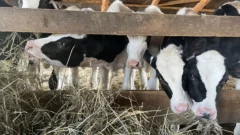
Laurie Stanek shovels hay in front of a group of young, black and white Holstein cows.
Great Lakes Now
https://www.greatlakesnow.org/2024/06/none-of-us-saw-this-coming-michigan-confronts-bird-flu-in-cows/

By Anna Clark, photography by Sarahbeth Maney
This story was originally published by ProPublica.
ProPublica is a Pulitzer Prize-winning investigative newsroom. Sign up for The Big Story newsletter to receive stories like this one in your inbox.
When Gretchen Whitmer campaigned for Michigan governor in 2018, she took aim at Michigan’s bottled water industry — and the state policy that gave it unfettered access to free water.
Great Lakes Now
https://www.greatlakesnow.org/2024/06/michigan-bottlers-still-get-free-water-despite-governors-tough-talk/
Healing Our Waters-Great Lakes Coalition
Contact: Lindsey Bacigal, BacigalL@nwf.org, (734) 887-7113
Jordan Lubetkin, Lubetkin@nwf.org, (734) 904-1589
ANN ARBOR, MICH. (June 6, 2024)—A recent audit by the U.S. Environmental Protection Agency Office of Inspector General found that Great Lakes Restoration Initiative (GLRI) grants supported the EPA’s program goals for the Great Lakes, overall, but could benefit from improved monitoring and reporting.
The Healing Our Waters-Great Lakes Coalition supports continued auditing of federal programs, as they are essential to continue to improve successful programs like the GLRI. Overall, the report found no gross financial mismanagement, rather, recommendations primarily focused on issues with reporting and training structures. These are problems across government programs due to insufficient funding for staff capacity and training, further showcasing the need for continued - and increased - funding for core functions of federal programs like the GLRI.
The report also emphasized the need for EPA to better track and report how projects help contribute to meeting the GLRI’s environmental justice goals. The Coalition, along with other organizations in the region, has been advocating for a stronger emphasis on environmental injustice within the GLRI Action Plans, most recently within the drafting of Action Plan IV, which is set to come out this fall.
“The report affirms that the EPA is running a successful program. Like with anything, it can do better,” said Laura Rubin, director of the Healing Our Waters-Great Lakes Coalition. “Over the last several years, the EPA has committed itself to targeting the region’s biggest environmental challenges and prioritizing areas hit hardest by pollution. We are glad to see this reflected in the recently released draft of the Great Lakes Action Plan IV, but we need to do more. We will keep advocating for EPA and the other federal agencies to make a strong program even stronger so that it can help the people and communities most impacted by environmental harm.”
Since 2004, the Healing Our Waters-Great Lakes Coalition has been harnessing the collective power of more than 180 groups representing millions of people, whose common goal is to restore and protect the Great Lakes. Learn more at HealthyLakes.org or follow us on Twitter, Facebook, Bluesky, Mastodon, and Threads @HealthyLakes.
Latest Updates - Healthy Lakes
Latest Updates - Healthy Lakes
https://www.healthylakes.org/latest-updates/great-lakes-restoration-initiative-grants-documenting-continued-improvements

By Enrique Saenz, Mirror Indy
Mirror Indy is a part of Free Press Indiana, a nonprofit news organization dedicated to ensuring all Hoosiers have access to the news and information they need.
A controversial plan to build a 200-acre retail development along the Indianapolis border with Greenwood is on hold after a state agency denied the developer’s permit application.
Great Lakes Now
https://www.greatlakesnow.org/2024/06/indiana-attorney-general-fights-epa-rule-that-would-reduce-pollution-indys-west-side/
Current watches, warnings, and advisories for Brown County (WIC009) WI
Current watches, warnings, and advisories for Brown County (WIC009) WI
https://api.weather.gov/alerts/urn:oid:2.49.0.1.840.0.d136e33d904625dc333f298dca990585e602ddde.001.1.cap
Current watches, warnings, and advisories for Brown County (WIC009) WI
Current watches, warnings, and advisories for Brown County (WIC009) WI
https://api.weather.gov/alerts/urn:oid:2.49.0.1.840.0.947361886fa306755eade3af62c1ef82cc19b1d2.001.1.cap
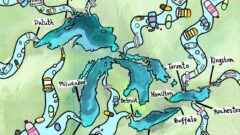
By Fatima Syed, The Narwhal
Rania Hamza calls it “a coincidence” that an engineer, a biologist and a lawyer at the same Toronto university were independently worrying about the harmful substances and chemicals being flushed down Ontario’s toilets. Three years ago, after figuring out they were all interested in the same thing, the unlikely trio came together to highlight a major gap in policy.
Great Lakes Now
https://www.greatlakesnow.org/2024/06/drugs-microplastics-and-forever-chemicals-new-contaminants-emerge-in-the-great-lakes/
More than 31,000 Atlantic salmon raised in a Michigan fish hatchery had to be killed after failing to recover from a bacterial kidney disease, officials said Tuesday. The unhealthy fish would have posed a risk to other fish if they had been released into Michigan waters. Read the full story by the Associated Press.
Great Lakes Commission
https://www.glc.org/dailynews/20240605-slamon-disease
Scientists studying unregulated “emerging contaminants” say Ontario and the federal government need a coordinated plan to protect our water and health. Read the full story by The Narwhal.
Great Lakes Commission
https://www.glc.org/dailynews/20240605-drug-microplastics-pfas
The federal government’s premiere Great Lakes restoration program, the Great Lakes Restoration Initiative, has improved the health of rivers and lakes across the region, but has sometimes overlooked environmental justice goals, according to a new audit from a federal watchdog. Read the full story by Bridge Michigan.
Great Lakes Commission
https://www.glc.org/dailynews/20240605-glri-audit
This year’s Michigan Great Lakes and Fresh Water Week, which will take place June 1 – June 9, will focus on events and resources related to physical, mental, and spiritual wellness as a result of connecting with water, as well as continuing to dive into enjoyment, recreation, appreciation, stewardship, and protection of the Great Lakes, their environment, and their communities. Read the full story by WHMI – Howell, MI.
Great Lakes Commission
https://www.glc.org/dailynews/20240605-fresh-water-week

Great Lakes Moment is a monthly column written by Great Lakes Now Contributor John Hartig. Publishing the author’s views and assertions does not represent endorsement by Great Lakes Now or Detroit PBS.
It was mid-morning on a beautiful early May day. It was clear and sunny and the white puffy clouds were a perfect contrast to the pale blue waters of the lower Detroit River.
Great Lakes Now
https://www.greatlakesnow.org/2024/06/great-lakes-moment-birds-of-a-feather-flock-together/
Researchers at the University of Michigan have received a $6.5 million grant to serve as a hub for studies investigating how climate change is impact on the harmful algal blooms on the Great Lakes and the overall impact on human health. Read the full story by WOOD-TV – Grand Rapids, MI.
Great Lakes Commission
https://www.glc.org/dailynews/20240605-algal-blooms
Health officials closed seven Michigan beaches on Friday after water testing showed high levels of E. coli. Read the full story by Bridge Michigan.
Great Lakes Commission
https://www.glc.org/dailynews/20240605-beach-closures
In Ohio, a city of Avon Lake council member presented at a recent meeting regarding stormwater runoff and allegations of heavy metals leaking into Lake Erie from the ongoing demolition of the Avon Lake Power Plant. Read the full story by the Sun Sentinel.
Great Lakes Commission
https://www.glc.org/dailynews/20240605-avon-lake-power-plant
On Tuesday, hundreds of Wisconsin residents congregated for a multi-session public hearing on the controversial Enbridge Line 5 pipeline project. The hearing focused on the proposed construction of a new segment of the pipeline, some 40 miles of which would be constructed around and upstream of the Bad River Reservation. Read the full story by the Wisconsin Examiner.
Great Lakes Commission
https://www.glc.org/dailynews/20240605-line-5
Beaver Island, a remote island off the coast of west Michigan, could become the testing ground for a new energy prototype that harnesses Lake Michigan’s tides. Read the full story by WJBK-TV – Detroit, MI.
Great Lakes Commission
https://www.glc.org/dailynews/20240605-wave-energy
1.6 million Wisconsin residents get their drinking water from Lake Michigan or Lake Superior, so why are we not doing more to protect this freshwater resource from continuous PFAS contamination? Read the full story by The Capital Times.
Great Lakes Commission
https://www.glc.org/dailynews/20240605-pfas
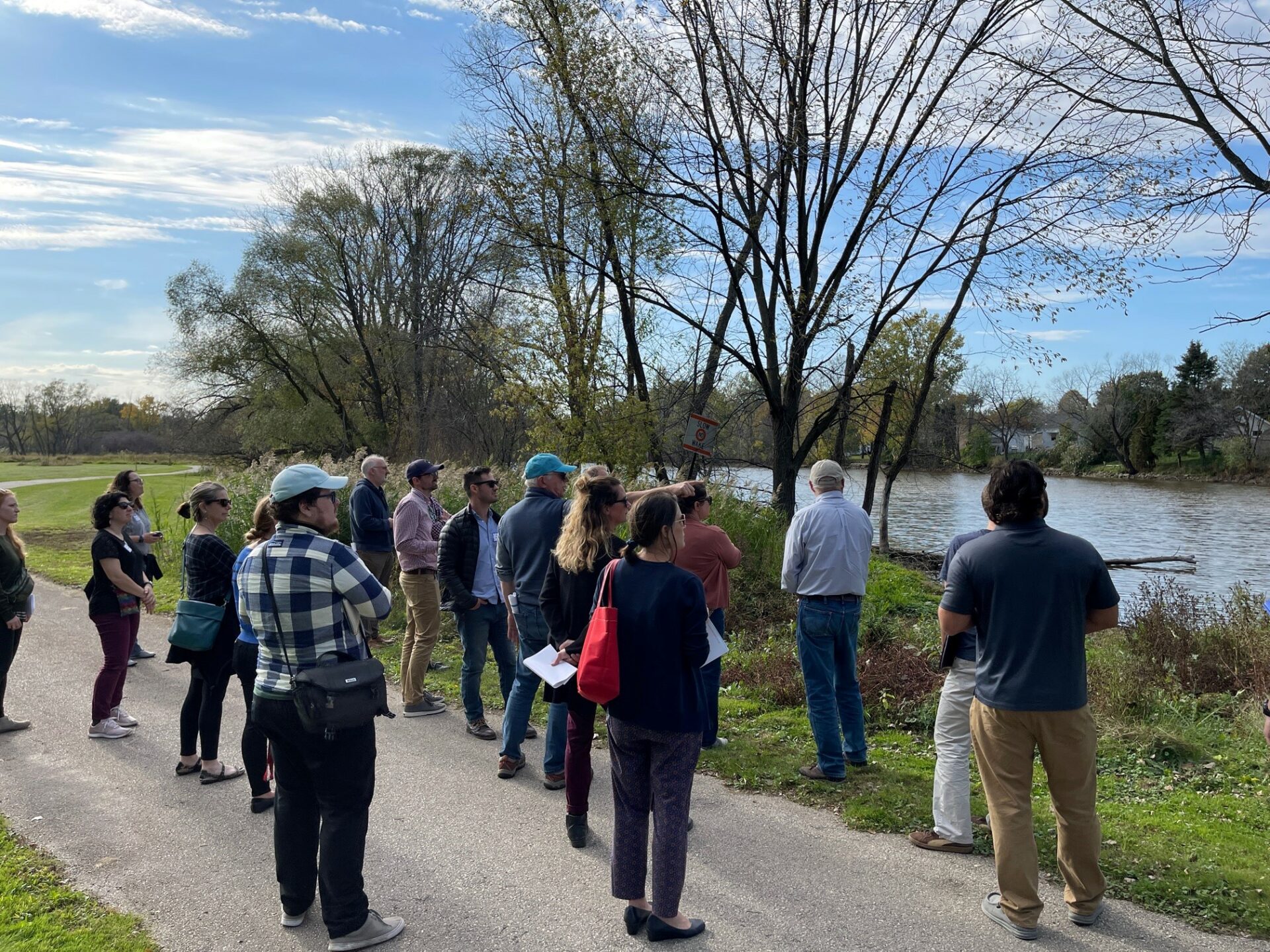
A group surveys a site along the East River in Green Bay that was hardest hit by flooding in 2019. Photo: Lamont Smith, The Nature Conservancy
Since 2020, the East River Collaborative has demonstrated that it takes a village—and coordination between municipalities, state and federal government, nonprofits and universities—to improve water quality and flood resilience at the watershed level.
“It’s very challenging for municipalities to work across boundaries with other municipalities,” said Julia Noordyk, water quality and coastal communities outreach specialist with Wisconsin Sea Grant. Noordyk works alongside partners at The Nature Conservancy and NEW Water (the brand of the Green Bay Metropolitan Sewerage District) on a core team that provides coordination and technical assistance to communities in the East River watershed.
“Every community is extremely different, and we’re not there to tell them what to do,” said Noordyk. Municipalities in the watershed span the rural-urban spectrum and vary in population, budget size and capacity.
“We’re there to listen and to figure out how to help them achieve flood resiliency based on what their community’s goals are.”
The 40-mile-long East River spans three counties in northeastern Wisconsin—Calumet, Manitowoc and Brown—and passes through agricultural, suburban and urban landscapes before it meets the Fox River and empties into the Bay of Green Bay. Historic flooding in March 2019 resulted in 50 houses being condemned and spurred the creation of the East River Collaborative the following year.
Since that time, the collaborative has worked with communities to identify shared goals across the watershed and developed maps and models to visualize flooding impacts. Now, with a new wave of grant funding, the collaborative is moving to the next phase: developing an implementation plan to identify and prioritize new projects.
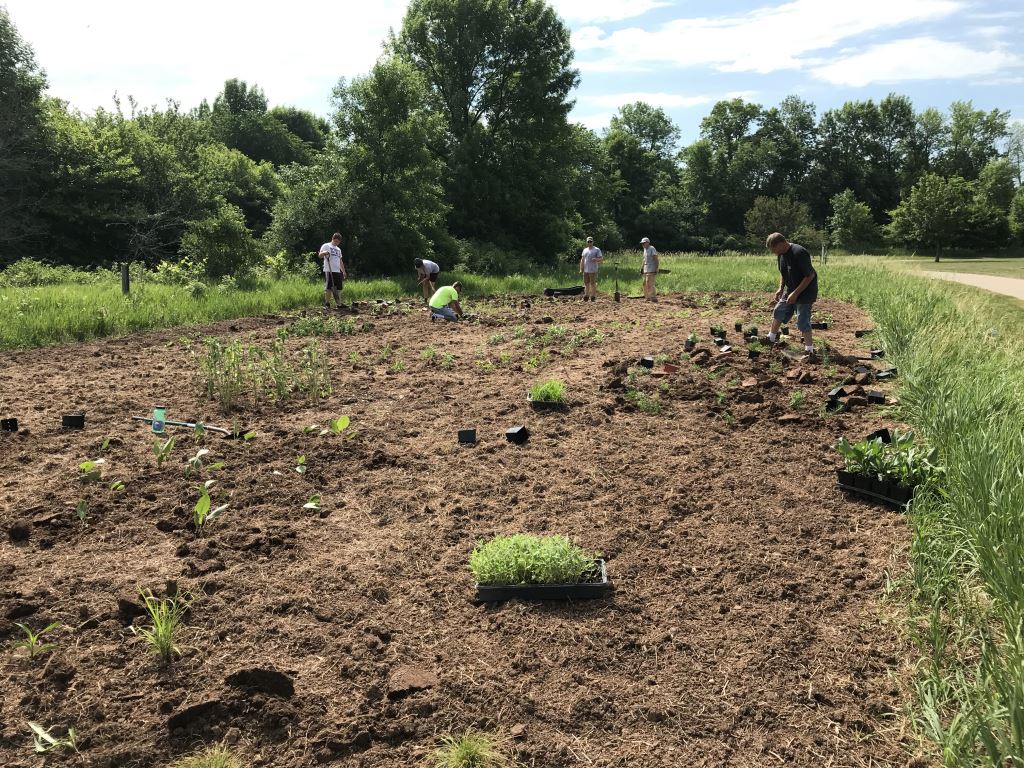
Volunteers replace turf grass with native plants along the East River in Ledgeview. Photo credit: Stephanie Schlag, town of Ledgeview
To help communities make these decisions, the East River Collaborative team is building a new tool to evaluate how well different nature-based solutions capture, slow and clean stormwater on the landscape. Nature-based solutions include practices like planting native plants, using rain barrels, building agricultural runoff storage systems and stabilizing streambanks.
Even though the tool is still in the planning stages, communities aren’t waiting to get local projects off the ground.
At the fourth annual East River Collaborative Winter Forum in February, partners gathered virtually to share their work restoring wetlands, removing invasive species, planting pollinator plants and designing canoe/kayak launches for the East River water trail—among many other projects.
“[The implementation plan] has really been a catalyst for other communities to think about this and start moving forward on resiliency themselves,” said Noordyk.
Another goal of the implementation phase is to build relationships with underserved residents who are likely to experience flooding and need the most support to recover from it due to factors like income, language and age.
A federal grant from NOAA Digital Coast will allow partners to connect with and learn from other municipalities that have worked with underserved communities on similar projects. The team is also pursuing funding for a survey that will gather residents’ feedback on strategies to prepare for and reduce flooding.
Adam Bechle, Wisconsin Sea Grant coastal engineering specialist and member of the East River Collaborative core team, is particularly excited to work with partners on establishing a flood warning system for the river.
“We worked with the Army Corps of Engineers and the National Weather Service and other partners to figure out what needs to happen so that the Weather Service can start putting together a forecast model,” said Bechle.
Both he and Noordyk said it’s been encouraging to see communities’ sustained interest in working together on these issues, even when flooding isn’t an imminent threat.
“We still have the same number of people showing up to meetings as when we kicked off,” said Bechle.
The East River Collaborative has been funded by the Wisconsin Coastal Management Program, National Oceanic and Atmospheric Administration, The Fund for Lake Michigan and National Fish and Wildlife Foundation. To learn more, visit the East River Collaborative’s website.
The post Northeastern Wisconsin communities build flood resilience at the local and watershed level first appeared on Wisconsin Sea Grant.News Releases | Wisconsin Sea Grant
News Releases | Wisconsin Sea Grant
https://www.seagrant.wisc.edu/news/northeastern-wisconsin-communities-build-flood-resilience-at-the-local-and-watershed-level/
Application deadline: June 30, 2024 | Download PDF
The Great Lakes Commission (GLC) and U.S. Geological Survey (USGS) Great Lakes Science Center (GLSC) are seeking an experienced ecologist with conservation and restoration expertise for a shared position between the two agencies. This position will work under a joint GLC and USGS GLSC team to advance specific outcomes in GLC’s Action Plan for a Resilient Great Lakes Basin (Action Plan) and related efforts within GLSC’s Restoration and Conservation (ReCon) Science Branch. Resilience is a priority for the GLC and a key goal of its strategic plan. The GLC and its partners developed the Action Plan to provide a foundation for regional coordination around climate resilience. This position is designed to support coastal ecosystem resiliency efforts and foster the development of strategic tools and practical on-the-ground actions. The work will involve close coordination with a variety of federal, state, and university partners with vested interest in these topics.
The ecologist will primarily be responsible for developing a science-based framework for understanding how to build healthy and resilient coastal ecosystems that can adapt to changing conditions and climate-related stressors. This work will give special attention to elucidating economic, ecological, and social return on investment of restoration and conservation activities within nearshore and coastal ecosystems; providing rationale for when and where to use nature-based solutions to accomplish climate resilience; valuing ecosystem services; and/or bridging with indigenous knowledge systems where appropriate. [65%]
Other responsibilities include:
Ideal candidates will have at least a Master of Science degree in a related field and four or more years applied academic or professional experience addressing climate related scientific issues. Additional qualifications include:
This is a full-time, two-year term position. The salary for this position is $70,000. Benefits include paid time off, flexible schedule, and medical, dental, and vision insurance. Desired start date: August 1, 2024.
This position is located at the USGS GLSC Lake Michigan Ecological Research Station (LMERS) in Chesterton, Indiana. LMERS is located within, and shares a close relationship with, the Indiana Dunes National Park. Some telework may be considered. This position requires periodic travel between Chesterton, Indiana, and Ann Arbor, Michigan, and occasional travel to meetings and workshops around the Great Lakes region.
Applicants must submit a cover letter and resume stating their interest in and qualifications for the position in a single PDF emailed to vacancy@glc.org. Please use the subject line “Ecologist.” All required items must be provided for an application to receive consideration. No phone calls, please.
The Great Lakes Commission is a binational government agency established in 1955 to protect the Great Lakes and the economies and ecosystems they support. Its membership includes leaders from the eight U.S. states and two Canadian provinces in the Great Lakes basin. The GLC recommends policies and practices to balance the use, development, and conservation of the water resources of the Great Lakes and brings the region together to work on issues that no single community, state, province, or nation can tackle alone. Learn more at www.glc.org.
The USGS Great Lakes Science Center exists to provide scientific information for restoring, enhancing, managing and protecting living resources and their habitats in the Great Lakes region. The GLSC is headquartered in Ann Arbor, Michigan, and has biological stations and research vessels located across the Great Lakes basin. The Restoration and Conservation Science Branch maintains scientific expertise in coastal wetland restoration; wetland and terrestrial plant ecology; invasive species biology and adaptive management approaches; landscape ecology, assessment, and conservation design; microbiological processes and eDNA; terrestrial coastal migration; and harmful and nuisance algal blooms.
Equal Opportunity Employer
The Great Lakes Commission strives to create an inclusive, diverse and non-discriminatory workplace. The Great Lakes Commission is an equal opportunity employer; the Great Lakes Commission complies with applicable federal, state and local laws prohibiting discrimination. It is Great Lakes Commission policy that no person shall be discriminated against, as an employee or applicant for employment, because of race, color, religion, age, sex, national origin, disability status, genetics, protected veteran status, marital status, political affiliation, sexual orientation, gender identity or expression, or any other characteristic protected by federal, state or local laws.
The United States government does not discriminate in employment on the basis of race, color, religion, sex (including pregnancy and gender identity), national origin, political affiliation, sexual orientation, marital status, disability, genetic information, age, membership in an employee organization, retaliation, parental status, military service or other non-merit factor.
Great Lakes Commission
https://www.glc.org/news/position-available-ecologist-2024
In an innovative approach to addressing uranium mining's impact in the Grand Canyon region, the U.S. Geological Survey has released a visually stunning fact sheet that combines the power of art and science.
Upper Midwest Water Science Center
Upper Midwest Water Science Center
https://www.usgs.gov/news/featured-story/art-illuminates-grand-canyon-exploring-environmental-puzzle?utm_source=comms&utm_medium=rss&utm_campaign=news