The Great Lakes Piping Plover Recovery Effort reported three sightings of tagged male plovers on April 8. One male was nesting along Green Bay in Wisconsin, and two plovers were seen at Sleeping Bear Dunes National Lakeshore in Michigan. Read the full story by MLive.

Original Article

Great Lakes Commission

Great Lakes Commission

https://www.glc.org/dailynews/20260410-plovers-return

Taaja Tucker-Silva

Bruce Power in Tiverton, Ontario, is one of the largest nuclear generating stations in the world, and the warm water created as part of its operation creates a perfect environment for a diverse gathering of Lake Huron fish species. A live stream of the ‘fish city’ will take place on April 22. Read the full story by Great Lakes Now.

Original Article

Great Lakes Commission

Great Lakes Commission

https://www.glc.org/dailynews/20260410-fish-city

Taaja Tucker-Silva

The City of Toledo, Ohio, is investing in both recreation and environmental protection with a $1.4 million project aimed at reducing flooding and improving water quality. Construction is underway as part of a broader effort to restore natural water flow, limit runoff, and create new wildlife habitat. Read the full story by WTOL-TV – Toledo, OH.

Original Article

Great Lakes Commission

Great Lakes Commission

https://www.glc.org/dailynews/20260410-detwilier-park

Taaja Tucker-Silva

Last week, the Nottawasaga Valley Conservation Authority welcomed 80 students to Wasaga Beach, Ontario, for the Lake Huron Student Conference. At the conference, students explored how Lake Huron shapes local communities and gained practical knowledge about how they can contribute to the stewardship of this globally significant freshwater ecosystem. Read the full story by the Meaford Independent.

Original Article

Great Lakes Commission

Great Lakes Commission

https://www.glc.org/dailynews/20260410-lake-learning

Taaja Tucker-Silva

The Fish Hatchery at Powder Mills Park in Pittsford, New York, released thousands of Atlantic salmon into Irondequoit Creek this week as part of an effort to restore the species to its native waters. Most salmon migrate to Lake Ontario within a year of release, typically in the spring. Read the full story by the Democrat and Chronicle.

Original Article

Great Lakes Commission

Great Lakes Commission

https://www.glc.org/dailynews/20260410-salmon-release

Taaja Tucker-Silva

Aboard the S.S. City of Milwaukee, docked in Manistee, Michigan, you can combine maritime history, gorgeous views and an overnight stay reminiscent of a bygone era. The 360-foot retired Great Lakes car ferry is a museum and a “boatel” all in one. Read the full story by MLive.

Original Article

Great Lakes Commission

Great Lakes Commission

https://www.glc.org/dailynews/20260410-boatel

Taaja Tucker-Silva

A woman with short dark hair, glasses, and a green sweater wearing a Sea Grant nametag

Ginny Carlton, education outreach specialist, won the WAEE’s Dave Engleson award. (Photo by Bonnie Willison/ASC)

The Wisconsin Association for Environmental Education (WAEE) recently named Ginny Carlton, Wisconsin Sea Grant education outreach specialist, as the winner of the 2026 Dave Engleson Award. The award honors individuals, agencies, and organizations making significant contributions to the field of environmental education. Carlton joins the esteemed company of former award winners like Senator Tammy Baldwin, Tia Nelson, and the Natural Resources Foundation of Wisconsin.

“To have my name associated with Dave Engleson’s, especially since many consider him the ‘father’ of environmental education in Wisconsin, is humbling,” said Carlton, who collaborated with Engleson while serving as the administrative specialist for the Wisconsin Environmental Education Board (WEEB).

“This award is special because it honors Dave’s legacy and the aspirations of so many individuals who seek to fulfill the WEEB’s mission of promoting environmental education in all segments of society, setting the stage for ripple effects we may never become fully aware of,” she said.

Carlton joined Sea Grant in 2019 and is responsible for developing, delivering, and evaluating Great Lakes and water science literacy programs for students and teachers across the state. Some of her notable projects include a play about marine debris, workshops for university students and faculty about fashion and microplastics, and recently, a coastal engineering curriculum for middle school students.

Her work in environmental education, however, spans decades. Prior to Sea Grant, Carlton developed online courses for conservation professionals with the University of Wisconsin–Madison Division of Extension Natural Resources Institute. She was also a lecturer at the University of Wisconsin–Stevens Point, providing environmental education training to those seeking to become classroom teachers, and was one of the original developers of the K-12 Energy Education Program, a foundational curriculum and set of professional learning resources that continue to guide educators across the state.

“Ginny Carlton’s contributions embody the core values of the Dave Engleson award: leadership, collaboration, support for educators, and a strong dedication to advancing environmental education in Wisconsin,” said the WAEE in a statement about Carlton. “Her impact is evident not only in the programs she has created but also in the educators she has mentored and inspired. With keen attention to detail, she brings a thoughtful perspective to activities and discussions that help propel the work forward.”

We couldn’t agree more. Congratulations, Ginny!

The post Ginny Carlton wins top environmental education award first appeared on Wisconsin Sea Grant.

Original Article

News Releases | Wisconsin Sea Grant

News Releases | Wisconsin Sea Grant

https://www.seagrant.wisc.edu/news/ginny-carlton-wins-top-environmental-education-award/

Jenna Mertz

By Ethan Bakuli, Planet Detroit

This article was republished with permission from Planet Detroit. Sign up for Planet Detroit’s weekly newsletter here.


In the middle of a five-day power outage brought on by an early spring storm, Woody Gontina’s house appeared to be the only one on his street that still had its lights on.

At the time, Gontina had just installed a 5.4-kilowatt solar-and-battery-storage system at his home.

“Because of the solar and the battery, we had our whole house powered day and night throughout that outage,” recalls Gontina.

While Gontina could not have foreseen the storm’s impact, it was an early proof of concept for the Royal Oak city commissioner, who was in the early stages of encouraging his neighbors to install solar panels on their properties through an initiative called Solarize Royal Oak.

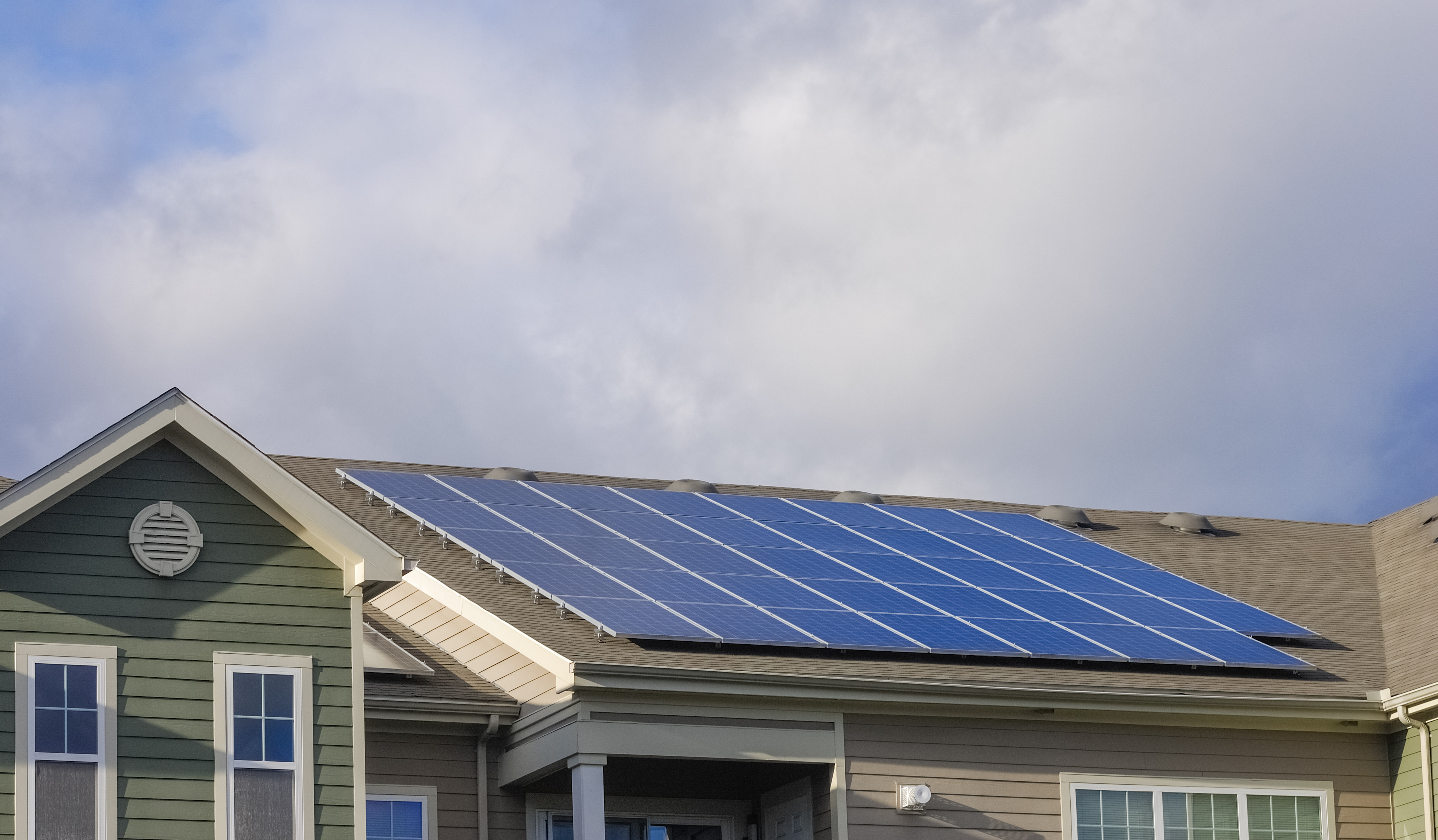
In the past few years, a largely grassroots solar installation trend has taken shape across a handful of Michigan towns and counties, as residents like Gontina have sought to capitalize on group-buy discounts and federal incentives to upgrade their homes.

“There wasn’t really a champion to push (Solarize) forward,” said Gontina. “I had the time and the interest to do it, and I also understood that the city was very challenged in terms of resources and didn’t have the time to meet an initiative like that.”

Now overseen by the Great Lakes Renewable Energy Association, the Solarize program has expanded to Grand Rapids, Lansing, Kalamazoo, as well as Oakland, Washtenaw, and Wayne counties, where city and county officials have taken over administering it to homeowners and businesses.

While federal incentives for solar have shrunk and solar installations have declined under the Trump administration, advocates of Solarize are still encouraging residents and businesses to take advantage of remaining opportunities and to embrace renewable energy sources amid utility rate hikes.

“As we see our energy costs continuing to rise, that’s really the biggest argument for renewables,” said Gontina. “Our electric provider, DTE, has demonstrated that they will not stop continuing to ask for increases at a regular pace until there’s something legislatively done to stop that.”

National grassroots solar installation program appeals to Michigan homeowners

While Solarize has found its footing in Michigan in the past decade, its origins trace back to 2009, when residents in Portland, Or. began hosting neighborhood seminars with local contractors to learn about residential solar panel installation. The program rapidly expanded the city’s solar footprint, according to a report from the Energy Trust of Oregon.

For Ann Arbor energy manager and resident Julie Roth — who now works for the city’s Office of Sustainability & Innovation — hearing about the early success of Solarize was enough of a rationale to try it in her neighborhood in 2019. At the time, she was interested in installing solar panels on her roof but was concerned about the high upfront costs and the wide range of contractor quotes.

“I pitched it to my solar installer (contractor),” said Roth. “I said, ‘Well, what do you think if I get a bunch of people here and we all do it together. Would you give us a discount?’ He said, ‘Sure,’ and came up with a sort of discount structure.”

After she sent out an invite on Nextdoor and Facebook, Roth says, she was surprised at the turnout.

“I thought that I would have three people sitting around my dining room table awkwardly trying not to make eye contact with the installer or me, and then we would all go home, and it would be over,” said Roth.

Instead, 40 people showed up to that first meeting at her house. Within a year, about a dozen people from that night installed solar panel systems on their homes.

“It basically started because we were trying to overcome barriers to adoption,” she said. “We didn’t have any staff. It started as a volunteer thing. We didn’t have any money, and so with no resources and very little bandwidth, what can you do?”

As residents like Gontina and Roth have become ambassadors for Solarize, encouraging neighbors to host their own events and create more group-buy discounts on solar, it’s brought greater interest from county governments and statewide organizations seeking to broaden its appeal.

“We really want to position ourselves as a resource, as an advocate, and relationship builder,” said Julie Lyons Bricker, chief sustainability officer for Oakland County, one of the latest counties to adopt the Solarize program.

Since launching in 2021, the county’s Sustainability Office has focused on both improving energy efficiency across Oakland’s 62 cities, townships, and villages and guiding homeowners and businesses toward available incentives, says Lyons Bricker.

With Solarize Oakland County, the county hopes to raise awareness on how solar works, what’s needed to get it installed, and what people should expect from their contractors. Groups of residents can be matched with GLREA-approved vendors and receive a bulk discount of 5 to 15% on their solar panel purchases.

A diminishing landscape for solar installation

As momentum for solar installations has picked up in some communities across Michigan, the national solar industry has had to contend with tariff pressures and a freeze on approvals for major infrastructure projects, amid a pivot away from the clean energy policies and investments that emerged during the Biden administration.

Solar installations have declined, leading to an industry-wide disruption, with utility-scale solar installations down 16% and community solar down 25% in 2025, according to a recent report from the Solar Energy Industries Association (SEIA).

Last year, the Residential Clean Energy Credit — a 30% federal tax credit on solar, wind, and geothermal home installations — was cut six years short when Trump signed the “One Big Beautiful Bill” in July 2025, ending a credit that had been set to run through 2032.

“It’s an economic investment when you’re thinking about installing a system,” said Gontina. “Anything that is available to help with that investment only makes it easier.”

While the residential tax credit ended in December, multiple financial incentives for businesses and houses of worship remain active through the end of 2027. Bricker says the county is still trying to encourage commercial property owners to take advantage of that opportunity while it lasts.

For renters, lower-income residents, and those with roofs unsuitable for panels, rooftop solar programs like Solarize remain largely out of reach. The Trump administration’s termination of the federal Solar for All program in 2025 eliminated $156 million in Michigan projects designed to expand solar access for low-income households — projects already underway in Detroit, Highland Park, Benton Harbor, and beyond.

Community solar legislation, which would allow residents to subscribe to off-site solar arrays and receive bill credits without owning a system, has bipartisan support in Michigan but has yet to advance.

Solar panel parties spawn citywide energy push

Gontina says that the Solarize Oakland County program could help the rest of the county catch up to what individual towns like Royal Oak are attempting to do.

“You’re bringing a bigger tent to the picture so that more people feel like they have an opportunity to be included,” he said.

Although Solarize is transitioning toward a “top-down” approach, Roth credits the “grassroots” solar parties she and others hosted with helping grow the city’s residential solar installations over the last several years.

“It grows the movement more when you’re talking to your neighbors than when you’re just talking to a city representative,” said Roth. “The community engagement and buy-in and ownership are much higher, especially when you’re not just looking at getting solar up, you’re looking at engaging a community around energy.”

She added: “We’re there as technical experts to some degree, to add legitimacy, and to continue to bring people along, and to make sure that the installers are being responsive.”

Although Ann Arbor Solarize’s numbers have slowed down in recent years, city data shows that the number of residents installing solar panels has increased in tandem with the program’s launch in 2019 and the growth of the solar installation market.

Ann Arbor has averaged about 180 residential solar installations annually since 2020, compared to 17 per year between 2008 and 2019.

Nearly seven years later, the success of Ann Arbor’s Solarize program has contributed, in part, to the city’s push to create a municipal-owned utility designed to help residents and businesses access solar energy and battery storage without upfront costs. The program will be optional, and will supplement, not replace, the use of DTE’s electric grid, according to city documents.

Ann Arbor’s Sustainable Energy Utility, authorized by roughly 80% of voters, is designed in part to address those barriers. Unlike rooftop solar programs, it would allow residents and businesses to access solar and battery storage without upfront costs — with the city owning the equipment and customers paying a monthly rate. Pilot projects targeting lower-income neighborhoods are expected to launch in 2026, with citywide expansion planned for 2027.

Roth hopes the city’s trend in renewable energy adoption and utility ownership can be a model for other communities. These days, she relishes the sight of solar panels around Ann Arbor.

“You walk around, you walk your dog in the neighborhoods, and it’s like, ‘solar there, solar there, solar there,’” she said. “It’s so visible. And that’s really exciting to see the actual physical changes in your community.”


The post Residents across Michigan unite for solar discounts appeared first on Great Lakes Now.

Original Article

Great Lakes Now

Great Lakes Now

https://www.greatlakesnow.org/2026/04/09/residents-across-michigan-unite-for-solar-discounts/

Planet Detroit