...QUICK MOVING BANDS OF SNOW AND STRONG WIND GUSTS THIS AFTERNOON... Bands of scattered snow showers are expected for the next few hours which could cause a brief period of low visibility and slippery stretches on area roads, especially across northern Wisconsin.

Original Article

Current Watches, Warnings and Advisories for Brown (WIC009) Wisconsin Issued by the National Weather Service

Current Watches, Warnings and Advisories for Brown (WIC009) Wisconsin Issued by the National Weather Service

https://alerts.weather.gov/cap/wwacapget.php?x=WI1261C4B2B9D8.SpecialWeatherStatement.1261C4B34290WI.GRBSPSGRB.3b77a733acfe35fc01f412b80021d336

w-nws.webmaster@noaa.gov

...WIND ADVISORY REMAINS IN EFFECT FROM 1 PM THIS AFTERNOON TO 9 PM CST THIS EVENING... * WHAT...West winds 15 to 25 mph with gusts up to 45 mph expected. * WHERE...Calumet, Manitowoc, Winnebago, Brown, Kewaunee, Outagamie, Southern Marinette County and Southern Oconto County Counties. * WHEN...From 1 PM this afternoon to 9 PM CST this evening.

Original Article

Current Watches, Warnings and Advisories for Brown (WIC009) Wisconsin Issued by the National Weather Service

Current Watches, Warnings and Advisories for Brown (WIC009) Wisconsin Issued by the National Weather Service

https://alerts.weather.gov/cap/wwacapget.php?x=WI1261C4B244A8.WindAdvisory.1261C4BFC5B0WI.GRBNPWGRB.3f6828931b630dfb952cdacc3323e258

w-nws.webmaster@noaa.gov

...WIND ADVISORY IN EFFECT FROM 1 PM THIS AFTERNOON TO 9 PM CST THIS EVENING... * WHAT...West winds 15 to 25 mph with gusts up to 45 mph expected. * WHERE...Calumet, Manitowoc, Winnebago, Brown, Kewaunee, Outagamie, Southern Marinette County and Southern Oconto County Counties. * WHEN...From 1 PM this afternoon to 9 PM CST this evening.

Original Article

Current Watches, Warnings and Advisories for Brown (WIC009) Wisconsin Issued by the National Weather Service

Current Watches, Warnings and Advisories for Brown (WIC009) Wisconsin Issued by the National Weather Service

https://alerts.weather.gov/cap/wwacapget.php?x=WI1261C4B10FAC.WindAdvisory.1261C4BFC5B0WI.GRBNPWGRB.3f6828931b630dfb952cdacc3323e258

w-nws.webmaster@noaa.gov

THIS WEEK: Special Focus Edition: Multi-Nation Negotiations


Indigenous Governments Invoking Their Treaty Rights in Line 5 Talks

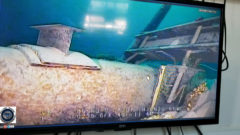
In the ongoing battle to ensure the twin, five-mile pipelines that run under the Straits of Mackinac, carrying 23 million gallons of petroleum liquids daily, don’t leak into Lakes Michigan and Huron, twelve Michigan tribes have asked for representation at the Canada/United States treaty discussions recently invoked by the Canadian government.  The treaties between the tribes and the U.S. government of course far predate the 1977 treaty between the U.S. and Canada on the free flow of oil between the two countries.


Trudeau and Biden to Discuss Potential Nuclear Waste Storage In Great Lakes

The leaders of Canada, the U.S. and Mexico are meeting on November 18, with discussions to include, among many critical issues, the siting of Canada’s permanent nuclear waste repository – which could be on the shores of Lake Huron.  Michigan Congressional Representatives Kildee, Levin and Meijer are asking “President Biden to work with Prime Minister Trudeau to ensure that no nuclear waste is permanently stored in the shared Great Lakes water basin. In the 1980s, when the United States was exploring sites to permanently store our nuclear waste, the Canadian government opposed any potential sites that were in our shared water basins. Ultimately, the United States did not pursue this permanent storage site out of respect for our Canadian friends. Now, we urge our Canadian neighbors to extend us this same courtesy. We must work together to protect the Great Lakes.”


Great Lakes Reflections from COP26

Stephanie Smith, Freshwater Future’s Board Chair and principal at Zephyr Mangata, a consultancy accelerating positive change for people and the planet, traveled to Scotland for the COP26 Climate Change Conference.  Read about Stephanie’s reflections on the conference, both positive results and clear needs for more urgent and accelerated actions. For more on the results of the governments’ actions at the conference, click here.

Original Article

Blog – Freshwater Future

Blog – Freshwater Future

https://freshwaterfuture.org/freshwater-weekly/freshwater-future-weekly-november-19-2021/

Alana Honaker

by Stephanie Smith

I arrived at COP26 in Glasgow, Scotland from my home in the Great Lakes region, and was heartened by the global community working to tackle climate change from many different angles. And yet, while there are many positive outcomes from COP26, they do not hit the mark for the accelerated pace of change we need. As I was reminded again and again, the people and countries that have done the least to create climate change issues are the most deeply impacted, with the fewest resources to create adaptive solutions. In my time at the conference, the voices of youth, island dwellers and indigenous people were loud, clear and absolutely urgent – their survival is threatened. But the outcomes of COP26 do not reflect the extent of change needed for the Great Lakes region and the planet as a whole.

While climate change impacts are inequitable, they are felt pretty much everywhere to varying degrees. The Great Lakes and their communities are being impacted by climate change through more severe storms, more extreme higher and lower lake levels, and changing temperatures, which affect the lake ecosystems and also the surrounding communities. Urban centers with aging infrastructure, areas with fewer resources and BIPOC communities are disproportionately impacted.

While some look to the Great Lakes as a climate refuge for those who can no longer live in their own communities due to fire, floods and droughts, this region also needs a more coordinated and accelerated approach to adapt to the changes we are amidst. Climate change is a threat multiplier and exacerbates existing issues, so we must have strategic, intersectional solutions that create, multiply and scale positive change. We’re not there yet, by a longshot, so what do we need to do?

Start with an inclusive vision for where we want to be. The people of the Great Lakes region in their diversity are not represented at our decision-making tables. As we hasten to develop the strategies we actually need for systemic change, the voices of youth and BIPOC leaders must be central to deciding upon, and guiding the journey. Yes, this is about regional preparation and action for the well-being of current Great Lakes residents. More critically, it’s about our future inhabitants – youth growing into adults here, and the incoming people that climate migration will lead here, seeking out the Great Lakes region as home.

Get better connected for bigger impact. With the Great Lakes at the heart of our region, we are already connected through these vital waters. Our current restoration and action agendas give us a strong base to stand on. But we need to embrace new voices – the same thinking and thinkers that have led us to this present moment will not get us to the change needed, in the relatively rapid timeframe needed. It’s imperative that we build stronger relationships and opportunities to share knowledge and solutions with the global water and climate change community

Integrate opportunities for engagement into all levels of our communities and schools. Because our vision should be about everyone, we need everyone engaged at varying levels. For a start, let’s mandate statewide, regional and national climate and water education that centers healthy people and a vibrant planet, with equity and justice for all. Youth leaders were at COP26 calling out for change, with a fantastic contingent from the Great Lakes region among them. But our young adults struggle with eco-anxiety and climate grief – and most of their peers are not adequately taught about climate change issues. This leaves them feeling isolated and frankly, tired. We must do better to support these leaders, who at age 25 have been doing this work for more than a quarter of their lives.

The calls to action at COP26 were crystal clear in their urgency. And while these aspects influenced the decisions made to reflect many global needs, they do not tap into the electric undercurrent of accelerated change truly needed. Let’s work within the Great Lakes region and connect with national and global partners to lead the change that’s needed now.

stephanie-smith-board-chair-freshwater-future-environmental-organization

Stephanie Smith is a Freshwater Future board member and runs Zephyr Mangata, a consultancy accelerating positive change for people and the planet.


Original Article

Blog – Freshwater Future

Blog – Freshwater Future

https://freshwaterfuture.org/call-to-action/cop26-and-the-great-lakes-region/

Freshwater Future

Whitmer proposes $300M in water funding for communities

LANSING, Mich. (AP) — Gov. Gretchen Whitmer on Thursday proposed $300 million in water spending to help local utilities address elevated lead levels, plan for pipe replacement and connect users of contaminated wells to municipal supplies.

The governor said the funding would expand her $500 million MI Clean Water Plan, some of which has been authorized since it was unveiled more than a year ago.

Read Now at Great Lakes Now.

Original Article

Great Lakes Now

Great Lakes Now

https://www.greatlakesnow.org/2021/11/ap-whitmer-300m-water-funding-communities/

The Associated Press

Sturgeon Restoration: Drawing in the public with a festival

This story is the fourth in a four-part series looking at sturgeon restoration efforts. 

Lake sturgeon restoration efforts are taking place across the Great Lakes basin.  

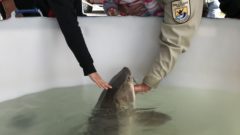
But what that restoration looks like is entirely dependent on location and other factors, such as whether or not any lake sturgeon remain in the area. 

Read Now at Great Lakes Now.

Original Article

Great Lakes Now

Great Lakes Now

https://www.greatlakesnow.org/2021/11/sturgeon-restoration-public-festival/

Kathy Johnson

Four members of Congress believe that the U.S. Fish and Wildlife Service should continue to play a role in protecting fish and wildlife in the Great Lakes region and have introduced bipartisan legislation in support of this idea. Read the full story by Dearborn Press and Guide.

Original Article

Great Lakes Commission

Great Lakes Commission

https://www.glc.org/dailynews/20211119-bill

Samantha Tank

Michigan Attorney General Dana Nessel joined a coalition of 19 attorneys general urging the U.S. Senate’s Environment and Public Works Committee to take action on federal health and environmental protections to address per-and polyfluoroalkyl substances, better known as PFAS. Read the full story by Midland Daily News.

Original Article

Great Lakes Commission

Great Lakes Commission

https://www.glc.org/dailynews/20211119-pfas

Samantha Tank

Michigan anglers should be on the lookout for trout or salmon with an adipose fin-clip. It could contain a tag with information on the movement of steelhead, Chinook salmon, Atlantic salmon, brown trout, and lake trout. Read the full story by WITL – Lansing, MI.

Original Article

Great Lakes Commission

Great Lakes Commission

https://www.glc.org/dailynews/20211119-tagged-fish

Samantha Tank

St. Catharines city councillors this week approved the terms of reference for the 2029 Historic Welland Canals Task Force, to develop plans to commemorate the history of the Welland Canal that first opened on Nov. 30, 1829, after five years of construction. Read the full story by the St. Catharines Standard.

Original Article

Great Lakes Commission

Great Lakes Commission

https://www.glc.org/dailynews/20211119-bicentennial

Samantha Tank

Erie Hack is a “multi-month innovation challenge” that encourages people from the U.S. and Canada to pitch their ideas for new ways and technologies to help Lake Erie. The 2021 winners were announced earlier this week. Read the full story by Great Lakes Now.

Original Article

Great Lakes Commission

Great Lakes Commission

https://www.glc.org/dailynews/20211119-erie-hack

Samantha Tank

Drinking Water News Roundup: Algae blooms threaten Illinois, Wisconsin DNR cuts runoff regulations

From lead pipes to PFAS, drinking water contamination is a major issue plaguing cities and towns all around the Great Lakes. Cleaning up contaminants and providing safe water to everyone is an ongoing public health struggle. 

Keep up with drinking water-related developments in the Great Lakes area. 

Click on the headline to read the full-story: 

Illinois: 

  • Illinois EPA Invests Over $29 Million in Wastewater and Drinking Water Projects in First Quarter of FY22 —MyRadioLink 

The state of Illinois’ Environmental Protection Agency (EPA) decided to invest over $29 million in wastewater and drinking water projects for the first quarter of the 2022 fiscal year.

Read Now at Great Lakes Now.

Original Article

Great Lakes Now

Great Lakes Now

https://www.greatlakesnow.org/2021/11/drinking-water-news-roundup-algae-blooms-dnr/

Maya Sundaresan

Funding to restore the Great Lakes in a way that will make waterways cleaner in Western New York is on its way. Thanks to the Great Lakes Restoration Initiative and President Joe Biden’s infrastructure plan, more than $3 million will be spent on improvements over the next five years. Read the full story by Spectrum Local News.

Original Article

Great Lakes Commission

Great Lakes Commission

https://www.glc.org/dailynews/20211119-restore-waterways

Samantha Tank

CONTACT:
Lindsey Bacigal, BacigalL@nwf.org, (734) 887-7113
Jordan Lubetkin, Lubetkin@nwf.org, (734) 904-1589 

ANN ARBOR, MICH. (November 19, 2021)—The U.S. House passed sweeping legislation this morning to help communities prepare for, and adapt to, climate change and restore clean water. The Healing Our Waters-Great Lakes Coalition is heralding many of the investments in the Build Back Better Act, which contains the largest federal investment in the nation’s history to confront the climate crisis. The package will now move to the Senate, which is expected to take up the reconciliation process as early as December 1. 

“We applaud the House for taking action. Climate change is here. It is impacting the Great Lakes. It is harming our communities. And it is only going to get worse, if we wait any longer to act,” said Laura Rubin, director of the Healing Our Waters-Great Lakes Coalition. “The extreme weather, more frequent and severe flooding, and erosion being driven by climate change is straining the region’s inadequate water infrastructure, harming communities, hurting the economy, and jeopardizing the health of people.”  

The Build Back Better Act contains over $550 billion in climate investments to get us to a clean energy future, while helping communities adapt, including: 

  • $6 billion in investments for the conservation, restoration, and protection of our coastal habitats and enhancing the resilience of our coastal communities threatened by climate change. 
  • $10 billion to address the threat of lead in drinking water: 
    • $9 billion for disadvantaged communities and schools. 
    • $970 million for lead remediation in rural communities. 
  • $1.85 billion to address sewer overflows. 
  • $225 million for water assistance programs. 
  • $150 million for individual household decentralized wastewater treatment systems. 
  • Over $27 billion for agriculture programs including farmland conservation, regenerative agriculture, and climate research. 
  • $3 billion for environmental and climate justice block grants. 

Climate change is exacerbating many threats to the Great Lakes and communities, including polluted runoff that causes toxic algal blooms, sewage overflows that close beaches, and flooding that jeopardizes homes, businesses, and communities. 

We encourage the Senate to act swiftly on legislation that confronts the climate crisis and provides the tools and resources communities so desperately need to protect themselves from the devastating economic, environmental and public health impacts of climate change. 

Since 2004, the Healing Our Waters-Great Lakes Coalition has been harnessing the collective power of more than 170 groups representing millions of people, whose common goal is to restore and protect the Great Lakes. Learn more at HealthyLakes.org or follow us on Twitter @HealthyLakes. 

### 

The post Coalition Applauds House Action on Climate, Urges Senate Action to Protect Great Lakes, Communities   appeared first on Healing Our Waters Coalition.

Original Article

Healing Our Waters Coalition

Healing Our Waters Coalition

https://healthylakes.org/coalition-applauds-house-action-on-climate-urges-senate-action-to-protect-great-lakes-communities/

Lindsey Bacigal

Sustainable Shipping: At the Port of Milwaukee the wind blows toward a greener future

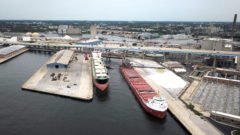
Shipping companies and ports around the world and on the Great Lakes are launching sustainability efforts to lessen their environmental impact, combat climate change, and improve their efficiency and images. With support from the Solutions Journalism Network, Great Lakes Now Contributor Kari Lydersen is reporting the four-part series “Sustainable Shipping.”

Read them here:

Are voluntary efforts enough to improve port sustainability?

Read Now at Great Lakes Now.

Original Article

Great Lakes Now

Great Lakes Now

https://www.greatlakesnow.org/2021/11/sustainable-shipping-port-milwaukee-the-wind-green-energy/

Kari Lydersen

Trash and other types of marine debris are a significant concern in the Great Lakes region and internationally, and balloons are one piece of that puzzle.

The post High schooler inspires bill to ban balloon litter first appeared on Great Lakes Echo.

Original Article

Great Lakes Echo

Great Lakes Echo

http://greatlakesecho.org/2021/11/19/high-schooler-inspires-bill-to-ban-balloon-litter/

Guest Contributor

PFAS News Roundup: Minnesota requiring businesses to monitor, PFAS impact on COVID vaccine, new New York standards

PFAS, short for per- and polyfluoroalkyl substances, are a group of widespread man-made chemicals that don’t break down in the environment or the human body and have been flagged as a major contaminant in sources of water across the country.

Keep up with PFAS-related developments in the Great Lakes area.

Read Now at Great Lakes Now.

Original Article

Great Lakes Now

Great Lakes Now

https://www.greatlakesnow.org/2021/11/pfas-news-covid-vaccine-minnesota-businesses-new-york-standards/

Natasha Blakely

Library

Issue Brief: Mercury Contamination in the Great Lakes Basin

This summary proceedings provides a detailed report on the presentations and discussions that occurred during a 2021 symposium and workshop on exploring science-based strategies for environmental dredging windows in Lake Michigan. The document also includes a discussion of common themes, findings and next steps to inform future work in the area of environmental dredging windows.

Published October 2021  | Download PDF

Original Article

Great Lakes Commission

Great Lakes Commission

https://www.glc.org/library/2021-glc-issue-brief-mercury

Laura Andrews

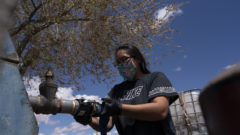
Tribes welcome infusion of money in infrastructure bill

By Felicia Fonseca, Associated Press

FLAGSTAFF, Ariz. (AP) — Tribes welcomed an infusion of money in the massive infrastructure bill to expand broadband coverage, fix roads and address water and sanitation needs, but they say real change will come only with sustained investment.

President Joe Biden signed the $1.2 trillion deal earlier this week that includes about $11 billion in benefits for Indian Country, according to the U.S.

Read Now at Great Lakes Now.

Original Article

Great Lakes Now

Great Lakes Now

https://www.greatlakesnow.org/2021/11/ap-tribes-infusion-money-infrastructure-bill/

The Associated Press

How the Ski Industry Stopped Worrying and Learned to Love Climate Activism

By Jenessa Duncombe, Eos

This story originally appeared in Eos and is republished here as part of Covering Climate Now, a global journalism collaboration strengthening coverage of the climate story.


An interview with the president of the International Ski Federation, Gian Franco Kasper, made its way around the Internet faster than locals flocking to the first chair on a powder day.

Read Now at Great Lakes Now.

Original Article

Great Lakes Now

Great Lakes Now

https://www.greatlakesnow.org/2021/11/ski-industry-climate-activism/

Eos

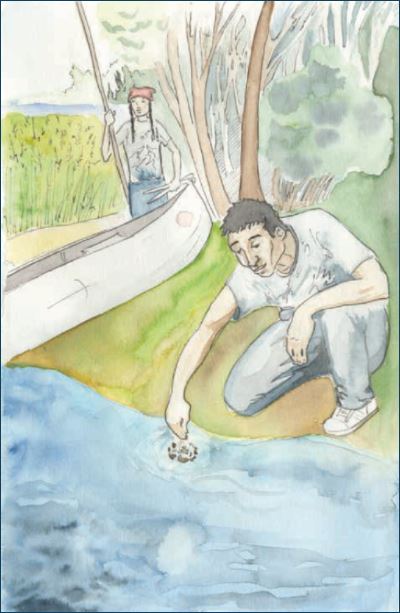
A new website is available that details what Indigenous communities in the Upper Midwest are doing to conserve and protect water. Named Bimaadiziwin Nibi, Water is Life, the story map is divided into sections, each centered around a different environmental issue. These include wild rice, fish, nonlocal beings (invasive species), mining, contaminants and beach sampling. Within each section are photos, reports and videos from tribal natural resource departments and a summary of interviews with scientists.

The project was created by Brenna DeNamur during her internship with Wisconsin Sea Grant in 2020. DeNamur, a recent University of Wisconsin-Madison graduate, partnered with the Great Lakes Indian Fish and Wildlife Commission (GLIFWC) to develop the content in a culturally responsive manner.

Image courtesy of the Great Lakes Indian Fish and Wildlife Commission

“It’s my hope that visitors to the site will gain a better understanding of the challenges faced in the intersection of conversation efforts and tribal culture, and that they be introduced to the diverse voices working in this area,” DeNamur said.

For instance, in the nonlocal beings section, DeNamur writes, “Although Indigenous science teaches respect and consideration for all, these nonlocal beings still pose a threat to biodiversity and the individual species, such as manoomin (wild rice) and ogaa (walleye), that Native Americans have had deep relationships with for generations.”

In response, GLIFWC has taken action against nonlocal beings. They conduct surveys, control actions and follow up monitoring for both terrestrial and aquatic species. The web page details how the commission divides its efforts into prevention, early detection and rapid response, control and management, research, and cooperation and coordination.

“This story map is a great tool for understanding how the collaboration of Traditional Ecological Knowledge and Western Science methodologies can produce strategic and respectful conservation efforts concerning water throughout the Ceded Territories and beyond,” said Hannah Arbuckle, GLIFWC Outreach Coordinator.

Anne Moser, Wisconsin Sea Grant senior special librarian/education coordinator and DeNamur’s mentor, hopes to see the story map grow in the coming years. “I am grateful and honored to collaborate with GLIFWC on this project. It helped me gain a deeper understanding about Great Lakes literacy and how to incorporate Indigenous approaches into my work in education and outreach.”

“Ultimately, teaching Indigenous science is about understanding the world from different perspectives. If more people lived by this, we could sustain a healthier, more prosperous world,” DeNamur said.

To access the story map, visit go.wisc.edu/4n6n3n.

The post An Indigenous Story Map Experience About Water first appeared on Wisconsin Sea Grant.

Original Article

News Releases | Wisconsin Sea Grant

News Releases | Wisconsin Sea Grant

https://www.seagrant.wisc.edu/news/an-indigenous-story-map-experience-about-water/?utm_source=rss&utm_medium=rss&utm_campaign=an-indigenous-story-map-experience-about-water

Marie Zhuikov

According to the Michigan Department of Natural Resources, the number of hunters is down this year about 4.5% compared to 2020. But at the Buck Pole in Mancelona, the turnout was better than last year.

The post Mancelona Buck Pole more than just a competition first appeared on Great Lakes Echo.

Original Article

Great Lakes Echo

Great Lakes Echo

http://greatlakesecho.org/2021/11/18/mancelona-buck-pole-more-than-just-a-competition/

Guest Contributor

Regulators seek to suspend Trump rule on railway natural gas

By Josh Funk, Associated Press

OMAHA, Neb. (AP) — Federal regulators have proposed suspending a Trump administration rule that would have allowed railroads to haul liquefied natural gas while they take a closer look at the potential safety risks.

The rule, which was backed by both the natural gas and freight rail industries, had already been on hold because several environmental groups and 14 states filed lawsuits challenging it.

Read Now at Great Lakes Now.

Original Article

Great Lakes Now

Great Lakes Now

https://www.greatlakesnow.org/2021/11/ap-regulators-suspend-trump-rule-railway-gas/

The Associated Press

Judge keeps Michigan oil pipeline case in federal court

By John Flesher, Associated Press

A federal judge retained jurisdiction Tuesday in a dispute over a Canadian oil pipeline that runs through a section of the Great Lakes, rejecting Michigan Gov. Gretchen Whitmer’s contention that the case belongs in state court.

The clash over whether Enbridge Energy’s Line 5 should continue operating raises issues “under consideration at the highest levels of this country’s government” involving a U.S.-Canada treaty and federal pipeline safety regulation, U.S.

Read Now at Great Lakes Now.

Original Article

Great Lakes Now

Great Lakes Now

https://www.greatlakesnow.org/2021/11/ap-judge-michigan-oil-pipeline-case-in-federal-court/

The Associated Press

Erie Hack Finals: Is Lake Erie’s most pressing water problem toxins, agriculture or infrastructure design?

The objects wouldn’t look out of place as decorative lanterns or centerpieces. But the winner of the 2019 Erie Hack did more than look nice, it was designed to capture debris from stormwater – including plastic, waste and needles – that normally go rushing into Lake Erie whenever there’s bad weather. 

Read Now at Great Lakes Now.

Original Article

Great Lakes Now

Great Lakes Now

https://www.greatlakesnow.org/2021/11/erie-hack-finals-toxins-agriculture-infrastructure/

Natasha Blakely

Warm weather in September and October has kept the Great Lakes’ water temperatures much warmer than normal for mid-November. A few of the Great Lakes are warmer than they have ever been since consistent water temperature tracking has been developed. Read the full story by MLive.

Original Article

Great Lakes Commission

Great Lakes Commission

https://www.glc.org/dailynews/2021117-record-warm

Theresa Gruninger

When a 72-pound bighead carp was pulled from Humboldt Park Lagoon in Chicago earlier this month, many questioned how it got there. The Illinois Department of Natural Resources thinks the carp may have been stocked in Humboldt Park Lagoon 20-plus years ago. Read the full story by WTTW-TV – Chicago, IL.

Original Article

Great Lakes Commission

Great Lakes Commission

https://www.glc.org/dailynews/2021117-carp

Theresa Gruninger

Construction on a proposed utility tunnel under the Straits of Mackinac to house a rebuilt section of the Enbridge Line 5 oil pipeline would not likely finish until 2028, according to documents posted online by the state of Michigan in response to a lawsuit. Read the full story by MLive.

Original Article

Great Lakes Commission

Great Lakes Commission

https://www.glc.org/dailynews/2021117-line-5-tunnel

Theresa Gruninger

Despite approval from a multitude of oversight agencies, a pilot offshore windmill project on Lake Erie is facing some strong headwinds the next few months amid the fallout of Ohio’s ongoing energy scandal. Read the full story by the Ohio Capital Journal.

Original Article

Great Lakes Commission

Great Lakes Commission

https://www.glc.org/dailynews/2021117-windmall-project

Theresa Gruninger

New York Governor Kathy Hochul announced Monday the completion of a Resilience and Economic Development Initiative project in the Wayne County Village of Sodus Point. The $7.58 million project will protect public areas, businesses, and homes from future flooding and provide recreational opportunities for the community’s tourism industry, according to state officials. Read the full story by WROC-TV – Rochester, NY.

Original Article

Great Lakes Commission

Great Lakes Commission

https://www.glc.org/dailynews/2021117-lake-ontario-waterfront

Theresa Gruninger

New York Sea Grant is working to create environmental stewardship among young learners by partnering with educators in the region to provide accessible curriculum resources on local environmental issues. Read the full story by WWTI-TV – Watertown, NY.

Original Article

Great Lakes Commission

Great Lakes Commission

https://www.glc.org/dailynews/2021117-ny-sea-grant

Theresa Gruninger

U.S. Circuit Court Judge Janet Neff issued a long-awaited written ruling late Tuesday, agreeing with Enbridge that its dispute with Michigan Governor Gretchen Whitmer’s administration involves “substantial federal issues” and thus will remain in federal court. Read the full story by MLive.

Original Article

Great Lakes Commission

Great Lakes Commission

https://www.glc.org/dailynews/2021117-line-5

Theresa Gruninger

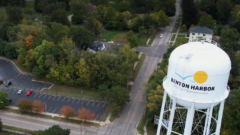
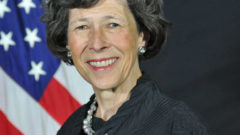
Q&A: New EPA Great Lakes administrator talks Benton Harbor, infrastructure, AOC cleanup

Conservation action for Debra Shore started with the driveway at her suburban Chicago home.

It was asphalt, and she wanted to replace it with gravel to absorb the rain and keep pollutants out of the stormwater drains. But her town administration said no to the permit, though it eventually yielded.

Read Now at Great Lakes Now.

Original Article

Great Lakes Now

Great Lakes Now

https://www.greatlakesnow.org/2021/11/epa-great-lakes-administrator-benton-harbor-infrastructure-cleanup/

Gary Wilson

Behavior-altering chemicals produced by sea lamprey may decrease the invaders’ populations in the Great Lakes.

The post Chemical sex attraction may curb invasive sea lamprey, new study says first appeared on Great Lakes Echo.

Original Article

Great Lakes Echo

Great Lakes Echo

http://greatlakesecho.org/2021/11/17/chemical-sex-attraction-may-curb-invasive-sea-lamprey-new-study-says/

Guest Contributor

30 years of keeping Great Lakes beaches clean!

2021 marked the 30th anniversary of the Alliance for the Great Lakes’ Adopt-a-Beach program. This year alone, volunteers hosted beach cleanups on all 5 Great Lakes and in all 8 states, with 7,883 volunteers gathering 25,280 pounds of litter at 719 beach cleanups.

This year’s volunteers formed the latest wave in a movement that started in 1991. For 30 years, thousands of volunteers from all over the Great Lakes and from all walks of life have signed up and shown up for beach cleanups. They’re part of an impactful movement to ensure that one of the world’s largest surface freshwater systems is cleaner, safer, and protected.

Volunteers Make All the Difference

424,923 pounds of litter
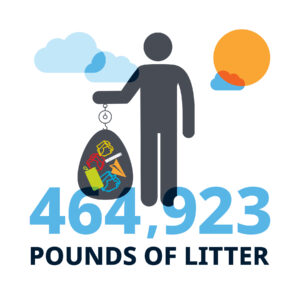
Volunteers have collected 464,923 pounds of litter since 2003, when the Alliance launched the Adopt-a-Beach online database.

Adopt-a-Beach volunteers don’t merely pick up thousands of pounds of litter from Great Lakes beaches and go home; they also collect important data. At each cleanup event, volunteers painstakingly tally each item they clean up, and the information is then entered into our online database that was developed in 2003. This huge data set – the largest of its kind in the Great Lakes region – provides us with invaluable information about the litter on our beaches and in the Great Lakes. 

The biggest finding is that roughly 85% of the litter picked up during Adopt-a-Beach cleanups is made up fully or partially of plastic.

Putting the Focus on Plastic

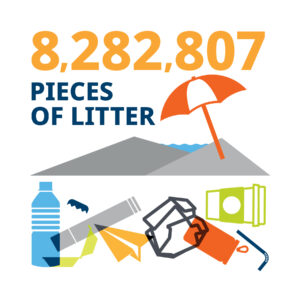
8,282,807 pieces of litter
Volunteers have collected 8,282,907 pieces of litter since 2003, when the Alliance launched the Adopt-a-Beach online database.

Adopt-a-Beach volunteers are on the front lines of keeping plastic out of our lakes. Their data collection efforts have raised the alarm about Great Lakes plastic pollution. 

The data has also been critical to raising awareness about microplastics in the Great Lakes as the plastic on our beaches. Plastic,  if not cleaned up, breaks down into smaller and smaller pieces that pollute our drinking water and harm wildlife.

Data from Adopt-a-Beach events has helped to narrow our attention on where we can best work together to reduce the use of plastic before it even reaches our beaches. For instance, food-related waste – from takeout containers to bottle caps – is among the top items found on Great Lakes beaches. 

Researchers, elected officials, government agencies, and nonprofit partners have used Adopt-a-Beach data to make the case for private and public efforts, such as programs aimed at reducing single-use plastic items, to keep plastic pollution out of the lakes.

Thank You, Adopt-a-Beach Volunteers!

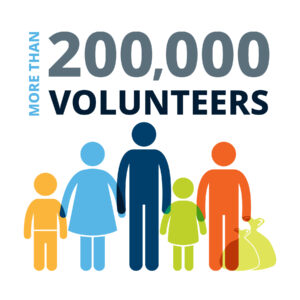
More than 200,000 volunteers
More than 200,000 volunteers have participated in Adopt-a-Beach since 1991.

It is heartwarming and hope-inducing to join volunteers year after year, standing shoulder to shoulder with friends, neighbors, and people they may have just met, putting their own hands to work cleaning hundreds of miles of shoreline of the plastic and other debris that pollutes our water. And most importantly, we all learn from each other why clean water and time outdoors are so important to our families, friends, and communities.

 ~ Joel Brammeier, President & CEO, Alliance for the Great Lakes

Thank you to all of our team leaders, volunteers, and partners who have given their time and resources over the past 30 years. We couldn’t accomplish all that we’ve done without your efforts!

Adopt-a-Beach Highlights Over the Years

  • 1991: First Adopt-a-Beach events held in September as part of the International Coastal Cleanup. For the first decade-plus, Adopt-a-Beach cleanup events were held in September only.
  • 2003: Adopt-a-Beach becomes the most extensive volunteer program ever to collect data on Great Lakes beach litter with the launch of year-round cleanups and an online database to ease data collection.
  • 2007: Adopt-a-Beach volunteers push for and win beach smoking bans along 30 miles of shoreline in Michigan and Chicago.
  • 2012: Adopt-a-Beach volunteers are among the first responders helping with cleanup after Hurricane Sandy blows in as a destructive superstorm, wreaking havoc on Lake Erie and the Cleveland lakefront
  • 2012: Scientists begin publishing research on plastic pollution in the Great Lakes using Adopt-a-Beach data and other data sources. One of the early findings: widespread presence of plastic microbeads in the waters of all five Great Lakes, leading to an awareness about microplastics in the Great Lakes.
  • 2018: A new toolkit – Plastic-Free Great Lakes: An Advocacy Toolkit to Make a Difference in Your Community – released to help volunteers take action on plastic pollution.
  • 2018: A federal ban on plastic microbeads in personal care products takes effect across the U.S.
  • 2020: An all-new Adopt-a-Beach website launched, making it easier than ever for people to volunteer and track data on their cleanups. And, despite a pandemic, volunteers kept connecting and cleaning up.

The post Over 200,000 Volunteers and 8,282,807 Pieces of Litter appeared first on Alliance for the Great Lakes.

Original Article

News – Alliance for the Great Lakes

News – Alliance for the Great Lakes

https://greatlakes.org/2021/11/over-200000-volunteers-and-8282807-pieces-of-litter/

Judy Freed

The Alliance for the Great Lakes Board of Directors held their annual meeting November 5-6 in Chicago. At the meeting, the board elected a new chair and four new directors and said farewell to three term-limited directors. Additionally, the board elected two new officers and renewed the terms of several current directors.

New Chair, Officers Elected

Jo-Elle Mogerman was elected as the Alliance’s new board chair. Mogerman is Director of the Saint Louis Zoo WildCare Park in St. Louis, Missouri. She returned to the board as a director in 2018 and previously served on the Executive Committee. Mogerman replaces previous chair Sue Conatser, who served in the role for three years and has previously served as board treasurer. 

“I’m incredibly grateful for Sue’s service, especially over the past year and a half,” said Alliance President & CEO Joel Brammeier. “Sue’s thoughtful guidance and leadership helped the Alliance successfully navigate the challenges of a global pandemic and create a new strategic plan. Her sound advice and steady hand have ensured that the organization is stronger than ever.”

In addition, the board elected two new officers. Bill Henry was elected Secretary, replacing David Schmahl, and Laura Payne was elected Vice Chair – Development, replacing Stephen Brewster, who is rotating off the board due to term limits. The Alliance deeply appreciates David and Stephen’s long service as board officers. 

Four New Directors Elected

The Alliance’s board welcomed four new directors to serve a three-year term.

Nicole Chavas, Chicago, Illinois is President and COO of Greenprint Partners, a certified WBE green infrastructure consulting and project development firm that works at the intersection of climate resiliency and equity. Greenprint designs and implements equitable, multi-benefit green infrastructure projects and programs, helping clients nationwide maximize the use of green infrastructure to manage stormwater while creating beneficial new community amenities. A co-founder of the firm, Nicole currently leads Greenprint strategy, business development and operations. Prior to founding Greenprint, Nicole spent 10 years working at large institutional investment firms evaluating the operational infrastructure of investment managers across all asset classes, including public equities, fixed income, hedge funds, private equity, venture capital, and real assets. She also spent significant time researching the opportunity to incorporate impact into a traditional investment portfolio on behalf of non-profit institutional investors. Nicole earned her BBA and Masters of Accountancy from the University of Wisconsin-Madison and her MBA from Northwestern University’s Kellogg School of Management.

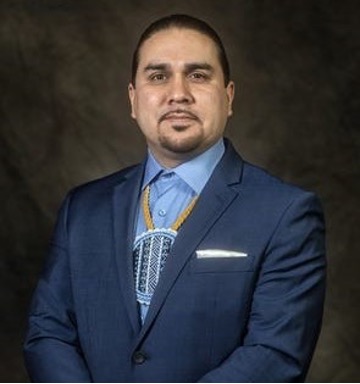
Daniel Guzman King, Oneida, Wisconsin is serving his 2nd term as a Councilman of the Oneida Nation. Daniel serves as a member of the Legislative Operating Committee,  responsible for developing and amending new laws, codes and policy for the Oneida Nation. In 2019, Daniel was selected to serve on the Great Lakes Area Tribal Health Board, which is a regional board advocating for health care system improvements on behalf of tribal communities in the Midwest. In 2021, he was also selected to serve on EPA’s Small Communities Advisory Committee.

Daniel graduated from Seymour High School in 2001. In 2004, he earned his Associates Degree in Hotel/Hospitality Management from Milwaukee Area Technical College. In 2015, Daniel earned his Bachelor’s Degree in Business Management from Cardinal Stritch University. Daniel is a graduate of the Latino Nonprofit Leadership Program and also the Philanthropy Incubator Project – Legacy Building in Communities of Color.

Daniel stood on the front lines at the Standing Rock Indian Reservation to fight for tribal land and water rights that would impact all of Indian Country and understands the importance of exercising the Oneida Nation’s sovereignty. 

Councilman Guzman King is of the Turtle Clan. His loving family includes his grandparents, the late Peter “Buzzy” and Martha (Skenandore) King; his mother, Joyce King; brother, Lorenzo Guzman; aunties, Louise Cornelius, Margaret King, Susan Reiter and Kathy King; his late uncle, Peter King Jr. 

Daniel Guzman King shared the following guiding words with the board: “When you sit and you counsel for the welfare of the people, think not of yourself, nor of your family, nor even your generation.” ~ The Peacemaker

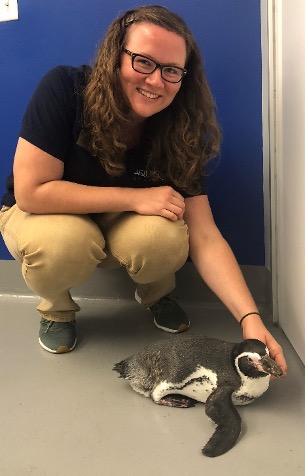
Katherine Jones, Tonawanda, New York is the Director of Education and Conservation at the Aquarium of Niagara. She started her time there as a part-time educator, however her knowledge, experience, and commitment to informal education allowed her to move up through the ranks over the last five years. During this time, she has spearheaded the creation of new STEM-based school programming, oversaw the development of day camps and homeschool curriculum, worked to expand a strong educational outreach presence, and increase the interpretive training and skill sets of the Education team.

Prior to her work at the Aquarium of Niagara, Katherine worked for seven years at the North Carolina Aquarium on Roanoke Island, two years in Maine with National Audubon Society’s Project Puffin, and several years as an interpretive naturalist for Indiana State Parks. She completed her Bachelor of Science degree in wildlife biology at the University of Guelph and is certified through the National Association of Interpretation as a Certified Heritage Interpreter. She spends her free time exploring the abundant parks of WNY with her husband and two children.

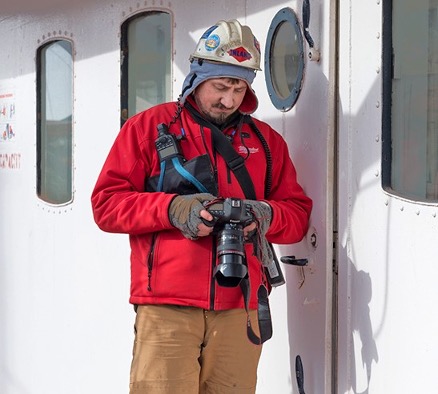
Christopher Winters, Milwaukee, Wisconsin is the staff photographer at Discovery World Science and Technology Center in Milwaukee, Wisconsin, a freelance photojournalist, and maritime historian. Smitten at the age of nine with the lore of lakeboats and the legend of the wreck of the Edmund Fitzgerald, Chris has dedicated his professional life to chronicling Great Lakes maritime history and culture. His award-winning books “Centennial,” documenting life aboard the century-old lake steamer St. Mary’s Challenger, “The Legend Lives On,” a definitive commemoration of the wreck of the Edmund Fitzgerald, and “Schooner Days,” the official history of Wisconsin’s flagship the S/V Denis Sullivan were published in 2008, 2015, and 2017 respectively. “Centennial” received the 2010 Steamship Historical Society of America’s C. Bradford Mitchell Award, and “Schooner Days” received the 2018 Gold “IPPY” Award for regional non-fiction. Chris has served as a four-term board member of the Great Lakes Shipwreck Historical Society, a trustee of the Wisconsin Marine Historical Society, and was recipient of the 2017 Great Lakes Historian of the Year award from the Marine Historical Society of Detroit. He enjoys sharing his love of the Great Lakes with daughters, Ryerson and Sullivan, and his long-suffering former flatlander wife Jessica.

The board renewed three current directors Tom LangmyerJo-Elle Mogerman, and

Vanessa Tey Iosue to serve their second three-year term. The board also said farewell to three term-limited directors after six years of service, Stephen BrewsterKathryn Bryk Friedman, and Laura Rubin

“Thank you to all of our board members – past and present – for their dedication and leadership,” said Brammeier. “Our work would not be possible without their time and expertise. They are integral to the Alliance’s successes in protecting and restoring this resource we all cherish. And we are grateful for their passion and commitment.”

For a full listing of Alliance for the Great Lakes directors and officers, visit our Board of Directors page.

The post New Board Chair, Four New Directors Welcomed to Alliance for the Great Lakes Board appeared first on Alliance for the Great Lakes.

Original Article

News – Alliance for the Great Lakes

News – Alliance for the Great Lakes

https://greatlakes.org/2021/11/new-board-chair-four-new-directors-welcomed-to-alliance-for-the-great-lakes-board/

Jennifer Caddick

News

Great Lakes Commission applauds historic bipartisan infrastructure investment

Ann Arbor, Mich. – The Great Lakes Commission (GLC) today applauded Congress and the Biden Administration for enacting the Infrastructure Investment and Jobs Act. The bipartisan infrastructure legislation includes significant investments in key Great Lakes priorities, including $1 billion in funding for the Great Lakes Restoration Initiative, $55 billion for drinking water and wastewater projects, $10 billion for action on emerging contaminants such as PFAS, $2.25 billion for port infrastructure development grants, and $1.9 billion for Army Corps of Engineers aquatic restoration projects.

“The Great Lakes Commission is grateful to our region’s bipartisan congressional delegation and President Biden for their work on the Infrastructure Investment and Jobs Act,” said GLC Chair Todd L. Ambs, deputy secretary for the Wisconsin Department of Natural Resources. “This legislation represents historic investment in longstanding GLC priorities, including $1 billion for the Great Lakes Restoration Initiative. Since it was launched in 2010, the GLRI has funded more than 5,000 projects across the Great Lakes. These projects have cleaned up toxic contamination, restored wetlands, prevented the spread of aquatic invasive species and more. They also produce a substantial return on investment, with every dollar spent generating an estimated $3.35 in additional economic activity.”

In June, the GLC led a coalition of regional agencies, legislators, mayors, and business and environmental groups in urging Congressional leaders to include key Great Lakes priorities in the legislation. The GLC will continue to advocate for Great Lakes priorities in upcoming legislation, including investments in climate resiliency and Great Lakes icebreaking capacity. 


The Great Lakes Commission, led by chair Todd L. Ambs, deputy secretary of the Wisconsin Department of Natural Resources, is a binational government agency established in 1955 to protect the Great Lakes and the economies and ecosystems they support. Its membership includes leaders from the eight U.S. states and two Canadian provinces in the Great Lakes basin. The GLC recommends policies and practices to balance the use, development, and conservation of the water resources of the Great Lakes and brings the region together to work on issues that no single community, state, province, or nation can tackle alone. Learn more at www.glc.org.

Contact

For media inquiries, please contact Beth Wanamaker, beth@glc.org.

Recent GLC News

Upcoming GLC Events

There are no upcoming events at this time. View GLC Calendar

ARCHIVES

Original Article

Great Lakes Commission

Great Lakes Commission

https://www.glc.org/news/infrastructure-111521

Beth Wanamaker

CONTACT:
Lindsey Bacigal, BacigalL@nwf.org, (734) 887-7113
Jordan Lubetkin, Lubetkin@nwf.org, (734) 904-1589

Ann Arbor, Mich. (November 15, 2021)—President Joe Biden signed the bipartisan infrastructure bill today, paving the way for historic investments in drinking water and sewage treatment infrastructure, Great Lakes restoration, and core clean water priorities. The Healing Our Waters-Great Lakes Coalition is heralding the bill as a tremendous victory for people and communities.

“The bipartisan infrastructure bill is a victory for the Great Lakes and the millions of people who depend on them for their drinking water, health, jobs, and quality of life,” said Laura Rubin, director of the Healing Our Waters-Great Lakes Coalition. “This bill is a big step forward in addressing the water infrastructure crisis threatening our communities and will provide much-needed help to the people who have been most impacted by pollution. We thank President Joe Biden and members of Congress for working together to make infrastructure and clean water a national priority.”

The Infrastructure Investment and Jobs Act will invest $1.2 trillion in the nation’s infrastructure, including $50 billion for drinking water and wastewater infrastructure. Investing in water infrastructure protects public health and improves climate resiliency of our communities, reducing maintenance and operational costs, and creating good-paying local jobs. The act also contains $1 billion to clean up toxic pollution, restore fish and wildlife habitat, reduce farm and city runoff pollution, and confront invasive species through the federal Great Lakes Restoration Initiative.

The Great Lakes states of Illinois, Indiana, Michigan, Minnesota, New York, Ohio, Pennsylvania, and Wisconsin, according to the EPA, need more than $188 billion over 20 years to update their drinking water and wastewater infrastructure. (This chart contains the water infrastructure needs of each state.)

Since 2004, the Healing Our Waters-Great Lakes Coalition has been harnessing the collective power of more than 170 groups representing millions of people, whose common goal is to restore and protect the Great Lakes. Learn more at HealthyLakes.org or follow us on Twitter @HealthyLakes.

###

The post Biden Signs Bipartisan Infrastructure Bill, Boon for Great Lakes, Clean Water appeared first on Healing Our Waters Coalition.

Original Article

Healing Our Waters Coalition

Healing Our Waters Coalition

https://healthylakes.org/biden-signs-bipartisan-infrastructure-bill-boon-for-great-lakes-clean-water/

Lindsey Bacigal