Drone will drop life preservers to struggling swimmers at South Haven beaches
2021-05-04
Great Lakes Commission
https://www.glc.org/dailynews/20210504-beach-drones
Great Lakes Commission
https://www.glc.org/dailynews/20210504-beach-drones
Great Lakes Commission
https://www.glc.org/dailynews/20210504-preservation-fundraising
Great Lakes Commission
https://www.glc.org/dailynews/20210504-aoc-epa
Great Lakes Commission
https://www.glc.org/dailynews/20210504-climate-trees
Great Lakes Commission
https://www.glc.org/dailynews/20210504-national-parks
Great Lakes Commission
https://www.glc.org/dailynews/20210504-water-quality-erie
Great Lakes Commission
https://www.glc.org/dailynews/20210504-pollution-plastic
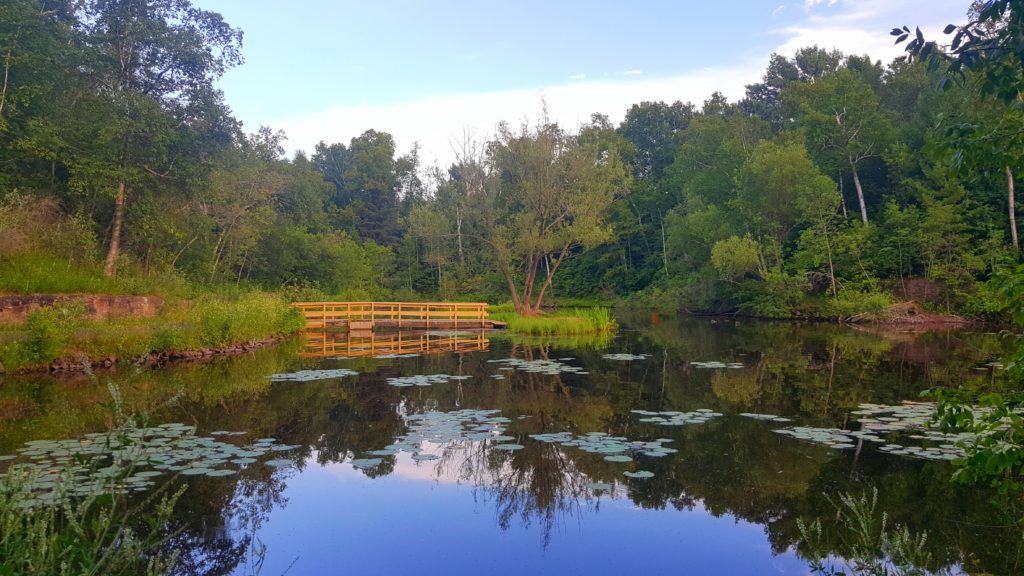
Billings Park in Superior on the St. Louis River Estuary. Image credit: Marie Zhuikov, Wisconsin Sea Grant
The April River Talk featured two speakers who described programs that are designed to bring tourists to the St. Louis River estuary. First up was Nikky Farmakes, director of marketing and social media for the Superior-Douglas County Chamber of Commerce and Travel Superior. She explained that Travel Superior is the visitor center arm of the chamber of commerce.
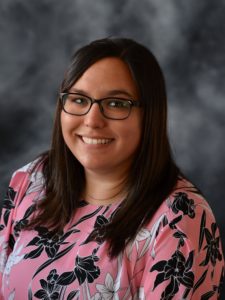
Nikky Farmakes, Superior-Douglas County Chamber of Commerce and Travel Superior. Submitted photo
“We are the primary tourism entity in Douglas County,” Farmakes said. “We also partner with our neighboring counties to promote northwestern Wisconsin and we work with Travel Wisconsin, the state tourism agency, to advocate for the tourism industry in Douglas County.”
Travel Superior’s visitor center is housed in the Richard I Bong Veteran’s Historical Center, which is right off Highway 53 in Superior. Farmakes explained that in 2016, Travel Superior evaluated their marketing strategy and shifted focus to outdoor recreation because, “We realized our greatest strength was there, especially in activities connected to the St. Louis River and the estuary. Plus, the infrastructure and the culture around Superior and Douglas County supported it.”
Drivers of river tourism during summer include activities such as canoeing, kayaking and boating. “The Superior Municipal Forest with Pokegama Bay and all the other areas surrounding it offers extremely beautiful urban views,” Farmakes said. “It’s really hard to believe when you’re out on the water that you are within city limits.”
Fishing is also popular. Farmkes said that walleye and muskie are “huge for tourism.” The annual Dragon Boat Festival is a big draw as are swimming, standup paddle boarding, birdwatching, ship watching, hiking and biking.
Winter river activities include snowshoeing, cross-country skiing, downhill skiing, ice fishing, and the annual Lake Superior Ice Festival. For those who prefer motorized sports, over 300 miles of all-terrain vehicle and snowmobile trails cross the county.
“The Superior Municipal Forest has some of the most beautiful snowmobile trails in the state,” Farmakes said. “The loop trail that goes along the St. Louis River has some of the most beautiful vistas that you will ever see in the winter, and you cannot get there during summer. So, if you can get out on a snowmobile trail, consider going on the loop trail. The views are worth it.”
Travel Superior’s 2021 marketing campaign hinges on the slogan: “Remember fun.” Framakes explained, “Everyone has been cooped up inside with covid for the last year and a half, so why not get out and enjoy all the beauty that surrounds us?” The campaign features different taglines for each season. Fall’s focus will be water. “We are going for a ‘watercolor’ campaign because a lot of our most beautiful spaces to view fall color come with water. We are a very water-centric area, so it works.”
Farmakes worked with the Discover Wisconsin television show to produce a recent video about motorized trails in Northwestern Wisconsin and the Lake Superior Ice Festival.
Farmakes summed up how the pandemic affected her industry and why she loves doing her job. “Tourism is one of our local economy’s top industries. Covid did affect us in 2020 just like it affected every other industry. We really won’t know the real impact until the new numbers come out in May, but the 2019 data continued the upward trend we had been seeing. Tourism supported over 1,300 jobs in Douglas County alone and it brought in over $150 million in business sales. The numbers we do have indicate we stayed strong throughout the pandemic, especially because we are an outdoor recreation destination and we were uniquely situated to weather that storm.
“There’s a lot to do here, especially around the river. It makes my job fun. It makes it easy. I’m always excited to showcase all the wonderful things you can see and do here.”
The evening’s second speaker was Kris Eilers, executive director of the St. Louis River Alliance. The Alliance manages the newly designated St. Louis River Estuary National Water Trail. The trail was designed under the direction of the city of Duluth and over 50 partners. The application was submitted by the National Park Service in 2017 and was signed by the secretary of the Interior in 2020. Unlike a hiking trail, the water trail is not linear but a series of loops for different skill levels and various watercraft. “It provides access to wild spaces in an urban area,” Eilers said.
Readers can access a video about the water trail here.
Eilers hopes that it will raise awareness about the river and help create stewards. The Alliance has created a water trail map for navigation and planning, which is available for free. Copies can be found outside their office in the DeWitt-Seitz Building in Duluth. Other places are listed here.
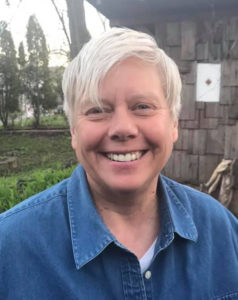
Kris Eilers, St. Louis River Alliance. Submitted photo
“The St. Louis River Estuary is the largest coastal wetland ecosystem on Lake Superior and the most significant source of biologic productivity for the western half of the lake,” Eilers said. “Getting families out on the water is important. With the pandemic, people started returning to the outdoors because it was one thing that we could do. I think it really helped restore our sanity. At the Alliance, we want to connect people back to their source of life: the water.”
A YouTube video of this River Talk is available for watching here.
One River Talk remains for this season. On May 12, Tom Howes with the Fond du Lac Band of Lake Superior Chippewa will talk on the topic of Wisconsin Point. This will be an in-person field trip, weather permitting.
The post Discovering the magic of the St. Louis River Estuary first appeared on Wisconsin Sea Grant.
Blog – Wisconsin Sea Grant
https://www.seagrant.wisc.edu/blog/discovering-the-magic-of-the-st-louis-river-estuary/
NCEI News Feed
http://www.ncei.noaa.gov/news/noaa-delivers-new-us-climate-normals
Microplastics act like a chemical sponge, soaking up contaminants such as persistent organic pollutants and heavy metals.
Great Lakes Now
https://www.greatlakesnow.org/2021/05/chemical-impact-microplastic-pollution/
As pandemic restrictions pushed people outdoors in 2020, visitors sought refuge in the National Parks System.
The post Great Lakes National Parks see record visitors in 2020 first appeared on Great Lakes Echo.Great Lakes Echo
http://greatlakesecho.org/2021/05/04/great-lakes-national-parks-see-record-visitors-in-2020/
Great Lakes Moment is a monthly column written by Great Lakes Now Contributor John Hartig. Publishing the author’s views and assertions does not represent endorsement by Great Lakes Now or Detroit Public Television.
As daylight lengthens and water temperatures slowly begin to warm, walleye overwintering in Lake Erie take their cue that it is time to spawn.
Great Lakes Now
https://www.greatlakesnow.org/2021/05/walleye-frenzy-detroit-river/
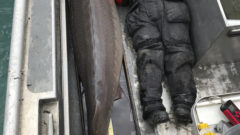
DETROIT (AP) — Now that’s a whopper — a very old whopper!
A 240-pound (108.8 kilograms) sturgeon that could be more than 100 years old was caught last week in the Detroit River by the U.S. Fish and Wildlife Service.
Great Lakes Now
https://www.greatlakesnow.org/2021/05/ap-240-pound-fish-sturgeon-detroit-river/
Audubon Great Lakes has released a new report focusing on restoring the Great Lakes for birds and people. Read the full story by Wisconsin Public Radio.
Great Lakes Commission
https://www.glc.org/dailynews/20210503-birds
The international body that oversees the regulation of Lake Ontario and the St. Lawrence River is in the middle of a comprehensive review of Plan 2014, the water management plan that governs decisions on things like outflows. As part of that process, the committee leading this effort has developed a new tool that has some shoreline homeowners feeling optimistic about the future. Read the full story by WBFO.
Great Lakes Commission
https://www.glc.org/dailynews/20210503-flooding
George A. Elmaraghy, a former Ohio EPA official, writes in a guest column today that bolder state action is needed to curb the phosphorus runoff feeding toxic algal blooms in Lake Erie. Read the full story by the Plain Dealer.
Great Lakes Commission
https://www.glc.org/dailynews/20210503-algae
Great Lakes Commission
https://www.glc.org/dailynews/20210503-nuclear
Great Lakes Commission
https://www.glc.org/dailynews/20210503-walleyes
Great Lakes Commission
https://www.glc.org/dailynews/20210503-cable
Great Lakes Commission
https://www.glc.org/dailynews/20210503-line5
Ohio State Sen. Theresa Gavarone, R-Bowling Green, has been named to the Great Lakes Commission, an interstate commission of eight member states — Ohio, Illinois, Indiana, Michigan, Minnesota, New York, Pennsylvania and Wisconsin — and two Canadian provinces. Read the full story by the Sandusky Register.
Great Lakes Commission
https://www.glc.org/dailynews/20210503-gavarone
Shipping advocates are calling for a harmonized schedule for the Great Lakes maritime transportation system — that the shipping system should be opened all at the same time and closed at the same time. Read the full story by Watertown Daily Times.
Great Lakes Commission
https://www.glc.org/dailynews/20210503-shipping
The Great Lakes have tides that occur twice each day, but they are much smaller in scale and barely noticeable in comparison to ocean tides. Read the full story by WROC-TV – Rochester, NY.
Great Lakes Commission
https://www.glc.org/dailynews/20210503-tides
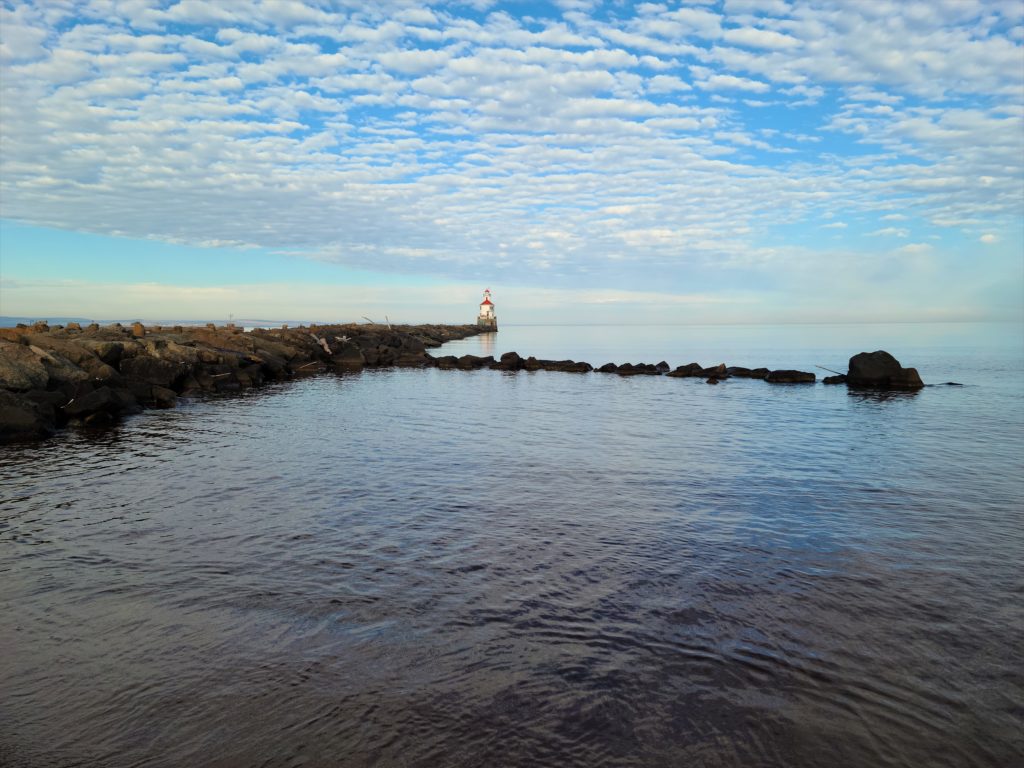
The lighthouse at Wisconsin Point. Image credit: Marie Zhuikov, Wisconsin Sea Grant
The River Talk series wraps up for the season with a field trip on Wisconsin Point at 7 p.m. Wednesday, May 12. Participants will meet at parking lot #5 at the far end of the point near the shipping canal and lighthouse. Thomas Howes, natural resources manager for the Fond du Lac Band of Lake Superior Chippewa, will lead the outing entitled, “Ojibwe connection to Wisconsin Point: Past, present and future.” Howes will discuss events that brought the Ojibwe to Wisconsin Point, what occurred from that time to the present, how the Ojibwe use the area currently and what the future vision is for Fond du Lac-owned lands on the point.
The event will last an hour and will include time for comments and questions. Use of masks is encouraged for safety. Bring a folding chair. A summary will be posted on Wisconsin Sea Grant’s blog. In case of rain, the talk will be held a week later on May 19 at 7 p.m. in the same location.
The River Talks are sponsored by The Lake Superior National Estuarine Research Reserve and the Wisconsin Sea Grant Program.
The post Wisconsin Point field trip wraps up the River Talk season first appeared on Wisconsin Sea Grant.
News Releases – Wisconsin Sea Grant
News Releases – Wisconsin Sea Grant
https://www.seagrant.wisc.edu/news/wisconsin-point-field-trip-wraps-up-the-river-talk-season/
The Chicago Water Council’s Jeff Whitelow has been assisting residents in Englewood and Southside Chicago neighborhoods with identifying their eligibility for the Utility Billing Relief Program that forgives 100% of residents debts after one year of consistent payment on a water bill. The multiple steps or lack of access to technology can create barriers to enrollment. Visiting food pantries, Jeff and other volunteers set-up a table and offer immediate help to enroll in the program.
Ohio Organizations Seeking Endorsements for $1 Billion Request for Safer Water
A variety of Ohio, regional and national, organizations representing medical, environmental, housing, and community interests are requesting $1 billion of the proposed more than $5 billion the state will receive in federal funding from the American Rescue Plan Act of 2021 to be dedicated to residential full lead service line replacements. Ohio is second in the nation for lead service lines at an estimated 650,000 lines. The American Medical Association and CDC have determined there is no safe level of lead in humans. Impacts to children exposed to lead include: neurological disorders, decreased cognitive behaviors, lower IQ, ADHD, and kidney disease. If you are involved in an organization that would like to support this request, please contact Kristy Meyer at kristy@freshwaterfuture.org.
Just yesterday, the U.S. Senate passed the Drinking Water and Wastewater Infrastructure Act of 2021, a $35 billion water infrastructure package, 89-2. This bill is a good first step in providing necessary funding to communities suffering from poor water quality and antiquted infrastructure. The bill now moves to the U.S. House of Representatives for consideration.
Two Love Birds–Monty and Rose
Monty and Rose, a pair of piping plovers, have reunited and returned to Chicago after spending the winter apart. Bird enthusiasts also known as “birders” in Chicago have kept a particularly close eye on this endangered fowl couple and stepped up to ensure their protection as they begin the nesting season.
Blog – Freshwater Future
https://freshwaterfuture.org/freshwater-weekly/freshwater-weekly-april-30-2021/
Current Watches, Warnings and Advisories for Brown (WIC009) Wisconsin Issued by the National Weather Service
https://alerts.weather.gov/cap/wwacapget.php?x=WI12619FDBB538.SpecialWeatherStatement.12619FDC2D24WI.GRBSPSGRB.31bf1075ba9c113368f4f48c27758e0b
The new hitchhikers in the Great Lakes region aren’t stopping drivers with a thumbs up. They’re riding moss balls across the ocean.
The post Forget freighter ballast, these mussels got here on moss balls first appeared on Great Lakes Echo.Great Lakes Echo
http://greatlakesecho.org/2021/05/03/forget-freighter-ballast-these-mussels-got-here-on-moss-balls/
Current Watches, Warnings and Advisories for Brown (WIC009) Wisconsin Issued by the National Weather Service
https://alerts.weather.gov/cap/wwacapget.php?x=WI12619FDAA238.SpecialWeatherStatement.12619FDB0A20WI.GRBSPSGRB.e8795dd729b8540e859d14c1b3c1adcd
Current Watches, Warnings and Advisories for Brown (WIC009) Wisconsin Issued by the National Weather Service
https://alerts.weather.gov/cap/wwacapget.php?x=WI12619FDAA238.SpecialWeatherStatement.12619FDB0A20WI.GRBSPSGRB.e8795dd729b8540e859d14c1b3c1adcd
Current Watches, Warnings and Advisories for Brown (WIC009) Wisconsin Issued by the National Weather Service
https://alerts.weather.gov/cap/wwacapget.php?x=WI12619FDA6EA8.SpecialWeatherStatement.12619FDAC1DCWI.GRBSPSGRB.e8795dd729b8540e859d14c1b3c1adcd
Current Watches, Warnings and Advisories for Brown (WIC009) Wisconsin Issued by the National Weather Service
https://alerts.weather.gov/cap/wwacapget.php?x=WI12619FCE4D94.SpecialWeatherStatement.12619FCE7184WI.GRBSPSGRB.296e6a4d454fcc32d4dbd012d7a1f3d6
Current Watches, Warnings and Advisories for Brown (WIC009) Wisconsin Issued by the National Weather Service
https://alerts.weather.gov/cap/wwacapget.php?x=WI12619FCB7C7C.SpecialWeatherStatement.12619FCBCDBCWI.GRBSPSGRB.cdc1ff113f80474f83c6e7685b61e187
Current Watches, Warnings and Advisories for Brown (WIC009) Wisconsin Issued by the National Weather Service
https://alerts.weather.gov/cap/wwacapget.php?x=WI12619FBED508.SpecialWeatherStatement.12619FCAE35CWI.GRBSPSGRB.7a193a3e8e3f9205a39387aa017b84df
Current Watches, Warnings and Advisories for Brown (WIC009) Wisconsin Issued by the National Weather Service
https://alerts.weather.gov/cap/wwacapget.php?x=WI12619FBE3DDC.SpecialWeatherStatement.12619FBEB438WI.GRBSPSGRB.ac0ee5a52bb66b8f477842761ff0d365
Current Watches, Warnings and Advisories for Brown (WIC009) Wisconsin Issued by the National Weather Service
https://alerts.weather.gov/cap/wwacapget.php?x=WI12619FBD8004.SpecialWeatherStatement.12619FBEF6A0WI.GRBSPSGRB.ac0ee5a52bb66b8f477842761ff0d365
Current Watches, Warnings and Advisories for Brown (WIC009) Wisconsin Issued by the National Weather Service
https://alerts.weather.gov/cap/wwacapget.php?x=WI12619FBCE2FC.SpecialWeatherStatement.12619FBD5A84WI.GRBSPSGRB.ac0ee5a52bb66b8f477842761ff0d365
Current Watches, Warnings and Advisories for Brown (WIC009) Wisconsin Issued by the National Weather Service
https://alerts.weather.gov/cap/wwacapget.php?x=WI12619FBBD254.SpecialWeatherStatement.12619FBC9734WI.GRBSPSGRB.ac0ee5a52bb66b8f477842761ff0d365
Jeff Whitelow has been known for his profound ability to walk in the shoes of those in the most vulnerable communities and help bring vital information to those who need it most, in language they best understand. Taking a vow of poverty to personally assess the life of those most vulnerable in Chicago, enabled him to identify that water shutoffs from unaffordable rates and lead exposure are serious problems.
Through the Chicago Water Council, Jeff has championed the search for residents eligible for the new drinking water Utility Billing Relief (UBR) program in Southside Chicago neighborhoods and assisting them in enrolling into the program that forgives 100% of residents debts after one year of consistent payment.
The Chicago Water Council has been working diligently to promote the awareness of the UBR program, boots are on the ground identifying residents, qualifying them according to the UBR criteria, and lastly, assisting them in becoming a UBR member of the program. To date the Chicago Water Council has identified over 50 residents eligible for the program and helped enroll 20 residents while establishing partnerships with food pantries to meet our targeted members in generous volumes. Work is underway to reach out to other nearby neighborhoods, in the Southside of Chicago to further aid those in need and ensure public health for all Chicagoans.
Freshwater Future honored Jeff Whitelow for his commitment with a Freshwater Hero Award, read more here or listen to Jeff accept his award.
Author: Brandon Tyus, Community Programming & Policy Associate
Blog – Freshwater Future
https://freshwaterfuture.org/uncategorized/debt-relief-helps-keep-water-flowing/
Current Watches, Warnings and Advisories for Brown (WIC009) Wisconsin Issued by the National Weather Service
https://alerts.weather.gov/cap/wwacapget.php?x=WI12619B835414.SpecialWeatherStatement.12619B83C9A8WI.GRBSPSGRB.ac0ee5a52bb66b8f477842761ff0d365
Dr. Robert Letscher serves as Board Secretary and has been a Freshwater Future Board Member since January 2019. Rob lives in Durham along the New Hampshire seacoast where he is a professional Earth scientist and assistant professor of chemical oceanography at the University of New Hampshire. His research interests include illuminating the ways in which the biology and chemistry of the oceans regulate global climate and in turn formulating predictions of how the changing climate will impact marine ecosystems. This work takes him out to sea on oceanographic research vessels for weeks at a time.
Of particular interest are the marine ecosystems located in the subtropics, between roughly 15 to 35 degrees of latitude, that are often called ‘ocean deserts’, owing to their low levels of chemical nutrients supporting low levels of biological productivity and diversity. Rob’s most recent research pursuits have taken him to the subtropical latitudes of the North Pacific Ocean in the vicinity of the Hawaiian islands where he is studying the sources of nutrients to sustain marine algal growth in the open ocean far from any land influence. This research will help gather foundational data on the natural functioning of the Earth’s largest biome which will be useful as a baseline from which to gauge future changes due to ongoing planetary warming and the changing climate.
Rob is also involved with the translation of scientific knowledge on the biology and chemistry of the oceans to the numerical code used in international climate modeling efforts that find their way into the decadal Intergovernmental Panel on Climate Change (IPCC) reports.
Rob also shares a passion for the health of the Great Lakes, spending his summers along the shores of Little Traverse Bay in the Petoskey, MI area. He is lending his expertise and resources to study the annual nutrient levels in Little Traverse Bay waters, hoping to monitor how water quality in the Lake evolves with time due to changing Lake levels, suburban development along its shores, and invasive mussel populations.
It was through his connection to Little Traverse Bay that Rob became familiar with the work of Freshwater Future. He believes strongly in the work that Freshwater Future does to educate, promote, and protect access to clean and healthy aquatic environments and drinking water.
Rob is particularly proud of the work by Freshwater Future to surveil for the emerging environmental contaminant, per- and polyfluoroalkyl substances (PFAS). These chemicals that are now linked to a handful of cancers have been used as flame, water, and oil retardants/repellants in many commercial and residential products, and have now been detected in a growing number of groundwater and well water reservoirs around North America. Rob applauds Freshwater Future’s advocacy work on this issue to continue to pressure local and state governments to remove these harmful chemicals from the environment.
Blog – Freshwater Future
https://freshwaterfuture.org/uncategorized/board-spotlight-dr-robert-letscher/
A variety of Ohio, Regional, and National organizations, representing medical, environmental, housing, and community interests, are requesting $1 billion of the proposed more than $5 billion the state will receive in federal funding from the American Rescue Plan Act of 2021 to be dedicated to residential full lead service line replacements. Ohio is second in the nation for lead service lines at an estimated 650,000 lines. The American Medical Association and CDC have determined there is no safe level of lead in humans. Impacts to children exposed to lead include: neurological disorders, decreased cognitive behaviors, lower IQ, ADHD, and kidney disease. If you are involved in an organization that would like to support this request, please contact Kristy Meyer at kristy@freshwaterfuture.org.
TO: Members of the General Assembly, Governor Mike DeWine, OBM
RE: American Rescue Plan Act Funding and Lead Service Line Replacements
Our organizations respectfully request that $1B of the proposed more than $5B the state will receive in federal funding for state and local aid from the American Rescue Plan Act of 2021, U.S. HB 1319, be dedicated to residential full lead service line replacements, both the public and private lead lines, across the State of Ohio. The $1B to replace full lead service lines should prioritize low-income neighborhoods within cities and rural communities in financial need. These funds would supplement H2Ohio funding that is being used to replace lead service lines and fixtures in daycares and schools, as well as any other water infrastructure funding from the American Rescue Plan Act.
A lead service line is a pipe made of lead that is used to distribute potable water, connecting a water main to a user’s residence. The United States used lead pipes as service lines for more than a century with most communities stopping the use of lead pipes in the 1950s. Unfortunately many of these pipes still are used today to deliver drinking water to residents across Ohio.
The American Medical Association and CDC has determined there is no safe level of lead in humans and unfortunately in 2019 approximately 3,500 children in Ohio had elevated levels of lead in their blood. Impacts to children exposed to lead include neurological disorders, decreased cognitive behaviors, lower IQ, ADHD, and kidney disease and failure later in life to name a few. A number of studies have also linked lead poisoning to behavioral issues, such as aggression in children and teens, and criminal behavior as adults. In a study undertaken by Princeton and Brown Universities, the researchers found that a one-unit increase in blood levels raised the probability of incarceration of boys by 47 percentage points, starting at 27 percent and rising to 74 percent.
Ohio is second in the nation for lead service lines at an estimated 650,000 lines. While the exact amount of funding needed for complete removal of lead service lines in Ohio is unclear, on the low end it can run approximately $2,400 a line and on the high end approximately $7,100 a line. Using these figures, full replacement could range from $1.56 B to $4.62 B over the next 20 years. In addition, Ohio has more than a $28 billion need in drinking water and wastewater infrastructure upgrades. Utilizing $1 B could replace hundreds of thousands of full lead service lines, ensure communities in Ohio are upgrading their antiquated water infrastructure, and create thousands of jobs.
Industry studies have indicated that every $1 billion invested in drinking water and wastewater infrastructure creates up to approximately 28,000 new jobs with average annual earnings of more than $50,000 and increases demand for products and services in other industries by more than $3 billion.
One billion dollars could make a big impact in Ohioans’ health and our economy by: Providing grants for full lead service line replacement, prioritizing low-income neighborhoods in cities and rural communities; Education and outreach funding for a local community group to educate residents about lead service lines and how to protect themselves from lead in water exposure, including providing an on-tap filter; and Supporting communities to inventory water service lines for lead.
In an effort to quantify impact and accountability, any locality receiving these funds should also report to the state how many lead service lines were replaced; geographic information detailing where lines were replaced and validating that areas with the greatest need were prioritized; the number of people educated on lead and how to protect themselves; and,the number of filters provided to residents.
Ohio can no longer afford to delay the removal and replacement of lead service lines. The longer we wait to replace these pipes the more costly it will become to our health and our economy. The cost of doing nothing is expensive and will impact social and health costs. Lead affects children’s development and IQ which potentially avails them to lower economic productivity and greater costs to the criminal justice system. In addition, according to the Environmental Defense Fund, every lead service line replaced yields an estimated $22,000 in reduced cardiovascular disease deaths. Given Ohio’s estimated 650,000 lead service lines, Ohio could save $14.3 billion due to reduced cardiovascular disease deaths.
For the health of Ohioans, particularly Ohio’s children and their future, and the future of our economy, we must be proactive to replace every lead line in Ohio.

Blog – Freshwater Future
https://freshwaterfuture.org/call-to-action/ohio-organizations-seeking-endorsements-for-1-billion-request-for-safer-water/
This article was republished here with permission from Great Lakes Echo.
By Brandon Chew, Great Lakes Echo
It was atmospheric pressure waves that produced 6-foot water waves in Lake Michigan on April 13, 2018, damaging docks and cottages and submerging breakwalls in Ludington.
Great Lakes Now
https://www.greatlakesnow.org/2021/04/meteotsunami-great-lakes-contaminants/
The Minnesota Supreme Court on Wednesday affirmed a lower court’s reversal of a critical mining permit for the proposed PolyMet copper-nickel mine in northeastern Minnesota. Read the full story by The Associated Press.
Great Lakes Commission
https://www.glc.org/dailynews/20210430-polymet
A circuit court judge ruled the proposed FishPass project at the Union Street Dam in Traverse City, Michigan, needs voter approval before construction can go forward. Read the full story by Interlochen Public Radio.
Great Lakes Commission
https://www.glc.org/dailynews/20210430-fishpass
Wild rice waters contaminated with sulfate from industrial pollution have never been included on Minnesota’s long list of officially polluted waters that require fixing. They will now, thanks to federal regulators who stepped in to say the Minnesota Pollution Control Agency was breaking federal law by not listing them as impaired. Read the full story by the Star Tribune.
Great Lakes Commission
https://www.glc.org/dailynews/20210430-wildrice
Just in time for boating and beach season on Lake St. Clair, officials in Macomb County, Michigan, said they now can reduce the volume of county sewage that overflows into the lake during heavy rains. Read the full story by the Detroit Free Press.
Great Lakes Commission
https://www.glc.org/dailynews/20210430-manhole
Another permit has been called into question for Aquila Resources’ plans to build the Back Forty mine near the Menominee River on the Michigan-Wisconsin border. Read the full story by Wisconsin Public Radio.
Great Lakes Commission
https://www.glc.org/dailynews/20210430-backforty
A U.S. Fish and Wildlife Service crew caught a 240-pound sturgeon last week. It is 6-foot-10, with a girth of nearly 4 feet. It is a native — and threatened — species to Michigan, and one of the largest lake sturgeon ever caught in the United States. Read the full story by the Detroit Free Press.
Great Lakes Commission
https://www.glc.org/dailynews/20210430-hugesturgeon
The Mayors Commission on Water Equity of the Great Lakes and St. Lawrence Cities Initiative is calling upon Congress to allocate $58 billion to replace lead pipes, as well as lead paint in homes and schools. Read the full story by WUWM – Milwaukee, WI.
Great Lakes Commission
https://www.glc.org/dailynews/20210430-mayors
Michigan bird enthusiasts will be excited to hear about an upcoming birding trail mapping initiative, a joint project between Macomb and St. Clair Counties. Read the full story by Metromode Detroit.
Great Lakes Commission
https://www.glc.org/dailynews/20210430-birdwatching