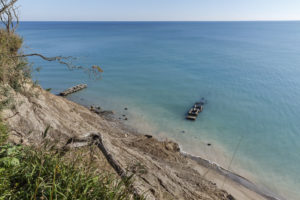
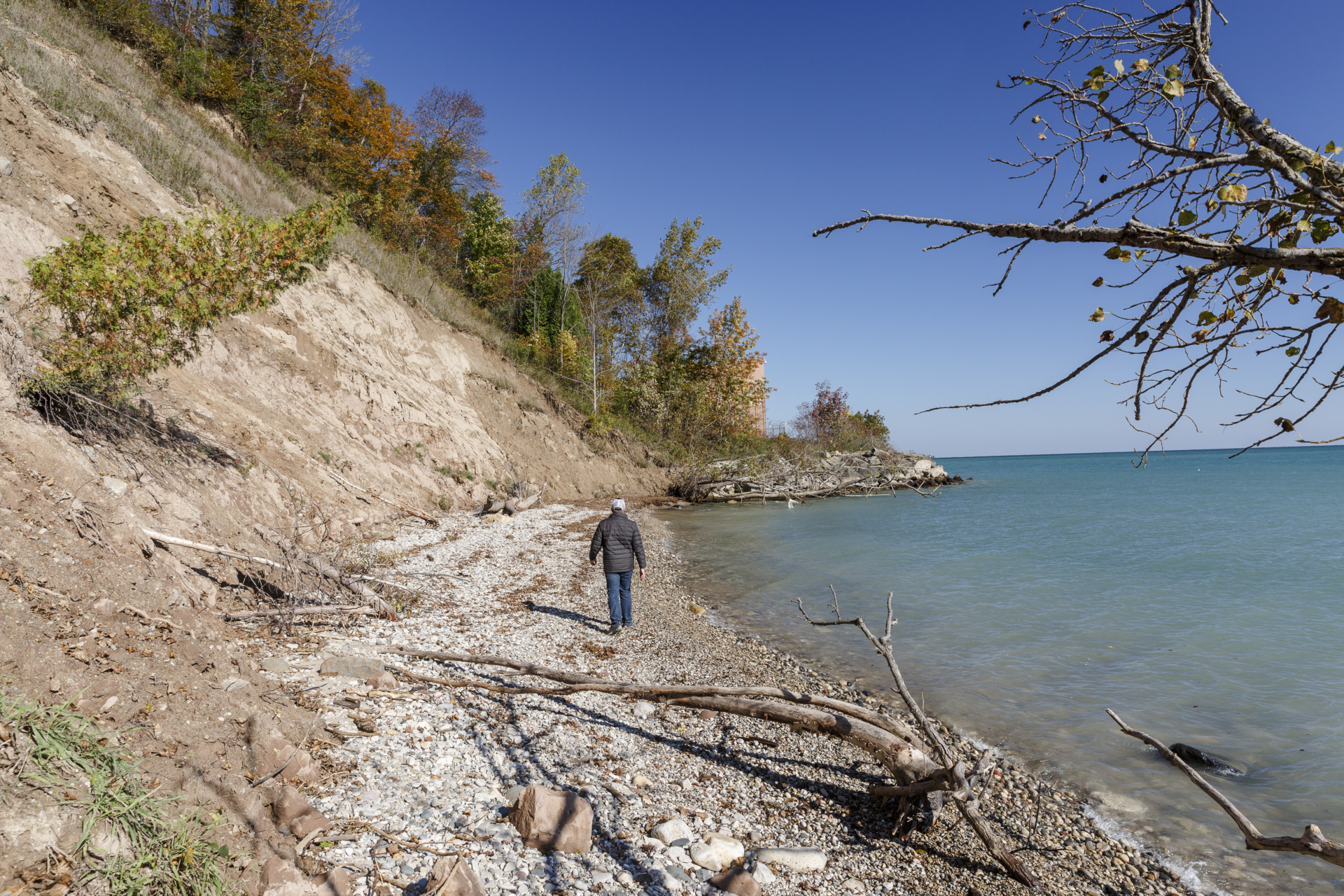
A person in a black jacket walks along a sandy, eroding bluff on Lake Michigan

An example of bluff erosion at a park in Cudahy, Wisconsin. (Photo by Sara Stathas)

When educator Nancy Carlson talks about Great Lakes coastal erosion, her students don’t have to imagine crumbling bluffs or shrinking beaches. They’ve seen it.

“We have so much coastal erosion in Racine,” said Carlson, who regularly takes groups of Racine and Kenosha-area students on field trips to Lake Michigan beaches. “Children actually know houses that have fallen into the lake.”

Now, with the help of a new coastal engineering curriculum from Wisconsin Sea Grant, Carlson and other educators can help their students understand how erosion occurs and affects coastal infrastructure, like homes. The six lesson plans are geared toward middle schoolers and cover Great Lakes coastal processes, engineering structures, stormwater management, and green infrastructure. They also feature hands-on activities — like using a homemade wave tank to simulate beach erosion — that get students collaborating and problem-solving like engineers.

The curriculum also helps kids notice and make sense of what they see along the coast, whether that’s a house dangling off a bluff or rocks that protect the shoreline from erosion. Carlson has led several of the hands-on activities described within the lesson plans and said they’re always a hit.

“This has been so well received here and so fun,” she said.

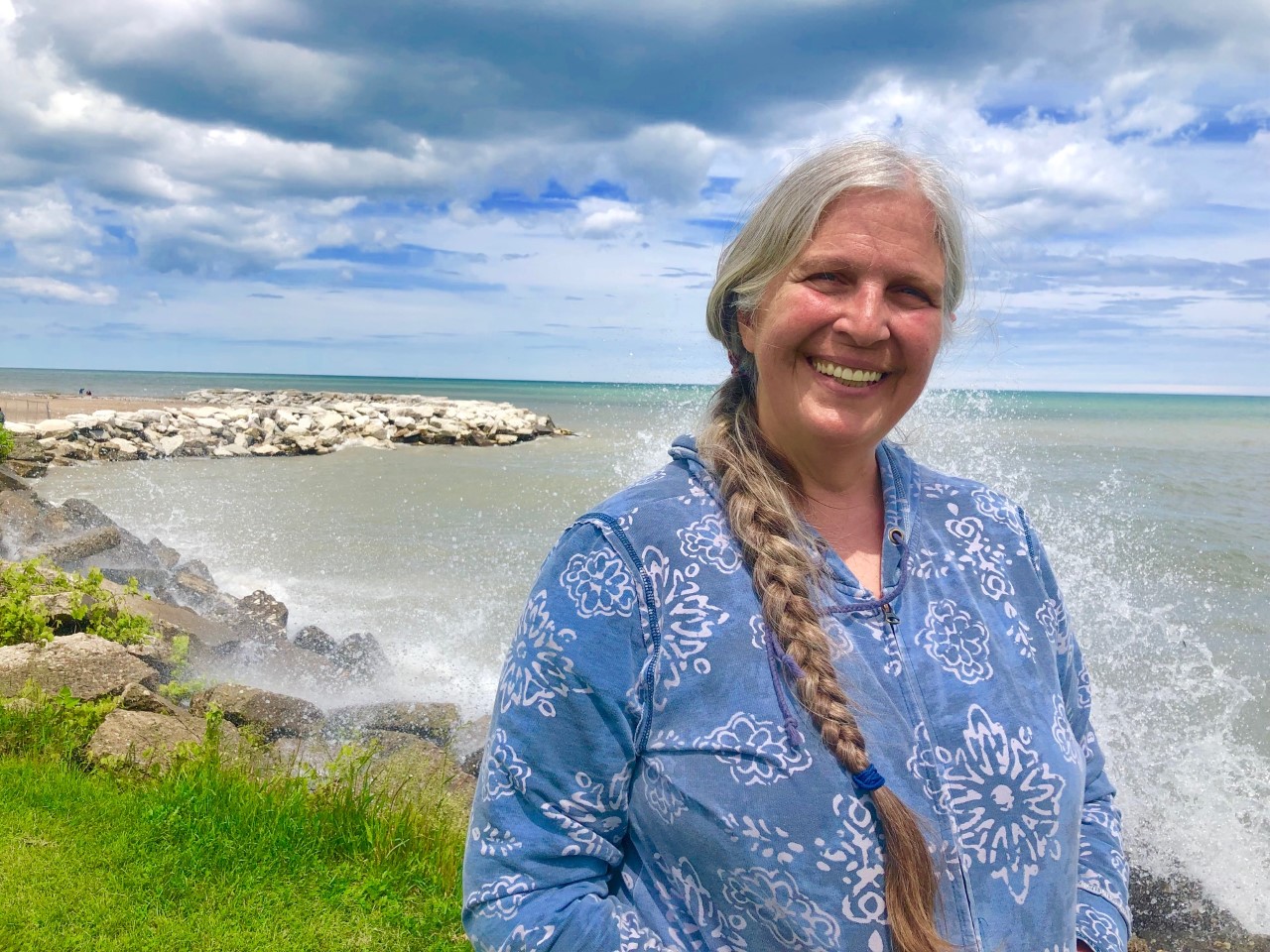
A woman with grey hair in a long braid wearing a blue shirt stands in front of Lake Michigan

Nancy Carlson is a watershed educator based in Racine, Wisconsin. (Submitted photo)

Adaptable, place-based education

Wisconsin Sea Grant education outreach specialist Ginny Carlton, librarian and education coordinator Anne Moser, and coastal engineer Adam Bechle developed the curriculum with funding from a NOAA Bay Watershed and Education Training grant. Carlton said the idea grew out of a desire to highlight Bechle’s coastal resilience work with the city of Racine.

The team also wanted to help teachers meet updated science standards. 

“Many of the school districts have adopted what are called the Next Generation Science Standards, and those standards, as they were revised, have a much stronger focus on engineering than previous science standards did,” said Carlton. “So, there’s an opportunity to create things in the engineering realm.”

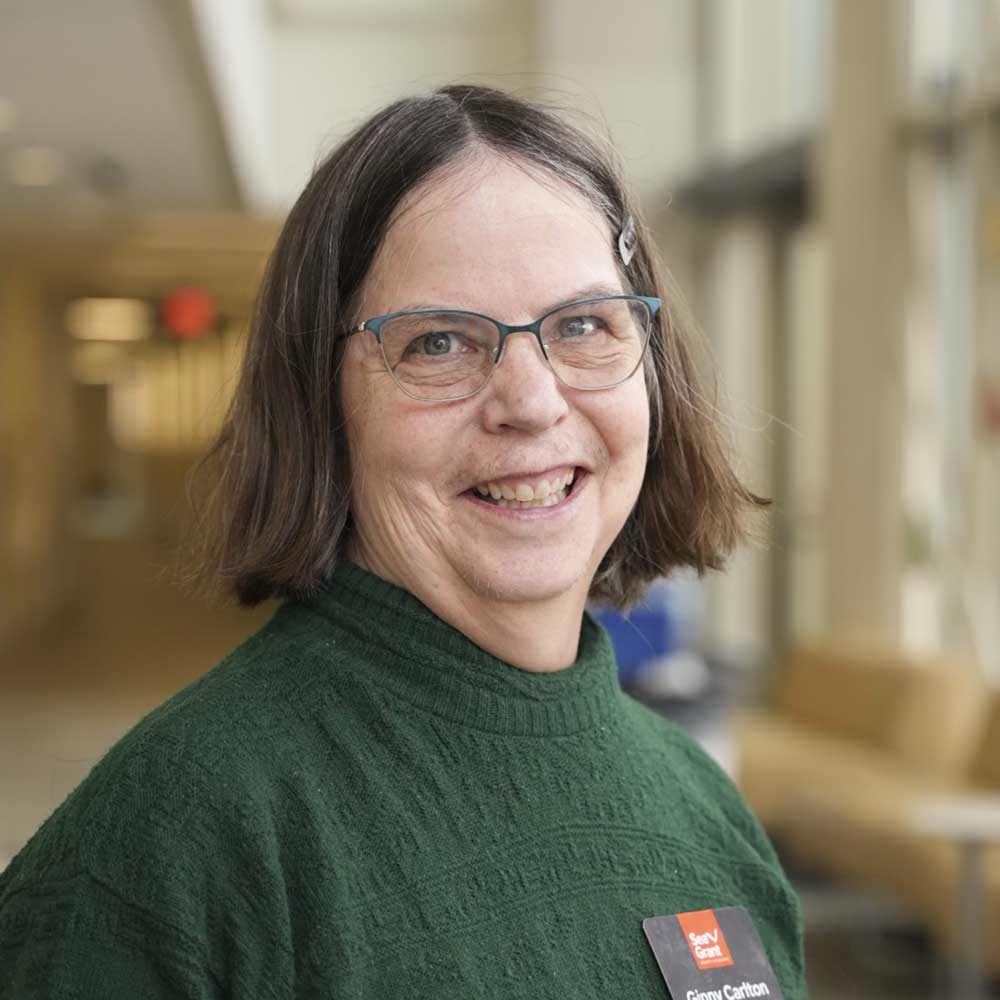
A woman with short dark hair, glasses, and a green sweater with a Sea Grant name tag poses for a photo.

Education outreach specialist, Ginny Carlton. (Photo by Bonnie Willison/ASC)

The lesson plans revolve around North Beach in Racine, but teachers living anywhere in the Great Lakes Basin can use them in their classrooms. Carlton emphasized that the goal from the beginning was to make the curriculum place-based, but adaptable.

“The concepts themselves are broadly applicable. Sediment transport and currents and waves  — you know, they happen on all of the Great Lakes. So, that is relevant to everyone,” she said.

The place-based aspect resonated with Bechle, who grew up in Green Bay but didn’t feel connected to Lake Michigan.

“There’s an amusement park on the shore of the Bay of Green Bay, and then it’s pretty industrial. So, there’s not a lot of access points where you go and explore the beach and you see the changes,” he said.

He drew on that perspective when developing the lesson plans, reflecting on what a younger Adam might have noticed or been curious about on the beach. The challenge was to then translate those coastal engineering topics for a middle school audience.

“Ginny and Anne were critical in toning down my over-enthusiastic engineering technical information into something that’s manageable,” he said.

Making waves with the wave tank

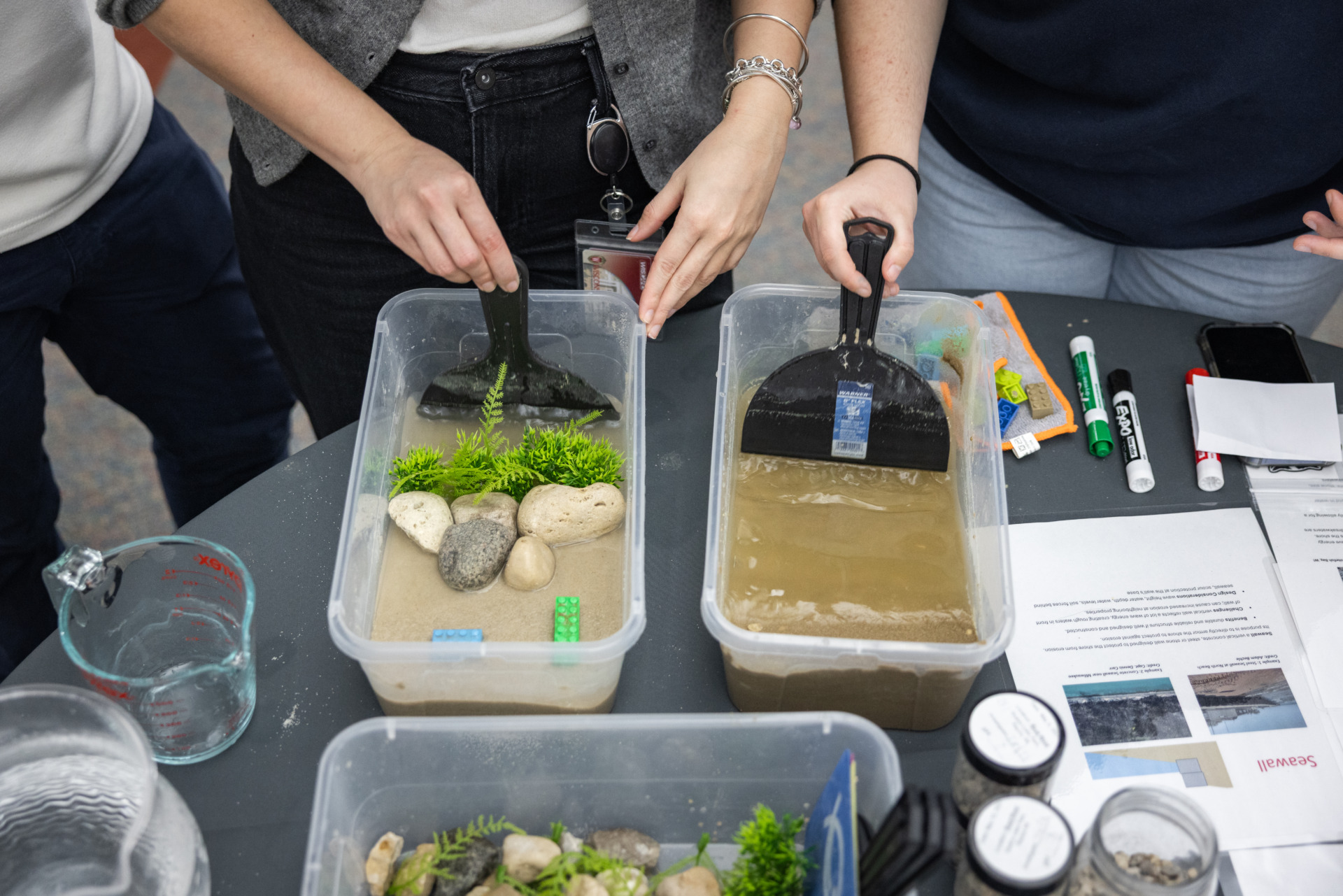
Students experiment with two wave tanks, which are shoebox-size plastic containers  filled with sand and water. One contains rocks and plastic vegetation and the other does not.

Two wave tanks, one with rocks and vegetation protecting plastic houses and one without. (Photo by UW–Madison Libraries)

The centerpiece of the coastal engineering curriculum is the wave tank activity, where students combine water and sand in a plastic container to simulate and observe how waves erode the beach. Carlson, the Racine-based educator, was an early user of the curriculum, and she’s noticed how engaged students are with the activity, particularly when it becomes their job to protect a plastic house perched on the sand. That’s when they get invested.

“Now, they have something they really have to protect: their houses. So that’s a riot. They love that,” she said.

In fact, the activity is so engaging that students will set aside their usual adolescent grievances for the good of the house.

“One teacher was like, I cannot believe this. I cannot believe my kids are getting along like this,” said Carlson. “They work together as a team. It’s just such a beautiful thing.”

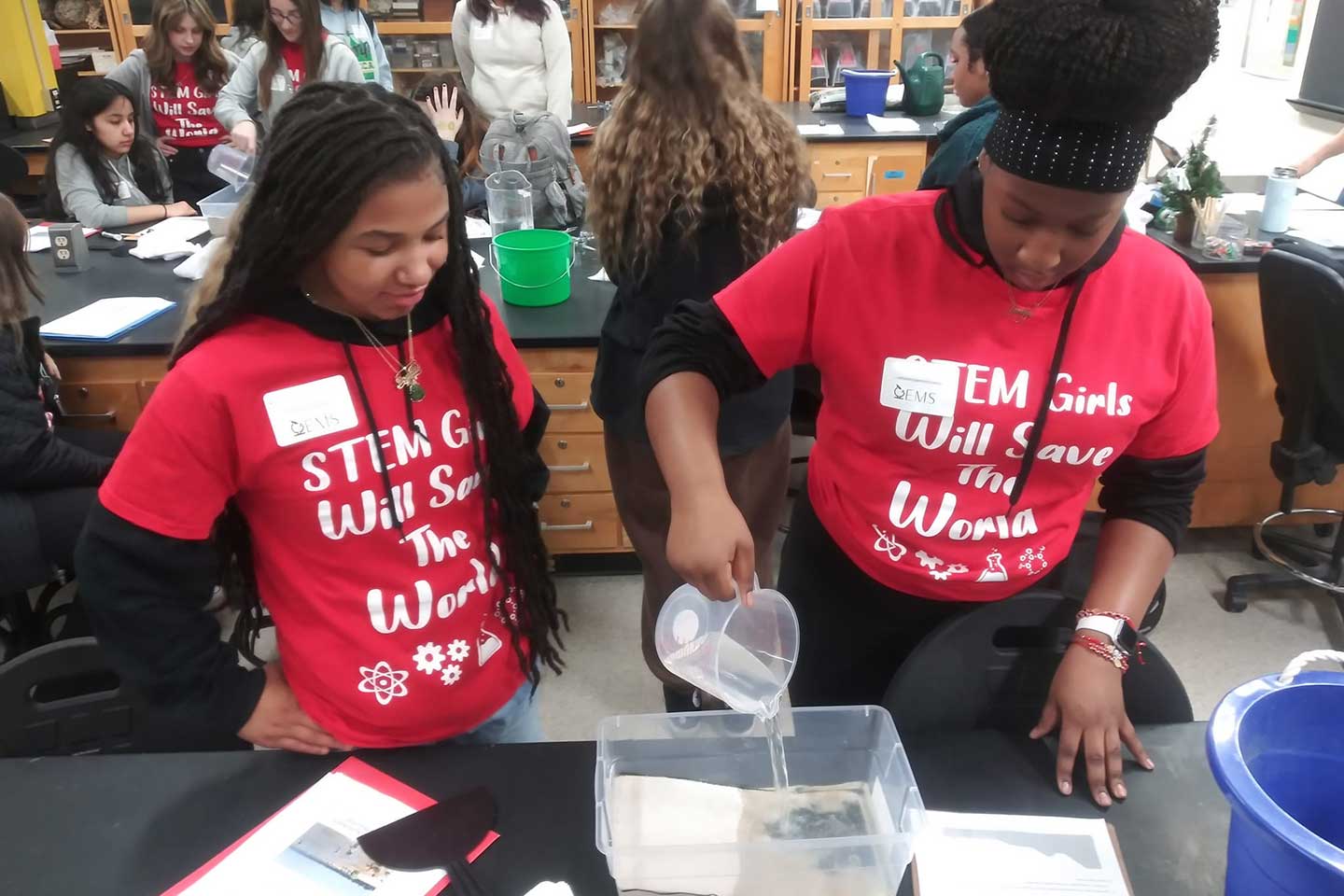
Two students experiment with a wave tank. The tank is a shoebox-sized plastic container filled with sand and water.

Two students pour water into a sand-filled wave tank, which simulates how waves erode beaches. (Photo by Nancy Carlson)

Teaching the curriculum has also been rewarding for Carlson, who’s added it to her repertoire of water literacy activities. It helps her to connect local students to Lake Michigan, who are often unaware that one of the planet’s greatest freshwater resources is in their backyard.

“One of the things I’m passionate about is getting our kids to appreciate and love the Great Lakes and love the community they live in,” she said. “And unless they start at a young age, who’s going to care about it?”

***

The University of Wisconsin Aquatic Sciences Center administers Wisconsin Sea Grant, the Wisconsin Water Resources Institute, and Water@UW–Madison. The center supports multidisciplinary research, education, and outreach for the protection and sustainable use of Wisconsin’s water resources. Wisconsin Sea Grant is one of 34 Sea Grant programs supported by the National Oceanic and Atmospheric Administration in coastal and Great Lakes states that encourage the wise stewardship of marine resources through research, education, outreach, and technology transfer.

The post New coastal engineering curriculum connects middle schoolers to the Great Lakes first appeared on Wisconsin Sea Grant.
Original Article

News Releases | Wisconsin Sea Grant

News Releases | Wisconsin Sea Grant

https://www.seagrant.wisc.edu/news/new-coastal-engineering-curriculum-connects-middle-schoolers-to-the-great-lakes/
Jenna Mertz

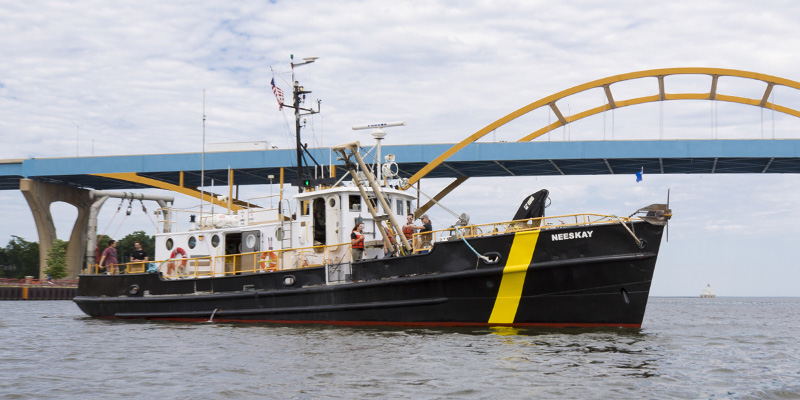
The R/V Neeskay will be the site of a workshop for teaching professionals this August. Submitted image.

Wisconsin Sea Grant is excited to announce its 2023 in-person Great Lakes literacy professional learning workshop for formal and nonformal educators in Milwaukee, Wisconsin. Over the course of two days, August 16-17, educators will work alongside each other, engineers, scientists and Sea Grant educators to take a deep dive into coastal engineering. 

The workshop will explore how coastal engineering can shape and strengthen our coasts and shorelines, using Milwaukee and its Lake Michigan shoreline as a case study. It will include time aboard R/V Neeskay giving a unique perspective to the engineering transformations of the community. Educators will be introduced to activities and lessons to bring back engineering to their learners. The content is best suited to educators working at the middle and high school levels.

A full agenda will be provided shortly. Both experienced and educators new to Great Lakes literacy are encouraged to apply. Stipends will be provided to cover attendance and travel.

Fill out an application today! Deadline is June 15.


The post Waterfronts Past and Present: Learn How Engineers Design with Nature first appeared on Wisconsin Sea Grant.

Original Article

Blog | Wisconsin Sea Grant

Blog | Wisconsin Sea Grant

https://www.seagrant.wisc.edu/blog/waterfronts-past-and-present-learn-how-engineers-design-with-nature/?utm_source=rss&utm_medium=rss&utm_campaign=waterfronts-past-and-present-learn-how-engineers-design-with-nature

Anne Moser

As Sea Grant celebrates its 50th year, it’s catching up with former employees to capture memories and add to the year of commemoration.

Gene Clark knew from a young age that he would work as a chemist in a lab. He loved chemistry class, experiments and even failed experiments. He said, “I just loved testing things out. When they didn’t work, why didn’t they work?”

Then he attended a high school career talk discouraging pure chemistry in favor of chemical engineering. The speaker focused more on the downsides of chemistry than the positive aspects of chemical engineering, leaving Clark disheartened and confused — and questioning his career choice.

Group of people sitting at tables.

Gene Clark at an event in 2019. Photo: Bonnie Willison

Fortunately, his advisor was able to explain how a chemical engineering degree uses science-based processes and test results to solve real-world problems, and requires plenty of those chemistry classes Clark enjoyed. He realized, “No one had ever told me about what a career in the engineering field was or could do.”

Newly informed and encouraged, Clark decided to pursue chemical engineering. The result was a 35-year-long award-winning career that contributed to solving many engineering issues, benefitting diverse groups such as homeowners, kayakers, the Great Lakes shipping industry and marina operators. For some career highlights, see “A Career Solving Wicked, Sticky and Humongous Coastal Engineering Problems.”

Learning the trade

Clark began at the University of Wisconsin-Madison’s chemical engineering program and stayed for two and a half years. In his junior year, he discovered a love for the oceans and scuba diving on a vacation with a fellow mechanical engineer. A Wisconsin native, Clark had never been diving before, and the experience left him awestruck.

Shortly after his return, Clark was studying in a student lounge and noticed a poster on the wall promoting ocean engineering at Texas A & M. He kept thinking about it, and after his next study session, took the poster with him.

Despite being only vaguely familiar with Texas A & M, Clark transferred. He said, “I assumed it was in Texas, I knew they had a good football team, and I hoped it was near the Gulf of Mexico—two out of three wasn’t bad.” The course of study was similar to a civil engineering program but was a bachelor’s degree in ocean engineering — particularly engineering principles related to oil rig structures — but he especially enjoyed a class about beaches. He was having fun and landing on the dean’s list, so upon graduation, he decided to continue with a master’s degree at the University of Florida.

He enjoyed the same level of academic success and fun at that program. “I made sure I stretched an 18-month master’s degree into a two-year master’s degree, so I could go scuba diving and go on the beaches.

During that time, Clark also made a valuable connection with a group from the U.S. Army Corps of Engineers office in Vicksburg, Mississippi, who were taking classes for one semester. He was offered a job there upon graduation and stayed for three years. By then, he had a young family and wanted to move back to Wisconsin. The only catch: He didn’t have any job leads in the state, or even any ideas about where to start.

“I didn’t know who was doing coastal engineering in the Great Lakes. I had no clue,” he said.

Man standing near green board

Gene Clark found working in the Great Lakes region rewarding. Here he is posing with water safety equipment. Photo: Marie Zhuikov

Clark made a visit to the coastal engineering professor at UW-Madison’s Civil and Environmental Engineering Department. He was impressed with Clark’s experience and degrees and offered him a year’s worth of funding on one of his current projects. (The project was funded by Sea Grant, but Clark wouldn’t realize that until later.) From there, he earned a second master’s degree and was offered a job at Warzyn Engineering. Warzyn transferred him to Minnesota to a division that did more dam work and less coastal work, so Clark went back to the job search. He landed a position as the Minnesota state lakeshore engineer located in Duluth, Minnesota, and stayed for 10 years.

He said, “That’s where I really learned my education and outreach because I was getting grants from the coastal program or the Great Lakes Commission to do demonstration projects on Lake Superior or work with individual property owners, but yet still working with a state agency.”

Working with Wisconsin Sea Grant

After 10 years in Minnesota, Clark was settled and enjoying his work. He was always skilled in working with teams and had formed close relationships with many colleagues, including Phil Keillor, who was the coastal engineer for Wisconsin Sea Grant. One day, he received a call from Keillor announcing that he was retiring and suggesting that Clark might want to apply for the position. Clark wasn’t sure he wanted to leave Minnesota to take Keillor’s position in Madison, but in a happy coincidence, another Sea Grant specialist announced his retirement at the same time. When Harvey Hoven retired from his position as the coastal business specialist in Superior, Wisconsin, Clark had the ability to take the new position without moving.

He said, “It just fell in my lap. …and it was the best move I ever made.”

Clark went on to spend 15 years as Sea Grant’s coastal engineering specialist. It was an ideal position for someone who loves both science and working with people.

He said, “The way that Wisconsin Sea Grant is set up and operates is just so ideal for providing information and assistance to communities and property owners and other states’ programs. We could deliver a product that was honest, it was non-biased and it was science-based information.”

Whether he was working with partners from the UW-Madison Civil and Environmental Engineering Department to develop a system to protect kayakers from unexpected high waves, harbor operators to identify causes and solutions for freshwater steel corrosion, port authorities to find beneficial uses for dredged sediment or homeowners facing eroding shorelines, Clark always enjoyed collaborating with others.

Man and woman standing near water and in tall grass.

Interacting, hands-on, with stakeholders in the field, Gene Clark inspected a coastal area following a 2011 flood. Photo: Marie Zhuikov

“And it didn’t take long, whenever I would meet with people or groups of people, for them to realize I’m not selling a product, I’m trying to help them. And I point out pros and cons, and then let them make the difference,” he said.

“It was all fulfilling. It wasn’t work. It was a blessing to be part of that,” he said.

Clark retired in 2019.

The future

The Covid pandemic limited Clark’s ability to meet with people, but he has been able to continue his work on two programs. One is based on a small grant from the U.S. Army Corps of Engineers to review two drafts of their National Shoreline Management Study, providing technical and practical report support. The second is a small grant from the Natural Resources Foundation of Wisconsin, providing technical assistance to the rehab project team. With partners at Sea Grant, Wisconsin Department of Natural Resources, Wisconsin Coastal Management Program and the UW-Madison Civil and Environmental Engineering Department, Clark has been working to improve beach quality on degraded beaches without disturbing natural coastal processes. The team started with the Kenosha Dunes and continued with other degraded beaches in southeast Wisconsin.

This project illustrates what Clark calls “a couple of very positive paradigm shifts,” which are the movement toward nature-based shoreline designs and the beneficial use of dredged material. When he started his career, shoreline protection consisted primarily of concrete, large rocks and sheetpile – now nearly all projects are focused on greener, more natural designs that provide habitat and allow for natural coastal processes. Reusing clean dredged material has also become more and more accepted, saving landfill space and providing valuable fill material.

Clark also serves as a technical advisor to Wisconsin Sea Grant’s current coastal engineer, Adam Bechle, who has been hard at work continuing all of the projects Clark started, plus beginning his own. Clark said, “I can’t think of a better person to have in this position than Adam. He has the perfect mix of an excellent coastal engineering education and the ability to convey information to all levels of audiences. Wisconsin Sea Grant’s future is bright with respect to coastal engineering.”


The post Hard work, joy and more than a bit of luck add up to an accomplished coastal engineering career first appeared on Wisconsin Sea Grant.

Original Article

News Releases | Wisconsin Sea Grant

News Releases | Wisconsin Sea Grant

https://www.seagrant.wisc.edu/news/hard-work-joy-and-more-than-a-bit-of-luck-add-up-to-an-accomplished-coastal-engineering-career/?utm_source=rss&utm_medium=rss&utm_campaign=hard-work-joy-and-more-than-a-bit-of-luck-add-up-to-an-accomplished-coastal-engineering-career

Elizabeth White

More than an expected 100 water managers and researchers will gather virtually March 3 and 4 for the annual American Water Resources Association Wisconsin Section meeting to discuss and strategize regarding water challenges and opportunities. Adam Bechle, Wisconsin Sea Grant’s coastal engineer, will deliver a plenary talk.

Wisconsin has a wealth of water—1.2 quadrillion gallons of groundwater; lakes Michigan and Superior; the Mississippi, Wisconsin and St. Croix rivers; more than 5 million acres of wetlands; and more than 15,000 lakes—yet all that volume does not guarantee it’s without challenges and opportunities. That is especially true when balancing agriculture, the environment and public health.

The meeting will feature 80 presentations by researchers from the state’s University System schools, non-governmental agencies, water-related businesses and federal and state agencies.

There will be two plenary sessions. Bechle’s talk will take place at 8:30 a.m. Thursday, March 4. He will explore the reasons behind record-high water levels on the Great Lakes and what the future may bring.

Lake Michigan’s high water levels have had an effect on natural and manmade structures.

At 8:40 a.m. Wednesday, March 3, two speakers will discuss tracking COVID-19 through wastewater as well as how viruses move through groundwater.

Anyone is welcome to attend and registration is here.

The meeting is sponsored by the Freshwater Collaborative of Wisconsin with additional conference support from the University of Wisconsin Water Resources Institute, Sea Grant’s sister organization. 

The post Sea Grant’s coastal engineer to discuss Great Lakes levels first appeared on Wisconsin Sea Grant.

Original Article

News Releases – Wisconsin Sea Grant

News Releases – Wisconsin Sea Grant

https://www.seagrant.wisc.edu/news/sea-grants-coastal-engineer-to-discuss-great-lakes-levels/

Moira Harrington