NOAA Provides Back-to-School Resources
2021-08-06
Integrate newly developed NCEI resources into your youth education.
NCEI News Feed
http://www.ncei.noaa.gov/noaa-provides-back-school-resources
NCEI News Feed
http://www.ncei.noaa.gov/noaa-provides-back-school-resources
Fish and Wildlife Service News
Fish and Wildlife Service News
http://www.fws.gov/news/ShowNews.cfm?ref=%0Asaving-a-rare-prairie-butterfly:-u.s.-fish-and-wildlife-service-releases-&_ID=36970
There are more than 5,000 chemicals in the man-made group known as per- and polyfluoroalkyl substances (PFAS). At times during an informal workshop on the topic late last week, it felt as if there were also thousands of questions surrounding PFAS.
The virtual gathering of more than 50 state agency personnel and academics from University of Wisconsin System schools shined a light on knowledge gaps, as well as energized opportunities for collaboration to move forward Wisconsin’s PFAS research agenda.
Amy Schultz, environment researcher for the University of Wisconsin-Madison-based Survey of the Health of Wisconsin, summed it up for most participants when she said points of collaboration “span all the worlds. And, collaboration is necessary.”
All the worlds she referred to were the four areas around which the workshop had been organized:
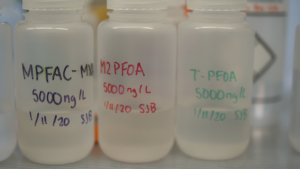
A recent PFAS workshop identified many knowledge gaps and potential collaborations between state agencies and scientists. Workshop organizers committed to the release of more information to set a research agenda. Photo: Bonnie Willison, Wisconsin Sea Grant.
The workshop hosts—Wisconsin Sea Grant, the University of Wisconsin Water Resources Institute and the Wisconsin State Laboratory of Hygiene—laid out goals for the workshop: identifying what is known about PFAS; targeting knowledge gaps; fostering working relationships between staff at the departments of Health Services, Natural Resources, and Agriculture, Trade and Consumer Protection and the research community to accomplish further work; and charting next steps.
At the conclusion of the two 4-hour sessions that saw speakers, technical panel discussions and breakout sessions, that tick list seemed complete. The group plans to continue informal conversations to formulate research needs and share research findings and resources that will lead to actions that protect Wisconsin’s environmental resources and public health from PFAS as they are present in numerous products of everyday life.
The post PFAS in Wisconsin: Setting a research agenda first appeared on Wisconsin Sea Grant.Blog | Wisconsin Sea Grant
https://www.seagrant.wisc.edu/blog/pfas-in-wisconsin-setting-a-research-agenda/?utm_source=rss&utm_medium=rss&utm_campaign=pfas-in-wisconsin-setting-a-research-agenda
Green Bay, WI
https://www.weather.gov/news/072221-svr-wea
Fish and Wildlife Service News
Fish and Wildlife Service News
http://www.fws.gov/news/ShowNews.cfm?ref=%0Arunning-buffalo-clover-saved-from-extinction%0A&_ID=36969
These Saildrone Explorers will use acoustic, or sound, technology to gather fish distribution and density data around-the-clock. USGS scientists will use the data to better understand the effects of invasive mussels and nutrient loss in the water. (Credit: Saildrone, Inc.)
The U.S. Geological Survey and Saildrone, Inc., launched the vehicles from Macatawa, Michigan, on July 28. These ocean drones, called Saildrone Explorers, will begin collecting fishery data on Lake Michigan starting August 5, sailing north into Lake Huron through September. Information collected as part of the study will help inform sustainable management of the $7 billion per year Great Lakes fishing industry.
The Saildrones will use acoustic, or sound, technology to gather fish distribution and density data around-the-clock. USGS scientists will use the data to better understand the effects of large vessel engine noise on fish sampling and catchability. This information will be used to sustain important fisheries for states, Tribes and likely the Province of Ontario, Canada.
The 23-foot autonomous vehicles are powered by wind and solar energy and carry no people. The sailboat-like drones have a 15-foot-tall wing sail and weighted keel, and they bear a payload of science sensors and navigational and communications equipment on their hulls.
The acoustic technology used in the study is not hazardous to people or animals and will not interfere with sonar, communications equipment or similar electronics.
For information about USGS research on the Great Lakes, please visit the USGS Great Lakes Science Center website.
USGS News: Region 3: Great Lakes Region
USGS News: Region 3: Great Lakes Region
https://www.usgs.gov/news/media-advisory-sailing-drones-collect-data-great-lakes-fishery-research
On August 5, two uncrewed surface vehicles will begin a 45-day sailing mission through Lakes Michigan and Huron as part of a scientific study.
Region 3: Great Lakes
http://www.usgs.gov/news/state-news-release/media-advisory-sailing-drones-collect-data-great-lakes-fishery-research
The Great Lakes are Michigan’s most precious resource, but plastic pollution and PFAS chemicals in our waterways are actively harming the state’s wildlife and residents. Read and hear the full story by WDET -Detroit, MI.
Great Lakes Commission
https://www.glc.org/dailynews/20210804-plastic-pollution
The piping plovers of Sleeping Bear Dunes National Lakeshore had their best-ever breeding season since plover recovery work began at the park, according to officials. Read the full story by Coastal News Today.
Great Lakes Commission
https://www.glc.org/dailynews/20210804-piping-plovers
This summer, a slew of scientists are converging to try to figure out why toxic algae is appearing in Lake Superior and to learn whether science can help control what, so far, has only been an occasional nuisance. Read and hear the full story by WUWM – Milwaukee, WI.
Great Lakes Commission
https://www.glc.org/dailynews/20210804-algae-research
The U.S. Environmental Protection Agency has awarded $7 million of Great Lakes Restoration Initiative money to the Northeast Ohio Regional Sewer District so it can perform improvements on the main stem of West Creek that will boost the Cuyahoga River’s water quality. Read the full story by The Plain Dealer.
Great Lakes Commission
https://www.glc.org/dailynews/20210804-cuyahoga-funding
The Michigan PFAS Action Response Team (MPART) hosted a virtual community meeting on July 20, for which updates on PFAS contamination in Lake Huron were provided by the Michigan departments of Environment, Great Lakes and Energy (EGLE), Health and Human Services (MDHHS) and Natural Resources (DNR). Read the full story by Iosco County News-Herald.
Great Lakes Commission
https://www.glc.org/dailynews/20210804-pfas
Researchers at the University of Toledo in Ohio are looking at how microcystin impacts wildlife. Read the full story by WTVG-TV – Toledo, OH.
Great Lakes Commission
https://www.glc.org/dailynews/20210804-algal-blooms
The Ohio Department of Transportation (ODOT) will solicit projects for the $11 million in grant funding the state legislature allocated in fiscal year 2022, along with an additional $12 million allocated in 2023 at the same time as part of its Ohio Maritime Assistance Program (MAP). Read the full story by the Waterways Journal Weekly.
Great Lakes Commission
https://www.glc.org/dailynews/20210804-map-funding
The United States Coast Guard is celebrating another year of being “Always Ready”. Read the full story by WWTI -TV- Watertown, NY.
Great Lakes Commission
https://www.glc.org/dailynews/20210804-coast-guard
Officials are warning people to stay off piers during high wave days with an example of what can happen when just 6 inches of water sweeps across them. Read the full story by MLive.com.
Great Lakes Commission
https://www.glc.org/dailynews/20210804-michigan-pier
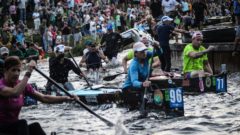
“I bet you can’t paddle to the lake!”
According to Phil Weiler, the AuSable River Canoe Marathon was born with those words and a friendly wager.
It’s now been 73 years since the inaugural canoe race, and what was once a friendly competition between a group of friends has become an international event, drawing professional canoe marathon paddlers from across North America.
Great Lakes Now
https://www.greatlakesnow.org/2021/08/international-canoe-race-michigan/
In Thousand Islands, New York, near Lake Ontario, between the United States and Canada, you can find four different origin stories for Thousand Island dressing, three of which involve a woman named May Irwin.
The post Thousand Island Dressing Mystery: Great Lakes origins of one of America’s favorite sauces first appeared on Great Lakes Echo.Great Lakes Echo
http://greatlakesecho.org/2021/08/04/thousand-island-dressing-mystery-great-lakes-origins-of-one-of-americas-favorite-sauces/
Current Watches, Warnings and Advisories for Brown (WIC009) Wisconsin Issued by the National Weather Service
https://alerts.weather.gov/cap/wwacapget.php?x=WI1261B1BE62A0.AirQualityAlert.1261B1CDA8C8WI.GRBAQAGRB.a99a1adb33cd2194593c574ec8b79cde
ROGERS CITY, Mich. (AP) — A memorial Mass has been held in northern Michigan for the last remaining survivor of a Lake Michigan shipwreck that killed 33 people in 1958.
Frank Mays was one of two people who survived the sinking of the Carl D. Bradley, a freighter that was on its way to Rogers City, Michigan, to pick up a load of stone before the shipping season ended.
Great Lakes Now
https://www.greatlakesnow.org/2021/08/ap-service-last-survivor-lake-michigan-shipwreck/
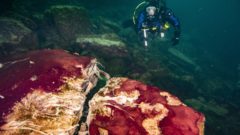
Scientists have a new idea for how Earth got its oxygen: It’s because the planet slowed down and days got longer.
A study published Monday proposes and puts to the test the theory that longer, continuous daylight kick-started weird bacteria into producing lots of oxygen, making most of life as we know it possible.
Great Lakes Now
https://www.greatlakesnow.org/2021/08/ap-theory-earth-days-oxygen-growth/
NCEI News Feed
http://www.ncei.noaa.gov/news/noaa-workshop-supports-artificial-intelligence
Current Watches, Warnings and Advisories for Brown (WIC009) Wisconsin Issued by the National Weather Service
https://alerts.weather.gov/cap/wwacapget.php?x=WI1261B1BBD260.AirQualityAlert.1261B1BE5AD0WI.GRBAQAGRB.a99a1adb33cd2194593c574ec8b79cde
This article, first posted here, was republished with permission from Wisconsin Watch.
By Coburn Dukehart, Wisconsin Watch
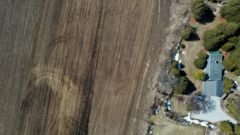
The No. 1 factor for acute gastrointestinal illness in Kewaunee County’s private drinking water wells is cow manure, according to a federal study released today.
Great Lakes Now
https://www.greatlakesnow.org/2021/08/cow-manure-sickness-contaminated-wells-wisconsin/
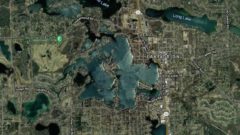
LAKE ORION, Mich. (AP) — State officials are investigating the deaths of hundreds of adult common carp at an Oakland County lake.
Michigan’s Department of Natural Resources said between 250 and 500 of the fish have been found dead since mid-July in Lake Orion, northwest of Detroit. Area residents reported the dead fish to the state agency.
Great Lakes Now
https://www.greatlakesnow.org/2021/08/ap-state-investigating-common-carp-deaths-michigan/
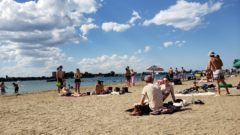
GRAND HAVEN, Mich. (AP) — Surfers, kite boarders and water boarders would be exempt from a proposed Michigan policy that would bar people from swimming at state beaches when waves are more than 8 feet high.
The Department of Natural Resources wants to reduce the risk of drowning in the Great Lakes.
Great Lakes Now
https://www.greatlakesnow.org/2021/08/ap-michigan-exceptions-weather-swim-ban/
Current Watches, Warnings and Advisories for Brown (WIC009) Wisconsin Issued by the National Weather Service
https://alerts.weather.gov/cap/wwacapget.php?x=WI1261B1AF4CE8.AirQualityAlert.1261B1BCBEB4WI.GRBAQAGRB.a99a1adb33cd2194593c574ec8b79cde
Current Watches, Warnings and Advisories for Brown (WIC009) Wisconsin Issued by the National Weather Service
https://alerts.weather.gov/cap/wwacapget.php?x=WI1261B1AF2F38.AirQualityAlert.1261B1BCAD20WI.GRBAQAGRB.8fcceab2a78b4693fef52667cbb6fc42
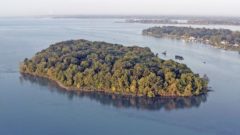
Great Lakes Moment is a monthly column written by Great Lakes Now Contributor John Hartig. Publishing the author’s views and assertions does not represent endorsement by Great Lakes Now or Detroit Public Television.
Sugar Island sits like a gemstone on a jeweled necklace of islands surrounding the southern end of Grosse Ile – the largest island in the Detroit River.
Great Lakes Now
https://www.greatlakesnow.org/2021/08/sugar-island-history-habitat-restoration/
Scientists are studying methods of genetic control to prevent invasive mussels from surviving and spreading in the Great Lakes while protection other mollusk species from potentially harmful chemical controls. Read the full story by the Chicago Tribune.
Great Lakes Commission
https://www.glc.org/dailynews/20210802-invasive-mussels
Harmful algae is now starting to grow on the surface of Lake Erie. NOAA has put out its first warning on where the harmful algae lies, and what you should know about safety precautions. Read the full story by MLive.
Great Lakes Commission
https://www.glc.org/dailynews/20210802-hab
Treacherous migrations for the Great Lakes piping plovers have been made worse by the climate crisis. Around the Great Lakes, warming water temperatures and flash flooding of plover nesting areas are among the climate change threats to navigate. Read the full story by The Globe and Mail.
Great Lakes Commission
https://www.glc.org/dailynews/20210802-piping-plovers
The Wisconsin Department of Natural Resources uncovered two new populations of invasive New Zealand mudsnails in Southern Wisconsin streams. Read the full story by WMTV-TV – Madison, WI.
Great Lakes Commission
https://www.glc.org/dailynews/20210802-new-zealand-mudsnails
Natural populations of oil-degrading bacteria could help to clean up freshwater rivers and lakes after spills from pipelines and trains, researchers have found after experiments that simulated spills in a Canadian lake. Read the full story by Great Lakes Now.
Great Lakes Commission
https://www.glc.org/dailynews/20210802-oil-degrading-bacteria
A water advocate from the Saugeen and Kettle and Stony Point First Nations is on a paddling mission to raise awareness about climate change. Read the full story by The Toronto Star.
Great Lakes Commission
https://www.glc.org/dailynews/20210802-water-advocate
Small fish called alewives are washing up on the shores of Lake Michigan in Kewaunee County, Wisconsin. According to Wisconsin Department of Natural Resources, alewife die offs are common this time of year. Read the full story by WFRV-TV – Algoma, WI.
Great Lakes Commission
https://www.glc.org/dailynews/20210802-alewives
Numerous organizations and governmental agencies are working to identify, control, and/or eradicate Michigan’s worst invasive species while scientists, field workers, and ordinary citizens are using various means to address the situation. Read the full story by The Northern Express.
Great Lakes Commission
https://www.glc.org/dailynews/20210802-invasive-species
A certified diver and maritime archaeologist in the Wisconsin Historical Society’s historic preservation division is transposing her underwater sketches and measurements of Wisconsin shipwrecks into scaled drawings that can help guide water-ready tourists to wrecks and provide historical background on the doomed boats. Read the full story by the Wisconsin State Journal.
Great Lakes Commission
https://www.glc.org/dailynews/20210802-shipwrecks
The Windsor-Essex County (Ontario) Health Unit (WECHU) has issued a blue-green algae bloom advisory for the south shores of Lake St. Clair. The advisory is based on recent lab results for microcystins in Lake St. Clair by the local municipal water treatment plants. Read the full story by the Windsor Star.
Great Lakes Commission
https://www.glc.org/dailynews/20210802-algae-bloom-advisory
Cougar habitat in North America has been shrinking due to development, land fragmentation and “human-induced mortality,” wildlife researchers warn.
The post Mapping pathways for roaming cougars first appeared on Great Lakes Echo.Great Lakes Echo
http://greatlakesecho.org/2021/08/02/mapping-pathways-for-roaming-cougars/
Current Watches, Warnings and Advisories for Brown (WIC009) Wisconsin Issued by the National Weather Service
https://alerts.weather.gov/cap/wwacapget.php?x=WI1261B19E86C4.AirQualityAlert.1261B19FD650WI.GRBAQAGRB.95772b461ecdeafcc9c0642321d118ec
Current Watches, Warnings and Advisories for Brown (WIC009) Wisconsin Issued by the National Weather Service
https://alerts.weather.gov/cap/wwacapget.php?x=WI1261AD745F9C.SpecialWeatherStatement.1261AD7487D8WI.GRBSPSGRB.11cad83779f11a7a6cf529f552f3af1d
Current Watches, Warnings and Advisories for Brown (WIC009) Wisconsin Issued by the National Weather Service
https://alerts.weather.gov/cap/wwacapget.php?x=WI1261AD743A1C.SpecialWeatherStatement.1261AD7460C8WI.GRBSPSGRB.8277e56207786573290cdaabd01b78b5
Current Watches, Warnings and Advisories for Brown (WIC009) Wisconsin Issued by the National Weather Service
https://alerts.weather.gov/cap/wwacapget.php?x=WI1261AD743378.AirQualityAlert.1261B19EA3ACWI.GRBAQAGRB.95772b461ecdeafcc9c0642321d118ec
Current Watches, Warnings and Advisories for Brown (WIC009) Wisconsin Issued by the National Weather Service
https://alerts.weather.gov/cap/wwacapget.php?x=WI1261AD726C00.AirQualityAlert.1261AD745510WI.GRBAQAGRB.95772b461ecdeafcc9c0642321d118ec
Current Watches, Warnings and Advisories for Brown (WIC009) Wisconsin Issued by the National Weather Service
https://alerts.weather.gov/cap/wwacapget.php?x=WI1261AD64FBC4.AirQualityAlert.1261AD72F580WI.GRBAQAGRB.95772b461ecdeafcc9c0642321d118ec
July 30, 2021
This week: Indigenous Activists Journey with A Totem Pole Across the US Calling Attention to Environmental Issues + Public Comments Requested on Asphalt Plant Proposed Near Flint, Michigan + Drought in Minnesota Drying Up Creeks and Wells + Federal Bill to Regulate Forever Chemicals Passes the U.S. House + Training Builds Skills to Promote Water Testing Program
Members of the Lummi Nation have spent the month of July on a journey with a 25-foot totem pole, traveling from Washington State to Washington DC, with eight stops along the way, including Mackinaw City on July 27th. At each stop along the Red Road to DC, they are hosting ceremonies and events to raise awareness and protect sacred land from threats such as industrial development and the over extraction of resources. During their stop in Mackinaw City, they joined the Bay Mills Indian Community and other tribal nations in the area to draw attention to the threat to water from the 68-year old oil and gas pipeline on the bottom of the Straits of Mackinac. The totem pole will finish its journey across the country with an exhibition in the Smithsonian from July 29th-31st.
Asphalt plants emit toxic pollutants that can cause health problems such as respiratory illnesses and heart disease. A new plant is proposed near Flint, that due to its proximity may increase exposure of Flint residents to environmental pollutants from the facility. The Michigan Department of Environment, Great Lakes, and Energy is hosting an informational session and a virtual public hearing on August 3, 2021 at 6 p.m. In addition, in-person comments can be shared from 6-8 p.m. Aug. 11, 2021, at the Genesee Township Hall. Written comments about the proposal will be accepted until August 16, 2021. Stay tuned for an action alert with Freshwater Future concerns about this proposed asphalt plant.
Under a new bill that recently passed the U.S. House, national drinking water standards would be required for two of the forever chemicals, PFOA and PFOS, which are the two most common forms of PFAS. If the bill passes in the U.S. Senate, the Environmental Protection Agency will be required to set the drinking water standards within two years and the forever chemicals will be classified as hazardous substances through the Federal Superfund law. Also included in the bill, $200 million per year would be administered to treat wastewater and the chemicals would be considered air pollutants, requiring limits on discharges.
In related news, Illinois issued a health advisory for a fifth form of PFAS and they are testing community water supplies for PFAS.
While areas of the Great Lakes region have been dealing with extreme rain events and flooding, Minnesota is in a moderate to extreme drought. The lack of precipitation has dried up wells and greatly reduced inland lake levels impacting recreation, even reducing waterfalls to trickles. Along the North Shore of Lake Superior creeks and rivers with decreased flow are harming trout and salmon populations.

Freshwater Future staff joined the staff at the Flint Community Lab this week to provide training to build confidence and communications in promoting the water testing service to Flint residents. Together they visited several neighborhoods and distributed water test kits that will be collected and analyzed for lead, providing information to help residents rebuild trust in their tap water.
Blog – Freshwater Future
https://freshwaterfuture.org/freshwater-weekly/freshwater-future-weekly-july-30-2021/
Natalie Chin, Wisconsin Sea Grant’s Climate and Tourism Outreach Specialist based in Superior, was recently appointed by Governor Tony Evers to the Wisconsin Council on Tourism.
“We’re working to make sure our state and our economy continue to recover from the coronavirus pandemic, and the Wisconsin Council on Tourism will play an important role in advising the Secretary of the Department of Tourism in the weeks and months ahead,” said Governor Evers. “Our tourism industry and workforce are a critical part of our state’s economy, and I’m proud of the work we’ve done through my first two budgets and targeted federal assistance to help support tourism in Wisconsin and ensure this industry can bounce back from this pandemic.”

Natalie Chin. Image credit: Bonnie Willison, Wisconsin Sea Grant.
Chin works on issues related to climate change, tourism and outdoor recreation within the context of the sustainable use of the Great Lakes. She also serves as one of the North Central Region representatives for the National Extension Tourism Network; is co-leading the Tourism and Outdoor Recreation Working Group for the Wisconsin Initiative on Climate Change Impacts; and is a member of the Wisconsin Department of Tourism’s Diversity, Equity, Accessibility and Inclusion Committee.
“It’s truly an honor to be appointed to the council,” Chin said. “The Great Lakes are a key part of the state’s tourism industry and will certainly play an important role in its recovery. I can’t wait to contribute to the council’s efforts to support and advise the Department of Tourism.”
Evers also appointed three others to the Wisconsin Council on Tourism:
The 21-member council, which includes 14 gubernatorial appointees and 7 ex-officio members, represents varied geography and wide-ranging expertise that includes, but is not limited to, recreation and attraction business owners, hospitality and service industry business owners, convention and visitor bureaus, economic development specialists, industry thought leaders, legislators and leaders of arts, historic and cultural destinations. Despite the pandemic, the tourism industry supported more than 157,000 jobs and drove $17.3 billion in total business sales in 2020.
The post Sea Grant staffer appointed to Wisconsin Council on Tourism first appeared on Wisconsin Sea Grant.News Releases | Wisconsin Sea Grant
News Releases | Wisconsin Sea Grant
https://www.seagrant.wisc.edu/news/sea-grant-staffer-appointed-to-wisconsin-council-on-tourism/?utm_source=rss&utm_medium=rss&utm_campaign=sea-grant-staffer-appointed-to-wisconsin-council-on-tourism
Scientists are carefully monitoring the bed of Lake Michigan to determine if small scale experiments to remove mussels from fish spawning habitat are working. Read the full story by the Chicago Tribune.
Great Lakes Commission
https://www.glc.org/dailynews/20210730-mussels
MLive released a documentary titled: “The Fight for Environmental Justice in Michigan.” The 10-minute video tells a powerful story of how marginalized communities are saddled with some of the worst environmental circumstances in Michigan. Read the full story by MLive.
Great Lakes Commission
https://www.glc.org/dailynews/20210730-documentary