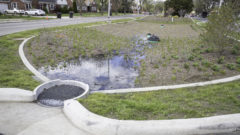
Green Infrastructure: Cities around the Great Lakes plan for a changing future

Rain gardens, bioretention features, adaptable parks and more are popping up all around the region.

Read Now at Great Lakes Now.

Original Article

Great Lakes Now

Great Lakes Now

https://www.greatlakesnow.org/2021/05/green-infrastructure-great-lakes-climate-future/

Andrew Blok

As the COVID-19 pandemic closed animal shelters to the public, Detroit-area pet rescue and adoption organizations had to come up with new ways to connect their dogs and cats to families.

The post Pandemic creates challenges, opportunities for animal shelters first appeared on Great Lakes Echo.

Original Article

Great Lakes Echo

Great Lakes Echo

http://greatlakesecho.org/2021/05/18/pandemic-creates-challenges-opportunities-for-animal-shelters/

Guest Contributor

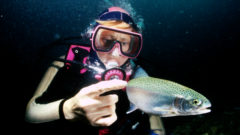
I Speak for the Fish

I Speak for the Fish is a new monthly column written by Great Lakes Now Contributor Kathy Johnson, coming out the third Monday of each month. Publishing the author’s views and assertions does not represent endorsement by Great Lakes Now or Detroit Public Television.

Read Now at Great Lakes Now.

Original Article

Great Lakes Now

Great Lakes Now

https://www.greatlakesnow.org/2021/05/i-speak-for-the-fish/

Kathy Johnson

Construction of a streambank restoration and pedestrian bridge replacement project will soon begin in Petrifying Springs Park, Wisconsin, on a section of the Pike River that is the most substantial stretch of publicly owned river within the greater urban Kenosha area and has been termed a green infrastructure hub in the Pike River Watershed-based Plan. Read the full story by Kenosha News.

Original Article

Great Lakes Commission

Great Lakes Commission

https://www.glc.org/dailynews/20210517-wisconsin-restoration

Patrick Canniff

H2Ohio, a voluntary Ohio program  that works closely with local farmers to reduce Lake Erie’s harmful algal bloom problem, has indicated in its 2020 annual report that the Ohio Department of Agriculture has entered into agreements with 1,815 producers across 1,092,852 acres of farmland, representing approximately 44% of the targeted cropland project area. Read the full story by WTOL-TV –  Toledo, OH.

Original Article

Great Lakes Commission

Great Lakes Commission

https://www.glc.org/dailynews/20210517-h2ohio-water-quality

Patrick Canniff

About halfway between Racine, Wisconsin, and Holland, Michigan, sensors keep close tabs on the temperature of Lake Michigan at a depth of 492 feet and have reported this data almost hourly for 30 years. This 30 year dataset indicates that the depths of Lake Michigan are warming and the annual “turnover” of the lake from warm to cold is changing. Read the full story by WTMJ-TV –  Milwaukee, WI.

Original Article

Great Lakes Commission

Great Lakes Commission

https://www.glc.org/dailynews/20210517-wisconsin-climate

Patrick Canniff

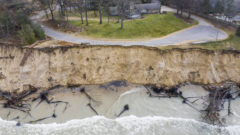
It has been 16 months since a severe storm wreaked havoc on southeast Wisconsin’s shoreline, damaging popular pathways. Moving forward, the City of Racine not only wants to fix the damage, but wants to do so in a way that lessens the potential destruction of future storms amid rising waters of Lake Michigan. Read the full story by The Journal Times.

Original Article

Great Lakes Commission

Great Lakes Commission

https://www.glc.org/dailynews/20210517-wisconsin-shoreline

Patrick Canniff

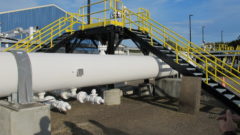
Enbridge, the Canadian energy company, claims the state of Michigan has no authority to enforce a deadline to shut down operation of Line 5, and will only shut down the oil pipeline if ordered by a federal court or their regulator. Read the full story by WDET –  Detroit, MI.

Original Article

Great Lakes Commission

Great Lakes Commission

https://www.glc.org/dailynews/20210517-enbridge-line-5

Patrick Canniff

The Saint Lawrence Seaway Development Corporation was renamed the Great Lakes St. Lawrence Seaway Development Corporation by U.S. Congress via the 2021 Consolidated Appropriations Act, to “acknowledge the Corporation’s long-standing contributions and important to the Great Lakes region and economy.” Read the full story by WWTI-TV – Washington, D.C.

Original Article

Great Lakes Commission

Great Lakes Commission

https://www.glc.org/dailynews/20210517-seaway

Patrick Canniff

Environmental Justice: Michigan’s goal is to be a national leader

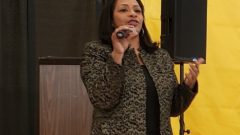
President Joe Biden has put a spotlight on environmental justice like no president before him, and that’s good news for Regina Strong.

“I feel like environmental justice is having a moment,” Strong told Great Lakes Now last week. She was referring to a recent indication that U.S. EPA Administrator Michael Regan may be willing to engage more than his predecessors with state and local governments on issues important to communities.

Read Now at Great Lakes Now.

Original Article

Great Lakes Now

Great Lakes Now

https://www.greatlakesnow.org/2021/05/environmental-justice-michigan-goal-national-leader/

Gary Wilson

...ELEVATED FIRE WEATHER CONDITIONS THROUGH EARLY THIS EVENING... Low relative humidity values of 17 to 23 percent, combined with dry and warm conditions will lead to elevated fire weather conditions through early this evening. Southwest winds of 10 to 15 mph with gusts of 20 to 25 mph will also add to the elevated fire weather conditions.

Original Article

Current Watches, Warnings and Advisories for Brown (WIC009) Wisconsin Issued by the National Weather Service

Current Watches, Warnings and Advisories for Brown (WIC009) Wisconsin Issued by the National Weather Service

https://alerts.weather.gov/cap/wwacapget.php?x=WI1261A084EF18.SpecialWeatherStatement.1261A0913AC0WI.GRBSPSGRB.3b77a733acfe35fc01f412b80021d336

w-nws.webmaster@noaa.gov

This week: New York Extends Moratorium that Prevents Utility Companies From Disconnecting Utilities + Urge the U.S. EPA to Keep PFAS Out of Our Water + Hundreds Protest Pipeline Operation + $9M in Great Lakes Restoration Initiative Available for Stormwater Projects + UIC Freshwater Lab Student Creates Art Activism with Lake Michigan Collage Project 


New York Governor Signs Legislation Extending Moratorium that Prevents Utility Companies From Disconnecting Utilities

Governor Cuomo signed legislation extending the moratorium on water and other utility shutoffs to assist residents still affected by the pandemic. “Freshwater Future applauds Senator Parker, Assembly Member Richardson and Governor Cuomo for their leadership in ensuring all New Yorkers have access to tap water in their homes to fight this pandemic,” said Kristy Meyer, Associate Director at Freshwater Future. “Now we must work together to ensure all New Yorkers have access to safe, clean and affordable water even after the moratorium has expired.”

Thanks to all of our New York friends for sending messages to the Governor to help get this moratorium in place.


Urge the U.S. EPA to Keep PFAS Out of Our Water

The more we learn about PFAS “forever chemicals,” the more clear it is that they are harmful to humans, wildlife, and the environment.  Fortunately, the U.S. EPA is now considering action to limit the dumping of PFAS into our rivers, lakes, and streams. Please sign on to this petition to support this action to protect our waters and source of drinking water for millions of people.  Chemical companies are fighting to stop or weaken the proposal. In fact, last week one company filed a lawsuit against the State of Michigan to invalidate recent standards adopted for levels of certain PFAS in drinking water. That’s why it is so crucial that EPA hears from us — so that the agency follows through and takes meaningful action. To sign on to the petition now, click HERE.


Hundreds Protest Pipeline Operation 

An eviction notice was posted on a gate to the Line 5 pipeline by hundreds of protesters on Thursday.  Representatives from several Michigan tribes and residents were there to support the shutdown of the pipeline and recent orders by Michigan Governor to revoke the easement. The company has continued operating the 68-year old pipeline.


$9M in Great Lakes Restoration Initiative Available for Stormwater Projects

Funding from the Great Lakes Restoration Initiative will support up to 24 projects to reduce stormwater runoff carrying polluted runoff to Great Lakes waters with an emphasis on reducing  nutrients from agricultural runoff.  To find out more about this funding opportunity visit this website.


UIC Freshwater Lab Student Creates Art Activism with Lake Michigan Collage Project

Chicago resident and student at the University of Illinois at Chicago (UIC) Freshwater Lab, Amy Heldman has created an art activist project entitled “Thinking Relationships to Lake Michigan: An Art Collage for Reflection” which draws inspiration from city residents and reflects on people’s deep personal connections to the Lake. In this week’s blog post, Amy discusses her course project details and her meaningful conversations with strangers about water. Read more here.  This summer, Amy will assist Freshwater Future with our lead in drinking water program as an intern.

Original Article

Blog – Freshwater Future

Blog – Freshwater Future

https://freshwaterfuture.org/freshwater-weekly/freshwater-weekly-may-14-2021/

Freshwater Future

Guest Blog by Amy Heldman

As someone residing near Chicago, I often visit the lakefront whenever I am in the city. However, only recently after taking an eye-opening course, The University of Illinois at Chicago (UIC) Freshwater Lab, did I begin to connect my feelings for Lake Michigan to art activism.

When I heard we had the option to do a project in any sort of medium we wanted, I immediately took the chance to unleash my love for collage making. I wanted to foster the power of storytelling to create an outline of Lake Michigan, holding inside people’s connection to the lake. I took a few trips to the lakefront and interviewed people asking them the questions, “Why do you visit the lake?” and “What do you love about Lake Michigan?” to try and inspire reflection among Chicago residents. I got many responses that were as simple as two word responses, to some that even wrote poems. Although different, each response is beautiful in its own way, because each person’s connection is unique to themselves.

I also wanted to use the power of contrast in my collage, so I made the background a series of news articles on Lake Michigan issues to sit behind people’s love for the lake to emphasize why it needs to be protected.

As a student studying urban planning, much of my undergraduate career has consisted of numerous research papers, GIS projects, and data analysis, and although they can be quite fun, the feeling of virtual school burnout hit me hard. This art collage was my way of expressing creativity and having meaningful conversations with strangers about water. A few themes that arose from my interviews were: therapy, creativity, solitude, and joy. It was inspiring to hear from so many how the lake has been helping them survive the pandemic. I spoke to one woman on her bike, and she explained how Lake Michigan reminds her of expansion. With being locked up for so long, it gave her peace of mind knowing that the world is not just in her house but it is borderless much like our water. After hearing responses like hers, I grew extremely inspired by the love Chicago residents have for Lake Michigan. Although it is usually seen as a tourist attraction, my collage amplifies the temple Lake Michigan is to Chicago residents. It is their safe place after a hard week, a place where they get their best ideas, and a place for mental clarity and reflection.

I want to thank Chicago residents for contributing to this piece, as well as the UIC Freshwater Lab for allowing me to do this. I hope that anyone who views this collage feels inspired by the significance Lake Michigan holds to its admirers and continues to advocate for protection of this life resource.

Original Article

Blog – Freshwater Future

Blog – Freshwater Future

https://freshwaterfuture.org/call-to-action/thinking-relationships-to-lake-michigan-an-art-collage-for-reflection/

Freshwater Future

Dry weather is putting the Great Lakes’ water levels on a downward trend, with new forecasts for the summer placing water levels at depths where boaters and shipping won’t have to worry about low water levels or adjusting dock heights due to record high water. Read the full story by MLive.

Original Article

Great Lakes Commission

Great Lakes Commission

https://www.glc.org/dailynews/20210514-waterlevels

Ned Willig

Tribes in Michigan are legally entitled to hunting and fishing rights in Michigan through historic treaties. However, because wildlife and fish often cross jurisdictional boundaries, tribes, state and federal agencies must work together to manage wildlife populations and reconcile conflicting science and management priorities. Read the full story by Great Lakes Now.

Original Article

Great Lakes Commission

Great Lakes Commission

https://www.glc.org/dailynews/20210514-conservation-coordination

Ned Willig

Taconite iron ore shipments on the Great Lakes are trending up, and the Port of Duluth-Superior is experiencing a bustling start to the shipping campaign. This year’s shipments represent a 48% increase over the 2020 pace and a 23% improvement on the five-season average. Read the full story by Duluth News Tribune.

Original Article

Great Lakes Commission

Great Lakes Commission

https://www.glc.org/dailynews/20210514-taconite

Ned Willig

The Chicago Park District announced that Monty and Rose, a pair of endangered Great Lakes piping plovers, have produced three eggs at their breeding grounds at Montrose Beach Dunes Natural Area on Chicago’s north side. Read the full story by WLS-TV – Chicago, IL.

Original Article

Great Lakes Commission

Great Lakes Commission

https://www.glc.org/dailynews/20210514-plover-eggs

Ned Willig

Anishinaabe chiefs of the upper Great Lakes are calling for a ban on aerial spraying of the herbicide across the Robinson Huron Treaty area in northern Ontario. Their requests are receiving parliamentary support by Ontario MPs in the Green Party. Read the full story by APTN News.

Original Article

Great Lakes Commission

Great Lakes Commission

https://www.glc.org/dailynews/20210514-anishinaabe

Ned Willig

The federal government announced on Thursday that it no longer needs the Cleveland Harbor West Pierhead Lighthouse, and would be giving away the lighthouse for free to eligible, federal, state or local organizations. Read the full story by WOIO-TV – Cleveland, OH.

Original Article

Great Lakes Commission

Great Lakes Commission

https://www.glc.org/dailynews/20210514-free-lighthouse

Ned Willig

A bill proposed by Ohio lawmakers seeks to remove pollution control for a large swath of Ohio streams and wetlands by relaxing regulations to align Ohio’s rules with the environmentally unsound federal regulation known as the Navigable Waters Protection Rule. Read the full story by The Columbus Dispatch.

Original Article

Great Lakes Commission

Great Lakes Commission

https://www.glc.org/dailynews/20210514-bill

Ned Willig

Algoma University in Sault St. Marie, Ontario, is partnering with other universities and community partners in the Lake Superior region to create the Lake Superior Climate Action Field School. The Field School will train a diverse group of young Canadians to become regional and national climate leaders through an experiential program of virtual workshops, community site visits, and events around the Lake Superior watershed. Read the full story by The Sault Star.

Original Article

Great Lakes Commission

Great Lakes Commission

https://www.glc.org/dailynews/20210514-climate-school

Ned Willig

Anglers on Lake Huron are encouraged to check any salmon or trout they catch in Lake Huron for an electronic tag on the fish’s adipose fin. The tags are used by state and federal researchers to track fish populations, and anglers could receive $100 for their catches. Read the full story by The News Herald.

Original Article

Great Lakes Commission

Great Lakes Commission

https://www.glc.org/dailynews/20210514-fish-tags

Ned Willig

Conservation Coordination: Black Lake sturgeon fishing highlights contrasts between Native and state approaches

The brief Black Lake sturgeon season which garners so much attention each year is over, but not for everyone.

The public face of the season usually begins and ends on a bitter-cold Saturday morning after six anglers spear their fish. After that, it’s over for citizens of Michigan and other states who travel for the opportunity to catch a big, long, tasty prehistoric fish.

Read Now at Great Lakes Now.

Original Article

Great Lakes Now

Great Lakes Now

https://www.greatlakesnow.org/2021/05/black-lake-sturgeon-fishing-indigenous-culture-conservation/

James Proffitt

A new Environmental Protection Agency mobile app will help communities track water quality at their beaches.

The post A new EPA app aims to help track water quality at beaches first appeared on Great Lakes Echo.

Original Article

Great Lakes Echo

Great Lakes Echo

http://greatlakesecho.org/2021/05/14/a-new-epa-app-aims-to-help-track-water-quality-at-beaches/

Guest Contributor

Great Lakes water surge eases after 2 record-setting years

TRAVERSE CITY, Mich. (AP) — A spell of dry, mild weather is giving the Great Lakes a break after two years of high water that has shattered records and heavily damaged shoreline roads and homes, officials said Monday.

Although still above normal, the lakes have dropped steadily since last fall and are expected to remain below 2020 levels for most of this year, according to a U.S.

Read Now at Great Lakes Now.

Original Article

Great Lakes Now

Great Lakes Now

https://www.greatlakesnow.org/2021/05/ap-great-lakes-water-surge-eases/

The Associated Press

Enbridge defies Michigan governor’s order to close pipeline

TRAVERSE CITY, Mich. (AP) — An Upper Midwestern oil pipeline continued operating Wednesday, despite a shutdown demand from Michigan Gov. Gretchen Whitmer that the operator warned could lead to fuel disruptions similar to those resulting from a cyberattack on an East Coast system.

Read Now at Great Lakes Now.

Original Article

Great Lakes Now

Great Lakes Now

https://www.greatlakesnow.org/2021/05/ap-enbridge-defies-michigan-governor-close-pipeline/

The Associated Press

News

Great Lakes Commission holds 2021 Semiannual Meeting online

Ann Arbor, Mich. – At its 2021 Semiannual Meeting, held online this week, the Great Lakes Commission (GLC) convened leaders from the United States and Canada on top issues facing the Great Lakes. The GLC and more than 150 guests received updates on Great Lakes issues from leaders of key U.S. agencies, including the U.S. Environmental Protection Agency, USDA-Natural Resources Conservation Service, and U.S. Fish and Wildlife Service, as well as from the province of Québec’s Transport Minister.

“Healthy, productive Great Lakes are critical to the future of both the U.S. and Canada,” said GLC Chair Sharon M. Jackson, Deputy General Counsel to Indiana Governor Eric J. Holcomb. “These issues don’t stop at the border, and the Great Lakes Commission is committed to bringing binational leadership to the table to tackle the biggest issues facing the lakes.”  

“At EPA, we’re committed to accelerating Great Lakes restoration, bolstering the region’s economic health, and supporting the cleanup of the region’s most contaminated sites,” said U.S. EPA Administrator Michael Regan in recorded remarks. “The entire Biden-Harris administration knows how important it is to collaborate on priorities like water infrastructure, water quality and environmental protection. Agencies like the Great Lakes Commission are crucial to facilitating that collaboration across jurisdictions and all levels of government.”

During the meeting, the GLC assembled expert panels on Great Lakes-St. Lawrence River maritime strategy, regional water equity, and harmful algal blooms. Commissioners and guests also received updates from senior legislative staff on climate and infrastructure priorities for the 116th U.S. Congress, and the U.S. Army Corps of Engineers on construction of critical national projects at the Brandon Road Lock and Dam in Illinois and Soo Locks complex in Michigan. In an action item, the GLC agreed to update its policy on supporting small commercial and recreational harbors in the Great Lakes basin. Video of meeting sessions will be available online in the days to come.

The GLC will next convene in October 2021 for its annual meeting, to be held in Ann Arbor, Michigan. The formats of these events will be announced in the future. 


The Great Lakes Commission, led by chair Sharon M. Jackson, Deputy General Counsel for Governor Eric J. Holcomb of Indiana, is a binational government agency established in 1955 to protect the Great Lakes and the economies and ecosystems they support. Its membership includes leaders from the eight U.S. states and two Canadian provinces in the Great Lakes basin. The GLC recommends policies and practices to balance the use, development, and conservation of the water resources of the Great Lakes and brings the region together to work on issues that no single community, state, province, or nation can tackle alone. Learn more at www.glc.org.

Original Article

Great Lakes Commission

Great Lakes Commission

https://www.glc.org/news/sam-051321

Beth Wanamaker

There’s been a lot of news about the amount of plastic debris in the oceans, but plastic pollution also affects the Great Lakes. A study from the Rochester Institute of Technology estimates 22 million pounds of plastic debris enters the Great Lakes from the U.S. and Canada each year. Read the full story by WDET – Detroit, MI.

Original Article

Great Lakes Commission

Great Lakes Commission

https://www.glc.org/dailynews/20210513-plastic

Jill Estrada

If Line 5 is still pumping petroleum through the Straits of Mackinac on Thursday, Michigan Gov. Gretchen Whitmer has notified Enbridge Energy she will consider all resulting profits to be property of the state of Michigan. Read the full story by Great Lakes Now.

Original Article

Great Lakes Commission

Great Lakes Commission

https://www.glc.org/dailynews/20210513-enbridge-profits

Jill Estrada

Ontario’s Lakehead University has announced the launch of the Lake Superior Climate Action Field School, in cooperation with three other universities on both sides of the international boundary. Read the full story by Thunder Bay News Watch.

Original Article

Great Lakes Commission

Great Lakes Commission

https://www.glc.org/dailynews/20210513-climate-school

Jill Estrada

The University of Toledo recently received more than a million dollars from the U.S. Army Corps of Engineers, part of which will fund research to understand the biological mechanisms of harmful algal blooms in Lake Erie. Read the full story by WTVG-TV – Toledo, OH.

Original Article

Great Lakes Commission

Great Lakes Commission

https://www.glc.org/dailynews/20210513-algae-blooms

Jill Estrada

A recently proposed bill that would modify the Fisheries Act in a way that would essentially return to prior laws, which were ineffective and rarely enforced, was dismissed as a step backwards by environmentalists and opposing Members of Parliament. Read the full story by the Toledo Star.

Original Article

Great Lakes Commission

Great Lakes Commission

https://www.glc.org/dailynews/20210513-sewage-bill

Jill Estrada

Ontario’s Laurentian University will be losing three researchers within its environmental sciences department due to restructuring. The loss of the three “Sudbury Model” researchers will affect local opportunities for the education and research of aquatic ecology and plant ecology. Read the full story by The Sudbury Star. 

Original Article

Great Lakes Commission

Great Lakes Commission

https://www.glc.org/dailynews/20210513-laurentian-researchers

Jill Estrada

Starting in 2000, The Nature Conservancy acquired and restored approximately 25,000 acres at Glacial Ridge, returning nearly all of the land to native wetland and prairie. Scientists with the USGS, in partnership with The Nature Conservancy, the U.S. Fish and Wildlife Service and the State of Minnesota, compared the hydrology of the area before and after restoration. They found substantial improvements in groundwater flow, water runoff rates and water quality as a result of land restoration, especially in areas with shallow groundwater or where drained wetlands were restored.

Water well at a restored prairie on Lake Agassiz beach ridge, Glacial Ridge National Wildlife Refuge (Credit: Tim Cowdery, USGS)

“These restorations will benefit the people and ecosystems of western Minnesota by reducing flooding and improving water quality,” said Tim Cowdery, USGS scientist and lead author of the report.

The study found a number of hydrological improvements at Glacial Ridge due to the restoration:

USGS hydrologist Tim Cowdery works from a mobile water sampling van in the Glacial Ridge National Wildlife Refuge. (USGS)

The rate of water runoff decreased by 33%. High runoff is undesirable because it can cause flooding and reduces the amount of water entering underground aquifers; The rate of groundwater recharge increased by 14%. Groundwater recharge is the process by which water soaks down from the land surface into an aquifer. Recharge is important because it helps maintain the amount of water stored in aquifers which is used for drinking water and irrigation; Ditch flow decreased by 23%. Reduced ditch flows were beneficial because they resulted in less water leaving the study area, helping to prevent flooding downstream; Concentrations of nitrate, a type of nutrient, decreased by 79% in groundwater and 53% in ditch water. Although nitrate is essential for plant growth, too much can harm or kill aquatic animals like fish, affect the quality of water used for recreation and make the water unfit to drink.

“The dramatic increase in wetland and prairie habitat at this location provides tremendous benefits for a diversity of wildlife and plants,” said Gregory Knutsen, manager at Glacial Ridge National Wildlife Refuge. “Additionally, this restoration has created a wealth of public recreation opportunities, such as hunting and birding. It also helps ensure clean water for residents of Crookston, Minnesota, whose major source of drinking water is aquifers within and around Glacial Ridge National Wildlife Refuge.”   

The study also found that the benefits of restoration were not distributed evenly across the study area. Areas that experienced the greatest improvements in hydrology were those where an aquifer exposed at the land surface. Areas where wetlands that had been drained for agricultural purposes were then restored also benefited significantly. These findings can help resource managers focus future restoration efforts on areas with similar landscape features, where maximum restoration benefits will most likely occur.

USGS technician Jody Hulne collects a groundwater nutrient sample at Glacial Ridge National Wildlife Refuge. (Credit: Tim Cowdery, USGS)

“This study shows the value of natural areas and the legacy of Glacial Ridge,” said Peggy Ladner, director of The Nature Conservancy in Minnesota. “Protecting and restoring prairies and wetlands not only provides wildlife habitat and opportunities for outdoor recreation but it also provides clean drinking water and protection from flooding.”

Ladner noted as the largest prairie-wetland restoration project in U.S. history, Glacial Ridge wouldn’t have been possible without the help of USDA’s Natural Resources Conservation Service and other partners.

Funding for this study was provided by the Minnesota Environment and Natural Resources Trust Fund as recommended by the Legislative-Citizen Commission on Minnesota Resources.

For more information about water studies in the region, please visit the USGS Upper Midwest Water Science Center website.

Morning fog over beach ridges at Glacial Ridge National Wildlife Refuge (Credit: Tim Cowdery, USGS)

Sandhill Crane Pair in flight at Glacial Ridge National Wildlife Refuge (Credit: Tim Cowdery, USGS)

Prairie Dog, Glacial Ridge National Wildlife Refuge (Credit: Tim Cowdery, USGS)

Young moose near Benoit, Minnesota, Glacial Ridge National Wildlife Refuge (Credit: Tim Cowdery, USGS)

Beach-ridge prairie at Glacial Ridge National Wildlife Refuge (Credit: Tim Cowdery, USGS)

Original Article

USGS News: Upper Midwest Water Science Center

USGS News: Upper Midwest Water Science Center

https://www.usgs.gov/news/water-resources-minnesota-significantly-improved-land-restoration

mlubeck@usgs.gov