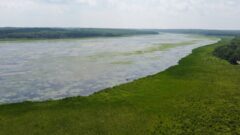
Six Nations of the Grand River is one of the most highly populated Indigenous communities in Canada with around 29,000 residents. A primary source of water is from the McKenzie Creek, which is mostly used for agricultural purposes for the Six Nations and non-Indigenous communities throughout the watershed. 

According to a recent study, Ontario’s McKenzie Creek watershed is likely to face increasing levels of water scarcity throughout the rest of the century. This research examines how water scarcity, due to factors like climate change, land use and water consumption, will have impacts for agricultural production for the Six Nations.

“I live on reserve and it’s just something that you don’t really think about on a daily basis until you’re actually living it, where you see your appliances die early because of the hardness of the water,” said Six Nations Senior Manager of the Environment Sara Curley-Smith.

Of the water available for Six Nations, the people here also face ongoing challenges with water quality. This compounds the effects of water insecurity.

“You have the majority of families at Six Nations that are water insecure already, so if they’re water insecure in good times, you can’t imagine what’s coming our way in the next 50 years,” said emeritus professor of Indigenous Studies at McMaster University Dawn Martin-Hill, who was also involved with the study.

Martin-Hill leads the Ohneganos Indigenous Water Research Program, which the study was a part of. She is also part of an initiative to create a Haudenosaunee Environmental Research Institute that centers Indigenous knowledge to better understand these issues. Part of her interview is also featured in the article, “Water is Life, Six Nations lead international approach to long-standing water insecurity.”

“In the design of the project we consulted with the environmental folks at Six Nations, the fish and wildlife folks, leaders, traditional knowledge holders, we just got a sense of what their concerns and priorities were,” Martin-Hill said. “Climate change came up quite a bit because cities and towns have access to that information and modeling, whereas reserves and reservations do not.”

Throughout the project process, Indigenous traditional knowledge holders helped guide the scientists on where and when to conduct the research, Martin-Hill said.

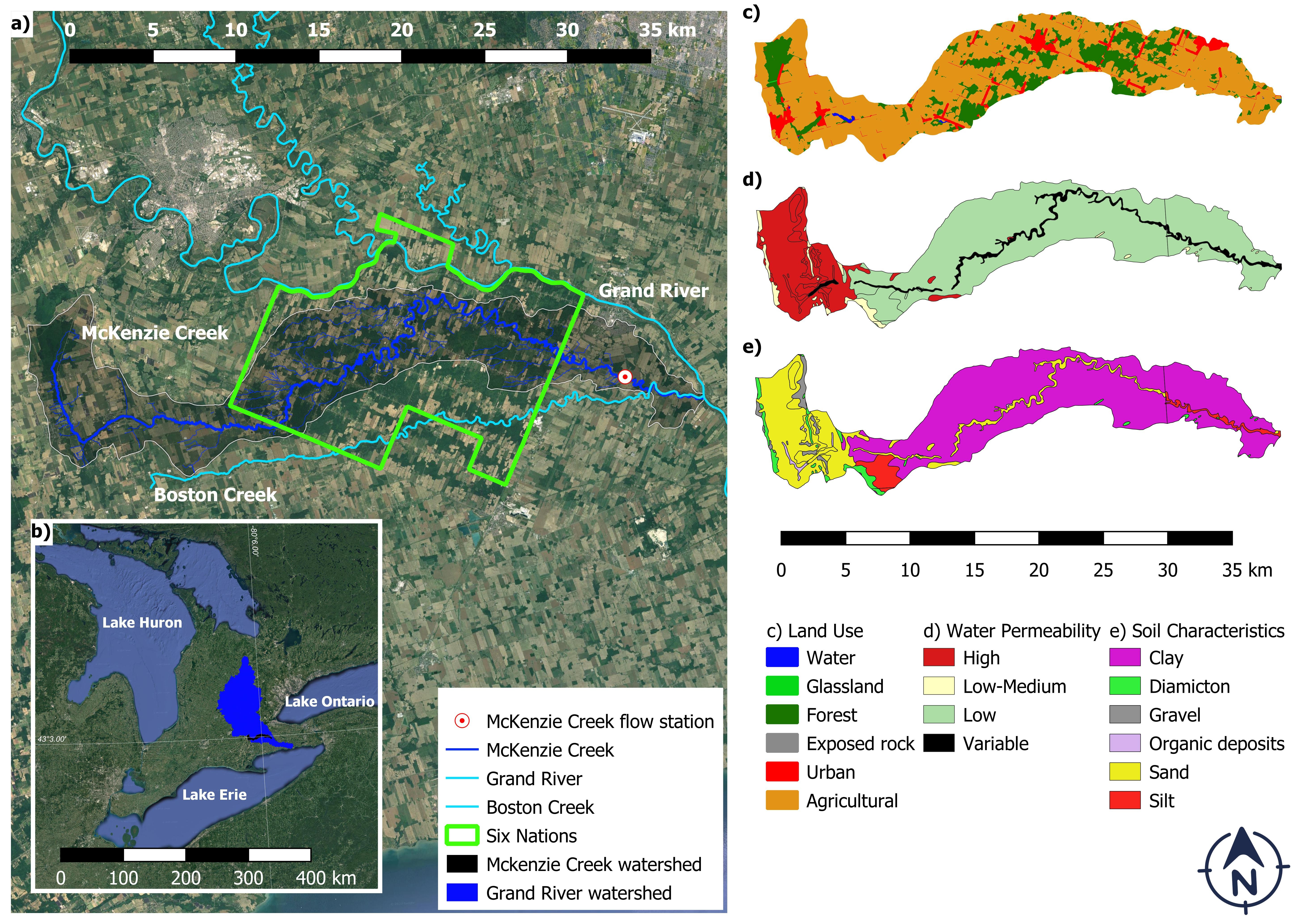
This led to a focus on the McKenzie Creek subwatershed, which was understudied compared to the Grand River watershed, according to Tariq Deen, lead author of the study at McMaster University.

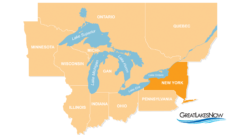
Map of the study area for “Blue and Green Water Scarcity in the McKenzie Creek Watershed of the Great Lakes Basin.” Credit: Dr. Tariq Deen

“That’s why that project was so beneficial in terms of process, because traditional ecological knowledge was the foundation of it,” said Smith.

Traditional ecological knowledge incorporates Western and Indigenous knowledge together in dialogue, Martin-Hill said, to better understand the environment.

The McMaster University study based its projections of water scarcity off of the Intergovernmental Panel on Climate Change (IPCC) Representative Concentration Pathway scenarios 4.5 and 8.5, which signify medium and high greenhouse gas emission and climate warming levels. 

The study by hydrologists and geographers looks at the projected levels for two types of water; blue and green water. While the study anticipates increased levels of water scarcity for both types of water in the future, Six Nations has already experienced these challenges. 

Blue water is fresh water that can be extracted for human activities.

To account for blue water scarcity, the study used two scenarios. The first was a low estimate scenario using monthly agricultural water consumption patterns. The second scenario estimated higher water consumption using the maximum amount of water that could be extracted, assuming this would occur with warming climate trends and an increase in agriculture.

“Under that scenario, we saw that blue water scarcity would increase to a level where it would negatively affect the ecosystem,” said Deen.

Another study on the Grand River watershed from the University of Guelph found similar trends in blue water scarcity considering increasing water demands due to climate change.

“This is a common trend where if you have more withdrawals and more agriculture use, there would be some scarcity that would be coming in,” said author and University of Guelph associate professor in water resources engineering Prasad Daggupati.  

However, water use data for the Six Nations was not included in the water scarcity estimates of the McMaster University study. This is because the Grand River Conservation Authority, who manages the McKenzie Creek watershed, does not collect water use data for the Six Nations. This means the water scarcity levels projected in both blue water scenarios are a low estimate.

“Under climate change scenarios, we saw that green water scarcity would increase throughout the next century,” Deen said.

Similar future patterns for green water scarcity were also found in the University of Guelph study, which used the same Representative Concentration Pathways to account for future impacts of climate change. 

Green water is the type of water that remains in the soil for plant growth.

“Moving into the future, obviously with increased precipitation, there would be more evapotransportation happening up, which would result in having less soil water available, which is green water,” said Daggupati.

Evapotranspiration is the process where water on land and in plants evaporates into the air.  

On top of agriculture and climate factors, corporations like Nestlé and BlueTriton have a history of extracting water without consulting and securing consent from Six Nations.

“We believe there are good veins of water that are much deeper than what wells were dug to, and that’s the water that Nestlé had been taking which we didn’t know about – 3.6 million liters every day for the last decade,” Martin-Hill said. 

The Six Nations pursued legal action and were able to get Nestlé and BlueTriton to stop their water extraction operations under previous laws requiring Indigenous consultation.

“The problem however has been made much worse because of the Bill 5 that the new federal government and Doug Ford passed so that they can bypass any kind of consultation for development, such as water extraction,” Martin-Hill said. 

According to Smith, this is a big issue because 70% of the community relies on groundwater. This issue is further exacerbated by the potential for wells running dry and the inability to support the agriculture that a lot of people at Six Nations rely on.

“I think our people have a problem with the way Western science compartmentalizes and silos things such as water,” Martin-Hill said. “We see ourselves as a part of the natural world.”

The post Climate change is worsening water crisis for Canada’s largest First Nations population appeared first on Great Lakes Now.
Original Article

Great Lakes Now

Great Lakes Now

https://www.greatlakesnow.org/2026/03/04/climate-change-is-worsening-water-crisis-for-canadas-largest-first-nations-population/

Mia Litzenberg, Great Lakes Now

How Ontario could have cracked down on Chemical Valley pollution — but chose not to

By Emma McIntosh, The Narwhal

The Great Lakes News Collaborative includes Bridge Michigan, Circle of Blue, Great Lakes Now at Detroit PBS, Michigan Public and The Narwhal who work together to bring audiences news and information about the impact of climate change, pollution, and aging infrastructure on the Great Lakes and drinking water.

Read Now at Great Lakes Now.

Original Article

Great Lakes Now

Great Lakes Now

https://www.greatlakesnow.org/2025/07/how-ontario-could-have-cracked-down-on-chemical-valley-pollution-but-chose-not-to/

The Narwhal

Where the strawberries still grow

“Nibi Chronicles,” a monthly Great Lakes Now feature, is written by Staci Lola Drouillard. A Grand Portage Ojibwe direct descendant, she lives in Grand Marais on Minnesota’s North Shore of Lake Superior. Her nonfiction books “Walking the Old Road: A People’s History of Chippewa City and the Grand Marais Anishinaabe” and “Seven Aunts” were published 2019 and 2022, and the children’s story “A Family Tree” in 2024.

Read Now at Great Lakes Now.

Original Article

Great Lakes Now

Great Lakes Now

https://www.greatlakesnow.org/2025/07/where-the-strawberries-still-grow/

Staci Lola Drouillard, Great Lakes Now

Waves of Change: Meet Ojibwe leader, activist and water walker Sharon Day

Waves of Change is an online interview series highlighting the diverse faces and perspectives shaping the environmental justice movement throughout the Great Lakes region.

Sharon Day is enrolled in the Bois Forte Band of Ojibwe and makes her home in Minnesota, where she is a founder and the executive director of the Indigenous Peoples Task Force, a vital provider of culturally appropriate health services, programs and housing.

Read Now at Great Lakes Now.

Original Article

Great Lakes Now

Great Lakes Now

https://www.greatlakesnow.org/2025/06/waves-of-change-meet-ojibwe-leader-activist-and-water-walker-sharon-day/

Great Lakes Now

How are science and tradition saving sturgeon?

When the Little River Band of Ottawa Indians in Manistee, MI, decided to start a lake sturgeon restoration program, they started by hiring two recently graduated fisheries research biologists to help them set it up.

“I remember getting there and realizing that the scientific knowledge that I had was only a piece,” fisheries biologist Marty Holtgren said.

Read Now at Great Lakes Now.

Original Article

Great Lakes Now

Great Lakes Now

https://www.greatlakesnow.org/2025/06/how-are-science-and-tradition-saving-sturgeon/

Great Lakes Now

The Legacy of Chief Blackstone: Ojibwe resistance in Great Lakes history

“Nibi Chronicles,” a monthly Great Lakes Now feature, is written by Staci Lola Drouillard. A Grand Portage Ojibwe direct descendant, she lives in Grand Marais on Minnesota’s North Shore of Lake Superior. Her nonfiction books “Walking the Old Road: A People’s History of Chippewa City and the Grand Marais Anishinaabe” and “Seven Aunts” were published 2019 and 2022, and the children’s story “A Family Tree” in 2024.

Read Now at Great Lakes Now.

Original Article

Great Lakes Now

Great Lakes Now

https://www.greatlakesnow.org/2025/05/the-legacy-of-chief-blackstone-ojibwe-resistance-in-great-lakes-history/

Staci Lola Drouillard, Great Lakes Now

Chequamegon Bay Superfund site: History, environmental impact and its importance to Indigenous communities

Chequamegon Bay plays a significant role in our human lives, including past residents like the Huron and Ottawa; and current residents, the Ojibwe-Anishinaabeg, who have gathered and made history there for a millennia. An oblong, shallow bay (61 feet at the deepest point), on the south shore of Lake Superior, the water also holds dark history as a federal Superfund site.

Read Now at Great Lakes Now.

Original Article

Great Lakes Now

Great Lakes Now

https://www.greatlakesnow.org/2025/04/chequamegon-bay-superfund-site-history-impact-importance-to-indigenous-communities/

Staci Lola Drouillard, Great Lakes Now

Fish, mines and Indigenous Rights ensnared in court case in northern Ontario

By Emma McIntosh, The Narwhal

Emma and photographer Christopher Katsarov Luna spent four days in northwestern Ontario, including visits to White Lake and Netmizaaggamig Nishnaabeg.

The Great Lakes News Collaborative includes Bridge Michigan, Circle of Blue, Great Lakes Now at Detroit PBS, Michigan Public and The Narwhal who work together to bring audiences news and information about the impact of climate change, pollution, and aging infrastructure on the Great Lakes and drinking water.

Read Now at Great Lakes Now.

Original Article

Great Lakes Now

Great Lakes Now

https://www.greatlakesnow.org/2025/04/fish-mines-and-indigenous-rights-ensnared-in-court-case-in-northern-ontario/

The Narwhal

Groups fight to preserve future of Michigan’s indigenous wild rice

By Jena Brooker, BridgeDetroit

This article was republished here with permission from BridgeDetroit.

An origin story, a teacher of life, a relative, and a source of crucial nutrition, manoomin now has a new protector.

Once covering much of Michigan’s inland lakes and streams, the wild rice (also known as mnoomin or mnomen) is indigenous to the Great Lakes region but has largely disappeared due to colonization, environmental degradation, and climate change.

Read Now at Great Lakes Now.

Original Article

Great Lakes Now

Great Lakes Now

https://www.greatlakesnow.org/2025/04/groups-fight-to-preserve-future-of-michigans-indigenous-wild-rice/

BridgeDetroit

Azhigwa Zhiiwaagamiziganike or She Makes Maple Sugar Right Now

“Nibi Chronicles,” a monthly Great Lakes Now feature, is written by Staci Lola Drouillard. A Grand Portage Ojibwe direct descendant, she lives in Grand Marais on Minnesota’s North Shore of Lake Superior. Her nonfiction books “Walking the Old Road: A People’s History of Chippewa City and the Grand Marais Anishinaabe” and “Seven Aunts” were published 2019 and 2022, and the children’s story “A Family Tree” in 2024.

Read Now at Great Lakes Now.

Original Article

Great Lakes Now

Great Lakes Now

https://www.greatlakesnow.org/2025/03/she-makes-maple-sugar-right-now/

Staci Lola Drouillard, Great Lakes Now

Could Lake Erie really become Lake Ohio?

On March 14, Ohio gubernatorial candidate Vivek Ramaswamy said that perhaps Lake Erie should be changed to Lake Ohio. 

According to reporting from Cleveland.com:

“Anybody think if there’s a Lake Michigan, maybe there should be a Lake Ohio around here?” Ramaswamy said, about 13 miles away from Lake Erie.

Read Now at Great Lakes Now.

Original Article

Great Lakes Now

Great Lakes Now

https://www.greatlakesnow.org/2025/03/could-lake-erie-really-become-lake-ohio/

Lisa John Rogers, Great Lakes Now

Nibi Chronicles: Invisible Borders

“Nibi Chronicles,” a monthly Great Lakes Now feature, is written by Staci Lola Drouillard. A Grand Portage Ojibwe direct descendant, she lives in Grand Marais on Minnesota’s North Shore of Lake Superior. Her nonfiction books “Walking the Old Road: A People’s History of Chippewa City and the Grand Marais Anishinaabe” and “Seven Aunts” were published 2019 and 2022, and the children’s story “A Family Tree” in 2024.

Read Now at Great Lakes Now.

Original Article

Great Lakes Now

Great Lakes Now

https://www.greatlakesnow.org/2025/02/nibi-chronicles-invisible-borders/

Staci Lola Drouillard, Great Lakes Now

How do you heal a sacred lake?

For over 70 years, a massive U.S. Steel plant on the shores of Spirit Lake near Duluth, Minnesota dumped toxic waste into the water, causing lasting environmental damage to this sacred site.

Spirit Lake, once a vital ecosystem rich in fish, wild rice, and wildlife, was central to the homeland of the Fond du Lac Band of Lake Superior Chippewa.

Read Now at Great Lakes Now.

Original Article

Great Lakes Now

Great Lakes Now

https://www.greatlakesnow.org/2025/02/how-do-you-heal-a-sacred-lake/

Great Lakes Now

US Forest Service firings decimate already understaffed agency: ‘It’s catastrophic’

By Katie Myers, Juanpablo Ramirez-Franco, & Izzy Ross

This coverage is made possible through a partnership between GristBPR, a public radio station serving western North Carolina, WBEZ, a public radio station serving the Chicago metropolitan region, and Interlochen Public Radio in Northern Michigan.

Read Now at Great Lakes Now.

Original Article

Great Lakes Now

Great Lakes Now

https://www.greatlakesnow.org/2025/02/us-forest-service-firings-decimate-already-understaffed-agency-its-catastrophic/

Grist

A different perspective on the fur trade

Carl Gawboy, a celebrated Minnesota artist and Ojibwe scholar of Finnish and Bois Forte Anishinaabe descent, has dedicated his life to preserving and sharing the stories of his people. In his book, Fur Trade Nation: An Ojibwe’s Graphic History, Gawboy combines his prolific artistic talent, family stories, and cultural research to shed light on a largely overlooked chapter of history.

Read Now at Great Lakes Now.

Original Article

Great Lakes Now

Great Lakes Now

https://www.greatlakesnow.org/2025/02/a-different-perspective-on-the-fur-trade/

Great Lakes Now

Tackling environmental racism in Chemical Valley

By Emma McIntosh, The Narwhal

The Great Lakes News Collaborative includes Bridge Michigan, Circle of Blue, Great Lakes Now at Detroit PBS, Michigan Public and The Narwhal who work together to bring audiences news and information about the impact of climate change, pollution, and aging infrastructure on the Great Lakes and drinking water.

Read Now at Great Lakes Now.

Original Article

Great Lakes Now

Great Lakes Now

https://www.greatlakesnow.org/2025/02/tackling-environmental-racism-in-chemical-valley/

The Narwhal

Nibi Chronicles: Protecting the protectors

“Nibi Chronicles,” a monthly Great Lakes Now feature, is written by Staci Lola Drouillard. A Grand Portage Ojibwe direct descendant, she lives in Grand Marais on Minnesota’s North Shore of Lake Superior. Her nonfiction books “Walking the Old Road: A People’s History of Chippewa City and the Grand Marais Anishinaabe” and “Seven Aunts” were published 2019 and 2022, and the children’s story “A Family Tree” in 2024.

Read Now at Great Lakes Now.

Original Article

Great Lakes Now

Great Lakes Now

https://www.greatlakesnow.org/2025/02/protecting-the-protectors/

Staci Lola Drouillard, Great Lakes Now

Life on the frontlines of Ontario’s critical mineral boom

By Emma McIntosh, The Narwhal

Photography by Christopher Katsarov Luna

The Great Lakes News Collaborative includes Bridge Michigan, Circle of Blue, Great Lakes Now at Detroit PBS, Michigan Public and The Narwhal who work together to bring audiences news and information about the impact of climate change, pollution, and aging infrastructure on the Great Lakes and drinking water.

Read Now at Great Lakes Now.

Original Article

Great Lakes Now

Great Lakes Now

https://www.greatlakesnow.org/2025/01/life-on-the-frontlines-of-ontarios-critical-mineral-boom/

The Narwhal

I Speak for the Fish: How Native Americans are saving lake sturgeon

I Speak for the Fish is a monthly column written by Great Lakes Now Contributor Kathy Johnson, coming out the third Monday of each month. Publishing the author’s views and assertions does not represent endorsement by Great Lakes Now or Detroit Public Television. 

Read Now at Great Lakes Now.

Original Article

Great Lakes Now

Great Lakes Now

https://www.greatlakesnow.org/2024/11/i-speak-for-the-fish-how-native-americans-are-saving-lake-sturgeon/

Kathy Johnson, Great Lakes Now

National Park Service Issues Landmark Order for Tribal Consultations

By Native News Online Staff, Native News Online

This article originally appeared on Native News Online. Founded in 2011, Native News Online reaches millions of Native and non-Native readers annually including American Indians, Alaska Natives, Native Hawaiians and others interested in Native American concerns.

Read Now at Great Lakes Now.

Original Article

Great Lakes Now

Great Lakes Now

https://www.greatlakesnow.org/2024/11/national-park-service-issues-landmark-order-for-tribal-consultations/

Native News Online

Nibi Chronicles: Manoomin as medicine

“Nibi Chronicles,” a monthly Great Lakes Now feature, is written by Staci Lola Drouillard. A Grand Portage Ojibwe direct descendant, she lives in Grand Marais on Minnesota’s North Shore of Lake Superior. Her nonfiction books “Walking the Old Road: A People’s History of Chippewa City and the Grand Marais Anishinaabe” and “Seven Aunts” were published 2019 and 2022, and the children’s story “A Family Tree” in 2024.

Read Now at Great Lakes Now.

Original Article

Great Lakes Now

Great Lakes Now

https://www.greatlakesnow.org/2024/10/nibi-chronicles-manoomin-as-medicine/

Staci Lola Drouillard

The lonely Lake Superior caribou and a lesson in limits

By Emma McIntosh, The Narwhal

Emma and photographer Christopher Katsarov Luna spent four days in northwestern Ontario, reporting from the shore of Lake Superior.

The Great Lakes News Collaborative includes Bridge Michigan, Circle of Blue, Great Lakes Now at Detroit PBS, Michigan Public and The Narwhal who work together to bring audiences news and information about the impact of climate change, pollution, and aging infrastructure on the Great Lakes and drinking water.

Read Now at Great Lakes Now.

Original Article

Great Lakes Now

Great Lakes Now

https://www.greatlakesnow.org/2024/10/the-lonely-lake-superior-caribou-and-a-lesson-in-limits/

Mila Murray

Points North: A New Hope for Anishinaabemowin

By Daniel Wanschura

Points North is a biweekly podcast about the land, water and inhabitants of the Great Lakes.

This episode was shared here with permission from Interlochen Public Radio.

Theresa Eischen would visit her grandparents every summer.

Read Now at Great Lakes Now.

Original Article

Great Lakes Now

Great Lakes Now

https://www.greatlakesnow.org/2024/10/points-north-a-new-hope-for-anishinaabemowin/

Interlochen Public Radio

Nibi Chronicles: The Gift of Manoomin

“Nibi Chronicles,” a monthly Great Lakes Now feature, is written by Staci Lola Drouillard. A Grand Portage Ojibwe direct descendant, she lives in Grand Marais on Minnesota’s North Shore of Lake Superior. Her nonfiction books “Walking the Old Road: A People’s History of Chippewa City and the Grand Marais Anishinaabe” and “Seven Aunts” were published 2019 and 2022, and the children’s story “A Family Tree” in 2024.

Read Now at Great Lakes Now.

Original Article

Great Lakes Now

Great Lakes Now

https://www.greatlakesnow.org/2024/09/nibi-chronicles-the-gift-of-manoomin/

Staci Lola Drouillard

‘These are not your lands to give away’: 6 First Nations take Ontario to court over mining law

By Emma McIntosh, The Narwhal

The Great Lakes News Collaborative includes Bridge Michigan; Circle of Blue; Great Lakes Now at Detroit Public Television; Michigan Public, Michigan’s NPR News Leader; and The Narwhal who work together to bring audiences news and information about the impact of climate change, pollution, and aging infrastructure on the Great Lakes and drinking water.

Read Now at Great Lakes Now.

Original Article

Great Lakes Now

Great Lakes Now

https://www.greatlakesnow.org/2024/08/these-are-not-your-lands-to-give-away-6-first-nations-take-ontario-to-court-over-mining-law/

The Narwhal

Nibi Chronicles: A conversation about Ojibwe history in Fur Trade Nation

Editor’s Note: “Nibi Chronicles,” a monthly Great Lakes Now feature, is written by Staci Lola Drouillard. A direct descendant of the Grand Portage Band of Ojibwe, she lives and works in Grand Marais on Minnesota’s North Shore of Lake Superior. Her two books “Walking the Old Road: A People’s History of Chippewa City and the Grand Marais Anishinaabe” and “Seven Aunts” were published 2019 and 2022, and she is at work on a children’s story.

Read Now at Great Lakes Now.

Original Article

Great Lakes Now

Great Lakes Now

https://www.greatlakesnow.org/2024/08/nibi-chronicles-conversation-about-ojibwe-history-in-fur-trade-nation/
Staci Lola Drouillard

Operation Manoomin: Restoring Wild Rice along the Detroit River

Great Lakes Moment is a monthly column written by Great Lakes Now Contributor John Hartig. Publishing the author’s views and assertions does not represent endorsement by Great Lakes Now or Detroit PBS.

Manoomin (mah-NOO-mehn) or wild rice was once very common in coastal marshes along the Detroit River and has always been sacred to First Nations.

Read Now at Great Lakes Now.

Original Article

Great Lakes Now

Great Lakes Now

https://www.greatlakesnow.org/2024/08/operation-manoomin-restoring-wild-rice-along-the-detroit-river/
John Hartig

Ojibwemodaa! Let’s speak Ojibwe!

“Nibi Chronicles,” a monthly Great Lakes Now feature, is written by Staci Lola Drouillard. A Grand Portage Ojibwe direct descendant, she lives in Grand Marais on Minnesota’s North Shore of Lake Superior. Her nonfiction books “Walking the Old Road: A People’s History of Chippewa City and the Grand Marais Anishinaabe” and “Seven Aunts” were published 2019 and 2022, and the children’s story “A Family Tree” in 2024.

Read Now at Great Lakes Now.

Original Article

Great Lakes Now

Great Lakes Now

https://www.greatlakesnow.org/2024/07/ojibwemodaa-lets-speak-ojibwe/

Staci Lola Drouillard

Seneca Nation Sues City for More than 450,000 Gallons of Wastewater Overflow

By Native News Online Staff, Native News Online

This article originally appeared on Native News Online. Founded in 2011, Native News Online reaches millions of Native and non-Native readers annually including American Indians, Alaska Natives, Native Hawaiians and others interested in Native American concerns.

Read Now at Great Lakes Now.

Original Article

Great Lakes Now

Great Lakes Now

https://www.greatlakesnow.org/2024/07/seneca-nation-sues-city-for-more-than-450000-gallons-of-wastewater-overflow/

Native News Online

As climate change alters lakes, tribes and conservationists fight for the future of spearfishing

By Melina Walling and John Locher, Associated Press

HAYWARD, Wis. (AP) — Chilly nights on northern Wisconsin’s Chippewa Flowage don’t deter 15-year-old spearfisher Gabe Bisonette. He’s been learning the Ojibwe practice for so long now that when his headlamp illuminates the eye-shine of his quarry, he can communicate the sighting to his dad with hardly a word.

Read Now at Great Lakes Now.

Original Article

Great Lakes Now

Great Lakes Now

https://www.greatlakesnow.org/2024/07/as-climate-change-alters-lakes-tribes-and-conservationists-fight-for-the-future-of-spearfishing/

The Associated Press

New Interagency Agreement Supports Water Tribal Water and Sanitation Projects

By Native News Online Staff, Native News Online

This article originally appeared on Native News Online. Founded in 2011, Native News Online reaches millions of Native and non-Native readers annually including American Indians, Alaska Natives, Native Hawaiians and others interested in Native American concerns.

Read Now at Great Lakes Now.

Original Article

Great Lakes Now

Great Lakes Now

https://www.greatlakesnow.org/2024/05/new-interagency-agreement-supports-water-tribal-water-and-sanitation-projects/

Native News Online

Indigenous peoples rush to stop ‘false climate solutions’ ahead of next international climate meeting

By Maria Parazo Rose

This story was originally published by Grist. Sign up for Grist’s weekly newsletter here.”

This story is published as part of the Global Indigenous Affairs Desk, an Indigenous-led collaboration between Grist, High Country News, ICT, Mongabay, Native News Online, and APTN.

Read Now at Great Lakes Now.

Original Article

Great Lakes Now

Great Lakes Now

https://www.greatlakesnow.org/2024/05/indigenous-peoples-rush-to-stop-false-climate-solutions-ahead-of-next-international-climate-meeting/

Grist

Your Foraging Journey: A Framework to Sustainable and Safe Practices

Foraging connects us with the natural world, offering a pathway to understand the land, its cycles, and the bountiful edible plants that grow wild around us. Whether you’re a novice eager to explore the greens outside your doorstep or an experienced forager looking to deepen your practice, this guide provides essential insights into starting your foraging journey, identifying plants, harvesting sustainably, and ensuring safety.

Read Now at Great Lakes Now.

Original Article

Great Lakes Now

Great Lakes Now

https://www.greatlakesnow.org/2024/04/your-foraging-journey-a-framework-to-sustainable-and-safe-practices/

Lisa M. Rose

Sault tribe challenges Michigan fishing deal, chides ‘preposterous’ rules

By Kelly House, Bridge Michigan

The Great Lakes News Collaborative includes Bridge Michigan; Circle of Blue; Great Lakes Now at Detroit Public Television; Michigan Public, Michigan’s NPR News Leader; and The Narwhal who work together to bring audiences news and information about the impact of climate change, pollution, and aging infrastructure on the Great Lakes and drinking water.

Read Now at Great Lakes Now.

Original Article

Great Lakes Now

Great Lakes Now

https://www.greatlakesnow.org/2024/04/sault-tribe-challenges-michigan-fishing-deal-chides-preposterous-rules/

Bridge Michigan

Nibi Chronicles: The nation-to-nation fight against extractivism

Ricky DeFoe can tell you all you need to know about fresh water on Earth in one minute or less. He rattles off that “70% of our planet — our Mother Earth is water. Ninety-seven percent of that water is saltwater. That leaves just 3% freshwater — 1% is in the atmosphere, 1% is subsurface, and 1% is on the surface.

Read Now at Great Lakes Now.

Original Article

Great Lakes Now

Great Lakes Now

https://www.greatlakesnow.org/2024/03/nibi-chronicles-the-nation-to-nation-fight-against-extractivism/

Staci Lola Drouillard

Tribes urge U.S. to weigh in on Line 5 case as appeal sits in court

By Izzy Ross, Interlochen Public Radio

This coverage is made possible through a partnership with IPR and Grist, a nonprofit independent media organization dedicated to telling stories of climate solutions and a just future.

Twelve miles of the Line 5 pipeline cross the lands of the Bad River Band of Lake Superior Chippewa in northern Wisconsin.

Read Now at Great Lakes Now.

Original Article

Great Lakes Now

Great Lakes Now

https://www.greatlakesnow.org/2024/03/tribes-urge-u-s-to-weigh-in-on-line-5-case-as-appeal-sits-in-court/

Interlochen Public Radio

Native Farm Bill Coalition Leaders Critical of USDA Equity Commission Final Report

By Levi Rickert, Native News Online

This article originally appeared on Native News Online. Founded in 2011, Native News Online reaches millions of Native and non-Native readers annually including American Indians, Alaska Natives, Native Hawaiians and others interested in Native American concerns.

In a critical response to the U.S.

Read Now at Great Lakes Now.

Original Article

Great Lakes Now

Great Lakes Now

https://www.greatlakesnow.org/2024/03/native-farm-bill-coalition-leaders-critical-of-usda-equity-commission-final-report/

Native News Online

Lac du Flambeau Ojibwe Winter Games go on despite little snow on the ground

This story was originally published by WXPR. WXPR is a community-licensed public radio station serving north central Wisconsin and adjacent areas of Michigan’s Upper Peninsula. Listen to their stories here.

Lac du Flambeau 6th Grader Gertie Moustache pulls a wooden, dulled spear from a bin.

Read Now at Great Lakes Now.

Original Article

Great Lakes Now

Great Lakes Now

https://www.greatlakesnow.org/2024/02/lac-du-flambeau-ojibwe-winter-games-go-on-despite-little-snow-on-ground/

WXPR

Reimagined St. Ignace memorial to be a showcase of Native American history

By Janelle D. James, Bridge Michigan

The Great Lakes News Collaborative includes Bridge Michigan; Circle of Blue; Great Lakes Now at Detroit Public Television; Michigan Public, Michigan’s NPR News Leader; and The Narwhal who work together to bring audiences news and information about the impact of climate change, pollution, and aging infrastructure on the Great Lakes and drinking water.

Read Now at Great Lakes Now.

Original Article

Great Lakes Now

Great Lakes Now

https://www.greatlakesnow.org/2024/02/reimagined-st-ignace-memorial-to-be-a-showcase-of-native-american-history/

Bridge Michigan

Twenty companies pledge to use all parts of Great Lakes fish by 2025

This article was republished here with permission from Great Lakes Echo.

By Shealyn Paulis, Great Lakes Echo

Fish-leather purses and wallets may make their way into Great Lakes fashion with an initiative to use 100% of commercially caught fish by 2025.

One of the latest projects of a binational Great Lakes organization is to fully use the region’s whitefish, lake trout, yellow perch, walleye and white sucker.

Read Now at Great Lakes Now.

Original Article

Great Lakes Now

Great Lakes Now

https://www.greatlakesnow.org/2024/01/twenty-companies-pledge-to-use-all-parts-of-great-lakes-fish-by-2025/

Great Lakes Echo

Upper Peninsula tribe closer to compensation for land seized by the U.S. government

By Lester Graham, Michigan Radio

The Great Lakes News Collaborative includes Bridge Michigan; Circle of Blue; Great Lakes Now at Detroit Public Television; and Michigan Radio, Michigan’s NPR News Leader; who work together to bring audiences news and information about the impact of climate change, pollution, and aging infrastructure on the Great Lakes and drinking water.

Read Now at Great Lakes Now.

Original Article

Great Lakes Now

Great Lakes Now

https://www.greatlakesnow.org/2023/12/upper-peninsula-tribe-closer-to-compensation-for-land-seized-by-the-u-s-government/

Michigan Radio

Nibi Chronicles: How to craft a memorandum of understanding with trout

Editor’s Note: “Nibi Chronicles,” a monthly Great Lakes Now feature, is written by Staci Lola Drouillard. A direct descendant of the Grand Portage Band of Ojibwe, she lives and works in Grand Marais on Minnesota’s North Shore of Lake Superior. Her two books “Walking the Old Road: A People’s History of Chippewa City and the Grand Marais Anishinaabe” and “Seven Aunts” were published 2019 and 2022, and she is at work on a children’s story.

Read Now at Great Lakes Now.

Original Article

Great Lakes Now

Great Lakes Now

https://www.greatlakesnow.org/2023/12/nibi-chronicles-how-to-craft-a-memorandum-of-understanding-with-trout/

Staci Lola Drouillard

Four Michigan tribes receive funding to support recycling initiatives

By Izzy Ross, Interlochen Public Radio

This coverage is made possible through a partnership with IPR and Grist, a nonprofit independent media organization dedicated to telling stories of climate solutions and a just future.

Four tribes in Michigan will receive funding from the U.S.

Read Now at Great Lakes Now.

Original Article

Great Lakes Now

Great Lakes Now

https://www.greatlakesnow.org/2023/12/four-michigan-tribes-receive-funding-to-support-recycling-initiatives/

Interlochen Public Radio

The Four Sisters: Bangs, Lugalette, Bannock and Frybread

Editor’s Note: “Nibi Chronicles,” a monthly Great Lakes Now feature, is written by Staci Lola Drouillard. A direct descendant of the Grand Portage Band of Ojibwe, she lives and works in Grand Marais on Minnesota’s North Shore of Lake Superior. Her two books “Walking the Old Road: A People’s History of Chippewa City and the Grand Marais Anishinaabe” and “Seven Aunts” were published 2019 and 2022, and she is at work on a children’s story.

Read Now at Great Lakes Now.

Original Article

Great Lakes Now

Great Lakes Now

https://www.greatlakesnow.org/2023/11/the-four-sisters-bangs-lugalette-bannock-and-frybread/

Staci Lola Drouillard

Waves of Change: Meet herbalist and forager Monica Cady

Waves of Change is a new online interview series highlighting the diverse faces and perspectives shaping the environmental justice movement throughout the Great Lakes region.

This month, we spoke with Monica Cady, a member of the Sault Tribe of Chippewa who is a forager and herbalist living in Hessel, Michigan — a place that is part of her tribe’s ancestral homelands in what is now known as Michigan’s Upper Peninsula.

Read Now at Great Lakes Now.

Original Article

Great Lakes Now

Great Lakes Now

https://www.greatlakesnow.org/2023/10/waves-of-change-meet-herbalist-and-forager-monica-cady/

GLN Editor

Nibi Chronicles: Grand Portage Water Warriors

Editor’s Note: “Nibi Chronicles,” a monthly Great Lakes Now feature, is written by Staci Lola Drouillard. A direct descendant of the Grand Portage Band of Ojibwe, she lives and works in Grand Marais on Minnesota’s North Shore of Lake Superior. Her two books “Walking the Old Road: A People’s History of Chippewa City and the Grand Marais Anishinaabe” and “Seven Aunts” were published 2019 and 2022, and she is at work on a children’s story.

Read Now at Great Lakes Now.

Original Article

Great Lakes Now

Great Lakes Now

https://www.greatlakesnow.org/2023/10/nibi-chronicles-grand-portage-water-warriors/

Staci Lola Drouillard

I’m working to revitalize an Indigenous language and bring it into the future

By John-Paul Chalykoff, Algoma University

 is an independent and nonprofit source of news, analysis and commentary from academic experts.

Language is foundational to Indigenous communities, including my own, and a vital connection to our cultures.

It is well documented how residential schools in Canada and boarding schools in the U.S. 

Read Now at Great Lakes Now.

Original Article

Great Lakes Now

Great Lakes Now

https://www.greatlakesnow.org/2023/10/im-working-to-revitalize-an-indigenous-language-and-bring-it-into-the-future/

The Conversation

Great Lakes Moment: University of Windsor to build capacity for Canada’s national urban parks

Eighty percent of Canadians live in urban areas, and most are disconnected from nature. To help address this, Canada is creating a network of national urban parks not only to conserve nature, but to connect people with it, and advance reconciliation with Indigenous peoples.

Now, the University of Windsor has become a partner by creating the first university-based National Urban Park Hub.

Read Now at Great Lakes Now.

Original Article

Great Lakes Now

Great Lakes Now

https://www.greatlakesnow.org/2023/09/great-lakes-moment-university-windsor-build-capacity-canada-national-urban-parks/

John Hartig

Minnesota Tribe Sets Enforceable Rules To Safeguard Wild Rice and Water Supply

By Keith Schneider, Circle of Blue

The Great Lakes News Collaborative includes Bridge Michigan; Circle of Blue; Great Lakes Now at Detroit Public Television; and Michigan Radio, Michigan’s NPR News Leader; who work together to bring audiences news and information about the impact of climate change, pollution, and aging infrastructure on the Great Lakes and drinking water.

Read Now at Great Lakes Now.

Original Article

Great Lakes Now

Great Lakes Now

https://www.greatlakesnow.org/2023/08/minnesota-tribe-enforceable-rules-safeguard-wild-rice-water-supply/

Circle of Blue

Survival of wild rice threatened by climate change, increased rainfall in northern Minnesota

By  Andrew Hazzard, Sahan Journal 

This piece is part of a collaboration that includes the Institute for Nonprofit News, Borderless, Ensia, Planet Detroit, Sahan Journal, and Wisconsin Watch, as well as the Guardian and Inside Climate News. The project was supported by the Joyce Foundation. 

ONAMIA, MINN.—Todd Moilanen paddles gently through wild rice beds on Ogechie Lake, trying not to disturb a loon sleeping on its back on a nest of reeds a few feet away.

Read Now at Great Lakes Now.

Original Article

Great Lakes Now

Great Lakes Now

https://www.greatlakesnow.org/2023/08/survival-wild-rice-threatened-climate-change-increased-rainfall-northern-minnesota/

Sahan Journal