By Kelly House, Bridge Michigan

The Great Lakes News Collaborative includes Bridge Michigan; Circle of Blue; Great Lakes Now at Detroit PBS; Michigan Public, Michigan’s NPR News Leader; and The Narwhal who work together to bring audiences news and information about the impact of climate change, pollution, and aging infrastructure on the Great Lakes and drinking water. This independent journalism is supported by the Charles Stewart Mott Foundation. Find all the work HERE.

Changes to Michigan’s energy sector are expected to dominate the headlines in 2026, with big implications for the state’s environment.

From data centers, coal plants and solar arrays to petroleum pipelines and aging dams, energy-related decisions next year that could shape Michigan’s environment for decades to come, affecting everything from which fish can survive in rivers to how quickly the state’s utilities ditch planet-warming fossil fuels. 

Here are the topics to watch:  

Data centers

Swift and secretive dealmaking involving some of the world’s most powerful corporations. 

Vast quantities of money, land and electricity. 

Promises of prosperity from a booming industry, coupled with fears that Michiganders could be left holding the bag in a bust.

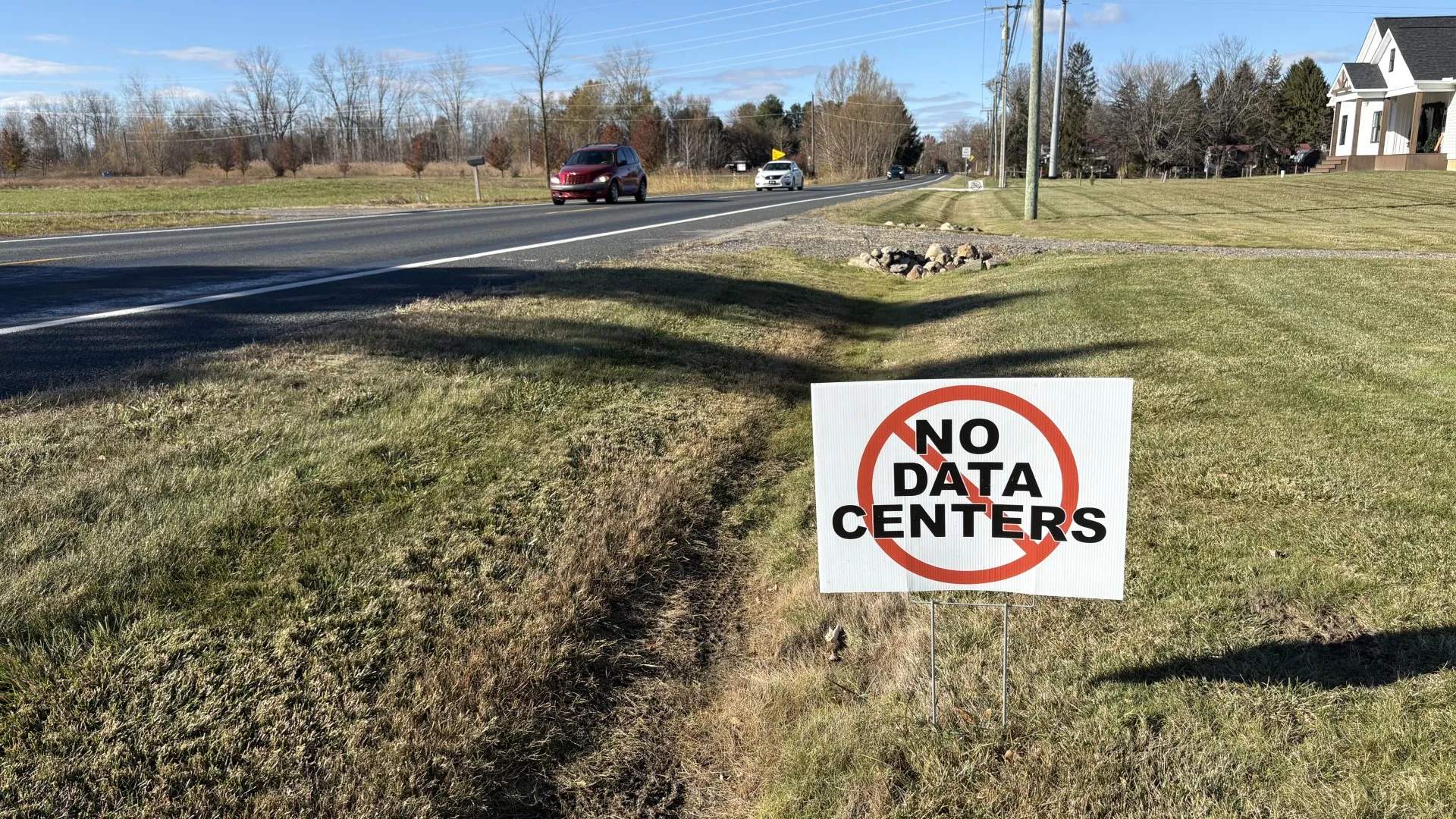
Given those dynamics, it’s no wonder data centers became one of Michigan’s biggest environmental and political issues in 2025. And the debate shows no signs of letting up in 2026.

“It’s not going away,” said Sarah Mills, a land use planning expert at the University of Michigan who advises local officials as they consider how to respond to the data center boom.

“I’m telling you, like, two weeks ago, the priest talked about it at church.”

Tech giants OpenAI, Oracle and Related Digital expect to break ground soon on Michigan’s first hyperscale data center in Saline Township, a milestone hailed by some as a win for Michigan, and maligned by others as an example of corporations railroading communities.

Developers have approached multiple other communities with data center proposals, prompting pushback from neighbors and fears that rapid expansion of the energy and water-hungry industry could imperil Michigan’s environment and drive up utility rates.

Support and opposition blurs party lines. Data center supporters include President Donald Trump, a Republican, and Gov. Gretchen Whitmer, a Democrat. Both contend the facilities are important to state and national economic development and national security interests.

Meanwhile, bipartisan criticism has emerged in response to Michigan’s tax breaks for the industry and regulators’ approval of data center deals with limited public scrutiny. They note that the facilities employ few permanent workers and have overtaxed water and energy supplies in some other data center-heavy states.

Michigan’s two largest utilities, Consumers Energy and DTE Energy, both say they’re in late-stage negotiations to bring on several gigawatts’ worth of new data centers in the near future.

“We’re talking about doubling our entire electricity demand,” said Bryan Smigielski, a Michigan organizer with the Sierra Club. “There’s no way to do that in a sustainable manner.”

The next year will be crucial for both sides, as developers continue to pursue deals and local governments decide whether to grant them access to the land they need to operate.

Michigan’s energy transition

More than two years after state lawmakers passed a law requiring utilities to get all of their power from designated “clean” sources by 2040, Michiganders will get their first glimpse next year at how the largest utilities plan to meet that goal.

Both DTE Energy and Consumers Energy, the monopoly utilities that provide electricity to the vast majority of Michigan households, are scheduled to file so-called integrated resources plans next year with the Michigan Public Service Commission. 

The long-range planning documents spell out how utilities plan to meet demand over the next 20 years. Because of the new climate law, they also must include details about how they’ll invest in clean energy to get off fossil fuels.

Both utilities contend they’re on track to meet the 2040 deadline, along with an interim deadline to reach 50% renewables by 2030. 

But they have a long way to go. Right now, about 12% of Michigan’s in-state electricity generation is from renewable sources.

Concern has emerged recently that growing demand from data centers could make it harder for utilities to make the transition. A single hyperscale facility typically consumes as much power as a large American city.

And at least in the near-term, DTE Energy is planning to power the Saline Township facility largely with fossil fuel energy generated by ramping up production at existing power plants.

“We cannot build renewables fast enough to avoid at least a temporary increase in greenhouse gas emissions” from data centers, said Douglas Jester, managing partner at the energy consulting firm 5 Lakes Energy.

Over the longer term, utilities will need to build even more solar arrays, wind farms or other approved clean energy to meet rising data center demand while still complying with the state’s clean energy law. Adding a single 1 gigawatt data center to the grid would require an extra 10,000 acres of solar arrays if utilities looked to power it exclusively with solar.

That raises big questions about where that energy infrastructure might be built and how utilities will add it to a power grid that’s already facing lengthy interconnection backlogs.

Palisades power plant

Against that backdrop, the Palisades nuclear plant has emerged as a controversial answer to Michigan’s energy supply conundrum.

It seems all but certain that the shuttered facility on Michigan’s southwestern shoreline will reopen in 2026, as the federal and state governments pour money into an effort to boost Michigan’s supply of carbon-free energy during a time of rising demand.

Subsidies for the project now top $3.5 billion. 

A nuclear plant control room
A training facility at the Palisades nuclear plant includes technology dating back to the 1970s, when the plant came online. Nuclear energy proponents want Michigan to be ground zero for an industrywide renaissance. (Kelly House/Bridge Michigan)

The federal government has authorized a $1.5 billion loan plus $1.3 billion in grants to help two rural electric cooperatives buy power from the plant and another $400 million to build additional reactors at the site. Michigan taxpayers have chipped in another $300 million. 

“I’ll keep working with anyone to grow Michigan’s economy and build a more affordable, clean energy future right here in Michigan,” said Whitmer, a supporter of the restart plan. 

Officials with Holtec Energy, the plant’s owner, began refueling the facility in October and say they’re on track to start generating power as soon as year’s end. But as of early December, federal officials were still inspecting the plant and opponents were fighting on multiple fronts to prevent the restart. 

Arguing the promise of emissions-free energy is not worth the risk of reopening a 54-year-old plant that has a history of problems, three anti-nuclear groups filed a November lawsuit contending the restart scheme should never have received regulatory approval.

“They’re making a mockery of safety regulations and even laws,” said Kevin Kamps, a Kalamazoo-based radioactive waste specialist with Beyond Nuclear. His group will likely file additional suits if the Nuclear Regulatory Commission allows the plant to reopen.

And then there’s the issue of what to do with the spent nuclear fuel. The United States still has no permanent storage location for the stuff, so, for now, it’d be held indefinitely in storage casks situated on concrete pads near the Great Lakes shoreline. 

Line 5

After years of delays, cost overruns, lawsuits and political controversy, 2026 could be the year Michigan learns for sure whether Enbridge Energy will build the Line 5 tunnel.

Federal regulators say they’ll decide by spring whether to grant key permits for the proposed concrete-lined tunnel beneath the Straits of Mackinac, where Enbridge has said since 2018 it plans to reroute the petroleum pipeline that currently poses an oil spill risk in the open water of the Straits. 

But this fall, they announced they’re also studying a separate option that would involve drilling a narrow borehole hundreds of feet underground and snaking the pipeline through it.

While pipeline fans and foes await decisions on the federal permit and a separate state permit that Enbridge needs to begin tunnel construction, the US Supreme Court is preparing to issue a key ruling pertaining to Attorney General Dana Nessel’s yearslong effort to shut down the pipeline.

The court will decide which court  — federal or state — should decide whether the pipeline shuts down. 

It may sound insignificant, but onlookers widely agree that a state court is more likely to side with Nessel, while a federal court is more likely to side with Enbridge.

Climate change

So far, Michigan is seeing its most normal winter in years, by historic standards.

Snowpack across much of the state is at or above average, temperatures have been seasonally chilly, and a brave few are already augering fishing holes into the ice as Great Lakes bays freeze over.

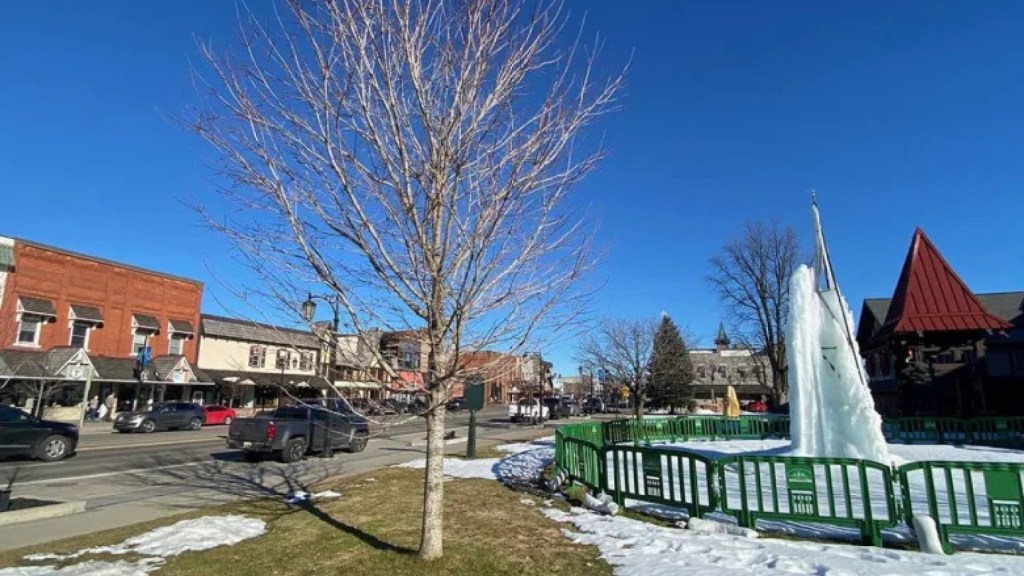
Downtown Gaylord
Michigan has endured a string of lackluster winters, including in 2024, when the ice spire outside Gaylord City Hall was rapidly melting on an early February day. (Kelly House/Bridge Michigan)

But the respite from a string of lackluster winters and smoky, hot summers can’t mask the fact that Earth’s atmosphere is steadily warming, with consequences reverberating into the Great Lakes region’s ecosystem.

Bridge has written extensively about how climate change affects Michigan, from lost winter pastimes to disappearing fish and worsening storm damage. It’s impossible to say what sort of climate disruption is in store for Michigan in 2026, but you can bet on more coverage about how the global changes are hitting home locally. 

The post 5 Michigan environment stories to watch in 2026 appeared first on Great Lakes Now.

Original Article

Great Lakes Now

Great Lakes Now

https://www.greatlakesnow.org/2025/12/30/5-michigan-environment-stories-to-watch-in-2026/

Kelly House, Bridge Michigan

After the flood: your support helps us advocate for free-flowing rivers

Support River Alliance of Wisconsin with a special year-end gift that will sustain our work to unite water advocates across the state to protect and restore Wisconsin’s waters. Your generous contribution – and impact for Wisconsin’s waters – will be matched dollar for dollar up to $18,000.


Manawa, Wisconsin faces decisions after a flood

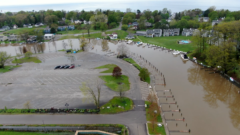
Early in the morning of July 5, 2024, a storm cell moved over central Wisconsin. In just two hours, four inches of rain had been dumped across the Little Wolf River watershed, which had already been hit with heavy rainfall in the preceding weeks.

In Appleton, streets became impassible. Flash flood warnings were issued in Calumet, Manitowoc, Outagamie and Brown counties. But the Waupaca County town of Manawa was hit the hardest.

Four hours after the storm began, downed trees and debris from the surging Little Wolf were pushed through Manawa’s 180-acre millpond and into the aging dam. The waters overwhelmed the dam, and the earthen berm to the north gave way.

The library nearby was forced to evacuate; the water treatment facility was flooded; the Mid-West Rodeo, the town’s largest annual event that brings hundreds of thousands of dollars into the community, was cancelled; and more than 100 people had to vacate their homes until the waters subsided.


How we help: when dam removal is necessary

Since our inception, River Alliance of Wisconsin has been a leading voice advocating for the removal of those dams that are unnecessary, unsafe, or incapable of withstanding the infrastructure demands new climate challenges will bring. This is an essential part of our mission to protect and restore Wisconsin’s waters.

Over the last few years, we’ve recommitted ourselves to dam removal advocacy, now with renewed urgency as devastating storms like the one that hit Manawa last year become more frequent, putting communities in direct conflict with the waters they were built around.

The benefits of dam removal are clear: cleaner water, improved wildlife habitat, lowered flooding risks, increased recreational opportunities, and lowered maintenance costs.

However, federal and state resources needed to remove dams and restore rivers are increasingly hard to come by.

Even in communities not faced with the threat of imminent dam failure, conversations about restoring our waters to their natural state are incredibly fraught.

At a fundamental level, these conversations are about restoring community-wide, democratic decision-making to our shared water resources. Who is allowed to reap the benefits of dammed rivers? Who will be forced to take on the consequences of extreme storms on unsafe dams or droughts on heavily impounded rivers?

For three decades, River Alliance of Wisconsin has helped water advocates navigate these complex interactions in their own communities across the state.

Wisconsinites form deep, emotional connections to our waters, so it can be hard to imagine the possibilities of a community existing in harmony with a free-flowing river when dams and their impounded waters are all that many community members have ever known.

And navigating the available options when dam removal is on the table is incredibly complex. The challenges are numerous: determining who has decision-making authority, which agency inspects and/or licenses the dam, where to find funding for removal and the accompanying habitat restoration, and how advocates can best make their voices heard.

River Alliance has become a trusted ally for people looking to restore their rivers and support climate-resilient communities because we have the experience and technical expertise to

  • help communities navigate complex conversations about dam removal and hydropower relicensing.
  • connect water advocates with resources needed to fund removal and restoration efforts.
  • be a voice for rivers when hydroelectric dam removal isn’t an option by demanding better conditions for wildlife, water quality and quantity, and recreation.
  • advocate for nature-based solutions for flood mitigation over human-built infrastructure.
  • connect Wisconsinites to our waters and wildlife through educational events and paddle trips – like our native mussel paddle on the Chippewa River in August.

What’s next for Manawa

Today the Manawa community has an incredible opportunity to imagine how a free-flowing Little Wolf, which has largely returned to its original channel, could enrich the city through fish passage, ecological health, recreation, and – critically – flood resilience.

For the Manawa dam, there are two paths forward: restore the river, or rebuild the dam for an estimated $8.4 million – 12 times the cost of restoration.

Like we have in communities across Wisconsin for the last three decades, we stand with local advocates in Manawa passionate about what a restored river could mean for their community. As climate change continues to threaten aging and sometimes unnecessary dams around the state, your support helps us work together to build a cleaner, more climate resilient Wisconsin.

Help us be an advocate for people who see a future of free-flowing rivers. Your generosity with a year-end gift helps River Alliance continue to protect and restore our waters for everyone who calls Wisconsin home.

– Ellen Voss, Climate Resilience Director


This message is made possible by generous donors who believe people have the power to protect and restore water. Subscribe to our Word on the Stream email newsletter to receive stories, action alerts and event invitations in your inbox. Support our work with your contribution today.

Miles Paddled visits the site of the damaged dam in Manawa

The full video is a great way to witness changes in the landscape at river level. The view of the damaged dam starts around the 13:45 mark.

The post After the flood: your support helps us advocate for free-flowing rivers appeared first on River Alliance of WI.

Original Article

Blog - River Alliance of WI

Blog - River Alliance of WI

https://wisconsinrivers.org/2025-year-end-donations/

Allison Werner

New study links seasonal pollen to higher suicide risk, experts warn

A new study between researchers at the University of Michigan and Wayne State University, looked at suicide rates in metropolitan areas around the United States. When looking at data from 2000 to 2018, they found a direct correlation to rises in seasonal pollen. While it is still unknown how exactly allergies work as a tipping point for some people, the research adds to a burgeoning body of work that shows this parallel exists.  

Read Now at Great Lakes Now.

Original Article

Great Lakes Now

Great Lakes Now

https://www.greatlakesnow.org/2025/10/new-study-links-seasonal-pollen-to-higher-suicide-risk-experts-warn/

Lisa John Rogers, Great Lakes Now

How Buffalo, New York has adapted to and embraced an influx of climate migrants

Buffalo is not a place that typically makes national headlines outside of football season. But in late July, the city did exactly that for one hugely significant reason: it became the last large city in the U.S. Lower 48 to have never reached 100 F.

At a time of rising temperatures and water levels, along with the threat of wildfires and smoke, many are reassessing where to live and Buffalo is embracing the “climate haven” tag.

Read Now at Great Lakes Now.

Original Article

Great Lakes Now

Great Lakes Now

https://www.greatlakesnow.org/2025/10/how-buffalo-new-york-has-adapted-to-and-embraced-an-influx-of-climate-migrants/

Stephen Starr, Great Lakes Now

How Buffalo, New York has adapted to and embraced an influx of climate migrants

Buffalo is not a place that typically makes national headlines outside of football season. But in late July, the city did exactly that for one hugely significant reason: it became the last large city in the U.S. Lower 48 to have never reached 100 F.

At a time of rising temperatures and water levels, along with the threat of wildfires and smoke, many are reassessing where to live and Buffalo is embracing the “climate haven” tag.

Read Now at Great Lakes Now.

Original Article

Great Lakes Now

Great Lakes Now

https://www.greatlakesnow.org/2025/10/how-buffalo-new-york-has-adapted-to-and-embraced-an-influx-of-climate-migrants/

Stephen Starr, Great Lakes Now

The ready access to nature and winter sports is what prompted Elizabeth Scott and her family to up sticks from Portland, Oregon, to Houghton on Michigan’s Keweenaw Peninsula in summer 2021.

With 29% of Michigan’s territory and only 3% of its population, to many, the Upper Peninsula (U.P.) might appear a dream place to start over.

Read Now at Great Lakes Now.

Original Article

Great Lakes Now

Great Lakes Now

https://www.greatlakesnow.org/2025/09/climate-migrations-impact-on-michigans-upper-peninsula/

Stephen Starr, Great Lakes Now

Stroll along Cleveland’s Edgewater Pier on a summer evening, and you’ll hear Arabic, Spanish, and other languages wafting through the lake air. For decades, international immigrants have found a home in the city of Lake Erie.

But now, there’s an increasing chance that future waves of migrants — from Florida, Arizona, California, and beyond — could move here as extreme weather events caused by climate change in those regions prompt people to rethink where they want to live.

Read Now at Great Lakes Now.

Original Article

Great Lakes Now

Great Lakes Now

https://www.greatlakesnow.org/2025/09/how-great-lakes-cities-are-preparing-for-climate-migration/

Stephen Starr, Great Lakes Now

Cleveland, NOACA seek public input on climate action plan

By Zaria Johnson, Ideastream Public Media

This story was originally published by Ideastream.

Several northeast Ohio counties will soon have a regional climate action plan with recommendations for reducing greenhouse gas emissions that worsen the effects of climate change like extreme heat, severe storms and worsened water quality.

Read Now at Great Lakes Now.

Original Article

Great Lakes Now

Great Lakes Now

https://www.greatlakesnow.org/2025/08/cleveland-noaca-seek-public-input-on-climate-action-plan/

Ideastream Public Media

Local health group seeks Northeast Ohio climate resilience solutions from those most at risk

By Zaria Johnson, Ideastream Public Media

This story was originally published by Ideastream.

The Northeast Ohio Black Health Coalition is exploring the climate resilience of Northeast Ohio by identifying those most at risk and provide possible solutions.

The coalition, through a partnership with the National Oceanic and Atmospheric Administration and Ohio State University’s Center for Health Outcomes and Policy Evaluation Studies, has hosted Reimagining Communities Conversations in Ashtabula, Cuyahoga, Lake and Mahoning counties so far to see how prepared residents feel in the face of severe weather made worse by climate change.

Read Now at Great Lakes Now.

Original Article

Great Lakes Now

Great Lakes Now

https://www.greatlakesnow.org/2025/07/local-health-group-seeks-northeast-ohio-climate-resilience-solutions-from-those-most-at-risk/

Ideastream Public Media

Chicago was supposed to warn residents about toxic lead pipes last year. Most still have no idea.

By Keerti Gopal & Juanpablo Ramirez-Franco

This story is a partnership between GristInside Climate News, and WBEZ, a public radio station serving the Chicago metropolitan region. This coverage is made possible through an ongoing partnership between Grist and WBEZ.

Read Now at Great Lakes Now.

Original Article

Great Lakes Now

Great Lakes Now

https://www.greatlakesnow.org/2025/07/chicago-was-supposed-to-warn-residents-about-toxic-lead-pipes-last-year-most-still-have-no-idea/

Inside Climate News and Grist

After Trump cuts, Michigan helps pay for remainder of climate work program

By Izzy Ross, Interlochen Public Radio

This coverage is made possible through a partnership between Interlochen Public Radio and Grist, a nonprofit environmental media organization.

Lucas Roff met his then-girlfriend when he was going to college at Lake Superior State University in Sault Ste.

Read Now at Great Lakes Now.

Original Article

Great Lakes Now

Great Lakes Now

https://www.greatlakesnow.org/2025/06/after-trump-cuts-michigan-helps-pay-for-remainder-of-climate-work-program/

Interlochen Public Radio

Toxic algae blooms are lasting longer in Lake Erie − why that’s a worry for people and pets

By Gregory J. Dick, University of Michigan

 is an independent and nonprofit source of news, analysis and commentary from academic experts.

Federal scientists released their annual forecast for Lake Erie’s harmful algal blooms on June 26, 2025, and they expect a mild to moderate season.

Read Now at Great Lakes Now.

Original Article

Great Lakes Now

Great Lakes Now

https://www.greatlakesnow.org/2025/06/toxic-algae-blooms-are-lasting-longer-in-lake-erie-why-thats-a-worry-for-people-and-pets/

The Conversation

Great Lakes temperature extremes intensifying due to climate change

By Lester Graham, Michigan Public

The Great Lakes News Collaborative includes Bridge Michigan; Circle of Blue; Great Lakes Now at Detroit PBS; Michigan Public, Michigan’s NPR News Leader; and The Narwhal who work together to bring audiences news and information about the impact of climate change, pollution, and aging infrastructure on the Great Lakes and drinking water.

Read Now at Great Lakes Now.

Original Article

Great Lakes Now

Great Lakes Now

https://www.greatlakesnow.org/2025/05/great-lakes-temperature-extremes-intensifying-due-to-climate-change/

Michigan Public

Water determines Great Lakes region’s economic future

Livelihoods and economies in the Great Lakes region always centered on water. From the manoomin, or wild rice, grown and revered by the Ojibwe people to the whitefish catch in Lake Michigan, to the water-dependent ports, steel mills, and manufacturers that dot thousands of miles of Fresh Coast lakeshore. The area’s liquid assets and the industries that developed around them form a “blue economy.”

The treasure trove of clean fresh water is seen as a competitive edge in a region hungry for growth and whose leaders boast about exporting the scientific breakthroughs and infrastructure hardware to solve the world’s water challenges.

Read Now at Great Lakes Now.

Original Article

Great Lakes Now

Great Lakes Now

https://www.greatlakesnow.org/2025/05/water-determines-great-lakes-regions-economic-future/

Brett Walton, Circle of Blue

Wisconsin sees record start to the fire season as climate change drives more blazes

By Danielle Kaeding, Wisconsin Public Radio

This article was republished here with permission from Wisconsin Public Radio.

Wisconsin saw a record number of fires in January and February this year due to a lack of snow as climate change has set the stage for more wildfires.

Read Now at Great Lakes Now.

Original Article

Great Lakes Now

Great Lakes Now

https://www.greatlakesnow.org/2025/04/wisconsin-wildfires-record-climate-change-drought/

Wisconsin Public Radio

‘Everyone deserves clean air,’ says a Chicago EPA worker who fears her job will end

By Juanpablo Ramirez-Franco, WBEZ

This coverage is made possible through a partnership between WBEZ and Grist, a nonprofit, independent media organization dedicated to telling stories of climate solutions and a just future. Sign up for WBEZ newsletters to get local news you can trust.

Read Now at Great Lakes Now.

Original Article

Great Lakes Now

Great Lakes Now

https://www.greatlakesnow.org/2025/04/everyone-deserves-clean-air-says-a-chicago-epa-worker-who-fears-her-job-will-end/

WBEZ

Ice fishing returns to Lake Erie after years of thin ice and open water

This article was republished here with permission from Great Lakes Echo.

By Clara Lincolnhol, Great Lakes Echo

This year’s winter has been a breath of fresh air for ice fishing enthusiasts and businesses around Lake Erie.

“There were over 300 huts out on the ice on Presque Isle Bay one weekend in January,” said Jerry Skyrpzak, president of the S.O.N.S.

Read Now at Great Lakes Now.

Original Article

Great Lakes Now

Great Lakes Now

https://www.greatlakesnow.org/2025/02/ice-fishing-returns-to-lake-erie-after-years-of-thin-ice-and-open-water/

Great Lakes Echo

The early elk hunt was tough last year. Hot weather is likely to blame.

By Izzy Ross, Interlochen Public Radio

This coverage is made possible through a partnership between Interlochen Public Radio and Grist, a nonprofit environmental media organization.

The elk hunting season got off to a tough start last year, and state officials say heat is at least partly to blame.

Read Now at Great Lakes Now.

Original Article

Great Lakes Now

Great Lakes Now

https://www.greatlakesnow.org/2025/02/the-early-elk-hunt-was-tough-last-year-hot-weather-is-likely-to-blame/

Interlochen Public Radio

Illinois Gov. JB Pritzker set ambitious climate goals for the state. It’s far from meeting them.

By Juanpablo Ramirez-Franco, WBEZ

This coverage is made possible through a partnership between WBEZ and Grist, a nonprofit, independent media organization dedicated to telling stories of climate solutions and a just future. Sign up for WBEZ newsletters to get local news you can trust.

Read Now at Great Lakes Now.

Original Article

Great Lakes Now

Great Lakes Now

https://www.greatlakesnow.org/2025/02/illinois-gov-jb-pritzker-set-ambitious-climate-goals-for-the-state-its-far-from-meeting-them/

WBEZ

Climate misinformation is rife on social media – and poised to get worse

By Jill Hopke, DePaul University

 is an independent and nonprofit source of news, analysis and commentary from academic experts.

The decision by Meta, the parent company of Facebook and Instagram, to end its fact-checking program and otherwise reduce content moderation raises the question of what content on those social media platforms will look like going forward.

Read Now at Great Lakes Now.

Original Article

Great Lakes Now

Great Lakes Now

https://www.greatlakesnow.org/2025/02/climate-misinformation-is-rife-on-social-media-and-poised-to-get-worse/

The Conversation

Study finds winter days on the Great Lakes growing shorter due to climate change

By Danielle Kaeding, Wisconsin Public Radio

This article was republished here with permission from Wisconsin Public Radio.

A new study builds on previous research that shows winters on the Great Lakes are growing shorter due to climate change.

The Great Lakes have been losing an average of 14 days of winter conditions each decade since 1995 due to warming air temperatures, according to the study published in the peer-reviewed journal Environmental Research Letters.

Read Now at Great Lakes Now.

Original Article

Great Lakes Now

Great Lakes Now

https://www.greatlakesnow.org/2025/01/study-finds-winter-days-on-the-great-lakes-growing-shorter-due-to-climate-change/

Wisconsin Public Radio

Many elderly Ohioans feel unprepared for severe weather, study finds

This article was republished here with permission from Great Lakes Echo.

By Clara Lincolnhol, Great Lakes Echo

Ohio took a beating from a record-breaking 73 tornadoes in 2024. Twisters and other severe weather events are becoming more common in the Midwest due to climate change, and seniors are more at risk.

Read Now at Great Lakes Now.

Original Article

Great Lakes Now

Great Lakes Now

https://www.greatlakesnow.org/2025/01/many-elderly-ohioans-feel-unprepared-for-severe-weather-study-finds/

Great Lakes Echo

Climate takes its toll on the “cherry capital of the world”

By Izzy Ross, Interlochen Public Radio

This coverage is made possible through a partnership with IPR and Grist, a nonprofit independent media organization dedicated to telling stories of climate solutions and a just future.

Walking between rows of dormant cherry and apple trees in mid-November, Raul Gomez, operations manager at Wunsch Farms on the Old Mission Peninsula, pointed out sweet cherry varieties like black pearls.

Read Now at Great Lakes Now.

Original Article

Great Lakes Now

Great Lakes Now

https://www.greatlakesnow.org/2024/12/climate-takes-its-toll-on-the-cherry-capital-of-the-world/

Interlochen Public Radio

NOAA to study Great Lakes climate change with underwater robots

This article was republished here with permission from Great Lakes Echo.

By Georgia Hill, Great Lakes Echo

As climate change increasingly shapes the Great Lakes region’s ecology and economy, scientists plan to use underwater robots to gather previously inaccessible data they say will help communities adapt.

Read Now at Great Lakes Now.

Original Article

Great Lakes Now

Great Lakes Now

https://www.greatlakesnow.org/2024/12/noaa-to-study-great-lakes-climate-change-with-underwater-robots/

Great Lakes Echo

Where did all the climate voters go?

By Sachi Kitajima Mulkey

This story was originally published by Grist. Sign up for Grist’s weekly newsletter here.

For those who worry about climate change all the time, the results of the November election seemed to send a clear message: American voters just don’t care as much as you do.

Read Now at Great Lakes Now.

Original Article

Great Lakes Now

Great Lakes Now

https://www.greatlakesnow.org/2024/11/where-did-all-the-climate-voters-go/

Grist

Pressed for powder, study finds ski areas are relying more on snowmaking

By Danielle Kaeding, Wisconsin Public Radio

This article was republished here with permission from Wisconsin Public Radio.

Ski hills in Wisconsin are relying more on snowmaking and other strategies to adapt to changing snow conditions due to climate change, according to a new study.

Read Now at Great Lakes Now.

Original Article

Great Lakes Now

Great Lakes Now

https://www.greatlakesnow.org/2024/11/pressed-for-powder-study-finds-ski-areas-are-relying-more-on-snowmaking/

Wisconsin Public Radio

What Trump can do to reverse US climate policy − and what he probably can’t change

By Gautam Jain, Columbia University

 is an independent and nonprofit source of news, analysis and commentary from academic experts.

As the U.S. prepares for another Trump administration, one area unambiguously in the incoming president’s crosshairs is climate policy.

Although he has not released an official climate agenda, Donald Trump’s playbook from his last stint in the Oval Office and his frequent complaints about clean energy offer some clues to what’s ahead.

Read Now at Great Lakes Now.

Original Article

Great Lakes Now

Great Lakes Now

https://www.greatlakesnow.org/2024/11/trump-climate-policy-impact/

The Conversation

4 things to know about a youth-led court case against Ontario’s climate plans

By Fatima Syed, The Narwhal

The Great Lakes News Collaborative includes Bridge Michigan, Circle of Blue, Great Lakes Now at Detroit PBS, Michigan Public and The Narwhal who work together to bring audiences news and information about the impact of climate change, pollution, and aging infrastructure on the Great Lakes and drinking water.

Read Now at Great Lakes Now.

Original Article

Great Lakes Now

Great Lakes Now

https://www.greatlakesnow.org/2024/11/4-things-to-know-about-a-youth-led-court-case-against-ontarios-climate-plans/

The Narwhal

Trump Wins, Planet Loses

By Tik Root, Grist

This story was originally published by Grist. Sign up for Grist’s weekly newsletter here.

Donald J. Trump will once again be president of the United States.

The Associated Press called the race for Trump early Wednesday morning, ending one of the costliest and most turbulent campaign cycles in the nation’s history.

Read Now at Great Lakes Now.

Original Article

Great Lakes Now

Great Lakes Now

https://www.greatlakesnow.org/2024/11/trump-wins-planet-loses/

Grist

Great Lakes Moment: Sacred Grounds

Great Lakes Moment is a monthly column written by Great Lakes Now Contributor John Hartig. Publishing the author’s views and assertions does not represent endorsement by Great Lakes Now or Detroit PBS.

In the era of climate change, many Detroit homes and churches face challenging stormwater fees.

Read Now at Great Lakes Now.

Original Article

Great Lakes Now

Great Lakes Now

https://www.greatlakesnow.org/2024/11/great-lakes-moment-sacred-grounds/

John Hartig

Climate change isn’t a top issue in this election. Some Wisconsin voters say it should be.

By Danielle Kaeding, Wisconsin Public Radio

This article was republished here with permission from Wisconsin Public Radio.

Outside a September rally with Minnesota Gov. Tim Walz at the University of Wisconsin-Superior, Ashland business owner and Democrat Will Pipkin set up signs with a cavalcade of slogans, including “Another cat lady for democracy” and “Without a healthy climate, there’s no freedom.”

Pipkin said he’s backing Vice President Kamala Harris and Walz in the presidential race because they’re the most progressive choice, and he thinks they would continue President Joe Biden’s work on green initiatives and climate change.

Read Now at Great Lakes Now.

Original Article

Great Lakes Now

Great Lakes Now

https://www.greatlakesnow.org/2024/10/climate-change-isnt-a-top-issue-in-this-election-some-wisconsin-voters-say-it-should-be/

Wisconsin Public Radio

The climate stakes of the Harris-Trump election

This story was originally published by Grist. Sign up for Grist’s weekly newsletter here.

Helene and Milton, the two massive hurricanes that just swept into the country — killing hundreds of people, and leaving both devastation and rumblings of political upheaval in seven states — amounted to their own October surprise.

Read Now at Great Lakes Now.

Original Article

Great Lakes Now

Great Lakes Now

https://www.greatlakesnow.org/2024/10/the-climate-stakes-of-the-harris-trump-election/
Grist

Consequences of less ice on lakes due to climate change

By Lester Graham, Michigan Public

The Great Lakes News Collaborative includes Bridge Michigan; Circle of Blue; Great Lakes Now at Detroit PBS; Michigan Public, Michigan’s NPR News Leader; and The Narwhal who work together to bring audiences news and information about the impact of climate change, pollution, and aging infrastructure on the Great Lakes and drinking water.

Read Now at Great Lakes Now.

Original Article

Great Lakes Now

Great Lakes Now

https://www.greatlakesnow.org/2024/10/consequences-of-less-ice-on-lakes-due-to-climate-change/

Michigan Public

Federal aid to rescue Michigan cherry farmers after devastating crop loss

By Nina Misuraca Ignaczak, Planet Detroit

This article was republished with permission from Planet Detroit. Sign up for Planet Detroit’s weekly newsletter here.

Federal aid is coming to Michigan’s sweet cherry farmers, who lost much of their crops this year due to erratic weather patterns and subsequent pest infestations.

Read Now at Great Lakes Now.

Original Article

Great Lakes Now

Great Lakes Now

https://www.greatlakesnow.org/2024/10/federal-aid-to-rescue-michigan-cherry-farmers-after-devastating-crop-loss/

Planet Detroit

Joliet, Illinois, Plans to Source Its Future Drinking Water From Lake Michigan. Will Other Cities Follow?

By Nina Elkadi, Inside Climate News

This article originally appeared on Inside Climate News, a nonprofit, non-partisan news organization that covers climate, energy and the environment. Sign up for their newsletter here.

The aquifer from which Joliet, Illinois, sources its drinking water is likely going to run too dry to support the city by 2030—a problem more and more communities are facing as the climate changes and groundwater declines.

Read Now at Great Lakes Now.

Original Article

Great Lakes Now

Great Lakes Now

https://www.greatlakesnow.org/2024/10/joliet-illinois-lake-michigan-drinking-water/

Inside Climate News

Chicago’s beach season is over … or is it? Lake Michigan temps are breaking records.

By Juanpablo Ramirez-Franco, WBEZ

This coverage is made possible through a partnership between WBEZ and Grist, a nonprofit, independent media organization dedicated to telling stories of climate solutions and a just future. Sign up for WBEZ newsletters to get local news you can trust.

Read Now at Great Lakes Now.

Original Article

Great Lakes Now

Great Lakes Now

https://www.greatlakesnow.org/2024/09/chicagos-beach-season-is-over-or-is-it-lake-michigan-temps-are-breaking-records/

WBEZ

Ice forms on the shore of Lake Mendota. Image credit: Wisconsin Sea Grant

By Maddie Gaudette, Freshwater Collaborative summer research student

This summer, 35 undergraduate students from across the country conducted research with Freshwater@UW, the University of Wisconsin’s cross-site, cross-discipline research opportunities program. Freshwater@UW is supported by the Freshwater Collaborative, Wisconsin Sea Grant, Water@UW–Madison, the Water Resources Institute and the University of Wisconsin–Madison Graduate School. In the final weeks of the program, students reflected on what they learned. Here’s Maddie Gaudette, an undergraduate junior in environment, sustainability and geography from the University of Minnesota Duluth, who worked with Andrea Hicks at UW–Madison.

As a Midwesterner, I understand the importance of a frozen lake; it has brought me some of my fondest memories. From ice fishing with my dad to learning how to skate, ice in winter is a cornerstone of Upper Midwest culture. This connection to frozen lakes is a sentiment that is shared on the University of Wisconsin–Madison campus. Lake Mendota is an established hot spot for winter recreation and festivals, something I have observed firsthand changing as a result of decreased ice cover.

I have found myself drawn to the intersection between observable climate change and public perception of climate change. I could not be more grateful for the research team I have been a part of this summer. Andrea Hicks and my graduate student adviser, Monica, allowed me to expand on my interests in freshwater changes and climate perception, leading me to explore the connections between lake freeze-over rates and local climate perception in the Madison area. I focused on UW–Madison’s beloved Lake Mendota and used state climatology data in addition to local climate perception survey results to research a connection. 

Through my research, I found that changes in lake freezing and disruptions to lake activity such as ice fishing and the cancellation of local festivals have had profound impacts on the Madison area, which has increased local climate perception. The trends I found in the climatology data show a decrease in the annual ice coverage of Lake Mendota, with a strong likelihood of continued decreased ice coverage. In Madison, where so much of the city’s culture is connected to the area’s lakes, changes like this can have long-lasting effects on the city’s and university’s culture. 

This research has been incredibly engaging; I have felt the reverberations of the changes on Lake Mendota, even as a nonresident. I visited Madison last winter for two different events that both ended up being canceled due to a lack of ice coverage: the Winter Carnival and Lily’s Classic. Both events are university traditions and contribute to the culture of UW–Madison and the Madison area. Understanding how winters along Lake Mendota may be changing gives insight into how to get the community involved in climate issues and, at the very least, aware of climate change impacts in their backyard. Understanding the local changing climate is increasingly important in adapting traditions and recreation for the years to come. While Lake Mendota will long be beloved by the university and the community, my research has indicated that its frozen future may look quite different in the years to come. 

The post Lake Mendota serves up lessons in climate change and public perceptions first appeared on Wisconsin Sea Grant.

Original Article

Blog | Wisconsin Sea Grant

Blog | Wisconsin Sea Grant

https://www.seagrant.wisc.edu/blog/lake-mendota-serves-up-lessons-in-climate-change-and-public-perceptions/

Wisconsin Sea Grant

Chicago reveals climate havens don’t exist — they must be created

Experts now say “climate havens” are not places immune from climate change, but areas where adequate preparation is implemented to account for a drastically different climate than anticipated.

Great Lakes cities, like Chicago, are generally considered to be at a lower risk for extreme climate impacts such as wildfires and tropical storms.

Read Now at Great Lakes Now.

Original Article

Great Lakes Now

Great Lakes Now

https://www.greatlakesnow.org/2024/09/chicago-reveals-climate-havens-dont-exist-they-must-be-created/

Mia Litzenberg

Americans love nature but don’t feel empowered to protect it, new research shows

By Jessica Eise, Indiana University

 is an independent and nonprofit source of news, analysis and commentary from academic experts.

Climate change has been in the news for more than 40 years. It’s typically covered as a scientific or political issue. However, social scientists like me have found that feelings and values are what drive people toward broad, collective change – not charts, graphs or images.

Read Now at Great Lakes Now.

Original Article

Great Lakes Now

Great Lakes Now

https://www.greatlakesnow.org/2024/08/americans-love-nature-but-dont-feel-empowered-to-protect-it-new-research-shows/

The Conversation

A New Paradigm: How climate change is shaping mental landscapes in the Great Lakes

In a weekly Good Grief Network session held on July 25, time and space were created for participants to reflect on their feelings of uncertainty in an unstable environment over Zoom. Trained facilitators kept time for each participant to speak while the other participants bore witness as listeners. The overarching rule was no cross-talk, which means not directly responding or referring to what a person shared.

Read Now at Great Lakes Now.

Original Article

Great Lakes Now

Great Lakes Now

https://www.greatlakesnow.org/2024/08/a-new-paradigm-how-climate-change-is-shaping-mental-landscapes-in-the-great-lakes/

Mia Litzenberg

Chicago teachers demand climate solutions in their next contract

By Juanpablo Ramirez-Franco, Grist

This story was originally published by Grist. Sign up for Grist’s weekly newsletter here.

This coverage is made possible through a partnership between WBEZ and Grist, a nonprofit environmental media organization.

Read Now at Great Lakes Now.

Original Article

Great Lakes Now

Great Lakes Now

https://www.greatlakesnow.org/2024/08/chicago-teachers-demand-climate-solutions-in-their-next-contract/

Grist

Heat, pollution, and climate change anxiety are affecting children

By Lester Graham, Michigan Public

Although temperatures vary day-to-day, this summer is shaping up to be a hot one in Michigan. Doctors are warning parents to learn how to protect their kids, and how to talk to them about climate change.

It used to be that parents had to talk to their kids about things like ‘stranger danger,’ or ‘don’t take candy from a stranger,’ and ‘be sure to put on sunscreen.’ With climate change, parents are finding they have a lot more to teach their children.

Read Now at Great Lakes Now.

Original Article

Great Lakes Now

Great Lakes Now

https://www.greatlakesnow.org/2024/07/heat-pollution-and-climate-change-anxiety-are-affecting-children/

Michigan Public

What happens when emergency managers, tree planters and community scientists walk into a room? A discussion about rainfall, naturally.

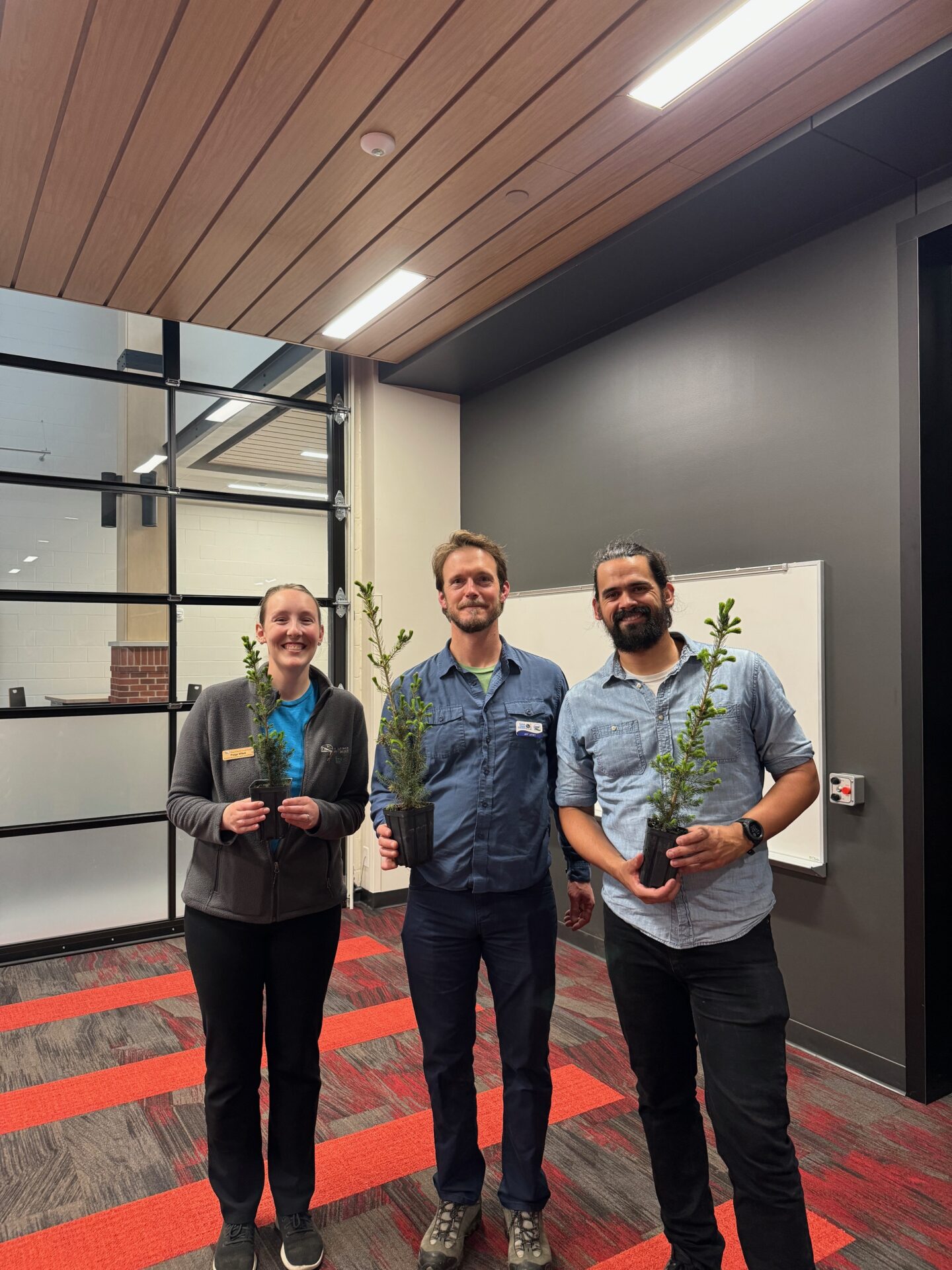
Flood resilience fellow Jackson Parr stands alongside Paige Witek of Door County Land Trust and Jeff Lutsey of the Door County Big Plant, all of whom hold tree saplings.

The hosts of the “Weather, Climate and Community” event: Paige Witek of Door County Land Trust, Jeff Lutsey and Jackson Parr.

In mid-May, Wisconsin Sea Grant Flood Resilience Fellow Jackson Parr partnered with the Door County Land Trust and the Climate Change Coalition of Door County to lead a community event about local rainfall trends and to recruit volunteers to measure precipitation in their backyards. Parr, a former Keillor Fellow, organized the talk as part of a National Sea Grant Office-funded project on disaster preparedness in northeastern Wisconsin. He said the event brought together folks with diverse environmental interests in conservation, community science and climate change.   

“In the other counties I’ve worked through with this grant, the audiences have tended to be emergency management, first responders, municipal staff — the professionals that are more frontline folks in disaster mitigation, preparedness and response,” said Parr.

“[This] was somewhat of a different audience that still had an interest in these topics — climate change, rainfall, citizen science — but otherwise probably wouldn’t have thought too much about, you know, NOAA Atlas 14 precipitation estimates.”

The “Weather, Climate and Community” event was born of a mutual desire for precipitation data and community engagement. Parr connected with Jeff Lutsey, Director of the Door County Climate Change Coalition, who organizes the Door County Big Plant, an event that gets thousands of trees into the ground each year. Lutsey wanted to know where and how much rain falls across the county to better allocate water to thirsty new trees. Parr wanted more spatial information about extreme rainfall to help municipalities plan for floods. 

The problem? Precipitation data across northeastern Wisconsin is sparse.

So, Parr and Lutsey partnered with a local conservation nonprofit, the Door County Land Trust, to recruit volunteers for the Community Collaborative Rain, Hail and Snow Network (CoCoRaHS), a national network of community scientists who measure and record precipitation. More volunteers mean more data points on the map, which means a more complete picture of rainfall across the county.

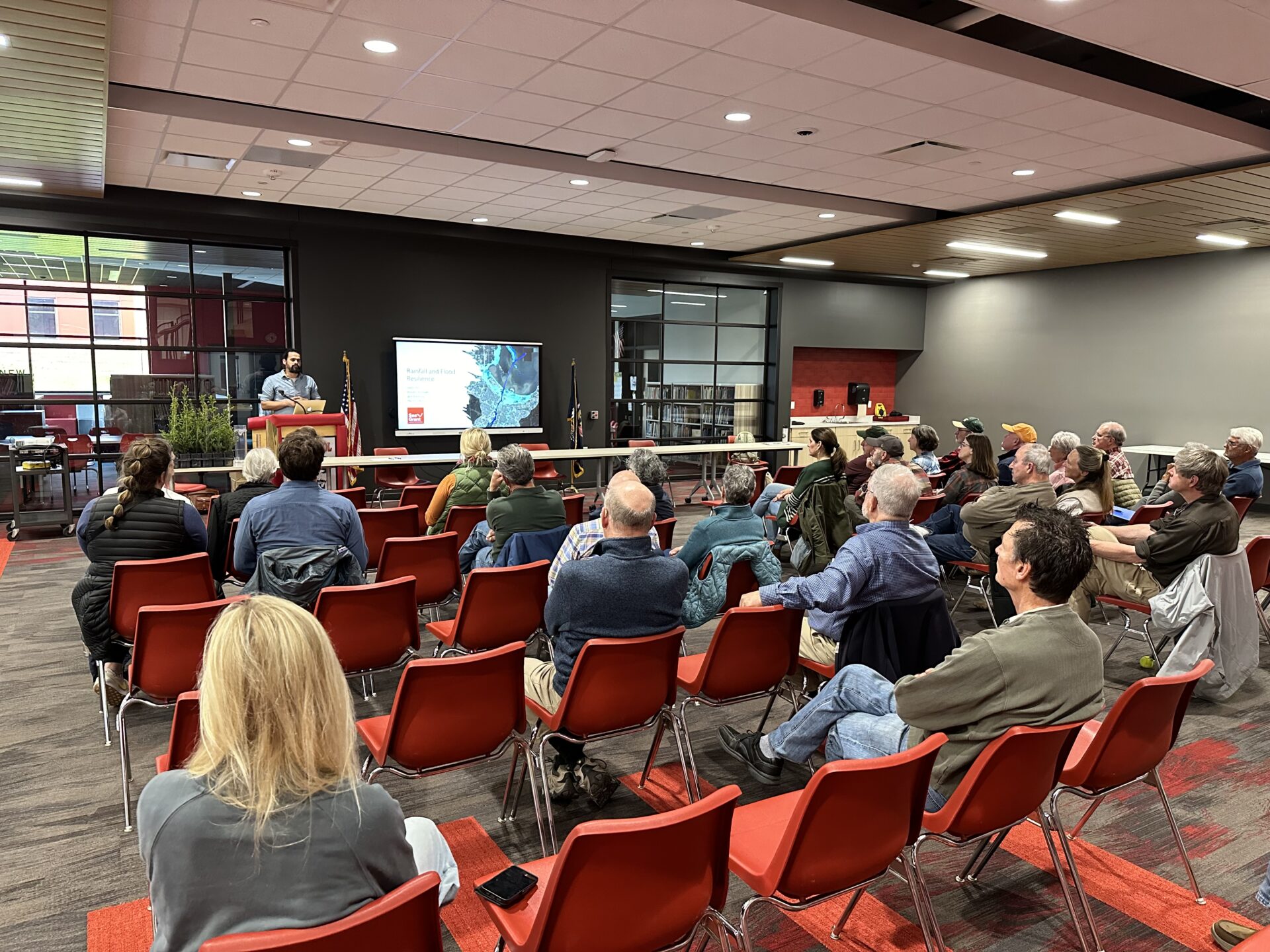
Jackson Parr delivers a talk at a podium in front of a room of people sitting in red chairs.

Jackson Parr presents findings from a rainfall and flood vulnerability analysis for Door County and Sturgeon Bay at the event. Photo: Jackson Parr

The event was successful in filling those gaps. Parr said 13 people signed up for rain gauges, more than doubling the current number of weather observers in Door County. Those are important numbers for a region experiencing more intense rainfall.

“We’re seeing the number of 2-inch rain events increase, particularly in the last decade,” said Parr.

Being prepared to handle increased rainfall and flooding is at the center of Parr’s grant-funded project. For the last two years, he’s been working with coastal communities in northeast Wisconsin on natural disaster planning, paying special attention to policy and planning documents.

“What are ways in which we can improve the policy language in those plans to better account for coastal hazards?” said Parr. He’s currently drafting recommendations and sample language for municipalities to use in updating comprehensive and hazard mitigation plans.

Parr is continuing similar work as a climate hazards planning educator with the University of Wisconsin–Madison Division of Extension’s Natural Resources Institute, where he’s helping rural communities prepare for extreme weather on a project funded by the Rural Partnerships Institute.

He’s also busy installing 13 new rain gauges across Door County. While the new volunteers may be more interested in well-watered gardens than flood resilience planning, Parr is excited to see folks getting involved, whatever the reason. The data is useful for gardeners, tree planters and emergency planners alike.

“In addition to checking your rain gauge to see how much your tomatoes got, you can log on to an app and take 10 seconds to tell us how much rainfall you see,” said Parr.


The post Gauging risk with rain gauges: Flood resilience fellow recruits volunteer weather observers at Door County event first appeared on Wisconsin Sea Grant.

Original Article

News Releases | Wisconsin Sea Grant

News Releases | Wisconsin Sea Grant

https://www.seagrant.wisc.edu/news/gauging-risk-with-rain-gauges-flood-resilience-fellow-recruits-volunteer-weather-observers-at-door-county-event/

Jenna Mertz

Disappointed dogs, sad skiers, frustrated fishermen

Hayward, Wisconsin got its first snow of the season on Halloween. But then Thanksgiving came, and Christmas, with no more white flakes. The new year started equally warm and snowless, and the organizers of the iconic American Birkebeiner ski race began to really worry. The February 24, 2024 race would be the 50th anniversary of the country’s most famous (and largest) cross-country ski event, and it would also be a World Cup competition, drawing top competitors from around the globe.

Read Now at Great Lakes Now.

Original Article

Great Lakes Now

Great Lakes Now

https://www.greatlakesnow.org/2024/05/disappointed-dogs-sad-skiers-frustrated-fishermen/

Kari Lydersen

EPA head Regan defends $20B green bank: ‘I feel really good about this program’

By Matthew Daly, Associated Press

PHILADELPHIA (AP) — The head of the Environmental Protection Agency on Friday defended a new $20 billion federal “green bank” program, saying it will finance a variety of projects to create low-carbon solutions to combat climate change, including in disadvantaged communities that are most affected by pollution.

Read Now at Great Lakes Now.

Original Article

Great Lakes Now

Great Lakes Now

https://www.greatlakesnow.org/2024/04/epa-head-regan-defends-20b-green-bank-i-feel-really-good-about-this-program/

The Associated Press

Are Great Lakes cities ready for climate migrants?

This article was republished here with permission from Great Lakes Echo.

By Kayla Nelsen, Great Lakes Echo

A California woman on “The Daily Show” recently swapped her sandals for snowshoes after moving to Duluth to escape her state’s wildfires.

The Comedy Central show featured Duluth as a climate haven, an ideal place to live to avoid wildfires, droughts, hurricanes and extreme flooding.

Read Now at Great Lakes Now.

Original Article

Great Lakes Now

Great Lakes Now

https://www.greatlakesnow.org/2024/03/are-great-lakes-cities-ready-for-climate-migrants/

Great Lakes Echo

Road salt use dips 37% in Michigan warm winter, saving millions, easing pollution

By Kelly House, Bridge Michigan

The Great Lakes News Collaborative includes Bridge Michigan; Circle of Blue; Great Lakes Now at Detroit Public Television; Michigan Public, Michigan’s NPR News Leader; and The Narwhal who work together to bring audiences news and information about the impact of climate change, pollution, and aging infrastructure on the Great Lakes and drinking water.

Read Now at Great Lakes Now.

Original Article

Great Lakes Now

Great Lakes Now

https://www.greatlakesnow.org/2024/03/road-salt-use-dips-37-in-michigan-warm-winter-saving-millions-easing-pollution/
Bridge Michigan

The Northwoods is now a month into unusually early maple tapping season

By Katie Thoresen, WXPR

This story was originally published by WXPR. WXPR is a community-licensed public radio station serving north central Wisconsin and adjacent areas of Michigan’s Upper Peninsula. Listen to their stories here.

Bright blue tubes web between the trees that run to the little red pump house that sits in the woods on the edge of 10 acres full of maple trees at Whataview Farm in Phelps.

Read Now at Great Lakes Now.

Original Article

Great Lakes Now

Great Lakes Now

https://www.greatlakesnow.org/2024/03/the-northwoods-is-now-a-month-into-unusually-early-maple-tapping-season/

WXPR

Warm winters are a wet blanket for small ski slopes in northern Michigan

By Izzy Ross, Interlochen Public Radio

This coverage is made possible through a partnership with IPR and Grist, a nonprofit independent media organization dedicated to telling stories of climate solutions and a just future.

  • Winter recreation is a big part of Michigan’s economy, but warm conditions have been tough for some businesses.

Read Now at Great Lakes Now.

Original Article

Great Lakes Now

Great Lakes Now

https://www.greatlakesnow.org/2024/02/warm-winters-are-a-wet-blanket-for-small-ski-slopes-in-northern-michigan/

Interlochen Public Radio

As Michigan winters vanish, researchers study snow for clues about what’s next

By Kelly House, Bridge Michigan

The Great Lakes News Collaborative includes Bridge Michigan; Circle of Blue; Great Lakes Now at Detroit Public Television; Michigan Public, Michigan’s NPR News Leader; and The Narwhal who work together to bring audiences news and information about the impact of climate change, pollution, and aging infrastructure on the Great Lakes and drinking water.

Read Now at Great Lakes Now.

Original Article

Great Lakes Now

Great Lakes Now

https://www.greatlakesnow.org/2024/02/as-michigan-winters-vanish-researchers-study-snow-for-clues-about-whats-next/

Bridge Michigan