Protected areas cover a sixth of Earth’s land and freshwater

WASHINGTON (AP) — Roughly a sixth of the planet’s land and freshwater area now lies within protected or conservation areas, according to a United Nations report released Wednesday.

Next comes the hard part. The world needs to ensure that those regions are actually effectively managed to stabilize the climate and to curb biodiversity loss while also increasing the total area of protected places, scientists say.

Read Now at Great Lakes Now.

Original Article

Great Lakes Now

Great Lakes Now

https://www.greatlakesnow.org/2021/05/ap-protected-areas-sixth-earth-land-freshwater/
The Associated Press

An effort is underway to improve the access to one of the top fisheries in Pennsylvania. Senator Dan Laughlin, a Republican from Erie, is proposing to double the size of the marina on Walnut Creek on Lake Erie. Read the full story by the Erie Times-News.

Original Article

Great Lakes Commission

Great Lakes Commission

https://www.glc.org/dailynews/20210520-erie-access

Ken Gibbons

A group of property owners along the flood-prone Lake Erie shoreline — on Erie Shore Drive — say they’ve taken legal action against the Municipality of Chatham-Kent. The group argues that the town has breached its obligations under Ontario’s Drainage Act, resulting in members paying the costs for shoreline protections. Read the full story by CBC.

Original Article

Great Lakes Commission

Great Lakes Commission

https://www.glc.org/dailynews/20210520-erie-shore

Ken Gibbons

Checking its data through early May, the National Oceanic and Atmospheric Administration and the National Center for Water Quality Research at Heidelberg University in Tiffin, Ohio, agreed the dry spring in the Northwest Ohio region could result in a smaller harmful algal bloom (HAB) forecast for Lake Erie during the late summer months, prime time for HABs to flourish. Read the full story by The Beacon.

Original Article

Great Lakes Commission

Great Lakes Commission

https://www.glc.org/dailynews/20210520-erie-bloom

Ken Gibbons

The Southwest Michigan Land Conservancy announced that it has been awarded grant funding to acquire property for a new nature preserve outside of Downtown Allegan. $1 million of Kalamazoo River Natural Resources Damages Assessment settlement funds will be used to purchase 140 acres of property along the west bank of the Kalamazoo River. Read the full story by WNWN- Battle Creek, MI.

Original Article

Great Lakes Commission

Great Lakes Commission

https://www.glc.org/dailynews/20210520-allegan

Ken Gibbons

The SS Badger prepares for its first voyage across Lake Michigan under new ownership. The new ownership will have to learn the ins and outs of the vessel and navigate challenges presented by COVID-19. Read the full story by Ludington Daily News.

Original Article

Great Lakes Commission

Great Lakes Commission

https://www.glc.org/dailynews/20210520-badger

Ken Gibbons

The mediator in the dispute between Enbridge Inc. and the State of Michigan over the controversial Line 5 pipeline says the two sides plan to keep talking. Retired U.S. district court judge Gerald Rosen, who was appointed in March to oversee the talks, says the parties discussed a “range of issues” when they met Tuesday. Read the full story by The Canadian Press.

Original Article

Great Lakes Commission

Great Lakes Commission

https://www.glc.org/dailynews/20210520-line5

Ken Gibbons

Michigan lawmakers on Wednesday proposed spending $500 million to repair aging dams a year after a hydroelectric dam failed to hold back floodwaters in the Midland area, causing more than $250 million in damage, draining lakes and forcing thousands of residents to evacuate their homes. Read the full story by Crain’s Detroit Business.

Original Article

Great Lakes Commission

Great Lakes Commission

https://www.glc.org/dailynews/20210520-dam-repair

Ken Gibbons

Michigan lawmakers on Wednesday proposed spending $500 million to repair aging dams a year after a hydroelectric dam failed to hold back floodwaters in the Midland area, causing more than $250 million in damage, draining lakes and forcing thousands of residents to evacuate their homes. Read the full story by Crain’s Detroit Business.

Original Article

Great Lakes Commission

Great Lakes Commission

https://www.glc.org/dailynews/20210520-dam-repair

Ken Gibbons

There are three current funding opportunities through the University of Wisconsin Water Resources Institute (WRI), each with a deadline to apply of 5 p.m., CST, Tuesday, June 15. Any interested Wisconsin investigator is urged to contact Melissa Boyce, maboyce@aqua.wisc.edu, as soon as possible for submittal guidance through WRI’s online proposal system. Boyce is WRI’s chief financial officer.

Grant proposals in these national calls are being accepted that would address local, state and regional water challenges. Each proposal would provide funding for one to three years and up to a level of $250,000. Successful applicants must match each dollar of the federal grant with one dollar from non-federal sources. The government’s obligation under this grant program is contingent upon the availability of funds. Proposals involving substantial collaboration between the U.S. Geological Survey and university scientists are encouraged. Details on the three open calls are:

  1. Proposals are sought on the topics of improving and enhancing the nation’s water supply and availability, and promoting the exploration of new ideas that address or expand our understanding of water problems, including the following specific areas of inquiry (levels of priority are not assigned, and the order of listing does not indicate the level of priority):

Socioeconomics and water use – includes the development of water use models that require understanding of what drives the timing and location of water being withdrawn and used and how those relations change when climate impacts the use or conservation/management strategies (culture/societal/economics) are implemented.

Water related hazards and public health – exploration of the intersections of land/water use, disease vector mechanisms, and water hazards, climate change, and/or irrigation practices. Research may include advancing our understand of these connections as they affect the development rates of pathogens impacting public health.

Exploration and advancement of our understanding of harmful algae blooms (HABs) -Proposals are sought that focus on innovations in monitoring the occurrence of HABs and algal toxins, research on factors that result in algal toxin production, and improvements in near-real time modeling and forecasting of toxin-producing blooms.

  1. Proposals are sought to support research on per-and polyflouroalkyl (PFAS) substances on water resources. This national competition recognizes water quality issues of a regional or interstate nature, beyond those of concern only to a single state.

The challenges and opportunities of understanding the impact of PFAS on water resources are poorly understood, despite the real and growing impact of this group of man-made substances on water quality. Research is needed to better understand these interactions and guide management decisions that will improve water resources at the regional scale or national scale. Proposals are sought on the following specific areas of inquiry (levels of priority are not assigned, and the order of listing does not indicate the level of priority):

Research on the fate, persistence, transport, and impacts of per-and polyflouroalkyl (PFAS) substances on changes to water quality and/or ecosystem dynamics, in water resources, including surface water and groundwater.

Social and/or economic assessment of the spread, detection, impacts, solutions, and management of PFAS in surface and/or groundwater.

  1. Proposals are sought on the following specific areas of inquiry (levels of priority are not assigned, and the order of listing does not indicate the level of priority):

Improve our understanding of the impacts of aquatic invasive species on lakes and rivers in the Upper Mississippi River basin, including changes to water quantity, quality and ecosystem dynamics.

Identify lake and river characteristics that infer resistance and resilience to establishment and impacts of aquatic invasive species in the Upper Mississippi River basin. Research is needed to better understand these interactions and guide management decisions that will improve water resources at the regional scale.

Social and/or economic assessment of the spread, detection, impacts, solutions, and management of aquatic invasive species in the Upper Mississippi River basin.

Any investigator at an accredited institution of higher learning in Wisconsin is eligible to apply for these grants through a WRI, which was established under the provisions of the Water Resources Research Act of 1984, as amended (http://water.usgs.gov/wrri/index.php).


The post June deadline for three new grant opportunities first appeared on WRI.

Original Article

News Release – WRI

News Release – WRI

https://www.wri.wisc.edu/news/june-deadline-for-three-new-grant-opportunities/

Moira Harrington

Michigan lawmakers propose $500M to repair dams after breach

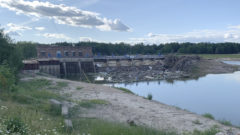
LANSING, Mich. (AP) — Michigan lawmakers on Wednesday proposed spending $500 million to repair aging dams a year after a hydroelectric dam failed to hold back floodwaters in the Midland area, causing more than $250 million in damage, draining lakes and forcing thousands of residents to evacuate their homes.

Read Now at Great Lakes Now.

Original Article

Great Lakes Now

Great Lakes Now

https://www.greatlakesnow.org/2021/05/ap-michigan-lawmakers-500m-repair-dams/

The Associated Press

Cleanups and Competitions – Episode 1025

One lakeside town struggles with PFAS pollution from a local Air Force base, while cities around the region race to remove and replace thousands of lead water pipes. And after a year-long delay, Great Lakes sailors head to the “2020” Olympics.


Read Now at Great Lakes Now.

Original Article

Great Lakes Now

Great Lakes Now

https://www.greatlakesnow.org/2021/05/cleanups-and-competitions-ep-1025/

Christina Amato

The Southern Ontario Nature Coalition, a collection of environmental, Indigenous, and agricultural groups, have outlined plans for building a network of natural areas within the urban and suburban landscapes of southern Ontario to support conservation and resilience efforts around Lake Ontario. Read the full story by the National Observer.

Original Article

Great Lakes Commission

Great Lakes Commission

https://www.glc.org/dailynews/20210519-roadmap

Ceci Weibert

The Traverse City Board of Commissioners in Michigan unanimously voted to file an appeal to a judge’s ruling that requires the city’s FishPass Project to be put to a community vote before proceeding. The FishPass project would install a barrier to invasive sea lamprey along the Boardman River, but has received opposition from some residents. Read the full story by WWUP-TV – Cadillac, MI.

Original Article

Great Lakes Commission

Great Lakes Commission

https://www.glc.org/dailynews/20210519-fishpass

Ceci Weibert

The Biden Administration has not yet taken a position on the legal battle between Enbridge Energy and the State of Michigan over the Line 5 oil pipeline. The federal government is expected to become involved as legal questions arise around international treaties regarding Line 5 and issues of federal authority over managing pipeline operations. Read the full story by Michigan Advance.

Original Article

Great Lakes Commission

Great Lakes Commission

https://www.glc.org/dailynews/20210519-line5

Ceci Weibert

Researchers at the University of Wisconsin-Superior are studying whether less winter ice across the Great Lakes might enable year-round shipping. The Great Lakes traditionally shut down to shipping from early January into March. Read the full story by the Duluth News Tribune.

Original Article

Great Lakes Commission

Great Lakes Commission

https://www.glc.org/dailynews/20210519-shipping

Ceci Weibert

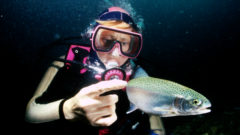
After decades of absence in the cold waters of Michigan, a successful collaboration between Michigan’s Department of Natural Resources and the Little River Band of Ottawa Indians has helped the arctic grayling make a return to their native habitats. Read the full story by WZZM-TV – Grand Rapids, MI.

Original Article

Great Lakes Commission

Great Lakes Commission

https://www.glc.org/dailynews/20210519-grayling

Ceci Weibert

Growing demand for goods in Canada and the United States as the two countries’ economies recover has translated into a boost in the amount of goods shipped on the Great Lakes-St. Lawrence Seaway by nearly 4 percent. Read the full story by the St. Catharine’s Standard.

Original Article

Great Lakes Commission

Great Lakes Commission

https://www.glc.org/dailynews/20210519-cargo

Ceci Weibert

A new report about combining solar power and farming practices has advocates saying the practice could take hold in Michigan, boosting productivity while providing much needed refuge for bees and other pollinators.

The post Crops grown under solar panels and pollinator habitats could be wave of the future first appeared on Great Lakes Echo.

Original Article

Great Lakes Echo

Great Lakes Echo

http://greatlakesecho.org/2021/05/19/crops-grown-under-solar-panels-and-pollinator-habitats-could-be-wave-of-the-future/

Guest Contributor

Summary

We seek a highly motivated individual to lead the Alliance’s volunteer programs, which involve about 15,000 people each year across all five Great Lakes. The ideal candidate is a self-starter, a collaborator who works easily with many different types of people, and an extrovert with a passion for empowering others to make a positive change in the world.

The Volunteer Engagement Manager is on the front lines of engaging with and cultivating volunteers across the Great Lakes region. They will lead the Adopt-a-Beach program, which includes the Alliance’s flagship volunteer program that involves about 15,000 volunteers per year on all five Great Lakes and all eight Great Lakes states, and the Ambassador program, a growing “speakers bureau”-type program that currently involves about 200 volunteers per year. They will develop strategy for maintaining the Alliance’s regional volunteer leadership and manage program implementation.

They will also represent the Alliance at events across the region, speaking at community events and supporting large volunteer groups. The role is very hands-on with lots of contact with volunteers, nonprofit organizations, and business partners across the Great Lakes region. The Volunteer Engagement Manager is core member of the Alliance’s Communications & Engagement Team and will work closely with the Alliance’s fundraising team.

A typical day for the Volunteer Engagement Manager might look like this – The day begins with the Communications & Engagement Team’s daily 30-minute check-in video call, where the team shares out key updates from the previous day and discusses any key project changes. They may hop on a call with a member of the Alliance’s fundraising team and a potential new Adopt-a-Beach business sponsor. They might then gather supplies and run out to a Chicago-area beach to meet a large Adopt-a-Beach group to support the cleanup event and give a short thank you speech to the group about the impact of their clean up. In the afternoon, they might meet with the Volunteer Engagement Coordinator, their direct report, to brainstorm ideas for upcoming Ambassador training sessions and sort through Adopt-a-Beach questions and requests. And they might end the day in a meeting with the Alliance’s Database Manager to discuss options for fixing some technical bugs in the Adopt-a-Beach Salesforce database.

Responsibilities

Management and Strategy

  • Develop strategy for and manage the implementation of the Alliance’s volunteer programs, including the regional Adopt-a-Beach program comprised of 15,000+ volunteers in 8 states and the Alliance Ambassadors program, a network of over 100 volunteers trained to speak to groups about Great Lakes issues.
  • Manage the Adopt-a-Beach program, with a focus on ensuring regional participation and maintaining program participation and visibility.
  • Support the growth and implementation of the Adopt-a-Beach business sponsorship program in partnership with the Alliance’s Development Team.
  • Lead the growth of the Alliance Ambassadors program, with a focus on expanding the program to become a regional presence.
  • Identify and cultivate relationships with high performing volunteers to deepen their relationship with the Alliance, either by increasing their volunteer leadership role or engaging them in other areas of the Alliance’s work.

Outreach

  • Manage and facilitate external outreach opportunities to audiences critical to supporting Great Lakes and water protection, such as opportunities for public speaking, tabling, and presentations as appropriate to support Alliance priorities.
  • Mobilize and recruit volunteers from communities (i.e., geographic, racial/ethnic, etc.) not currently represented in Alliance volunteer programs to ensure a wide diversity of people are engaged in Great Lakes protection efforts.
  • Identify expansion opportunities for the Alliance’s volunteer programs that align with the Alliance’s strategic goals.
  • Conduct trainings for volunteers to become environmental leaders, so that they have the skills and knowledge to address relevant Great Lakes issues and take action to improve the ecosystem.
  • Speak publicly for large and small groups, and occasionally the media, about the Alliance for the Great Lakes, the Alliance’s volunteer opportunities, and Great Lakes issues.

Technical

  • Manage volunteer data and identify strategic uses of the information for internal and external partners.
  • Manage program supply inventory, ordering, and relationships with key vendors.

Management

  • Manage the Volunteer Engagement Coordinator, and seasonal affiliates as needed.

Knowledge, Skills, & Competencies

  • Associate’s degree with relevant experience or Bachelor’s degree in social sciences, environmental sciences and/or communications.
  • Three to five years of experience in volunteer coordination and training, community outreach, developing stakeholder partnerships in the public, private, or nonprofit sector.
  • Demonstrated experience connecting with a wide variety of stakeholders of all ages and backgrounds, including civic groups, schools, agency staff, businesses and community-based environmental organizations.
  • Specific ability to manage volunteers with a positive and nurturing attitude to produce measurable results.
  • Experience leading volunteers in outdoor, hands-on activities a plus. Must be comfortable managing volunteers in outdoor settings in variable weather and crowded settings.
  • Excellent listening, writing, and speaking skills. Must be able to speak publicly in a clear, compelling, and engaging manner. Experience speaking with the media a plus.
  • Database management skills, specifically Salesforce, desirable.
  • Adaptive leader who is open, creative, and flexible in thought and practice with skills to lead both from the front and behind as needed.
  • Able to manage multiple projects simultaneously.
  • Knowledge of Great Lakes or water issues a plus.

Job Parameters

  • This position is full-time exempt and consistent with Alliance employment policy. Salary to be commensurate with experience.
  • Excellent benefits, including health, dental, and paid leave. Employees are eligible for participation in our retirement plan after 1 year of employment.
  • This position is based in the greater Chicagoland region. Applicants must be able to occasionally (or more frequently if preferred) work from, access supplies, and host meetings at the Alliance’s downtown Chicago office when it is safe to resume normal office operations.

Application Process

Please e-mail a cover letter, resume and references to: hr@greatlakes.org. Include job title in the subject line.

Applications will be accepted until the position is filled, with a desired start date of July 1, 2021. Materials should be compatible with Microsoft Word or Adobe Acrobat. Applicants will receive confirmation of receipt of their materials and further guidance and updates about the hiring process by e-mail, with interviews provided for finalists. No phone inquiries please.

About the Alliance for the Great Lakes

The Alliance for the Great Lakes is an Equal Opportunity Employer. The search process will reinforce the Alliance’s belief that achieving diversity requires an enduring commitment to inclusion that must find full expression in our organizational culture, values, norms, and behaviors.

The Alliance’s vision is a healthy Great Lakes for people and wildlife, forever. Its mission is to conserve and restore the world’s largest freshwater resource using policy, education and local efforts, ensuring a healthy Great Lakes and clean water for generations of people and wildlife. For more information about the Alliance’s programs and work, please visit us online at www.greatlakes.org.

The post We’re Hiring a Volunteer Engagement Manager appeared first on Alliance for the Great Lakes.

Original Article

News – Alliance for the Great Lakes

News – Alliance for the Great Lakes

https://greatlakes.org/2021/05/were-hiring-a-volunteer-engagement-manager/

Judy Freed

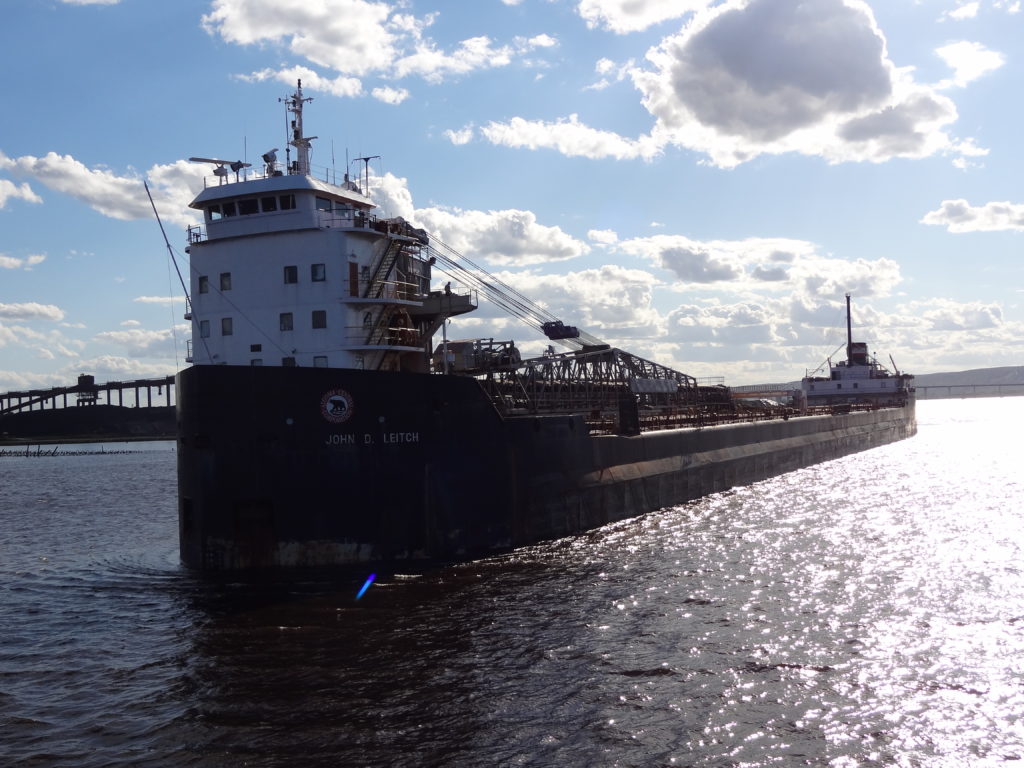
The John D. Leitch, a self-discharging bulk carrier vessel, makes its way through the Duluth-Superior Harbor in 2012. Image credit: Marie Zhuikov, Wisconsin Sea Grant

A preponderance of climate studies on the Great Lakes predict a trend toward reduced ice cover. Ice is expected to form later and melt earlier. With Wisconsin Sea Grant funding, researchers at the University of Wisconsin-Superior (UWS) are looking into how this might impact the shipping industry on the Great Lakes.

Richard Stewart, director of the Transportation and Logistics Research Center at UWS, is undertaking the yearlong study with Daniel Rust, UWS assistant professor of transportation and logistics. To begin, they conducted a literature review of Great Lakes climate studies on ice cover.

“By the year 2050, which is only 30 years away, there are expectations that there will be relatively little ice on the Great Lakes that will impede the navigation of vessels,” Stewart said.

Richard Stewart. Image credit: University of Wisconsin-Superior

By collecting data on cargo movements from lake carriers along with data on the ship types and carrying capacities, they will create models that can be used by commercial ports and shipping companies. They plan to look at three main cargoes: taconite, coal and limestone, developing models first for a single vessel, then for a fleet and determining the operational and economic impacts if the shipping season is extended by 20 days. They will also conduct another analysis for a 50-day extension of the shipping season.

Stewart explains, “Say that with the existing fleet of ships, how many ships would be needed to carry that same amount of cargo if they could operate – instead of nine months per year – 10 months, 11 months and 12 months? If that cargo pie doesn’t grow bigger, we believe our research will indicate a need for fewer ships.”

A longer shipping season with fewer ships could have far-reaching ramifications, especially in Wisconsin, which is one of the nation’s largest shipbuilding and ship-repair sites. Taconite, coal and limestone terminals may no longer need to store large buffer stocks of their products to carry them through the winter since they might be able to operate year-round. Ship maintenance usually takes place during winter when ice impedes navigation. Maintenance work could switch to a short two-week period because the ships might be operating year-round. That’s what oceangoing ships do.

Daniel Rust. Image credit: University of Wisconsin-Superior

In fact, Stewart and Rust are looking to the Baltic Region shipping industry for guidance. “It has a similar geographic size to the Great Lakes and the same issues with ice,” Stewart said. “They operate year-round and move cargoes. We’ve visited the Baltic for preliminary research. We’re looking to see if there are similar cargoes and trade patterns that might have applicability on the Great Lakes.”

Stewart and Rust will also assess what opportunities may arise for new cargoes if the shipping season is extended by 20 days and 50 days. It could be that some commodities would move from rail and truck transport to vessel transport, instead.

Deb DeLuca, director of the Duluth Seaway Port Authority, expects the study will provide significant information. She said the possibility of having shipping seasons that are essentially ice-free could mean less risk to ships from ice and less expense needed for icebreakers. DeLuca agrees that year-round shipping could attract new commodities.

“It might open up the entire waterway to greater usage, which is a good thing because shipping is environmentally beneficial,” DeLuca said. “It takes trucks off the road. It would be a plus for all sorts of reasons, and the research allows us to plan ahead.”

The researchers are cooperating with many organizations on their study including the Lake Carriers’ Association, the U.S. Coast Guard, the U.S. Army Corps of Engineers and the ports of Milwaukee, Gary-Indiana and Duluth-Superior.

Rust will be collecting data and overseeing student workers on the project. “We’ve just begun to scratch the surface on this issue,” he said. “Obviously, climate change is happening, and we need to be ready to adapt to whatever is coming and to take advantage if there are opportunities that arise.”

The post Study will examine effects of reduced ice coverage on Great Lakes marine transportation first appeared on Wisconsin Sea Grant.

Original Article

News Releases – Wisconsin Sea Grant

News Releases – Wisconsin Sea Grant

https://www.seagrant.wisc.edu/news/study-will-examine-effects-of-reduced-ice-coverage-on-great-lakes-marine-transportation/

Marie Zhuikov

Green infrastructure is a strategy that cities around the Great Lakes basin have increasingly been employing to ease the burden on their wastewater infrastructure and improve water quality, while deferring or avoiding costly upgrades to wastewater treatment plants. Read the full story by Great Lakes Now.

Original Article

Great Lakes Commission

Great Lakes Commission

https://www.glc.org/dailynews/20210518-green-infrastructure

Jill Estrada

The Chicago Park District announced that a pair of endangered birds, namely Monty and Rose, has produced three eggs at their Montrose Beach Dunes Natural Area breeding grounds on the north side of Chicago, Illinois. Read the full story by The Science Times.

Original Article

Great Lakes Commission

Great Lakes Commission

https://www.glc.org/dailynews/20210518-piping-plovers

Jill Estrada

The plan envisions a broad land bridge connecting the downtown malls to the area just north of First Energy Stadium and the Great Lakes Science Center. The 350-foot-wide greenway, known as a plinth, would soar over railroad tracks and the Ohio 2 Shoreway and provide a park-like connection to Cleveland’s biggest asset. Read the full story by cleveland.com.

Original Article

Great Lakes Commission

Great Lakes Commission

https://www.glc.org/dailynews/20210518-cleveland-lakefront

Jill Estrada

A dispute near the northern U.S. border is threatening relations between America and Canada. Michigan Gov. Gretchen Whitmer has ordered the shutdown of the Line 5 pipeline, which carries up to 540,000 barrels a day of crude oil and natural gas. Read the full story by The Wall Street Journal.

Original Article

Great Lakes Commission

Great Lakes Commission

https://www.glc.org/dailynews/20210518-pipeline

Jill Estrada

A formerly troublesome dirt path, connecting Bowmanville Avenue to West Beach Road of the Great Lakes Waterfront Trail in Bowmanville, Ontario was recently paved to allow for improved recreation opportunities along Lake Ontario’s northern shoreline. Read the full story by Oshawa This Week.

Original Article

Great Lakes Commission

Great Lakes Commission

https://www.glc.org/dailynews/20210518-waterfront-trail

Jill Estrada

A group of students, researchers and volunteers at the University of Toronto in Toronto, Ontario — called the U of T Trash Team — are dumping plastic bottles with GPS trackers to pinpoint exactly where trash goes in the water to help determine ways to retrieve it. Read the full story by Yahoo News.

Original Article

Great Lakes Commission

Great Lakes Commission

https://www.glc.org/dailynews/20210518-ontario-trash

Jill Estrada

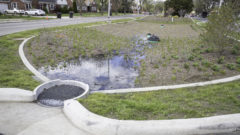
Green Infrastructure: Cities around the Great Lakes plan for a changing future

Rain gardens, bioretention features, adaptable parks and more are popping up all around the region.

Read Now at Great Lakes Now.

Original Article

Great Lakes Now

Great Lakes Now

https://www.greatlakesnow.org/2021/05/green-infrastructure-great-lakes-climate-future/

Andrew Blok

As the COVID-19 pandemic closed animal shelters to the public, Detroit-area pet rescue and adoption organizations had to come up with new ways to connect their dogs and cats to families.

The post Pandemic creates challenges, opportunities for animal shelters first appeared on Great Lakes Echo.

Original Article

Great Lakes Echo

Great Lakes Echo

http://greatlakesecho.org/2021/05/18/pandemic-creates-challenges-opportunities-for-animal-shelters/

Guest Contributor

I Speak for the Fish

I Speak for the Fish is a new monthly column written by Great Lakes Now Contributor Kathy Johnson, coming out the third Monday of each month. Publishing the author’s views and assertions does not represent endorsement by Great Lakes Now or Detroit Public Television.

Read Now at Great Lakes Now.

Original Article

Great Lakes Now

Great Lakes Now

https://www.greatlakesnow.org/2021/05/i-speak-for-the-fish/

Kathy Johnson

Construction of a streambank restoration and pedestrian bridge replacement project will soon begin in Petrifying Springs Park, Wisconsin, on a section of the Pike River that is the most substantial stretch of publicly owned river within the greater urban Kenosha area and has been termed a green infrastructure hub in the Pike River Watershed-based Plan. Read the full story by Kenosha News.

Original Article

Great Lakes Commission

Great Lakes Commission

https://www.glc.org/dailynews/20210517-wisconsin-restoration

Patrick Canniff

H2Ohio, a voluntary Ohio program  that works closely with local farmers to reduce Lake Erie’s harmful algal bloom problem, has indicated in its 2020 annual report that the Ohio Department of Agriculture has entered into agreements with 1,815 producers across 1,092,852 acres of farmland, representing approximately 44% of the targeted cropland project area. Read the full story by WTOL-TV –  Toledo, OH.

Original Article

Great Lakes Commission

Great Lakes Commission

https://www.glc.org/dailynews/20210517-h2ohio-water-quality

Patrick Canniff

About halfway between Racine, Wisconsin, and Holland, Michigan, sensors keep close tabs on the temperature of Lake Michigan at a depth of 492 feet and have reported this data almost hourly for 30 years. This 30 year dataset indicates that the depths of Lake Michigan are warming and the annual “turnover” of the lake from warm to cold is changing. Read the full story by WTMJ-TV –  Milwaukee, WI.

Original Article

Great Lakes Commission

Great Lakes Commission

https://www.glc.org/dailynews/20210517-wisconsin-climate

Patrick Canniff

It has been 16 months since a severe storm wreaked havoc on southeast Wisconsin’s shoreline, damaging popular pathways. Moving forward, the City of Racine not only wants to fix the damage, but wants to do so in a way that lessens the potential destruction of future storms amid rising waters of Lake Michigan. Read the full story by The Journal Times.

Original Article

Great Lakes Commission

Great Lakes Commission

https://www.glc.org/dailynews/20210517-wisconsin-shoreline

Patrick Canniff

Enbridge, the Canadian energy company, claims the state of Michigan has no authority to enforce a deadline to shut down operation of Line 5, and will only shut down the oil pipeline if ordered by a federal court or their regulator. Read the full story by WDET –  Detroit, MI.

Original Article

Great Lakes Commission

Great Lakes Commission

https://www.glc.org/dailynews/20210517-enbridge-line-5

Patrick Canniff