How to check if your Michigan water system is replacing lead pipes

By Nina Misuraca Ignaczak, Planet Detroit

This article was republished with permission from Planet Detroit. Sign up for Planet Detroit’s weekly newsletter here.

Lead exposure remains a serious health risk in Michigan, but many residents don’t know whether their water system complies with state rules or whether their service line contains lead.

Read Now at Great Lakes Now.

Original Article

Great Lakes Now

Great Lakes Now

https://www.greatlakesnow.org/2025/12/how-to-check-if-your-michigan-water-system-is-replacing-lead-pipes/
Planet Detroit

By Nina Misuraca Ignaczak, Planet Detroit

This article was republished with permission from Planet Detroit. Sign up for Planet Detroit’s weekly newsletter here.


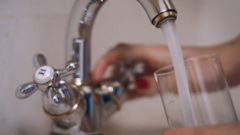
Lead exposure remains a serious health risk in Michigan, but many residents don’t know whether their water system complies with state rules or whether their service line contains lead.

Utilities must notify customers of sampling results and the presence of lead or galvanized lines. Yet, these notices don’t always reach people — leaving families unsure about their potential exposure and what steps to take.

Depending on where you live in Michigan, you may have recently received updates from your water utility about compliance with state and federal Lead and Copper Rule requirements.

Most utilities completed their annual lead and copper sampling by Sept. 30, and Michigan regulators have since notified communities that exceeded the lead action level. If you live in one of those areas, you should have been told.

Utilities must also notify all residents served by lead, unknown, or galvanized-previously-connected service lines. You should have received this notice last November, and the next round is due by Dec. 31.

Michigan is simultaneously working to remove an estimated 580,030 lead and galvanized service lines statewide. About 11% — roughly 69,891 lines — were replaced from 2021 to 2024. Progress varies by water system, and many still lack complete inventories or are behind on required reporting.

To help residents see the whole picture, Planet Detroit and Safe Water Engineering created the Michigan Lead Service Line Tracker. This statewide dashboard shows how much progress each water system is making in identifying and replacing lead service lines. This guide explains what the dashboard includes, how to use it, how to protect yourself from drinking water risks, and what to do if your community is not keeping pace with Michigan’s Lead and Copper Rule.

The Michigan Department of Environment, Great Lakes, and Energy (EGLE) releases lead sampling data on a separate timeline, so limited information is available: the full set of 2024 compliance results and the 2025 action-level exceedances.

Without a complete 2025 dataset, we chose not to include 2025 sampling results in the dashboard at this time. Stay tuned for future updates as more data becomes publicly available.

Why this matters

Lead exposure remains a major environmental health threat across Michigan. Lead is a well-documented neurotoxin with no safe level of exposure. Even small amounts can affect learning, behavior, and long-term health. Planet Detroit’s reporting has highlighted several statewide concerns:

  • Children face the greatest risk. Lead can harm brain development, lower IQ, and affect attention and learning. Infants who consume formula mixed with contaminated water are particularly vulnerable.
  • Pregnant people are also at higher risk. Lead exposure is linked to high blood pressure, premature birth, miscarriage, and reduced fetal growth.
  • Adults can experience cardiovascular and kidney impacts. Long-term exposure is associated with hypertension, decreased kidney function, and increased risk of heart disease.
  • Exposure often tracks with inequity. Many of the state’s highest concentrations of lead service lines — and some of the slowest replacement rates — are in communities that have faced historic underinvestment.
  • Installation work can temporarily increase lead levels. Disturbing old pipes during replacement can cause short-term spikes, underscoring the need for filters and clear public communication.

Michigan’s 20-year replacement mandate is designed to reduce these risks, but the pace of removal varies, and residents often struggle to get clear information about what’s happening in their communities.

Many drinking water systems still have thousands of known or suspected lead lines, and some continue to exceed state or federal lead limits. Planet Detroit’s reporting has shown:

  • Significant regional differences in replacement speed, with some systems moving quickly and others reporting little to no progress.
  • Inconsistent public notification, including instances where residents weren’t told about lead exceedances, construction schedules, or mandatory notification that a lead or unknown service line serves a home.
  • Higher risks in historically under-resourced communities, where lead lines and aging infrastructure tend to be concentrated.

Checking the dashboard is one of the simplest ways for residents to understand how their water system is performing under Michigan’s 20-year replacement mandate.

How to use the lead service line dashboard

Follow these steps to look up your water system and interpret what you’re seeing.

In the middle, click Search Systems and type the name of your water system — usually a city, township, or regional authority. Select it from the dropdown to open its profile.

2. Review your system’s profile card

Each water system has a standardized card with key information required under Michigan’s Lead and Copper Rule. The card shows:

  • Population Served: The estimated number of people receiving water from the system.
  • Known Lead Lines: Service lines confirmed to be made of lead. These are the highest-priority lines for replacement. Example: 1,999 lead lines.
  • Lines Replaced: The number of lead or galvanized lines that have been removed and replaced with safer materials between 2021 and 2024.
    Example: 96 lines replaced.
  • Galvanized (GPCL)  Lines that are galvanized steel but were previously connected to lead pipe. These are considered “galvanized requiring replacement” under federal rules.
  • Unknown Material Service lines where the material is not yet confirmed. To protect your health, these should be treated as though they are lead until they are confirmed to be a non-lead material.
  • Total to Be Identified and/or Replaced: The combined number of known lead lines, GPCL lines, plus all unknowns that must be resolved through inspection or replacement.
  • Replacement Progress: The percentage of replacements completed between 2021 and 2024. During this four-year period, water systems were required by the Michigan Lead and Copper Rule, as enforced by EGLE, to complete an average of 20% of their total lead service line replacements.
  • Compliance Status: Indicates whether the utility has met state inventory and reporting requirements. Systems that have replaced at least 20% of the required lines between 2021 and 2024 are compliant.

This card is your quick snapshot of how well your water system is doing compared with state requirements and nearby communities.

3. Check the statewide map for context

The map shows systems by color:

  • Green: Compliant
  • Red: Not compliant

If your system appears in red while neighboring systems are green, that may signal slow progress or reporting problems.

4. Look for missing or incomplete data

If the card shows large numbers of unknown materials, low replacement counts, or a noncompliance flag, the system may be struggling to meet Michigan’s 20-year replacement mandate. A large, future project can bring a water utility into compliance.

The sooner the lead pipes are removed, the sooner the residents experience the public health benefits.

What the numbers mean for your household

  • Lead or galvanized lines: These carry the highest risk of lead release, especially during construction or partial replacements.
  • Unknown lines: To protect your health, treat these as lead until they are confirmed to be non-lead materials. Many Michigan systems still have thousands of unknown materials.
  • Low replacement progress: Systems with single-digit progress may struggle to meet Michigan’s 20-year requirement, leaving residents with long wait times and extended exposure to lead in drinking water.
  • Exceedances: If your system exceeds the lead action level, it must accelerate replacement and notify residents.

If your water system has a high proportion of lead or unknown lines, or if you know or think you have a lead service line, request or purchase a certified lead-reducing filter. The Michigan Department of Health and Human Services has some filter distribution programs targeted to specific communities in Michigan. You can also check whether your service line is lead using your utility’s inspection program.


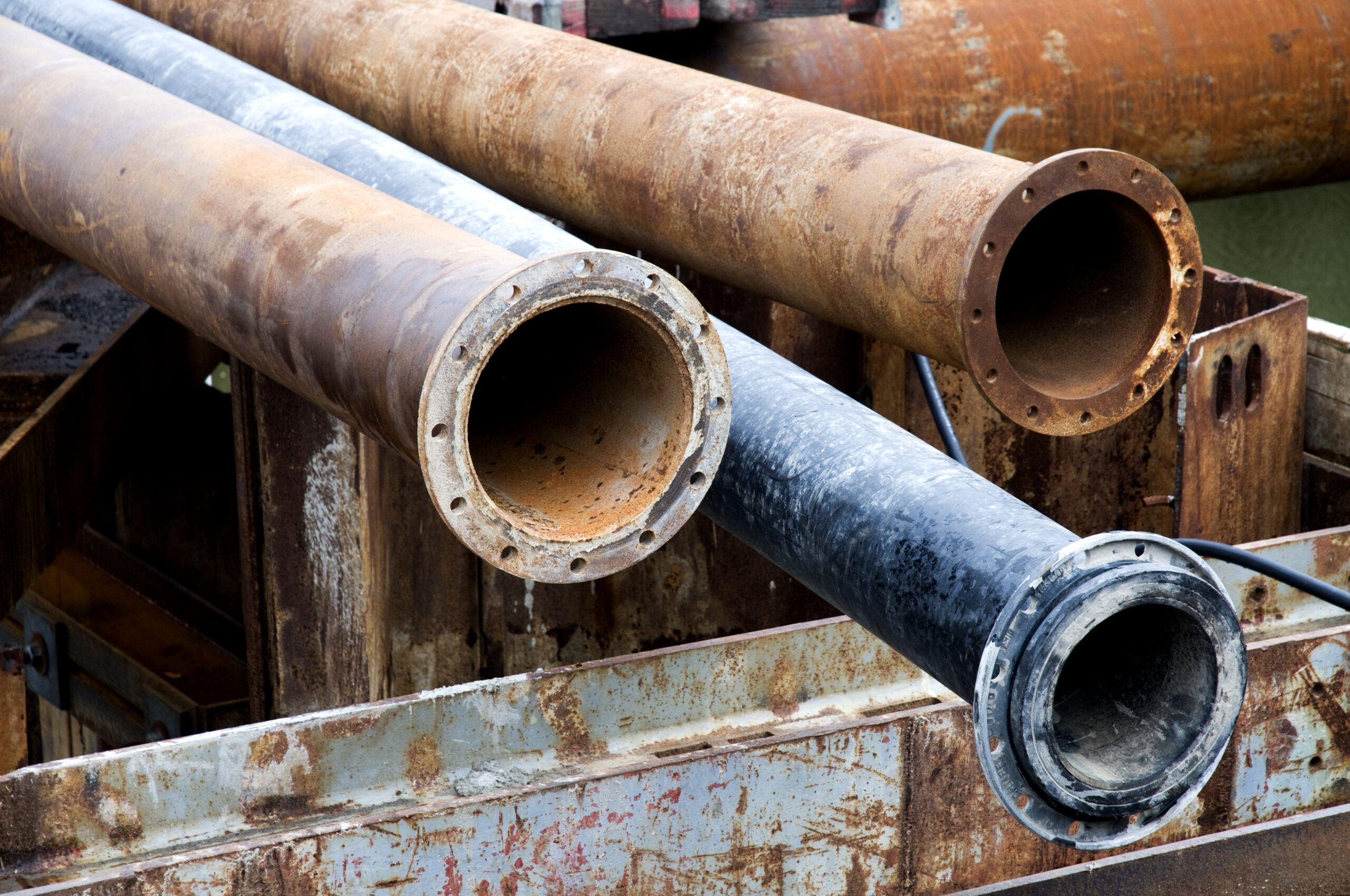
Featured image: Close up shot of some metal pipes. (Photo Credit: iStock)

The post How to check if your Michigan water system is replacing lead pipes appeared first on Great Lakes Now.

Original Article

Great Lakes Now

Great Lakes Now

https://www.greatlakesnow.org/2025/12/10/how-to-check-if-your-michigan-water-system-is-replacing-lead-pipes/

Planet Detroit

The Next Deluge May Go Differently

By Christian Thorsberg, Circle of Blue

The Great Lakes News Collaborative includes Bridge Michigan, Circle of Blue, Great Lakes Now at Detroit PBS, Michigan Public and The Narwhal who work together to bring audiences news and information about the impact of climate change, pollution, and aging infrastructure on the Great Lakes and drinking water.

Read Now at Great Lakes Now.

Original Article

Great Lakes Now

Great Lakes Now

https://www.greatlakesnow.org/2025/12/the-next-deluge-may-go-differently/

Circle of Blue

By Christian Thorsberg, Circle of Blue

The Great Lakes News Collaborative includes Bridge Michigan, Circle of Blue, Great Lakes Now at Detroit PBS, Michigan Public and The Narwhal who work together to bring audiences news and information about the impact of climate change, pollution, and aging infrastructure on the Great Lakes and drinking water. This independent journalism is supported by the Charles Stewart Mott Foundation. Find all the work HERE.


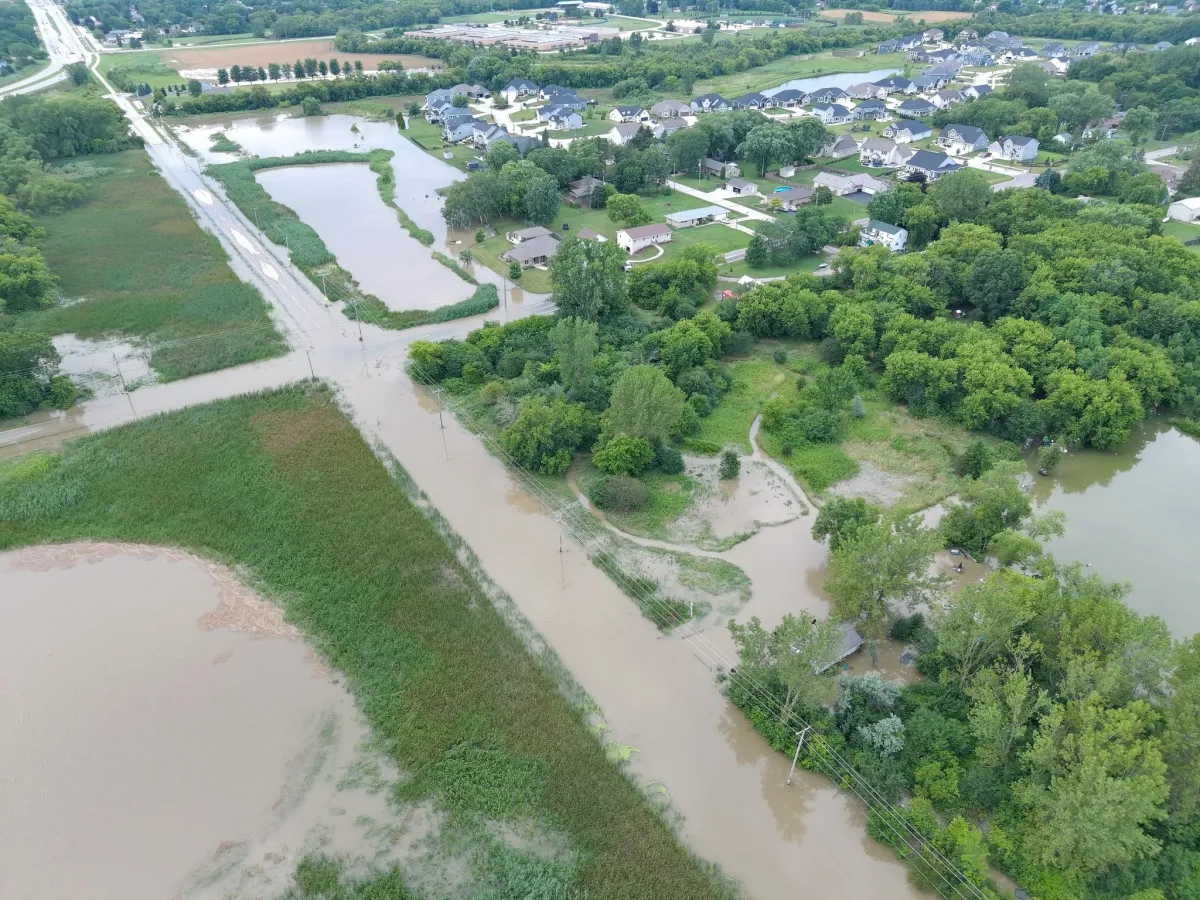
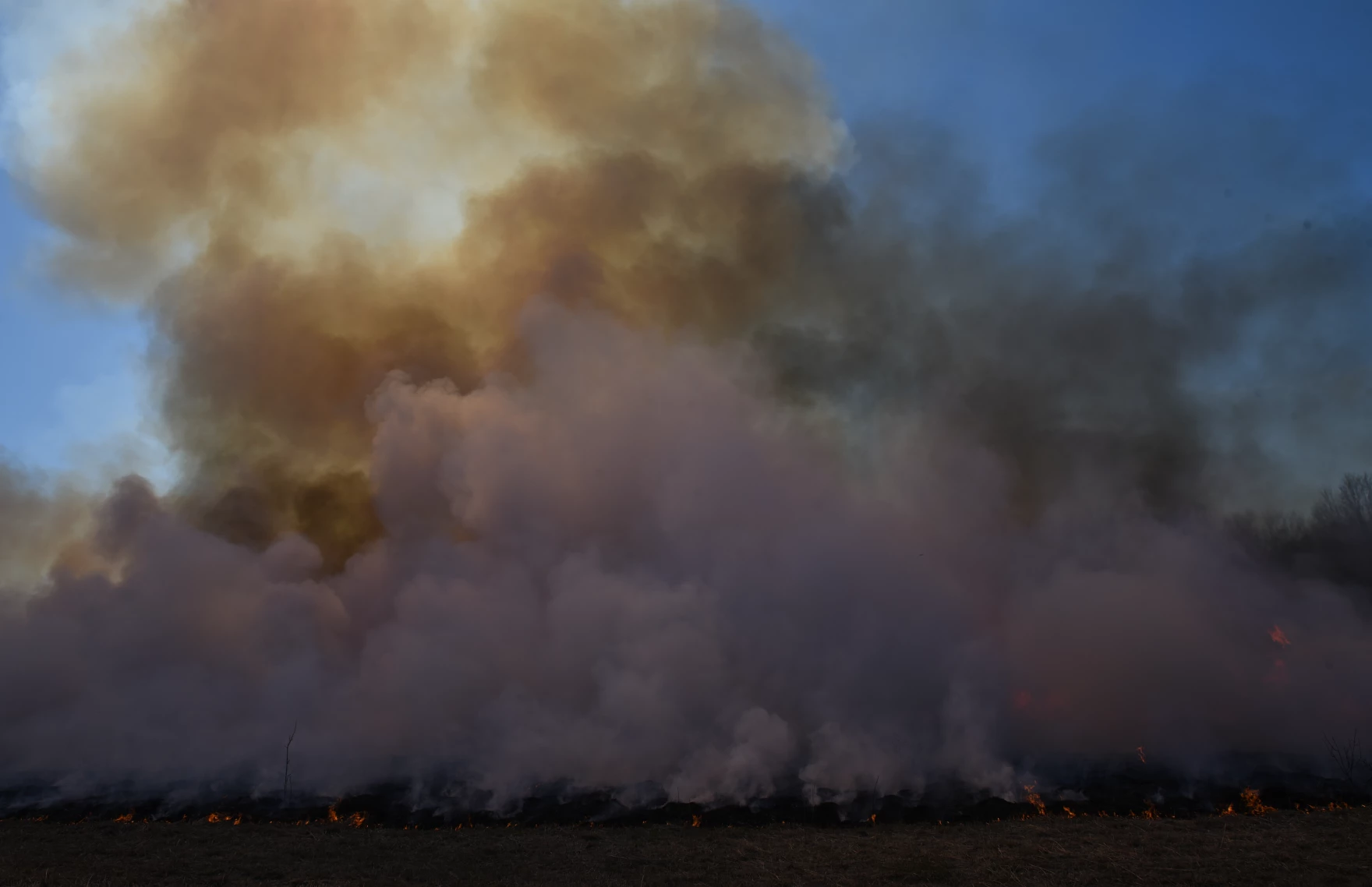
In early August, days after thousand-year rain fell on southeastern Wisconsin, officials waded through the devastation’s wake — and liked what they saw.

Beyond the overflowing banks of the Little Menomonee River, which surged six feet in less than 10 hours, floodwaters were deep enough to support swimming beavers and waterfowl. On farmland near the northern border of Milwaukee, 70 acres of standing rainwater overtopped boots. Further south, in the town of Oak Creek, another 114 acres of public grassland resembled an aboveground pool.

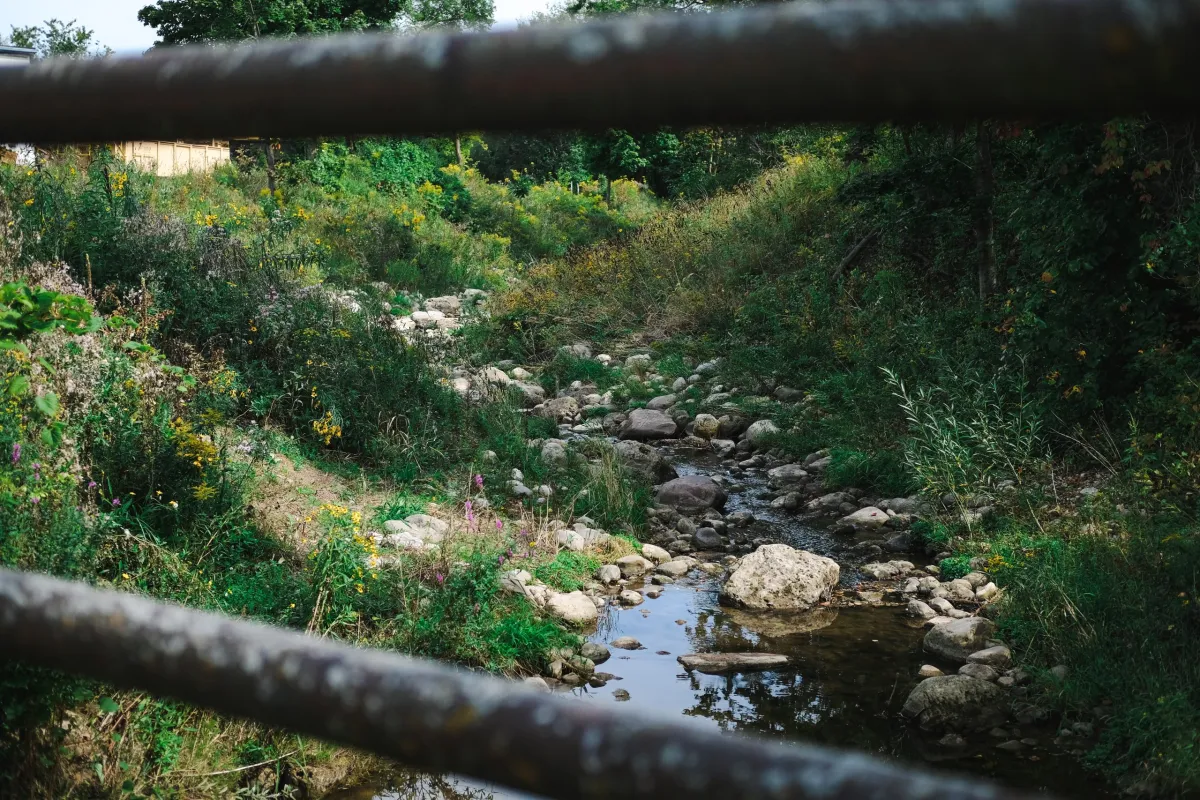
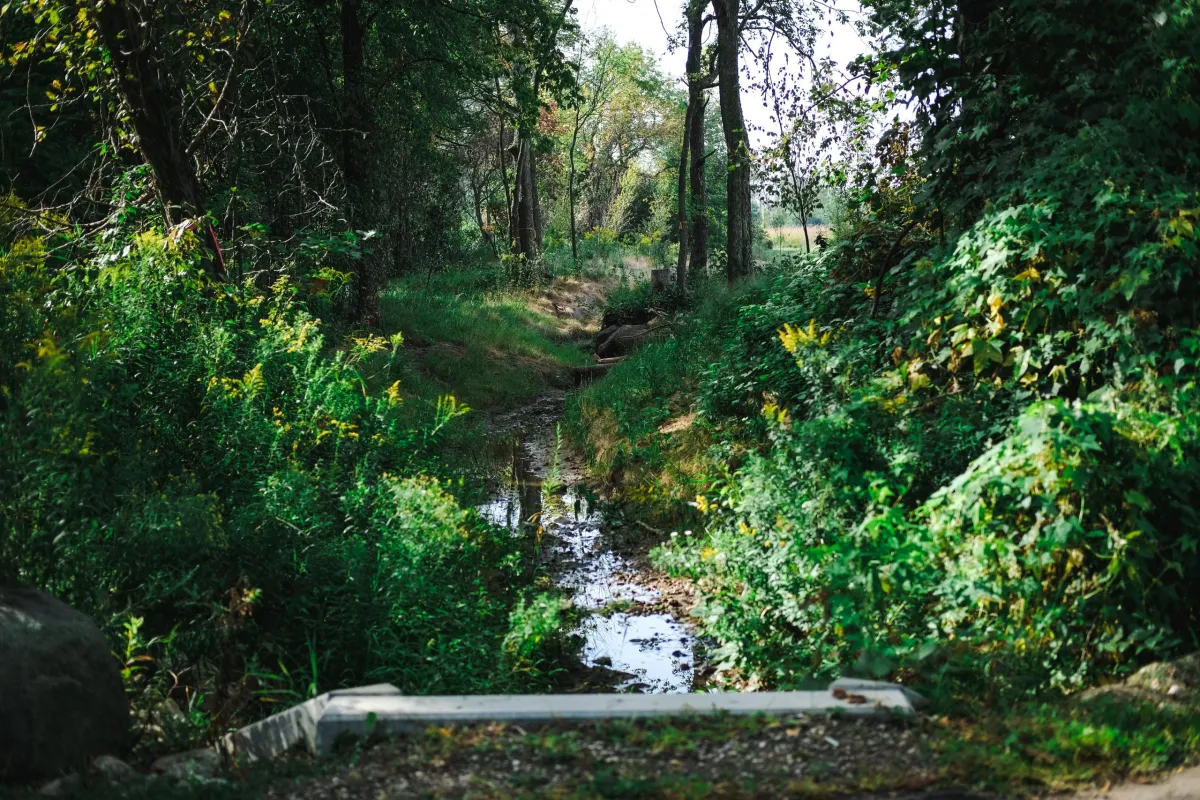
These inundated sites worked exactly as intended. All were purposefully restored wetlands, which are often called “nature’s kidneys” for their ability to absorb excess water that would otherwise cause harm to infrastructure, homes, and sewage systems during storms.

“Water needs space to expand, to flow,” said Kristin Schultheis, a senior project planner with the Milwaukee Metropolitan Sewerage District (MMSD). “It’s not destructive when it has its room.”

The three locations were recently completed Greenseams projects, a flood mitigation program that acquires and protects undeveloped wetlands. The effort is a testament to a long-standing cohesion of environmental policy, dedicated funding, and sound climate science in Wisconsin.

Over 25 years, Greenseams has applied $30 million in state and federal grants to conserve 5,825 acres of wetlands in the Milwaukee area. Their collective storage capacity totals 3.2 billion gallons of water. Though neither MMSD nor the state Department of Natural Resources (DNR) quantified the role wetlands played in August’s storm, the Union of Concerned Scientists estimate these natural floodplains prevent $4.56 billion each year in flood-related damages in Wisconsin.

“As catastrophic as the flooding was, it would have been so much worse without the investments that MMSD and others have made,” Democratic state Rep. Deb Andraca told Circle of Blue.

Despite these benefits, Wisconsin’s wetland development program is in serious trouble, just as they are in other Great Lakes states. On both the state and federal levels, legislation that safeguards surface waters that produce wetlands is eroding. A lapse in federal disaster assistance means the importance of local, preventive action has never been greater.

This week, wetland protections took an additional, drastic hit on the federal level. The Trump Administration’s EPA and Army Corps of Engineers proposed new rules that would strip protections for up to 85 percent of the country’s wetlands, totaling 55 million acres.

“We’ve forgotten that we have clean water because of the Clean Water Act,” Jim Murphy, the National Wildlife Federation’s senior director of legal advocacy, said in a statement. “This rule would further strip protection from streams that flow into the rivers and lakes that supply our drinking water. The wetlands now at risk of being bulldozed filter our water supplies and protect us from floods.”

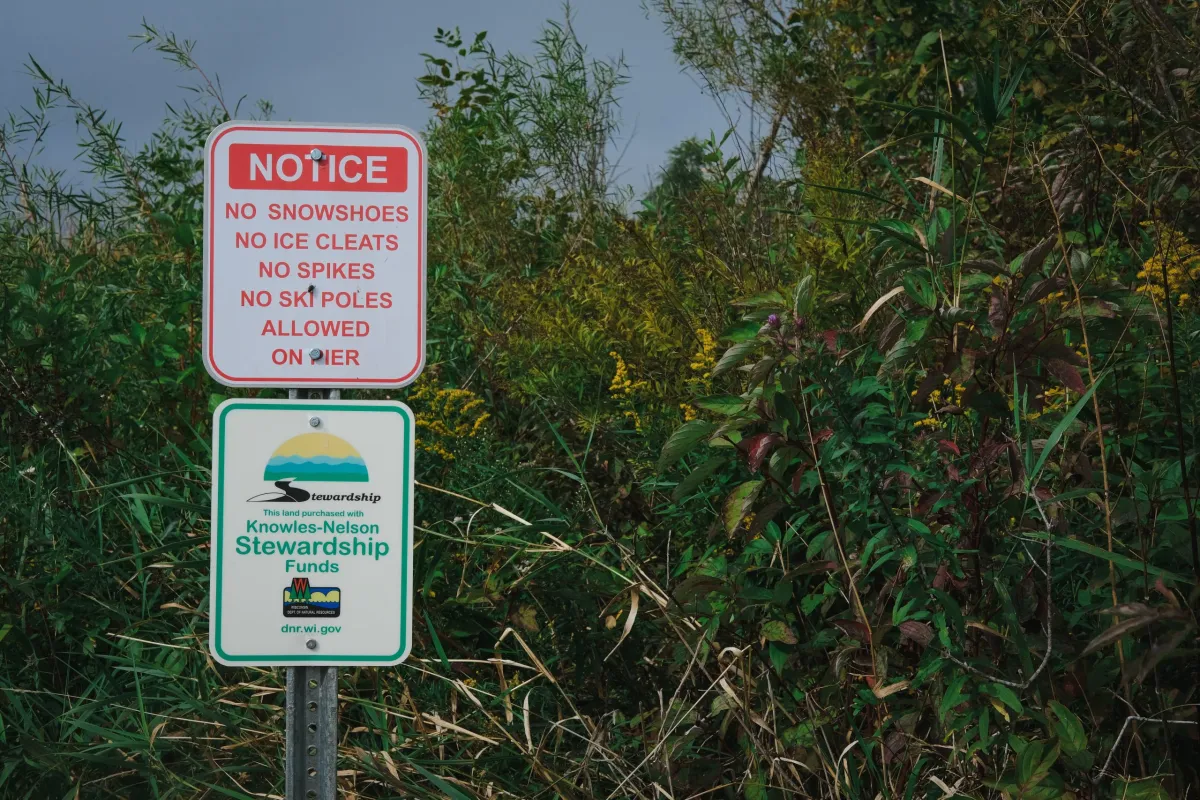
And a funding source in Wisconsin specifically intended to conserve land that can be used to produce new wetlands — called the Knowles-Nelson Stewardship Fund — faces an uncertain future in the state Legislature.

Created in 1989, the state has invested more than $1.3 billion into the stewardship fund. As of 2020, more than 90 percent of Wisconsin residents lived within a mile of property that received Knowles-Nelson investments. A significant portion of these projects have gone to wetland restoration. Of the $30 million MMSD has spent on lands for Greenseams wetlands, $7 million has come from the Knowles-Nelson fund.

But amid ongoing tensions between Gov. Evers, a Democrat, and the Republican-led Wisconsin Senate, the new two-year state budget, signed in July, did not renew the Knowles-Nelson Stewardship Fund.

Both Republican and Democratic lawmakers have introduced dueling bills this legislative session to save the fund, which would otherwise expire in 2026 and leave a massive financial hole for environmental groups.

“It’s just another example of partisanship getting in the way of a project that we know so many Wisconsinites like,” Rep. Andraca said. “I get more mail on Knowles-Nelson than anything else, from people wanting to save it.”

A Wetter Climate Means Future Flooding

Added up, the flurry of changes amount to weakening government support for conserving existing wetlands and developing new ones. It couldn’t come at a worse time. 

Fueled by warmer air lifting water into the atmosphere, climate change is projected by century’s end to dump 6 more inches of annual rainfall on Great Lakes states, according to NOAA data.

In Wisconsin, precipitation has already increased by 20 percent since 1950, and is expected to continue to rise. The likelihood of flooding remains high, with these deluges predicted to come in erratic, concentrated bursts.

But the landscape now is ill-suited to receive more moisture. Across the Great Lakes basin, floodplains have been overwhelmingly filled, to communities’ detriment. Recent damaging floods in IndianaOhio, and Illinois — which have each lost between 85 percent and 90 percent of their own historic wetlands — serve as a costly reminder of this change.

Wisconsin, which has retained roughly half of its wetland cover since pre-colonization, now finds itself at an uncertain tipping point. Decisions made today will affect lives during the next great deluge.

“I think everyone should have a new appreciation for wetlands. We need to recognize that making small investments helps all of us,” Rep. Andraca said. “If we’re cutting back on basic science, staff, and people who have expertise, we’re not going to make smart decisions, and that’s going to impact everyone down the road.”

Communities Left ‘On Their Own’ After Floods

In Milwaukee-area neighborhoods without substantial floodplains, August’s storm and subsequent flash flooding prompted emergency evacuations and swift-water rescues. Crop fields submerged. Cars deteriorated in city lots. Suburban roads were made inaccessible. Nearly 50,000 residences and businesses across six counties lost power.

After the storm, Gov. Evers estimated the flooding had caused at least $33 million worth of home damages alone, with another $43 million accrued in public sector losses. Later that month, he requested $26.5 million in federal assistance.

The governor’s appeals for assistance were denied. The Trump administration has apparently politicized FEMA’s disaster aid programs. In a reversal from earlier commitments made by the Trump administration, FEMA announced in October it would halt all aid for the state the president flipped red in the 2024 election. Of the six counties in need of funds, two — Milwaukee and Door — voted Democrat that year.

“Denying federal assistance doesn’t just delay recovery, it sends a message to our communities that they are on their own,” Evers, who has recently feuded with Trump over immigration policy and other spending cuts, said in a statement.

The denial stands out amidst a backdrop of recently approved flood-assistance packages for Republican-led Missouri, Nebraska, North Dakota, and Alaska.

FEMA “categorically refutes” that their funding follows partisan lines. This month a coalition of 12 states — including Michigan and Wisconsin — filed suit against the agency and Department of Homeland Security for restricting grants, an act amounting to what they say is “an inconsistent patchwork of disaster response across the Nation.”

They also accused the agency of slowly unloading the responsibility of disaster financing solely onto states altogether, a move that magnifies the importance of local momentum for pre-emptive flood mitigation.

“In southeast Wisconsin in particular, this issue exemplifies how the protection or lack of protection in an area can impact such a wide swath of stakeholders,” said Tressie Kamp, assistant director of the Center for Water Policy at University of Wisconsin-Milwaukee.

State and Federal Protections Weaken

For the better part of the last 20 years, wetlands in Wisconsin were doubly protected by both state and federal environmental legislation. But key changes on both levels, in quick succession, have left thousands of acres of floodplains vulnerable to filling.

The first action came in 2018, when the Wisconsin Legislature introduced an exemption in state law allowing for the filling of wetlands that were not protected by the federal government. At the time, this constituted a relatively small amount of habitat in Wisconsin.

But this change had massive consequences just a few years later, when, in 2023, the U.S. Supreme Court significantly rolled-back its definition of federally protected waters. Suddenly, wetlands in Wisconsin and across the country that were not permanently connected to a navigable stream, river, or lake were legally eligible to be filled.

In the two years since this decision, officials in Wisconsin have noted developers taking advantage of its large swath of unprotected areas. “It makes it easier [to fill wetlands] when there’s only one entity regulating it,” said Chelsey Lundeen, the wetlands mitigation coordinator for the Wisconsin DNR.

The U.S. Army Corps of Engineers determines if a wetland is eligible to be filled. According to Joseph Shoemaker, the Corp’s Wisconsin East Branch Chief, Section 404 of the Clean Water Act — which pertains to wetland filling or dredging — is now “the most common reason people request that we review federal jurisdiction over aquatic resources,” he said.

Between 2018 and 2022, the number of acres of wetlands filled steadily rose each year, from 2.5 acres to 40 acres, according to Kamp. This rise is likely to continue, she said, as the Army Corps streamlines their permitting processes.

In January, the matter was addressed with even greater haste when President Trump issued an executive order directing the Corps to speed up its review for filling wetlands, encouraging more development projects.

The southeast region of Wisconsin, which receives the highest number of requests, is particularly vulnerable to these fillings, said Tom Nedland, a wetland identification coordinator with the Wisconsin DNR. “As the state’s largest population center,” he said, “development pressure is high.”

Reliable Funding Sources Disappear

The state’s looming loss of the Knowles-Nelson Stewardship Fund is magnified by the Trump Administration’s freezing and outright cancellation of hundreds of millions of dollars of federal grants for conservation initiatives.

In Ozaukee County, several wetland restoration projects — completed just before August’s historic flooding, supported by the federal Great Lakes Restoration Initiative  — are telling examples of what might be missed during the next great deluge.

Wetlands at Mineral Springs Creek, Mequon County Park and Golf Course, and the Little Menomonee Fish and Wildlife Preserve all showed “proof of concept” this summer, said Andrew Struck, the county’s director of planning and parks.

“We didn’t get any complaints about flooding that we were constantly hearing about,” Struck said. “We retained a good amount of water during that event…so I think we’ve seen that as being very successful.”

But big challenges lay ahead, with potentially devastating consequences. For county neighbors living along Lake Michigan’s shoreline — where unchecked drainage and stormwater runoff are causing erosion and slumping — the future of wetland restoration could very well determine the fate of their properties.

“We’re also trying to do some of this work on private lands,” Struck said. “We have a comprehensive goal of managing the water, and also managing infrastructure. But we face a lot of challenges. Funding is disappearing from the landscape.”


Catch more news at Great Lakes Now: 

Intense rainfall means more floods. What can we do?

This wetland fight could go to the Supreme Court


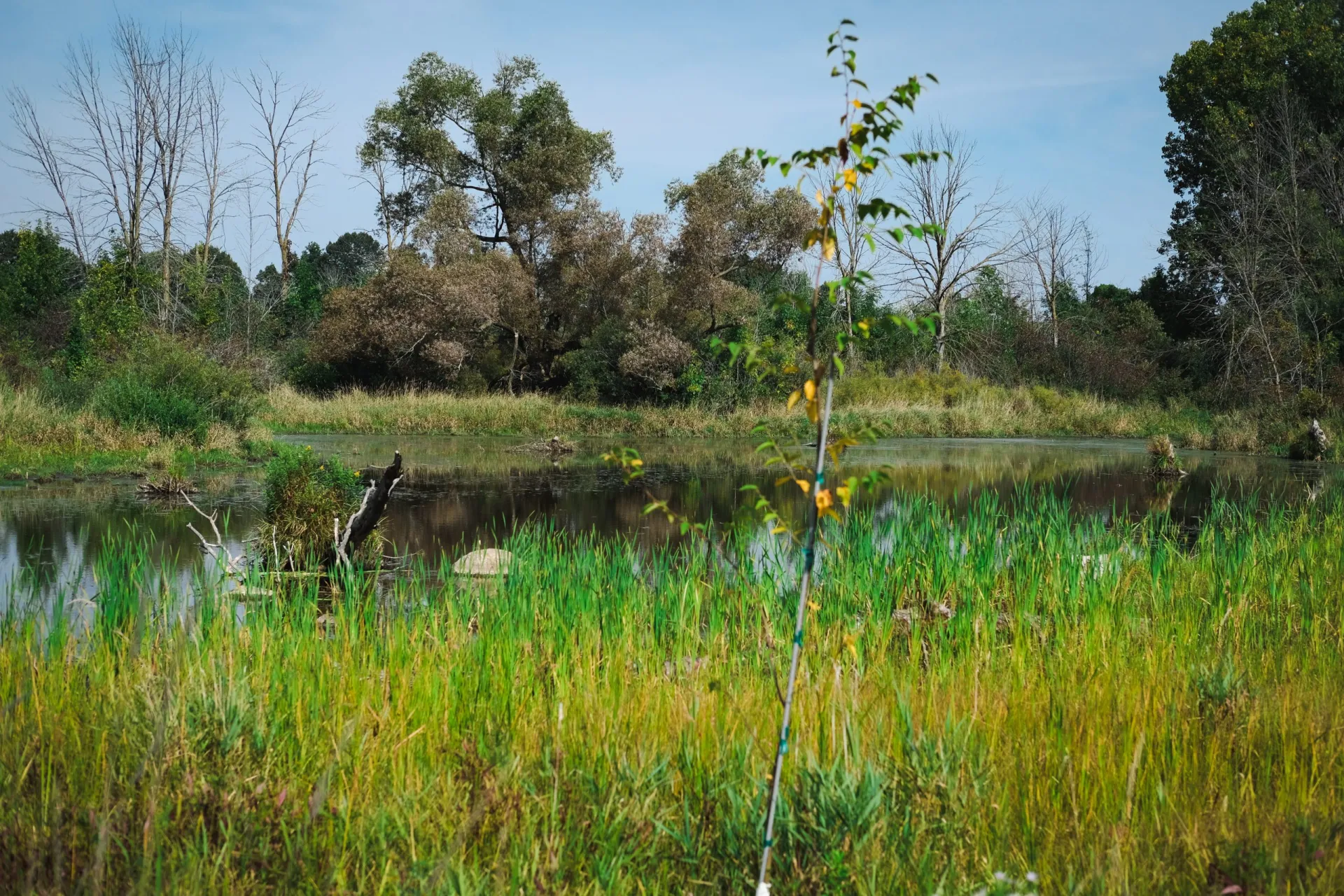
Featured image: Wetlands at Tendick Nature Park in Saukville, Wisconsin. Photo by Christian Thorsberg/Circle of Blue.

The post The Next Deluge May Go Differently appeared first on Great Lakes Now.

Original Article

Great Lakes Now

Great Lakes Now

https://www.greatlakesnow.org/2025/12/09/the-next-deluge-may-go-differently/

Circle of Blue

Tensions flare as Line 5 public comment deadline nears

By Ellie Katz, Interlochen Public Radio

This article was republished with permission from Interlochen Public Radio.

The U.S. Army Corps of Engineers recently revived an alternative to the Line 5 tunnel. The new option was proposed in a supplemental environmental impact statement published by the federal agency last month.

Read Now at Great Lakes Now.

Original Article

Great Lakes Now

Great Lakes Now

https://www.greatlakesnow.org/2025/12/tensions-flare-as-line-5-public-comment-deadline-nears/

Interlochen Public Radio

By Ellie Katz, Interlochen Public Radio

This article was republished with permission from Interlochen Public Radio.


The U.S. Army Corps of Engineers recently revived an alternative to the Line 5 tunnel. The new option was proposed in a supplemental environmental impact statement published by the federal agency last month.

The Army Corps is now proposing to use a technique called horizontal directional drilling, or HDD, which was tabled as an option for replacing the pipeline in 2018. HDD would create a narrow borehole to house the pipeline in the Straits of Mackinac, as opposed to the tunnel that’s been at the center of criticism and lawsuits for several years.

Public comment on the Army Corps’ new proposal is due by the end of the week. An online public comment session on Wednesday went for nearly three hours. The majority of those speaking were against the project, raising fears about a potential oil spill in the Straits of Mackinac and voicing frustration with the new drilling option.

“This proposal before you is a bait and switch,” said Lauren Sargent of Ann Arbor. “We were talking about a tunnel. Now what we’re talking about is essentially fracking technology below the Straits.”

Horizontal drilling is not the same as fracking, but is sometimes used to drill wells for fracking.

Joseph Torres, a business agent for Pipeliners Local Union 798, spoke in favor of the continued operation of Line 5 regardless of the method used to replace it.

“Building this pipeline, whether going through a tunnel or by HDD, is a safer option compared to transporting resources by railcar or truck,” Torres said. “I do believe that maintaining the integrity of Line 5 is crucial and shutting it down will impact citizens and our economy.”

In email to Interlochen Public Radio, an Enbridge spokesperson Ryan Duffy said there is confusion surrounding the new horizontal directional drilling alternative.

“This is not something we proposed,” Duffy wrote. “Nothing has changed on our end, we are still planning to build the tunnel.”

According to an online timeline, U.S. Army Corps expects to issue a decision on the Line 5 project in spring 2026.


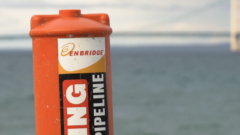
Featured image: A view of part of the Enbridge Energy Line 5 pumping station near Mackinaw City, Michigan on the south side of the Straits of Mackinac. (Photo: Lester Graham/Michigan Radio)

The post Tensions flare as Line 5 public comment deadline nears appeared first on Great Lakes Now.

Original Article

Great Lakes Now

Great Lakes Now

https://www.greatlakesnow.org/2025/12/05/tensions-flare-as-line-5-public-comment-deadline-nears/

Interlochen Public Radio

In world of AI, Michigan State University Extension bets on human expertise

By Kelly House, Bridge Michigan

The Great Lakes News Collaborative includes Bridge Michigan; Circle of Blue; Great Lakes Now at Detroit PBS; Michigan Public, Michigan’s NPR News Leader; and The Narwhal who work together to bring audiences news and information about the impact of climate change, pollution, and aging infrastructure on the Great Lakes and drinking water.

Read Now at Great Lakes Now.

Original Article

Great Lakes Now

Great Lakes Now

https://www.greatlakesnow.org/2025/12/in-world-of-ai-michigan-state-university-extension-bets-on-human-expertise/

Bridge Michigan

Trump administration moves to weaken federal protections for waterways and wetlands

By Aidan Hughes, Inside Climate News

This article originally appeared on Inside Climate News, a nonprofit, non-partisan news organization that covers climate, energy and the environment. Sign up for their newsletter here.

The Environmental Protection Agency and the Department of the Army announced a proposal last week to further define, and scale back, the number of waterways and wetlands protected by the federal government under the Clean Water Act, a bedrock environmental law.

Read Now at Great Lakes Now.

Original Article

Great Lakes Now

Great Lakes Now

https://www.greatlakesnow.org/2025/11/trump-administration-moves-to-weaken-federal-protections-for-waterways-and-wetlands/

Inside Climate News

$18M approved in bill credits for Pennsylvania customers in ‘forever chemicals’ settlement

Catch the latest updates on what’s happening with PFAS in the Great Lakes region. Check back for more PFAS news roundups every other week on our website.


The Pennsylvania Public Utility Commission recently approved a proposal from the Pennsylvania-American Water Company (PAWC) to issue over $18 million in bill credits to customers.

Read Now at Great Lakes Now.

Original Article

Great Lakes Now

Great Lakes Now

https://www.greatlakesnow.org/2025/11/more-than-18m-approved-in-bill-credits-for-pennsylvania-customers-in-forever-chemicals-settlement/

Lisa John Rogers, Great Lakes Now

The history of taming the Great Black Swamp

This is an excerpt from the book “The Great Black Swamp: Toxic algae, toxic relationships, and the most interesting place in America that nobody’s ever heard of.” Available for purchase on November 11, 2025, by Belt Publishing.

“The Worst Road in America”

Disasters do not happen overnight. 

Read Now at Great Lakes Now.

Original Article

Great Lakes Now

Great Lakes Now

https://www.greatlakesnow.org/2025/11/the-history-of-taming-the-great-black-swamp/

Patrick Wensink

Stanton Yards development merges art, nature on Detroit River, envisions ‘thriving new community destination’

This story is published in partnership with Planet Detroit

Stanton Yards, a Detroit riverfront development, aims to be a gathering place where people find inspiration in art and reconnect with nature.

The waterfront attraction is planned as an extension of the Little Village cultural corridor developed by Library Street Collective co-founders Anthony and JJ Curis.

Read Now at Great Lakes Now.

Original Article

Great Lakes Now

Great Lakes Now

https://www.greatlakesnow.org/2025/11/detroit-riverfront-cultural-hub/

John Hartig

Roads in the Great Lakes region get riskier after daylight saving ends

Drivers around the Great Lakes region beware. In the weeks following “fall back,” once daylight saving time ends, collisions between wildlife and vehicles rises by 16%. According to data from insurance company State Farm, October, November and December are the most dangerous for animal-related collisions, making up 41% of all animal collision claims.

Read Now at Great Lakes Now.

Original Article

Great Lakes Now

Great Lakes Now

https://www.greatlakesnow.org/2025/11/roads-in-the-great-lakes-region-get-riskier-after-daylight-saving-ends/

Lisa John Rogers, Great Lakes Now

Fifty years later: The little-known story of the families the Fitz left behind

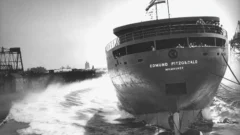
Wrecked: The Edmund Fitzgerald and the Sinking of the American Economy” is a new book by Thomas Nelson with Jeremy Podair. Below is an adapted excerpt from the chapter “Just Call Toby,” that details the legal mess families were put through after losing their loved ones on the Edmund Fitzgerald. 

Read Now at Great Lakes Now.

Original Article

Great Lakes Now

Great Lakes Now

https://www.greatlakesnow.org/2025/11/fifty-years-later-the-little-known-story-of-the-families-the-fitz-left-behind/

Thomas Nelson

Going Country at Farrand Hall

Situated in a town of a little over a thousand people in Colon, Michigan, is an idyllic and pastoral outdoor dining experience just 250 feet from a main road. Guests are recommended to order a glass of wine, wander the property grounds, and soak in their surroundings before taking a seat at a banquet-style table.

Read Now at Great Lakes Now.

Original Article

Great Lakes Now

Great Lakes Now

https://www.greatlakesnow.org/2025/11/going-country-at-farrand-hall/

S. Nicole Lane

Ontario is subsidizing an energy project in Georgian Bay despite expert advice

By Fatima Syed, The Narwhal

The Great Lakes News Collaborative includes Bridge Michigan, Circle of Blue, Great Lakes Now at Detroit PBS, Michigan Public and The Narwhal who work together to bring audiences news and information about the impact of climate change, pollution, and aging infrastructure on the Great Lakes and drinking water.

Read Now at Great Lakes Now.

Original Article

Great Lakes Now

Great Lakes Now

https://www.greatlakesnow.org/2025/11/ontario-is-subsidizing-an-energy-project-in-georgian-bay-despite-expert-advice/

The Narwhal

Sludge is used as fertilizer across Wisconsin. How much is tainted by PFAS?

By Danielle Kaeding, Wisconsin Public Radio

This article was republished here with permission from Wisconsin Public Radio.

On a Saturday in June, Nancy Sattler bats away flies while standing in the shade of the Moen Lake boat landing near the town of Stella.

Read Now at Great Lakes Now.

Original Article

Great Lakes Now

Great Lakes Now

https://www.greatlakesnow.org/2025/11/sludge-is-used-as-fertilizer-across-wisconsin-how-much-is-tainted-by-pfas/

Wisconsin Public Radio

Illinois one step closer to keeping invasive carp out of Great Lakes

By Juanpablo Ramirez-Franco, WBEZ

This coverage is made possible through a partnership between WBEZ and Grist, a nonprofit, independent media organization dedicated to telling stories of climate solutions and a just future. Sign up for WBEZ newsletters to get local news you can trust.

Read Now at Great Lakes Now.

Original Article

Great Lakes Now

Great Lakes Now

https://www.greatlakesnow.org/2025/10/illinois-one-step-closer-to-keeping-invasive-carp-out-of-great-lakes/

WBEZ

New study links seasonal pollen to higher suicide risk, experts warn

A new study between researchers at the University of Michigan and Wayne State University, looked at suicide rates in metropolitan areas around the United States. When looking at data from 2000 to 2018, they found a direct correlation to rises in seasonal pollen. While it is still unknown how exactly allergies work as a tipping point for some people, the research adds to a burgeoning body of work that shows this parallel exists.  

Read Now at Great Lakes Now.

Original Article

Great Lakes Now

Great Lakes Now

https://www.greatlakesnow.org/2025/10/new-study-links-seasonal-pollen-to-higher-suicide-risk-experts-warn/

Lisa John Rogers, Great Lakes Now

In “The Gales of November,” author John U. Bacon investigates the sinking of the Edmund Fitzgerald

By Doug Tribou, John U. Bacon and Caoilinn Goss, Michigan Public

The Great Lakes News Collaborative includes Bridge Michigan; Circle of Blue; Great Lakes Now at Detroit PBS; Michigan Public, Michigan’s NPR News Leader; and The Narwhal who work together to bring audiences news and information about the impact of climate change, pollution, and aging infrastructure on the Great Lakes and drinking water.

Read Now at Great Lakes Now.

Original Article

Great Lakes Now

Great Lakes Now

https://www.greatlakesnow.org/2025/10/in-the-gales-of-november-author-john-u-bacon-investigates-the-sinking-of-the-edmund-fitzgerald/

Michigan Public

Points North: How ‘Bout Them Apples?

By Austin Rowlader, Interlochen Public Radio

Points North is a biweekly podcast about the land, water and inhabitants of the Great Lakes.

This episode was shared here with permission from Interlochen Public Radio. 

Luke Marion is on Beaver Island in Lake Michigan looking for apple trees.

Read Now at Great Lakes Now.

Original Article

Great Lakes Now

Great Lakes Now

https://www.greatlakesnow.org/2025/10/points-north-how-bout-them-apples/

Interlochen Public Radio

Ohio to fast-track energy at former coal mines and brownfields

By Kathiann M. Kowalski

This story was originally published by Canary Media.

A new law in Ohio will fast-track energy projects in places that are hard to argue with: former coal mines and brownfields.

But how much the legislation benefits clean energy will depend on the final rules for its implementation, which the state is working out now.

Read Now at Great Lakes Now.

Original Article

Great Lakes Now

Great Lakes Now

https://www.greatlakesnow.org/2025/10/ohio-to-fast-track-energy-at-former-coal-mines-and-brownfields/

Canary Media

A bitcoin mine came to Michigan’s Upper Peninsula, and Dafter Township isn’t happy

By Tom Perkins, Inside Climate News

This article originally appeared on Inside Climate News, a nonprofit, non-partisan news organization that covers climate, energy and the environment. This is the last of three articles about Michigan communities organizing to stop the construction of energy-intensive computing facilities.

Read Now at Great Lakes Now.

Original Article

Great Lakes Now

Great Lakes Now

https://www.greatlakesnow.org/2025/10/a-bitcoin-mine-came-to-michigans-upper-peninsula-and-dafter-township-isnt-happy/

Inside Climate News

What to know about Michigan whitefish crisis, from limits to solutions

By Kelly House, Bridge Michigan

The Great Lakes News Collaborative includes Bridge Michigan; Circle of Blue; Great Lakes Now at Detroit PBS; Michigan Public, Michigan’s NPR News Leader; and The Narwhal who work together to bring audiences news and information about the impact of climate change, pollution, and aging infrastructure on the Great Lakes and drinking water.

Read Now at Great Lakes Now.

Original Article

Great Lakes Now

Great Lakes Now

https://www.greatlakesnow.org/2025/10/what-to-know-about-michigan-whitefish-crisis-from-limits-to-solutions/

Bridge Michigan

A Michigan town hopes to stop a data center with a 2026 ballot initiative

By Tom Perkins, Inside Climate News

This article originally appeared on Inside Climate News, a nonprofit, non-partisan news organization that covers climate, energy and the environment. This is the second of three articles about Michigan communities organizing to stop the construction of energy-intensive computing facilities.

Read Now at Great Lakes Now.

Original Article

Great Lakes Now

Great Lakes Now

https://www.greatlakesnow.org/2025/10/michigan-town-effots-to-stop-data-center/

Inside Climate News

Los Alamos and University of Michigan want to build a national security ‘data center’ in Ypsilanti. Residents and local officials see few benefits.

By Tom Perkins, Inside Climate News

This article originally appeared on Inside Climate News, a nonprofit, non-partisan news organization that covers climate, energy and the environment. It’s the first of three articles about Michigan communities organizing to stop the construction of energy-intensive computing facilities.

Read Now at Great Lakes Now.

Original Article

Great Lakes Now

Great Lakes Now

https://www.greatlakesnow.org/2025/10/los-alamos-university-of-michigan-national-security-data-center/

Inside Climate News

How Buffalo, New York has adapted to and embraced an influx of climate migrants

Buffalo is not a place that typically makes national headlines outside of football season. But in late July, the city did exactly that for one hugely significant reason: it became the last large city in the U.S. Lower 48 to have never reached 100 F.

At a time of rising temperatures and water levels, along with the threat of wildfires and smoke, many are reassessing where to live and Buffalo is embracing the “climate haven” tag.

Read Now at Great Lakes Now.

Original Article

Great Lakes Now

Great Lakes Now

https://www.greatlakesnow.org/2025/10/how-buffalo-new-york-has-adapted-to-and-embraced-an-influx-of-climate-migrants/

Stephen Starr, Great Lakes Now

How Buffalo, New York has adapted to and embraced an influx of climate migrants

Buffalo is not a place that typically makes national headlines outside of football season. But in late July, the city did exactly that for one hugely significant reason: it became the last large city in the U.S. Lower 48 to have never reached 100 F.

At a time of rising temperatures and water levels, along with the threat of wildfires and smoke, many are reassessing where to live and Buffalo is embracing the “climate haven” tag.

Read Now at Great Lakes Now.

Original Article

Great Lakes Now

Great Lakes Now

https://www.greatlakesnow.org/2025/10/how-buffalo-new-york-has-adapted-to-and-embraced-an-influx-of-climate-migrants/

Stephen Starr, Great Lakes Now

Millions in loans to replace lead pipes pumping water into Chicago homes remain unspent

By Keerti Gopal & Juanpablo Ramirez-Franco

This story is a partnership between GristInside Climate News, and WBEZ, a public radio station serving the Chicago metropolitan region. 

Millions of dollars in federal and city loans dedicated to replacing lead pipes that pump water into people’s homes remain unused, a city official said, at the same time that officials are struggling to keep up with state and federal deadlines to warn people of the risks.

Read Now at Great Lakes Now.

Original Article

Great Lakes Now

Great Lakes Now

https://www.greatlakesnow.org/2025/10/lead-pipes-chicago-city-council-notification-federal-loans-unspent/

Inside Climate News and Grist

The ready access to nature and winter sports is what prompted Elizabeth Scott and her family to up sticks from Portland, Oregon, to Houghton on Michigan’s Keweenaw Peninsula in summer 2021.

With 29% of Michigan’s territory and only 3% of its population, to many, the Upper Peninsula (U.P.) might appear a dream place to start over.

Read Now at Great Lakes Now.

Original Article

Great Lakes Now

Great Lakes Now

https://www.greatlakesnow.org/2025/09/climate-migrations-impact-on-michigans-upper-peninsula/

Stephen Starr, Great Lakes Now

Time running out for Great Lakes whitefish. Can ponds become their Noah’s Ark?

By Kelly House, Bridge Michigan

The Great Lakes News Collaborative includes Bridge Michigan; Circle of Blue; Great Lakes Now at Detroit PBS; Michigan Public, Michigan’s NPR News Leader; and The Narwhal who work together to bring audiences news and information about the impact of climate change, pollution, and aging infrastructure on the Great Lakes and drinking water.

Read Now at Great Lakes Now.

Original Article

Great Lakes Now

Great Lakes Now

https://www.greatlakesnow.org/2025/09/time-running-out-for-great-lakes-whitefish-can-ponds-become-their-noahs-ark/

Kelly House, Bridge Michigan

Stroll along Cleveland’s Edgewater Pier on a summer evening, and you’ll hear Arabic, Spanish, and other languages wafting through the lake air. For decades, international immigrants have found a home in the city of Lake Erie.

But now, there’s an increasing chance that future waves of migrants — from Florida, Arizona, California, and beyond — could move here as extreme weather events caused by climate change in those regions prompt people to rethink where they want to live.

Read Now at Great Lakes Now.

Original Article

Great Lakes Now

Great Lakes Now

https://www.greatlakesnow.org/2025/09/how-great-lakes-cities-are-preparing-for-climate-migration/

Stephen Starr, Great Lakes Now

A Great Lakes oil pipeline faces 3 controversies with no speedy resolutions

By Mike Shriberg, University of Michigan

 is an independent and nonprofit source of news, analysis and commentary from academic experts.

For more than a decade, controversy over an oil pipeline that passes directly through a Native American reservation and then across a sensitive waterway that is also a key shipping lane has brewed in Wisconsin and Michigan.

Read Now at Great Lakes Now.

Original Article

Great Lakes Now

Great Lakes Now

https://www.greatlakesnow.org/2025/09/a-great-lakes-oil-pipeline-faces-3-controversies-with-no-speedy-resolutions/

The Conversation

Amid rise of RFK Jr., officials waver on drinking water fluoridation — even in the state where it started

By Anna Clark, ProPublica

This story was originally published by ProPublica.

Just 15 months after receiving an award from the Centers for Disease Control and Prevention for excellence in community water fluoridation, the city of Grayling, Michigan, changed course.

With little notice or fanfare, council members voted unanimously in May to end Grayling’s decades long treatment program.

Read Now at Great Lakes Now.

Original Article

Great Lakes Now

Great Lakes Now

https://www.greatlakesnow.org/2025/09/fluoride-drinking-water-rfk-jr-michigan-cdc-hhs/

ProPublica

Illinois farmers find that sheep and solar arrays go well together

By Kari Lydersen

This story was originally published by Canary Media.

To all the challenges the solar industry is facing today, add one more: cultivating a domestic market for lamb meat. It may seem an unlikely mission for clean-energy developers, but in many states, including Illinois, grazing sheep between rows of photovoltaic panels is considered the most efficient form of agrivoltaics — the combination of solar and farming on the same land.

Read Now at Great Lakes Now.

Original Article

Great Lakes Now

Great Lakes Now

https://www.greatlakesnow.org/2025/09/illinois-farmers-find-that-sheep-and-solar-arrays-go-well-together/

Canary Media

As mussels ravage Great Lakes whitefish, Lake Superior survives — for now

By Kelly House, Bridge Michigan

The Great Lakes News Collaborative includes Bridge Michigan; Circle of Blue; Great Lakes Now at Detroit PBS; Michigan Public, Michigan’s NPR News Leader; and The Narwhal who work together to bring audiences news and information about the impact of climate change, pollution, and aging infrastructure on the Great Lakes and drinking water.

Read Now at Great Lakes Now.

Original Article

Great Lakes Now

Great Lakes Now

https://www.greatlakesnow.org/2025/09/as-mussels-ravage-great-lakes-whitefish-lake-superior-survives-for-now/

Bridge Michigan

What’s going on in Wasaga Beach? Profit, piping plovers and an Ontario town’s complicated future

By Fatima Syed, The Narwhal

The Great Lakes News Collaborative includes Bridge Michigan, Circle of Blue, Great Lakes Now at Detroit PBS, Michigan Public and The Narwhal who work together to bring audiences news and information about the impact of climate change, pollution, and aging infrastructure on the Great Lakes and drinking water.

Read Now at Great Lakes Now.

Original Article

Great Lakes Now

Great Lakes Now

https://www.greatlakesnow.org/2025/09/wasaga-beach-ontario-park-plan/

Fatima Syed, The Narwhal

Report says growing demand from data centers, industry could stress Great Lakes water

By Danielle Kaeding, Wisconsin Public Radio

This article was republished here with permission from Wisconsin Public Radio.

Great Lakes states should take steps to protect water resources from increasing demand from data centers and other industries, according to a new report.

The analysis by the nonprofit Alliance for the Great Lakes found data centers may withdraw as much as 150 billion gallons of water nationally over the next five years.

Read Now at Great Lakes Now.

Original Article

Great Lakes Now

Great Lakes Now

https://www.greatlakesnow.org/2025/09/report-says-growing-demand-from-data-centers-industry-could-stress-great-lakes-water/

Wisconsin Public Radio

Trump administration orders 63-year-old Michigan coal plant to stay open — again

Catch the latest energy news from around the region. Check back for these bimonthly Energy News Roundups.

The Trump administration is keeping a Michigan coal plant open even longer past its planned retirement. The 63-year-old J.H. Campbell coal plant in the far western part of the state, near Lake Michigan, was supposed to close for good at the end of May.

Read Now at Great Lakes Now.

Original Article

Great Lakes Now

Great Lakes Now

https://www.greatlakesnow.org/2025/09/trump-administration-orders-63-year-old-michigan-coal-plant-to-stay-open-again/

Nicole Pollack, Great Lakes Now

In Peshawbestown, the Grand Traverse Band puts fish waste to use

By Izzy Ross, Interlochen Public Radio

This coverage is made possible through a partnership between Interlochen Public Radio and Grist, a nonprofit environmental media organization.

Piles of sawdust sit just downhill from the Peshawbestown Gitigaan, the farm of the Grand Traverse Band of Ottawa and Chippewa Indians, where local commercial fisheries drop off all the parts of a fish they don’t sell — heads, bones, organs, tails.

Read Now at Great Lakes Now.

Original Article

Great Lakes Now

Great Lakes Now

https://www.greatlakesnow.org/2025/09/in-peshawbestown-the-grand-traverse-band-puts-fish-waste-to-use/

Interlochen Public Radio

In Peshawbestown, the Grand Traverse Band puts fish waste to use

By Izzy Ross, Interlochen Public Radio

This coverage is made possible through a partnership between Interlochen Public Radio and Grist, a nonprofit environmental media organization.

Piles of sawdust sit just downhill from the Peshawbestown Gitigaan, the farm of the Grand Traverse Band of Ottawa and Chippewa Indians, where local commercial fisheries drop off all the parts of a fish they don’t sell — heads, bones, organs, tails.

Read Now at Great Lakes Now.

Original Article

Great Lakes Now

Great Lakes Now

https://www.greatlakesnow.org/2025/09/in-peshawbestown-the-grand-traverse-band-puts-fish-waste-to-use/

Interlochen Public Radio

Blue-green algae is making a home in the warming waters of Lake Superior’s watershed

By Chris McEvoy, The Narwhal

The Great Lakes News Collaborative includes Bridge Michigan, Circle of Blue, Great Lakes Now at Detroit PBS, Michigan Public and The Narwhal who work together to bring audiences news and information about the impact of climate change, pollution, and aging infrastructure on the Great Lakes and drinking water.

Read Now at Great Lakes Now.

Original Article

Great Lakes Now

Great Lakes Now

https://www.greatlakesnow.org/2025/09/blue-green-algae-is-making-a-home-in-the-warming-waters-of-lake-superiors-watershed/

The Narwhal

Points North: The Pink Prairie Mascot

By Claire Keenan-Kurgan, Interlochen Public Radio

Points North is a biweekly podcast about the land, water and inhabitants of the Great Lakes.

This episode was shared here with permission from Interlochen Public Radio. 

Back in the summer of 2014, a botanist named Rachel Goad was on a canoe trip to see a very rare flower.

Read Now at Great Lakes Now.

Original Article

Great Lakes Now

Great Lakes Now

https://www.greatlakesnow.org/2025/09/points-north-the-pink-prairie-mascot/

Interlochen Public Radio

Illinois Gov. Pritzker signs PFAS Reduction Act

Catch the latest updates on what’s happening with PFAS in the Great Lakes region. Check back for more PFAS news roundups every other week on our website.

Illinois Gov. JB Pritzker signed the PFAS Reduction Act into law on August 15.

Read Now at Great Lakes Now.

Original Article

Great Lakes Now

Great Lakes Now

https://www.greatlakesnow.org/2025/08/illinois-gov-pritzker-signs-pfas-reduction-act/

Lisa John Rogers, Great Lakes Now

How many cigarette butts are littering your local beach?

By Lester Graham, Michigan Public

The Great Lakes News Collaborative includes Bridge Michigan; Circle of Blue; Great Lakes Now at Detroit PBS; Michigan Public, Michigan’s NPR News Leader; and The Narwhal who work together to bring audiences news and information about the impact of climate change, pollution, and aging infrastructure on the Great Lakes and drinking water.

Read Now at Great Lakes Now.

Original Article

Great Lakes Now

Great Lakes Now

https://www.greatlakesnow.org/2025/08/how-many-cigarette-butts-are-littering-your-local-beach/

Lester Graham, Michigan Public

Nibi Chronicles: Your hands will know what to do

Wiigwaasi-jiimaanan (birch bark canoes) are one of the essential tools invented by Ojibwe-Anishinaabe people, using materials commonly found in the Great Lakes region — our homeland for 1,000s of years. These lightweight and durable vehicles formed the basis of travel for everyone in the region, not just the Ojibwe. I have come to think of the Ojibwe canoe as the driver of early economies across Turtle Island.

Read Now at Great Lakes Now.

Original Article

Great Lakes Now

Great Lakes Now

https://www.greatlakesnow.org/2025/08/nibi-chronicles-your-hands-will-know-what-to-do/

Staci Lola Drouillard, Great Lakes Now

Cleveland, NOACA seek public input on climate action plan

By Zaria Johnson, Ideastream Public Media

This story was originally published by Ideastream.

Several northeast Ohio counties will soon have a regional climate action plan with recommendations for reducing greenhouse gas emissions that worsen the effects of climate change like extreme heat, severe storms and worsened water quality.

Read Now at Great Lakes Now.

Original Article

Great Lakes Now

Great Lakes Now

https://www.greatlakesnow.org/2025/08/cleveland-noaca-seek-public-input-on-climate-action-plan/

Ideastream Public Media

EV maker Rivian sues Ohio, claims state unfairly favors Tesla

Catch the latest energy news from around the region. Check back for these bimonthly Energy News Roundups

Electric vehicle manufacturer Rivian is suing Ohio for letting Tesla open car dealerships in the state but not letting other manufacturers do the same.

Read Now at Great Lakes Now.

Original Article

Great Lakes Now

Great Lakes Now

https://www.greatlakesnow.org/2025/08/ev-maker-rivian-sues-ohio-claims-state-unfairly-favors-tesla/

Nicole Pollack, Great Lakes Now

Heat waves and cold snaps: Study finds the Great Lakes have entered an era of extremes

The Great Lakes, like the rest of the world, are dealing with a phenomenon of global heating caused mostly by fossil fuel emissions. In an innovative new study from the University of Michigan, the data reveals it’s not just rising average temperatures we need to worry about. Looking back at lake surface temperatures (LST) over forty years, researchers found the Great Lakes have entered a new era of temperature extremes. 

Read Now at Great Lakes Now.

Original Article

Great Lakes Now

Great Lakes Now

https://www.greatlakesnow.org/2025/08/heat-waves-cold-snaps-study-finds-great-lakes-era-of-extremes/

Carlyn Zwarenstein