The U.S. EPA is proposing to weaken the Clean Water Act by eliminating protections for many streams and wetlands that feed into the Great Lakes. This would put our drinking water, communities, and wildlife at risk.  

The EPA needs to hear from thousands of people who care about clean water. Your voice matters! The deadline to comment on the proposed rule is January 5, 2026. 

What’s happening?  

The EPA has proposed a revised definition of the “waters of the United States” that would drastically narrow which waters are protected under the Clean Water Act. The rule could remove safeguards for seasonal streams, small tributaries, and large areas of wetlands—including many waters that eventually flow into the Great Lakes.  

Weakening these protections would:  

  • Allow more pollution to enter rivers, lakes, and drinking water sources
  • Increase flooding by destroying wetlands that store stormwater
  • Raise costs for communities that must treat more contaminated water
  • Harm fish, wildlife, and recreation opportunities

More than 40 million people rely on the Great Lakes for drinking water. We cannot afford to roll back protections now.  

What you can do!  

Contact the U.S. EPA today and urge them to withdraw the proposed rule and uphold strong protections for all U.S. waters.  

  1. Draft your note to U.S. EPA.  
    • Start by explaining why clean water matters to you, whether you fish, boat, rely on a well, work in a water-related industry, or simply care about protecting the Great Lakes.  
    • Then ask EPA to withdraw the proposed rule and uphold strong protections for all U.S. waters. If it’s helpful, use some of the language below and make it your own.  
      I urge the U.S. EPA to withdraw the proposed revision to the definition of “waters of the United States.” Weakening this definition will remove protections from wetlands and streams that feed into our lakes and drinking water sources—including the Great Lakes.
      These waters filter pollution, reduce flooding, support fish and wildlife, and provide clean drinking water for millions of people, and yet the proposed rule gives little to no attention to the impacts on public health, water quality, and flood prevention that will result from removing these protections. Allowing more wetlands to be filled and more streams to be polluted shifts the burden onto communities, taxpayers, and water customers who must pay for increased treatment costs.  
      The Clean Water Act has protected the water in our nation’s lakes, rivers, and streams for more than 50 years, and 94% of Americans support strong safeguards. The EPA should strengthen—not weaken—protections for wetlands and streams. I urge you to withdraw the proposed rule and ensure that all waters that affect downstream water quality remain protected. 
  1. Submit your comment to the U.S. EPA. Go to https://www.regulations.gov/commenton/EPA-HQ-OW-2025-0322-0001 and follow the instructions.  

Take action by January 5th! And, if you have a minute, email alliance@greatlakes.org to let us know you contacted the EPA.

Thank you for speaking out to protect the Great Lakes! 

Tell U.S. EPA: Protect Our Streams & Wetlands

The U.S. EPA is proposing to weaken the Clean Water Act by eliminating protections for many streams and wetlands that feed into the Great Lakes. This would put our drinking water, communities, and wildlife at risk.

Submit Your Comment

The post Tell the U.S. EPA to Protect Our Streams and Wetlands appeared first on Alliance for the Great Lakes.

Original Article

News - Alliance for the Great Lakes

News - Alliance for the Great Lakes

https://greatlakes.org/2025/12/tell-the-u-s-epa-to-protect-our-streams-and-wetlands/

Judy Freed

Joel Brammeier headshot.
Joel Brammeier, ​President & CEO

We’re celebrating a major win: Muskegon Lake, a 4,149-acre lake that drains into the western shore of Lake Michigan, has officially been removed from the list of the most environmentally degraded areas in the Great Lakes.

It’s thanks to decades of collaborative restoration efforts among local communities, state and federal agencies, and advocates, as well as consistent federal funding that the Alliance for the Great Lakes has fought hard to maintain.

For years, the lake was ringed by factories, foundries, and paper plants. Locals talked about being able to tell which factory was operating based on the color of the water that day. The heavy industry left behind a legacy of pollution that landed the lake on the federal government’s list of “Areas of Concern” – 43 highly degraded areas along the Great Lakes in need of significant remediation.

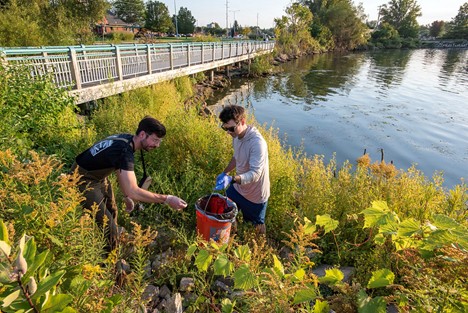
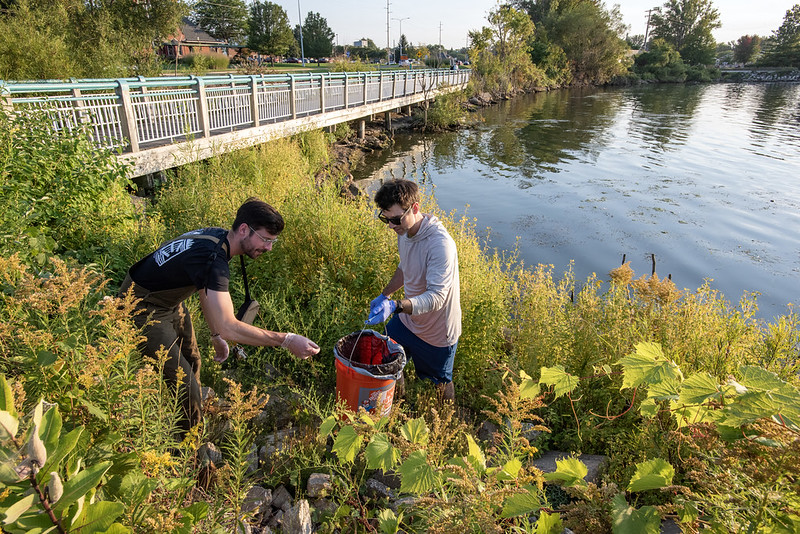
Alliance for the Great Lakes Adopt-a-Beach volunteers cleaning shoreline litter at Muskegon Lake. PC: Lloyd DeGrane

In all, more than 190,000 cubic yards of contaminated sediment were remediated from Muskegon Lake – enough to fill roughly 9 football fields, each 10 feet deep. Beaches have reopened, wetlands are restored, and new recreation opportunities are fueling the local economy. A study by Grand Valley State University estimates that for every dollar spent on the restoration, there were six dollars in economic benefit.

On the day Muskegon came off the list, Dr. Alan Steinman, an Alliance Board member who was active in the cleanup efforts for decades, said it best: “It’s a huge day for Muskegon.”

Our work isn’t done. There are 23 remaining U.S. Areas of Concern. And the major federal program that supports their cleanup – the Great Lakes Restoration Initiative – needs to be reauthorized next year. We’re fighting to make sure it’s renewed and fully funded.

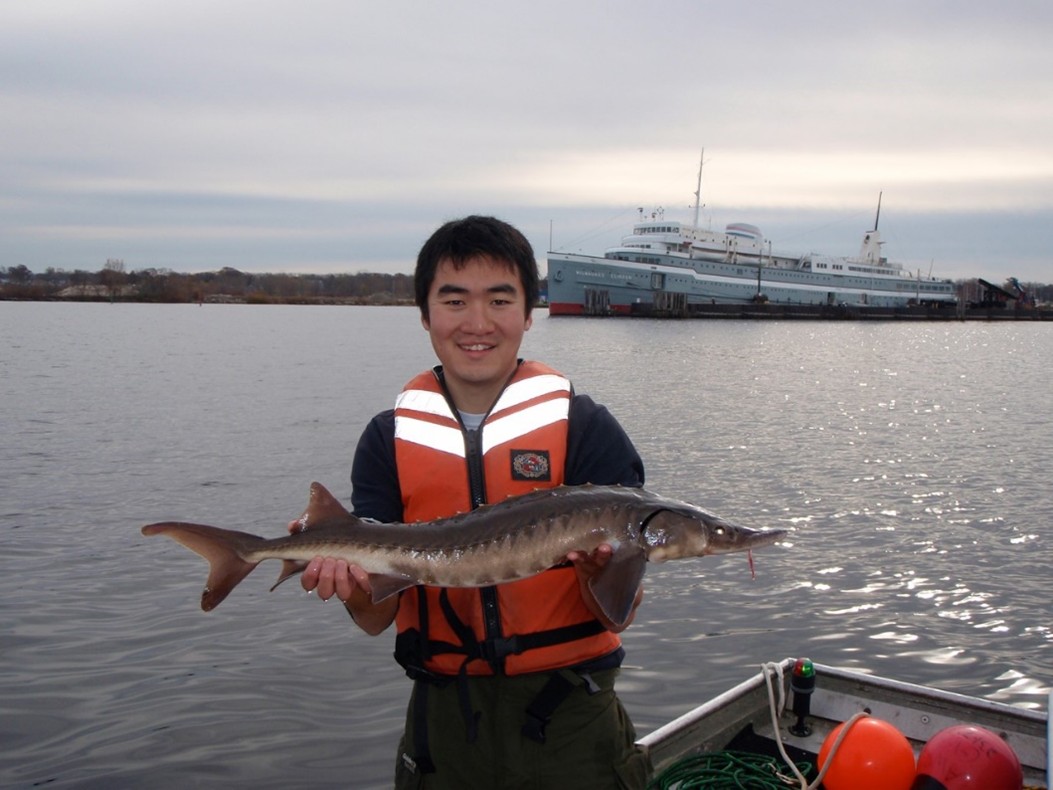
A graduate student with Annis Water Resources Institute at Grand Valley State University holds a lake sturgeon found in Muskegon Lake.

Muskegon Lake’s restoration was possible because The Great Lakes Restoration Initiative had long-term support across many administrations and from both political parties. It’s a model for what we can achieve with consistent bipartisan commitment to the lakes we all share.

And it’s a reminder of why we can’t stop fighting for Great Lakes restoration.

Thank you for your support, which makes wins like this possible.

More about Great Lakes restoration

Read more about the Great Lakes Restoration Initiative, one of the most important tools in the region’s toolbox to support on-the-ground restoration projects, from wetland restoration to cleaning up toxic hot spots.

Read more

The post Big win: One of the most polluted areas in the Great Lakes is now restored appeared first on Alliance for the Great Lakes.

Original Article

News - Alliance for the Great Lakes

News - Alliance for the Great Lakes

https://greatlakes.org/2025/11/big-win-one-of-the-most-polluted-areas-in-the-great-lakes-is-now-restored/

tfazzini


CHICAGO, IL (October 2nd, 2025)  — The Alliance for the Great Lakes is celebrating the announcement that Muskegon Lake has been officially delisted as an Area of Concern. Muskegon Lake was devastated by decades of industrial pollution and poor shoreline management. In 1987 it was declared a Great Lakes Area of Concern. An AOC is a geographic area with significant impairment and environmental degradation that has occurred as a result of human activities at the local level. There are 24 remaining AOCs in the Great Lakes basin. 

Alliance for the Great Lakes Adopt-a-Beach volunteers cleaning shoreline litter at Muskegon Lake.
Alliance for the Great Lakes Adopt-a-Beach volunteers cleaning shoreline litter at Muskegon Lake. PC: Lloyd DeGrane

Since then, the Michigan Department of Environment, Great Lakes, and Energy, the U.S. Federal Government, the City of Muskegon, and the Muskegon Lake Watershed Partnership comprised of concerned citizens, academic researchers, local business owners, philanthropic representatives, local government, retirees, riparian property owners, recreational users, environmental advocates, and industry representatives worked in collaboration to delist Muskegon Lake. The focus of the work was on the remediation of contaminated sediments and habitat restoration surrounding the lake.  

“This is a huge day for Muskegon. We are proud to have provided the scientific underpinning to inform the restoration activities that has led to the de-listing of Muskegon Lake and we celebrate with our partners and the entire community,” said Dr. Alan Steinman, former Director of Grand Valley State University’s Annis Water Resources Institute, and a Member of the Board of Directors of the Alliance for the Great Lakes.  

“The Alliance applauds this milestone that demonstrates that a commitment to Great Lakes restoration projects can lead to success for local communities and the region. Bringing Muskegon Lake back from the brink also serves as an example of the good work that critical programs like the Great Lakes Restoration Initiative can accomplish. Every dollar spent by the GLRI brings at least three dollars back in economic activity; in the case of Muskegon Lake, the return on investment is even greater and was shown to be six to one,” said Alliance for the Great Lakes President and CEO Joel Brammeier.  

### 

Contact: Don Carr, Media Director, Alliance for the Great Lakes dcarr@greatlakes.org 

More about Great Lakes restoration

Read more about the Great Lakes Restoration Initiative, one of the most important tools in the region’s toolbox to support on-the-ground restoration projects, from wetland restoration to cleaning up toxic hot spots.

Read more

The post Muskegon Lake Area of Concern Delisted appeared first on Alliance for the Great Lakes.

Original Article

News - Alliance for the Great Lakes

News - Alliance for the Great Lakes

https://greatlakes.org/2025/10/muskegon-lake-area-of-concern-delisted/

tfazzini

Donald Jodrey headshot.
Don Jodrey, Director of Federal Government Relations

On July 4th, President Donald Trump signed into law the “One Big Beautiful Bill Act” or “OBBBA.” Now that OBBBA is law, the focus in Congress turns to funding the government and passing legislation that is required to renew, or “reauthorize,” federal programs in the new fiscal year that starts October 1st.  

On the funding side, the President’s proposed budget recommends deep cuts that would threaten the health of the Great Lakes and the people who depend on them. Congressional Republicans are unlikely to accept the full cuts, as some in their leadership have spoken out against some of the proposals, but important funding is still likely to be scaled back. Among the cuts would be funding to replace dangerous lead pipes, fix leaky pipes, and stop sewage overflows from entering our lakes and people’s homes. 

On the fight to reauthorize key programs, there are some potentially positive signs, though some of the renewed programs may end up with less funding. Programs up for reauthorization cover fisheries management, water infrastructure, managing invasive carp, and on-the-ground restoration projects, from wetland restoration to cleaning up toxic hot spots. 

At the Alliance, we’re following these developments closely and working to ensure that federal programs and policies protect and restore the clean, fresh water of the Great Lakes in a manner that promotes a sustainable economy and environment for Great Lakes residents. 

The administration’s budget proposal threatens the Great Lakes, our public health, and our environment 

The first order of business is Congressional action on the 12 annual spending bills that Congress must enact before the end of September, when the new fiscal year begins and current government funding runs out.    

The FY 2026 President’s Budget that was submitted to Congress this spring proposes sweeping cuts to many federal agencies that significantly reduce domestic discretionary spending. For the Great Lakes, the proposed cuts risk the health of residents who rely upon the lakes as a source of drinking water because the budget proposes to eliminate nearly all of the $3 billion in water infrastructure funding that is provided annually to states. These steep cuts would make it difficult for Great Lakes states to address water infrastructure backlogs, replace lead service lines, address contaminant issues such as PFAS, and provide principal forgiveness for disadvantaged communities that struggle to construct expensive drinking and wastewater infrastructure because they may lack the tax base to do so. These are just a few of the problems with proposing to eliminate nearly $3 billion in annual federal funding that supports water infrastructure needs nationally. Information gathered by the Environmental Protection Agency indicates that the national backlog of water infrastructure needs is growing, not diminishing, over the next 20 years.  

Although Congressional Republicans solidly supported the President in passing OBBBA, Congressional Republicans are unlikely to accept the proposed FY 2026 proposed budget cuts, as key Republicans in leadership positions have spoken out against some of the proposed cuts. As a result, on the House side where the individual appropriations subcommittees have begun to “mark up” the annual spending bills, the Interior and Environment Appropriations Subcommittee did not agree with the Administration to eliminate water infrastructure funds to states for both the Clean Water and Drinking Water State Revolving Funds (“SRFs”).   

Notwithstanding this opposition to the Administration’s proposal, they did propose significant cuts totaling $661.9 million, or approximately 24%, of the funds for the nation’s primary source of water infrastructure funding. This means that the Great Lakes States will collectively lose $137.1 million. This loss is ameliorated by the fact that some Members of Congress from Great Lakes states pursued “Community Project Funding” where they directed funds from within these large federal appropriations to water infrastructure projects in their districts. If a Member of Congress secured such community-specific funding, the overall loss to their state is less than it would have been. The 24% cut to water infrastructure funding combined with the Community Project Funding would result in the following changes to water infrastructure funding compared to last year: 

StateChange in federal water infrastructure funding
Illinois + $800,000
Indiana – $20,200,000
Michigan – $2,100,000
Minnesota + $28,800,000
New York– $53,200,000
Ohio – $23,500,000
Pennsylvania– $34,200,000
Wisconsin – $33,500,000

Although House Republicans are not fully embracing the Administration’s proposed cuts to water infrastructure funding, SRF funding to states under the House Interior Appropriations Subcommittee mark-up is less than last year, which is problematic for the reasons discussed above.

Similarly, Congressional Republicans on the House side are also not accepting the Administration’s proposal to eliminate the National Oceanic and Atmospheric Administration’s (“NOAA”) Office of Atmospheric Research, which funds numerous research facilities around the country and also in the Great Lakes, including the Great Lakes Environmental Research Laboratory (“GLERL”) in Ann Arbor, MI and the related research organization housed there known as the Cooperative Institute for Great Lakes Research or “CIGLR.” CIGLR is a public-private partnership of 10 research universities throughout the region, non-governmental organizations, and local governmental partners who tackle some of the biggest challenges facing the Great Lakes. These challenges include the monitoring of harmful algal blooms, or “HABs,” which are produced by agricultural runoff. CIGLR monitors HAB outbreaks, which occur during the summer months, to ensure that the Great Lakes drinking water in areas affected by HABs is safe to drink and to protect swimmers and fishermen from the effects of HABs – which can be fatal. Although the details are not yet available, the House Appropriations Subcommittee on Commerce, Justice and Science marked up its bill this week and proposes to only decrease NOAA’s Office of Atmospheric Research by $257 million, which leaves intact most of these functions. We have yet to determine whether GLERL or CIGLR is fully funded and able to maintain the functions it provides to Great Lakes States. 

On the other side of the Capitol, the Senate has only started its process to develop the 12 annual spending bills and two senior Senators, Appropriations Chair Susan Collins, R-Maine (who voted against OBBBA) and Interior Appropriations Chair Lisa Murkowski, R-Alaska, have expressed doubts about supporting the Administration’s proposed cuts. The Senate’s Appropriations Subcommittee on Commerce, Justice and Science has begun to consider its bill funding NOAA programs, but halted its markup this week where it added back approximately $650 million for NOAA’s Office of Atmospheric Research. No further details are available on the Senate markup as it is not complete, but Senate Republicans are also not fully on board with the Administration’s funding proposals. 

Although there is a great deal of uncertainty over how Congress will resolve its differences with the Administration on the FY 2026 budget, and the Congress must also consider a package of “rescissions” recently proposed by the Administration (canceling prior year spending), it is clear that the House and Senate are unlikely to pass any of the individual spending bills before Congress recesses in August. After Labor Day, Congress will devote its time to issues associated with enacting a budget for FY 2026 that begins on October 1st. Given this attenuated schedule, it is possible that there will be one or more continuing resolutions for FY 2026 which just extend current levels of annual funding for a period of time. We will closely monitor these developments and let you know how the annual funding process is unfolding. 

Bipartisan support for continuing Great Lakes programs

With respect to other legislative issues affecting the Great Lakes, including reauthorization for the Great Lakes Restoration Initiative, reauthorization for the Great Lakes Fishery Reauthorization Act, reauthorization for the Clean Water Act’s State Revolving Funds, and the implementation of the Brandon Road Interbasin Project in Joliet, Illinois, that is intended to halt invasive carp from getting into Lake Michigan, there are some positive developments. 

First, President Trump has publicly announced his support for both the Great Lakes Restoration Initiative (or “GLRI”) as well as the Brandon Road Project. For GLRI, which the Administration proposes to fund at last year’s enacted level, the bipartisan reauthorization bill, which has been reintroduced in both the House and Senate, has attracted numerous bipartisan cosponsors and is likely to pass during this session of Congress, which ends in 2026. We are working closely with a bipartisan group of Great Lakes Members of Congress to ensure that the bill moves through both the Senate Environment and Public Works Committee and the House Transportation and Infrastructure Committee, passes the House and Senate, and becomes law. 

For the Brandon Road Project, President Trump issued a memorandum earlier this year directing federal agencies to move expeditiously to implement the project. The U.S. Army Corps of Engineers (“Corps”), which initiated project construction in late 2024, is doing just that. All contracts for the first phase of project construction are issued, and work is well underway. The Corps is working diligently with its local partners, the States of Illinois and Michigan, to get ready for the next phase of construction (slated to begin in the fall of 2026), which requires an additional transfer of lands from the State of Illinois to the Corps. This land transfer is scheduled to occur before September 2025 so that the Corps may begin site testing and preparation of these lands and remediation of any contamination as necessary. No additional federal funding is needed until FY 2027, and the project is on track thanks to the diligent work of the States of Illinois and Michigan and the Corps. 

Other legislative reauthorizations are moving, with the schedule largely dictated by the Administration’s transition, which is unprecedented in scope in terms of actions that affect federal agency budgets, staffing, regulations and policy, as well as judicial review. At the Alliance, we work to stay on top of these changes and to inform and educate decision-makers on the effects of proposed actions. As another source of good news, the Great Lakes Fishery Research Reauthorization Act just passed the House this week and may now be considered by the Senate. Work is also underway among authorizing staff to prepare for the reauthorization of the Clean Water and Drinking Water State Revolving Funds, which must be reauthorized by the end of 2026; we are working that issue as well. 

We will continue working on all these issues as they move through Congress. We are hopeful that the Administration’s support for both GLRI and Brandon Road, and the awareness of how numerous federal programs support the Great Lakes and its people, will result in final actions on funding and legislating that protect the Great Lakes. 

If you have any concerns about proposals and actions in the federal legislative or executive branch that are being considered, we encourage you to contact your Congressional representative to express your views using the action alert below.

Tell Congress: Don’t Cut Critical Great Lakes Programs

Congress is considering budget proposals that could devastate our nation’s ability to protect the Great Lakes, public health, and our regional economy.

Take Action

The post Critical Months Ahead for the Great Lakes in Congress  appeared first on Alliance for the Great Lakes.

Original Article

News - Alliance for the Great Lakes

News - Alliance for the Great Lakes

https://greatlakes.org/2025/07/critical-months-ahead-for-the-great-lakes-in-congress/

tfazzini

Donald Jodrey headshot.
Don Jodrey, Director of Federal Government Relations

The Trump Administration’s proposed FY 2026 President’s Budget slashes federal non-defense spending and proposes steep cuts to federal programs that protect and restore the Great Lakes and the communities that depend on them.  

The White House proposal to cut federal funding threatens Great Lakes residents, putting their health and economic security at risk by defunding water infrastructure programs, important research and observation programs, and efforts to assist communities overburdened from pollution. At the top of the list is the U.S. Environmental Protection Agency (“U.S. EPA”), with a proposed overall cut of 55% that would gut key water infrastructure programs that help pay for safe and clean drinking water, and stop sewage overflows, flooding, and basement backups. Also on the chopping block are the National Oceanic and Atmospheric Administration (-19%), the Interior Department (including the Fish and Wildlife Service, National Park Service, and U.S. Geologic Survey, -31%), and U.S. Department of Agriculture (-18%), all of which play key roles in restoring and protecting the Great Lakes through action on the ground and robust scientific research. Taken together, the White House proposal to gut federal funding not only threatens the Great Lakes but also sets up a showdown with Congress, which must decide whether to protect core funding for the programs it created or go along with the President’s proposed deep-cut budget. 

With water infrastructure needs growing, budget drastically cuts funding

Under this budget, U.S. EPA would abdicate a large portion of its federal responsibility and partnership with the states as set forth by Congress in both the Clean Water Act and Safe Drinking Water Act. And it comes at a time when water infrastructure needs are growing fast. Based on its 2023 Drinking Water Needs Information and Assessment Survey and its 2022 Clean Water Needs Survey, U.S. EPA estimates that Great Lakes states need at least $290.3 billion in water infrastructure investment over the next twenty years. Against this need, the proposed budget would decimate federal funding levels for the Drinking Water and Clean Water State Revolving Funds (“SRFs”) – the primary federal program for funding and financing water infrastructure projects – by nearly 90%. Such cuts threaten to destabilize states and communities struggling to ensure safe drinking water and protections from flooding and sewage. The Great Lakes states would see the following decreases in federal funding for water infrastructure programs: 

StateDecrease in federal water infrastructure funding
Illinois – $94.6 million 
Indiana – $57.5 million
Michigan – $84.1 million
Minnesota – $41.2 million
New York– $204.2 million
Ohio – $102.9 million
Pennsylvania– $89.2 million
Wisconsin – $55.6 million

While the states have built up funding in their state-administered SRFs since Congress established these programs, the states cannot meet the estimated water infrastructure needs on their own. The proposed budget ignores that federal funding plays key roles in state-administered SRFs. States rely heavily on federal funding to provide principal forgiveness or grant funding to disadvantaged communities that struggle to afford standard awards. States also use federal funding to help pay for staffing and technical assistance to communities, and to supplement repayable loan awards. U.S. EPA plays a key role in administering SRF funding, including assessing infrastructure needs on a regular basis to make sure funding goes to the states proportional to the need, and ensuring drinking water, stormwater, and sanitary system operators comply with standards that keep us and our waters safe. The White House’s blithe explanation that it is returning control of these programs to the states ignores the important federal partnership that has been underway since Congress first established these programs decades ago.  

Cuts threaten programs that protect Great Lakes from algal blooms, invasive species, and more

The administration’s budget also proposes a $1 billion reduction in EPA’s categorical grants. These programs support state efforts to implement Clean Water Act regulations, reduce lead in drinking water, reduce sources of non-point source pollution that fuels harmful algal blooms, assist small and disadvantaged communities struggling to implement water infrastructure programs, and develop a water workforce. Like the proposed reductions to the SRFs, the proposal to nearly eliminate all categorical grants upends important federalism goals for programs Congress established to deal with specific needs. 

As noted above, the budget also includes steep cuts at the National Oceanic and Atmospheric Administration, the Interior Department (the Fish and Wildlife Service, the U.S. Geologic Survey and the National Park Service), and the U.S. Department of Agriculture. These cuts threaten the restoration of the Great Lakes by decreasing our ability to conduct scientific investigations, address runoff pollution and harmful algal blooms that threaten our drinking water, control invasive species to protect our fisheries, and protect national parks in the region. 

The cuts in the administration’s proposal would threaten the quality of the drinking water relied on by more than 30 million Americans in the Great Lakes region. The cuts would defer and delay action to stop sewage backups into homes and surface waters, replace failing septic systems, and solve chronic flooding. Access to safe and clean drinking water and freedom from flooding and sewage impacts are basic needs that should be guaranteed to all citizens and communities across the Great Lakes. 

Will Congress agree to such steep cuts?

The big question is whether Congress will agree to such steep reductions. The answer is unclear and, in some cases, such as the proposed $3.4 billion proposed cuts to water infrastructure programs, the answer may be a hard no. 

Just last week, in a display of bipartisan unity, the Senate Environment and Public Works Committee, under the leadership of Senator Shelley Moore Capito (R-WV), held its first hearing on water infrastructure funding with the goal of finalizing a bipartisan water infrastructure package that would reauthorize both the Drinking Water and Clean Water State Revolving Funds, as well as other water infrastructure grant programs like the Water Infrastructure Financing and Innovation Act program. Sen. Capito, who played a leading role in negotiating the bipartisan Infrastructure Investment and Jobs Act of 2021 (IIJA) with its $50 billion investment in water infrastructure, extolled the federalism virtues of the SRFs and the important role they played in assisting states with meeting their water infrastructure needs and providing water services to underserved communities. Senator Capito, and the other senators attending the hearing including Senator Kevin Cramer (R-ND), Senator Adam Schiff (D-CA), Senator Lisa Blunt Rochester (D-DE) and Senator Angela Alsobooks (D-MD) all praised the IIJA water infrastructure funding, noting the many projects underway in each of their states addressing important community needs, including upgrading treatment facilities, replacing aging systems, supporting the needs of rural and underserved communities, replacing lead service lines, and dealing with contaminants such as PFAS.  

The debate in the reauthorization of water infrastructure programs is not whether there will be the votes to pass the legislation, but how much control to give to states at the expense of federal oversight. These programs are designed to help states meet their obligations – and protect our health – under bedrock federal laws like the Clean Water Act. That is a very important question and one in which the answer has yet to emerge. The Senate Environment and Public Works Committee will be conducting other hearings on this topic and the House is expected to follow suit later this year. 

In the meantime, the appropriations process is well underway, and the House and Senate Appropriations Committees have been working on the FY 2026 budget in anticipation of the start of the fiscal year this October. The Trump Administration’s FY 2026 budget proposal is just that, a proposal, and Congress will be evaluating the steep budget cuts. For our part at the Alliance, we will be meeting with members of the Great Lakes delegations to point out the many problems with the proposed cuts and working hard to ensure that the final budget package passed by the House and Senate protects and restores the Great Lakes. 

2025 Great Lakes Federal Policy Priorities

The federal government plays an essential role in protecting clean water.

Read More

The post Trump Budget Proposal Slashes Federal Funding, Threatens the Great Lakes and Sets Up Showdown With Congress   appeared first on Alliance for the Great Lakes.

Original Article

News - Alliance for the Great Lakes

News - Alliance for the Great Lakes

https://greatlakes.org/2025/05/trump-budget-proposal-slashes-federal-funding-threatens-the-great-lakes-and-sets-up-showdown-with-congress/

tfazzini

CHICAGO, IL (May 2, 2025) – Efforts to keep the Great Lakes healthy and ensure the drinking water for 40 million people is safe to consume would be deeply harmed by the Trump Administration’s budget proposal announced today.

“We’re disappointed to see the President’s budget rejects core funding to restore safe drinking water, protect our communities from sewage and flooding, and implement federal clean water protections. We look forward to working with Congress to fund these vital Great Lakes programs,” said Joel Brammeier, President and CEO of the Alliance for the Great Lakes.”

### 

Contact: Don Carr, Media Director, Alliance for the Great Lakes dcarr@greatlakes.org 

2025 Great Lakes Federal Policy Priorities

The federal government plays an essential role in protecting clean water.

Read More

The post Trump Budget Puts Great Lakes at Risk  appeared first on Alliance for the Great Lakes.

Original Article

News - Alliance for the Great Lakes

News - Alliance for the Great Lakes

https://greatlakes.org/2025/05/trump-budget-puts-great-lakes-at-risk/

Judy Freed

WASHINGTON DC (March 4, 2025) — On Monday, U.S. Representatives Mike Quigley (IL-05) and Bill Huizenga (MI-04) introduced the Great Lakes Fishery Research Reauthorization Act. Set to expire at the end of September, the bipartisan legislation provides the U.S. Geological Survey (USGS) Great Lakes Science Center dedicated funding to conduct critical research for the nearly $5 billion sport and commercial fishing industry in the Great Lakes. The bill maintains the current research program authorization level at $15 million each year.

“The Alliance thanks Representatives Quigley and Huizenga for sponsoring this bipartisan legislation. The Great Lakes Fishery Research Reauthorization Act will provide accurate data to protect complex and sensitive aquatic ecosystems. Healthy fish are good for the environment, and good for the businesses that rely on them,” said Don Jodrey, Alliance for the Great Lakes Director of Federal Relations.  

### 

Contact: Don Carr, Media Director, Alliance for the Great Lakes dcarr@greatlakes.org 

More about Great Lakes restoration

Read more about the Great Lakes Restoration Initiative, one of the most important tools in the region’s toolbox to support on-the-ground restoration projects, from wetland restoration to cleaning up toxic hot spots.

Read more

The post Vital Great Lakes Fishery Research Bill Introduced in US House appeared first on Alliance for the Great Lakes.

Original Article

News - Alliance for the Great Lakes

News - Alliance for the Great Lakes

https://greatlakes.org/2025/03/vital-great-lakes-fishery-research-bill-introduced-in-us-house/

tfazzini

Will JD Vance save the Great Lakes from Trump?

By Izzy Ross and Juanpablo Ramirez-Franco

This coverage is made possible through a partnership between GristInterlochen Public Radio in Northern Michigan, and WBEZ, a public radio station serving the Chicago metropolitan region.

Read Now at Great Lakes Now.

Original Article

Great Lakes Now

Great Lakes Now

https://www.greatlakesnow.org/2025/02/will-jd-vance-save-the-great-lakes-from-trump/

Grist


WASHINGTON DC (February 11, 2025) — Today, Senator Gary Peters (D-MI) and Senator Todd Young (R-IN) reintroduced in the U.S. Senate the bipartisan Great Lakes Restoration Initiative (GLRI) Act of 2025, a bill intended to reauthorize the GLRI program for a five-year period at $500 million per year. GLRI funding assists states, tribes and local communities in implementing crucial on-the-ground projects, including habitat restoration, helping farmers do more to combat non-point source agrichemical run-off, cleaning up legacy pollution and toxic sediments, and preventing the establishment or spread of destructive invasive species. It is a well-established program that helps protect 22% of the world’s source of freshwater.  

“The Alliance would like to thank Senator Gary Peters and Senator Todd Young in sponsoring this bipartisan legislation to continue this important program that directly benefits the tens of millions of Americans living in the Great Lakes region,” said Don Jodrey, Alliance for the Great Lakes Director of Federal Government Relations.  

“As co-chairs of the Greak Lakes Task Force in the Senate, Senators Peters and Young have tirelessly advocated for the GLRI and the Alliance thanks them for their great work on this issue,” said Jodrey. 

To date, the GLRI program has funded more than 7,563 individual projects totaling $3.7 billion, greatly improving the quality of life throughout the region. The GLRI also provides major economic benefits, as it is estimated that for every dollar spent, an additional three dollars of value is added to the regional economy.  

Cosponsors of the bill are Senator Klobuchar (D-MN), Senator Moreno (R-OH), Senator Baldwin (D-WI), Senator Durbin (D-IL), Senator Smith (D-MN), Senator Gillibrand (D-NY), Senator Fetterman (D-PA), Senator Slotkin (D-MI), Senator Schumer (D-NY), Senator Duckworth (D-IL), and Senator Husted (R-OH).

### 

Contact: Don Carr, Media Director, Alliance for the Great Lakes dcarr@greatlakes.org 

More about Great Lakes restoration

Read more about the Great Lakes Restoration Initiative, one of the most important tools in the region’s toolbox to support on-the-ground restoration projects, from wetland restoration to cleaning up toxic hot spots.

Read more

The post Great Lakes Restoration Initiative Reauthorization Introduced in US Senate appeared first on Alliance for the Great Lakes.

Original Article

News - Alliance for the Great Lakes

News - Alliance for the Great Lakes

https://greatlakes.org/2025/02/great-lakes-restoration-initiative-reauthorization-introduced-in-us-senate/

tfazzini

Significant progress continues to be made in protecting and restoring the Great Lakes, but much more needs to be done. The federal government plays a major role in this work by funding projects, administering programs, and enforcing rules. With a permanent presence in Washington, D.C., the Alliance for the Great Lakes advocates to federal decision makers to ensure the region’s voices are heard. We update and release our federal priorities each year.

2025 Federal Great Lakes Policy Priorities.

Although increased federal funding from the Infrastructure Investment and Jobs Act allowed states and the federal government to address drinking and wastewater infrastructure backlogs, removal of lead water service lines, and the cleanup of toxic legacy pollution, we still have too many Great Lakers experiencing polluted water too often. Invasive species continue to threaten the lakes, nutrient runoff from agriculture causes toxic algae blooms, and plastic pollutes our shorelines and contaminates our drinking water.

In our 2025 federal policy priorities, we’ve identified opportunities for the 119th Congress and the Trump Administration to address these challenges in collaboration with states and local communities. Many of these priorities are familiar systemic problems that take time to resolve. But as we’ve shown through efforts like stopping invasive carp, working on a big challenge for a decade or more is often what it takes to finally get the right solution.

For the upcoming year, Congress and the Trump Administration must work together to pass an annual federal budget to provide states with sufficient federal resources to fix our ailing water infrastructure; enact a Farm Bill that will reduce the flow of nutrient pollution into the lakes; maintain progress on key federal projects intended to stop invasive species, including the Brandon Road Interbasin Project; and provide funding for, and reauthorize, the Great Lakes Restoration Initiative to continue support for on-the-ground restoration projects benefiting many communities throughout the Great Lakes region. Water pollution, and the resulting health and economic burdens, fall unequally on people in cities and towns across the Great Lakes. Federal decision makers should shape policy to ensure that all Great Lakers have access to safe, clean, and affordable water.

Read on for full details of our 2025 Great Lakes federal policy priorities, or download the fact sheet to learn more.

Water infrastructure.

Ensure clean water protects the health of people and natural resources

Clean water is a basic need for all. The Infrastructure Investment and Jobs Act passed by Congress late in 2021 was an important down payment to fix the nation’s failing and outdated water infrastructure. The funding jump-started efforts to replace dangerous lead pipes, fix leaky pipes, and stop sewage overflows from entering our lakes and people’s homes.

However, the funding is only a start and recent surveys indicate that water infrastructure needs have grown in the last several years. EPA’s 7th national Drinking Water Needs Information Survey and Assessment, completed in 2023, and the Clean Watershed Needs Survey completed in 2024, estimate that the Great Lakes region will need at least $290.3 billion over the next twenty years to fix our water infrastructure problems. This is an increase from the last national surveys and indicates that federal funding is not keeping up with needs. As a result, we need to keep the pressure on Congress to provide additional funds for water infrastructure programs and to strengthen them to ensure that money reaches communities with the highest needs. One of the most important ways the federal government provides this infrastructure funding to states and municipalities is through State Revolving Funds.

In addition, in 2024 the EPA released its first-ever Water Affordability Needs Assessment, which found that 12.1 to 19.2 million households lack access to affordable water service. This is a major public health risk that compels urgent federal action. One of the recommendations in the report is for Congress to pass legislation establishing a national water affordability program. We agree and plan to work with our partners and Congress to advocate for the establishment of a national water affordability program.

In 2025, we urge Congress to:

  • Increase annual funding to at least $9.3 billion for the Drinking Water and Clean Water State Revolving Funds
  • Set aside at least 20 percent of the Clean Water State Revolving Fund as grants for green infrastructure projects such as green roofs, permeable pavement, and additional green spaces
  • Pass a federal ban on residential water shutoffs
  • Establish a federal program to provide financial assistance for water and sewer bills

In 2025, we urge the U.S. Environmental Protection Agency to:

  • Require that states accepting federal funds increase funding and technical assistance for communities bearing the greatest burden of pollution so that they are equipped to apply for and receive funding through State Revolving Funds to replace toxic lead water pipes, repair malfunctioning sewers, and stop community flooding

Download the water infrastructure fact sheet.

Great Lakes restoration.

Fund and reauthorize the Great Lakes Restoration Initiative

The Great Lakes Restoration Initiative (GLRI) is one of the most important tools in the region’s toolbox to protect and restore the lakes. The program has provided funding with near-universal bipartisan and public support for on-the-ground restoration projects, from wetland restoration to cleaning up toxic hot spots. The GLRI also provides major economic benefits. For every dollar spent by the program, an additional three dollars of value is added to the regional economy. In 2024, EPA relied on up-to-date science and extensive input from across the Great Lakes to issue the five-year Action Plan IV for the program to address the most critical threats to the region. The GLRI is also supporting significant progress to address the removal of toxic legacy pollution at Areas of Concern, a number of highly degraded areas that require extensive remediation throughout the Great Lakes.

In 2025, we urge Congress to:

  • Fund the GLRI with at least $475 million for FY 2026
  • Reauthorize the GLRI program at $500 million per year for five years from FY 2027-2031

In 2025, we urge the Environmental Protection Agency to:

  • Propose the authorized level of GLRI funding at $475 million for FY 2026
  • Make progress on finishing cleanup of most Areas of Concern by 2030, and implement Action Plan IV to address community needs for Great Lakes restoration

Download the Great Lakes restoration fact sheet.

Agriculture.

Pass a Farm Bill that prioritizes clean water

Agriculture is the largest unaddressed source of nonpoint pollution in the Great Lakes region. Nonpoint pollution is pollution that doesn’t come from a single identifiable source such as a pipe, but instead originates from many places over a wide area. This runoff from agricultural lands puts the Great Lakes at risk. It pollutes drinking water by causing toxic algal blooms, threatens wildlife, harms the tourism economy, and prevents people from enjoying recreation on the Great Lakes. Ultimately these problems demand that the agriculture industry demonstrate it can operate safely without fouling our water.

Every five years, Congress develops a “Farm Bill,” a major package of legislation that sets the agenda and funding for national farm and food policy. Congress passed one-year extensions of the Farm Bill in 2023 and 2024, so in 2025 Congress can pass a Farm Bill that ensures farms produce clean water, not pollution, along with their crops.

In 2025, we urge Congress to pass a Farm Bill that:

  • Increases funding for U.S. Department of Agriculture conservation programs
  • Includes provisions to ensure accountability for farm conservation programs aimed at stopping runoff pollution from agricultural lands

Download the agriculture fact sheet.

Plastic pollution.

Pass legislation to stop plastic pollution

Researchers estimate that 22 million pounds of plastic pollution enter the Great Lakes each year. Plastic pollution isn’t just an unsightly problem in our waterways. It’s estimated that humans ingest a credit card-sized amount of plastic each week, with unknown long-term consequences for our health.

For many years, efforts to stop plastic pollution put the responsibility on individuals, such as recycling. But only a fraction of plastic produced each year is recycled, leaving the remainder to end up in landfills or as litter that lands in our waterways. The alternative is to require plastic producers to be responsible for their products through their lifecycle, which is called extended producer responsibility. Congress has an opportunity to be a leader on this issue.

In 2025, we urge Congress to pass legislation that:

  • Makes plastic producers responsible for reduction of plastic waste
  • Reduces the federal government’s use of single-use plastics including polystyrene foam
  • Funds additional research on the public health impact of plastics

Download the plastic pollution fact sheet.

Invasive Species.

Protect the Great Lakes from aquatic invasive species

Invasive species have caused irreparable harm to the Great Lakes ecosystem and cost the region billions of dollars at least since the mid-20th century. Preventing them from ever entering is the best way to protect the Great Lakes. Invasive bighead and silver carp are still a major risk. Established populations of invasive carp are only 50 miles from Chicago and Lake Michigan. But it’s not too late to prevent them from reaching the lakes. The U.S. Army Corps of Engineers is implementing additional carp prevention measures at the Brandon Road Lock and Dam near Joliet, Illinois. The facility is fully authorized by Congress, supported by the Great Lakes states, and is a critical choke point in the waterways leading to Lake Michigan. Congress and federal agencies must continue to support this project, which has broken ground and is under construction.

In 2025, we urge Congress to:

  • Provide federal funding to initiate the design and engineering phase for the second increment of construction (the first increment is underway) at the Brandon Road Interbasin Project, which is intended to stop invasive carp from entering the Great Lakes

In 2025, we urge the Army Corps of Engineers to:

  • Continue implementing the first phase of construction at the Brandon Road Interbasin Project
  • Initiate planning, design, and engineering for the second increment of construction so that it can be completed in time for the second increment to follow seamlessly when the first increment is complete

Download the invasive species fact sheet.

Join Us February 20

Join the webinar to learn more about these critical issues. You’ll hear from members of our team who presented our federal priorities to members of Congress in meetings at the Capitol.

Register for the Webinar

The post How Washington Can Support the Great Lakes in 2025 appeared first on Alliance for the Great Lakes.

Original Article

News - Alliance for the Great Lakes

News - Alliance for the Great Lakes

https://greatlakes.org/2025/01/how-washington-can-support-the-great-lakes-in-2025/

Judy Freed

FOR IMMEDIATE RELEASE 
 
Contact: Don Carr, Media Director, Alliance for the Great Lakes dcarr@greatlakes.org 

WASHINGTON DC (January 9, 2025)  – Today, representative David Joyce (R-OH), along with Rep. Debbie Dingle (D-MI), Rep. Bill Huizenga (R-MI), and Rep. Marcy Kaptur (D-OH) reintroduced in the U.S. House of Representatives the bipartisan Great Lakes Restoration Initiative (GLRI) Act of 2025, a bill intended to reauthorize the GLRI program for a five-year period at $500 million per year. GLRI funding assists states, tribes and local communities in implementing crucial on-the-ground projects, including habitat restoration, helping farmers do more to combat non-point source agrichemical run-off, cleaning up legacy pollution and toxic sediments, and preventing the establishment or spread of destructive invasive species. It is a well-established program that helps protect 22% of the world’s source of freshwater.  

“The Alliance would like to thank Representatives Joyce, Dingell, Huizenga and Kaptur for their leadership of the Great Lakes Task Force in the House and in sponsoring this bipartisan legislation to continue this important program that directly benefits the tens of millions of Americans living in the Great Lakes region,” said Don Jodrey, Alliance for the Great Lakes Director of Federal Government Relations.  

“As co-chairs of the Greak Lakes Task Force in the House of Representatives, these members have tirelessly advocated for the GLRI and the Alliance thanks them for their great work on this issue,” said Jodrey. 

To date, the GLRI program has funded more than 7,563 individual projects totaling $3.7 billion, greatly improving the quality of life throughout the region. The GLRI also provides major economic benefits, as it is estimated that for every dollar spent, an additional three dollars of value is added to the regional economy.  

House cosponsors of the bill are Bill Huizenga (R-MI), Marcy Kaptur (D-OH), Debbie Dingell (D-MI), Pete Stauber (R-MN), John Moolenaar (R-MI), Brad Schneider (D-IL), John James (R-MI), Bryan Steil (R-WI), Emilia Sykes (D-OH), Tim Walberg (R-MI), Claudia Tenney (R-NY), Haley Stevens (D-MI), Bill Foster (D-IL), Rashida Tlaib (D-MI), Jan Schakowsky (D-IL), Joseph Morelle (D-IL), Gwen Moore (D-WI), Sean Casten (D-IL), Jack Bergman (R-MI), Hillary Scholten (D-MI), Raja Krishnamoorthi (D-IL), Shri Thanedar (D-MI), Frank Mrvan (D-IN), Mike Kelly (R-PA).  

### 

The post Great Lakes Restoration Initiative Reauthorization Introduced in US House  appeared first on Alliance for the Great Lakes.

Original Article

News - Alliance for the Great Lakes

News - Alliance for the Great Lakes

https://greatlakes.org/2025/01/great-lakes-restoration-initiative-reauthorization-introduced-in-us-house/

Michelle Farley

In 2010, Congress established the Great Lakes Restoration Initiative (GLRI) to allow the U.S. Environmental Protection Agency (EPA), working in collaboration with other federal agencies, states, and tribes, to fund projects to restore and protect the Great Lakes. To date, the GLRI has funded more than 7,563 individual projects totaling $3.7 billion and has greatly improved the quality of life in the region. GLRI projects restore habitat, reduce non-point source pollution, prevent the establishment or spread of invasive species, and clean up toxic legacy pollution. In recognition of the importance of this program, the Infrastructure Investment and Jobs Act of 2021 invested an additional $1 billion to accelerate the cleanup of toxic legacy pollution at “Areas of Concern” throughout the region.

Will Congress extend the GLRI for 5 more years?

This year is another important year for the GLRI. Congress is considering bipartisan legislation to reauthorize and extend the program for an additional five years at $500 million per year from 2027-2031. A bipartisan group of lawmakers, including Senators Debbie Stabenow (D-MI) and J.D. Vance (R-OH) in the Senate, and Representatives David Joyce (R-OH), Debbie Dingell (D-MI), Bill Huizenga (R-MI) and Marcy Kaptur (D-OH) in the House, have introduced legislation to reauthorize the GLRI.

On May 1, 2024, the Senate Environment and Public Works Committee unanimously approved the legislation thereby clearing the way for full Senate passage later this year. On the House side, the bill has 31 Republican and Democratic cosponsors, and we continue to advocate that the House Transportation and Infrastructure Committee approve the bill and send it to the full House for approval.

How will projects be prioritized?

In addition to GLRI’s reauthorization, the Alliance for the Great Lakes worked in partnership with the Healing Our Waters–Great Lakes Coalition to suggest ways the EPA could improve its next GLRI Action Plan. The Action Plan is important because it identifies five-year priorities for GLRI funding. We encouraged EPA to address climate change resilience and to focus on the needs of underserved communities. We also made specific suggestions for each part of the Action Plan.

EPA adopted many of our recommendations in its recently released draft “Action Plan IV.” When complete, it will guide GLRI funding to projects from 2025 to 2029.  Climate change is now better incorporated into the draft action plan with projected climate change impacts being emphasized during the design and implementation of GLRI projects. There is increased focus on meaningfully involving underserved communities in decisions about addressing issues in their communities and accruing benefits from GLRI projects. We would still like to see additional emphasis in both areas consistent with our earlier comments.

How you can help

EPA would like your feedback on the draft Action Plan IV. You can read the action plan and provide comments to EPA until May 24, and we hope you will.

Give Your Feedback by May 24

EPA would like your feedback on the draft GLRI Action Plan IV. You can read the plan and provide comments to EPA until May 24, 2024.

Read the Plan & Give Your Feedback

The post 2024: An Important Year for Great Lakes Restoration appeared first on Alliance for the Great Lakes.

Original Article

News - Alliance for the Great Lakes

News - Alliance for the Great Lakes

https://greatlakes.org/2024/05/2024-an-important-year-for-great-lakes-restoration/

Judy Freed

2024 Federal Policy Priorities

Significant progress continues to be made in protecting and restoring the Great Lakes, but much more needs to be done. Although increased federal funding from the Infrastructure Investment Act these last two years has allowed states and the federal government to address some key issues, including water infrastructure and the cleanup of toxic legacy pollution, we still have too many Great Lakers experiencing polluted water. Invasive species continue to threaten the lakes, nutrient runoff continues to negatively affect our water quality, and plastic pollutes our beaches and drinking water. 

In our 2024 federal policy priorities, we’ve identified the top five opportunities for Congress and federal agencies to address these challenges. Many of these priorities are familiar and are carried over from last year when Congress made little progress on substantive legislation. For the upcoming year, Congress and the administration must address key issues. These include passing an annual federal budget to provide states with sufficient federal resources to fix our ailing water infrastructure; enacting a Farm Bill that will reduce the flow of nutrient pollution into the lakes; maintaining progress on key federal projects intended to stop invasive species; and providing funding and reauthorization for the Great Lakes Restoration Initiative to continue support for on-the-ground restoration projects.

Equity and justice are embedded throughout these policy priorities and must be considered at every step of the federal decision-making process to ensure that all Great Lakers have access to safe, clean, affordable water. Repairing the long-term harm from environmental injustices isn’t a one-off action and federal decision-makers must prioritize disadvantaged communities where the burden of pollution and the lack of essential services often hit the hardest. Congress and the administration must ensure that community voices are at the table – and listened to – from the beginning of all decision-making.

Read on for full details of our 2024 Great Lakes federal policy priorities, or download the fact sheet to learn more.

Water infrastructure.

Increase water infrastructure funding, prioritize funding for communities most in need  

The Infrastructure Investment and Jobs Act passed by Congress late in 2021 was an important down payment to fix the nation’s failing and outdated water infrastructure. The funding will jump-start efforts to replace dangerous lead pipes, fix leaky pipes, and stop sewage overflows.

However, the funding is only a start. EPA’s 7th national Drinking Water Needs Information Survey and Assessment, completed just last year, estimates that the Great Lakes region will need at least $225.2 billion over the next twenty years to fix our water infrastructure problems. This is an increase from the last national survey and indicates that federal funding is not keeping up with needs. Currently, the infrastructure bill will provide Great Lakes states with an additional $1.8 billion per year for the next five years. It is clearly not enough. We need to keep the pressure on Congress to provide additional funds for water infrastructure programs. Additionally, funding programs must be structured to ensure that money reaches communities with the highest need, such as those with many lead pipes.

In 2024, we urge Congress to: 

  • Increase annual funding to at least $9.3 billion for the Drinking Water and Clean Water State Revolving Funds
  • Increase by $1 billion annual funding levels for lead service line replacement and emerging contaminants
  • Set aside at least 20 percent of the Clean Water State Revolving Fund as grants for green infrastructure projects such as green roofs, permeable pavement, and additional green spaces
  • Pass a federal ban on residential water shutoffs 
  • Establish a federal program to provide financial assistance for water and sewer bills 

In 2024 we urge the U.S. Environmental Protection Agency to: 

  • Require that states accepting federal funds from the Infrastructure Investment and Jobs Act of 2021 are increasing funding and technical assistance for disadvantaged communities so that they are equipped to advance through the SRF selection process 
  • Issue a final Lead and Copper Rule requiring cities to meet ambitious timelines for lead service line replacement

Download the water infrastructure fact sheet.

Agriculture.

Pass a Farm Bill that prioritizes clean water 

Agriculture is the largest unaddressed source of nonpoint pollution in the Great Lakes region. Runoff from agricultural lands puts the Great Lakes at risk. It pollutes drinking water, threatens wildlife, harms the regional economy, and prevents people from enjoying recreation on the Great Lakes. 

Every five years, Congress develops a “Farm Bill,” a major package of legislation that sets the agenda and funding for national farm and food policy. Congress passed a one-year extension of the Farm Bill in 2023, so in 2024 Congress can pass a Farm Bill that ensures farms produce clean water, not pollution, along with their crops.    

In 2024, we urge Congress to pass a Farm Bill that: 

  • Increases funding for U.S. Department of Agriculture conservation programs  
  • Includes provisions to ensure accountability for farm conservation programs aimed at stopping runoff pollution from agricultural lands
  • Reduces funding for concentrated animal feeding operations 

Download the agriculture fact sheet.

Plastic pollution.

Pass legislation to stop plastic pollution  

Researchers estimate that 22 million pounds of plastic pollution enter the Great Lakes each year. Plastic pollution isn’t just an unsightly problem in our waterways. It’s estimated that humans ingest a credit card-sized amount of plastic each week, with unknown long-term consequences for our health. 

For many years, efforts to stop plastic pollution put the responsibility on the end-user, such as recycling. But only a fraction of plastic produced each year is recycled, leaving the remainder to end up in landfills or as litter that lands in our waterways. The alternative is to require plastic producers to be responsible for their products through their lifecycle, which is called extended producer responsibility. Congress has an opportunity to be a leader on this issue.  

In 2024, we urge Congress to pass legislation that: 

  • Makes plastic waste producers responsible for its reduction 
  • Reduces the federal government’s use of single-use plastics, including polystyrene foam 
  • Funds additional research on the public health impact of plastics

Download the plastic pollution fact sheet.

Invasive species.

Protect the Great Lakes from aquatic invasive species  

Invasive species have caused irreparable harm to the Great Lakes ecosystem and cost the region billions of dollars since the late 1980s. Preventing them from ever entering is the best way to protect the Great Lakes. The battle against invasive species is focused on two fronts – stopping invasive carp from entering the Great Lakes and cleaning up ship ballast tanks.  

Established populations of invasive carp are only 50 miles from Chicago and Lake Michigan. But it’s not too late to prevent them from reaching the lakes. The U.S. Army Corps of Engineers has proposed constructing additional carp prevention measures at the Brandon Road Lock and Dam near Joliet, Illinois. The facility is a critical choke point in the waterways leading to Lake Michigan. Congress and federal agencies must continue to support this project. 

The St. Lawrence Seaway opened the Great Lakes to direct ocean-going shipping. Unfortunately, ships brought invasive species along for the ride in their ballast tanks. Although regulations to clean up ship ballast tanks have reduced introductions, loopholes remain for “lakers,” ships operating solely in the Great Lakes. The U.S. EPA can close that loophole. 

In 2024, we urge Congress to: 

  • Include language in the next Water Resources Development Act to authorize 100 percent federal funding for the annual operations and maintenance of the Brandon Road Interbasin Project, which is being implemented to stop invasive carp from entering the Great Lakes 

In 2024, we urge federal agencies to take the following actions: 

  • The U.S. Army Corps of Engineers should execute a Project Partnership Agreement with the State of Illinois for the Brandon Road Interbasin Project so that the project may proceed to phase 1 construction this fall and continue public participation for the project’s implementation
  • The U.S. EPA should issue final rules requiring all vessels operating on the Great Lakes, including lakers, to clean up their ballast tanks

Download the invasive species fact sheet.

Great Lakes restoration.

Fund, update, and reauthorize the Great Lakes Restoration Initiative 

The Great Lakes Restoration Initiative (GLRI) is one of the most important tools in the region’s toolbox to protect and restore the lakes. The program provides funding for on-the-ground restoration projects, from wetland restoration to cleaning up toxic hotspots. In addition to environmental benefits, GLRI funding garners an additional 3-to-1 return in economic benefits.  

While we need continued investment in Great Lakes restoration, the strategy guiding the GLRI was developed almost 20 years ago and needs an update. Federal agencies should revise the Great Lakes restoration strategy to address the next generation of threats to the lakes, including climate change and long-standing environmental injustices. In addition, the program’s authorization will expire in 2026, so action will be needed by Congress in the near future to reauthorize and extend the GLRI program. 

In 2024, we urge Congress to: 

  • Fund the GLRI with at least $450 million in FY 2024
  • Reauthorize the GLRI program at $500 million per year for five years from FY 2027-2031

In 2024, we urge the U.S. Environmental Protection Agency to take the following action: 

  • U.S. EPA should issue the Great Lakes Restoration Initiative Action Plan IV to address environmental injustice, climate resilience, and the next generation of risks to the Great Lakes

Download the Great Lakes restoration fact sheet.

The post Top 5 Great Lakes Federal Policy Priorities for 2024 appeared first on Alliance for the Great Lakes.

Original Article

News - Alliance for the Great Lakes

News - Alliance for the Great Lakes

https://greatlakes.org/2024/02/top-5-great-lakes-federal-policy-priorities-for-2024/

Judy Freed

The post Pop Quiz: Great Lakes Restoration appeared first on Alliance for the Great Lakes.

Original Article

News - Alliance for the Great Lakes

News - Alliance for the Great Lakes

https://greatlakes.org/2024/02/pop-quiz-great-lakes-restoration/

Judy Freed

WASHINGTON, D.C. (February 6, 2024) – Today, Senator Debbie Stabenow (D-MI), Senator J.D. Vance (R-OH), Representative Debbie Dingell (D-MI), and Representative David Joyce (R-OH) sponsored the Great Lakes Restoration Initiative (GLRI) Act of 2024, a bill intended to reauthorize the GLRI program for a five-year period at $500 million per year.

GLRI funding assists states, tribes and local communities in implementing crucial on-the-ground projects, including habitat restoration, helping farmers do more to combat non-point source agrichemical run-off, cleaning up legacy pollution and toxic sediments, and preventing the establishment or spread of destructive invasive species. It is a well-established program that helps protect 22% of the world’s source of freshwater.

“The Alliance would like to thank Senators Stabenow and Vance, and Representatives Dingell and Joyce for sponsoring bipartisan legislation to continue this important program that directly benefits the tens of millions of Americans living in the Great Lakes region,” said Don Jodrey, Alliance for the Great Lakes Director of Federal Government Relations.

“As members of the Great Lakes Task Forces, many champions from both the U.S. Senate and House of Representatives have tirelessly advocated for the GLRI and the Alliance thanks them for their support,” said Jodrey.

“The creation of the Great Lakes Restoration Initiative is one of the most important actions of my legislative career.  Since I authored the program in 2010, it has been a proven success story,” said Senator Stabenow, Co-Chair of the Senate Great Lakes Task Force. “This bill will ensure the stability and future of the program as we address new emerging threats to our Great Lakes and waters.”

“The Great Lakes provide more than 1.5 million jobs, supply 90 percent of our nation’s fresh surface water, and generate $62 billion in wages every year,” said Congressman Joyce, Co-Chair of the House Great Lakes Task Force. “The Great Lakes Restoration Initiative supports efforts that confront direct threats facing the lakes like harmful algal blooms, water pollution, invasive species, and coastal erosion. I am proud to be working with my colleagues on both sides of the aisle to reintroduce this critical legislation to protect and preserve the national treasure that is the Great Lakes ecosystem.”

To date, the GLRI program has funded more than 7,563 individual projects totaling $3.7 billion, greatly improving the quality of life throughout the region. The GLRI also provides major economic benefits, as it is estimated that for every dollar spent, an additional three dollars of value is added to the regional economy.

### 

Contact: Don Carr, Media Director, dcarr@greatlakes.org

More about Great Lakes Restoration

Read more about Great Lakes restoration and the GLRI.

Learn More

The post Health of the Lakes and Strength of Local Economies Relies on Reauthorization of the Great Lakes Restoration Initiative appeared first on Alliance for the Great Lakes.

Original Article

News - Alliance for the Great Lakes

News - Alliance for the Great Lakes

https://greatlakes.org/2024/02/health-of-the-lakes-and-strength-of-local-economies-relies-on-reauthorization-of-the-great-lakes-restoration-initiative/

Judy Freed

Donald Jodrey headshot.
Don Jodrey, Director of Federal Government Relations

This blog is part of a series of updates from Don Jodrey, the Alliance’s Director of Federal Government Relations, with his view on Great Lakes policy from Washington, DC.

At the beginning of 2023, we announced an ambitious Great Lakes federal policy agenda. We noted that it was the start of a new Congress and an era of divided government. We predicted that there were likely to be major policy disagreements between the Republican House, the Democratic Senate, and the Biden administration that might result in a stalemate or lack of progress on some issues, particularly where legislation is required.

We were correct in anticipating major policy disagreements, but we did not envision how dysfunctional the year would be in this Congress where a very small group of conservative House members have managed to delay action on some of Congress’ most basic tasks, including preventing the Congress from passing an annual budget for the federal government.

Major funding disagreements for water infrastructure

As we approach the year mark after we released our federal priorities last year, we note that Congress has enacted another short-term continuing resolution until early March for the fiscal year which started last October. And although the House and Senate leadership have agreed upon a top-line number for domestic spending, it is unclear when final spending levels will be resolved between the House and Senate among the 12 bills that fund the government. There are major disagreements between the House and Senate over the level of funding for water infrastructure with the House proposing more than $1.7 billion in cuts from levels supported by the Senate. This would reduce the funding available to communities to address drinking water and wastewater issues.

Farm Bill discussions continue

Another legislative casualty this year was the Farm Bill. The House and Senate were unable to advance a new five-year Farm Bill. Instead, they agreed to a one-year extension of the current program. We continue to encourage Great Lakes members to support increased funding for conservation programs, as well as provisions to ensure accountability for conservation programs that address harmful agricultural runoff pollution, particularly in Lake Erie. We are pleased that Representatives Marcy Kaptur from Ohio and Mike Gallagher from Wisconsin have introduced the Healthy Farms Healthy Watersheds Act to reduce nutrient runoff and thereby reduce harmful algal blooms. The legislation would help farmers reduce phosphorus pollution by better targeting farm bill conservation dollars where they would have the most impact.

Plastics legislation is introduced

Discussions continue in Congress on efforts to control plastic pollution. Several key pieces of legislation have been introduced in the House and Senate. First, Illinois Senator Dick Durbin reintroduced “The Plastic Pellet Free Waters Act” to address the problems posed by plastic pellets in our waters, including the Great Lakes. The bill would prohibit the discharge of plastic pellets and other pre-production plastics into the Great Lakes and waterways across the country. Plastic pellets, like other microplastics, pose a danger to human health, fish, wildlife, and ecosystems. In addition, Oregon Senator Jeff Merkley has reintroduced the “Break Free From Plastic Pollution Act” which provides a comprehensive approach to plastic pollution reduction by creating a national policy and requirements for extended producer responsibility which would require corporations to take responsibility for post-consumer management of plastic products and packaging. Other legislative efforts include bills that would impose an excise tax on the production of virgin plastic, as well as legislation that would ban the use of polystyrene foam. It is unlikely that any of these efforts will become law in this Congress, but we will continue to support them and educate members on the harmful environmental impacts caused by plastic pollution.

Great Lakes Restoration Initiative continues to receive strong bipartisan support

One program that continues to have robust bipartisan support is the Great Lakes Restoration Initiative. The House proposes to fund this program at the current funding level and the Senate proposes a $5 million increase. The Great Lakes Restoration Initiative’s goals are: fish that are safe to eat, water that is safe for recreation, a safe source of drinking water, clean up Areas of Concern, eliminate harmful algal blooms, prevent the introduction of new invasive species and control existing invasive species, and protect and restore habitat to sustain native species.

States step up to fund invasive carp protections

Following up on last year’s Congressional authorization to change the Brandon Road project’s construction cost share to 90 percent federal and 10 percent state, the Brandon Road project received funding boosts this year from the States of Illinois and Michigan. The combined $115 million will cover the entire state share of the estimated construction costs for the project. The next step is for the State of Illinois and the U.S Army Corps of Engineers to sign a project partnership agreement so that construction can begin in 2024. This project is critical to keeping invasive carp out of the Great Lakes.

Environmental Protection Agency takes action

This past year the Environmental Protection Agency (EPA) took several actions that affect the Great Lakes. First, the agency issued its 7th national Drinking Water Needs Assessment survey that assesses the health of the nation’s drinking water infrastructure. For the first time, the assessment included information on the number of lead service lines in each state. Unfortunately, Great Lakes states water infrastructure needs have increased since the last national drinking water needs assessment was completed. Collectively, EPA estimates that the Great Lakes region needs at least $225.3 billion over the next twenty years to fix failing water infrastructure.

EPA also proposed a supplemental rule to regulate ballast water in the Great Lakes. This is necessary to prevent the spread of harmful aquatic invasive species. Although EPA proposes to exempt existing Lakers (ships that do not leave the Great Lakes) from installing ballast water treatment systems, EPA does propose requiring that new Lakers, or those constructed after 2026, install ballast water treatment. We provided extensive comments to EPA recommending that all Lakers be required to install ballast water treatment systems. The agency’s final rule is expected later this year.

Lastly, EPA is updating the Great Lakes Restoration Initiative Strategy by developing its next action plan, which will cover the next five years of funding for this program. We have recommended that EPA address environmental justice and climate change along with its environmental restoration priorities. A draft plan will be released for public comment later this year.

Looking ahead, your voice matters

Although not all our priorities advanced this past year, your voice makes a difference. Contact federal decision-makers about the Great Lakes issues that you care about. Great Lakes members of Congress need to hear from you about prioritizing funding to ensure every community has safe drinking water. They need to hear what federal legislation or existing programs would help address environmental concerns in your community, like harmful algal blooms or reducing plastic pollution. Let your members of Congress and other federal decision-makers know how important clean and healthy Great Lakes are to you.

Protect the Great Lakes & Our Communities

Too many Great Lakers experience polluted water – whether it is lead-tainted water coming from taps in homes or algal blooms fouling beaches. Visit our Action Center and learn how you can take action.

Take Action

The post DC Update: Are Great Lakes Priorities Advancing After a Year of Divided Government? appeared first on Alliance for the Great Lakes.

Original Article

News - Alliance for the Great Lakes

News - Alliance for the Great Lakes

https://greatlakes.org/2024/01/dc-update-are-great-lakes-priorities-advancing-after-a-year-of-divided-government/

Judy Freed

Joint statement from the Alliance for the Great Lakes and the National Wildlife Federation regarding the Environmental Protection Agency’s proposed rulemaking under the Vessel Incidental Discharge Act.

Chicago, IL (December 18, 2023) – Today, a broad coalition of groups submitted comments to EPA limited to the most recently proposed supplemental regulatory options that EPA is considering, as well as comments on the rationale that EPA has put forward regarding its supplemental regulatory options and continuance of proposals from its 2020 proposed rule.

In 2018, Congress enacted the Vessel Incidental Discharge Act of 2018 (VIDA) and directed the Environmental Protection Agency (EPA) to establish national standards for vessel discharges, such as ballast water. The purpose of the statute is to protect the natural environment and the surrounding communities and economies from the introduction of aquatic invasive species or harmful pathogens that might be released or transported from vessels.  In October 2020, EPA released its proposed draft VIDA rules, which we, and many others, found to be severely deficient in that they did not protect the environment and arbitrarily excluded “Lakers” (vessels that do not leave the Great Lakes) from regulation.

EPA proposes to create a new regulatory subcategory for “New Lakers” and is considering imposing a regulatory requirement for “New Lakers” to install, operate, and maintain ballast water management systems to reduce the level of discharges of harmful aquatic organisms into the Great Lakes.  New Lakers are rarely built. The Mark W. Barker Laker was launched in 2022, and it was the first Laker built and launched in more than 35 years. EPA proposes to continue to exempt existing Lakers that can spread invasive species throughout the Great Lakes.

“Exempting any Lakers is the wrong approach to combat invasive species. The shipping industry has asked repeatedly for many years for uniform regulations for ballast water across the United States and that they be harmonized with Canada. What EPA is proposing is contrary to that demand. Exempting existing Lakers carves out this class of ship from regulation and puts the Great Lakes at risk. Most important, it fails to live up to our obligation to prevent new damage from the invasive species that have already cost the Great Lakes, and the people that rely on them, so much.” – Molly M. Flanagan, Chief Operating Officer and Vice President for Programs at the Alliance for the Great Lakes.

###

Media contact: Please connect with our media team at TeamGreatLakes@mrss.com.

The post Statement on EPA Ballast Rule appeared first on Alliance for the Great Lakes.

Original Article

News - Alliance for the Great Lakes

News - Alliance for the Great Lakes

https://greatlakes.org/2023/12/statement-on-epa-ballast-rule/

Michelle Farley

Note: This blog was co-written by President & CEO Joel Brammeier and Vice President of Policy and Strategic Engagement Crystal M.C. Davis.

For four days in Cleveland on the shores of Lake Erie last week, many of the Great Lakes region’s leading advocates and decision-makers gathered for discussions on the future of our waters. We were privileged to be part of those gatherings at the Healing Our Waters (HOW) – Great Lakes Coalition’s annual conference, followed by the biennial Summit of Great Lakes St. Lawrence Governors and Premiers. 

Building a Path to Protect the Great Lakes 

Forums like these occasionally yield big breakthroughs. The 2015 Summit was where Ohio, Michigan and Ontario agreed to reduce nutrient pollution to Lake Erie by 40%. More often, they are a place for people like us to build consensus with our colleagues on the next major phases of our long-term work to protect the Great Lakes.  

With the HOW Conference and the Governors and Premiers Summit held back-to-back in one place, there were great opportunities to confab among the hundreds of elected officials, senior agency staff, philanthropists, and private sector and nonprofit leaders from across the region.

Crystal and other community leaders engaged in a powerful roundtable discussion hosted by the Cleveland NAACP, joined by Governor Whitmer.

Crystal was honored to join in a small roundtable discussion with Governor Whitmer led by the Cleveland NAACP, bringing her voice to elevate the Alliance’s water policy priorities. Additionally, we had the opportunity to speak directly with Ohio Governor Mike DeWine about his state’s H2Ohio water funding program, the Ohio Lake Erie Commission, and other pressing water policy matters. 

Three Key Takeaways

Three things stood out to us among the countless speeches, panels, and meetings.  

First, attendees learned that to be successful at protecting the Great Lakes, we must pay attention to how they intersect with so many other needs in our communities.  

Field trip to Rid-All-Farm

The HOW coalition asked Crystal to organize the opening plenary for the conference. The audience applauded a diverse panel from the financial, health, environmental and economic development sectors that outlined the complex relationship between water policy and needs for economic, racial, and educational justice in Cleveland and communities across our region. The Alliance also organized the ‘Green N Tha Ghetto’ field trip to the renowned Rid-All Farm in Cleveland. This trip highlighted a black-owned urban farm’s groundbreaking aquaponics and thriving crops, and a farm that stands as a testament to the rich intersection of Great Lakes water, cultivation of community, and economic development. 

Second, the composition of some of the rooms is changing to better reflect all the voices of the region. Truly inclusive representation of Great Lakes communities is critical for these high-level gatherings to be worth their weight. We saw and heard many younger faces and voices that were new to us – always a positive sign. And the Great Lakes movement is catching up to the fact that leaders from Black, Indigenous, Latino and more communities of color have been pivotal in advocating for our water for many years. When organizations like HOW and the Alliance truly value and practice authentic engagement, this fosters long-lasting and sustainable relationships, paving the way for more Great Lakes success. 

Joel at Great Lakes St. Lawrence Governors and Premiers Summit

Finally, we saw attention not just to what needs to happen but how the work gets done. The governors and premiers summit was the launch pad for a new commitment to planting 250 million trees across the Great Lakes region over the next decade. A laudable goal for sure, and one that can play a part in meeting our climate and clean water challenges. What we found most illuminating about the launch were the reflections from leaders from the Cleveland Trees Coalition and National Indian Carbon Coalition. Trees can help heal urban heat islands in Cleveland or support wild rice habitat on tribal lands in Minnesota. Tree planting is good, but it can become great when it starts with and is sustained by community leadership to address community-identified needs. 

The Power of Great Lakes Gathering

Joel chatting with other Great Lakes St. Lawrence Governors and Premiers Summit attendees.

The power of these gatherings hit home for Joel on Saturday at the Great Lakes St. Lawrence Governors and Premiers luncheon. A video testimonial from the two surviving founders of the organization, former Michigan Governor Jim Blanchard and former Ohio Governor Dick Celeste, described the economic conditions of the Great Lakes region in the early 1980s – severe recession, high unemployment, and deep uncertainty facing residents and leaders across the lakes. The governors chose this moment to convene for the first time to build on one asset that was recession-proof: our shared freshwater foundations. Their choice to come together in a time of uncertainty so many decades ago reminds us that protecting the Great Lakes takes time and that choices we make today can have incredible staying power.  

We are proud to be part of bringing a greater diversity of voices to these critical Great Lakes conversations than ever before, ensuring the next generation of Great Lakes protection meets the needs of everyone who relies on the lakes every day.  

Protect the Great Lakes & Our Communities

Too many Great Lakers experience polluted water – whether it is lead-tainted water coming from taps in homes or algal blooms fouling beaches. Visit our Action Center and learn how you can take action.

Take Action

The post Charting the Future of the Great Lakes: Insights from the HOW Conference and Governors’ Summit  appeared first on Alliance for the Great Lakes.

Original Article

News - Alliance for the Great Lakes

News - Alliance for the Great Lakes

https://greatlakes.org/2023/11/charting-the-future-of-the-great-lakes-insights-from-the-how-conference-and-governors-summit/

Michelle Farley

Joint statement from the Alliance for the Great Lakes, the Environmental Law and Policy Center and the National Wildlife Federation regarding the Environmental Protection Agency’s supplemental notice of proposed rulemaking under the Vessel Incidental Discharge Act

Chicago, IL (October 17, 2023) – In 2018, Congress enacted the Vessel Incidental Discharge Act of 2018 (VIDA) and directed the Environmental Protection Agency (EPA) to establish national standards for vessel discharges, such as ballast water. The purpose of the statute is to protect the natural environment and the surrounding communities and economies from the introduction of aquatic invasive species or harmful pathogens that might be released or transported from vessels.  In October 2020, EPA released its proposed draft VIDA rules, which we, and many others, found to be severely deficient in that they did not protect the environment and arbitrarily excluded “Lakers” (vessels that do not leave the Great Lakes) from regulation.

Today, in response to public comments and concerns expressed about the draft rule, EPA released a supplemental notice of proposed VIDA rulemaking with additional regulatory options that EPA is now considering to regulate the discharge of ballast water in the Great Lakes.

EPA proposes to create a new regulatory subcategory for “New Lakers” and is considering imposing a regulatory requirement for “New Lakers” to install, operate, and maintain ballast water management systems to reduce the level of discharges of harmful aquatic organisms into the Great Lakes.  New Lakers are rarely built. The Mark W. Barker Laker was launched in 2022, and it was the first Laker built and launched in more than 35 years. EPA proposes to continue to exempt existing Lakers that can spread invasive species throughout the Great Lakes.

In response to EPA’s supplemental proposed rulemaking, for which EPA is seeking public comment by December 18, 2023, Alliance for the Great Lakes Chief Operating Officer Molly Flanagan said, “The Alliance appreciates that EPA is considering regulating ballast water discharges from New Lakers. However, the proposed rule would continue the ballast water treatment exemption for existing Lakers, leaving the Great Lakes at risk. The proposal falls far short of the level of environmental protection that is needed to protect the Great Lakes.”

“The EPA proposed standard will not adequately protect the Great Lakes and other U.S. waters from ballast water invaders,” said Marc Smith, policy director for the National Wildlife Federation’s Great Lakes office. “The EPA’s failure to protect water quality and wildlife by exempting Lakers (ships that do not leave the Great Lakes) leaves the door open for future harm to outdoor recreation, our economy and quality of life.”

Howard Learner, the Environmental Law & Policy Center’s (ELPC) Executive Director, said:  “Protecting the Great Lakes from invasive species and plants requires effective EPA standards for ballast water discharges from “Lakers”. The EPA’s long-awaited proposed standards repeat the historic failure to apply fair regulatory standards to old highly-polluting coal plants, which then kept running for years harming our environment and public health. The EPA now, again, largely exempts existing Lakers ships that are harming the Great Lakes in hopes that new Lakers sometimes will be cleaner. That failed approach will predictably lock in more old Lakers ships running longer, polluting, and causing damage to the Great Lakes for many years instead of phasing them out quickly and encouraging new Lakers ships with cleaner technology sooner. ELPC will join our Great Lakes protection partners in submitting comments to the EPA, which hopefully will correct this fundamental flaw in its final standards. The public and the Great Lakes deserve better.”

###

Media contact: Please connect with our media team at TeamGreatLakes@mrss.com.

The post EPA Rule Fails to Protect Great Lakes from Invasive Species appeared first on Alliance for the Great Lakes.

Original Article

News - Alliance for the Great Lakes

News - Alliance for the Great Lakes

https://greatlakes.org/2023/10/epa-rule-fails-to-protect-great-lakes-from-invasive-species/

Michelle Farley

Chicago, IL (March 24, 2023) – This afternoon Canadian Prime Minister Justin Trudeau announced a new investment in Great Lakes restoration. The announcement was made as part of an official state visit to Canada by President Biden.

In reaction, Alliance for the Great Lakes President & CEO Joel Brammeier made the following statement:

“The Alliance for the Great Lakes welcomes today’s announcement that the Canadian federal government is investing $420 million in restoring the Great Lakes over the next 10 years. Commitments like these are a critical down payment in ensuring that the Great Lakes are brought back to health and can sustain a way of life for the millions of people who rely on them in both Canada and the United States. This is an important step forward. There is work to be done to make sure these investments address the highest priorities for Great Lakes protection and are not undermined by continuing threats from pollution and climate change. We commend the Trudeau administration for its leadership and look forward to working with our Canadian partners to protect the health of the Great Lakes for all.”

###

Media contact: Jennifer Caddick, Alliance for the Great Lakes, jcaddick@greatlakes.org​

The post Statement: Alliance Welcomes New Canadian Investment in Great Lakes Restoration appeared first on Alliance for the Great Lakes.

Original Article

News - Alliance for the Great Lakes

News - Alliance for the Great Lakes

https://greatlakes.org/2023/03/statement-alliance-welcomes-new-canadian-investment-in-great-lakes-restoration/

Judy Freed

2023 federal policy priorities.

Significant progress has been made in protecting and restoring the Great Lakes. But much more needs to be done. Too many Great Lakers experience polluted water, whether it is lead-tainted water coming from taps in homes or algal blooms fouling beaches. Invasive species threaten the lakes, and plastic pollutes our beaches and drinking water.  

In our 2023 federal policy priorities, we’ve identified the top five opportunities for Congress and federal agencies to address these challenges. Many of these priorities are familiar. Congress and the administration must keep up the momentum generated over the past few years to fix our water infrastructure, stop invasive species, and support on-the-ground restoration projects.  

Equity and justice are embedded throughout these policy priorities. Equity and justice must be considered at every step of the federal decision-making process to ensure that all Great Lakers have access to safe, clean, affordable water. Federal water programs must prioritize low-income communities and communities of color, where the burden of pollution often hits hardest. Repairing the long-term harm from environmental injustices isn’t a one-off action. Instead, Congress and the administration must ensure that community voices are at the table, and listened to, from the beginning of all decision-making.  

This year, we have two new priority areas focused on opportunities we’ve identified for the federal government to push forward new approaches to long-standing problems. First is the Farm Bill, which only happens every five years and sets national agriculture and food policy. We see an opportunity to improve federal agriculture subsidy programs to make sure farmers produce clean water, not pollution, along with their crops. Second, concern about plastic pollution continues to grow, and Congress can act to limit plastic pollution by reducing it at the source and not once it is a problem on our beaches and in our communities.  

Read on for full details of our 2023 Great Lakes federal policy priorities, or download the fact sheet to learn more.

Water infrastructure.

Increase water infrastructure funding, prioritize funding for communities most in need 

The infrastructure bill passed by Congress late in 2021 was an important down payment to fix the nation’s failing and outdated water infrastructure. The funding will jump-start efforts to replace dangerous lead pipes, fix leaky pipes, and stop sewage overflows.  

However, the funding is only a start. It’s estimated that the Great Lakes region will need at least $188 billion over the next twenty years to fix our water infrastructure problems. Currently, the infrastructure bill will provide Great Lakes states with an additional $1.8 billion per year for the next five years. It is clearly not enough. We need to keep the pressure on Congress to provide additional funds for water infrastructure programs. Additionally, funding programs must be structured to ensure that money reaches communities with the highest need, such as those with many lead pipes. 

In 2023, we urge Congress to: 

  • Increase annual funding to at least $8 billion for the Drinking Water and Clean Water State Revolving Funds  
  • Increase by $1 billion annual funding levels for lead service line replacement and emerging contaminants  
  • Pass a federal ban on water shutoffs 
  • Establish a federal program to provide financial assistance for water and sewer bills 

In 2023 we urge the U.S. Environmental Protection Agency to: 

  • Work with states to ensure equitable distribution of infrastructure funding and provide technical assistance to disadvantaged and underserved communities  
  • Complete the Drinking Water Needs Assessment in early 2023 to increase the amount of lead service line funding to Great Lakes states which have the highest number of lead pipes in the country

Download the water infrastructure fact sheet.

Agriculture.

Pass a Farm Bill that prioritizes clean water 

Agriculture is the largest unaddressed source of nonpoint pollution in the Great Lakes region. Runoff from agricultural lands puts the Great Lakes at risk. It pollutes drinking water, threatens wildlife, harms the regional economy, and prevents people from enjoying recreation on the Great Lakes. 

Every five years, Congress develops a “farm bill,” a major package of legislation that sets the agenda and funding for national farm and food policy. In 2023, Congress can pass a Farm Bill that ensures farms produce clean water, not pollution, along with their crops.  

In 2023, we urge Congress to pass a Farm Bill that: 

  • Increases funding for US Department of Agriculture conservation programs  
  • Includes provisions to ensure accountability for farm conservation programs aimed at stopping runoff pollution from agricultural lands
  • Reduces funding for concentrated animal feeding operations 
Plastic pollution.

Pass legislation to stop plastic pollution  

Researchers estimate that 22 million pounds of plastic pollution enter the Great Lakes each year. Plastic pollution isn’t just an unsightly problem in our waterways. It’s estimated that humans ingest a credit card-sized amount of plastic each week, with unknown long-term consequences for our health. 

For many years, efforts to stop plastic pollution put the responsibility on the end-user, such as recycling. But only a fraction of plastic produced each year is recycled, leaving the remainder to end up in landfills or as litter that lands in our waterways. The alternative is to require plastic producers to be responsible for their products through their lifecycle, which is called extended producer responsibility. Congress has an opportunity to be a leader on this issue.  

In 2023, we urge Congress to pass legislation that: 

  • Makes plastic waste producers responsible for its reduction 
  • Reduces the federal government’s use of single-use plastics 
  • Funds additional research on the public health impact of plastics

Download the plastic pollution fact sheet.

Invasive species.

Protect the Great Lakes from aquatic invasive species  

Invasive species have caused irreparable harm to the Great Lakes ecosystem and cost the region billions of dollars since the late 1980s. Preventing them from ever entering is the best way to protect the Great Lakes. The battle against invasive species is focused on two fronts – stopping invasive carp from entering the Great Lakes and cleaning up ship ballast tanks.  

Established populations of invasive carp are only 50 miles from Chicago and Lake Michigan. But it’s not too late to prevent them from reaching the lakes. The U.S. Army Corps of Engineers has proposed constructing additional carp prevention measures at the Brandon Road Lock and Dam near Joliet, Illinois. The facility is a critical choke point in the waterways leading to Lake Michigan. Congress and federal agencies must continue to support this project.  

The St. Lawrence Seaway opened the Great Lakes to direct ocean-going shipping. Unfortunately, ships brought invasive species along for the ride in their ballast tanks. Although regulations to clean up ship ballast tanks have reduced introductions, loopholes remain for “lakers,” ships operating solely in the Great Lakes. The US EPA can close that loophole. 

In 2023, we urge Congress to: 

  • Fund the next phases of construction of the Brandon Road project to stop invasive carp 

In 2023, we urge federal agencies to take the following actions: 

  • The U.S. Army Corps of Engineers should continue implementing the Brandon Road project with public participation and work with the state of Illinois to finalize the project partnership agreement. 
  • The U.S. EPA should issue rules requiring all vessels operating on the Great Lakes, including lakers, to clean up their ballast tanks.

Download the invasive species fact sheet.

Great Lakes restoration.

Update and fund Great Lakes restoration programs 

The Great Lakes Restoration Initiative (GLRI) is one of the most important tools in the region’s toolbox to protect and restore the lakes. The program provides funding for on-the-ground restoration projects, from wetland restoration to cleaning up toxic hotspots. In addition to environmental benefits, GLRI funding garners an additional 3-to-1 return in economic benefits.  

While we need continued investment in Great Lakes restoration, the strategy guiding the GLRI was developed almost 20 years ago and needs an update. Federal agencies should revise the Great Lakes restoration strategy to address the next generation of threats to the lakes, including climate change and long-standing environmental injustices.  

In 2023, we urge Congress to: 

  • Fund the GLRI with at least $425 million in FY24 

In 2023, we urge federal agencies to take the following actions: 

  • The White House and U.S. EPA should update the Great Lakes action plan to address environmental injustice, climate resilience, and the next generation of risks to the Great Lakes.
  • The U.S. Army Corps of Engineers should include large-scale natural infrastructure in the Great Lakes Coastal Resiliency Study to address extreme water level changes caused by climate change. 

Download the Great Lakes restoration fact sheet.

The post Top 5 Great Lakes Federal Policy Priorities for 2023 appeared first on Alliance for the Great Lakes.

Original Article

News - Alliance for the Great Lakes

News - Alliance for the Great Lakes

https://greatlakes.org/2023/01/top-5-great-lakes-federal-policy-priorities-for-2023/

Judy Freed

Donald Jodrey headshot.

Note: This blog is part of a periodic series of updates from Don Jodrey, the Alliance’s Director of Federal Government Relations, with his view on Great Lakes policy from Washington, DC.

Over the past two years of the 117th Congress, advocates around the Great Lakes region spoke out about the critical importance of the lakes and the need for Congress to take action to protect them. The last Congress heard you and acted on bipartisan legislation, allocating a historic $1 billion investment in Great Lakes restoration, funding efforts to stop invasive carp from reaching the lakes, providing critical new funding to fix our failing water infrastructure to protect our health and environment, and more.

Now that the new 118th Congress is convened, we will start the advocacy cycle again, educating new and returning members of Congress about the critical importance of the Great Lakes. The landscape in Washington, DC changed with the 2022 midterm election, as Republicans won the majority in the House of Representatives, and a period of divided government will be the norm for at least the next two years. However, we know that support for water issues, particularly fixing our failing water infrastructure, spans both political parties. We’ll be encouraging members of Congress and the administration to reach across the aisle to protect the Great Lakes.

Key champions of the Great Lakes retired from Congress at the end of last term, including former Ohio Senator Bob Portman, but other new members were elected, and they will have their opportunity to legislate. Overall, there are 25 new Members of Congress from Great Lakes states, including two new United States Senators, and 9 of these members have districts located directly in the Great Lakes basin.

After just two weeks, early signals from the House of Representatives indicate there are likely to be major policy disagreements between the House and Senate over the debit ceiling, government funding, and a host of other issues. These disagreements may consume significant amounts of time and energy or possibly even lead to undesirable outcomes such as a government shutdown.

Notwithstanding this dynamic, the Alliance for the Great Lakes remains nonpartisan and will urge Congress to maintain its focus on its primary responsibilities. For us that means passing laws and providing funding for programs that benefit the Great Lakes and its people, such as funding to repair and maintain water infrastructure, the Great Lakes Restoration Initiative, and numerous other programs that benefit the health of our citizens and our natural resources.

Next week, we’ll be unveiling our 2023 Federal Policy Priorities. We’ll detail the specific next steps this new Congress must take to protect the Great Lakes and ensure everyone around the region has access to safe, affordable water. And, once again, we’ll be looking to you to help make sure Congress hears from voters around the Great Lakes. Your voice matters.

We were proud to work on all of these programs during this past year and thank all of our supporters for lending your strong voices to this effort.

The post The New Congress and the Great Lakes appeared first on Alliance for the Great Lakes.

Original Article

News - Alliance for the Great Lakes

News - Alliance for the Great Lakes

https://greatlakes.org/2023/01/the-new-congress-and-the-great-lakes/

Judy Freed

Great Lakes Moment: Historic Great Lakes agreement reaches golden anniversary

Great Lakes Moment is a monthly column written by Great Lakes Now Contributor John Hartig. Publishing the author’s views and assertions does not represent endorsement by Great Lakes Now or Detroit Public Television.

The Great Lakes represent one-fifth the standing freshwater on the Earth’s surface, provide ecosystem services or benefits to approximately 34 million people living in the basin, and serve as the foundation for the $5 trillion regional economy that would be one of the largest in the world if it stood alone as a country.

Read Now at Great Lakes Now.

Original Article

Great Lakes Now

Great Lakes Now

https://www.greatlakesnow.org/2022/04/great-lakes-moment-historic-great-lakes-agreement-anniversary/

John Hartig