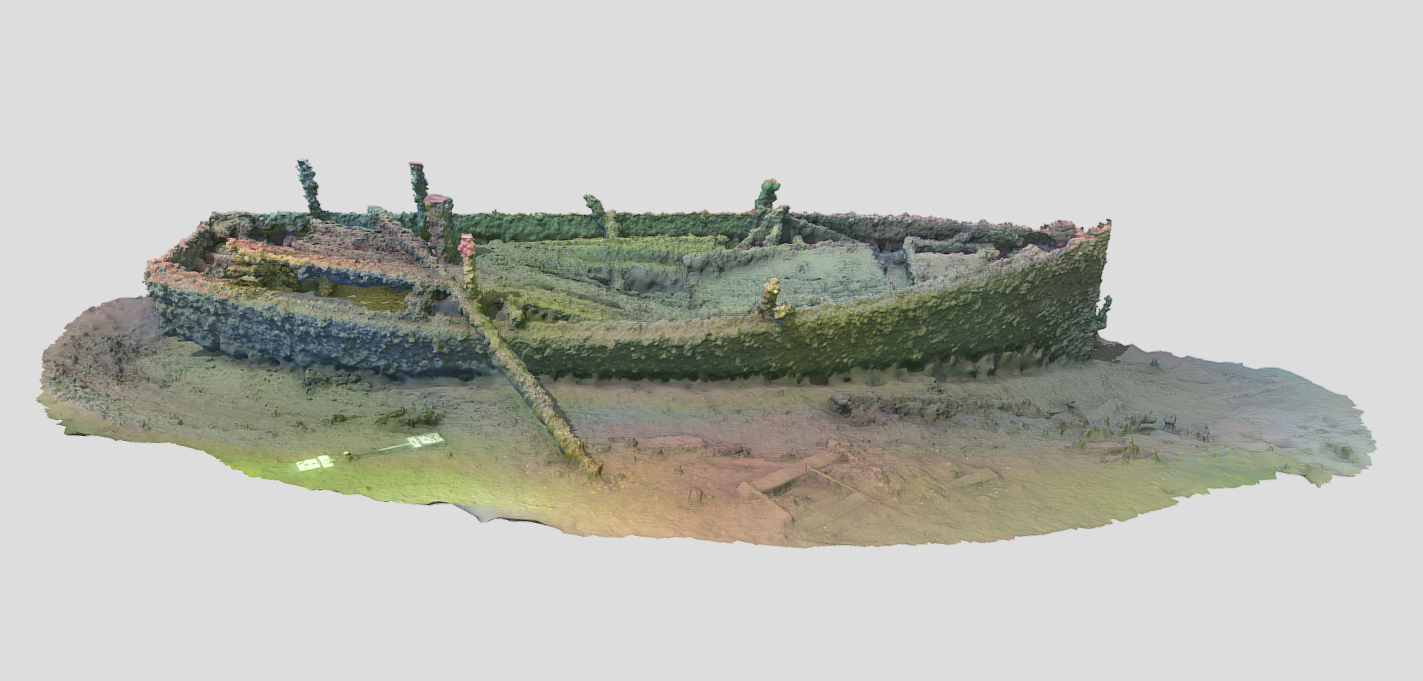
Model of Little Harbor launch

Photogrammetry model of the Little Harbor launch. Image: Zach Whitrock

The Little Harbor launch wasn’t a muscular ship. Measuring nearly 30 feet in length, the boat paled in comparison to the hundred-foot steam-powered vessels ferrying lumber and coal across Lake Michigan in the late 19th and early 20th centuries. But this little boat, wrecked off the coast of Door County and newly listed on the National Register of Historic Places, can tell us a lot about the history of one of Wisconsin’s favorite vacation spots.

Marine archaeologist Tamara Thomsen led the effort to survey and register the vessel as part of her Sea Grant-funded research on shipwrecks in the bay of Green Bay. Her team was the first to visit and document the launch, which was uncovered during a NOAA coastal survey in 2021.

“Being able to be the first there helps give the full story, or as much of the story, as we can gather from the shipwreck,” Thomsen said. “It’s our first chance to look at it and do the archeological examination before others come and may end up inadvertently damaging the site.”

It’s also the first time this type of story is being told. Not much is written about small, powered watercraft in Great Lakes maritime history.

“We’ve spent a lot of time in this office looking at large commercial vessels – you know, schooners and steamers. They were this major part of the transportation network on the Great Lakes,” said Thomsen. “But we haven’t had the opportunity to study these small, what are called ‘vernacular’ craft.”

Unlike schooners and steamers, launches were everyday boats for everyday people. They were used for pleasure boating and fishing, and they also transported both vacationers and fruit pickers around the oft-visited Door County peninsula.

“Every one of the little resorts along Door County had a launch,” Thomsen said. “When folks would come into Sturgeon Bay, the small resort would go and pick them up with the launch. Cherry pickers were moved around the peninsula by launch. You have to remember that the trains really didn’t get to the northern part of Door County until the 1920s.”

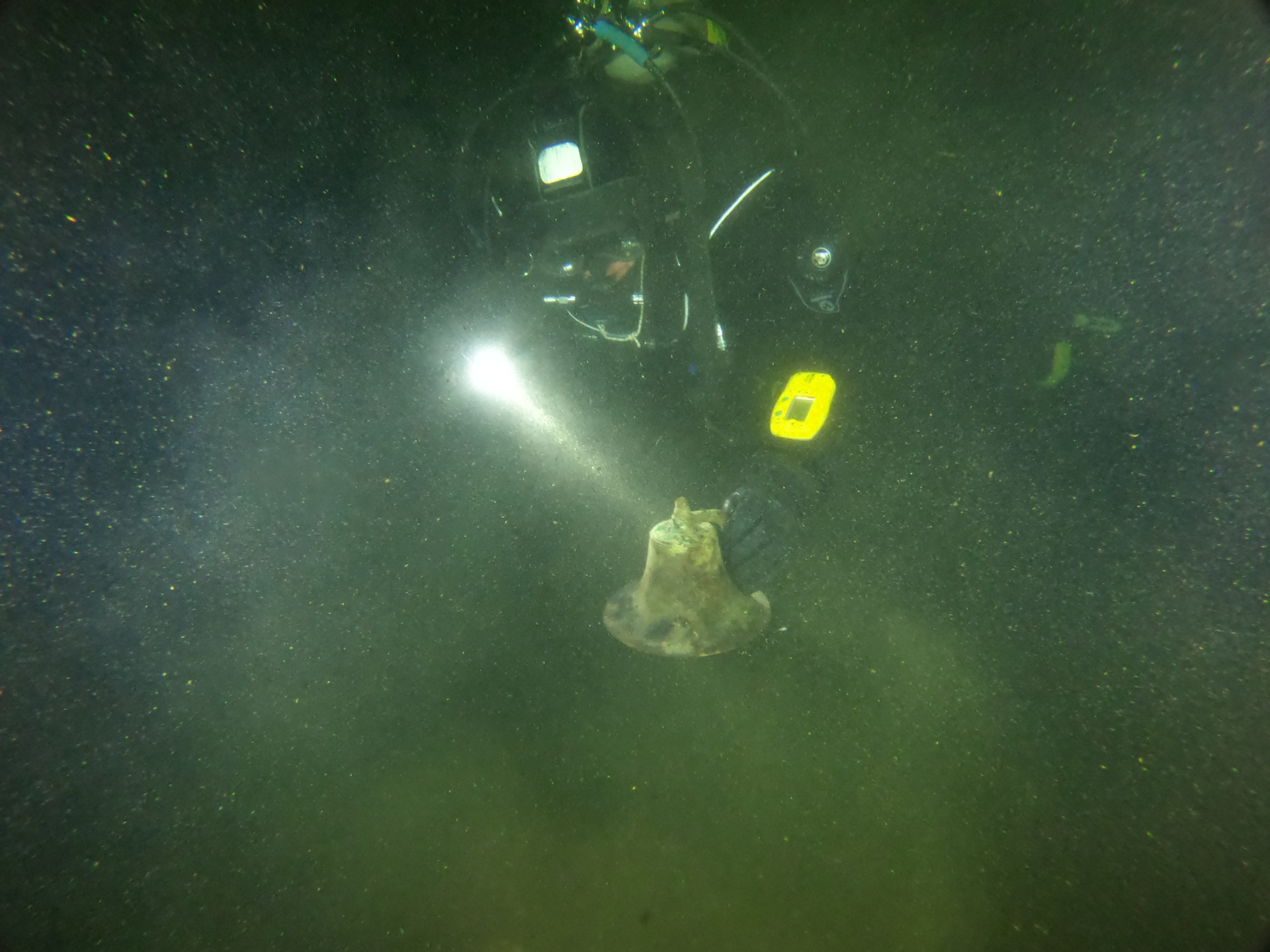
Diver Tim Pranke holds up the bell from the shipwreck of the Little Harbor launch

Diver Tim Pranke holds up the bell from the shipwreck of the Little Harbor Launch. Photo: Wisconsin Historical Society

Often these launches were built locally. Tim Pranke, a seasoned diver and engine enthusiast who volunteers on Thomsen’s dives, helped identify the Little Harbor’s gasoline engine as one built by Straubel Machine Company in Green Bay. That’s not a surprise given the vibrant boat-building industry in the state. In the early 1900s, Wisconsin was the third largest manufacturer of non-steam powered launches in the country.

Some things still remain a mystery, though, like the identity of the launch and why it sank. Thomsen and team pored through local papers looking for news of a boat matching the description of the launch, but to no avail. It’s unusual for a place like turn-of-the-century Door County where, Thomsen said, if someone in the boat business so much as “sneezed, it showed up in the newspaper.”

The boat may remain anonymous, but that doesn’t mean it’s unimportant. Big ships can tell us about trade and tycoons, but boats like the Little Harbor launch can tell us about everyday folks — the ones picking cherries or casting a line.

Said Thomsen, “It fills out the story of people’s use of the waterway.”

The post Door County shipwreck listed on National Register of Historic Places first appeared on Wisconsin Sea Grant.
Original Article

News Releases | Wisconsin Sea Grant

News Releases | Wisconsin Sea Grant

https://www.seagrant.wisc.edu/news/door-county-shipwreck-listed-on-national-register-of-historic-places/
Jenna Mertz

What happens when emergency managers, tree planters and community scientists walk into a room? A discussion about rainfall, naturally.

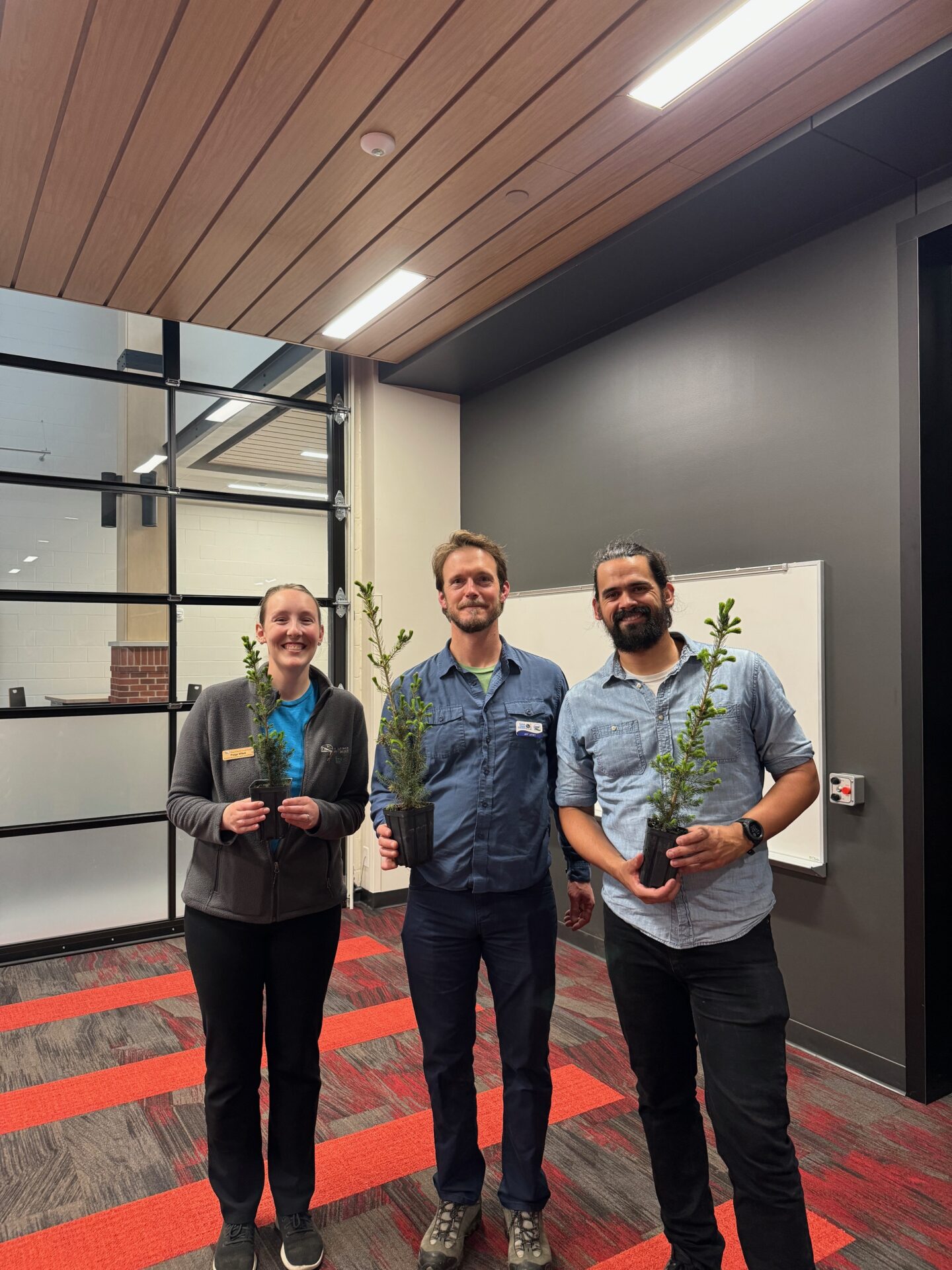
Flood resilience fellow Jackson Parr stands alongside Paige Witek of Door County Land Trust and Jeff Lutsey of the Door County Big Plant, all of whom hold tree saplings.

The hosts of the “Weather, Climate and Community” event: Paige Witek of Door County Land Trust, Jeff Lutsey and Jackson Parr.

In mid-May, Wisconsin Sea Grant Flood Resilience Fellow Jackson Parr partnered with the Door County Land Trust and the Climate Change Coalition of Door County to lead a community event about local rainfall trends and to recruit volunteers to measure precipitation in their backyards. Parr, a former Keillor Fellow, organized the talk as part of a National Sea Grant Office-funded project on disaster preparedness in northeastern Wisconsin. He said the event brought together folks with diverse environmental interests in conservation, community science and climate change.   

“In the other counties I’ve worked through with this grant, the audiences have tended to be emergency management, first responders, municipal staff — the professionals that are more frontline folks in disaster mitigation, preparedness and response,” said Parr.

“[This] was somewhat of a different audience that still had an interest in these topics — climate change, rainfall, citizen science — but otherwise probably wouldn’t have thought too much about, you know, NOAA Atlas 14 precipitation estimates.”

The “Weather, Climate and Community” event was born of a mutual desire for precipitation data and community engagement. Parr connected with Jeff Lutsey, Director of the Door County Climate Change Coalition, who organizes the Door County Big Plant, an event that gets thousands of trees into the ground each year. Lutsey wanted to know where and how much rain falls across the county to better allocate water to thirsty new trees. Parr wanted more spatial information about extreme rainfall to help municipalities plan for floods. 

The problem? Precipitation data across northeastern Wisconsin is sparse.

So, Parr and Lutsey partnered with a local conservation nonprofit, the Door County Land Trust, to recruit volunteers for the Community Collaborative Rain, Hail and Snow Network (CoCoRaHS), a national network of community scientists who measure and record precipitation. More volunteers mean more data points on the map, which means a more complete picture of rainfall across the county.

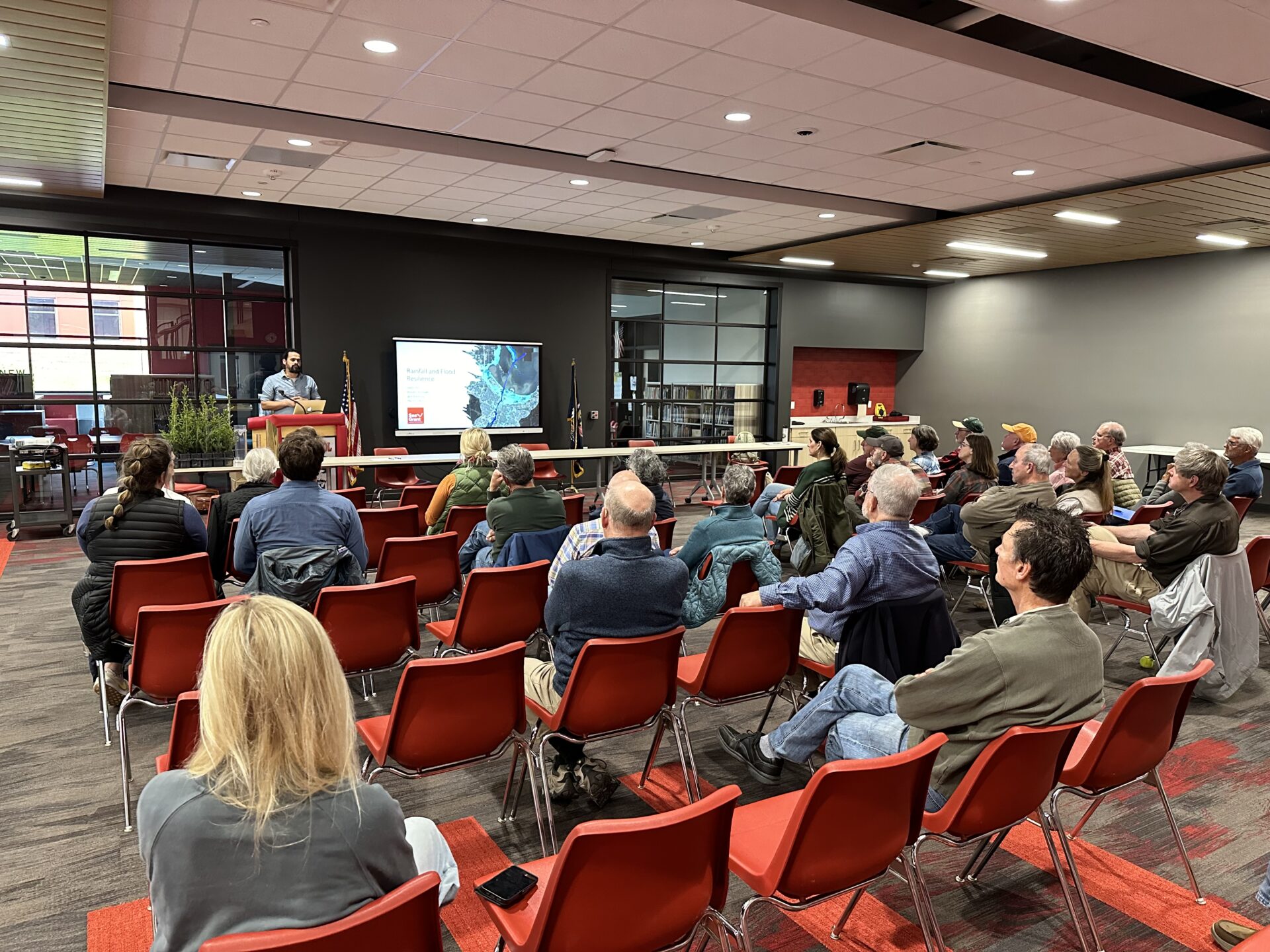
Jackson Parr delivers a talk at a podium in front of a room of people sitting in red chairs.

Jackson Parr presents findings from a rainfall and flood vulnerability analysis for Door County and Sturgeon Bay at the event. Photo: Jackson Parr

The event was successful in filling those gaps. Parr said 13 people signed up for rain gauges, more than doubling the current number of weather observers in Door County. Those are important numbers for a region experiencing more intense rainfall.

“We’re seeing the number of 2-inch rain events increase, particularly in the last decade,” said Parr.

Being prepared to handle increased rainfall and flooding is at the center of Parr’s grant-funded project. For the last two years, he’s been working with coastal communities in northeast Wisconsin on natural disaster planning, paying special attention to policy and planning documents.

“What are ways in which we can improve the policy language in those plans to better account for coastal hazards?” said Parr. He’s currently drafting recommendations and sample language for municipalities to use in updating comprehensive and hazard mitigation plans.

Parr is continuing similar work as a climate hazards planning educator with the University of Wisconsin–Madison Division of Extension’s Natural Resources Institute, where he’s helping rural communities prepare for extreme weather on a project funded by the Rural Partnerships Institute.

He’s also busy installing 13 new rain gauges across Door County. While the new volunteers may be more interested in well-watered gardens than flood resilience planning, Parr is excited to see folks getting involved, whatever the reason. The data is useful for gardeners, tree planters and emergency planners alike.

“In addition to checking your rain gauge to see how much your tomatoes got, you can log on to an app and take 10 seconds to tell us how much rainfall you see,” said Parr.


The post Gauging risk with rain gauges: Flood resilience fellow recruits volunteer weather observers at Door County event first appeared on Wisconsin Sea Grant.

Original Article

News Releases | Wisconsin Sea Grant

News Releases | Wisconsin Sea Grant

https://www.seagrant.wisc.edu/news/gauging-risk-with-rain-gauges-flood-resilience-fellow-recruits-volunteer-weather-observers-at-door-county-event/

Jenna Mertz

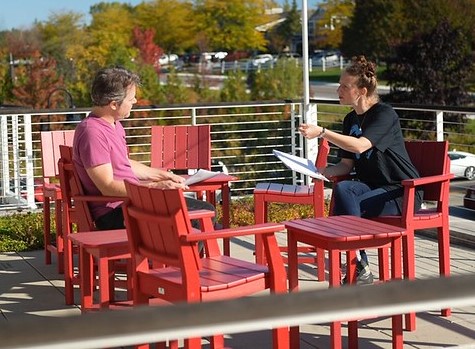
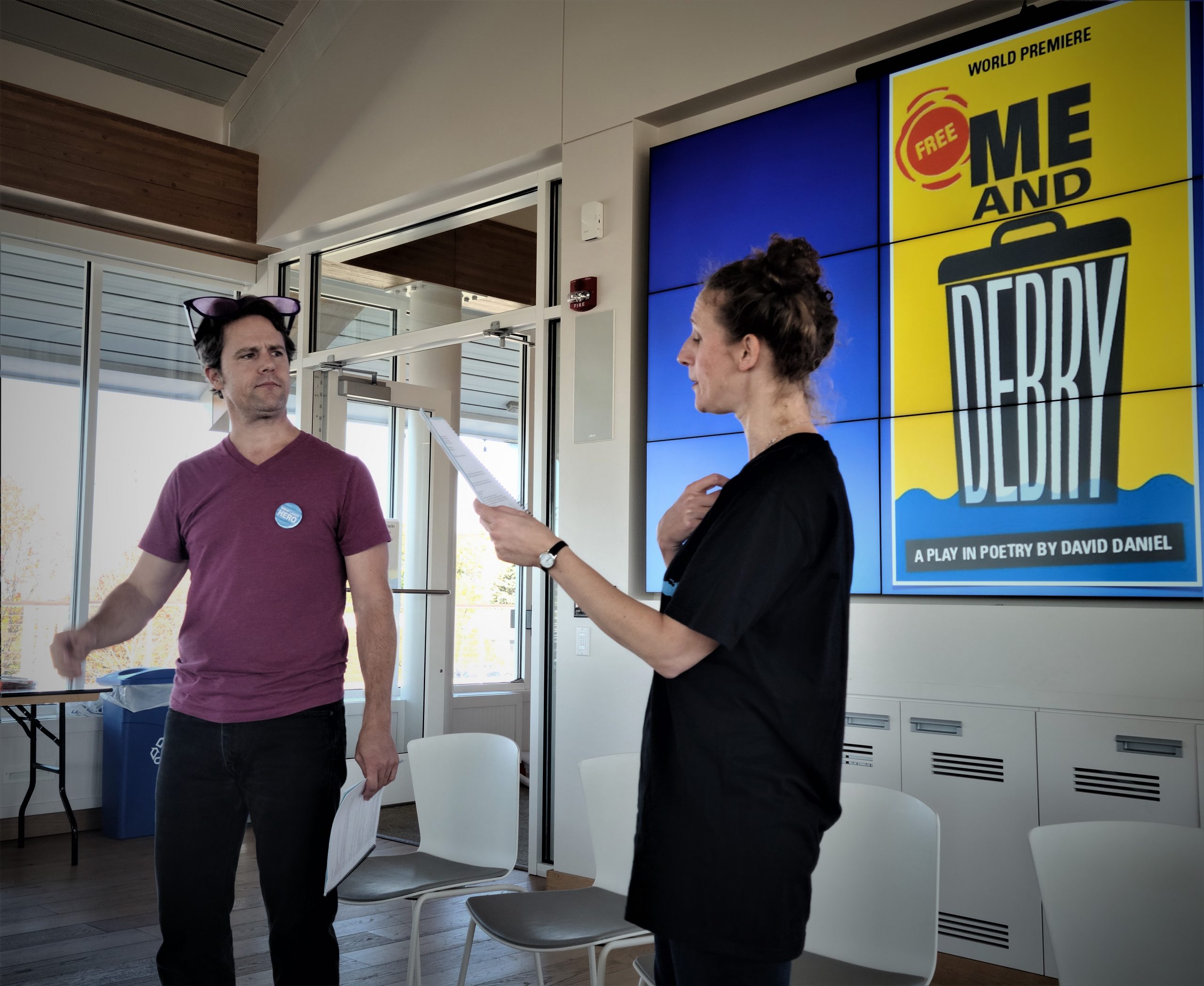
Actors Neil Brookshire and Cassandra Bissell practice their lines for “Me and Debry,” a play about marine debris held at the Door County Public Library in 2022. Image credit: Bonnie Willison, Wisconsin Sea Grant

What is marine debris, what are its impacts and what can we do about it? These are the central messages of a play written on behalf of Wisconsin Sea Grant by David Daniel with American Players Theatre of Wisconsin.

Me and Debry,” (pronounced “debris”), is a half-hour, whimsical, audience-participation play about litter (marine debris) in the Great Lakes. It had its “world premiere” in Wisconsin’s Door County in October 2022 and was performed three times at the Gilmore Fine Arts School in Racine, Wisconsin, for fifth- and sixth-grade students in May 2023.

The play’s script has been fine-tuned through these performances and is now available for others to use for free, complete with props.

Ginny Carlton, Wisconsin Sea Grant’s education outreach specialist, recently discussed the play and why schools or other educational institutions might be interested in performing it.

Ginny, what is marine debris and what message does the play offer about it?

So, a lot of times people think about gasoline or oil on the water because we often see that on the news. Technically, from NOAA’s perspective (National Oceanic and Atmospheric Administration), that isn’t marine debris. It’s obviously pollution, but the definition requires marine debris to be a solid. It can be anything from something really small, like a microplastic, to something quite large, like a derelict fishing vessel.

Often, environmental messaging can be sort of depressing and doom and gloom. We wanted to provide students with an uplifting message. One of the lines in the play is, “If it’s to be, it’s up to me.” This particular line is repeated a couple times during the play, so that hopefully, the students come to understand that they can have a positive role in at least considering what to do and making a change that would have a positive impact.

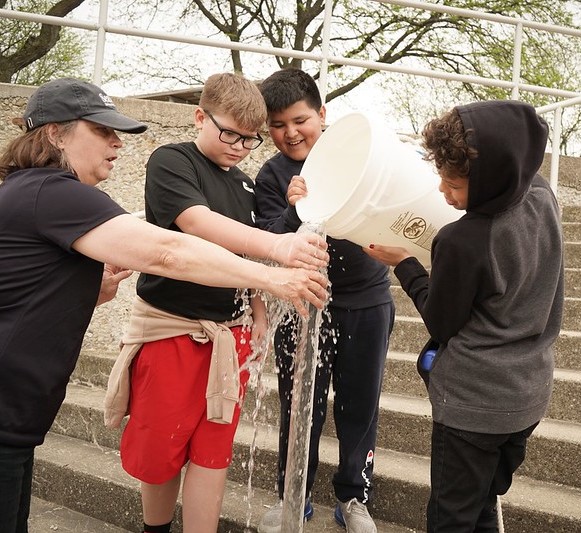
Ginny Carlson (left) instructs Racine elementary students in an environmental stewardship day project at Quarry Lake County Park as part of the marine debris project that the “me and Debry” play came from. Image credit: Bonnie Willison, Wisconsin Sea Grant

What is special about the play compared to other marine debris educational materials?

Two reasons: one, it presents the material in a slightly different messaging format. Rather than reading a textbook or watching a video, it has an opportunity for interaction. There’s a lot of audience participation built into the play script. There are four central roles that are performed by members of the audience. One is a crane, another is a kayaker, a fish and a kid. Then beyond those four central roles, there’s also audience participation opportunities when the play starts to talk about what we call the eight R’s. Many teachers and students are already familiar with three of the R’s. Reduce, Reuse, Recycle. The play introduces five others for the students and the educators to think about. (Rethink, Refuse, Repurpose, Refurbish and Repair)

I think another reason is that it has the potential of getting people up moving and actually doing, and inspiring action beyond the actual performance. So, providing an opportunity for the students to consider their own behavior and their own impact on this issue and potentially making some minor adjustments in what they’re doing. Obviously other educational curriculum and formats also attempt to do that, but for some reason, I think just having the audio and visual together and having live interactions with people brings it one step further along than just listening to a teacher talk about it or with a PowerPoint or watching a video, perhaps.

Also, the script design itself is a rhyming format, and that tends to grab people’s attention, and it somehow helps people to remember the content better than just having it in regular prose.

Do actors in the play need to memorize lines?

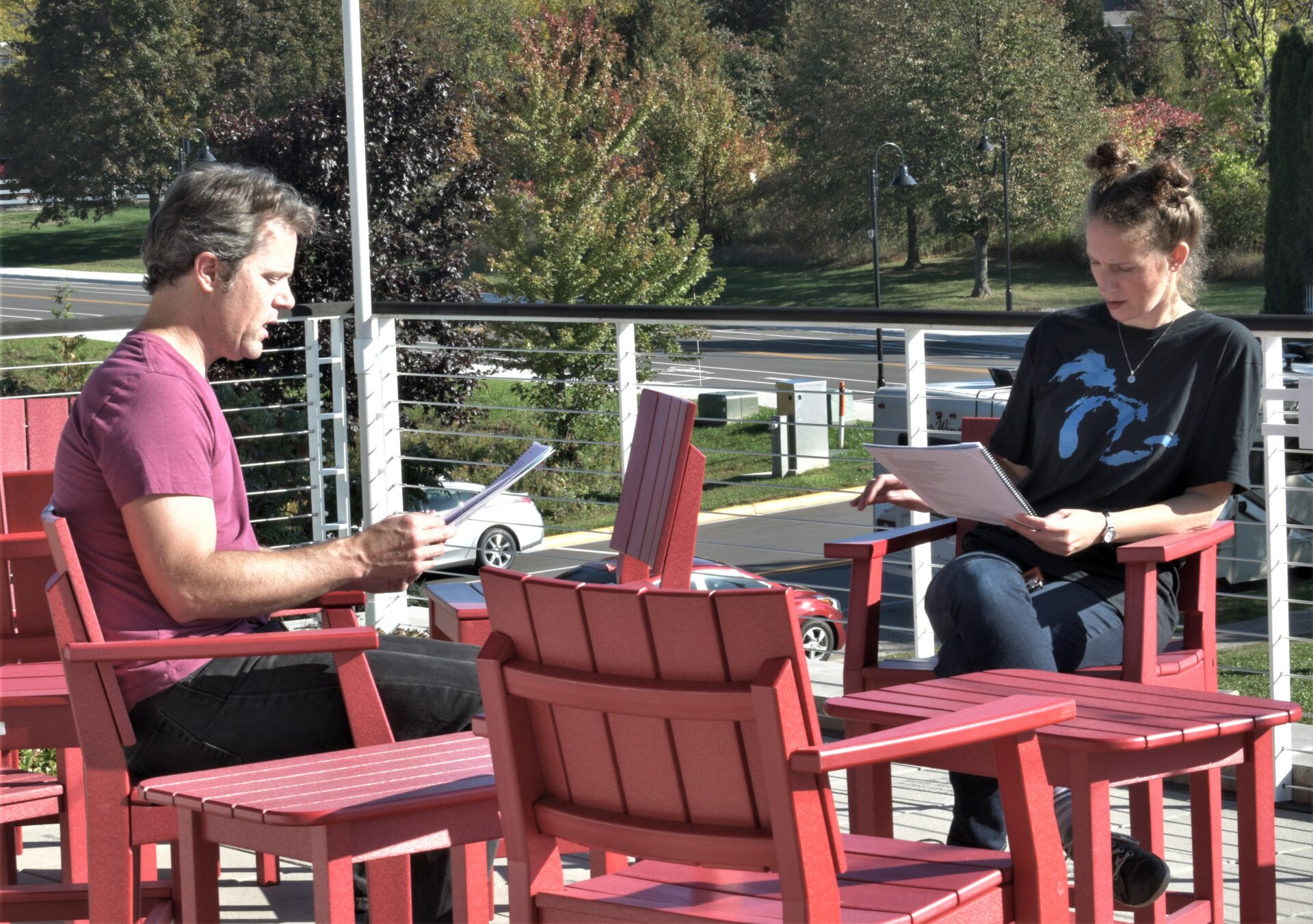
Even with the actors that were at Door County and in The Gilmore Fine Arts School, we told them that there was no need for them to memorize lines. They could do what they called a reading performance, which means that you can have the script in hand. The desire is to have you pre-read it, so you’re not standing and reading like a storybook-style program, but that you have some familiarity with the script ahead, but have it there to provide a refresher as you move along.

What do students get out of the play in addition to marine debris education?

Students get an opportunity to do some public speaking. I think oftentimes students don’t have the opportunity to publicly speak in front of their peers and or other individuals. So that can be a real confidence-booster to have the opportunity to do that.

They also have an opportunity to consider different worldviews and different perspectives. So, by including the characters of the crane and the fish our intention and hope was that perhaps the students  or youth that are watching the performances and interacting with the performances would understand how humans can and do impact other organisms and our responsibility to them — a stewardship message that is part of the play as well.

The “Me and Debry” script is now available to use for free. Image credit: Bonnie Willison, Wisconsin Sea Grant

How do people get the script if they want it?

The easiest way to obtain it is to simply download it from our Wisconsin Sea Grant Education website. We have it available in English, and then the four main character parts for the audience members are in English, Spanish, and Hmong translations as well. The eight R materials for audience participation, they’re available in English, Spanish, and Hmong directly from our website. We also include all that material in a costume kit and an educational kit that you can make a request to have sent to you within Wisconsin. That link is also on the education website. So, you simply make a request for the materials to be interlibrary loaned to you.

The kit has costumes for the two primary actors. Basically, a T-shirt and a pair of oversized sunglasses, so it’s not elaborate costuming. And similarly, it has costumes for the four main characters. And then supporting props for the various eight R topics.

Does it cost anything?

No. Just like our other educational kits at this time, there’s no charge. We will ship it on our cost, and we also pay for the return shipping.

Me and Debry, is part of a two-year project funded by Wisconsin Sea Grant with grants from the National Sea Grant College Program, National Oceanic and Atmospheric Administration Marine Debris Program, U.S. Department of Commerce, and the state of Wisconsin.

The post Marine debris play script available for free first appeared on Wisconsin Sea Grant.

Original Article

News Releases | Wisconsin Sea Grant

News Releases | Wisconsin Sea Grant

https://www.seagrant.wisc.edu/news/marine-debris-play-script-available-for-free/

Marie Zhuikov

Script will soon be available for others to use

Actors Neil Brookshire and Cassandra Bissell perform “Me and Debry,” a play about marine debris held at the Door County Public Library in the Donald and Carol Kress Pavilion. Image credit: Marie Zhuikov, Wisconsin Sea Grant

What empowers people to help the environment and rhymes at the same time? Answer: “Me and Debry,” a half-hour, whimsical, audience-participation play about litter (marine debris) in the Great Lakes.

The play had its “world premiere” in Wisconsin’s Door County in October before a full house at the town library in Egg Harbor. Starring in it were two local actors: Cassandra Bissell and Neil Brookshire. They live just two blocks away from the library and the play was for a good cause, so lending their talents to it, “seemed like a no-brainer,” said Bissell.

Brookshire said he was drawn to the play because his father was an environmental economist who specialized in water resources research and his mother worked for the U.S. Fish and Wildlife Service. “So, I have a personal family history of being aware of these kinds of issues and information. One of the reasons we live up here is we like nature. We like the water, so we naturally want to do anything we can to spread awareness to keep it clean.”

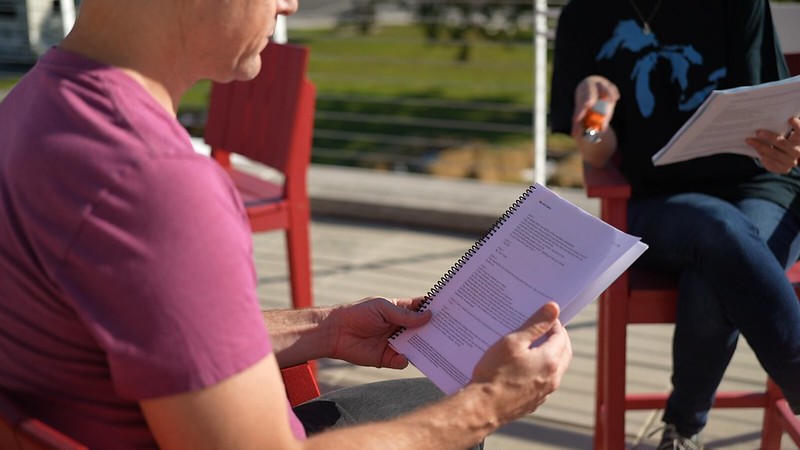
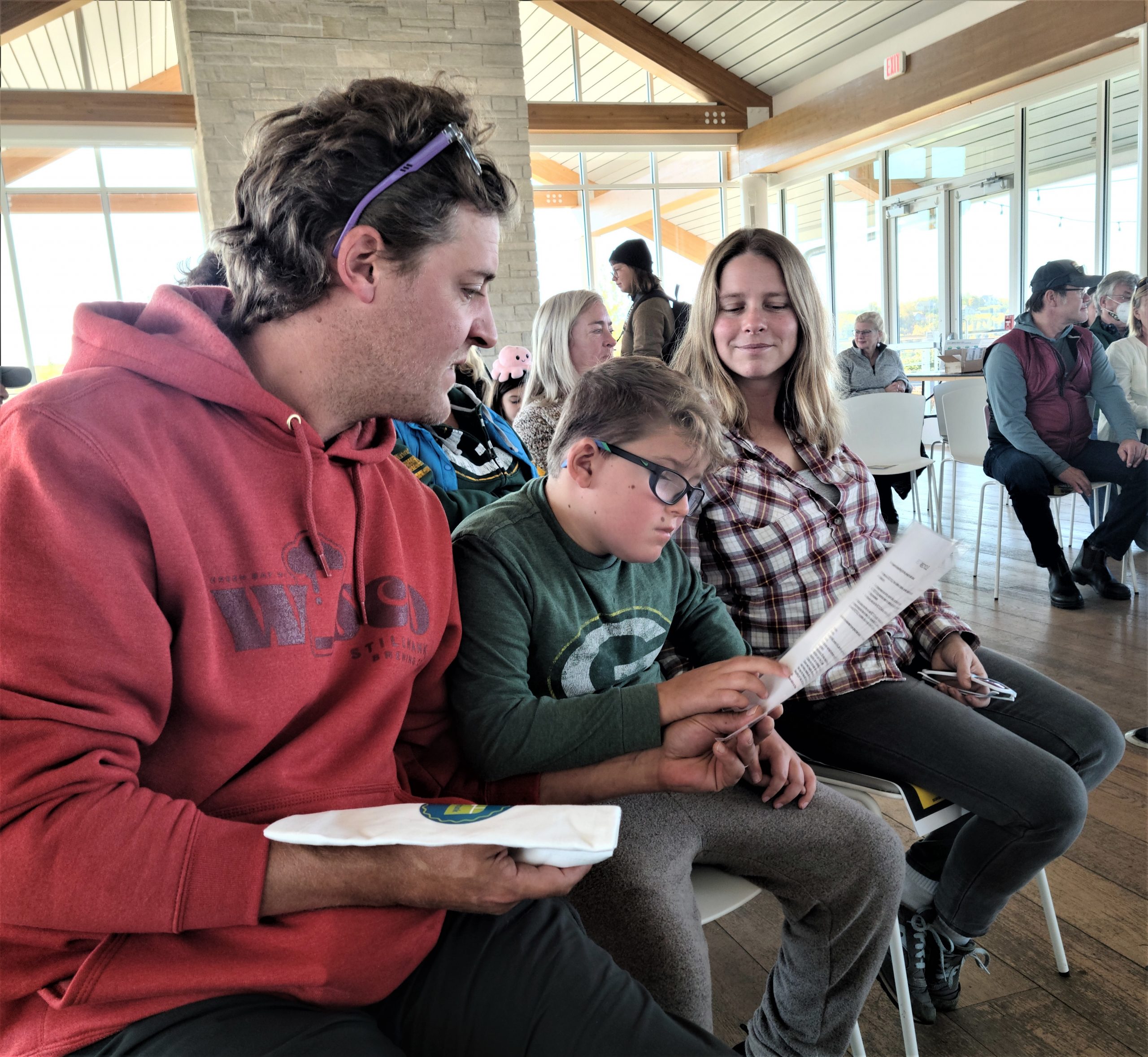
Wisconsin Sea Grant staff member Julia Noordyk (right) and her family members Ethan (left) and Zander (center) study their script for an audience participation part of the “Me and Debry” play. Image credit: Marie Zhuikov, Wisconsin Sea Grant

The actors described the play, produced by David Daniel with American Players Theater, as an “information play” and their parts as vaudevillian characters who banter with each other to lighten the subject matter and make the information easier for the audience to take in.

“I’m Jerry Bardo Apam Napat Sesquipedalian Cornelius Watershed Dubry,” said Bissell. “And in the vaudevillian act of the duo, I’m the really long-winded talky one. And Neil is…”

“Beck,” Brookshire deadpanned.

“He’s much more to the point and has fewer words,” Bissell said.

Brookshire highlighted the play’s audience participation, which includes prewritten parts for a kayaker, young person, crane and fish. “Any time you involve an audience, people are going to remember better because it wasn’t just something they observed, it was something they participated in.”

The project was led by Wisconsin Sea Grant’s Education Outreach Specialist Ginny Carlton, who described the variety of marine debris. “It’s a solid found in our waters. It’s not perhaps the most common pollutant that you think about when you think of pollution in our waters. It’s not oil slicks on the water. It’s these solid things that can be really tiny – like microplastics – or really big – like derelict fishing vessels.”

Carlton described the performance as “Wonderful. The actors really brought it to life with all the different nuances they added.”

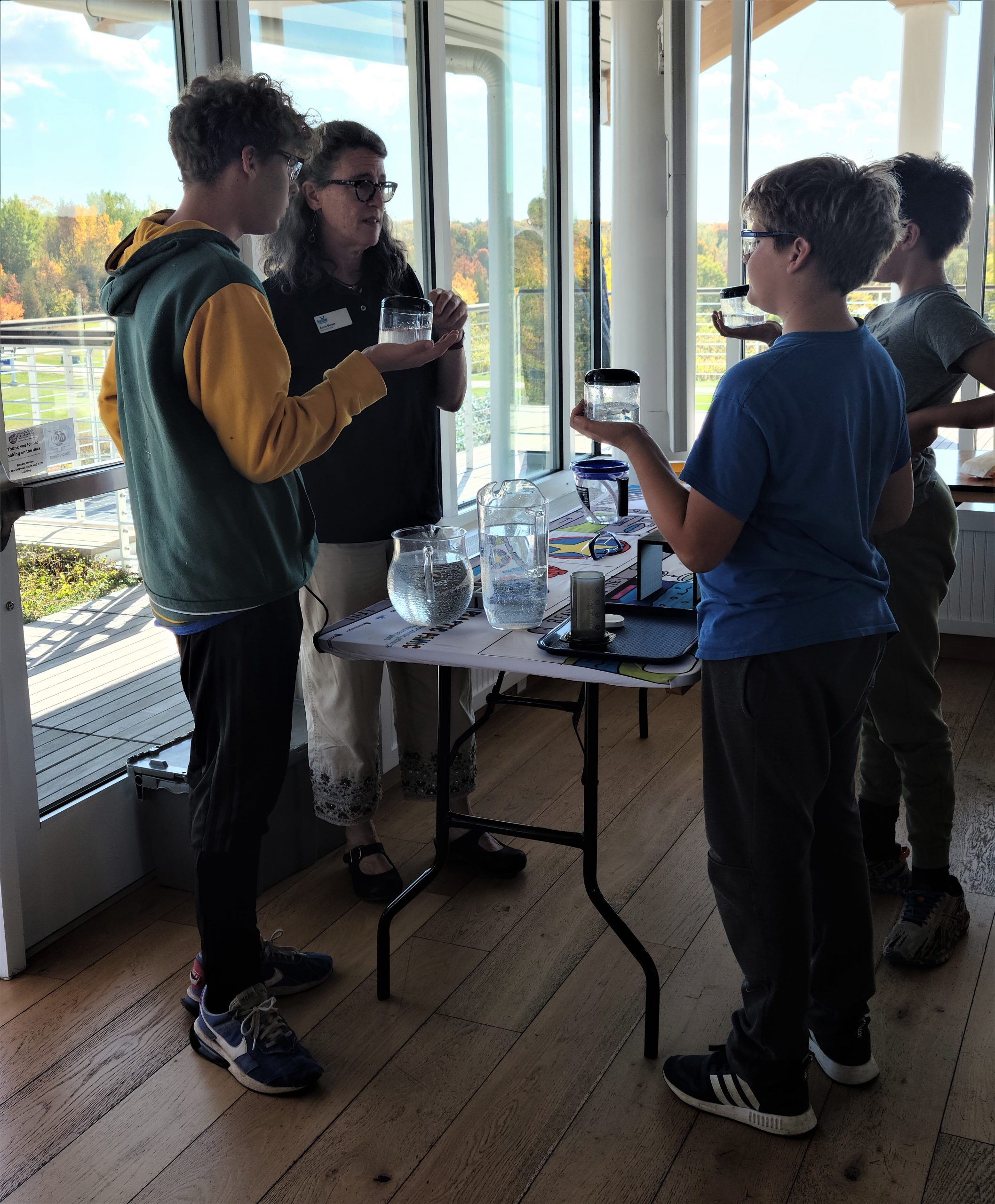
After the play, audience members visited learning stations around the room that featured art and science activities involving marine debris. These included experiments to determine different types of microplastic pollution, a table with information about Milly Zantow, who helped create Wisconsin’s recycling mandate, and a station where people could decorate their own reusable tote bag.

Wisconsin Sea Grant Education Coordinator Anne Moser (center) staffs a water education station that was one of several learning activities available after the play. Image credit: Marie Zhuikov

Carlton said the play will be performed again next spring with the Gilmore Fine Arts Middle School in Racine and that the script will soon be available for other groups to perform.

Besides environmental messages, the play instills a sense of hope and empowerment in the audience.

“Now we know how we can help,” said Brookshire playing his Beck character. “You and I right here can always make a difference.”

“You are the difference,” said Bissell playing her character. “You’re what our watershed needs! One who knows their actions have impacts on the land and the inland sea.”

“If it’s to be, it’s up to me!” said Beck.

“That is the truest creed,” said Jerry Bardo Apam Napat Sesquipedalian Cornelius Watershed Dubry.

“Me and Debry,” (pronounced “debris”) is part of a two-year project funded by Wisconsin Sea Grant with grants from the National Sea Grant College Program, National Oceanic and Atmospheric Administration Marine Debris Program, U.S. Department of Commerce, and the state of Wisconsin.

The project, called, “The Play’s the Thing: Using Drama as an Introduction to Marine Debris Prevention and Meaningful Stewardship Experiences” harnesses the power of storytelling to engage, educate and inspire performing artists and community members to be committed stewards of their Great Lakes watershed. In addition to the performance, the project includes marine debris prevention workshops, cleanup events, and public outreach and education activities.

Neil Brookshire and Cassandra Bissell practice their lines before the play. Image credit: Marie Zhuikov

The post Whimsical marine debris play debuts in Door County first appeared on Wisconsin Sea Grant.

Original Article

News Releases | Wisconsin Sea Grant

News Releases | Wisconsin Sea Grant

https://www.seagrant.wisc.edu/news/whimsical-marine-debris-play-debuts-in-door-county/?utm_source=rss&utm_medium=rss&utm_campaign=whimsical-marine-debris-play-debuts-in-door-county

Marie Zhuikov