Research into centuries-old fire-scarred trees in northern Wisconsin is helping shape current fire management practices for tribal and state partners. The project, We are all gathering around the fire, or Nimaawanji’idimin giiwitaashkodeng in Anishinaabemowin, combines dendrochronology, Native Experiential Knowledge (NEK), and community engagement to uncover the intertwined ecological and cultural history of this Lake Superior coastal landscape.

The two-year Wisconsin Sea Grant-funded project, featured in a new video, confirmed something long known in Indigenous communities but rarely acknowledged in scientific literature: the beloved red pine forests on Wisconsin and Minnesota Points were not shaped by nature alone, but by people who used fire to care for the landscape. Red pine struggles to produce new generations without fire.
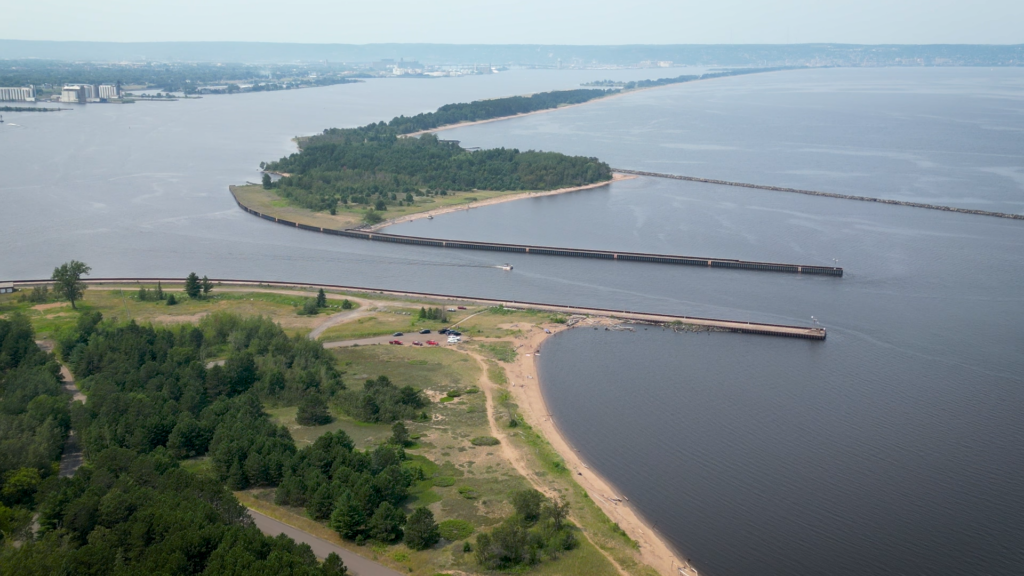
Aerial photo of Wisconsin and Minnesota Point, two peninsulas in Lake Superior.

Wisconsin and Minnesota Points are Lake Superior coastal peninsulas off the shores of Duluth, Minnesota, and Superior, Wisconsin.
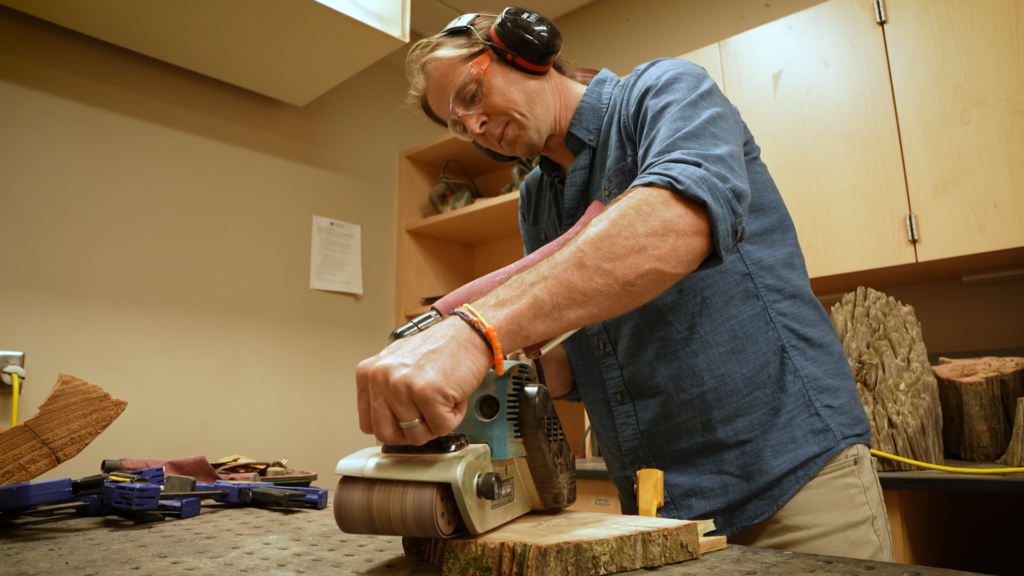
Evan Larson uses a belt sander in his workshop.

Dendrochronologist and Professor Evan Larson sands a wood sample to get it ready for the microscope.

The exclusion of Indigenous perspectives and burning practices in the forest management has led to reduced ecosystem resiliency, biodiversity, and a drop in the pine tree population. In order to prove that people, and not natural phenomena like lightning, set fires to the landscape, the team looked for centuries-old fire scars from tree samples collected on the Points. The data confirm what the team expected.

“The fires on both Points ceased abruptly after the signing of the 1842 and 1854 treaties,” said Evan Larson, professor at the University of Wisconsin-Platteville. “It is undeniable that the reason that we love the Points and protected the pine forest is because of the fires that people were setting,” Larson said. “That act of ‘protecting’ – moving people out of that space – is literally dooming the things that we’re hoping to protect.”​

After two years of research, engagement, and outreach, the team has shown the importance of fire and NEK to Wisconsin and Minnesota Points. This has allowed them to take important steps to return cultural fire to the landscape.
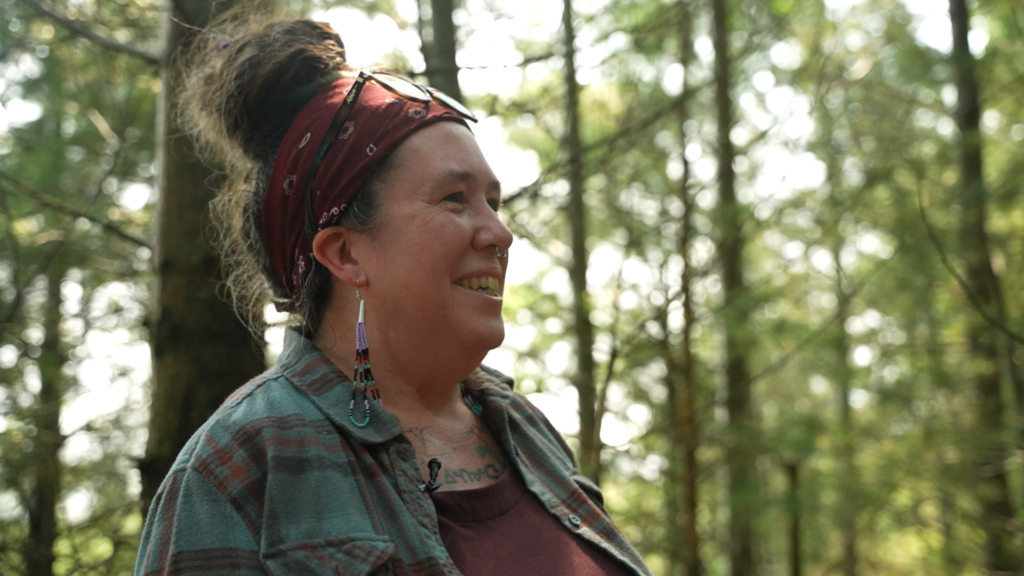
Melonee Montano smiles.

Melonee Montano, project leader and University of Minnesota-Twin Cities Forestry Department graduate student, talks about the deep significance that Wisconsin and Minnesota Points hold to the Anishinaabe people.
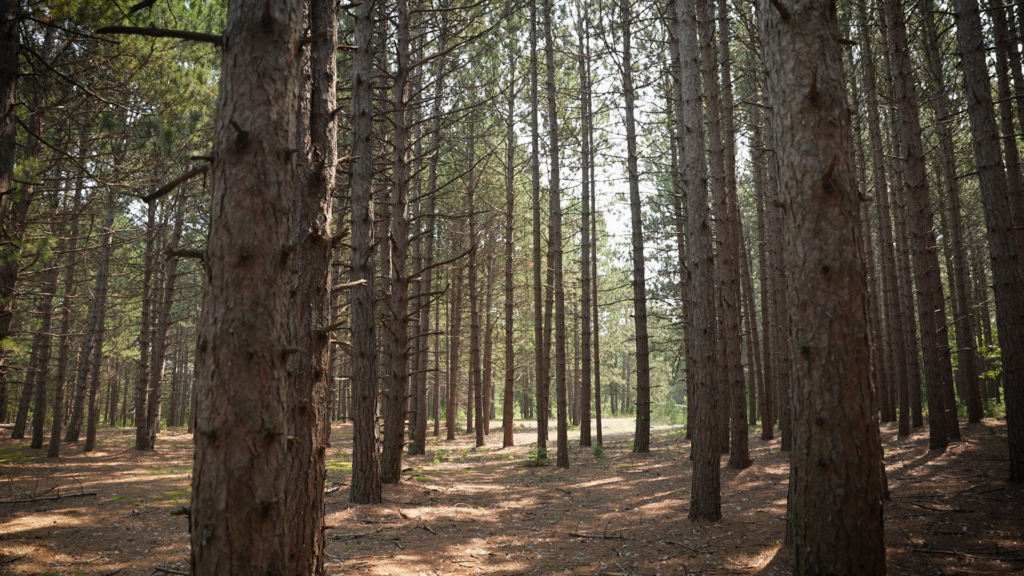
A pine forest on Wisconsin Point.

Fire helps red pines, like the ones pictured here on Wisconsin Point, regenerate.

“One thing that has made this research extremely successful is the funding from Wisconsin Sea Grant, because that’s been our starting point for all of this,” says project and tribal leader Melonee Montano. Throughout the project, Larson, Montano, and their students talked to local residents about the history of fire and the possibility of returning it. “The funding made it possible for us to go out and actually build these relationships on the ground, in people’s homes, at their kitchen tables, and at the city meetings.”

Larson and Montano have been surprised by the amount of support they’ve gotten from the community. “Through this work, we’re seeing, in ways that I can’t put into words, that it’s time for fire to come back,” says Montano. The city of Superior is now in advanced discussions with fire experts from the Fond du Lac Band of Lake Superior Chippewa about burning practices on Wisconsin Point.

“A lot of this really has only been possible because of this grant, which is really weird for my mind to process,” reflects Montano. “It’s strange to think that it took a grant – a piece of paper, some money – to bring these folks together to actually start tearing down through the layers of trauma to figure out what is at the base and what really happened.”

While the Sea Grant funding has come to a close, the team continues their work supported by a grant from the National Science Foundation. They will be broadening their research to encompass the whole Great Lakes region.  

Watch the video here.

The post Watch: How tree rings and community conversations are bringing fire back first appeared on Wisconsin Sea Grant.

Original Article

News Releases | Wisconsin Sea Grant

News Releases | Wisconsin Sea Grant

https://www.seagrant.wisc.edu/news/watch-how-tree-rings-and-community-conversations-are-bringing-fire-back/
Bonnie Willison

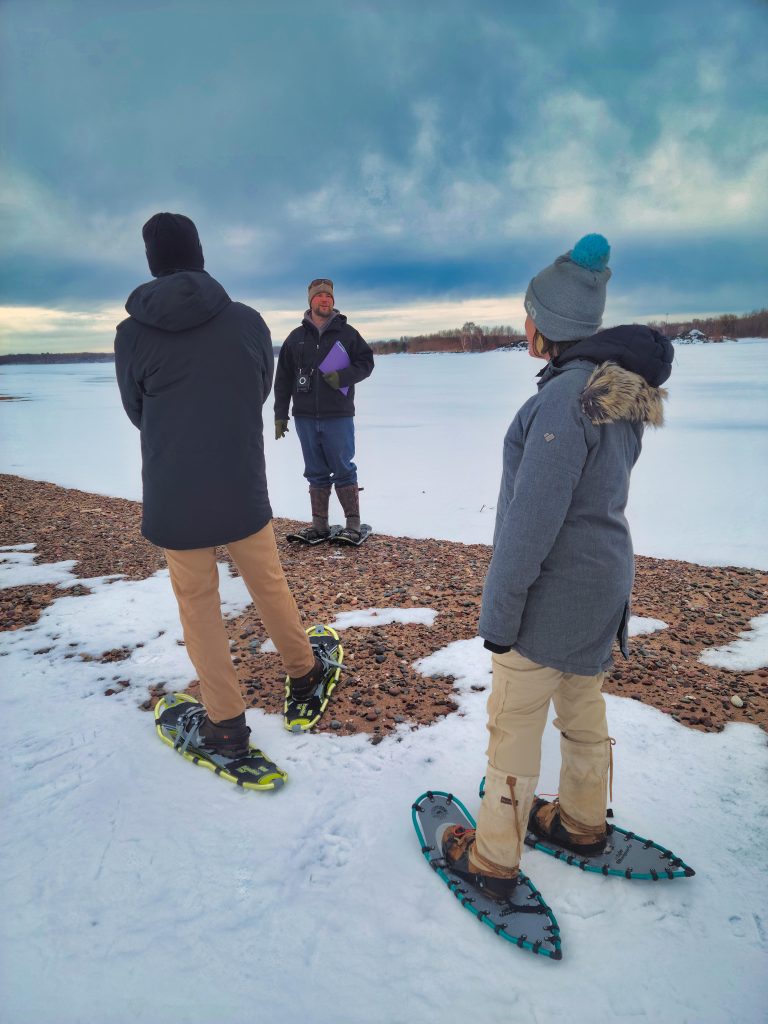
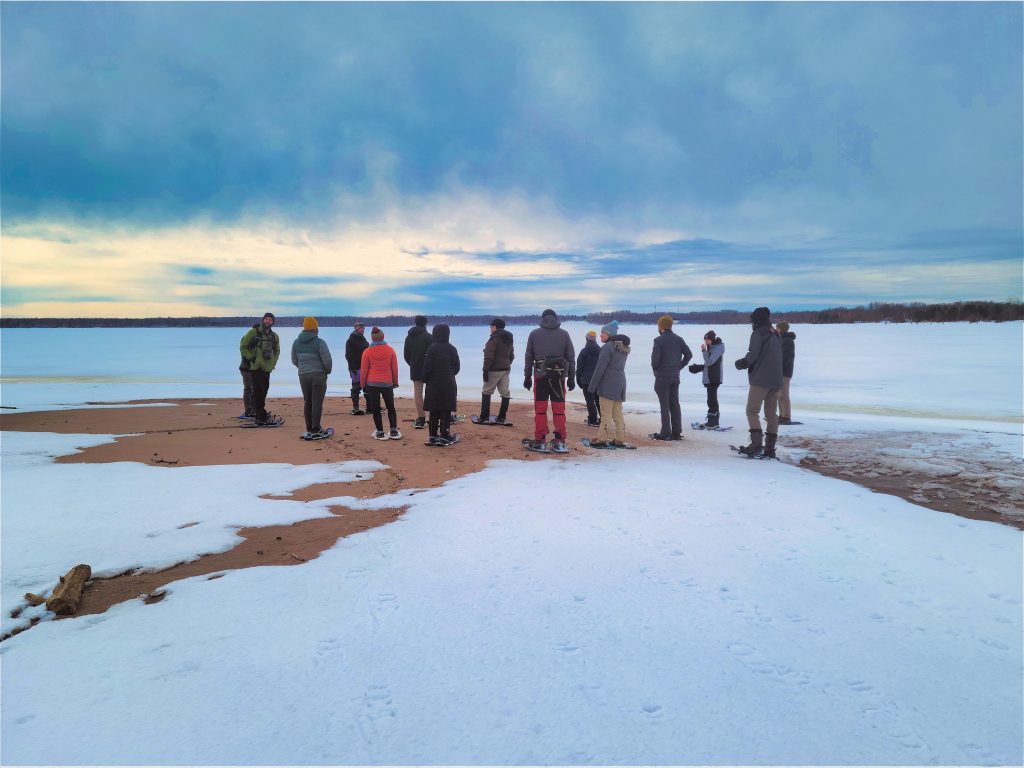
Field trip participants with the St. Louis River Summit learn about efforts to encourage piping plovers to nest on Wisconsin Point. Image credit: Marie Zhuikov, Wisconsin Sea Grant

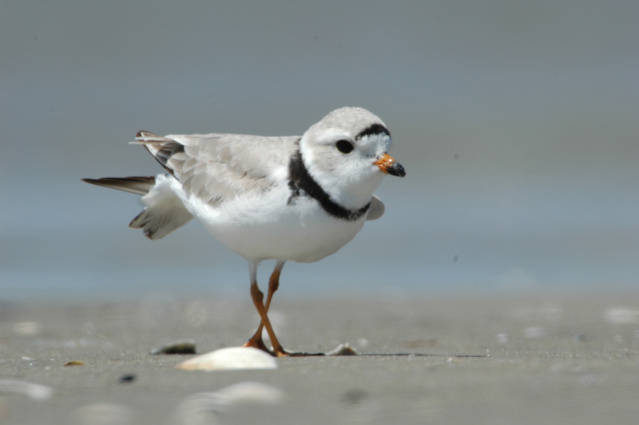
I participated in a field trip during the recent St. Louis River Summit that involved snowshoeing out to a bird sanctuary on Wisconsin Point, which is near Superior, Wisconsin. The sanctuary is a protected area on a sandy spit of land, specifically designated for endangered shorebirds called piping plovers (Charadrius melodus).

I enjoy any opportunity to visit Wisconsin Point, but I also attended because I was involved in early habitat restoration efforts for these cute little birds before I worked for Wisconsin Sea Grant. I was interested in hearing the latest intel about their status.

A piping plover. Image credit: U.S. Fish and Wildlife Service

The St. Louis River Estuary had breeding plover pairs up until 1989. The last nesting pair was seen at this bird sanctuary site. Plovers, which look like killdeers, prefer large isolated beaches for nesting. Much of this habitat type has been lost due to development and recreational pressure. Work to increase the population of plovers is going on all across the Great Lakes and in other parts of the country.

Matt Steiger, St. Louis River Area of Concern Coordinator with the Wisconsin Department of Natural Resources (DNR), led the field trip along with David Grandmaison, St. Louis River wild rice and habitat restoration coordinator with the Wisconsin DNR.

As we snowshoed out to the end of the beach in a cold wind from the northeast, Steiger explained that several projects had taken place on the site over the years to make it attractive to plovers and common terns. The latest was begun with Great Lakes Restoration Initiative funding in 2019, which involved enlarging the beach with clean dredged sand. The goal was to create habitat that would last despite changing water levels in the harbor and storms and would require minimal maintenance. Fourteen acres of nesting and foraging habitat were created along with three “nesting pans” composed of small cobblestones that plovers prefer.

Matt Steiger, WI DNR, (center) discusses the Wisconsin Point Bird Sanctuary restoration efforts to field trip participants. Image credit: Marie Zhuikov, Wisconsin Sea Grant

Piping plover monitors coordinated by the St. Louis River Alliance have kept their eyes peeled for any plovers on this site and others around the estuary. So far, none have nested, but sometimes these efforts take time – decades, even. Steiger said that a female plover was spotted in the sanctuary during the spring 2022 migration season at the same time a male was spotted on nearby Minnesota Point. Let’s hope that someday two plovers will land on the same beach at the same time!

In other areas of the state, Wisconsin Sea Grant has played an integral role in habitat restoration that benefits piping plovers. Our staff were involved in the Cat Island Restoration Project in Green Bay, which created 1,400 acres of barrier islands in Lake Michigan that had previously disappeared due to high lake levels and storms. In 2016, for the first time in 75 years, endangered piping plovers successfully nested on a restored island there and fledged chicks.

Sea Grant was also involved in an earlier effort on Wisconsin Point’s Shaefer Beach to create plover habitat. We were involved in initial design discussions for the bird sanctuary work but are not currently participating. For more information, see this cool post and videos on the Perfect Duluth Day website.

At the end of the tour, Grandmaison described work going on in nearby Allouez Bay to restore wild rice beds. Historically, wild rice was abundant in Allouez bay and throughout the estuary, providing an important food source for Native Americans. Wild rice beds also provided habitat and food for birds and wildlife. Their abundance in the estuary declined significantly in the past century, and today only a sparse remnant stand exists in Allouez Bay. Wild rice seeds were spread throughout the bay. Exclosure fencing was installed protect the seedlings from browsing pressure of Canada geese.

As I snowshoed back to my car, I remained hopeful that someday, Wisconsin Point will be home to nesting piping plovers and lush stands of wild rice, thanks to these efforts.

The post Restoring piping plover habitat on Wisconsin Point first appeared on Wisconsin Sea Grant.

Original Article

Blog | Wisconsin Sea Grant

Blog | Wisconsin Sea Grant

https://www.seagrant.wisc.edu/blog/restoring-piping-plover-habitat-on-wisconsin-point/?utm_source=rss&utm_medium=rss&utm_campaign=restoring-piping-plover-habitat-on-wisconsin-point

Marie Zhuikov

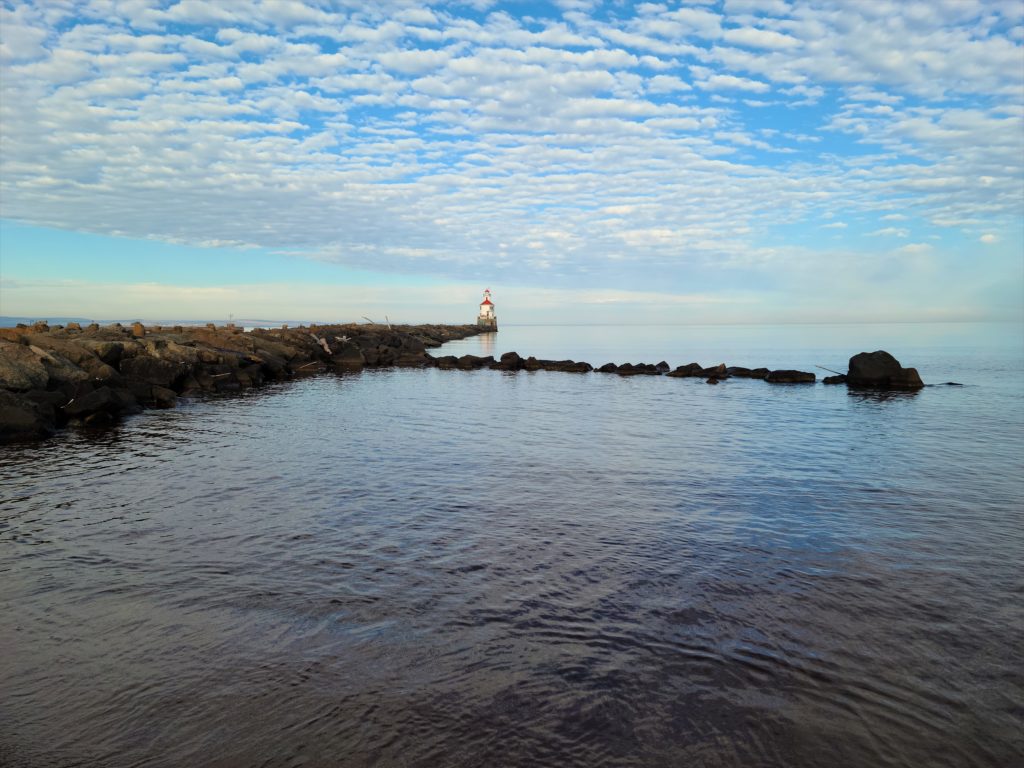
The lighthouse at Wisconsin Point. Image credit: Marie Zhuikov, Wisconsin Sea Grant

The River Talk series wraps up for the season with a field trip on Wisconsin Point at 7 p.m. Wednesday, May 12. Participants will meet at parking lot #5 at the far end of the point near the shipping canal and lighthouse. Thomas Howes, natural resources manager for the Fond du Lac Band of Lake Superior Chippewa, will lead the outing entitled, “Ojibwe connection to Wisconsin Point: Past, present and future.” Howes will discuss events that brought the Ojibwe to Wisconsin Point, what occurred from that time to the present, how the Ojibwe use the area currently and what the future vision is for Fond du Lac-owned lands on the point. 

The event will last an hour and will include time for comments and questions. Use of masks is encouraged for safety. Bring a folding chair. A summary will be posted on Wisconsin Sea Grant’s blog. In case of rain, the talk will be held a week later on May 19 at 7 p.m. in the same location.

The River Talks are sponsored by The Lake Superior National Estuarine Research Reserve and the Wisconsin Sea Grant Program.

The post Wisconsin Point field trip wraps up the River Talk season first appeared on Wisconsin Sea Grant.

Original Article

News Releases – Wisconsin Sea Grant

News Releases – Wisconsin Sea Grant

https://www.seagrant.wisc.edu/news/wisconsin-point-field-trip-wraps-up-the-river-talk-season/

Marie Zhuikov