How an unusual Door County landscape is helping researchers learn how Great Lake water levels affect groundwater and forests in coastal areas 

Landscapes tell a story. That can be obvious to the casual observer traveling around the state, whether it’s taking a scenic fall drive through the Driftless Area in southwest Wisconsin, exploring the potholes and drumlins of Kettle Moraine State Forest near Milwaukee, or kayaking among the water-etched sea caves off Lake Superior’s Apostle Islands.

To the trained eye, those landscapes also tell a story, but one goes beyond a quick photo and may provide answers to important research questions. University of Wisconsin-Madison Professor Steven Loheide, graduate student Eric Kastelic, Freshwater@UW summer students Lucie Carignan and Ella Flattum, and collaborators are focusing their collective scientific gaze on a particular section along Door County’s southeast coast for clues to a decades-old question: How do Great Lakes water level changes affect groundwater and forests along our coasts?
The Ridges Sanctuary is a 1,700-acre nature preserve tucked along the bottom half of Door County as it pokes into Lake Michigan just above the community of Bailey’s Harbor. Initially established in 1937 as Wisconsin’s first land trust, the sanctuary is a National Natural Landmark noted for a rich concentration of rare plants, including 25 species of orchids. What really sets this place apart from other preserves, however, is the 30 or so swales and crescent-shaped ridges that line the sanctuary from west to east.

These are the areas where Loheide, Kastelic, and team have concentrated their efforts. The sandy formations represent former beaches caused by changes in Lake Michigan water levels during the past millennia. Each is peppered with black and white spruce, balsam fir, and white pine. Between these ridges are swales, which are wet, lower areas, each containing their own collection of diverse marsh and bog flora. 
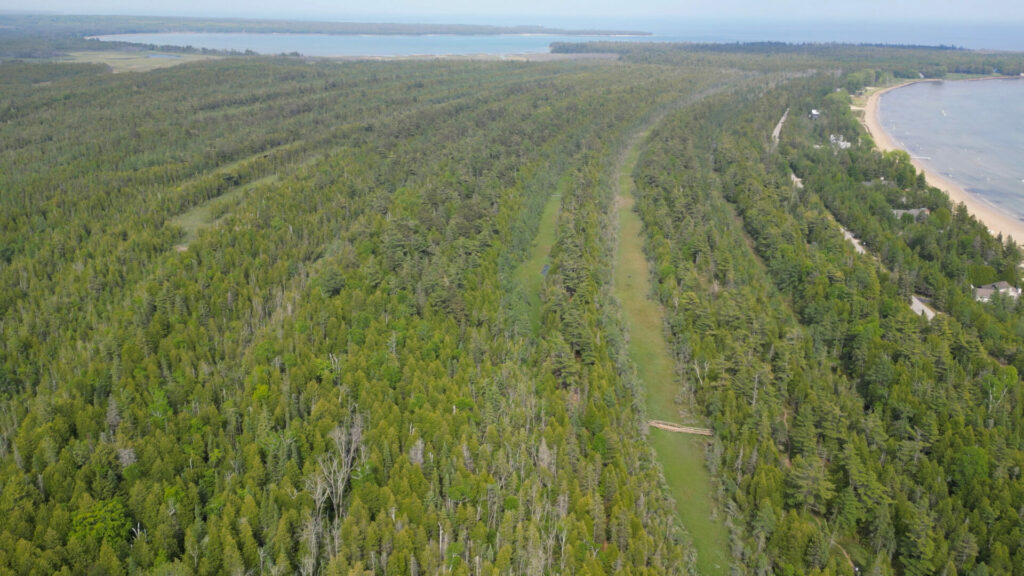
A drone photo of a ridge and swale ecosystem from above, showing parallel strips of forest and wetland next to Lake Michigan.

In ridge and swale ecosystems, forested ridges and marshy wetlands run in long strips parallel to the shore, like here at the Ridges Sanctuary.

 “What we’re interested in is how the Great Lakes and the changing water levels within the Great Lakes affect the ridge and swale ecosystems,” said Loheide. “There’s a tight connection between the surface water, the Great Lakes, and then the groundwater, which is underneath the subsurface but is feeding the wetlands and feeding the forests in these systems.”

Scientists have known for some time that water levels fluctuate in all five Great Lakes. Historically they change not just annually but over several decades with the record high being more than 6 feet higher than the record low. For Loheide, what he and his fellow researchers are most interested in are more recent water level changes.

“On short, seasonal scales, you might have a foot of variability from high water levels in one year to low water levels in that same year,” explained Loheide. “But when you look at it at a longer time frame, we see that there are cycles. For instance, in the early 2000s through about 2012-2013, we were in a low water state. That whole time, there were still ups and downs every year, but we were at low water levels, and then we went from near record lows then to record highs in 2017, 2018, and 2019. That really quick swing is something that we’re interested in.

“There’s always been a lot of variability, but we’re seeing what seems to be sometimes faster changes from low water level conditions to high water conditions, so more extremes.  And we’re actually going through the same thing right now,” said Loheide. “The high-water levels of 4-6 years ago are now dropping to below average water levels on Lake Michigan.”

Those faster water level changes could have greater impact on coastal ecosystems, and that’s where Loheide’s team has zeroed in their research efforts.

“Even since last year, lake levels have gone down about 10 inches. What does that mean for the groundwater system? Are we draining water out of the groundwater system? How much change in storage is there of our groundwater resource, and how does that affect other hydrologic and ecological processes?”
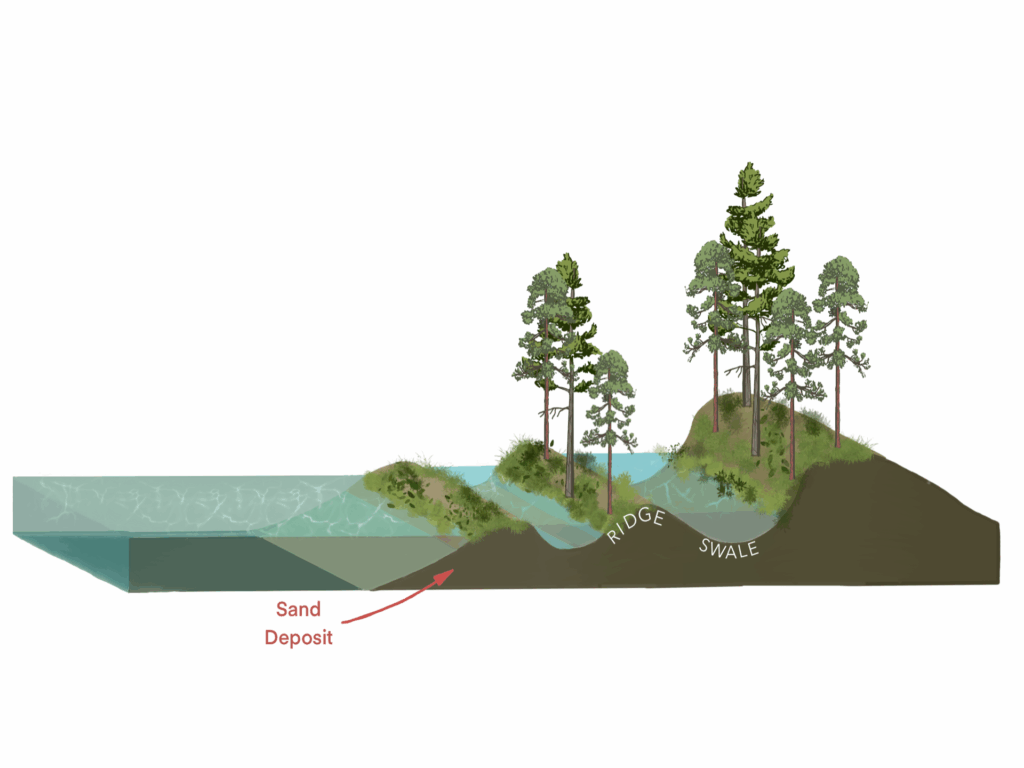
An illustrated cross-section graphic shows how the water from a lake merges with groundwater to form swales between ridges.

Great Lakes water levels impact the groundwater levels within ridge and swale ecosystems, as seen here in a cross-section created by Lucie Carignan.

Not just water and systems may be impacted, Loheide added.  “We’ve been studying trees and groundwater in Wisconsin for over a decade now, and we’ve been surprised by some of the things we’ve learned, that groundwater is used by trees. Even in a wet climate like Wisconsin where we get a lot of rain, we’re seeing that trees, particularly if they’re in sandy soils that drain really quickly, do depend on shallow groundwater, and if they have access to shallow groundwater, they do better.”

Given we know Great Lake levels fluctuate and those levels are connected to our coastal ecosystems, the team is looking at the Ridges and those funky swales lining the landscape to help them sketch out the rest of the story. “Our interest in the swales is knowing that we have lake levels that are driving changes in groundwater levels, how does that affect the ecosystem?” Loheide noted.  “How does that affect tree growth? How does that affect whether the forest might be vulnerable to either drought conditions where there’s limited water availability and the trees don’t have access to shallow groundwater, versus what happens during really high lake stages, and you end up with the roots of the plants being saturated, having low oxygen availability that can be fatal to the trees?”

The team has developed an ecohydrological observatory at The Ridges, which besides the cool name is also a great way to continuously monitor groundwater levels and changes that occur daily as the trees start to use water, from when the sun rises higher in the sky and exerts its considerable influence on the flora to when things start to shut down in the evening.

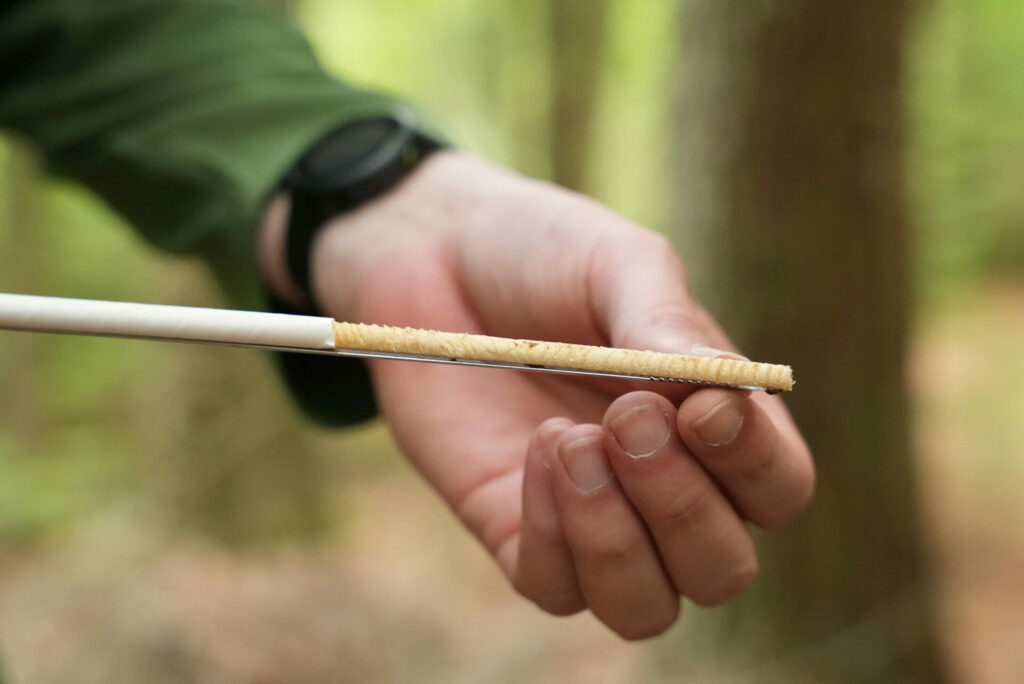
Loheide’s team, however, is looking beyond daily data. “We’re really hoping to leverage long-term data sets, and that’s coming from the trees themselves. If we core the trees, we can see variability in the annual growth. When conditions are good, when you’re getting the right amount of rain, when groundwater’s at the right level, we see larger growth rings. But, we see narrow growth rings during dry years or years where groundwater is not available, or even when groundwater’s too shallow,” said Loheide. “So that gives us an opportunity to not just have the data we collect during this two-year project, but to have a record that extends over a hundred years with some of these older trees.”
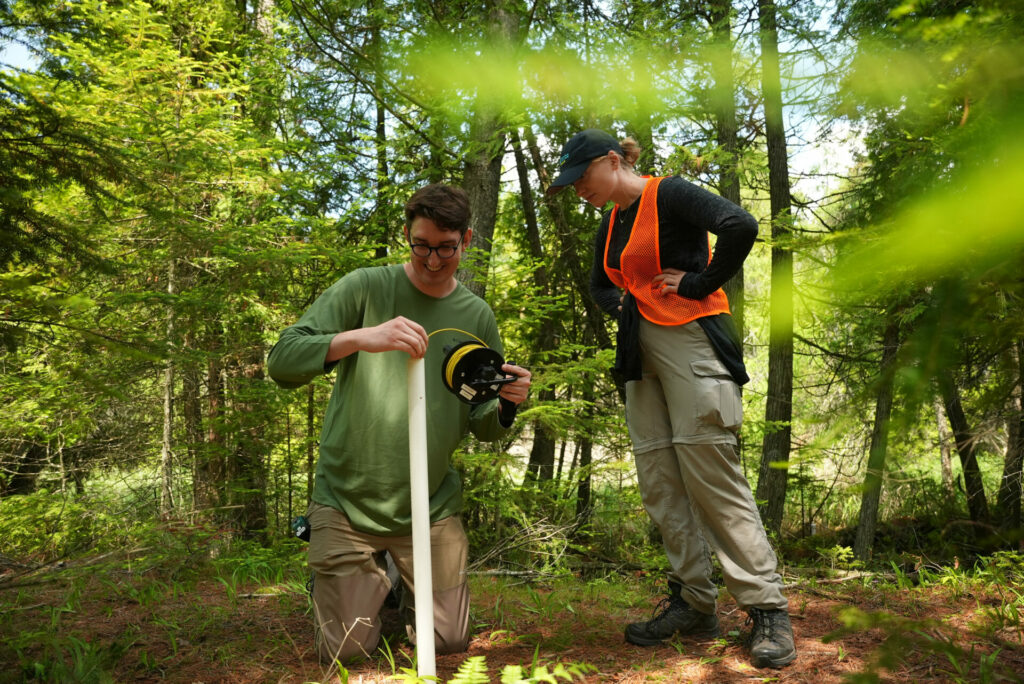
Graduate student Eric Kastelic and undergraduate researcher Lucie Carignan check in on a groundwater monitoring well that they installed at the Ridges Sanctuary, which gives them groundwater level measurements multiple times every hour.
Graduate student Eric Kastelic and undergraduate researcher Lucie Carignan check in on a groundwater monitoring well that they installed at the Ridges Sanctuary, which gives them groundwater level measurements multiple times every hour.

 
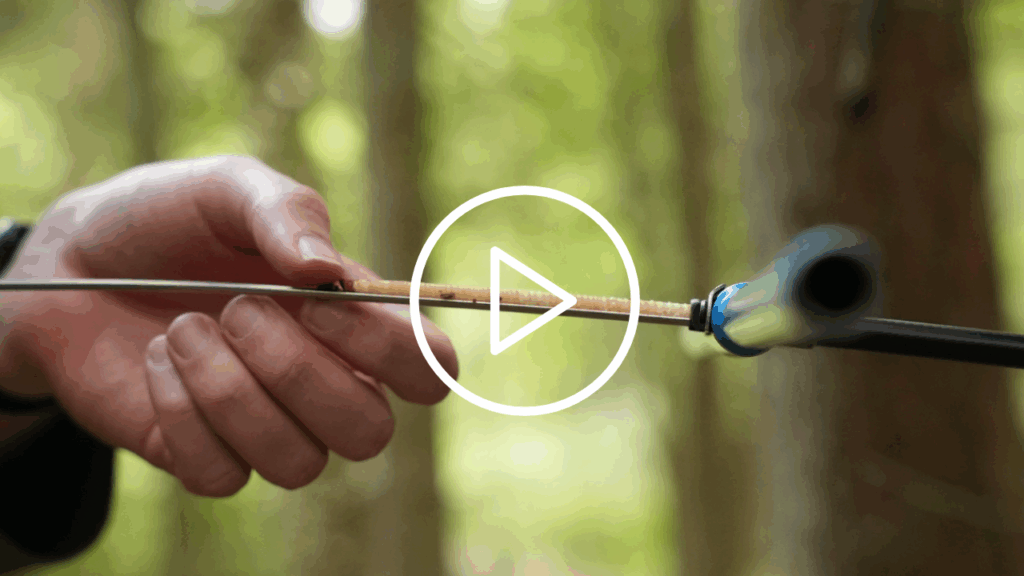
Close up of Eric Kastelic's hand holding a pencil-sized tree core.

By taking tree cores of red and white pine trees, the research team can analyze tree growth patterns going back almost 150 years.

The two-year project window Loheide references comes from funding through the Aquatic Science Center’s Water Resources Institute. Additional work was done by Joe Binzley (Hilldale Undergraduate Researcher 2025, UW-Madison) and collaborators from the Ridges Sanctuary, UW-Platteville TREES Lab, and the Wisconsin Department of Natural Resources. 

Loheide said that the findings his team develops could be used to better understand how extreme changes in water levels impact groundwater and flora not only at the Ridges but also for other areas throughout the Great Lakes.  

“We’re hopeful that we can use remote sensing tools to try to compare other sites, and if satellite data can show us how transpiration or water use might be changing,” Loheide said. “There are new satellites out there that are at fine scale that we might actually be able to see and map out the spatial variability within ridge and swale wetlands, and then also compare among them what the response is. 

“We’re excited about what the future holds.” 

The post The Swale Tale first appeared on Wisconsin Sea Grant.

Original Article

News Releases | Wisconsin Sea Grant

News Releases | Wisconsin Sea Grant

https://www.seagrant.wisc.edu/news/the-swale-tale/
Andrew Savagian

Image by David Nevala

July 1, 2024
By Moira Harrington

Wisconsin has about 1.2 million billion gallons of water underground. If it were above ground, it would submerge the state in 100 feet of water. Simply because there is a lot of groundwater, however, does not mean that volume keeps it immune for challenges related to quantity and quality.

After a rigorous review, the University of Wisconsin Water Resources Institute selected two projects out of 15 that were submitted in a competition held last year. Those new projects got underway on July 1.

“We are so grateful to all of the researchers who submitted proposals to address Wisconsin groundwater challenges. Understanding problems is the first step in finding solutions, and we wish that we could have funded all of the submissions,” said Jennifer Hauxwell, WRI’s director of research. “The projects that we selected for funding this year will go a long way in understanding how surface waters and groundwater are connected as well as how geology interacts with groundwater and contaminants.”

Hauxwell shared these details:

  • Steve Loheide is the lead researcher on a project that will quantify the impact of changing Great Lakes water levels on groundwater storage and flow patterns, lake-groundwater interactions, evapotranspiration and forest productivity to better understand how certain areas can vary in their sensitivity to Lake Michigan’s dynamic water levels. The work will focus in Door County, where ridge and swale topographical features create an ecosystem supporting a diverse plant community. Loheide is in the Department of Civil and Environmental Engineering at UW-Madison. His co-investigators are geology professor Evan Larson from UW-Platteville and UW-Madison graduate Dominick Ciruzzi, now in the geology department at William and Mary.
  • In the second project, Matt Ginder-Vogel will explore the potential for release and transport of iron and manganese from rock within an aquifer underlying Cottage Grove, a village in Dane County. The site has been contaminated by a hydrocarbon spill. The spill could have triggered a release of the naturally occurring chemicals that compromise groundwater quality. Ginder-Vogel, a UW-Madison professor in environmental biogeochemistry water at UW-Madison.
The post 1.2 million billion gallons of groundwater will meet WRI science through new projects first appeared on WRI.

Original Article

News Release | WRI

News Release | WRI

https://www.wri.wisc.edu/news/1-2-million-billion-gallons-of-groundwater-will-meet-wri-science-through-new-projects/

Marie Zhuikov

The University of Wisconsin Water Resources Institute recently provided funds for three new projects that will conclude at the end of June 2025:

Risk From Pathogens and Exposure to Antibiotic Resistance Genes in Private Wells in Southwest Wisconsin, led by Maureen Muldoon at the University of Wisconsin-Madison

Here’s things that are true about the southwestern Wisconsin counties of Lafayette, Grant and Iowa: they are predominantly rural, people living there mostly get their drinking water from private wells and the water sources lie under fractured rock, which means septic systems and agricultural practices can more easily contaminate the water supply. This research team has recent findings of viral, bacterial and protozoan pathogens in 66 of the 138 private wells in the area, but the health risk associated with this contamination is unknown. That’s in keeping with the broader lack of knowledge about the health risk associated with private well water. This project has three objectives 1) quantify the health risk associated with 10 pathogens detected in wells 2) evaluate well construction and geologic factors for pathogen contamination and 3) assess antibiotic resistance genes co-occurrence with human and livestock fecal contamination.

An Experimental Investigation on the Leaching of Per- and Polyfluoroalkyl Substances (PFAS) From Contaminated Soil, led by Shangping Xu at the University of Wisconsin-Milwaukee

The majority of people in Wisconsin get their drinking water from groundwater. This project will attempt to build an understanding of how what are known as “forever chemicals,” per- and polyfluoroalkyl substances (PFAS), might move through soil and into groundwater drinking water sources. The research team will collect soil core samples from several Wisconsin location, including samples based on factors like soil type, properties and PFAS contamination history. They will apply collected rainwater to the soil cores at rates simulating natural conditions. The rainwater flow patterns will be monitored, and leachate will be collected to measure its volume and its PFAS concentrations. If different transport behavior of PFAS within soil cores collected from different sites is observed, the comparison of the soil physicochemical properties and hydrological patterns will provide clues to the key factors that control PFAS mobility within the vadose zone (where the land and the aquifer meet). This work may also yield knowledge of “high risk” and currently overlooked PFAS areas.

Long-Term Threat of Geogenic Contaminants to Water Quality and Quantity in the Midwestern Cambrian Ordovician Aquifer System, led by Matt Ginder-Vogel at the University of Wisconsin-Madison

The Cambrian Ordovician Aquifer System underlies most of Wisconsin. It’s a system with naturally occurring contaminants—uranium, radium, arsenic and manganese. This project seeks to understand the sources and temporal trends of these contaminants because their variations complicate municipal water system management. The research team will identify six study sites, obtain well cuttings and/or core materials from the sites, quantify the presence and prevalence of potential contaminants and then construct models of how the contaminants move in the system. This will help water managers build and manage wells in a way that prevents water users from being exposed to contaminants.

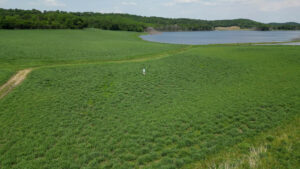
Green field with water in the background.
Wisconsin is rich with surface water. Its groundwater assets are also critical to the economy and people’s health. New groundwater research will serve the state.

Two University of Wisconsin-Madison-based projects kicked off last July and are ongoing with completion targeted for next year:

Aligning the Wisconsin Idea on Water: Interpreting Public Perspectives and Values, led by Michael Cardiff

This project is documenting rural perspectives (attitudes, perception and values) related to groundwater issues, and the variability of these perspectives within the state through “Wisconsin’s Waters Survey”—a community-sourced public survey to be delivered to a range of rural communities. Rural land covers most of the state, overlies the majority of groundwater and the range of issues that may be important to the rural public is vast, from quality concerns such as nitrate and microbial contamination, to quantity concerns that include agricultural irrigation needs and impacts of groundwater to springs and streamflows.

Biomanipulation of Groundwater Flooding, led by Steve Loheide

This project is examining the causes of groundwater flooding, which leads to the loss of farmland and permanent inundation of homes. Such flooding can happen when extremely flat, internally or poorly drained landscapes get hit with a quantity of rain that doesn’t otherwise drain away, infiltrate the soil without flooding or dissipate through the atmosphere. The research team is examining Dane and Columbia counties’ flood records from the 1930s to the present to identify flood causes and how such factors may have changed through time.


The post Water Research Projects Announced first appeared on WRI.

Original Article

News Release | WRI

News Release | WRI

https://www.wri.wisc.edu/news/water-research-projects-announced/

Moira Harrington

It’s summer in Wisconsin and with boating, beachgoing and fishing a lot of attention is being given to surface water, which is a true treasure in this state. Another treasure isn’t visible but is just as valuable—groundwater. Wisconsin has an estimated 1.2 quadrillion gallons of groundwater, from which two-thirds of the state’s 5.6 million residents draw drinking water. The University of Wisconsin Water Resources Institute (WRI) is funding two new groundwater-focused projects. The two-year projects got underway July 1.

Both projects are based at the University of Wisconsin-Madison. The Department of Geoscience’s Professor Michael Cardiff is leading the first. It will document rural perspectives (attitudes, perception and values) related to groundwater issues, and the variability of these perspectives within the state. This project will implement the “Wisconsin’s Waters Survey”—a community-sourced public survey to be delivered to a range of rural communities.

As Cardiff noted in the project proposal, rural land covers most of the state, overlies the majority of groundwater and “the range of issues that may be important to the rural public is vast, from quality concerns such as nitrate and microbial contamination, to quantity concerns that include agricultural irrigation needs and impacts of groundwater to springs and streamflows.” Despite those factors, he said, there have been few efforts to document rural perspectives.

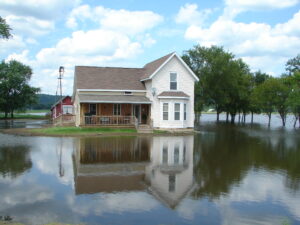
The second project will examine the causes of groundwater flooding, which leads to the loss of farmland and permanent inundation of homes. Such flooding can happen when extremely flat, internally or poorly drained landscapes get hit with a quantity of rain that doesn’t otherwise drain away, infiltrate the soil without flooding or dissipate through the atmosphere.

House standing in wate
An example in southern Wisconsin of groundwater flooding that happened in 2008. Photo by Madeline Gotkowitz

Steve Loheide and co-investigator Ken Potter, both with the Department of Civil and Environmental Engineering, will track flood records in Dane and Columbia counties from 1936 to 2022, identify what primarily caused such flooding and how those factors have changed through time and investigate whether methods such as strategic tree planting can build flood resilience.


The post Two new research projects about Wisconsin’s groundwater announced first appeared on WRI.

Original Article

News Release | WRI

News Release | WRI

https://www.wri.wisc.edu/news/two-new-research-projects-about-wisconsins-groundwater-announced/?utm_source=rss&utm_medium=rss&utm_campaign=two-new-research-projects-about-wisconsins-groundwater-announced

Moira Harrington

In a concise and informative video released today, Wisconsin Sea Grant presents the science behind the effectiveness of green infrastructure—rain gardens or green roofs, for instance. Green infrastructure can turn down the heat and improve water quality and habitat by absorbing heavy rainfall and diverting it from a sewer system. The question is, what combination of curbside gardens, verdant roofs—or other approaches—packs the most punch.

The video explores the interplay between widespread green infrastructure, urban heat islands and rainfall. “You get this heat bubble around cities and that has some health consequences for people living in the cities,” said Steve Loheide, University of Wisconsin-Madison professor of civil and environmental engineering. “It also affects the weather around the cities.”

In Milwaukee, for example, storms typically come from the west and hit the city where the temperature is warmed by lots of pavement and asphalt roofs. Then, that stormy warm air rises. What rushes into the void left by the warm air is water-laden air from over Lake Michigan, known as an urban sea breeze. This, said Dan Wright, “Turns it (the city) into a hotspot for thunderstorms that tend to cause urban flash flooding.” Wright is also a civil and environmental engineering professor on the Madison campus.

Loheide, Wright and other research team members Wisconsin Department of Natural Resources Water Resources Science Policy Fellow Carolyn Voter and UW-Madison Ph.D. student Aaron Alexander are using models to gauge how a suite of one of the nation’s most ambitious green infrastructure plans, with numerous greening goals, might affect temperature and precipitation.

The Milwaukee Metropolitan Sewerage District (MMSD) and city of Milwaukee plan to increase tree canopy, depave parking lots and schoolyards, and install green roofs, rain gardens and porous pavement.

Porous pavement in Milwaukee captures rainwater for infiltration versus running into surface waters or as untreated water into the sewer system. Photo by: Kevin Miyazaki.

Sea Grant Videographer Bonnie Willison spoke to the researchers over Zoom and toured Milwaukee’s green infrastructure sites with MMSD’s Bre Plier. “After hearing so much about the considerable benefits green infrastructure can bring to a city, it was great to be able to visit and get footage of these sites,” Willison said.

 Her favorite quote from all the conversations was an uplifting one from Voter, who said, “I really like this project because it feels very hopeful to me. It feels like we’re not just thinking, “Well, what’s going to happen when we have heavy rainfall.’ We’re thinking, ‘Can we change this? Can we take matters into our own hands and reduce our risk.’ ”

The post New video explores greening of Milwaukee to combat heat island and flooding first appeared on Wisconsin Sea Grant.

Original Article

News Releases – Wisconsin Sea Grant

News Releases – Wisconsin Sea Grant

https://www.seagrant.wisc.edu/news/new-video-explores-greening-of-milwaukee-to-combat-heat-island-and-flooding/

Moira Harrington