Great Lakes, Great Read logo showing a book with a waveIn partnership with library associations, education groups, Sea Grant programs, and universities throughout the eight Great Lakes states and two Canadian provinces, the Wisconsin Water Library and Wisconsin Sea Grant, along with the Library of the Great Lakes, are excited to announce the books selected for the 2026 basin-wide shared-reading experience, Great Lakes, Great Read.

Great Lakes, Great Read is based on the One Book, One Community model where reading programs choose one book for libraries, community groups, and the public to read and enjoy together over the course of a year.

“It is incredibly exciting to launch the second year of a community read about the Great Lakes, especially as it gives us an opportunity to celebrate this beautiful watershed through literature. I can’t wait for readers to sit down with the three chosen titles and learn about the rich history and science of the Great Lakes,” said Anne Moser, director of the Wisconsin Water Library.

The titles for the 2026 Great Lakes, Great Read are:

  • “Sport – Ship Dog of the Great Lakes” by Pamela Cameron
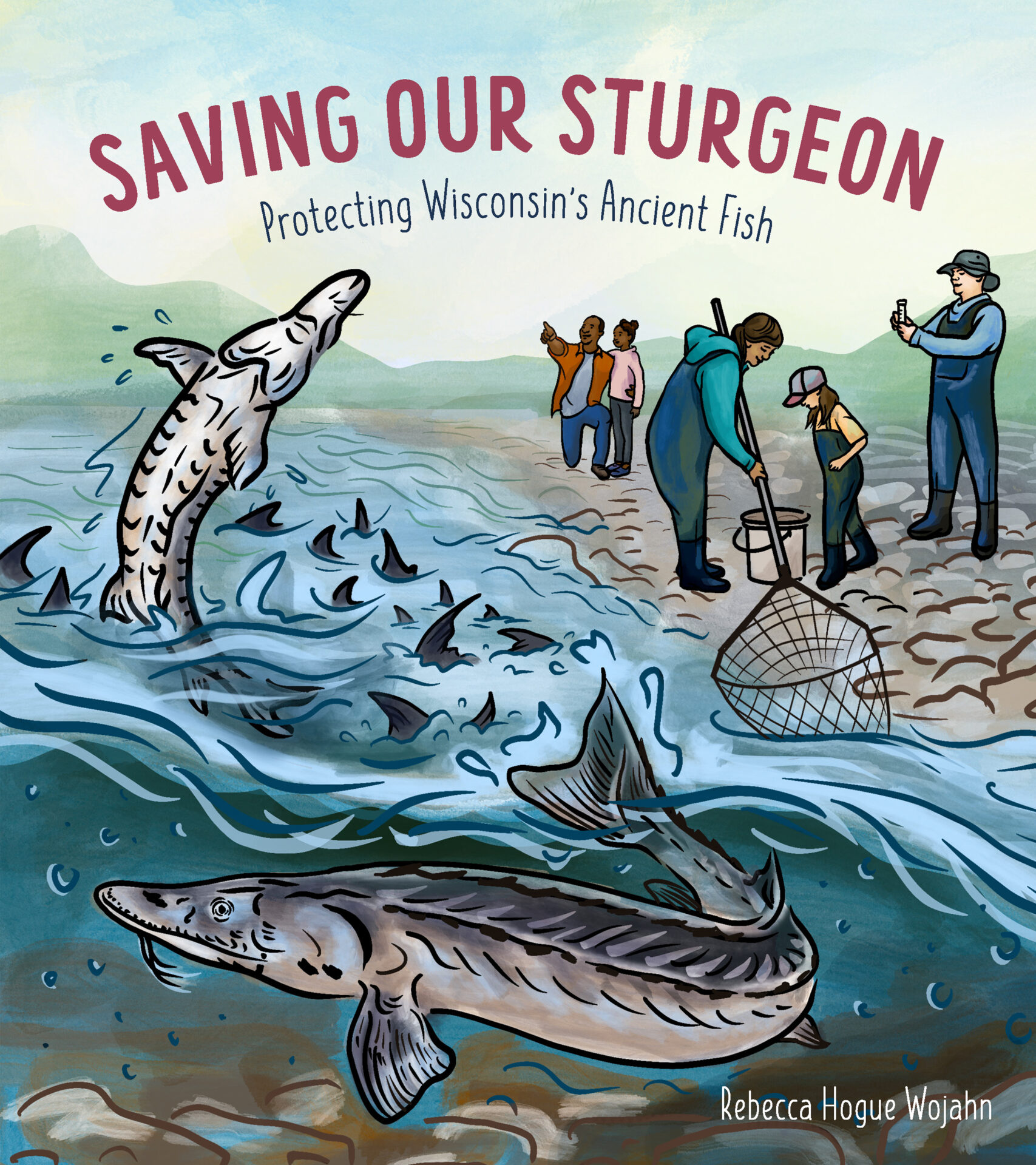
  • “Saving Our Sturgeon: Protecting Wisconsin’s Ancient Fish” by Rebecca Hogue Wojahn
  • “The Gales of November: The Untold Story of the Edmund Fitzgerald” by John U. Bacon

The picture book selection, “SPORT – Ship Dog of the Great Lakes,” by Pamela Cameron is the true story of a puppy rescued during a storm by a sailor working on a Great Lakes tender (a boat that brings supplies to the various lighthouse keepers in the lakes). A delightful tale with wonderful illustrations, Cameron introduces us to Sport and his human companions as they deliver essentials to keep the lights on and ships safe in Lake Michigan.

The middle grade selection is “SAVING OUR STURGEON: Protecting Wisconsin’s Ancient Fish.” Author Rebecca Hogue Wojahn introduces readers to a very peculiar fish and the successful efforts that led to its continuing survival. Concerted efforts by children, indigenous communities, community scientists, and government organizations contributed to the return of the threatened species. With terrific illustrations and maps, we can all learn from this book.

John U. Bacon’s latest New York Times bestseller, “THE GALES OF NOVEMBER: The Untold Story of the Edmund Fitzgerald,” is our adult selection and is the definitive account of America’s most haunting maritime disaster. Bacon also provides a fascinating look at the history of Great Lakes shipping, the sailors and their families who dedicated their lives to the lakes, based on more than 100 interviews with the families, friends, and former crewmates of those lost. 

“It is a great honor to have my book picked by the Library of the Great Lakes as one of its Great Lakes, Great Read selection — a wonderful way to reach those who love the Great Lakes as I do,” Bacon said.

The Great Lakes, Great Read website offers further details on the authors, their books, a toolkit, and other resources. Look for future announcements of region-wide webinars with each of the authors.

Several organizations, including the Library of the Great Lakes, the Gail Borden Public Library, Saginaw District Library, Swim Drink Fish, Biinaagami Project, Great Lakes Odyssey, and the Wisconsin Water Library at the University of Wisconsin–Madison, partnered in 2024 to create and carry out the Great Lakes, Great Read program. In-kind support was provided by the staff with the Wisconsin Water Library and Wisconsin Sea Grant and by the Wisconsin Library Association.

For more information, contact Anne Moser at akmoser@aqua.wisc.edu.

***

The University of Wisconsin Aquatic Sciences Center administers Wisconsin Sea Grant, the Wisconsin Water Resources Institute, and Water@UW–Madison. The center supports multidisciplinary research, education, and outreach for the protection and sustainable use of Wisconsin’s water resources. Wisconsin Sea Grant is one of 34 Sea Grant programs supported by the National Oceanic and Atmospheric Administration in coastal and Great Lakes states that encourage the wise stewardship of marine resources through research, education, outreach, and technology transfer.

The post Great Lakes, Great Read program announces 2026 book selections first appeared on Wisconsin Sea Grant.
Original Article

News Releases | Wisconsin Sea Grant

News Releases | Wisconsin Sea Grant

https://www.seagrant.wisc.edu/news/great-lakes-great-read-program-announces-2026-book-selections/
Wisconsin Sea Grant


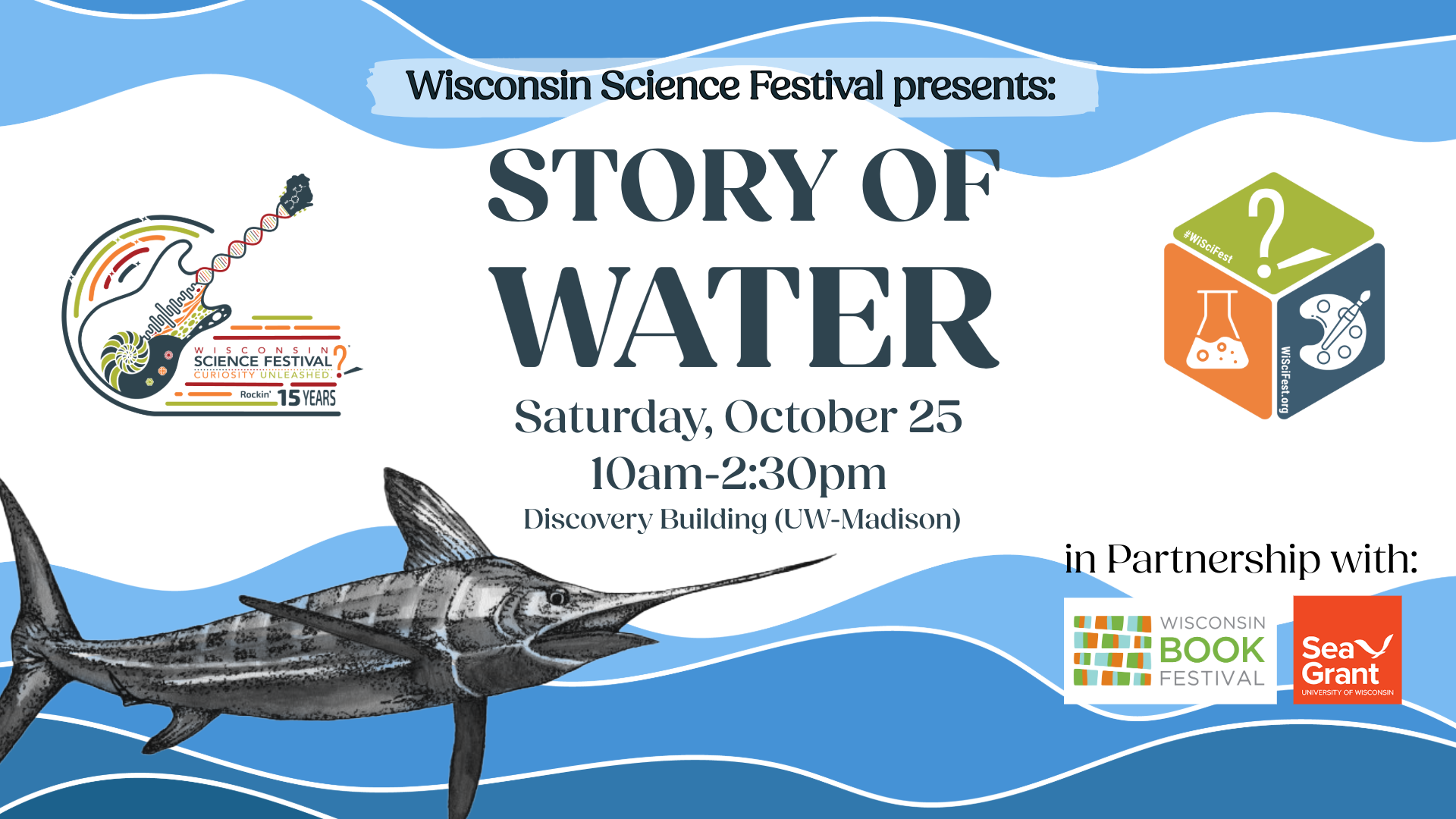
Banner image announcing the Story of Water event on Saturday October 25, 2025 at the Wisconsin Science Festival

On Saturday, Oct. 25, young readers and families can get up close and personal with Wisconsin’s iconic big fish, the lake sturgeon, at the 15th annual Wisconsin Science Festival.

From 10 a.m. to noon, Wisconsin Sea Grant and other University of Wisconsin–Madison staff will be leading hands-on activities for kids at the Story of Water mini-expo on the UW–Madison campus. Education coordinator Anne Moser will be displaying a variety of sturgeon items — including a five-foot stuffed foam fish — and fisheries specialist Titus Seilheimer will dissect a juvenile sturgeon. Kids and families can also explore booths about microplastics, science video games, Great Lakes shipwrecks, a wave tank, and more.

At noon, Moser will moderate a discussion of the newly released children’s book, “Saving our Sturgeon: Protecting Wisconsin’s Ancient Fish,” by Becky Wojahn. Moser served as a consultant on the book and has been teaching kids about sturgeon and other Great Lakes fish for many years at libraries across the state.

The book talk, which is presented in partnership with the Wisconsin Book Festival, will also feature local author Joe E. Meisel. His book, “The Marlin’s Fiery Eye and Other Tales from the Extraordinary World of Marine Fishes,” takes readers to the ocean to explore the wonders of saltwater fishes. The discussion will dive into both marine and freshwater environments and highlight the importance of protecting and celebrating fish.

“I’m looking forward to talking with both authors about writing nonfiction works and the importance of understanding and appreciating our natural world,” said Moser.

The Wisconsin Science Festival runs from October 16-26 and is a statewide celebration of science, technology, engineering, art, and math with activities for people of all ages, backgrounds, and interests throughout the state.

***

The University of Wisconsin Aquatic Sciences Center administers Wisconsin Sea Grant, the Wisconsin Water Resources Institute, and Water@UW. The center supports multidisciplinary research, education, and outreach for the protection and sustainable use of Wisconsin’s water resources. Wisconsin Sea Grant is one of 34 Sea Grant programs supported by the National Oceanic and Atmospheric Administration in coastal and Great Lakes states that encourage the wise stewardship of marine resources through research, education, outreach, and technology transfer.

The post ‘Story of Water’ spotlights sturgeon at Wisconsin Science Festival first appeared on Wisconsin Sea Grant.

Original Article

News Releases | Wisconsin Sea Grant

News Releases | Wisconsin Sea Grant

https://www.seagrant.wisc.edu/news/story-of-water-spotlights-sturgeon-at-wisconsin-science-festival/

Jenna Mertz

Cover of Saving our Sturgeon showing an illustration of big fish jumping out a river

“Saving our Sturgeon” teaches young readers about Wisconsin’s iconic big fish. Cover image: Wisconsin Historical Society

Call it a fish story, but author Rebecca Hogue Wojahn’s latest book is absolutely true. 

Set to be released on August 19, “Saving our Sturgeon: Protecting Wisconsin’s Ancient Fish,” tells the story of how conservation efforts rescued lake sturgeon from extinction in Wisconsin. With kid-friendly illustrations, photos, and maps, the book explains how factors like overfishing and dam building threatened sturgeon survival and how people banded together to save — and continue to support — the iconic big fish.

Anne Moser, Wisconsin Sea Grant education coordinator and senior special librarian at the Wisconsin Water Library, served as a consultant on the book. She kickstarted the project by pitching the idea to the Wisconsin Historical Society Press in 2022.

Headshot of author Rebecca Hogue Wojahn

Author Rebecca Hogue Wojahn. Submitted photo.

“For many years, I’ve travelled to libraries and learning centers across the state teaching kids about Great Lakes fish and fishing, and their eyes always light up when I talk about lake sturgeon — how big they are, how they have barbels and scutes and how they can live to be 150 years old,” said Moser. “The conservation story shows kids how they can make a difference, and Rebecca was the perfect writer to bring that story to life.” 

Wojahn, herself a public school librarian, has written several other science and animal-themed books for young readers. And while she didn’t initially know much about sturgeon, she felt drawn to the topic. 

“ It was a really good fit for me because most of my life I’ve lived in Wisconsin, and I love the outdoors,” she said. “It’s history, it’s science, it’s everything I love.”

Wojahn did extensive research to write the book, digging through archives and conducting interviews with biologists, members of the Menominee Indian Tribe of Wisconsin, and volunteers of the Sturgeon Guard who worked to prevent poaching at spawning sites. She also made it a point to experience sturgeon in person and travelled across the state to visit hatcheries, observe spawning and spearing, and release baby sturgeon into Lake Michigan. 

Fisheries outreach specialist Titus Seilheimer fact-checked the book, and of course, Moser was a big help. “Anne, as every librarian will, gave me tons of resources,” said Wojahn. 

One of those resources was “People of the Sturgeon: Wisconsin’s Love Affair with an Ancient Fish,” a book written by former Wisconsin Sea Grant staff members Kathy Kline and Fred Binkowski and sturgeon biologist Ron Bruch. The book, which was written for adults and published in 2009, served as a launching spot for Wojahn, who wrote “Saving our Sturgeon” to be appealing and accessible to readers aged 11 and up. Luckily, knowing what young people read is, quite literally, Wojahn’s day job.

“I’ve always felt that being a school librarian has been a huge secret weapon for my writing because I am interacting with my audience,” she said. “I can tell when their eyes glaze over and when they’re like, ooh!”

Both Wojahn and Moser said the story of the sturgeon is a special one, in part because it’s a rare conservation success story. Returning the lake sturgeon to Wisconsin’s waters took decades of hard work from many dedicated people, and the book shows young people that they, too, can get involved and have an impact.

Wojahn also hopes readers feel a sense of wonder. “There are so many wild creatures that you may not even know about that need their space in our state, too.”

You can purchase the book at the Wisconsin Historical Society’s online store or at your favorite bookstore. 

*

The University of Wisconsin Aquatic Sciences Center administers Wisconsin Sea Grant, the Wisconsin Water Resources Institute, and Water@UW. The center supports multidisciplinary research, education, and outreach for the protection and sustainable use of Wisconsin’s water resources. Wisconsin Sea Grant is one of 34 Sea Grant programs supported by the National Oceanic and Atmospheric Administration in coastal and Great Lakes states that encourage the wise stewardship of marine resources through research, education, outreach, and technology transfer.

The post New children’s book celebrates sturgeon conservation in Wisconsin first appeared on Wisconsin Sea Grant.

Original Article

News Releases | Wisconsin Sea Grant

News Releases | Wisconsin Sea Grant

https://www.seagrant.wisc.edu/news/new-childrens-book-celebrates-sturgeon-conservation-in-wisconsin/

Jenna Mertz