The energy boom is coming for Great Lakes water
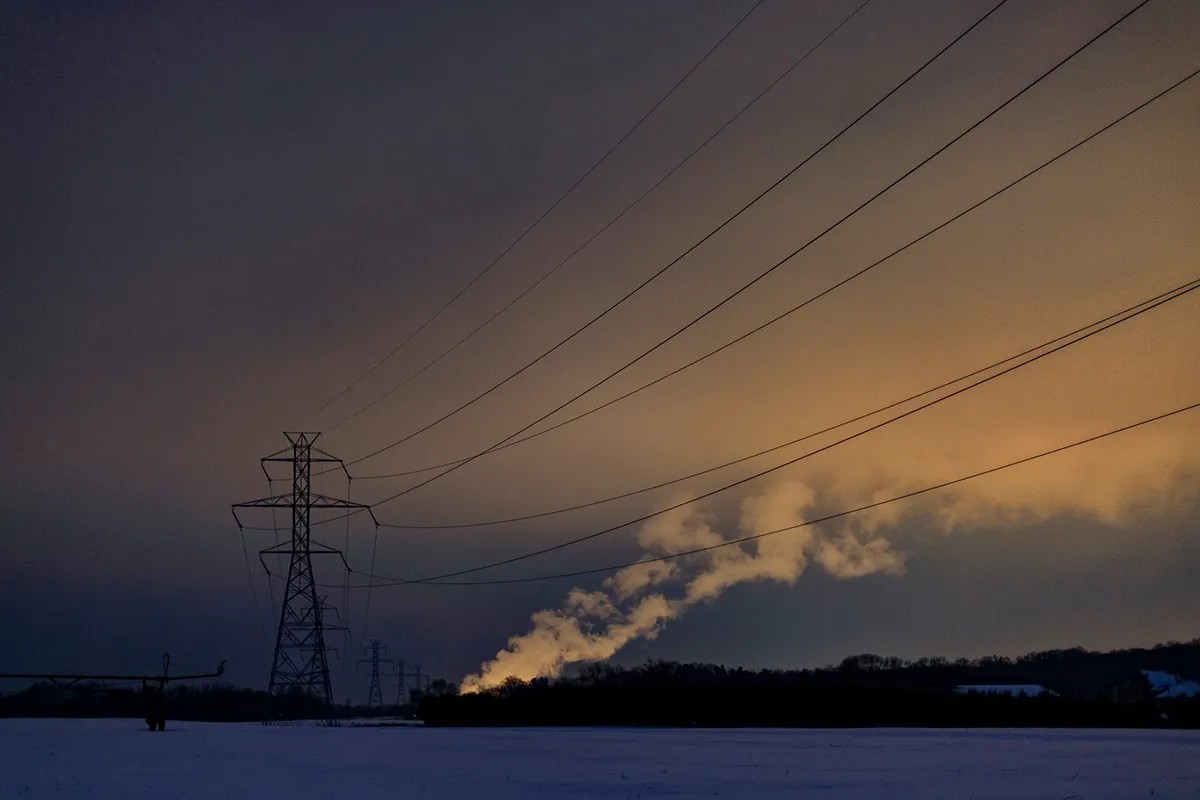
This story is part of a Great Lakes News Collaborative series called Shockwave: Rising energy demand and the future of the Great Lakes. The Great Lakes region is in the midst of a seismic energy shakeup, from skyrocketing data center demand and a nuclear energy boom, to expanding renewables and electrification. In 2026, the Great Lakes News Collaborative will explore how shifting supply and demand affect the region and its waters.
The collaborative’s five newsrooms — Bridge Michigan, Circle of Blue, Great Lakes Now, Michigan Public and The Narwhal — are funded by the Charles Stewart Mott Foundation.
A six-decade history in the Great Lakes region of ecosystem and water protection is being put to the test as a dynamic era of energy investment, rising electricity demand, aging assets, and political intervention dawns across the basin.
The energy story emerging today is one of tumultuous change in energy supply and demand coupled with conflicting state and federal objectives that are colliding with a buzzy economic narrative centered around AI and data centers. Electricity consumption in the basin’s eight states and two provinces is climbing for the first time in at least a decade.
Forecasts show electricity demand in the region growing 2 to 3 percent annually over the next 10 years. The Trump administration, meanwhile, is injecting carbon-promoting policies into energy markets, requiring coal power plants in Michigan and Indiana to continue operating beyond their announced closure dates while also slowing the solar and wind projects, two energy sources that emit no climate-altering carbon and use little to no water.
Along with coal, another water-intensive energy source is being revived or reimagined to satisfy projected electricity demands. With nearly $3 billion in federal and state financing, the 55-year-old Palisades Nuclear Generating Station is preparing to restart after a four-year shutdown. When it does, the old reactor will draw 98,000 gallons a minute, 141 million gallons a day from Lake Michigan.
In addition to these legacy energy sources, new gas-fired power plants, battery storage, transmission lines, and a planned new nuclear plant north of Benton Harbor, Michigan, are being added to keep pace with demand. Agriculture, the region’s biggest water consumer and water polluter, is playing a larger role in energy production – by converting corn into biofuel and producing methane from manure in industrial-scale biodigesters.
Liquid fuels also remain in the spotlight due to the lingering question of Line 5, an oil pipeline that crosses the Straits of Mackinac. The future of the 73-year-old pipeline is the subject of several lawsuits, with key legal and permitting decisions expected in 2026.
This is the first article in our “Shockwave” project, a series of reports that will investigate the rapid evolution of the energy landscape in the Great Lakes region and the consequences the new era will have for one of the world’s largest reserves of fresh water. Produced by the five partners of the Great Lakes News Collaborative — Bridge Michigan, Circle of Blue, Great Lakes Now, Michigan Public, and The Narwhal — Shockwave will document the depth and breadth of the region’s energy transformation and its influence on water use and pollution.
“As electricity demand is soaring, in part due to data centers, we’re seeing changes in water use, we’re seeing changes in electricity consumption,” said Mike Shriberg, director of the University of Michigan Water Center. “And how our region responds to that over the long term will have a massive impact for the Great Lakes and for our energy future.”
Altogether, these changes amount to an inflection point in the region’s energy policy, one with as many questions as answers. Will data center demand and the White House’s lifeline to fossil fuel units jeopardize state clean energy targets? Will the numerous binational, regional, and state-level consultative bodies enable collaboration that reduces harm to waterways? Can local officials, researchers, and lawmakers assemble the data to inform their responses? Will a decade-long decline in the energy sector’s water use continue or stall? Will the projected data center demand for electricity materialize or will the energy buildout result in stranded assets?
What is certain is that the energy playing field today is set up for a different game than just a few years ago. These are still early days, but the region, its $9.3 trillion economy, its border-crossing energy infrastructure, and its world-class environmental riches stand at the threshold of a profound shift in some of its basic economic inputs and assumptions.
Top-Down Orders
The changes begin at the top.
For political, ideological, and grid reliability reasons the Trump administration is adamant on propping up fossil fuels and shepherding a nuclear power revival. It is doing so through executive orders and agency action.
The Department of Energy issued a series of emergency orders to prevent the coal-fired J.H. Campbell Power Plant, in West Olive, Michigan, on the shore of Lake Michigan, from shutting down last year. It issued a separate order in December to prevent the closures of the R.M. Schahfer Generating Station and F.B. Culley Generating Station in Indiana.
In addition, the administration extended the deadline for closing coal waste dumps in Illinois, Indiana, and Ohio, though none is directly within the basin. Though the administration asserts it is “clean,” coal is the dirtiest and among the thirstiest sources of electricity.
The Department of Energy excluded small modular reactors, or SMRs, and other “advanced” nuclear generation technologies from National Environmental Policy Act review. SMR developers promote the new reactors as more mobile and less risky than the older generation of big reactors. SMRs are under development or have been proposed in Ontario, Illinois, Ohio, Michigan, and Wisconsin.
Canada, too, has announced national energy strategies that appear certain to affect Great Lakes waters. Rebuffed and taunted by tariffs imposed by President Trump, Prime Minister Mark Carney told an audience at the World Economic Forum in Davos last month, “We are an energy superpower.” Carney outlined his plan for $1 trillion in fast-tracked Canadian investments in energy, AI, and critical minerals. He also promoted a national infrastructure campaign for oil pipelines, electricity transmission lines, and mines.
Big political announcements are reinforced by facts on the ground. The numbers tell a story of rapid growth in electricity demand that has analysts reaching back decades for a historical equivalent. Some compare it to the push for rural electrification in the United States after the Second World War. Already rising, electricity demand in the Great Lakes region could soar ever higher if high-tech corporate interest in data centers manifests as real-world construction. This comes as NERC, a North American regulatory agency, warns that the Great Lakes region faces high risk of electricity shortfalls in the next five years due to rising demand and power plant retirements.
This represents a head-spinning, era-defining reversal in electrical demand. In Wisconsin, electricity sales had been on a downward slope since the Great Recession began in 2007. By one estimate, data center electricity demand in the state will increase seven-fold by 2030, amounting to more than 4 percent of its electricity consumption. Data center load in northern Illinois has climbed 27 percent annually between 2022 and 2025, according to ComEd, the region’s electric utility.
DTE Energy, the largest Michigan electric utility, announced a deal last fall to provide power to the 1,383-megawatt Green Chile Ventures data center in Washtenaw County. The Michigan Public Service Commission conditionally approved the state’s first “hyperscale” development in December.
Consumers, the second largest electric provider in Michigan, has 9,000 megawatts of projects in its development pipeline, mostly for data centers and manufacturing.
Meta, the parent company of Facebook, announced a 20-year deal with Vistra last month to buy 2,100 megawatts from three nuclear plants while also expanding the generating capacity at those facilities. The agreement covers Perry and Davis-Besse, both located along Lake Erie in Ohio, as well as Beaver Valley, in Pennsylvania along the Ohio River. Meta also signed an agreement with California-based Oklo Inc. to build a 1,200-megawatt SMR plant in Ohio.
The rise in electricity demand could pose a challenge to state renewable energy goals. Illinois has a target of 100 percent clean energy by 2050. For Michigan’s electric utilities, the deadline is sooner: 100 percent clean energy by 2040.
That shift to renewables and the closure of water-intensive coal plants has been a net benefit for Great Lakes water so far. Water is drawn from lakes and rivers to cool the equipment at thermoelectric power stations, a category that includes fossil fuels and nuclear. Water withdrawals in the basin for thermoelectric power are down 24 percent compared to a decade ago, according to a University of Michigan report prepared for the Conference of Great Lakes St. Lawrence Governors and Premiers. That decline is true for power plants that use once-through cooling as well as for those that have recirculating systems that reduce withdrawals but increase consumption.
There are “substantial water savings as the region transitions away from traditional fossil fuels,” the report found. Besides water demand, the shift away from thermoelectric plants means fewer fish sucked into cooling-water pipes or trapped against their screens. It means less thermal pollution of nearshore waters and rivers. It means less mercury deposited into waterways from coal plant air emissions.
The downward trend could shift upwards this year when the Palisades nuclear plant is scheduled to open, and may tilt higher as another shuttered nuclear plant in Wisconsin could reopen and new SMR plants come online. For data centers, the largest piece of their water use is not in direct operations. It is through the electricity they consume.
Years ago, the Great Lakes Commission, which represents the eight basin states and two Canadian provinces, was thinking about the same questions of water supply. In 2011, the commission published the findings from a multi-year project to identify water quality and quantity vulnerabilities in the U.S. portion of the Great Lakes basin due to thermoelectric power generation.
The analysis, led by Sandia National Laboratories, considered multiple power generation projections and assessed three energy-related risk factors for the region’s water resources: water quality, thermal pollution of waterways, and low stream flows. It was the first model to consider water resources in future electricity scenarios for the region. A fifth of the basin’s 102 sub-watersheds scored a high risk in at least two categories.
The commission published the analysis, but largely moved on. No follow-up review was completed to determine the project’s effectiveness in shaping policy, said Erika Jensen, the commission’s executive director.
Today with data centers commanding so much attention, the water-energy connection resurfaced. That focus is partly due to growing public pushback against data center growth. Lawmakers in Indiana, Michigan, and Minnesota have introduced legislation to mandate more transparency from data center operators on their water and energy use.
At its meeting last October, the Great Lakes Commission signaled its reengagement when the commissioners – largely high-ranking state officials and lawmakers – signed two new resolutions related to energy and water. One resolution encourages water reuse for industry, where appropriate. The other, on the water-energy nexus, asserts the “importance of coordinating and integrating water, energy, and sustainable resource management” in the face of data center development and related industries that are poised to increase energy demand and water use.
The resolutions reaffirmed that energy and water are back on the table at the highest levels, Jensen said. “We’re just getting restarted right now.”
Looking Back, Looking Forward
Electricity is only part of the region’s evolving energy story. Aging legacy assets are also a part of the mix.
The most noteworthy of these older assets is Line 5, the 645-mile oil pipeline that runs from Superior, Wisconsin, to Sarnia, Ontario. Enbridge, the Canadian company that owns the pipeline, wants to drill a tunnel to house the structure so that it does not sit exposed on the lakebed. Michigan officials are seeking to shut down the line. Lawsuits are proceeding in both state and federal courts, with a U.S. Supreme Court hearing later this month to determine the appropriate venue.
The outcome will be a bellwether for energy policy, Shriberg said. “It’s really symbolic and may be determinant of which direction this region and this country is headed on energy and water issues.”
Reliable water and cheap energy are foundational economic pieces. Historically, these resource inputs were the great engines of the Great Lakes economy. Water-intensive industries – tanneries, breweries, pulp mills, manufacturers and the like – were drawn to a region where they could extract water and pump out profits. Nuclear and coal-fired power plants were installed on the shores of Michigan, Ontario, Huron, Superior, and Erie, the source of water to cool their electricity-generating equipment.
Today a different set of businesses has entered the market. The entire sweep of large water users catalyzed by the new energy economy – semiconductors, battery manufacturers – need to be part of the water-use equation, said Alaina Harkness, CEO of Current, a Chicago-based organization focused on water innovation.
“If we had better policy and planning frameworks, this could be a great place to do that relative to some of the water-scarce regions in the rest of the country,” Harkness said. “But again, we’ve got to shift our frameworks, got to look much more at water reuse and these water-energy connections.”
There is indeed opportunity in the new energy landscape, said Liesl Clark, director of climate action engagement at the University of Michigan and the former head of the state environment agency. Not just for a foothold in the 21st century economy, but also for continuing on a low-carbon path and strengthening the policies that ensure the region’s water is not abused in the process.
“How do we make sure we’re doing it in the most protective way possible in the state?” Clark asked.
As the new energy era takes shape, that is a prevailing question not just for Michigan but for the region as a whole.
The post The energy boom is coming for Great Lakes water appeared first on Great Lakes Now.
Great Lakes Now
https://www.greatlakesnow.org/2026/02/12/the-energy-boom-is-coming-for-great-lakes-water/