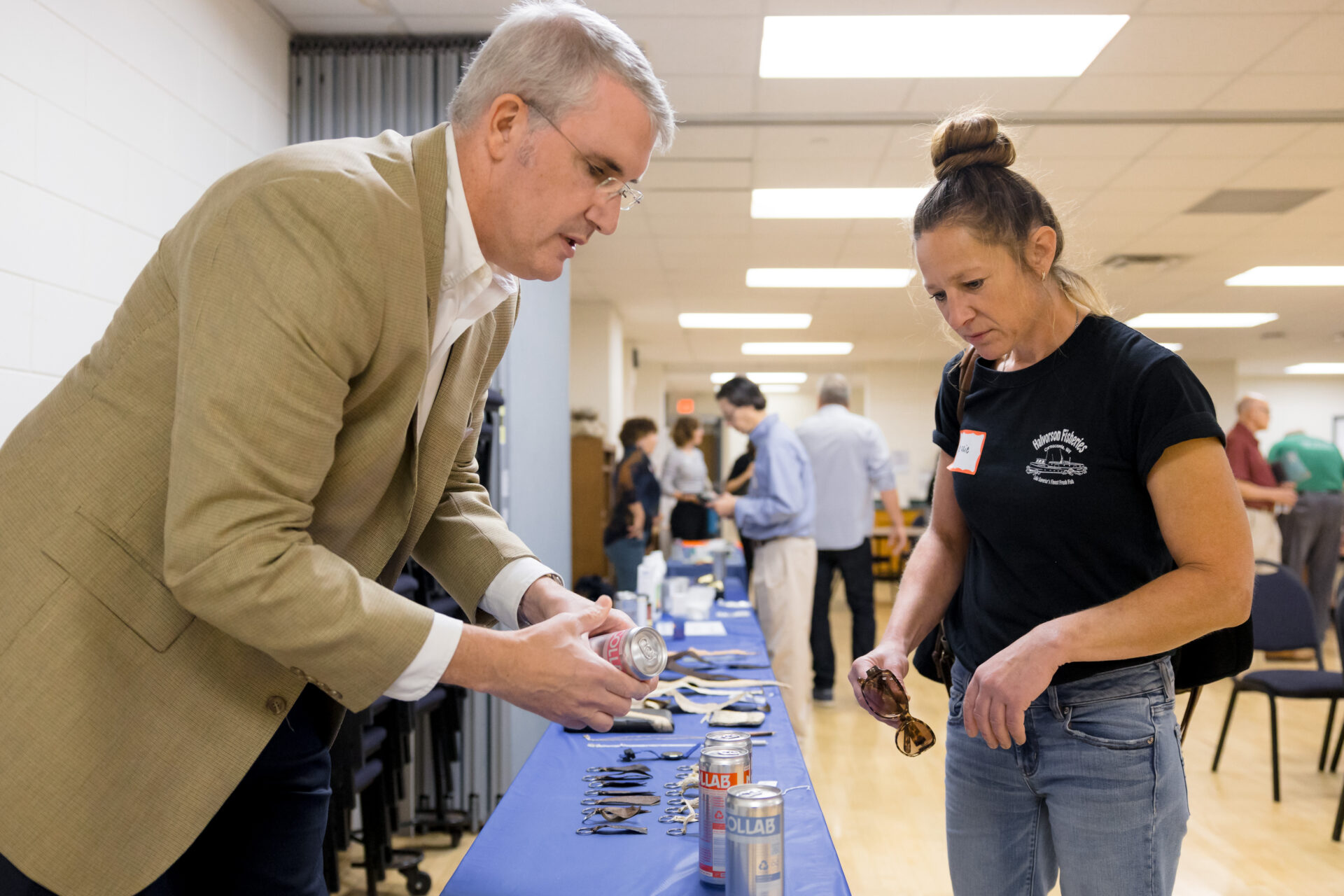
GSGP Executive Director David Naftzger hands a participant an Icelandic energy drink made with fish collagen. Photo: Front Room Studios

GSGP Executive Director David Naftzger hands a participant an Icelandic energy drink made with fish collagen. Photo: Front Room Studios

On Oct.1, the Head to Tail Fish Showcase celebrated Great Lakes fish products — with not a fillet in sight.

The event aimed at elevating awareness of the Great Lakes St. Lawrence Governors & Premiers (GSGP) 100% Great Lakes Fish initiative, a project that seeks to find commercial uses for all parts of harvested Great Lakes fish. Typically, the fillet, which represents only 40% of the fish, is consumed while the remaining 60% is discarded or used in animal feed and fertilizers.

That fish waste, however, can be turned into pharmaceuticals and other high-value products like fish leather and collagen supplements.

“Our goal is to drive more value through the fishery, create more jobs, create rural economy development and really improve the sustainability of our fishery,” said David Naftzger, executive director of GSGP.

Businesses who join the initiative pledge to use 100% of harvested fish by the end of 2025. So far, 30 Great Lakes commercial fishing and aquaculture operations have signed on, 11 of which are from Wisconsin.

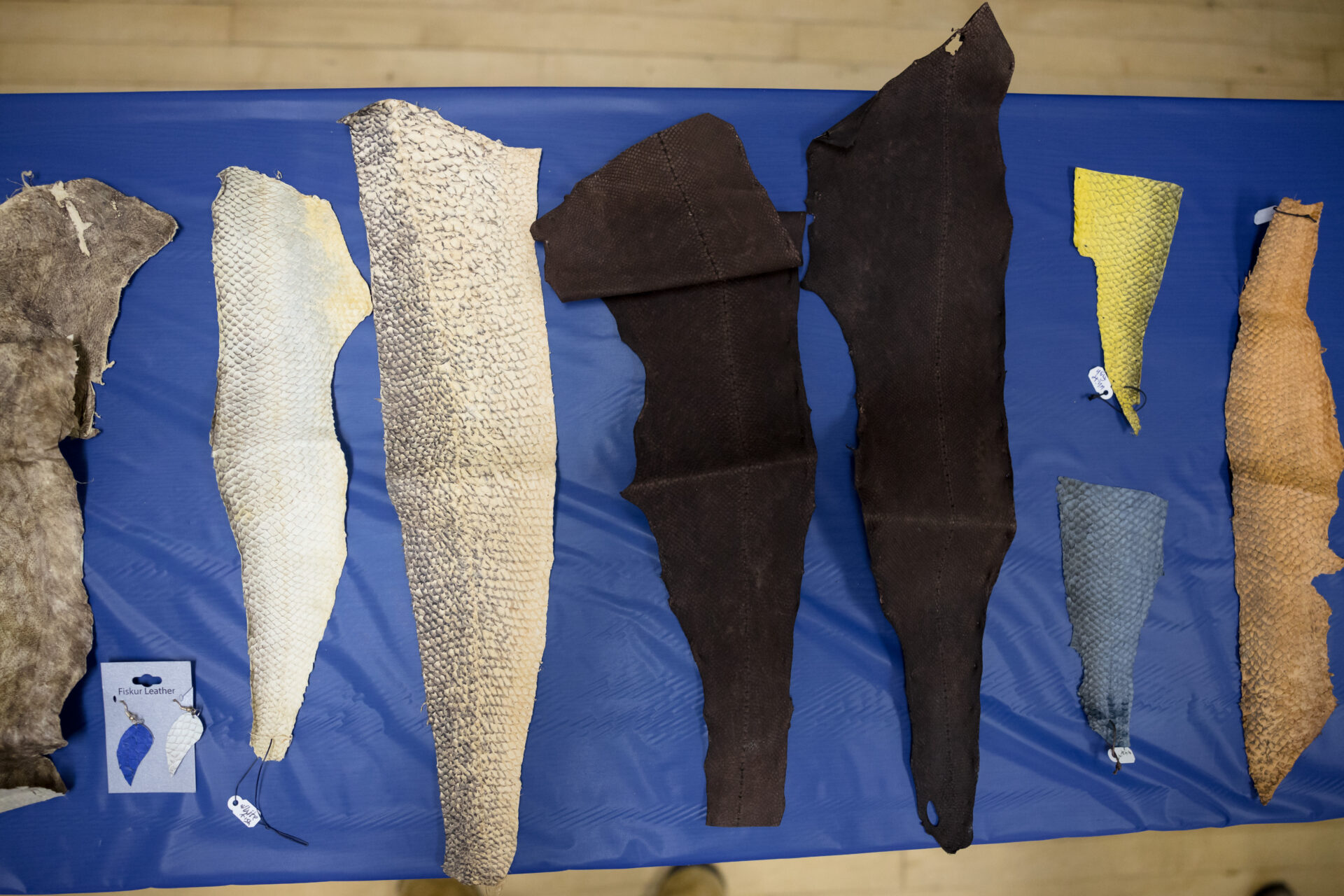
Several long pieces of fish leather

Fish leather was a featured product at the event. Photo: Front Room Studios

“Wisconsin companies have been a real leader and helped to send a message to the rest of the region and to the rest of the fish value chain that there’s raw material available. We want to see it used productively and we want to create some partnerships that can make that happen,” said Naftzger.

The private event was held at the University of Wisconsin-Milwaukee School of Freshwater Sciences for an audience of media and business, academic and government partners. Representatives from UW-Milwaukee, the Wisconsin Economic Development Corporation, Department of Natural Resources and Wisconsin Coastal Management Program offered remarks in support of the program.

Wisconsin Sea Grant helped organize the event. Interim director Christy Remucal said that the initiative aligns well with the program’s focus on sustainable fisheries and aquaculture and commitment to fostering academic, industry and government collaboration.

“I think the 100% Great Lakes Fish Initiative really encapsulates the mission of our work for sustainable resources,” said Remucal. “We’re really proud to be part of this partnership.”

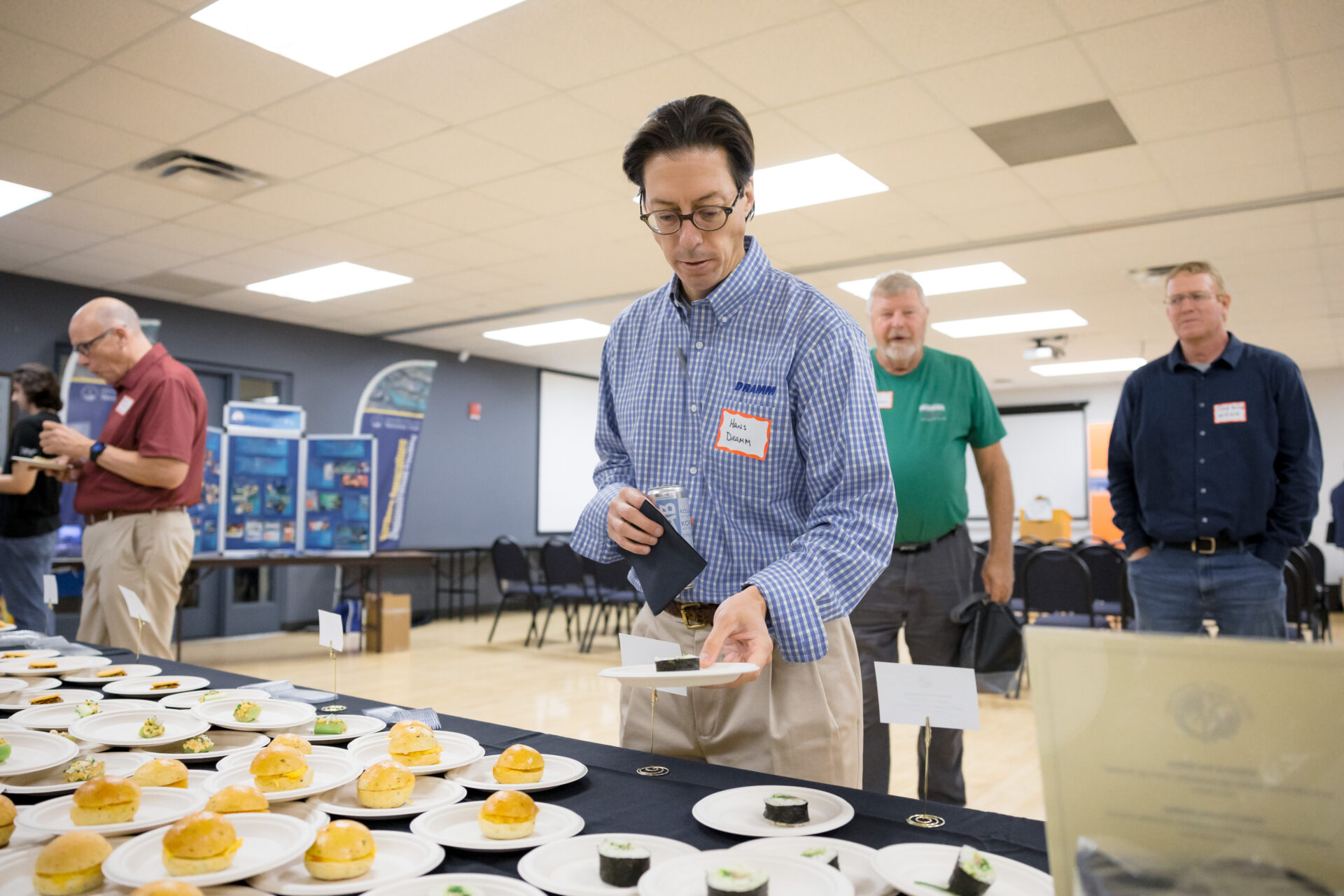
During the event, participants could try a variety of non-filet fish dishes prepared by Third Coast Provisions in Milwaukee, including whitefish roe sliders, pickled herring kimbap, whitefish liver pate, buffalo walleye cheeks and whitefish chili. Restaurant co-owner Cameron Whyte said the team enjoyed finding creative ways to use different parts of the fish.

A participant picks up a small plate of pickled herring kimbap.

A participant picks up a small plate of pickled herring kimbap. Photo: Front Room Studios

“They sent us some really cool products to try, and it was really kind of a fun opportunity for us to flex our culinary muscles and do something a little different,” said Whyte.

The event also featured non-food items, such as locally produced fish leather, fertilizer and dog treats. Several products from Iceland, such as a fish collagen-infused energy drinks and supplements were also on display.

Naftzger explained that the 100% Great Lakes Fish initiative is modeled after Iceland’s efforts to use all parts of harvested cod. According to GSGP, over 90% is now used, and the value of products made from cod has risen from $12 to $4,000. What was once waste is now an ingredient in beverages, cosmetics and medicinal bandages.  

For Door County commercial fisherman Charlie Henriksen, who attended the event, the increase in value of Lake Michigan whitefish doesn’t need to be dramatic for impacts to be felt.

“If six dollars of that trickles back to us, or even if the value of that fish doubles to us, it’s a game changer,” said Henriksen. “It makes our businesses viable, and it gives us a lot of hope.”


The post Head to Tail Fish Showcase invites producers and consumers to think beyond the fillet first appeared on Wisconsin Sea Grant.
Original Article

News Releases | Wisconsin Sea Grant

News Releases | Wisconsin Sea Grant

https://www.seagrant.wisc.edu/news/head-to-tail-fish-showcase-invites-producers-and-consumers-to-think-beyond-the-fillet/
Jenna Mertz

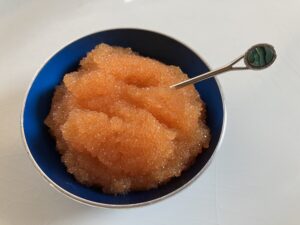
Dish and small spoon. Dish contains orange-pink fish eggs, known as caviar.

Wisconsin commercial fishermen will again have access to a lucrative European market for their fish roe, otherwise known as caviar, thanks to Wisconsin Sea Grant. Photo: Sharon Moen

Swedish hospitality wouldn’t be complete without a spread of crackers or bread and accompanying roe, the eggs from fish and also known as caviar. Because of Sea Grant’s role in facilitating the exchange of information, some of this roe will be coming from the Great Lakes.

A Sept. 28 decision from the World Wildlife Fund-Sweden to rank Wisconsin commercial lake whitefish and cisco fisheries as “best choice” with regard to sustainability means the roe from these fish can grace Swedish tables as a tasty, salty treat of skirom or löjrom without obstacles.  

Prior to that release of a “green, best choice” ranking for commercial fisheries in the Wisconsin and Michigan waters of Lake Superior the lake whitefish fishery, which yields sikrom, was in jeopardy. The cisco fishery of Lake Superior, which yields löjrom, was also in question. Great Lakes commercial fishers rely on the international sale of roe, a high-value product, to make ends meet.

Sharon Moen, Sea Grant’s food fish outreach coordinator, explained: “About two years ago, I was contacted by a fish processor/seafood importer/exporter operating in Door County. Because lake whitefish and cisco were rated red (unsustainable) by the World Wildlife Fund-Sweden, roe sales were plummeting as the products were being pulled from Swedish markets. The vigor with which red-rated products are leaving the Swedish marketplace has escalated each year since then. If the ratings didn’t change this year, the Great Lakes roe industry would have been devastated.”

Thanks to Moen’s intervention that rating changed from red to green early in the morning on Sept. 28 when new rankings were released. What led up to that change were Moen’s presentations to the Swedish Seafood forum, production and distribution of fact sheets on the fishery and lengthy facilitated conversations. She brought together Great Lakes fisheries managers, roe processors, the Monterey Bay Aquarium’s Seafood Watch staff, World Wildlife Fund-EU, World Wildlife Fund-Sweden and Swedish seafood industry leaders.

There is another “green” to celebrate, green to the tune of $15 million annually. That’s the estimate from domestic tribal and commercial fishers and processors about the worth of their anticipated roe export to Europe.

“Within minutes of my Sept. 28 joint presentation with Andy Edwards, treaty natural resources manager with the Red Cliff Band of Lake Superior Chippewa, the two largest retail chains in

Close-up of smiling person

Sharon Moen is the food fish outreach coordinator and brought together many parties to discuss Lake Superior lake whitefish and cisco.

Sweden contacted an importer to place orders,” said Moen.

One of those importers reached out to Moen and said, “It’s thanks to your hard work and extraordinary presentation our deepest wishes came true!,” said Tony Hartwig, CEO of Olle Hartwig Aktiebolag. “Now, we have busy days working out a market plan to promote roe again from Lake Superior, Wisconsin!”

Moen is pleased the ranking has been changed because she wholeheartedly stands by the science behind the management of the fishery and the professionalism of the commercial fishers. “From my perspective, the red rating reflected communication challenges, the complexity of Great Lakes fisheries management and the scarcity of money for a due-diligence assessment.”

As Dan Grooms said, “Fishing the Apostle Islands for food had been an integral part of the Anishinaabe’s way of life. Our fishers and our tribe depend on responsible fisheries management for sustainability for future generations.” Grooms was formerly the business manager of Red Cliff Fish Co., a business owned by the Red Cliff Band of Lake Superior Chippewa.

The post Sea Grant education on fishery expected to lead to $15 million in exports to Sweden first appeared on Wisconsin Sea Grant.

Original Article

News Releases | Wisconsin Sea Grant

News Releases | Wisconsin Sea Grant

https://www.seagrant.wisc.edu/news/sea-grant-education-on-fishery-expected-to-lead-to-15-million-in-exports-to-sweden/

Moira Harrington