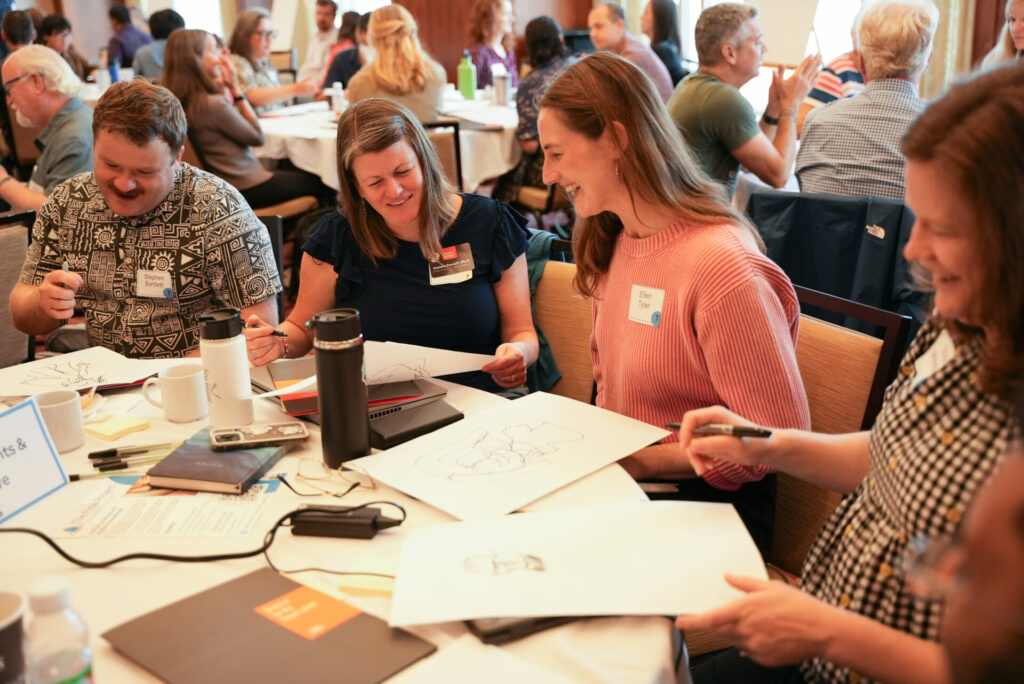
Participants at the Water Partnership Workshop talk and smile at a paper-strewn table

The Water Partnership Workshop gathered in September as part of an overall effort to turn scientific inquiry directly toward the priorities and needs of others, an approach known as community-engaged research. (Photo by Bonnie Willison / ASC)

By Alison Mikulyuk, Water@UW–Madison Research Program Coordinator, and Sarah Peterson, Community Engagement and Professional Development Manager

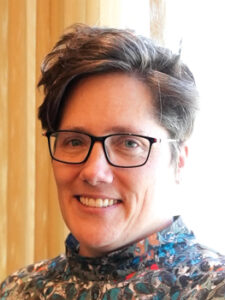
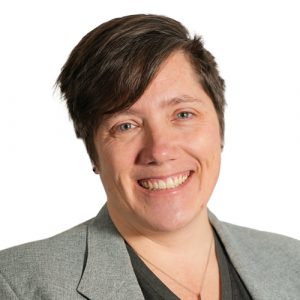
Alison Mikulyuk headshot

Alison Mikulyuk, Water@UW–Madison Research Program Coordinator (Photo by Bonnie Willison / ASC)

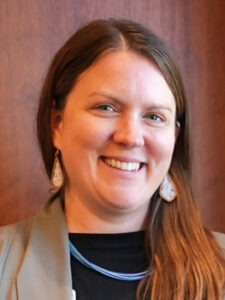
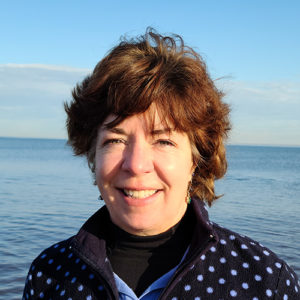
Sarah Peterson headshot

Sarah Peterson, Community Engagement and Professional Development Manager (Photo by Bonnie Willison / ASC)

Last fall, more than 70 water professionals, researchers, and community leaders gathered on the University of Wisconsin–Madison campus for the first-ever Water Partnership Workshop, hosted by Water@UW–Madison and Wisconsin Sea Grant. The energy in the room was apparent: conversations buzzed and ideas flowed freely as participants leaned into the opportunity to shape Wisconsin’s water future.

The lively discussion revolved around one question: What should we research — together — next?

This type of collaboration is a reflection of the growing desire to turn scientific inquiry directly toward the priorities and needs of others. Known as community-engaged research (CER), this approach centers community voices and fosters collaboration in science.

CER requires us to evaluate whether science is asking the right questions. Are research projects grounded in concerns and priorities shared by the community? Are researchers answering them in ways that are fair and useful? When done well, CER also helps build trust in science and the scientific process, empowers communities to take action and build strength, and can help democratize knowledge production so that more people have access and stand to benefit.

A growing number of scientists are inspired to participate in CER; however, many don’t know where to begin. In our roles at the Aquatic Sciences Center, we often hear the same question from scientists: How do I get started in a collaborative partnership with a community group?

Our attempts to answer that question led us to organize the Water Partnership workshop in September.

Matchmaking researchers with community partners

Designing the workshop took several months and started with brainstorming about how we as coordinators could help build relationships between campus researchers and community partners. Early on, we decided to offer a full-day workshop structured around a set of topics that scientists and community members wanted to tackle together. Our goal was to spark new connections, foster collaboration, and provide a space where community-engaged water research projects could begin to take shape. 

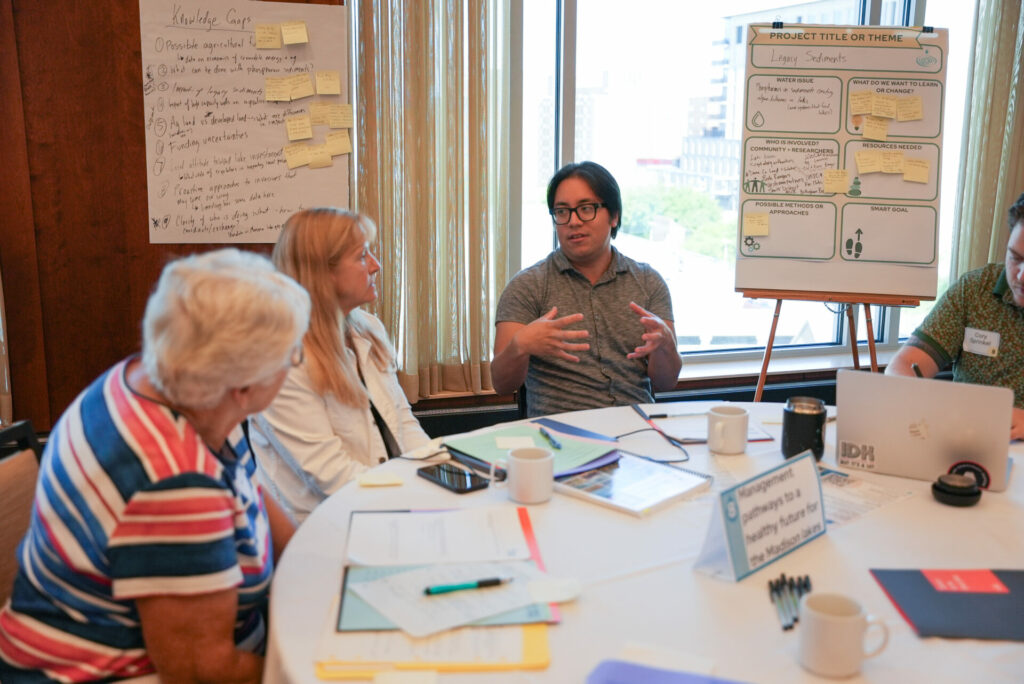
Three workshop participants discuss water quality around a round table.

Water professionals and community members discuss phosphorus in Madison-area lakes. (Photo by Bonnie Willison / ASC)

We reached out to over 40 contacts within Wisconsin’s diverse water network, who then reached out across their networks in turn. Participants were almost always excited about the opportunity to connect. After a series of one-on-one meetings with community representatives, we identified a collection of eight organizations eager to participate, each with their own unique concerns related to water. 

Behind the scenes, we began to match researcher expertise with the questions posed by community guests. As we recruited and aligned participants, we found ourselves creating a topic-specific seating chart that resembled something you’d see at a wedding reception. We aligned the participants on topic and interest, then balanced the groups to include experts and community members from a range of career stages and disciplines. 

The multigenerational, multidisciplinary groups that emerged set the stage for what we hoped would be a set of really interesting and productive conversations. 

Moving at the speed of trust

The eight groups that came together on September 11 arrived with a wide range of water topics that mattered to them. 

  • Representatives from the Wisconsin Farmers Union discussed agricultural trade-offs between organic and conventional practices. 
  • The Coon Creek Community Watershed Council explored ways of rethinking flood management to address aging dams throughout the watershed. 
  • Wisconsin EcoLatinos discussed culturally relevant communication about environmental contaminants in Latino communities. 
  • Representatives from the Black Earth Creek Watershed Association explored the impact of neonicotinoid pesticides on aquatic invertebrates in trout streams. 
  • Southern Wisconsin Trout Unlimited discussed the relationship between urban stormwater management and trout streams. 
  • A member of the Lac du Flambeau Band of Lake Superior Chippewa Indians spoke about tribal water rights and imagining ecology beyond a Western scientific framework. 
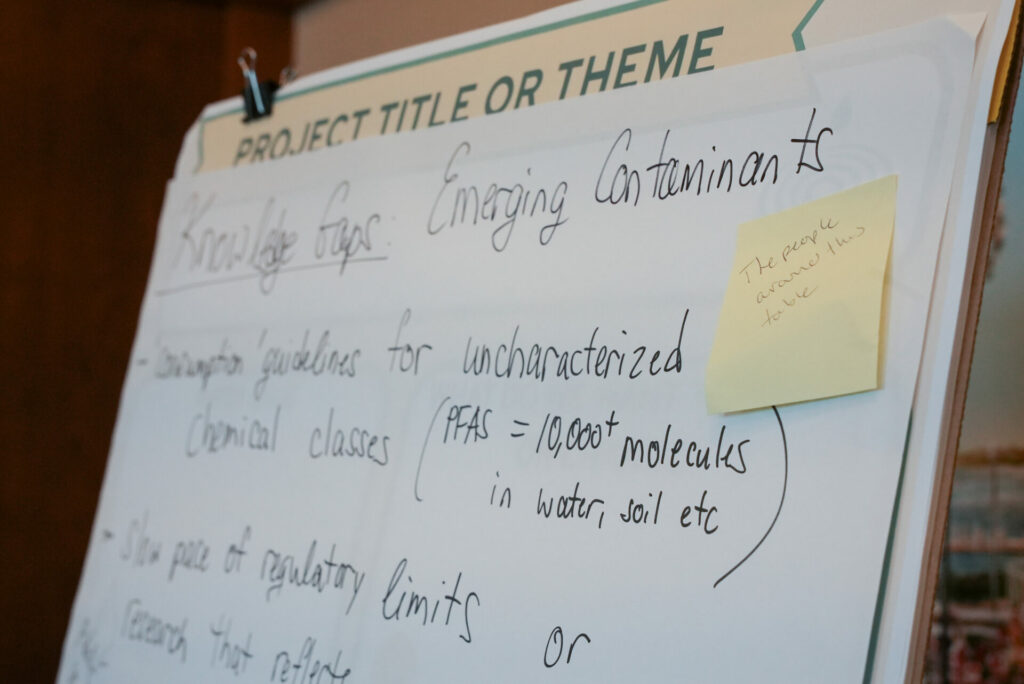
  • Staff from the Great Lakes Inter-Tribal Epidemiology Center engaged in a discussion on emerging contaminants and cumulative impacts to tribal communities across Wisconsin. 
  • Volunteers with two Madison-based lake associations spoke about phosphorus contamination and future management pathways. 

Over the course of six hours, the workshop revealed some cross-cutting challenges. One theme that surfaced was that scientific data and tools are often too complex for practical use. There was shared consensus that researchers must prioritize translating research into simple, actionable decision-support tools. 

Another theme spoke to how essential trust is for developing effective solutions, requiring two-way communication and the involvement of trusted community messengers. It highlighted how academic research operates at a certain pace, often driven by grant cycles, project management milestones or tenure review timelines. However, CER is not only in the hands of researchers, so it must always strive to move at what we’ve come to call the “speed of trust.”

Future collaborations

It’s our hope that we helped forge lasting connections that day. While we don’t know yet what will come of the projects and ideas that were generated, we know we’re learning more about a model by which to facilitate trust and exchange.

We hope that the Water Partnership Workshop was more than a one-day event — we envision it as a catalyst, demonstrating the power of bringing many voices together around shared water interests. We hope it helped lay groundwork for future collaborations that are community-initiated, interdisciplinary, and action-oriented.

We are already planning our next collaborative event, refining the model using feedback we received from participants. We strongly believe that this is what water research should look like: people coming together, listening deeply, honoring community agency, and building something better, together. If you’re interested, reach out to water@mailplus.wisc.edu to join us.

Notes collected on a large sticky note

Emerging contaminants were just one of the topics discussed at the workshop. (Photo by Bonnie Willison / ASC)

The post Researchers and communities working together first appeared on Wisconsin Sea Grant.
Original Article

News Releases | Wisconsin Sea Grant

News Releases | Wisconsin Sea Grant

https://www.seagrant.wisc.edu/news/researchers-and-communities-working-together/

Wisconsin Sea Grant

A rock covered with invasive zebra mussels taken from Lake Mendota. Photo: Adam Hinterthuer, University of Wisconsin-Madison

By Adam Hinterthuer and Madelyn Anderson, University of Wisconsin-Madison

A report on more than 40 years of research on Wisconsin lakes highlights lessons scientists have learned about aquatic invasive species. For example, far more ecosystems are playing host to non-native species than were previously thought. However, the authors write, those species aren’t necessarily detrimental to their new habitat and, in some cases, the negative “impacts of invasive species control [efforts] may be greater than the impacts of the invasive species” themselves.

That doesn’t mean we shouldn’t be concerned about different species moving into new ecosystems, said Jake Vander Zanden, director of the University of Wisconsin-Madison’s Center for Limnology and lead author on the report. “There are many examples where an invasive species has remarkable ecosystem impacts. They can result in fisheries decline, water quality decrease, and more which negatively impacts humans and the environment,” he said. But ecological destruction is far from a foregone conclusion in invasive species stories. 

In the article, published recently in the journal “BioScience,” Vander Zanden and his team, which includes Alison Mikulyuk, Sea Grant’s Water@UW Madison Research Program coordinator, highlight nine lessons learned through four decades of data collection, research and experiments conducted by the North Temperate Lakes Long-Term Ecological Research Program. Housed at the Center for Limnology, the NTL-LTER is one of 27 long-term research sites funded by the National Science Foundation.

Research grants are typically funded for three years, Vander Zanden explains, “But that would never allow you to detect these types of changes. It’s only through long-term research that we can get insights into these big questions like where invasive species are, how they are changing our ecosystems and how it all connects to things like climate change.” 

One such insight is that the presence of non-native aquatic species in Wisconsin lakes is more widespread than scientists and resource managers initially thought. The NTL-LTER has helped inform Wisconsin Department of Natural Resources maps and datasets on six target species – Eurasian watermilfoil, zebra mussels, spiny waterfleas, rusty crayfish, Chinese mystery snail and the banded mystery snail – since the 1990s. 

Combining long-term monitoring records on its 11 core study lakes with field-based research and community-based science on dozens of other water bodies, researchers revealed that existing estimates of about 8% of Wisconsin lakes containing one or more of the six species was way off. In fact, the number is closer to 39%.  

The post Study offers key takeaways from long-term research on aquatic invasive species first appeared on Wisconsin Sea Grant.

Original Article

Blog | Wisconsin Sea Grant

Blog | Wisconsin Sea Grant

https://www.seagrant.wisc.edu/blog/study-offers-key-takeaways-from-long-term-research-on-aquatic-invasive-species/

Wisconsin Sea Grant

Two new grants set to build water-related workforce development

The labor landscape in Wisconsin is closely bound to demographics and it comes down to this simple reality: shoes are not being filled.

U.S. Census data shows Wisconsinites of traditional retirement age, 65, have increased 42% since 2005. At the same time, the number of people entering the workforce is contracting because state birth rates have slowed and there are fewer young people. Another aspect of this workforce-shortage trend is that young people are bypassing Wisconsin, choosing to work and live elsewhere as they chase their American dreams.

Now, thanks to an infusion of two new grants, Wisconsin Sea Grant is positioned to facilitate the paths young people are considering as they sort through workforce choices, including where they may eventually want to find training and education, take a job and make a home.

With $592,332 in support from the Freshwater Collaborative of Wisconsin (FWC) over two years, the Freshwater@UW Summer Research Opportunities Program will continue its work to develop Wisconsin’s next generation of freshwater scientists.

The program matches water-related mentors from throughout the University of Wisconsin System with undergraduates to guide them in an immersive research experience and acquaint them with the many graduate school opportunities in Wisconsin.

 The program just wrapped up its second summer, which attracted 31 students from across the nation to work on the system campuses at Eau Claire, Green Bay, La Crosse, Madison, Milwaukee, Oshkosh and Superior.

Closeup of a smiling person

Alison Mikulyuk is coordinating the work of summer research scholars.

Sea Grant’s Alison Mikulyuk coordinates the program which, she said, is growing freshwater research and the workforce through collaborative, cross-system programming that trains and will, ultimately, recruit, retain and diversify the next generation of water professionals.

“The program attracts talented students to the Badger State where they gain skills that are directly applicable to future work in Wisconsin,” Mikulyuk said. “Having just seen these young people through the summer, I’m incredibly inspired. The students made an impressive showing at the recent Summer Research Symposium, and so many of them have had life-altering experiences that I know will fuel their future accomplishments.”

The second two-year FWC grant will provide $207,400 for a project called “Partnering to Boost Aquaculture Workforce Development in Wisconsin.”

Sharon Moen, food-fish outreach coordinator, conducted a 2020 needs assessment of Wisconsin’s food-fish farmers and heard over and over again the need to bring young people into the industry.

“The U.S. imports more than 70% of its fish and shrimp. About half of these imports come from overseas farms. Meanwhile, consumers are calling for locally produced food that supports American jobs, and the health of themselves and their loved ones. Wisconsin aquaculture, aquaculture being another word for fish farming, is primed to meet that demand,” Moen said. “The industry just needs workers and this project will expand training opportunities, linking commercial fish farms in the state to high schools, colleges and universities to foster farm experiences and skill-building workshops.”

Close-up of smiling person

Sharon Moen will work with colleagues on aquaculture industry workforce development.

She said one such idea for that skill-building will be supporting high school teams to participate in an existing annual aquaculture competition. Students design and build a system to grow fish.

Moen will work with Sea Grant colleagues Dong-Fang Deng and Emma Hauser, both aquaculture outreach and education specialists. Deng is based at the University of Wisconsin-Milwaukee and Hauser works out of UW-Steven’s Point Northern Aquaculture Demonstration Facility on the Bayfield Peninsula, not too far from Lake Superior.

“With Dong-Fang’s and Emma’s connections and our collective enthusiasm for this project, we are looking forward to successfully inspiring young people to enter the aquaculture workforce. It can offer a good standard of living and a remarkable quality of life,” Moen said.

The Freshwater Collaborative of Wisconsin is a partnership of Wisconsin’s 13 public universities, connecting with industry partners, local communities, policymakers and advocacy groups. Its mission is to establish Wisconsin as a world leader in freshwater science, technology, entrepreneurship and economic growth. The Freshwater Collaborative of Wisconsin is training the next generation of scientists to solve global water resource problems through academic programs, collaborative research and career development across the UW System.

The post Filling water shoes first appeared on Wisconsin Sea Grant.

Original Article

News Releases | Wisconsin Sea Grant

News Releases | Wisconsin Sea Grant

https://www.seagrant.wisc.edu/news/filling-water-shoes/

Moira Harrington

When summer stretches before many college undergraduates, they make plans: Spend time outdoors. Connect with friends. Catch up on screen time.

For the 31 undergraduates participating in the 2023 Freshwater@UW Summer Research Scholars Program, those plans are the same, with slight alterations. The time outdoors is likely to be spent collecting field samples from a body of water. The friends are new ones—made from the pool of program participants who hail from California to Alabama from Virginia to Wisconsin, and points in between. The screen time isn’t about beating The Legend of Zelda: Tears of the Kingdom, but instead entering findings into a larger dataset to further aquatic science projects.

“I looked at many summer REU (research experiences for undergraduates) opportunities,” Sofia Mota Chichy, chemistry major from the University of Michigan, said. “This one at Madison had the most in water chemistry and that’s what I am interested in. I’ve never worked in a chemistry lab before and it’s even better that it is an aquatic one.” Mota Chichy will be a part of University of Wisconsin-Madison’s Christine Remucal’s lab studying magnesium oxide.

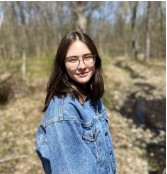
Jessica Alcorn is an undergraduate who will join a water research lab at UW-Madison this summer. Contributed photo.

A second young woman also expressed her attraction to this opportunity because of its emphasis on water. Plus, said Jessica Alcorn a student at Northwest Missouri State, “I want to go to graduate school here in Madison.” She’ll work under UW-Madison’s Matt Ginder-Vogel, who does both surface and groundwater research.

These springboards from research to a new path in life were celebrated by an enthusiastic Marissa Jablonski at a recent orientation session for the students. “Life will form you without you trying. You’re on your way. You’ve shown up. You’re leaning in.”

Jablonski is the executive director of the Freshwater Collaborative of Wisconsin, one of the funding entities for the summer program, about which, the University of Wisconsin Water Resources Institute Director Jim Hurley said, “It’s been really positive to be able to expand our program because of support from the Freshwater Collaborative. Last year, we were a fledgling program of nine students.” Hurley secured a nearly $358,300 grant from the collaborative, resulting in this year’s larger cohort.

No matter the size of the group, though, Hurley said the goal remains unchanged, “The overall goal is to provide immersive student research experiences to enhance workforce development skills and allow undergraduates to consider the option of graduate studies in Wisconsin. Research experience as an undergraduate is an important component of a successful application for graduate school. In the job market, it also sets apart recent undergraduates who have addressed the changing needs of water-related fields.”

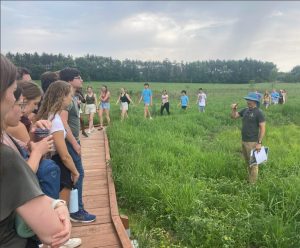
Group of people standing in a grassy area.
Summer research scholars had many orientation activities before heading to their assignments across the state. Photo by Alison Mikulyuk

Expanding the number of participating students is one thing, another is the broadened involvement from professors, graduate students and others at organizations that are acting as mentors for the students. There are 48 in all, including people on University of Wisconsin System campuses in Eau Claire, Green Bay, La Crosse, Madison, Milwaukee and Oshkosh. Also providing formative experiences will be mentors from the U.S. Geological Survey, the Lake Superior National Estuarine Research Reserve, Wisconsin Shipwreck Coast National Marine Sanctuary and Wisconsin Maritime Museum.

In application materials, students this summer expressed interest in pursuing research into topics such as pollution, climate change, molecular structures of water, public health and more. The projects will deliver on that skill-building, spawning a new generation of water leaders. While the students will disperse across the state for these labs and field sites, they have a standing invitation to gather each Thursday virtually—and in-person if they are in Madison—for weekly professional development sessions on topics like science communication, navigating graduate school and proposal writing.

They will add these skills to their already prodigious ones in other areas that demonstrate well-rounded natures. At the orientation session, Alison Mikulyuk, summer research opportunity program coordinator, called out fun facts when she said among the group there was a proficient loon caller, a mushroom finder, dancers, an aspiring author, someone who graduated from high school as a 14-year-old, a boxer, world-medalist baton twirler, two twins, competitive swimmers, a multi-instrumentalist, many who play instruments and several who speak more than one language.

Mikulyuk urged the undergraduates to enjoy those skills of others, and also capitalize on the people who possess them, “Learn from each other. Care for each other…Take advantage of personal and professional connections.” She continued, “I hope you will have a life-changing experience that propels you forward in your next decades.”

The program will run until Aug. 5, culminating in a poster session where students will present their summer’s worth of findings.

In addition to the Freshwater Collaborative of Wisconsin and the Water Resources Institute, the summer program has support from Wisconsin Sea Grant, Water@UW Madison and the UW-Madison Graduate School.

The post Summer loving and the research is fine first appeared on WRI.

Original Article

News Release | WRI

News Release | WRI

https://www.wri.wisc.edu/news/summer-loving-and-the-research-is-fine/?utm_source=rss&utm_medium=rss&utm_campaign=summer-loving-and-the-research-is-fine

Moira Harrington

When summer stretches before many college undergraduates, they make plans: Spend time outdoors. Connect with friends. Catch up on screen time.

For the 31 undergraduates participating in the 2023 Freshwater@UW Summer Research Scholars Program, those plans are the same, with slight alterations. The time outdoors is likely to be spent collecting field samples from a body of water. The friends are new ones—made from the pool of program participants who hail from California to Alabama from Virginia to Wisconsin, and points in between. The screen time isn’t about beating The Legend of Zelda: Tears of the Kingdom, but instead entering findings into a larger dataset to further aquatic science projects.

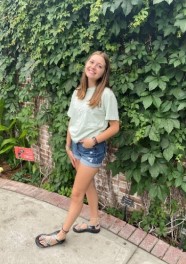
Smiling person standing in a grassy, wooded area.

Sofia Mota Chichy will research magnesium oxide. Contributed photo.

“I looked at many summer REU (research experiences for undergraduates) opportunities,” Sofia Mota Chichy, chemistry major from the University of Michigan, said. “This one at Madison had the most in water chemistry and that’s what I am interested in. I’ve never worked in a chemistry lab before and it’s even better that it is an aquatic one.” Mota Chichy will be a part of University of Wisconsin-Madison’s Christine Remucal’s lab studying magnesium oxide.

A second young woman also expressed her attraction to this opportunity because of its emphasis on water. Plus, said Jessica Alcorn a student at Northwest Missouri State, “I want to go to graduate school here in Madison.” She’ll work under UW-Madison’s Matt Ginder-Vogel, who does both surface and groundwater research.

These springboards from research to a new path in life were celebrated by an enthusiastic Marissa Jablonski at a recent orientation session for the students. “Life will form you without you trying. You’re on your way. You’ve shown up. You’re leaning in.”

Jablonski is the executive director of the Freshwater Collaborative of Wisconsin, one of the funding entities for the summer program, about which, Sea Grant Director Jim Hurley said, “It’s been really positive to be able to expand our program because of support from the Freshwater Collaborative. Last year, we were a fledgling program of nine students.” Hurley secured a nearly $358,300 grant from the collaborative, resulting in this year’s larger cohort.

No matter the size of the group, though, Hurley said the goal remains unchanged, “The overall goal is to provide immersive student research experiences to enhance workforce development skills and allow undergraduates to consider the option of graduate studies in Wisconsin. Research experience as an undergraduate is an important component of a successful application for graduate school. In the job market, it also sets apart recent undergraduates who have addressed the changing needs of water-related fields.”

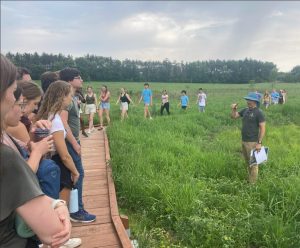
Large group of people in a grassy area.

The 2023 cohort of summer research scholars undertook various orientation activities, including a tour of the UW-Madison Arboretum. Photo: Alison Mikulyuk

Expanding the number of participating students is one thing, another is the broadened involvement from professors, graduate students and others at organizations that are acting as mentors for the students. There are 48 in all, including people on University of Wisconsin System campuses in Eau Claire, Green Bay, La Crosse, Madison, Milwaukee and Oshkosh. Also providing formative experiences will be mentors from the U.S. Geological Survey, the Lake Superior National Estuarine Research Reserve, Wisconsin Shipwreck Coast National Marine Sanctuary and Wisconsin Maritime Museum.

In application materials, students this summer expressed interest in pursuing research into topics such as pollution, climate change, molecular structures of water, public health and more. The projects will deliver on that skill-building, spawning a new generation of water leaders. While the students will disperse across the state for these labs and field sites, they have a standing invitation to gather each Thursday virtually—and in-person if they are in Madison—for weekly professional development sessions on topics like science communication, navigating graduate school and proposal writing.

They will add these skills to their already prodigious ones in other areas that demonstrate well-rounded natures. At the orientation session, Alison Mikulyuk, summer research opportunity program coordinator, called out fun facts when she said among the group there was a proficient loon caller, a mushroom finder, dancers, an aspiring author, someone who graduated from high school as a 14-year-old, a boxer, world-medalist baton twirler, two twins, competitive swimmers, a multi-instrumentalist, many who play instruments and several who speak more than one language.

Mikulyuk urged the undergraduates to enjoy those skills of others, and also capitalize on the people who possess them, “Learn from each other. Care for each other…Take advantage of personal and professional connections.” She continued, “I hope you will have a life-changing experience that propels you forward in your next decades.”

The program will run until Aug. 5, culminating in a poster session where students will present their summer’s worth of findings.

In addition to the Freshwater Collaborative of Wisconsin and Sea Grant, the summer program has support from the University of Wisconsin Water Resources Institute, Water@UW Madison and the UW-Madison Graduate School.


The post Summer loving and the research is fine first appeared on Wisconsin Sea Grant.

Original Article

News Releases | Wisconsin Sea Grant

News Releases | Wisconsin Sea Grant

https://www.seagrant.wisc.edu/news/summer-loving-and-the-research-is-fine/?utm_source=rss&utm_medium=rss&utm_campaign=summer-loving-and-the-research-is-fine

Moira Harrington

In the late 1800s, the field of limnology (the study of lakes) had its birth in North America when what is now the University of Wisconsin-Madison’s Center for Limnology began its formative years.

Zoologists Edward Birge and Chancey Juday offered vision and leadership for this take on water science. They went heavy on field work and produced dozens of papers expounding lakes’ chemistry, biology and geology. They were committed to fostering student experiences and learning.

A thread of connection to those early days of freshwater study and student support carries through to today with the arrival at the Water Resources Institute (WRI)  and Sea Grant of Alison Mikulyuk, herself a graduate of that very same limnology program. She is the first-ever coordinator of Water@UW-Madison.

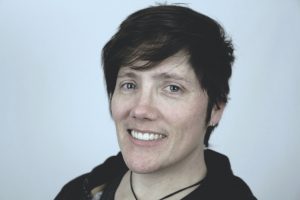
Closeup of smiling young woman with short dark hair.

“I’m excited to join the team at the Aquatic Sciences Center.” Mikulyuk continued, “I want to build and support a caring and connected network of water researchers, one that encourages exchange and innovation. I envision a healthy and productive collaborative group, where we work together across disciplines, across agencies and with communities to find new ways of asking and answering the questions that matter for fresh water.”

Water@UW-Madison had its own beginnings more than a decade ago when a handful of water scientists—including Jake Vander Zanden, the current director of the Center for Limnology—formed an organization to foster connections among students, staff and faculty with water interests and studies. The goal at the time, Vander Zanden said, was to facilitate greater interdisciplinary collaboration and exploration.

Water@UW-Madison sponsors a fall poster session, spring symposium, student mentoring, a summer undergraduate research experience and art and freshwater science collaborations. It hosts an informative website and during the academic year publishes a weekly newsletter. In sum, it pulls together and amplifies the water expertise of more than 130 faculty and staff across more than 40 departments and programs on the Madison campus.

It further strives to broaden its reach to other campuses in the University of Wisconsin System, along with private colleges, government agencies, non-governmental organizations and civil society in Wisconsin and beyond.

Mikulyuk will also support the WRI and Sea Grant research enterprise and the programs’ robust fellowship initiatives that place post-graduates in settings with state agencies, offering cutting-edge skills and knowledge to the agencies, along with mentoring, networking opportunities and experience for the fellows.

Additionally, she will also oversee the Freshwater@UW Summer Research Scholars Program, which pairs undergraduates with research mentors. The program is in its second year and 2023 opportunities are now available for application until Feb. 15.

The post Alison Mikulyuk will assist with WRI research competition first appeared on WRI.

Original Article

News Release | WRI

News Release | WRI

https://www.wri.wisc.edu/news/alison-mikulyuk-will-assist-with-wri-research-competition/?utm_source=rss&utm_medium=rss&utm_campaign=alison-mikulyuk-will-assist-with-wri-research-competition

Moira Harrington

In the late 1800s, the field of limnology (the study of lakes) had its birth in North America when what is now the University of Wisconsin-Madison’s Center for Limnology began its formative years.

Zoologists Edward Birge and Chancey Juday offered vision and leadership for this take on water science. They went heavy on field work and produced dozens of papers expounding lakes’ chemistry, biology and geology. They were committed to fostering student experiences and learning.

A thread of connection to those early days of freshwater study and student support carries through to today with the arrival at Sea Grant and the Water Resources Institute (WRI) of Alison Mikulyuk, herself a graduate of that very same limnology program. She is the first-ever coordinator of Water@UW-Madison.

Closeup of smiling young woman with short dark hair.

“I’m excited to join the team at the Aquatic Sciences Center.” Mikulyuk continued, “I want to build and support a caring and connected network of water researchers, one that encourages exchange and innovation. I envision a healthy and productive collaborative group, where we work together across disciplines, across agencies and with communities to find new ways of asking and answering the questions that matter for fresh water.”

Water@UW-Madison had its own beginnings more than a decade ago when a handful of water scientists—including Jake Vander Zanden, the current director of the Center for Limnology—formed an organization to foster connections among students, staff and faculty with water interests and studies. The goal at the time, Vander Zanden said, was to facilitate greater interdisciplinary collaboration and exploration.

Water@UW-Madison sponsors a fall poster session, spring symposium, student mentoring, a summer undergraduate research experience and art and freshwater science collaborations. It hosts an informative website and during the academic year publishes a weekly newsletter. In sum, it pulls together and amplifies the water expertise of more than 130 faculty and staff across more than 40 departments and programs on the Madison campus.

It further strives to broaden its reach to other campuses in the University of Wisconsin System, along with private colleges, government agencies, non-governmental organizations and civil society in Wisconsin and beyond.

Mikulyuk will also support the WRI and Sea Grant research enterprise and the programs’ robust fellowship initiatives that place post-graduates in settings with state agencies, offering cutting-edge skills and knowledge to the agencies, along with mentoring, networking opportunities and experience for the fellows.

Additionally, she will also oversee the Freshwater@UW Summer Research Scholars Program, which pairs undergraduates with research mentors. The program is in its second year and 2023 opportunities are now available for application until Feb. 15.


The post New hire Alison Mikulyuk part of a connective thread of water first appeared on Wisconsin Sea Grant.

Original Article

News Releases | Wisconsin Sea Grant

News Releases | Wisconsin Sea Grant

https://www.seagrant.wisc.edu/news/new-hire-alison-mikulyuk-part-of-a-connective-thread-of-water/?utm_source=rss&utm_medium=rss&utm_campaign=new-hire-alison-mikulyuk-part-of-a-connective-thread-of-water

Moira Harrington